
Harriet Brooks: A Trailblazer's Experiments in Radioactivity and Atomic Recoil

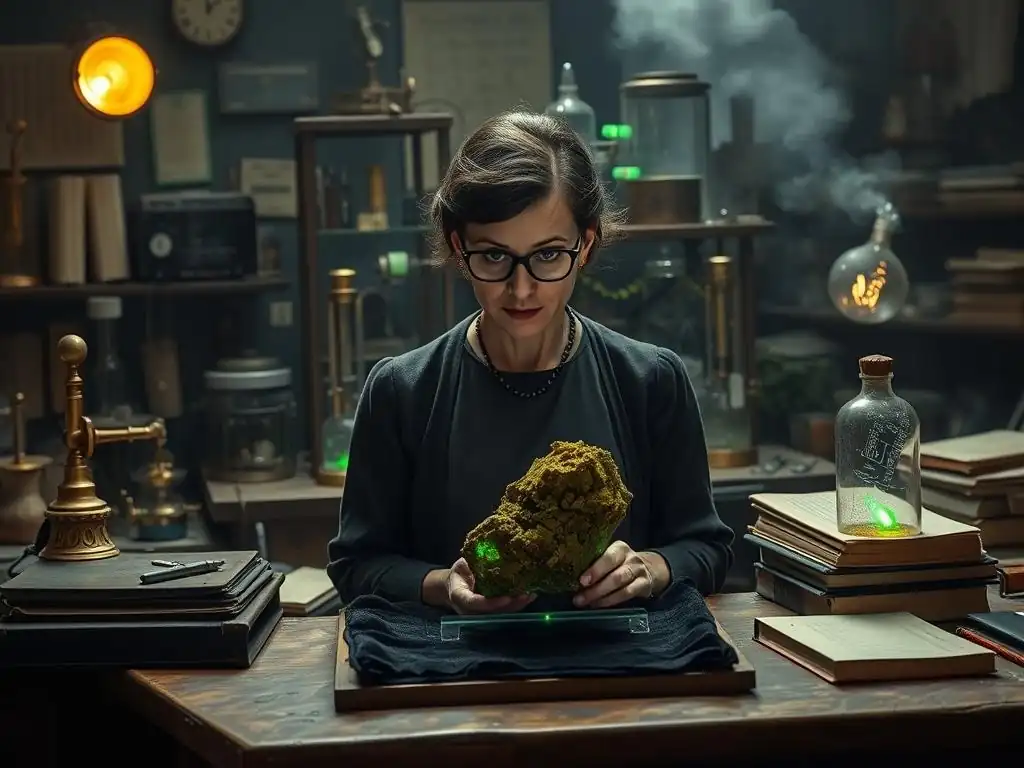
Welcome to WomenInScienceHistory.com, where we uncover the untold stories of remarkable women who shaped the scientific world. Delve into the fascinating life and groundbreaking work of Harriet Brooks in our latest feature, " Harriet Brooks: A Trailblazer's Experiments in Radioactivity and Atomic Recoil." What secrets did her pioneering experiments in radioactivity reveal, and how did they contribute to our understanding of atomic structure? Explore the details now and discover the legacy of a physicist who challenged conventions and advanced the field.
- Harriet Brooks: Pioneering Radioactivity Research and Atomic Recoil
- Introduction to Harriet Brooks: A Pioneer in Nuclear Physics
- Harriet Brooks' Groundbreaking Radioactivity Experiments: A Detailed Look
- The Significance of Harriet Brooks' Radioactivity Research
- Exploring Brooks' Experimental Setup and Methodology
- Brooks' Research on Atomic Recoil and its Implications
- Comparing Harriet Brooks' Radioactivity Work with Other Pioneering Scientists
- The Challenges Faced by Harriet Brooks: A Woman in Early 20th Century Physics
- Harriet Brooks' Later Life and Continued Scientific Contributions
- Legacy of Harriet Brooks: Remembering a Pioneer in Radioactivity Research
-
Frequently Asked Questions
- What was Harriet Brooks' primary area of scientific research?
- What is atomic recoil and how did Harriet Brooks contribute to its understanding?
- What were some of the challenges Harriet Brooks faced as a woman in science?
- Can you describe one of Harriet Brooks' significant experiments?
- Why is it important to highlight Harriet Brooks' contributions to science history?
- Final Reflection: Illuminating the Unseen
- Ignite Your Curiosity: Explore the Atomic World Like Harriet Brooks!
Harriet Brooks: Pioneering Radioactivity Research and Atomic Recoil
Introduction to Harriet Brooks: A Pioneer in Nuclear Physics
Celebrating Harriet Brooks' Legacy in Physics
Harriet Brooks stands as a formidable figure in the early history of nuclear physics, whose foundational contributions to understanding radioactivity and atomic recoil were instrumental in shaping the field. Often overshadowed by her male contemporaries, Brooks' pioneering spirit and acute experimental skills led to critical insights into the nature of radioactive decay. Her work provided tangible evidence for the transformation of elements and the mechanics of particle emission, cementing her place as a true trailblazer.
Her legacy extends beyond her specific discoveries; it embodies the perseverance required to pursue scientific inquiry in an era when opportunities for women in science were exceedingly rare. Brooks' commitment to rigorous experimentation and her intellectual independence paved the way for future generations of female scientists, demonstrating that profound scientific contributions know no gender.
The Early Life and Education of a Canadian Physics Pioneer
Born in Montreal, Canada, in 1876, Harriet Brooks displayed an exceptional intellect from a young age. She pursued her higher education at McGill University, a burgeoning center for scientific research at the turn of the 20th century. It was here that she encountered and began working under the guidance of Ernest Rutherford, a luminary in the nascent field of radioactivity.
Brooks earned her Bachelor of Arts degree in mathematics and natural philosophy in 1898, followed by a Master of Arts degree in physics in 1901. Her master's thesis, under Rutherford's supervision, delved into the damping of electrical oscillations and the effects of uranium radiation on the dielectric constant of paraffin. These early academic achievements set the stage for her subsequent groundbreaking Harriet Brooks radioactivity experiments details that would help unravel the mysteries of the atom.
Harriet Brooks' Groundbreaking Radioactivity Experiments: A Detailed Look
Brooks' Early Research at McGill University: Identifying Thorium's Radioactive Emanations
Under Ernest Rutherford's mentorship at McGill University, Harriet Brooks embarked on a series of meticulous experiments investigating the radioactive properties of thorium. Rutherford had previously identified "thorium emanation," a gaseous substance released by thorium, which he later identified as radon. Brooks' work provided crucial confirmation and further characterization of this phenomenon, solidifying the understanding of gaseous radioactive decay products.
Her detailed observations confirmed that these emanations were indeed radioactive gases, capable of inducing "excited activity" on surfaces with which they came into contact. These Harriet Brooks radioactivity experiments details were vital in establishing the concept of radioactive series, where one element transmutes into another through a sequence of decays, each producing a new radioactive product.
The Discovery of Atomic Recoil: A Key Contribution to Nuclear Physics
Perhaps Brooks' most significant individual contribution to physics was her experimental observation of atomic recoil in 1904. This phenomenon occurs when a nucleus undergoes alpha decay, ejecting an alpha particle and causing the residual nucleus to recoil in the opposite direction, much like a gun recoils when firing a bullet. While predicted by the conservation of momentum, Brooks was the first to provide direct experimental evidence of this effect.
She observed that radioactive "active deposits" from thorium emanation could be collected on an electrode, even when the gas itself was not directly transported by an electric field. This suggested that the parent atom, after emitting an alpha particle, was itself propelled away with considerable energy, allowing it to adhere to nearby surfaces. This groundbreaking observation was a crucial step in understanding the mechanics of radioactive decay at the atomic level, providing tangible proof of the violent atomic transformations occurring during emission.
The Significance of Harriet Brooks' Radioactivity Research
Understanding Radioactive Decay Through Brooks' Experiments
Harriet Brooks' meticulous Harriet Brooks radioactivity experiments details significantly advanced the understanding of radioactive decay. Her work on thorium emanations and active deposits provided empirical support for Rutherford and Soddy's disintegration theory, which posited that radioactivity involved the spontaneous transformation of one element into another. By characterizing these intermediate products and their behavior, Brooks helped to map out the intricate pathways of radioactive decay chains.
Her experimental findings contributed directly to the concept that radioactive elements undergo a series of successive transformations, each with its own characteristic decay products and half-lives. This was a radical departure from the classical view of immutable elements and laid the groundwork for the modern understanding of nuclear stability and instability.
Brooks' Role in the Development of Nuclear Science
Brooks' contributions were not merely confirmatory; they were foundational. Her discovery of atomic recoil, in particular, provided a direct window into the mechanics of nuclear decay and the forces at play within the atom. This observation was critical for validating the conservation of momentum at the subatomic level and for understanding the energy distribution during radioactive processes.
Her work, often conducted in close collaboration with Ernest Rutherford, helped to solidify the experimental basis of nuclear physics in its infancy. The precision and ingenuity of her Harriet Brooks radioactivity experiments details demonstrated the power of experimental observation in revealing the fundamental nature of matter, positioning her as a pivotal figure in the development of nuclear science.
Exploring Brooks' Experimental Setup and Methodology
Using Electromagnetic Fields to Deflect Recoiling Atoms
In her seminal work on atomic recoil, Harriet Brooks employed clever experimental setups to observe the movement of recoiling atoms. While specific diagrams of her exact apparatus are not widely available, her methodology involved placing radioactive sources, such as thorium emanation, in a controlled environment. She then introduced an electric field, often using charged plates or electrodes, to influence the paths of the charged particles.
The key insight was that even when the gaseous emanation itself was prevented from moving towards an electrode by an opposing electric field, a "radioactive deposit" would still form on the electrode. This indicated that the newly formed, recoiling atom (after alpha emission) was itself charged and possessed sufficient kinetic energy to travel against the field and deposit on the surface. This indirect method of observing the recoil, through its ability to deposit, was a testament to her inventive experimental design.
Overcoming Limitations in Early 20th-Century Physics Equipment
Working in the early 1900s, Brooks faced significant limitations in the available scientific equipment, which was rudimentary by today's standards. Precision measurements often relied on careful manual techniques, sensitive electroscopes to detect minute charges, and simple vacuum pumps to control the experimental environment. The sources of radioactivity themselves were often weak and difficult to handle.
Despite these challenges, Brooks' meticulous approach and keen observational skills allowed her to extract profound insights. Her success in identifying atomic recoil, for instance, speaks volumes about her ability to design experiments that could reveal subtle yet fundamental phenomena, even with the relatively unsophisticated tools of the era. The ingenuity in her Harriet Brooks radioactivity experiments details highlights the importance of intellectual rigor over advanced technology in scientific discovery.
Brooks' Research on Atomic Recoil and its Implications
Defining Atomic Recoil: Brooks' Contribution to Understanding Radioactive Decay
Harriet Brooks' experimental observation of atomic recoil fundamentally deepened the understanding of radioactive decay. Atomic recoil, in the context of alpha decay, refers to the kinetic energy imparted to the daughter nucleus as it recoils in the opposite direction to the emitted alpha particle. This phenomenon is a direct consequence of the conservation of momentum; since the alpha particle carries momentum, the remaining nucleus must gain an equal and opposite momentum.
Brooks' work provided the first direct experimental evidence for this recoil. She demonstrated that when a heavy radioactive atom, like that of thorium emanation (radon-220), undergoes alpha decay, the resulting daughter atom (polonium-216) is propelled away with significant kinetic energy. This was not merely a theoretical prediction but a tangible physical event observed through its effects, adding a crucial piece to the puzzle of how nuclear transformations occur.
The Impact of Brooks' Atomic Recoil Research on Future Discoveries
The implications of Brooks' atomic recoil research extended far beyond simply confirming a theoretical prediction. Her findings provided a clearer picture of the energy distribution during radioactive decay, which was essential for understanding the forces holding the nucleus together. This insight became a cornerstone for future investigations into nuclear structure and stability.
Moreover, the understanding of atomic recoil proved vital for the development of sensitive particle detectors and techniques used in nuclear physics. For instance, the principle of recoiling atoms is utilized in certain types of radiation detectors and in experiments designed to study exotic nuclei. The Harriet Brooks radioactivity experiments details regarding recoil laid a critical foundation for subsequent advancements in nuclear spectroscopy and the manipulation of radioactive materials.
Comparing Harriet Brooks' Radioactivity Work with Other Pioneering Scientists
Brooks and Marie Curie: A Comparative Analysis of their Research
While both Harriet Brooks and Marie Curie were pioneering women in radioactivity research, their primary contributions diverged in focus. Marie Curie, alongside her husband Pierre, is most celebrated for the discovery and isolation of new radioactive elements, polonium and radium, from tons of pitchblende. Her work was largely focused on the chemical separation and characterization of these previously unknown radioactive substances, leading to a deeper understanding of their properties and potential applications.
Harriet Brooks, on the other hand, focused more intensely on the physical processes of radioactive decay, particularly the behavior of radioactive emanations and the phenomenon of atomic recoil. Her Harriet Brooks radioactivity experiments details were geared towards understanding how elements transformed and the mechanics of particle emission. While Curie revealed what new radioactive elements existed, Brooks illuminated how they behaved at a fundamental level. Both faced immense gender-based challenges, but their scientific pursuits complemented each other in advancing the field.
Comparing Brooks' Approach to Radioactivity with that of Ernest Rutherford
Ernest Rutherford, Brooks' mentor, is widely recognized as the father of nuclear physics, famous for his gold foil experiment and the discovery of the atomic nucleus. His approach was often characterized by bold theoretical postulates backed by groundbreaking experiments. Brooks, working closely with him, shared his experimental rigor but often focused on the intricate details and precise observations that supported or refined his broader theories.
Rutherford's work provided the overarching framework of radioactive disintegration and the nuclear model, while Brooks' specific Harriet Brooks radioactivity experiments details on thorium emanations and atomic recoil provided crucial empirical evidence that validated and enriched these theories. For example, her observation of recoil directly supported the conservation laws applied to nuclear decay, a concept Rutherford himself was developing. Their collaboration was a powerful synergy, with Brooks providing meticulous experimental proof for Rutherford's revolutionary ideas.
The Challenges Faced by Harriet Brooks: A Woman in Early 20th Century Physics
Overcoming Gender Barriers in Scientific Research
Harriet Brooks navigated a scientific landscape heavily dominated by men, where opportunities for women were scarce and often conditional. Despite her exceptional talent and groundbreaking work, she faced significant gender barriers throughout her career. Obtaining permanent, high-level research positions was a constant struggle, as universities and research institutions were largely unwilling to offer such roles to women, regardless of their qualifications.
Her brilliance was undeniable; Ernest Rutherford himself considered her second only to Marie Curie among women physicists of their time. Yet, societal norms and institutional biases meant she was often relegated to temporary positions or had to make difficult choices between personal life and scientific pursuits. This systemic discrimination limited her ability to establish a long-term, independent research career commensurate with her abilities, a common plight for many pioneering women in science.
The Impact of Soci societal Expectations on Brooks' Career
Beyond institutional barriers, societal expectations profoundly impacted Harriet Brooks' career trajectory. In the early 20th century, women were largely expected to prioritize marriage and family over professional ambitions. Brooks, like many of her female contemporaries, faced immense pressure to conform to these norms. For instance, her engagement in 1907 led to her resignation from Barnard College, as it was customary for married women to leave their professional posts.
This societal pressure meant that her scientific career was often interrupted or diverted. While she did return to science later in life, these societal expectations undoubtedly curtailed the full extent of her potential contributions to fundamental physics. Her story highlights the profound personal sacrifices demanded of women who dared to pursue intellectual careers in an era of rigid gender roles, even as her Harriet Brooks radioactivity experiments details were shaping the future of physics.
Harriet Brooks' Later Life and Continued Scientific Contributions
Brooks' Work with Ernest Rutherford at the Cavendish Laboratory
After her initial groundbreaking work at McGill, Harriet Brooks briefly joined Ernest Rutherford once more at the Cavendish Laboratory at the University of Cambridge in 1906. This period, though short, was a testament to her continued intellectual prowess and Rutherford's high regard for her experimental skills. The Cavendish Laboratory was a hub of cutting-edge physics research, and her presence there indicates her standing among the scientific elite.
During her time at Cavendish, she likely continued her investigations into radioactive phenomena, possibly focusing on the properties of active deposits and emanations, building upon her earlier Harriet Brooks radioactivity experiments details. However, this tenure was short-lived due to various factors, including her later move to other institutions and the prevailing limitations for women in sustained research roles.
Brooks' Transition to Teaching and Medical Research
Following her work at Cavendish and a period at the Radium Institute in Paris (where she worked with Marie Curie), Harriet Brooks returned to the United States. In 1907, she accepted a position as a physics instructor at Barnard College in New York City. While this provided a stable academic post, it shifted her focus away from primary, fundamental research in radioactivity.
Later in her life, Brooks transitioned into medical research, working with Dr. John H. Girdner, a prominent neurologist. Her scientific acumen was applied to investigating the properties of radium and its potential applications in medicine, particularly in understanding its effects on living tissue. This move demonstrated her versatility and continued commitment to scientific inquiry, even if it meant moving away from the pure physics research that brought her initial fame through her detailed Harriet Brooks radioactivity experiments details.
Legacy of Harriet Brooks: Remembering a Pioneer in Radioactivity Research
Recognizing Brooks' Contributions to the Field of Nuclear Physics
Harriet Brooks' contributions to nuclear physics, though historically underrepresented, are undeniably significant. Her meticulous Harriet Brooks radioactivity experiments details on thorium emanations provided crucial empirical data that validated the early theories of radioactive disintegration. More profoundly, her experimental observation of atomic recoil offered direct evidence of a fundamental physical process at the atomic level, solidifying the conservation of momentum in nuclear decay.
Her work laid some of the essential groundwork for understanding the mechanics of radioactive transformations and the behavior of subatomic particles. While she did not win a Nobel Prize, her insights were foundational to the discoveries that did receive such accolades. Her legacy is one of a brilliant experimentalist whose acute observations were ahead of her time.
Inspiring Future Generations of Women in Science Through Brooks' Story
The story of Harriet Brooks is more than just a recounting of scientific discoveries; it is an inspiring narrative of resilience, intellect, and pioneering spirit. Her journey, marked by groundbreaking research in a male-dominated field and personal sacrifices, serves as a powerful testament to the capabilities of women in science. By highlighting her achievements and the challenges she overcame, WomenInScienceHistory.com aims to ensure her rightful place in the annals of scientific history.
Her life encourages future generations of women to pursue careers in STEM fields with confidence and determination. Brooks' story reminds us that profound scientific contributions can emerge from unexpected places and that recognizing the full spectrum of historical scientific talent is crucial for fostering an inclusive and innovative future.
Frequently Asked Questions
What was Harriet Brooks' primary area of scientific research?
Harriet Brooks primarily focused on the study of radioactivity, particularly the properties of radioactive materials and the emission of radioactive emanations from them.
What is atomic recoil and how did Harriet Brooks contribute to its understanding?
Atomic recoil refers to the momentum transfer to an atom during radioactive decay. Brooks provided early experimental evidence supporting its existence through her studies of radioactive emanations.
What were some of the challenges Harriet Brooks faced as a woman in science?
Brooks faced significant challenges due to the prevailing gender bias in academia and the scientific community, which limited her opportunities for permanent research positions and recognition.
Can you describe one of Harriet Brooks' significant experiments?
One important experiment involved observing the radioactive emanation from thorium. She demonstrated that this emanation could be easily transported and collected, suggesting the existence of a new radioactive element.
Why is it important to highlight Harriet Brooks' contributions to science history?
Highlighting Brooks' work recognizes her pioneering role in the field of radioactivity and serves as a reminder of the contributions made by women who faced systematic barriers in science, inspiring future generations.
Final Reflection: Illuminating the Unseen
The exploration of Harriet Brooks' groundbreaking work, particularly her detailed radioactivity experiments, resonates profoundly today. Her meticulous approach and innovative thinking, often overlooked in historical narratives, serve as a powerful reminder of the vital contributions women have made to scientific advancement. Understanding the specifics of her experiments allows us to appreciate the depth of her intellect and the lasting impact of her discoveries on our understanding of the atomic world.
The legacy of Harriet Brooks extends far beyond the laboratory. Her story is a testament to the perseverance and brilliance that can be found in the face of societal barriers, inspiring future generations of scientists, especially women, to pursue their passions relentlessly. Don't be afraid to go out on a limb. That's where the fruit is.
This sentiment, though not directly from Brooks, encapsulates the spirit of her pioneering work and the courage required to challenge established norms in the pursuit of knowledge.
Now, consider the implications of Brooks' journey. How can we, in our own lives, champion the voices and contributions of those who have been historically marginalized? Let us strive to create a more inclusive and equitable world, where brilliance is recognized and celebrated, regardless of gender or background. Let Harriet Brooks' story be a catalyst for change, inspiring us all to push the boundaries of knowledge and to build a future where every individual has the opportunity to reach their full potential.
Ignite Your Curiosity: Explore the Atomic World Like Harriet Brooks!
Thank you for delving into the inspiring story of Harriet Brooks and her groundbreaking contributions to radioactivity! Now that you've uncovered her legacy, let's channel that knowledge into action.
Here are a few ways to continue your journey:
- Delve deeper: Investigate the modern applications of radioactivity in medicine, energy, or environmental science. Uncover how Brooks' pioneering work paved the way for these innovations.
- Share this article with a friend or colleague who appreciates scientific discovery and female empowerment. Let's amplify Harriet's story!
- Consider exploring the biographies of other unsung women in physics. Expand your understanding of women's contributions to science beyond the well-known figures.
What other hidden stories of women in science do you plan to uncover next?