
Navigating the Storm: The Resilience of Women in Historical Meteorology

Welcome to WomenInScienceHistory.com!
Delve into the captivating world of scientific innovation and discover the remarkable stories of women who defied expectations and shaped our understanding of the world. This month, we're shining a light on environmental science and exploring the historical challenges faced by women meteorologists. What obstacles did they overcome to predict the weather and contribute to this crucial field? Prepare to be inspired by their resilience and groundbreaking work, and uncover the untold stories that have been waiting to be heard.
- Introduction: Unveiling the Forgotten Stories of Women in Meteorology
- Early Pioneers: Women Breaking Barriers in Weather Science
- Historical Challenges Faced by Women Meteorologists
- Groundbreaking Contributions of Women to Meteorology
- The Impact of World War II on Women in Meteorology
- Case Studies: Examining the Work of Notable Women Meteorologists
- Legacy and Inspiration: The Enduring Influence of Women in Meteorology
- Celebrating the Achievements: Recognizing Women's Contributions to Weather Science
- Conclusion: Honoring the Resilience of Women Meteorologists Across Time
-
Frequently Asked Questions
- What were some of the major obstacles faced by women entering meteorology historically?
- How did women contribute to meteorology despite facing these historical challenges?
- Where can I find information about specific women meteorologists who overcame these hurdles?
- What is the importance of recognizing the contributions of women in science history, particularly in fields like meteorology?
- What are some present-day initiatives aimed at supporting women in meteorology and other scientific disciplines?
- Final Reflection: Echoes of Resilience
- Unearth Your Inner Explorer: Weather the World Like a Pioneering Woman!
Introduction: Unveiling the Forgotten Stories of Women in Meteorology
The history of science is replete with tales of groundbreaking discoveries and pioneering minds, yet many of these narratives have historically overlooked the significant contributions of women. In the specialized field of meteorology and atmospheric science, women have played crucial, albeit often uncredited, roles in understanding Earth's weather patterns and climate systems. From early observations to complex modeling, their resilience in the face of formidable women meteorologists historical challenges has paved the way for modern meteorological advancements.
This article endeavors to illuminate the often-shadowed paths of these remarkable women, celebrating their intellect, perseverance, and indelible impact. By delving into their struggles and triumphs, we gain a richer, more accurate understanding of scientific progress and draw inspiration for future generations of female climate scientists.
The Underrepresentation of Women Meteorologists in Historical Accounts
For centuries, scientific institutions and academic records were predominantly shaped by men, leading to a systemic underrepresentation of women's intellectual contributions. In meteorology, this bias was particularly pronounced. While women often performed vital computational and observational work, their names were rarely attached to publications or credited for their insights. This historical marginalization meant that foundational discoveries or critical analytical work performed by women were frequently attributed to male colleagues or simply lost to time.
The societal norms of the 19th and early 20th centuries often confined women to roles perceived as supportive rather than leadership-oriented, making it exceedingly difficult for them to gain formal education, secure research positions, or achieve professional recognition. These formidable women meteorologists historical challenges created a landscape where their achievements were either actively suppressed or simply deemed less significant, leading to a distorted historical record that is only now being corrected.
Why Recognizing Women's Contributions to Meteorology Matters
Acknowledging the contributions of women in historical meteorology is not merely about correcting past oversights; it is fundamental to fostering a more inclusive and accurate understanding of scientific progress. These untold stories reveal the immense talent and dedication that persevered despite severe limitations and biases. By highlighting their groundbreaking work, we provide vital role models for young women and girls considering careers in STEM fields, demonstrating that ingenuity and scientific curiosity transcend gender.
Furthermore, a comprehensive understanding of meteorological history, inclusive of women's vital roles, enriches our collective scientific knowledge. It showcases diverse approaches to problem-solving and innovation, emphasizing that a wider range of perspectives leads to more robust and creative scientific breakthroughs. Recognizing these pioneers helps dismantle lingering stereotypes and encourages greater diversity and equity in contemporary scientific endeavors.
Early Pioneers: Women Breaking Barriers in Weather Science
The nascent stages of weather science saw a few exceptional women defy societal expectations to make profound observations and theoretical leaps. Their dedication, often pursued outside formal institutions, laid critical groundwork for future meteorological understanding. These early figures faced unique women meteorologists historical challenges in gaining acceptance and recognition for their intellectual pursuits.
Eunice Newton Foote - Linking Carbon Dioxide and Climate Change
In the mid-19th century, well before the term "global warming" entered public discourse, an American scientist named Eunice Newton Foote conducted groundbreaking experiments that linked carbon dioxide levels to atmospheric warming. In her 1856 paper, "Circumstances affecting the Heat of the Sun's Rays," presented at the American Association for the Advancement of Science (AAAS) but read by a male colleague, Foote described her experiments where she measured the heating effects of different gases exposed to sunlight.
She famously observed that an "atmosphere of carbonic acid gas" (carbon dioxide) reached a much higher temperature than ordinary air and cooled more slowly.
Foote concluded that "an atmosphere of that gas would give to our earth a higher temperature." This profound insight, published three years before John Tyndall’s more widely recognized work on the same topic, clearly articulated the concept of greenhouse gases and their potential impact on Earth's climate. Despite her significant discovery, Foote's work was largely overlooked for decades, a prime example of the women meteorologists historical challenges in gaining scientific recognition during an era when women were rarely seen as serious scientific contributors.
Inge Lehmann - Discovering the Earth's Inner Core
While primarily recognized as a seismologist rather than a meteorologist, Inge Lehmann's monumental discovery of the Earth's inner core in 1936 exemplifies the rigorous analytical prowess and perseverance of women in related Earth sciences, facing many of the same women meteorologists historical challenges. Working as a state geodesist for Denmark, Lehmann meticulously analyzed seismic wave data from earthquakes. She observed that P-waves (compressional waves) behaved unexpectedly when traveling through the Earth's center, appearing at locations where they should have been absent according to existing models.
Lehmann hypothesized that the Earth's core was not a uniform liquid sphere but consisted of a solid inner core surrounded by a liquid outer core. Her hypothesis, detailed in her paper "P'," provided a revolutionary understanding of Earth's internal structure, fundamental to geophysics and indirectly influencing models of Earth's magnetic field and internal heat, which drive atmospheric and oceanic circulation. Despite working in a male-dominated field and often in isolation, Lehmann's precise analysis and bold conclusion eventually gained widespread acceptance, solidifying her place as one of the most influential geophysicists of the 20th century.
Historical Challenges Faced by Women Meteorologists
The path for women in historical meteorology was fraught with significant obstacles, stemming from deeply entrenched societal norms and institutional biases. These women meteorologists historical challenges extended beyond mere inconvenience, often dictating the very possibility of a woman pursuing a scientific career.
Gender Bias and Discrimination in Scientific Institutions
Throughout much of history, scientific institutions were exclusive bastions of male privilege, systematically excluding women from their ranks. Women faced overt discrimination in admissions to universities, access to laboratories, and eligibility for research grants. Even when admitted, they were often relegated to supportive, lower-status roles such as "human computers" or data transcribers, with their intellectual contributions rarely acknowledged or published under their own names. For instance, many early 20th-century meteorological offices employed women to process vast amounts of weather data, but these women were seldom promoted to forecasting or research positions.
This pervasive bias also manifested in the "Matilda effect," where the achievements of women scientists were frequently attributed to their male colleagues, or their work was simply ignored. Professional societies were slow to admit women, and even when they did, women found themselves isolated, struggling to gain recognition or leadership roles. The fight for equitable pay and promotion was a constant uphill battle, with women often earning significantly less than men for equivalent or even superior work, further exemplifying the profound women meteorologists historical challenges they encountered.
Limited Access to Education and Resources for Female Scientists
A primary hurdle for aspiring women meteorologists was the severe limitation on educational opportunities. Until the late 19th and early 20th centuries, higher education for women was either nonexistent or severely restricted, particularly in scientific disciplines like physics, mathematics, and meteorology. Women's colleges gradually emerged, but they often lacked the specialized equipment and research facilities available at male-dominated universities. This meant that even brilliant minds were often denied the foundational knowledge and practical experience necessary for advanced scientific work.
Beyond formal education, access to critical resources like research funding, laboratory space, and mentorship was disproportionately allocated to men. Women often had to rely on personal connections, self-funding, or unpaid volunteer work to pursue their scientific interests. This scarcity of resources meant that women had to be exceptionally resourceful and determined, often conducting their research in unconventional settings or in their own homes, making their breakthroughs even more remarkable.
Societal Expectations and the Struggle for Recognition
Societal expectations placed immense pressure on women to adhere to traditional domestic roles, viewing intellectual pursuits, especially in demanding scientific fields like meteorology, as unfeminine or inappropriate. Women who dared to pursue scientific careers often faced skepticism, ridicule, and outright hostility from family, peers, and the broader public. The idea that women lacked the intellectual capacity for rigorous scientific thought was a pervasive stereotype, making it difficult for their work to be taken seriously.
Even when women achieved significant scientific breakthroughs, they often struggled for recognition and professional legitimacy. Their publications might be dismissed, their findings questioned more rigorously than those of male counterparts, and their career progression hampered by an ingrained bias against female authority. This constant battle against deeply ingrained prejudices and expectations was a significant part of the women meteorologists historical challenges, requiring extraordinary resilience and determination to carve out a space in a world that largely expected them to remain invisible in the scientific sphere.
Groundbreaking Contributions of Women to Meteorology
Despite the significant women meteorologists historical challenges, women made invaluable and often overlooked contributions that shaped the course of meteorology. Their innovative approaches and meticulous work advanced various facets of weather science.
Developing New Weather Forecasting Techniques
Many women played crucial roles in the development and refinement of weather forecasting techniques, particularly in the era before widespread computerization. As "human computers," they were instrumental in processing complex mathematical equations for numerical weather prediction models, often working tirelessly with slide rules and early calculating machines. For example, during the mid-20th century, a significant number of women were employed at institutions like the U.S.
Weather Bureau and military weather services, performing the laborious calculations necessary to translate atmospheric physics into actionable forecasts. They meticulously analyzed vast datasets of temperature, pressure, and wind observations, identifying patterns and anomalies that informed daily weather predictions.
Beyond computation, some women contributed to observational methods and data interpretation. Their keen eye for detail and systematic approach helped improve the accuracy of weather maps and synoptic charts. While often working behind the scenes, their precision and dedication were foundational to the evolution from qualitative, experience-based forecasting to more quantitative, scientific methods, directly impacting the reliability of weather predictions used by agriculture, aviation, and public safety.
Pioneering Research on Climate Patterns and Atmospheric Conditions
Women were also at the forefront of pioneering research into long-term climate patterns and the fundamental conditions of the atmosphere. As highlighted earlier, Eunice Newton Foote's 1856 experiments on carbon dioxide's warming effect were remarkably prescient, laying an early foundation for understanding greenhouse gases and climate change. Her work, although largely ignored for decades, demonstrated an early grasp of atmospheric thermodynamics. Later, other women contributed to understanding atmospheric dynamics, such as the behavior of fronts, air masses, and global circulation.
For instance, some female researchers contributed to the analysis of historical weather records, identifying trends in temperature, precipitation, and extreme weather events that are crucial for climate studies. Their work helped establish the empirical basis for understanding natural climate variability and, eventually, anthropogenic climate change. These contributions often involved painstaking data collection and analysis, revealing subtle shifts in atmospheric conditions that were not immediately apparent, thereby advancing the field's understanding of complex climatic phenomena.
Advancing the Understanding of Severe Weather Events
The study of severe weather events—such as hurricanes, tornadoes, and intense thunderstorms—also benefited significantly from the contributions of women. Their research helped elucidate the mechanisms behind these destructive phenomena, leading to improved forecasting and warning systems. For example, in the mid-20th century, women were involved in the early studies of cloud physics, which is fundamental to understanding how thunderstorms develop and produce precipitation and severe weather. Their work in laboratories and through field observations helped characterize cloud microphysics, including droplet formation and ice crystal growth.
Later, as radar technology became more prevalent, female meteorologists contributed to interpreting radar signatures of severe storms, identifying tell-tale signs of tornado formation or hurricane intensity. Their analytical skills were crucial in translating raw data into meaningful insights for forecasters and emergency responders. This dedication to understanding the most dangerous aspects of weather directly contributed to saving lives and mitigating property damage, showcasing their critical impact on public safety and the scientific understanding of atmospheric hazards.
The Impact of World War II on Women in Meteorology
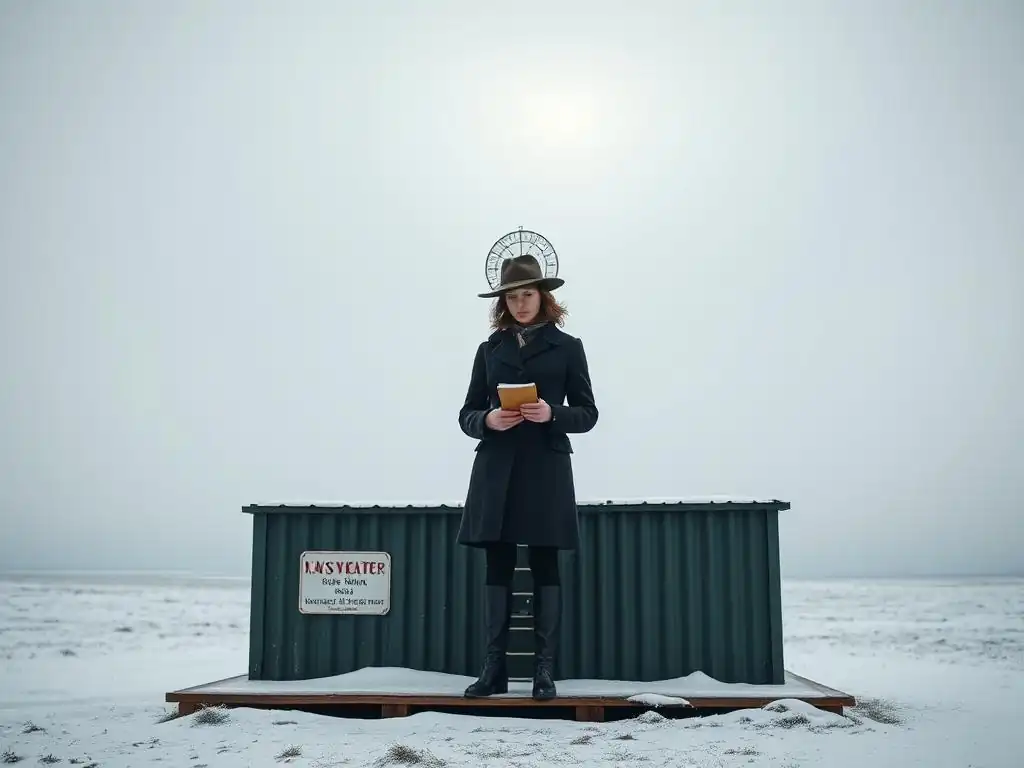
World War II dramatically altered the landscape for women in many professions, including meteorology. The urgent need for skilled personnel created unprecedented opportunities, but these gains often proved fragile in the post-war era.
Filling the Void: Women's Roles in Military Weather Services
As millions of men enlisted in the armed forces during World War II, a significant void was created in civilian and military support roles, including meteorology. This provided an unexpected opening for women to enter the field in substantial numbers. The U.S. military, through programs like the Women's Army Corps (WAC) and Women Accepted for Volunteer Emergency Service (WAVES), trained and deployed hundreds of women as weather observers, forecasters, and instructors. These women were essential for providing critical weather intelligence for military operations across the globe, from planning aerial bombardments to coordinating naval movements.
Women served in various capacities, from taking surface and upper-air observations to plotting weather maps and issuing forecasts for specific missions. Their work was vital for the war effort, directly impacting strategic decisions and the safety of troops. For many, it was their first opportunity to apply scientific training in a professional, high-stakes environment, demonstrating their capabilities and resilience under pressure. This period marked a significant, albeit temporary, expansion of women's roles in a traditionally male-dominated scientific field, challenging preconceived notions about their capabilities.
Post-War Challenges: Maintaining a Foothold in a Male-Dominated Field
Despite their invaluable contributions during World War II, the post-war period brought renewed women meteorologists historical challenges. As male veterans returned home, societal pressure intensified for women to vacate their professional roles and return to domestic life. Many women who had gained significant experience and expertise in meteorology during the war found themselves demoted, laid off, or facing immense difficulty in securing civilian positions in the field. The scientific community, largely unreformed in its gender biases, reverted to pre-war norms.
Even for those who managed to retain their positions, career progression remained an uphill battle. Opportunities for advanced training, promotions, and leadership roles were often reserved for men. The institutional structures that had temporarily opened during wartime quickly reasserted their exclusivity. This period highlights the profound resilience required by women to maintain a foothold in meteorology, often having to fight individually for their professional legitimacy and to continue their valuable work in an environment that was once again unwelcoming to female scientists.
Case Studies: Examining the Work of Notable Women Meteorologists
Delving into the lives and careers of specific women illuminates the extraordinary impact individuals had despite systemic barriers. Their stories are powerful examples of overcoming women meteorologists historical challenges.
Joanne Simpson - Leading Cloud Modeling and Tropical Meteorology Research
Joanne Simpson (1923–2010) was a towering figure in atmospheric science, renowned for her pioneering work in cloud physics and tropical meteorology. She broke significant barriers, becoming the first woman to earn a Ph.D. in meteorology from the University of Chicago in 1949. Simpson's early research focused on the dynamics of cumulus clouds, demonstrating their crucial role in transporting heat and moisture in the atmosphere. Her work, often involving complex mathematical models and early computer simulations, fundamentally changed the understanding of how individual clouds influence global atmospheric circulation and energy balance.
Throughout her illustrious career, Simpson held prominent positions at institutions like the Woods Hole Oceanographic Institution, the National Aeronautics and Space Administration (NASA), and the University of Virginia. At NASA, she served as the chief scientist for the Tropical Rainfall Measuring Mission (TRMM) satellite, a groundbreaking international mission launched in 1997 that provided unprecedented data on tropical rainfall, crucial for climate modeling and hurricane prediction. Her leadership in this multi-million dollar project underscored her scientific acumen and ability to direct large-scale research efforts, inspiring countless future women meteorologists historical challenges to overcome.
June Bacon-Bercey - Breaking Barriers in Television Weather Broadcasting and Atmospheric Research
June Bacon-Bercey (1932–2019) was a trailblazer who left an indelible mark on both atmospheric research and public meteorology. In 1955, she became the first African American woman to earn a degree in meteorology from the University of California, Los Angeles (UCLA), a remarkable achievement given the dual racial and gender barriers of the era. Her career began in research at the National Weather Service and the National Oceanic and Atmospheric Administration (NOAA), where she contributed to understanding atmospheric phenomena.
Bacon-Bercey gained significant public recognition in the 1970s as the first African American woman to become a television meteorologist, breaking new ground in a highly visible profession. She worked for various TV stations, including WGR-TV in Buffalo, New York. Beyond her on-air presence, she used her platform to advocate for diversity in meteorology.
In 1977, after winning $64,000 on the game show "The $128,000 Question," she generously established a scholarship fund for women pursuing degrees in atmospheric sciences through the American Meteorological Society (AMS). This fund has since supported numerous female students, directly addressing the women meteorologists historical challenges of access and financial support, cementing her legacy as a champion for future generations.
Legacy and Inspiration: The Enduring Influence of Women in Meteorology
The cumulative impact of these pioneering women extends far beyond their individual scientific contributions. Their resilience and achievements have created a powerful legacy, inspiring and shaping the future of meteorology.
Inspiring Future Generations of Female Climate Scientists
The stories of women like Eunice Newton Foote, Joanne Simpson, and June Bacon-Bercey serve as powerful beacons for aspiring female climate scientists today. By highlighting their groundbreaking work and the formidable women meteorologists historical challenges they overcame, we provide tangible proof that women have always been, and continue to be, essential to scientific progress. These narratives demonstrate that intellectual curiosity, perseverance, and dedication can triumph over societal and institutional barriers.
Visible role models are crucial for encouraging young women to pursue careers in STEM fields. When girls and young women see themselves reflected in the history of science, it instills confidence and ambition. The legacy of these meteorologists is not just about their past accomplishments but about their ongoing influence in motivating a new generation to tackle pressing climate issues, ensuring that diverse perspectives are brought to bear on global challenges.
The Importance of Mentorship and Support for Women in STEM
The historical struggles of women in meteorology underscore the critical importance of robust mentorship and support systems for women in STEM fields today. In environments where women were often isolated and undervalued, a strong network of allies, mentors, and peers could provide invaluable encouragement, guidance, and opportunities. Today, organizations like the American Meteorological Society's Board on Women and Minorities, and various university programs, actively work to foster such supportive communities.
These initiatives help address contemporary women meteorologists historical challenges that persist, such as unconscious bias, work-life balance issues, and disproportionate representation in leadership roles. Mentorship can guide career paths, provide access to research opportunities, and offer crucial advocacy. By actively supporting women at all stages of their careers, from undergraduate studies to senior research positions, the meteorological community can ensure that talent is nurtured, diverse voices are heard, and the full potential of all scientists is realized.
Celebrating the Achievements: Recognizing Women's Contributions to Weather Science
To truly honor the resilience of women in meteorology, ongoing efforts are essential to ensure their contributions are recognized and that the field continues to evolve towards greater equity and inclusion.
Promoting Diversity and Inclusion in Meteorology Today
Building on the legacy of historical pioneers, contemporary meteorological institutions are increasingly recognizing the imperative of promoting diversity and inclusion. This involves proactive measures to attract, retain, and advance women and underrepresented groups in all facets of weather science, from academic research to operational forecasting and leadership. Initiatives include creating equitable hiring practices, fostering inclusive work environments, and implementing unconscious bias training.
The benefits of a diverse workforce in meteorology are profound. Diverse teams bring varied perspectives, experiences, and problem-solving approaches, leading to more innovative research, more accurate forecasts, and a better understanding of complex atmospheric systems. For example, a diverse team might be better equipped to understand the localized impacts of weather events on different communities, leading to more effective communication and preparedness strategies. Promoting diversity today directly combats the lingering effects of women meteorologists historical challenges and strengthens the scientific community as a whole.
Resources for Further Exploration of Women's History in Science
For those inspired to delve deeper into the rich history of women in science, numerous resources are available. University archives, specialized historical societies, and digital collections often house invaluable primary source materials, including personal papers, correspondence, and scientific records of pioneering women. Academic journals and books dedicated to the history of science and women's studies provide comprehensive analyses and biographies that shed light on their struggles and triumphs.
Organizations like the American Meteorological Society (AMS) and the American Geophysical Union (AGU) have also increased their efforts to document and celebrate the contributions of women in their respective fields, often publishing articles and hosting events that highlight these forgotten narratives. Exploring these resources offers a deeper appreciation for the individual resilience and collective impact of women who navigated significant women meteorologists historical challenges to advance our understanding of Earth's atmosphere.
Conclusion: Honoring the Resilience of Women Meteorologists Across Time
The journey of women in historical meteorology is a powerful testament to human resilience, intellectual prowess, and unwavering dedication. Despite facing systemic gender bias, limited educational opportunities, and societal pressure, these pioneering women made indispensable contributions to our understanding of weather and climate. From Eunice Newton Foote's early insights into carbon dioxide's warming effect to Joanne Simpson's groundbreaking cloud research and June Bacon-Bercey's advocacy for diversity, their stories highlight a profound impact that is only now being fully appreciated.
Acknowledging these women meteorologists historical challenges and celebrating their achievements is not just about rectifying historical inaccuracies; it is about inspiring future generations. By honoring their legacy, we foster a more inclusive scientific community where talent is recognized regardless of gender, and where every aspiring scientist can pursue their passion for understanding the intricate dance of Earth's atmosphere. The storm of historical adversity may have raged, but the resilience of these women shone through, illuminating the path for a more equitable and scientifically enriched future.
Frequently Asked Questions
What were some of the major obstacles faced by women entering meteorology historically?
Women often encountered gender bias and limited access to education and professional opportunities. Societal expectations also steered them away from science careers.
How did women contribute to meteorology despite facing these historical challenges?
Despite adversity, women made significant contributions through data collection, analysis, and research. Some became renowned weather forecasters and climate scientists.
Where can I find information about specific women meteorologists who overcame these hurdles?
Websites like WomenInScienceHistory.com offer biographies and profiles of pioneering women in various scientific fields, including meteorology.
What is the importance of recognizing the contributions of women in science history, particularly in fields like meteorology?
Highlighting their achievements challenges historical narratives and provides role models for aspiring scientists. It also promotes gender equality in STEM fields.
What are some present-day initiatives aimed at supporting women in meteorology and other scientific disciplines?
Organizations offer mentorship programs, scholarships, and networking opportunities to encourage women's participation and advancement in science.
Final Reflection: Echoes of Resilience
The stories unveiled in this exploration of women meteorologists and their historical challenges resonate powerfully today, reminding us that progress is rarely linear and often built upon the shoulders of those who persevered against immense odds. The dedication and ingenuity displayed by these pioneering women, despite facing systemic barriers, serve as a potent reminder of the untapped potential that exists when inclusivity is prioritized. Their struggles and triumphs are not just historical footnotes; they are vital lessons for fostering a more equitable and innovative future in all STEM fields.
The impact of these women extends far beyond the data they collected and the forecasts they made. Their very presence, their unwavering commitment to their passion, helped chip away at societal norms and paved the way for future generations. Their legacy is a testament to the power of individual determination to challenge deeply ingrained biases, and it underscores the importance of actively dismantling the barriers that continue to hinder women in science. The most common way people give up their power is by thinking they don't have any.
- Alice Walker. This quote perfectly encapsulates the spirit of these women who refused to be silenced and instead, harnessed their inner strength to make invaluable contributions to meteorology.
Let us carry forward the lessons learned from "Navigating the Storm." Consider how you can actively champion inclusivity in your own sphere of influence. Reflect on the biases, both conscious and unconscious, that may be present in your own environment, and commit to creating a space where all voices are heard and valued. The resilience of these women meteorologists serves as an enduring inspiration; let their stories empower you to be an advocate for equity and a catalyst for positive change, ensuring that the storms of the past never again silence the brilliance of future generations.
Unearth Your Inner Explorer: Weather the World Like a Pioneering Woman!
Thank you for delving into the inspiring stories of women who braved uncharted territories in historical meteorology. Now it's your turn to tap into that same resilience and curiosity!
Here's how you can continue your journey:
- Embark on your own local weather study! Document the patterns in your area for a month and see if you can find historical records for comparison.
- Share this article with a friend or family member who might be inspired by these incredible women. Spread the word about their unsung contributions!
- Explore the "Women in Science History" archives and discover more hidden gems from the past. You might find a new field to be passionate about!
Ready to become a modern-day weather watcher and contribute to the ongoing story of women in science?