Mentorship Myths & MustHaves: Finding the Right Guide for Your STEM Ascent
🌟 Discover the truth behind Women STEM mentorship guidance in our latest article, unraveling common myths and essential must-haves to help aspiring…
Read article
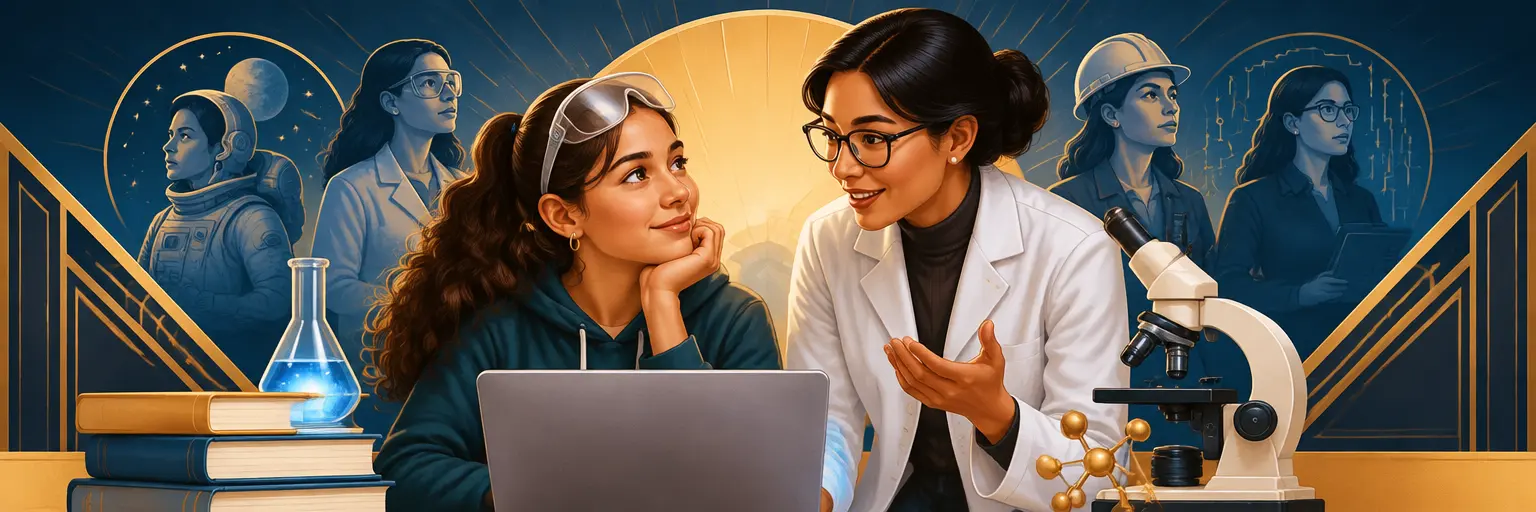
Empowering the next generation of innovators, STEM Career Advice for Young Women delivers actionable guidance, mentorship insights, and confidence-building strategies to help you navigate science, technology, engineering, and math with purpose. From choosing the right academic path to overcoming imposter syndrome and negotiating salaries, this resource blends real-world advice with inspiring stories of trailblazing women who shattered glass ceilings. Discover how to build a resilient network, ace internships, and turn your passion into a thriving career—while learning from the challenges and victories of women who paved the way. Whether you’re a student, recent graduate, or early-career professional, this hub equips you with practical tools to thrive in any STEM field, proving that your voice and perspective are essential to the future of science. Let history fuel your ambition and chart a course toward success—because the world needs more women in STEM, and you belong at the forefront.

🌟 Discover the truth behind Women STEM mentorship guidance in our latest article, unraveling common myths and essential must-haves to help aspiring…
Read article
🌟 Discover how women in STEM careers are shaping the future through emerging fields like AI and renewable energy. By highlighting pioneering…
Read article
🌟 Celebrate the hidden legacies of women in STEM history who defied odds, pioneered groundbreaking discoveries, and continue to inspire future generations.…
Read article
🌟 Empowering young women to succeed, "Pivot & Prosper" explores how women can confidently navigate STEM career transitions, overcoming challenges and building…
Read article
🌟 Considering a STEM graduate school strategy? Explore whether pursuing a Master's or PhD best aligns with your scientific ambitions, inspired by…
Read articleWelcome to our dedicated hub for STEM career advice for young women. Whether you are a high school student exploring options, an undergraduate selecting a major, or a recent graduate planning your next step, this subcategory is designed to provide actionable mentorship, practical guidance, and inspiring stories from women who have navigated these paths before you. We blend historical insights from pioneering female scientists with modern-day strategies to help you build confidence, develop skills, and overcome barriers. Discover how to identify your strengths, find mentors, negotiate salaries, build a professional network, and thrive in a field that needs your perspective. Your journey begins here—let us equip you with the tools to succeed.
Selecting a specific discipline among biology, chemistry, physics, computer science, engineering, mathematics, and data science can feel overwhelming. Our advice helps you evaluate your interests, natural aptitudes, and long-term career goals. We break down emerging fields like biotechnology, renewable energy engineering, and artificial intelligence ethics, where women are making significant contributions. We also share self-assessment checklists and real-world testimonials from female professionals who switched fields mid-career, proving that your path is not set in stone.
Use our guidance to explore interdisciplinary options such as bioinformatics or environmental data science, which combine multiple STEM areas for broader impact. We emphasize the importance of informational interviews and shadowing programs, offering templates for outreach emails. By understanding salary ranges, job growth projections, and work-life balance factors, you can make an informed decision that resonates with your values. Remember, the best field is one where you can be both challenged and fulfilled—our resources help you find that sweet spot.
Imposter syndrome—that persistent feeling of being a fraud despite accomplishments—disproportionately affects young women in STEM. Our dedicated section provides evidence-based techniques to recognize and reframe negative self-talk. You will learn about cognitive behavioral strategies, the power of positive affirmations, and the importance of tracking your achievements in a success journal. We also share personal narratives from female scientists who conquered self-doubt, including their exact mental scripts during tough exams or presentations.
Beyond individual tactics, we encourage building a supportive peer community. Join our recommended study groups, online forums, and local clubs where you can share vulnerabilities without judgment. We also discuss the "confidence gap" research and practical exercises like public speaking practice or mock interviews. By normalizing failure as a learning step—not a verdict—you can shift your mindset from perfectionism to growth. Our goal is to help you stand tall in your own brilliance and speak up in classrooms, labs, and boardrooms.
Mentorship is a proven catalyst for career advancement. This section guides you on identifying potential mentors—professors, industry professionals, or even senior graduate students—and how to approach them respectfully. We provide a step-by-step framework for initial conversations, including questions that demonstrate genuine interest and initiative. You’ll also learn about formal mentorship programs offered by organizations like AnitaB.org and Million Women Mentors, plus how to leverage digital platforms like LinkedIn for virtual connections.
We highlight the historical mentoring chains among women in science, such as Marie Curie guiding future Nobel laureates, to illustrate the long-term impact of guidance. Additionally, we discuss reverse mentoring, where you can also teach senior colleagues about new technologies, fostering mutually beneficial relationships. We offer templates for maintaining mentor relationships through regular check-ins and gratitude. Remember, a mentor isn’t only for job advice—they can offer emotional support, introduce you to networks, and advocate on your behalf. Start small with one trusted advisor, then expand your circle over time.
Hands-on experience is critical for STEM careers, yet finding the right opportunities can be daunting. This segment provides a comprehensive guide to securing research assistant positions, summer internships, and fellowships. We explain how to read professor’s research pages, craft compelling cover letters, and highlight your relevant coursework and projects. We also list databases for STEM-specific scholarships and grants aimed at women, such as AAUW’s Career Development Grants and the Society of Women Engineers’ Scholarships.
We address common pitfalls, like underestimating community college research or failing to apply to smaller labs where you might get more hands-on training. Learn to negotiate for credit, stipends, or flexible hours—we provide exact scripts. Additionally, we cover national and international programs like NSF REUs and DAAD RISE. Through interviews with successful female researchers, you’ll see how early exposure shaped their trajectories. We also include tips for presenting your work at undergraduate symposiums, turning a small project into a conference abstract, and building your CV strategically.
Transitioning from academia to industry or staying in research requires distinct skills. This section equips you with strategies for your first job search, including how to tailor your resume for STEM roles, prepare for behavioral interviews, and leverage informational interviews. We focus specifically on salary negotiation—sharing data on pay gaps and scripts to advocate for equitable compensation from day one. Learn to quantify your achievements with metrics, which builds a powerful case for your worth.
Networking doesn’t have to be awkward. We teach you how to attend conferences strategically, use the two-minute pitch to introduce yourself effectively, and follow up with new contacts. For career growth, we outline paths to technical leadership, management, or entrepreneurship, with examples of women who founded startups or moved into patent law. We also address topics like workplace microaggressions and how to combat them professionally. Finally, we discuss work-life integration and role models who balance families with demanding careers, ensuring you understand that success is holistic and personal.
While historically some fields like mechanical engineering had lower female representation, data shows that biomedical engineering, environmental science, and data analytics are increasingly inclusive. However, welcome depends more on company culture and your support system than the field itself. We recommend researching diversity statistics for specific employers and seeking out organizations with explicit anti-harassment policies and female leadership. Ultimately, choose a field that excites you, then build a community that supports you.
Start by expanding your digital network: join professional groups on LinkedIn, participate in Twitter science chats, and reach out via email to authors of papers you admire. Many universities have formal mentoring programs; check with your department’s student services. Also, attend virtual conferences where you can connect with speakers. When reaching out, be concise, specific about what you seek (e.g., “advice on graduate school”), and respectful of their time. Offer value reciprocally by sharing your own insights or volunteering for their projects.
Yes, numerous opportunities exist. Prominent ones include the Palantir Women in Technology Scholarship, Adobe Research Women-in-STEM Scholarship, and P.E.O. International Peace Scholarship for graduate study. For internships, check Microsoft’s Women in Engineering and Google’s Women Techmakers programs. Also, your university may have endowed funds. Always read eligibility criteria carefully, as some target specific fields or academic levels. Apply early, and don’t shy away from smaller local grants—they often have less competition and provide valuable networking.
Being the only woman can feel isolating, but reframe it as an opportunity to be a trailblazer. Build a support system outside that environment, whether through campus clubs or online communities like Women Who Code. Document your experiences, and if you face exclusionary behavior, speak up or report it through proper channels. Focus on your work’s quality and find allies among male peers who respect your skills. Over time, your presence paves the way for others, and resilience becomes part of your professional identity.
Focus on building strong fundamentals in math and science, but also develop communication and collaboration skills through group projects. Participate in science fairs, coding camps, or robotics clubs to gain hands-on experience. Seek out dual-enrollment courses at community colleges for early exposure. Start a small project, like a blog about your experiments, to practice articulating complex ideas. Most importantly, reach out to local universities or labs for shadowing opportunities—many are open to high schoolers. Your enthusiasm and curiosity are your greatest assets.