
Global Impact: Women Biologists & Medics Beyond Borders (19001950)

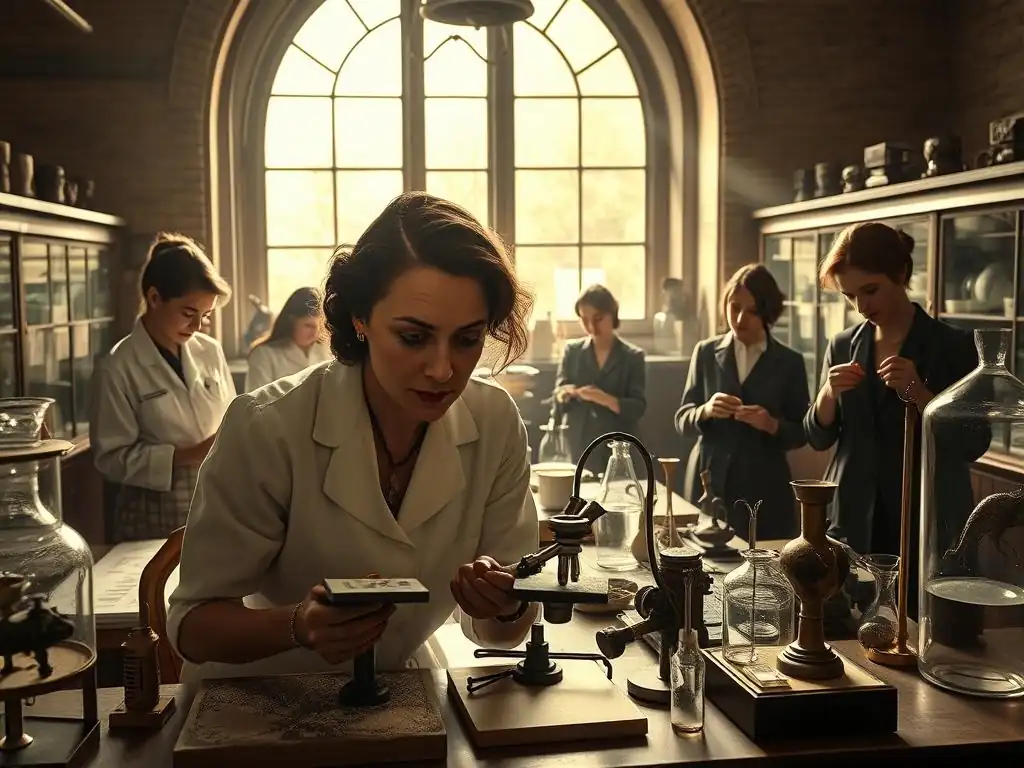
Welcome to WomenInScienceHistory.com!
Delve into the fascinating, often untold stories of women who shaped the scientific landscape. This month, we're exploring the Global Impact: Women Biologists & Medics Beyond Borders (1900-1950). Discover how these pioneering women biologists navigated challenges and made groundbreaking contributions to medical history, leaving an indelible mark on the world. What obstacles did they overcome, and what lasting legacies did they create? Read on to uncover their remarkable journeys.
The Rise of Women Biologists and Medics (1900-1950): A Global Perspective
The early 20th century marked a pivotal, albeit challenging, era for women aspiring to careers in science and medicine. Despite deeply entrenched societal norms that often confined women to domestic roles, a slow but significant shift began to emerge globally.
Universities in various nations, including the United States, parts of Europe, and even some institutions in Asia, cautiously opened their doors to female students, providing foundational training in biology and medical sciences. This nascent access to higher education laid the groundwork for a generation of pioneering women who would quietly, yet profoundly, shape the landscape of women biologists medical history.
This period saw a gradual increase in the number of female graduates from medical schools and science programs. While their numbers remained relatively small compared to their male counterparts, these women embarked on careers in research, public health, and clinical practice, often against considerable odds. Their emergence was not confined to a single region; from the burgeoning laboratories of North America to the tropical clinics of the Caribbean and the academic institutions of East Asia, women began to assert their intellectual capabilities, contributing to diverse fields within biology and medicine and expanding the narrative of women biologists medical history.
Overcoming Obstacles: Challenges Faced by Female Scientists Internationally
Despite their growing presence, women in biology and medicine during 1900-1950 faced a formidable array of obstacles that often hindered their progress and recognition. Discrimination was rampant, manifesting in limited access to prestigious research positions, lower salaries compared to men, and exclusion from influential scientific societies and professional networks. Many found themselves relegated to auxiliary roles, even when their intellectual contributions were central to a project's success, a common theme in the broader women biologists medical history.
Beyond institutional barriers, societal expectations and cultural norms presented significant hurdles. In many regions, women were still primarily expected to marry and raise families, with professional ambitions often viewed as secondary or even inappropriate. This pressure, combined with a general lack of funding specifically allocated for female researchers and a prevailing skepticism about their scientific capabilities, meant that many talented women had to work twice as hard to prove their worth and secure their place in the scientific community.
- The Rise of Women Biologists and Medics (1900-1950): A Global Perspective
- Overcoming Obstacles: Challenges Faced by Female Scientists Internationally
- How did societal expectations impact women pursuing careers in biology and medicine between 1900-1950?
- What were some of the major scientific advancements women contributed to in biology and medicine during the first half of the 20th century?
- What challenges did women biologists and medics face in gaining recognition for their work during this period?
- How did the global context, such as wars and pandemics, affect the opportunities and roles of women in biology and medicine?
- Where can I find more information about specific women biologists and medics who made significant contributions during this era?
Pioneering Contributions: Women Biologists and Medics Making a Difference Worldwide
Research and Discoveries: Highlighting Key Contributions in Biology
The first half of the 20th century witnessed remarkable biological discoveries, many of which were directly influenced by the diligent work of women. For instance, Lilian Vaughan Morgan, a geneticist working at Columbia University, made significant contributions to Drosophila genetics in the 1920s and 1930s. Her detailed observations and experiments on chromosome behavior and gene linkage provided crucial insights into heredity, building upon the foundational work in the field. Her meticulous research helped to solidify the understanding of genetic mapping and the mechanisms of inheritance, advancing the field of genetics and enriching women biologists medical history.
Another notable figure was Dr. Gladys W. Emerson, an American biochemist who made critical discoveries related to vitamins. In the 1930s and 1940s, her research at the University of California, Berkeley, and later at Merck, contributed significantly to the isolation and synthesis of Vitamin E. Her work was instrumental in understanding the role of this essential nutrient in nutrition and health, leading to its eventual widespread application in dietary supplements and fortifying foods. These contributions underscored the vital role women played in foundational biological research during this transformative period.
Medical Advancements: Female Doctors and Researchers Shaping Healthcare
Women in medicine during this era were not only active in clinical practice but also made substantial strides in research that directly improved public health and patient care. Dr. Gerty Cori, a Czech-American biochemist, along with her husband Carl Cori, elucidated the pathway of glycogen metabolism, known as the Cori cycle.
Their work in the 1930s and 1940s provided fundamental insights into how the body stores and utilizes energy, which had profound implications for understanding diabetes and other metabolic disorders. Their groundbreaking research earned them a Nobel Prize in Physiology or Medicine in 1947, marking a significant milestone for women in science and medical history.
Beyond laboratory research, many female doctors dedicated themselves to public health initiatives, particularly in underserved communities. Dr. Martha May Eliot, an American pediatrician, played a pivotal role in establishing public health programs for mothers and children in the United States during the 1920s and 1930s.
Her tireless advocacy led to significant policy changes, such as the passage of the Sheppard-Towner Act, which provided federal funding for maternal and child health clinics. Her efforts directly reduced infant mortality rates and improved the health outcomes for countless children, illustrating the profound impact of women in shaping healthcare and contributing to women biologists medical history.
Case Studies: Women Biologists and Medics in Specific Regions (1900-1950)
Marie Phipps Clark: Contributions to Public Health in Jamaica
Marie Phipps Clark (1896-1960) was a pioneering Jamaican nurse and public health advocate whose work significantly improved health outcomes in her native country. Educated both locally and abroad, she returned to Jamaica with a fervent commitment to addressing the prevalent health challenges, particularly those affecting women and children. Her efforts were critical in a period when colonial health services were often inadequate and public health education was minimal, making her a vital figure in women biologists medical history in the Caribbean.
Clark focused intensely on maternal and child health, establishing clinics and implementing educational programs across the island. She navigated a complex landscape of limited resources and traditional beliefs, often working directly within communities to foster trust and encourage adoption of modern health practices. Her dedication laid foundational elements for Jamaica's public health infrastructure, demonstrating the tangible impact of local female leadership in healthcare.
Key Achievements and Challenges in Jamaica
Marie Phipps Clark's key achievements include the establishment of numerous infant welfare clinics throughout Jamaica, which provided crucial prenatal and postnatal care, as well as nutritional guidance. She was instrumental in advocating for and implementing widespread vaccination campaigns, particularly against diseases like diphtheria and tuberculosis, which were major causes of mortality among children. Her work directly contributed to a noticeable decline in infant mortality rates in the areas she served, though specific island-wide statistics from her direct influence are challenging to isolate.
The challenges she faced were substantial, typical for public health workers in colonial settings. These included a severe shortage of trained medical personnel, inadequate funding from the colonial administration, and widespread poverty that limited access to proper nutrition and sanitation. Furthermore, she often encountered resistance from communities due to traditional beliefs and skepticism towards Western medicine, requiring immense patience and cultural sensitivity to overcome.
Alice Evans: Pioneering Research on Brucellosis in the United States
Alice Catherine Evans (1881-1975) was an American microbiologist whose groundbreaking research at the U.S. Department of Agriculture and later the U.S. Public Health Service profoundly impacted food safety and public health. Her meticulous scientific approach and unwavering persistence carved out a significant niche for her in women biologists medical history. She is best known for her discovery of the shared pathogenicity between Brucella abortus (found in cattle) and Brucella melitensis (found in goats), which causes brucellosis in humans.
Evans's work, conducted in the 1910s and 1920s, was initially met with skepticism, particularly because she was a woman in a male-dominated field without a medical degree. Despite the pushback, her empirical evidence was irrefutable, demonstrating that raw milk from infected cows could transmit the disease to humans, causing what was then known as undulant fever. Her discoveries were revolutionary, leading to significant changes in dairy practices.
Key Achievements and Challenges in the United States
Alice Evans's most significant achievement was proving that Brucella bacteria could cross species barriers and infect humans through contaminated dairy products. This discovery, published in 1918, was pivotal in the fight against brucellosis. Her findings directly led to the widespread adoption of milk pasteurization in the United States and other developed nations, effectively eradicating brucellosis as a major public health concern linked to milk consumption. It is estimated that her work prevented countless cases of the debilitating disease, saving many lives.
However, Evans faced considerable challenges. As a woman researcher, her initial findings were dismissed or downplayed by prominent male scientists and public health officials who found it difficult to accept such a critical discovery from someone outside their established networks. She persevered through years of professional ostracization and lack of recognition, relying on the strength of her data. It took over a decade for her research to be fully accepted and implemented, highlighting the gender bias prevalent in science during that period, a common thread in women biologists medical history.
Wu Yi-fang: Championing Women's Education and Biology in China
Wu Yi-fang (1893-1986) was a towering figure in Chinese education and a notable biologist, whose influence extended far beyond the laboratory into the realm of women's empowerment. As one of the first Chinese women to earn a Ph.D. from an American university (University of Michigan, 1928, in biology), she returned to China with a vision for modern education and a deep commitment to elevating the status of women. Her leadership at Ginling College, a prominent women's university in Nanjing, positioned her at the forefront of educational reform and contributed uniquely to women biologists medical history in China.
At Ginling College, Wu Yi-fang not only served as president for over two decades but also actively promoted the study of sciences, including biology, for young Chinese women. She believed that a strong scientific education was crucial for national development and for empowering women to take on leadership roles in society. Her efforts ensured that Ginling College maintained high academic standards, even through periods of immense political upheaval in China.
Key Achievements and Challenges in China
Wu Yi-fang's primary achievement was transforming Ginling College into a leading institution for women's higher education in China, with a strong emphasis on scientific disciplines. Under her leadership, the college produced numerous graduates who went on to become scientists, educators, and leaders in various fields.
She personally taught biology courses and oversaw the development of a robust science curriculum, ensuring that her students received rigorous training. Her commitment to education was so profound that she refused to flee China during the Sino-Japanese War and the Chinese Civil War, instead moving Ginling College inland to continue its operations, notably in Chengdu.
The challenges Wu Yi-fang faced were immense, reflecting the tumultuous political and social landscape of early to mid-20th century China. She had to navigate foreign occupation, civil war, and the constant threat of disruption to academic life. Furthermore, she battled deeply ingrained societal prejudices against women's education and their participation in public life. Despite these adversities, her unwavering dedication ensured that a generation of Chinese women received a quality education, including in biology, enabling them to contribute significantly to their nation's progress and to the broader narrative of women biologists medical history.
The Impact of World Events on Women in Biology and Medicine (1900-1950)

World War I and its Influence on Female Medical Professionals
World War I (1914-1918) significantly, albeit temporarily, altered the landscape for female medical professionals. With a vast number of male doctors and nurses deployed to the front lines, a critical void emerged in civilian healthcare, and even in some military support roles. This created unprecedented opportunities for women, who stepped forward to fill these vacancies. Female doctors, who had often struggled to gain hospital privileges or secure full-time positions, found themselves in high demand, working in emergency hospitals, treating wounded soldiers, and managing public health crises on the home front.
In countries like the United Kingdom and the United States, women surgeons and physicians gained invaluable experience treating trauma and infectious diseases, often in challenging conditions. Many served overseas in field hospitals, challenging conventional gender roles and demonstrating their capabilities under immense pressure. While the end of the war saw some women pressured to return to traditional roles, their wartime contributions irrevocably proved their competence and commitment, leaving a lasting mark on women biologists medical history.
The Interwar Period: Opportunities and Setbacks for Women Scientists
The period between World War I and World War II (roughly 1918-1939) presented a mixed bag of opportunities and setbacks for women in science and medicine. On one hand, the wartime experience had somewhat broadened perspectives on women's capabilities, leading to a slow increase in the number of women pursuing higher education in scientific fields. More women enrolled in university science programs and medical schools, and some found positions in research institutions and public health agencies. This era saw the continued, albeit gradual, expansion of women biologists medical history.
However, the gains were often tenuous. Many women who had entered professions during the war found themselves competing with returning servicemen for jobs, and discrimination remained pervasive. Access to top-tier research funding and leadership roles continued to be largely restricted, and women often faced the "glass ceiling" in their careers. Despite these systemic barriers, pioneering women continued to make significant scientific contributions, often working in less visible roles or in fields that were less competitive with male-dominated areas, such as nutrition, home economics, or public health outreach.
World War II: The Accelerated Role of Women in Biological and Medical Fields
World War II (1939-1945) once again created an urgent demand for scientific and medical expertise, leading to an accelerated integration of women into critical roles. As men were conscripted for military service, women stepped into laboratories, factories, and hospitals to support the war effort. Their contributions were vital across a spectrum of biological and medical fields. For instance, women played crucial roles in the mass production of penicillin, a life-saving antibiotic, and in the development of blood plasma substitutes, essential for treating wounded soldiers.
Beyond direct wartime applications, women also contributed significantly to public health initiatives, managing outbreaks of infectious diseases that often accompanied wartime conditions and ensuring the health of civilian populations. Their involvement in scientific research expanded rapidly, encompassing areas from entomology (for pest control in military zones) to nutrition (for rationing and troop diets). This period undeniably cemented the presence of women in science and medicine, demonstrating their indispensable value and further solidifying their place in women biologists medical history.
Legacy and Inspiration: The Enduring Impact of Early 20th Century Women Biologists and Medics
Inspiring Future Generations of Women in Science
The women biologists and medics of the early 20th century, despite facing immense societal and professional barriers, laid crucial groundwork for future generations. Their perseverance, intellectual rigor, and groundbreaking discoveries served as powerful testaments to women's capabilities in scientific and medical fields. By breaking through institutional resistance and challenging prevailing stereotypes, they created pathways that were previously unimaginable, inspiring young women in subsequent decades to pursue their scientific ambitions.
Their stories, often overlooked in traditional historical narratives, are now being increasingly recognized as vital sources of inspiration. The courage of figures like Alice Evans, who fought for the acceptance of her life-saving research, or the dedication of Wu Yi-fang, who championed women's education amidst war, continue to motivate aspiring female scientists. These pioneers demonstrated that passion, intellect, and resilience could overcome even the most formidable obstacles, encouraging countless others to embark on their own journeys in science and medicine, thereby enriching women biologists medical history.
Further Research: Exploring the Untold Stories of Female Scientists
Despite increasing awareness, the full scope of contributions made by women biologists and medics from 1900 to 1950 remains largely unexplored. Many women worked in the shadows, their efforts uncredited or their names forgotten due to systemic biases in historical record-keeping. There is an ongoing and critical need for further academic and historical research to uncover these untold stories, providing a more comprehensive and accurate picture of their collective impact.
Future research could delve into regional archives, personal correspondence, and obscure scientific journals to unearth the accomplishments of women who contributed to local health initiatives, specialized biological studies, or lesser-known medical breakthroughs. Such endeavors would not only honor their individual legacies but also provide invaluable insights into the social, cultural, and scientific contexts that shaped their careers. By continuing to explore these narratives, we can paint a richer, more complete portrait of women biologists medical history.
Women Biologists Medical History: Resources and Further Reading
Frequently Asked Questions
How did societal expectations impact women pursuing careers in biology and medicine between 1900-1950?
Societal expectations often created significant barriers, limiting access to educational opportunities and professional recognition for women in science. Many faced discrimination and were relegated to less prestigious roles.
What were some of the major scientific advancements women contributed to in biology and medicine during the first half of the 20th century?
Women made crucial contributions to areas like genetics, public health, and medical treatments. Examples include discoveries related to cancer research and the development of new vaccines.
What challenges did women biologists and medics face in gaining recognition for their work during this period?
Women often faced gender bias in publishing their research and receiving credit for their discoveries. They were sometimes excluded from prominent scientific societies and leadership positions.
How did the global context, such as wars and pandemics, affect the opportunities and roles of women in biology and medicine?
Global events like World War I and the Spanish Flu pandemic often created opportunities for women to fill roles previously held by men, demonstrating their essential contributions to medical care and research.
Where can I find more information about specific women biologists and medics who made significant contributions during this era?
Websites like WomenInScienceHistory.com provide biographies and detailed accounts of the work of pioneering women in science, including their medical history and their contributions to biology.
Okay, here's a final reflection designed to close your article "Global Impact: Women Biologists & Medics Beyond Borders (1900-1950)" and resonate with readers interested in "Women biologists medical history":
Final Reflection: Echoes of Resilience
The stories of women biologists and medics between 1900 and 1950, as we have explored, are not simply relics of a bygone era; they are powerful testaments to perseverance and intellectual brilliance that continue to resonate deeply within the scientific community and beyond. Their struggles against societal barriers and their unwavering dedication to advancing knowledge serve as a potent reminder of the ongoing fight for equity and inclusion in STEM fields.
The impact of these pioneering women extends far beyond their individual contributions to biology and medicine. Their legacy continues to inspire generations of female scientists, demonstrating that passion, intellect, and resilience can overcome even the most formidable obstacles. Their work laid the foundation for many of the advancements we benefit from today, and their stories serve as a crucial reminder of the often-overlooked contributions of women in science. The most effective way to do it, is to do it.
- Amelia Earhart, a sentiment that perfectly encapsulates the spirit of these women who defied expectations and forged their own paths.
As we reflect on the lives and achievements of these remarkable women, let us not only celebrate their past triumphs but also commit to building a future where every aspiring scientist, regardless of gender, has the opportunity to reach their full potential. Consider how you can champion inclusivity and support the next generation of women in biology and medicine, ensuring that their voices are heard and their contributions are valued. Let their stories inspire you to challenge the status quo and create a more equitable and innovative world for all.
Empower Her Legacy: Ignite Your Global Inspiration!
Thank you for exploring the remarkable journeys of these pioneering women in biology and medicine. Their dedication to global impact serves as a powerful reminder of the potential within us all. Now, let's transform inspiration into action.
- Become a Champion for Women in STEM: Share this article with your network and spark a conversation about the ongoing need for gender equality in science and medicine.
- Research and highlight other unsung women in science from your local community or region, expanding the narrative beyond this article.
- Consider donating to organizations that support women's education and leadership in STEM fields, directly contributing to their future success.
Which woman's story resonated most with you, and what specific step will you take to honor her legacy today?