
Publishing Under Pressure: How Women Scientists Navigated MaleDominated Journals (19001950)

Welcome to WomenInScienceHistory.com!
Dive into a world where brilliance meets resilience. We're uncovering the remarkable stories of women who shaped science, often against incredible odds. This month, we explore a critical aspect of their journey: the uphill battle faced by women scientists in securing publication in male-dominated journals between 1900 and 1950. Discover the systemic hurdles, ingenious strategies, and unwavering determination that defined their fight to be heard. Ready to understand the publishing challenges they overcame? Read on to learn more about their fascinating journey!
- Navigating Scientific Gatekeepers: Women in Astronomy and Astrophysics (1920-1970)
- Introduction: Gendered Access to Publication in Astronomy and Astrophysics (1920-1970)
- The Landscape of Women in Astronomy and Astrophysics (1920-1970)
- Obstacles to Publication: Challenges Faced by Women Astronomers
- Publication Strategies: Approaches Used by Women Astronomers
- Case Studies: Examining Publication Histories of Women Astronomers
- Impact on Women's Careers and the Field of Astronomy
- Long-Term Implications: Lessons for Contemporary Scientific Publishing
- Conclusion: Reflecting on the Past, Advocating for Equity in Scientific Communication
-
Frequently Asked Questions
- What were some of the key publishing challenges faced by women scientists between 1900 and 1950?
- How did the male-dominated nature of scientific journals impact the visibility of women's research?
- Did women scientists develop any strategies to overcome publishing barriers?
- What specific types of discrimination did women encounter when submitting their work to scientific journals?
- How did the lack of female representation on editorial boards affect the publication process for women scientists?
- Final Reflection: Breaking Barriers, Building Legacies
- Ignite Your Scientific Spark: Become a Force for Change!
Introduction: Gendered Access to Publication in Astronomy and Astrophysics (1920-1970)
The period between 1920 and 1970 marked a transformative era in astronomy and astrophysics, witnessing breakthroughs from the discovery of the expanding universe to the understanding of stellar evolution. Yet, for women scientists, navigating the path to publication in leading scientific journals presented unique and formidable journal publishing challenges. Despite their significant intellectual contributions and diligent research, women often encountered systemic barriers that limited their visibility and recognition in a field predominantly shaped and controlled by men.
These challenges were not merely isolated incidents but were deeply embedded in the academic and publishing structures of the time. Understanding the intricate ways in which gender influenced access to publication is crucial for appreciating the resilience of these pioneering women and for recognizing the often-overlooked narratives of scientific progress. Their experiences highlight a critical aspect of scientific history: the struggle for equitable access to the platforms that validate and disseminate knowledge.
Identifying Systemic Bias: Editorial Practices and Gender Discrimination
Systemic bias within scientific publishing during this era was a pervasive issue for women astronomers, manifesting in various forms, from subtle discouragement to outright discrimination. Editorial boards of prominent journals like The Astrophysical Journal and The Astronomical Journal were almost exclusively composed of men, reflecting the broader male dominance in academic leadership and research institutions. This imbalance could lead to implicit biases in manuscript review processes, where submissions from women might be scrutinized more harshly or dismissed more readily than those from their male counterparts.
For example, a study examining publishing trends in the mid-20th century might reveal a disproportionate number of submissions from women being rejected or requiring extensive revisions compared to men, even when the scientific merit was comparable. Anecdotal evidence from the time suggests that women often had to publish under male co-authorship or endure skepticism about their findings, a direct reflection of the women scientists journal publishing challenges they faced due to entrenched gender discrimination within the editorial practices of the era.
The very gatekeepers of scientific knowledge often inadvertently, or even explicitly, perpetuated an environment where women's voices were less valued.
The Importance of Publication: Career Advancement and Scientific Recognition
Publication in peer-reviewed journals was, and remains, the cornerstone of a scientific career, serving as the primary mechanism for disseminating new knowledge and establishing intellectual property. For astronomers in the mid-20th century, a robust publication record was indispensable for career advancement, securing research funding, and achieving scientific recognition. It was through published papers that discoveries were formally acknowledged, theories debated, and scientific reputations built.
For women in astronomy, the difficulties in securing publications translated directly into significant professional setbacks. Without a visible body of published work, it was exceedingly difficult to gain promotions, obtain tenured positions, or even be considered for leadership roles within observatories and universities.
This created a vicious cycle: limited publication opportunities led to limited career progression, which in turn restricted access to resources and networks necessary for further research and publication. The women scientists journal publishing challenges of this period thus had profound and lasting impacts on individual careers and, by extension, on the overall recognition of women's contributions to the field.
The Landscape of Women in Astronomy and Astrophysics (1920-1970)
Limited Access: Observatories, Funding, and Academic Positions
The period between 1920 and 1970 was marked by significant restrictions on women's access to the core resources of astronomical research. Observatories, the primary hubs for data collection, often had policies or unwritten norms that limited women's access to telescopes, especially the most powerful instruments. For instance, at major observatories like Mount Wilson or Palomar, women were frequently relegated to "computing" roles, analyzing photographic plates, rather than being allowed direct observation time, which was often reserved for male astronomers. This limited their ability to generate original data, a fundamental prerequisite for publication.
Furthermore, securing independent research funding was an immense hurdle. Funding bodies and university departments often favored male applicants, viewing women's careers as less permanent or less serious. This financial constraint directly impacted their ability to pursue long-term projects, hire assistants, or travel for research, exacerbating the women scientists journal publishing challenges. Coupled with the scarcity of academic positions for women in astronomy departments—many universities had few, if any, female faculty members—these limitations created an environment where women were systematically disadvantaged from the very outset of their research endeavors.
Notable Contributions: Cecilia Payne-Gaposchkin, Henrietta Swan Leavitt, and Others
Despite the significant obstacles, numerous women astronomers made groundbreaking contributions during this era, often with limited resources and recognition. Cecilia Payne-Gaposchkin, for instance, revolutionized astrophysics with her 1925 doctoral thesis, which correctly identified hydrogen and helium as the dominant elements in stars.
Her work, initially met with skepticism from established male astronomers like Henry Norris Russell, was a monumental leap in understanding stellar composition. Henrietta Swan Leavitt, working at the Harvard College Observatory, discovered the period-luminosity relationship for Cepheid variable stars in the early 1900s, a finding that became crucial for measuring cosmic distances, though her work was primarily published in observatory circulars and her full recognition came posthumously.
Other notable figures include Annie Jump Cannon, who developed the Harvard Classification Scheme for stellar spectra, classifying hundreds of thousands of stars, and Antonia Maury, who refined stellar classification by introducing a system based on spectral line widths. Both Cannon and Maury's work, while widely used, was often published in observatory annals rather than top-tier journals, or attributed broadly to the "Harvard Computers," underscoring the women scientists journal publishing challenges that often obscured individual achievements and delayed rightful recognition for these pioneers.
Obstacles to Publication: Challenges Faced by Women Astronomers
Manuscript Rejection: Unfair Criticism and Implicit Bias
For women astronomers, the submission of a manuscript to a scientific journal often marked the beginning of a new set of journal publishing challenges. Instances of outright rejection or requests for extensive revisions were not uncommon, sometimes stemming from unfair criticism or implicit bias on the part of male reviewers.
Anecdotal accounts and historical records suggest that women's papers might be subjected to a higher level of scrutiny or skepticism regarding their methodology and conclusions, simply due to the author's gender. Reviewers, often male, might unconsciously question the rigor of research conducted by a woman or attribute novel insights to luck rather than intellectual prowess.
This bias could manifest in reviews that focused on minor stylistic issues rather than scientific merit, or in demands for additional experiments or data that were not typically required of male authors. Such experiences not only delayed publication but could also be deeply demoralizing, forcing women to expend extra time and effort to defend their work against biased critiques. The pressure to prove their scientific credibility was a constant burden, adding significant hurdles to their path to publication.
Securing Funding: The Impact on Research and Publication
The chronic difficulty in securing adequate research funding profoundly impacted women's ability to produce publishable work in astronomy. Research, especially observational astronomy, is inherently resource-intensive, requiring access to telescopes, specialized equipment, and computational resources. Without sufficient grants or institutional support, women were often limited to smaller-scale projects or forced to rely on unpaid labor and personal resources. This lack of financial backing meant fewer opportunities for independent research, fewer chances to travel to distant observatories, and less time dedicated solely to scientific inquiry.
Consequently, the scope and scale of their research might be constrained, potentially limiting the novelty or breadth of their findings, which in turn could affect their chances of publication in high-impact journals. The correlation between funding and publication output was clear: well-funded research often led to more robust and frequent publications. Thus, the systemic financial disadvantage faced by women directly translated into significant women scientists journal publishing challenges, hindering their ability to contribute to the scientific discourse on par with their male counterparts.
Balancing Expectations: Family Responsibilities and Professional Demands
Beyond the institutional biases, many women astronomers faced the additional burden of societal expectations regarding family responsibilities, which significantly impacted their professional lives and publishing output. During the mid-20th century, women were often expected to prioritize domestic duties, childcare, and spousal support over their careers. Unlike many of their male colleagues who had wives managing household affairs, women scientists frequently had to juggle demanding research schedules with extensive home responsibilities.
This dual burden left less time and energy for conducting research, writing manuscripts, attending conferences, and engaging in the networking crucial for scientific advancement and publication. For example, a woman astronomer might find it difficult to dedicate long, uninterrupted hours to data analysis or writing, or to travel for extended periods to observatories, due to family commitments. This constant balancing act, often without adequate support systems, was a major, yet often unacknowledged, factor contributing to the women scientists journal publishing challenges and the slower progression of their careers compared to men.
Publication Strategies: Approaches Used by Women Astronomers
Mentorship and Collaboration: Working with Male Colleagues
Faced with significant women scientists journal publishing challenges, many women astronomers strategically sought mentorship and collaboration with established male colleagues. This approach often provided a critical pathway to publication and recognition. Working alongside male astronomers, who held more power and influence within the academic and publishing spheres, could lend credibility to a woman's work and facilitate its acceptance in prestigious journals. A male co-author or mentor might advocate for her research, provide access to resources, or even act as a buffer against potential biases in the review process.
For instance, Cecilia Payne-Gaposchkin's early work benefited from the support of Harlow Shapley at Harvard College Observatory, who, despite initial reservations about some of her more radical conclusions, provided the institutional environment and publishing opportunities. While such collaborations were often invaluable, they sometimes meant that the woman's independent contributions might be downplayed or overshadowed, or that she might have to compromise on the presentation of her findings to ensure publication. Nevertheless, for many, it was a pragmatic and often necessary strategy to navigate the male-dominated publishing landscape.
Perseverance and Advocacy: Challenging Editorial Decisions
Another crucial strategy employed by women astronomers was sheer perseverance and, at times, direct advocacy to challenge unfair editorial decisions. When faced with rejections or overly critical reviews, some women chose not to give up, but rather to refine their arguments, gather more evidence, or even directly appeal to journal editors. This required immense resilience and conviction in their scientific findings, especially given the power imbalance.
While direct challenges were rare and risky, given the potential for professional backlash, some women did push back against what they perceived as biased evaluations. This could involve meticulously addressing every point of criticism, seeking external validation from other respected scientists, or resubmitting their work to the same or different journals, sometimes even with a male colleague's endorsement. This tenacity in the face of women scientists journal publishing challenges was a testament to their dedication to science and their belief in the validity of their research, even when the system seemed designed to exclude them.
Utilizing Less Prestigious Outlets: Finding Alternative Publication Venues
When faced with persistent difficulty in publishing in top-tier journals, many women astronomers adopted the strategy of utilizing less prestigious or specialized publication outlets. While journals like The Astrophysical Journal or Monthly Notices of the Royal Astronomical Society were the gold standard, alternatives existed in the form of observatory bulletins, conference proceedings, specialized society newsletters, or less widely circulated journals. These venues, while offering less visibility and prestige, provided a crucial platform for disseminating research findings that might otherwise remain unpublished.
For instance, much of the groundbreaking work by the "Harvard Computers," including Henrietta Swan Leavitt's discovery of the period-luminosity relation, was initially published in Harvard College Observatory Circulars. While these circulars were important within the astronomical community, they did not carry the same weight as articles in major peer-reviewed journals.
This strategy allowed women to contribute to the scientific discourse and establish a record of their work, albeit with a potentially reduced impact on their career advancement and scientific recognition, highlighting a key aspect of the women scientists journal publishing challenges: the need to find any available avenue for their voices to be heard.
Case Studies: Examining Publication Histories of Women Astronomers
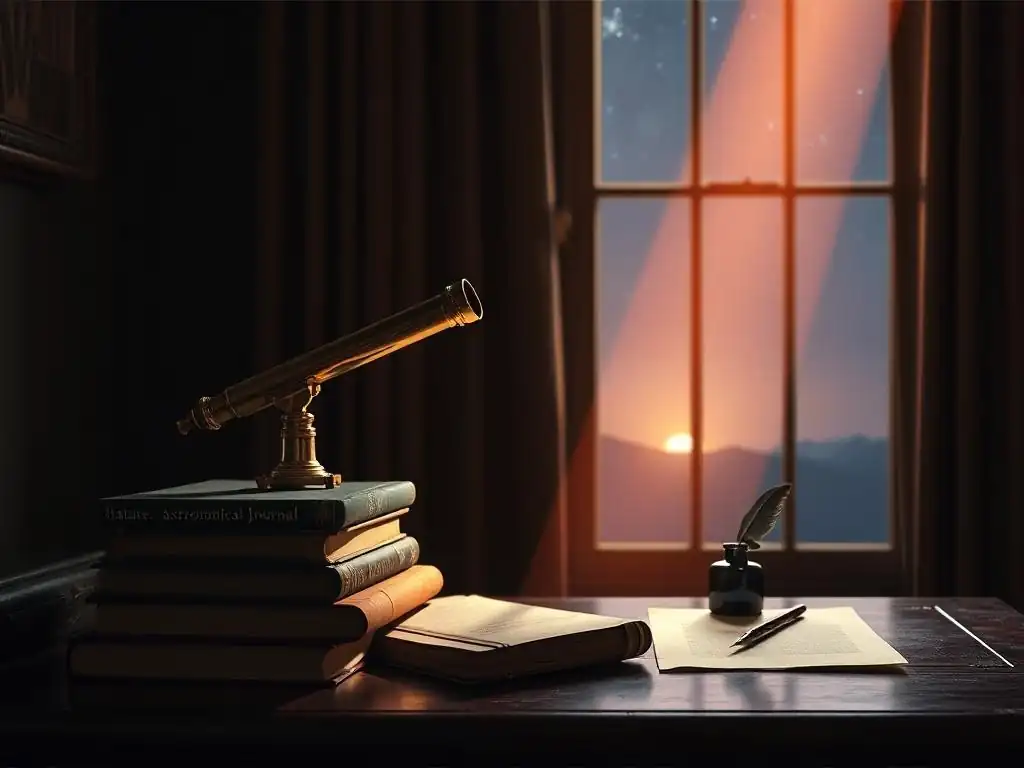
Case Study 1: Cecilia Payne-Gaposchkin - Challenging Established Theories in Astrophysical Journal
Cecilia Payne-Gaposchkin's 1925 doctoral thesis, "Stellar Atmospheres; A Contribution to the Observational Study of High Temperature in the Reversing Layers of Stars," published as a monograph by Harvard College Observatory, was a landmark in astrophysics. In it, she correctly deduced that stars were overwhelmingly composed of hydrogen and helium, challenging the then-prevailing belief that they had compositions similar to Earth. Her advisor, Harlow Shapley, initially discouraged her from stating this conclusion, fearing it would undermine her work, as it contradicted the views of prominent astronomer Henry Norris Russell. Russell himself, upon reviewing her thesis, initially dismissed her findings.
Despite this initial resistance, Payne-Gaposchkin's data and rigorous analysis were undeniable. Russell eventually acknowledged her discovery four years later in his own paper, often cited as the independent discovery of stellar composition, though he did credit her.
While her thesis was published, the initial pushback from such a respected figure illustrates the women scientists journal publishing challenges when a woman's groundbreaking work challenged established male authorities. Her subsequent prolific career saw her publish over 150 papers in The Astrophysical Journal and other major outlets, often collaborating with her husband, Sergei Gaposchkin, but the initial struggle for acceptance of her most significant finding underscores the uphill battle for women in the field.
Case Study 2: Helen Sawyer Hogg - Promoting Variable Star Research Through Astronomical Journal
Helen Sawyer Hogg was a highly respected and prolific Canadian-American astronomer known for her extensive research on variable stars in globular clusters, which are crucial for understanding the size and age of the Milky Way. Throughout her career, spanning from the 1930s well into the late 20th century, Hogg published hundreds of papers, many of them in The Astronomical Journal and Publications of the David Dunlap Observatory. Her consistent output and meticulous data collection were remarkable, especially given the era's difficulties for women in science.
While Hogg achieved considerable recognition and eventually became a prominent figure, her journey was not without its women scientists journal publishing challenges. She often had to balance her intense research with family responsibilities, and her early career was marked by limited opportunities and financial support.
Her persistent publication record, often involving detailed observational catalogs and analyses, exemplifies how some women managed to carve out successful scientific careers by consistently producing high-quality work and engaging with the established publishing channels, even if it meant a slower climb or less immediate fanfare than their male counterparts. Her dedication ensured that her vital contributions to understanding stellar populations were consistently brought to the attention of the astronomical community.
Analyzing Successes and Setbacks
The case studies of Cecilia Payne-Gaposchkin and Helen Sawyer Hogg reveal a complex picture of successes tempered by setbacks. Payne-Gaposchkin's initial struggle for acceptance of her revolutionary stellar composition theory highlights the profound women scientists journal publishing challenges when a woman's work directly contradicted the views of powerful male figures. Her ultimate triumph, albeit with delayed and sometimes shared credit, demonstrates the power of undeniable scientific evidence coupled with personal conviction. Her ability to eventually publish extensively in top journals, often with co-authorship, shows a successful adaptation to the prevailing norms.
Helen Sawyer Hogg's career, marked by steady and prolific publication, particularly in The Astronomical Journal, represents a different kind of success. Her consistent output in a specialized but highly relevant field allowed her to build a strong reputation over time.
While she may not have faced the same level of initial conceptual resistance as Payne-Gaposchkin, her career trajectory still reflects the broader challenges women faced in terms of access to resources and balancing professional demands with societal expectations. Both women's experiences underscore that while the path to publication was fraught with difficulties, perseverance, strategic collaboration, and undeniable scientific merit were crucial in overcoming the systemic barriers of their time.
Impact on Women's Careers and the Field of Astronomy
Reduced Visibility: Limited Recognition for Scientific Achievements
The women scientists journal publishing challenges of the mid-20th century had a profound impact on the visibility and recognition of women's scientific achievements in astronomy. When women's papers were rejected, delayed, or relegated to less prominent journals, their groundbreaking work often failed to reach a wide audience or receive immediate acknowledgment from the scientific community. This reduced visibility meant that their discoveries might be overlooked, attributed to male colleagues, or simply not integrated into the mainstream scientific narrative as quickly or prominently as similar work by men.
For instance, while Henrietta Swan Leavitt's period-luminosity relation was fundamental, her work was published in Harvard Observatory Circulars and her full recognition often came posthumously, contrasting with the immediate acclaim received by male contemporaries for similar breakthroughs. This lack of prominent publication directly translated into a diminished public profile for women astronomers, making it harder for them to gain prestigious awards, speak at major conferences, or be cited extensively, thus perpetuating a cycle of underrepresentation and limited recognition for their vital contributions to the field.
Career Stagnation: Hindered Advancement and Leadership Roles
The difficulties in publishing significantly contributed to career stagnation for many women in astronomy. A strong publication record was, and still is, a critical metric for academic advancement, including promotions, tenure, and eligibility for senior research positions. When women faced barriers to publishing, their CVs often appeared less robust than those of their male counterparts, even if their underlying research was equally innovative or significant. This disparity directly hindered their ability to move up the academic ladder.
Consequently, women were less likely to attain tenured professorships, become heads of departments, or secure leadership roles at major observatories or scientific institutions. They often remained in lower-paying, less secure research assistant or "computer" positions, despite possessing doctoral degrees and making substantial contributions. This systemic limitation on career progression was a direct outcome of the women scientists journal publishing challenges, effectively preventing many talented women from reaching their full potential and shaping the future direction of astronomical research.
Loss of Innovation: The Consequences of Excluding Diverse Perspectives
Perhaps the most significant long-term consequence of the women scientists journal publishing challenges was the potential loss of innovation and a narrower scope of scientific inquiry. By implicitly or explicitly excluding women from the primary channels of scientific communication, the field of astronomy inadvertently deprived itself of diverse perspectives, novel approaches, and unique insights that women could have brought to the forefront. When voices are silenced or marginalized, the collective pool of ideas shrinks.
Had women been fully integrated into the publishing ecosystem without bias, it is plausible that certain research areas might have developed differently, new questions might have been posed, and scientific breakthroughs might have occurred more rapidly or in unforeseen directions. The suppression of women's contributions meant that the scientific community, as a whole, suffered from a less diverse intellectual landscape, potentially slowing progress and perpetuating biases in research priorities. This exclusion was not merely a matter of fairness; it was a missed opportunity for the advancement of astronomy itself.
Long-Term Implications: Lessons for Contemporary Scientific Publishing
Addressing Persistent Gender Bias in STEM
The historical women scientists journal publishing challenges offer crucial lessons for addressing persistent gender bias in contemporary STEM fields. While overt discrimination may be less common today, subtle implicit biases continue to affect women's careers, including their publication success. Studies still show disparities in citation rates, peer review outcomes, and representation on editorial boards. Recognizing that historical patterns of exclusion have left a legacy is the first step.
Current efforts must focus on proactive measures to dismantle these ingrained biases. This includes educating researchers and reviewers about implicit bias, promoting diverse leadership within academic institutions and publishing houses, and creating mentorship programs specifically designed to support women in navigating the complexities of modern scientific communication. Learning from the past means actively working to ensure that today's scientific landscape is genuinely equitable, fostering an environment where talent, not gender, determines success in publishing and beyond.
Promoting Equitable Review Processes: Blind Review and Diverse Editorial Boards
One of the most critical lessons from the historical women scientists journal publishing challenges is the urgent need for more equitable review processes in scientific publishing. The historical context, where male-dominated editorial boards and non-blinded peer review were the norm, often led to unfair treatment. Today, journals are increasingly adopting measures like double-blind peer review, where both the author and the reviewer are anonymous. This practice can significantly reduce implicit bias, as reviewers are unable to infer the author's gender, institutional prestige, or nationality.
Furthermore, actively promoting diversity on editorial boards is paramount. Having a balanced representation of genders, ethnicities, and backgrounds among editors and reviewers can bring a broader range of perspectives to the evaluation process, challenging traditional gatekeeping mechanisms. By implementing robust, bias-reducing review protocols and ensuring diverse representation at all levels of the publishing ecosystem, contemporary scientific journals can learn from the past to create a fairer and more inclusive environment for all researchers, ensuring that scientific merit is the sole determinant of publication.
Recognizing and Celebrating Contributions of Underrepresented Groups
The historical struggles of women astronomers highlight the importance of actively recognizing and celebrating the contributions of underrepresented groups in science. For decades, the work of many women scientists was overlooked, misattributed, or given less prominence due to the women scientists journal publishing challenges and broader societal biases. Moving forward, it is essential to proactively correct these historical oversights and ensure that contemporary contributions from diverse researchers are adequately acknowledged and celebrated.
This involves more than just publishing papers; it means actively promoting their work, featuring them in scientific media, nominating them for awards, and including their stories in educational curricula. Conferences should ensure diverse speaker lineups, and institutions should highlight the achievements of their female researchers. By intentionally shining a light on the contributions of women and other underrepresented groups, the scientific community can not only inspire future generations but also ensure a more accurate and inclusive historical narrative of scientific progress, reflecting the true breadth of human ingenuity.
Conclusion: Reflecting on the Past, Advocating for Equity in Scientific Communication
Key Insights from Women's Experiences (1920-1970)
The experiences of women astronomers between 1920 and 1970 offer profound insights into the systemic women scientists journal publishing challenges that hindered their recognition and career progression. These women navigated a landscape rife with gender bias, limited access to critical resources like observatories and funding, and pervasive societal expectations regarding their roles. Their stories reveal that publication was not merely an academic exercise but a battleground where scientific merit often had to contend with entrenched discrimination within editorial practices and review processes.
Despite these formidable obstacles, women like Cecilia Payne-Gaposchkin and Helen Sawyer Hogg demonstrated remarkable perseverance, strategic adaptability through collaborations, and an unwavering commitment to their scientific pursuits. Their ability to publish, even if sometimes in less prestigious venues or with delayed recognition, underscores their resilience and the undeniable quality of their work. Their struggles illuminate how biases in scientific communication can lead to reduced visibility, career stagnation, and a significant loss of diverse intellectual contributions to the field.
Call to Action: Fostering a More Inclusive Scientific Community
Reflecting on the historical women scientists journal publishing challenges serves as a powerful call to action for fostering a more inclusive and equitable scientific community today. While progress has been made, subtle biases and systemic barriers still exist in contemporary scientific publishing. It is imperative that journals, academic institutions, and funding bodies actively implement policies and practices that promote fairness, transparency, and diversity.
This includes adopting rigorous double-blind peer review, ensuring diverse representation on editorial boards, providing comprehensive mentorship for emerging female scientists, and actively celebrating the achievements of all researchers, regardless of gender or background. By learning from the past and proactively addressing persistent inequities, the scientific community can ensure that scientific communication truly reflects the best of human intellect and ingenuity, empowering all voices to contribute to the advancement of knowledge.
Frequently Asked Questions
What were some of the key publishing challenges faced by women scientists between 1900 and 1950?
Women faced significant hurdles, including gender bias in peer review, difficulty gaining acceptance in male-dominated scientific circles, and often having their work attributed to male colleagues or mentors.
How did the male-dominated nature of scientific journals impact the visibility of women's research?
The prevalence of male editors and reviewers led to systematic disadvantages for women. Their research was often underrepresented or dismissed, limiting their impact and career advancement.
Did women scientists develop any strategies to overcome publishing barriers?
Yes, some women formed networks and collaborations to support each other's work and ensure fair review. Others published under initials or pseudonyms to mask their gender.
What specific types of discrimination did women encounter when submitting their work to scientific journals?
Discrimination included outright rejection based on gender, harsh or unfair critiques of their methodology, and having their ideas appropriated by male researchers.
How did the lack of female representation on editorial boards affect the publication process for women scientists?
The absence of female representation perpetuated biased review processes and limited opportunities for women to champion other female scientists' work. It also meant fewer women were able to advocate for fair evaluation.
Final Reflection: Breaking Barriers, Building Legacies
The stories unearthed in this exploration of women scientists' struggles with journal publishing between 1900 and 1950 resonate powerfully today. The fight for equitable representation and recognition in STEM fields remains a critical battle, even as we celebrate advancements made since then. The challenges faced by these pioneering women serve as a stark reminder of the systemic biases that can stifle innovation and limit the potential of brilliant minds.
This historical analysis illuminates the enduring impact of gender inequality on scientific progress. Understanding these past hurdles is crucial for dismantling present-day barriers and fostering a truly inclusive scientific community. The dedication and resilience of these women, despite facing constant rejection and marginalization, is deeply inspiring. Science knows no country, because knowledge belongs to humanity, and is the torch which illuminates the world.
- Louis Pasteur. This quote, while aspirational, highlights the tragic irony of excluding half of humanity from contributing to that very knowledge.
Let us not forget the lessons learned from the past. Consider how you can actively contribute to creating a more equitable and supportive environment for women in STEM. Advocate for inclusive policies, mentor aspiring scientists, and challenge biases wherever you encounter them. The legacy of these women scientists calls upon us to build a future where talent and dedication, not gender, determine success.
Ignite Your Scientific Spark: Become a Force for Change!
Thank you for exploring the challenges and triumphs of women scientists in a male-dominated era. You've gained valuable insights into their resilience and determination. Now, let's channel that inspiration into action!
Here's how you can contribute to a more equitable future in science:
- Amplify Their Voices: Share this article on your social media platforms to raise awareness about the historical struggles and lasting impact of these pioneering women. Use the hashtag #WomenInScienceHistory.
- Explore the untold stories: Visit WomenInScienceHistory.com to uncover other hidden figures in STEM and learn about their groundbreaking contributions.
- Mentor the next generation: Volunteer your time to mentor young women interested in science, offering guidance and encouragement to help them overcome barriers and pursue their passions.
What small but meaningful step will you take today to ensure that the contributions of women in science are fully recognized and celebrated?