
Unveiling the Life Story of Mary G. Ross: Lockheed's First Female Engineer

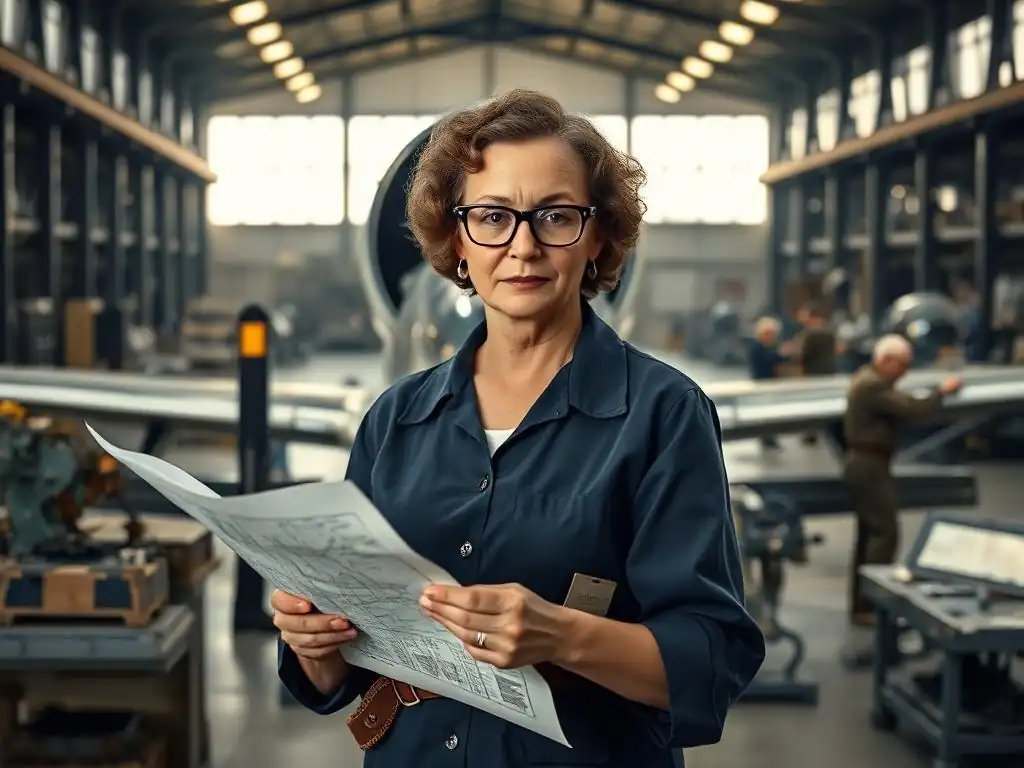
Welcome to WomenInScienceHistory.com!
Prepare to be inspired. Dive into the fascinating world of women who defied expectations and shaped the landscape of science. Today, we're unveiling the remarkable life story of Mary G. Ross, a true pioneer and Lockheed's first female engineer. What were the challenges she overcame, and what groundbreaking contributions did she make? Explore her incredible journey and discover why her legacy continues to resonate. Read on to learn more about this extraordinary woman!
- Introduction: Mary G. Ross - A Pioneering Woman in Engineering History
- Early Life and Education: Shaping a Future Engineer
- Career at Lockheed: Breaking Barriers in Aerospace Engineering
- The Skunk Works Era: Mary G. Ross and Advanced Engineering
- Overcoming Challenges and Discrimination in a Male-Dominated Field
- Post-Retirement Life and Continued Advocacy for STEM Education
- Mary G. Ross's Lasting Impact on Engineering and Society
- Conclusion: Celebrating the Achievements of Mary G. Ross
-
Frequently Asked Questions
- What made Mary G. Ross a significant figure in engineering history?
- What were some of the challenges Mary G. Ross faced as a woman in engineering?
- What specific contributions did Mary G. Ross make to Lockheed's work?
- Where can I find more information about Mary G. Ross's life and career?
- Why is it important to highlight the stories of women like Mary G. Ross in science history?
- Final Reflection: Honoring a Legacy of Innovation
- Embrace Innovation: Become the Engineer of Your Own Future!
Introduction: Mary G. Ross - A Pioneering Woman in Engineering History
Celebrating Mary G. Ross's Legacy in Engineering History
Mary G. Ross, a member of the Cherokee Nation, carved an indelible path in the annals of American engineering, standing as a testament to intellectual rigor and perseverance. Born in 1908, her career at Lockheed Aircraft Corporation, particularly within its famed Skunk Works division, cemented her status as a pioneering force in aerospace.
She distinguished herself not only as a brilliant mathematician but also as Lockheed's very first female engineer, a groundbreaking achievement in a field overwhelmingly dominated by men during the mid-20th century. Her contributions spanned critical defense projects and early space exploration concepts, laying foundational groundwork for technologies that would shape the future.
Her quiet yet profound impact extended from calculating ballistic missile trajectories to conceptualizing manned spaceflight, making her a crucial, though often unsung, hero of the Space Race and Cold War era. The Mary G. Ross engineer biography is a narrative of breaking barriers and achieving excellence against societal odds, showcasing how an individual's dedication to science can alter the course of technological advancement. Her legacy is not merely in the complex calculations she performed but in the doors she opened for countless women and Native Americans in STEM fields.
The Significance of Mary G. Ross's Biography for Aspiring Engineers
The life story of Mary G. Ross offers profound lessons and inspiration for aspiring engineers, particularly those from underrepresented groups. Her journey from a mathematics teacher in rural Oklahoma to a pivotal figure at a leading aerospace company demonstrates the power of education and relentless pursuit of knowledge. For young women contemplating careers in engineering, her Mary G. Ross engineer biography serves as a powerful example of what is achievable when passion meets opportunity, even in environments that historically resisted diversity.
Furthermore, her narrative highlights the importance of adaptability and continuous learning. Ross consistently sought further education and adapted her skills to meet the evolving demands of aerospace technology, from aircraft stress analysis to complex orbital mechanics. Her story underscores that true innovation often requires stepping beyond conventional roles and embracing challenges, a spirit that remains vital for any successful engineering career today.
Early Life and Education: Shaping a Future Engineer
Childhood and Early Influences in Park Hill, Oklahoma
Mary G. Ross was born on August 9, 1908, in Park Hill, Oklahoma, within the Cherokee Nation. She was the great-great-granddaughter of Chief John Ross, a prominent leader of the Cherokee Nation who navigated the tribe through the tumultuous period of forced removal. This rich heritage instilled in her a deep respect for education and a strong sense of community. Her family, particularly her grandfather, encouraged her intellectual curiosity and emphasized the importance of learning, a value deeply rooted in Cherokee culture which historically prioritized literacy and academic achievement.
Growing up in a time when educational opportunities for women, especially Native American women, were limited, Ross benefited from her family's progressive outlook. She attended local schools in Park Hill, where her aptitude for mathematics and science became evident early on. This supportive environment, coupled with her innate curiosity, laid the essential groundwork for her future groundbreaking career in engineering.
Academic Pursuits: A Focus on Mathematics at Northeastern State Teachers College and Colorado State College
Ross began her higher education at a remarkably young age, enrolling in Northeastern State Teachers College (now Northeastern State University) in Tahlequah, Oklahoma, at just 16. She pursued a rigorous curriculum focused on mathematics, a subject in which she consistently excelled. In 1928, at the age of 20, she proudly earned her bachelor's degree in mathematics, a significant accomplishment that set her on a path of intellectual growth and professional development.
Following her undergraduate studies, Ross dedicated a decade to teaching mathematics and science in high schools across Oklahoma and New Mexico. During this period, she continued to refine her pedagogical skills and deepen her understanding of complex mathematical principles. Her commitment to lifelong learning led her to pursue graduate studies, culminating in a master's degree in mathematics from Colorado State College of Education (now the University of Northern Colorado) in 1938. Her master's thesis focused on projective geometry, a highly advanced area of mathematics that would prove invaluable in her subsequent career in aerospace engineering.
Earning a Mathematics Degree: The Foundation for Her Engineering Career
The robust mathematical foundation Mary G. Ross built through her two degrees was absolutely critical to her later transition into engineering. Her bachelor's and master's degrees in mathematics provided her with the analytical rigor and problem-solving skills necessary to tackle the intricate challenges of aerospace design and development. She possessed a deep understanding of geometry, calculus, and physics, which are the bedrock of engineering disciplines.
This strong academic background allowed her to excel in roles that required precise calculations, complex modeling, and theoretical analysis, areas where many engineers without her specialized mathematical training might struggle. Her ability to translate theoretical mathematical concepts into practical engineering solutions was a hallmark of her career, ultimately enabling her to contribute significantly to some of the most advanced and classified projects of her era. The Mary G. Ross engineer biography truly begins with her unwavering commitment to mathematical excellence.
Career at Lockheed: Breaking Barriers in Aerospace Engineering
Joining Lockheed Aircraft Corporation: A Turning Turn During World War II
Mary G. Ross's career at Lockheed Aircraft Corporation commenced in 1942, a pivotal moment in American history marked by the intense demands of World War II. During this period, with a significant portion of the male workforce engaged in military service, women across the nation stepped into roles traditionally reserved for men, particularly in industries vital to the war effort.
Ross, with her strong background in mathematics, was initially hired as a mathematician at Lockheed's Burbank, California facility. Her early responsibilities included performing complex calculations related to aircraft design and performance, such as stress analysis and aerodynamic computations for various military aircraft, including the iconic P-38 Lightning.
Her entry into Lockheed during this transformative era not only provided her with an opportunity to apply her exceptional mathematical skills but also placed her at the forefront of the burgeoning aerospace industry. This initial role as a mathematician was a crucial stepping stone, allowing her to gain practical experience within an engineering environment and demonstrate her invaluable analytical capabilities, which quickly distinguished her among her peers.
Mary G. Ross: Lockheed's First Female Engineer - A Historical Milestone
By 1950, Mary G. Ross achieved a historical milestone: she officially became Lockheed's first female engineer. This transition was a direct result of her exceptional performance and Lockheed's recognition of her unique talents. The company invested in her further education, sending her to the University of California, Los Angeles (UCLA) for advanced engineering courses, including aeronautical and mechanical engineering. This investment underscored her value to the company and their confidence in her potential.
Her official designation as an engineer was not merely a title change but a significant breakthrough in a male-dominated profession, especially within a leading aerospace firm. The Mary G. Ross engineer biography often highlights this achievement as a testament to her perseverance and intellectual prowess, demonstrating that skill and dedication could transcend prevailing gender norms. Her pioneering status opened doors and challenged perceptions, paving the way for future generations of women in engineering.
Contributions to the P-80 Shooting Star Project
While much of her notable work at Lockheed was in classified missile and space programs, Mary G. Ross also made significant, albeit earlier, contributions to projects such as the P-80 Shooting Star. The P-80 was America's first operational jet fighter, a revolutionary aircraft that marked a new era in aviation. Her work on this project involved intricate calculations related to its design and performance characteristics.
Specifically, Ross was involved in stress analysis and aerodynamic computations, ensuring the structural integrity and optimal flight capabilities of this cutting-edge aircraft. Her precise mathematical modeling helped engineers understand how the jet would perform under various conditions, contributing to its successful development and deployment. This early exposure to advanced aircraft design honed her engineering acumen, preparing her for even more complex challenges in the years to come.
Secret Work on Classified Projects: Developing Ballistic Missiles
As her career at Lockheed progressed, Mary G. Ross moved into increasingly sensitive and classified projects, particularly within Lockheed's Advanced Development Projects division, famously known as Skunk Works. Here, her expertise in mathematics and nascent engineering skills were applied to the development of early ballistic missiles. This work was highly secretive and crucial to national security during the height of the Cold War.
Her responsibilities involved complex calculations of missile trajectories, re-entry vehicle design, and the dynamics of hypersonic flight. She played a key role in analyzing the effects of atmospheric conditions on missile performance and determining optimal flight paths to target. This highly specialized work required not only advanced mathematical ability but also an innovative approach to problems that had no historical precedent, solidifying her reputation as an indispensable member of Lockheed's elite engineering teams.
The Skunk Works Era: Mary G. Ross and Advanced Engineering
Working Under Clarence "Kelly" Johnson at Skunk Works
Mary G. Ross's tenure at Lockheed's Advanced Development Projects, famously known as Skunk Works, placed her among an elite group of engineers and designers. This legendary division, under the visionary leadership of Clarence "Kelly" Johnson, was renowned for its rapid, innovative, and highly secretive development of groundbreaking aircraft and aerospace technologies. Working directly under Johnson, a titan of aerospace engineering, was a testament to Ross's exceptional capabilities and her ability to thrive in a high-pressure, intellectually demanding environment.
Within Skunk Works, Ross was often the only woman on the team, performing complex analytical work that pushed the boundaries of known physics and engineering. Her role involved not just calculations but also conceptualizing and modeling systems that were, at the time, purely theoretical. This period cemented her reputation as a formidable force in advanced engineering, contributing to projects that would remain classified for decades.
Contributions to Advanced Missile Systems and Space Travel Concepts
During her time at Skunk Works, Mary G. Ross was a key contributor to the development of advanced missile systems, including early intercontinental ballistic missiles (ICBMs) for the U.S. military. Her mathematical prowess was essential for calculating precise trajectories, designing re-entry vehicles capable of withstanding extreme atmospheric conditions, and ensuring the accuracy and reliability of these critical defense assets. This work was fundamental to America's strategic defense capabilities during the Cold War.
Beyond missiles, Ross also delved into preliminary design concepts for space travel. She was involved in studies related to orbital mechanics, satellite feasibility, and the dynamics of objects in space. Her calculations helped lay the theoretical groundwork for future space missions, including the challenges of launching payloads into orbit, maintaining stable orbits, and returning spacecraft safely to Earth. This forward-thinking work positioned her at the very forefront of aerospace innovation.
Mary G. Ross's Role in the Agena Rocket Program
One of Mary G. Ross's most significant contributions during the Skunk Works era was her integral role in the Agena rocket program. The Agena was a versatile and highly successful upper stage rocket used for a wide range of military and scientific satellites, including the Corona reconnaissance satellites and early NASA missions. Ross was deeply involved in the complex calculations required for mission planning and orbital trajectories for Agena.
Her expertise ensured that satellites launched by Agena could achieve precise orbits and perform their intended functions, whether for Earth observation, scientific research, or military reconnaissance. Her work was crucial for the success of these missions, which played a vital role in shaping early space exploration and national security. The Agena program's success, in part, stands as a testament to the meticulous and innovative work performed by engineers like Mary G. Ross.
Overcoming Challenges and Discrimination in a Male-Dominated Field

Mary G. Ross's career unfolded during a period when gender bias was deeply ingrained in professional environments, particularly within highly technical fields like engineering. As Lockheed's first female engineer and often the only woman in meetings or on project teams within the elite Skunk Works, she undoubtedly faced skepticism and implicit bias. The prevailing societal norms suggested that women were less capable of complex technical work, leading to an environment where her competence might have been initially underestimated or her contributions scrutinized more closely.
Despite these systemic challenges, Ross maintained her focus on her work, allowing her undeniable skills and intellectual rigor to speak for themselves. She navigated these biases with quiet determination and professionalism, proving through her consistent high-quality output that gender was irrelevant to engineering prowess. Her ability to thrive in such an environment serves as a powerful example of resilience in the face of discrimination.
Maintaining Professionalism and Achieving Recognition
Throughout her extensive career at Lockheed, Mary G. Ross consistently maintained a high level of professionalism, which was key to her success and eventual recognition. Rather than confronting biases directly, she chose to demonstrate her value through her exceptional work and unwavering dedication to her projects. Her meticulous calculations, innovative problem-solving, and critical insights into complex aerospace challenges earned her the respect of her peers and superiors, albeit gradually.
Her quiet yet persistent approach allowed her to overcome initial prejudices and establish herself as an indispensable member of the engineering teams. Over time, her colleagues and the leadership at Lockheed recognized her invaluable contributions to critical defense and space programs. This earned recognition was not simply for her technical skills, but for her ability to contribute meaningfully in an environment that was not always welcoming to women, solidifying her standing as a pioneer.
Mary G. Ross: A Role Model for Women in STEM
Mary G. Ross's remarkable career trajectory undeniably established her as a formidable role model for women aspiring to careers in science, technology, engineering, and mathematics (STEM). Her ability to break through the gender barriers of her era, becoming a lead engineer on highly classified and cutting-edge projects, demonstrated that women could not only participate but also excel in fields traditionally reserved for men. Her Mary G. Ross engineer biography is a narrative of empowerment and proof that intellectual capability knows no gender.
Her legacy extends beyond her technical achievements; it lies in the inspiration she continues to provide. By succeeding in a challenging and male-dominated field, she paved the way for countless other women, showing them that a career in engineering was indeed a viable and rewarding path. Her life story encourages young women to pursue their passions in STEM, challenging them to overcome societal expectations and achieve their full potential.
Post-Retirement Life and Continued Advocacy for STEM Education
Mary G. Ross's Involvement in STEM Outreach Programs
Upon her retirement from Lockheed in 1973, after three decades of groundbreaking work, Mary G. Ross did not retreat from public life. Instead, she channeled her energy into advocating for STEM education, particularly focusing on inspiring the next generation. She became a passionate and active participant in various outreach programs, sharing her unique experiences and insights with students and educators across the nation.
Ross frequently spoke at universities, high schools, and professional conferences, emphasizing the critical role of mathematics and science in shaping the future. Her involvement included mentoring young people and serving as a compelling example of what dedication and intellectual curiosity could achieve. She believed strongly in the power of education to transform lives and open doors to new possibilities, especially for underrepresented groups.
Inspiring Future Generations of Engineers and Scientists
Mary G. Ross dedicated a significant portion of her post-retirement life to inspiring future generations of engineers and scientists. She understood the importance of early exposure to STEM concepts and the need for encouragement to pursue these challenging fields. Her talks often included anecdotes from her own pioneering career, illustrating the practical applications of theoretical knowledge and the excitement of working on cutting-edge technologies.
She particularly focused on encouraging young women and Native American youth, recognizing the unique challenges they faced in accessing and succeeding in STEM. Her personal story, a powerful Mary G. Ross engineer biography, served as a tangible example of how perseverance and a strong educational foundation could lead to extraordinary achievements. She motivated countless students to consider careers in science and engineering, leaving a lasting impact on their educational and professional aspirations.
Promoting Women in Engineering and Science Fields
Beyond general STEM advocacy, Mary G. Ross was a vocal and active proponent for increasing the representation of women in engineering and science fields. She understood firsthand the systemic barriers that women faced and worked to dismantle them through her active participation in professional organizations. She was a long-standing member of the Society of Women Engineers (SWE), contributing to their mission of empowering women in engineering and encouraging girls to consider engineering careers.
Her involvement in such organizations provided a platform to discuss the importance of diversity in innovation and the need for equitable opportunities. She shared her experiences, offered guidance, and served as a living testament to the capabilities of women in highly technical roles. Her efforts helped to foster a more inclusive environment within the engineering community, ensuring that her pioneering work continued to resonate and inspire.
Mary G. Ross's Lasting Impact on Engineering and Society
Awards and Recognition for Her Contributions
Despite her humble nature and the classified nature of much of her work, Mary G. Ross eventually received numerous accolades and recognitions for her profound contributions to engineering and society. In 1992, she was inducted into the Silicon Valley Engineering Council Hall of Fame, a testament to her foundational work in the region's burgeoning tech and aerospace industries. Later, in 2004, she was posthumously inducted into the Oklahoma Aviation and Space Hall of Fame, acknowledging her significant impact on both aerospace and her home state.
Her achievements were also celebrated by professional organizations, including the Society of Women Engineers (SWE), which honored her pioneering role and advocacy for women in STEM. These awards underscore the immense value of her intellectual contributions and her quiet perseverance in a challenging field. The growing recognition of her Mary G. Ross engineer biography ensures her place among the most influential figures in American engineering.
The Enduring Legacy of a Pioneering Female Engineer
Mary G. Ross's enduring legacy as a pioneering female engineer is multifaceted, extending far beyond her technical calculations. Her work on ballistic missiles and early space systems at Lockheed's Skunk Works fundamentally impacted national security and laid crucial groundwork for subsequent advancements in space exploration. She was instrumental in shaping the theoretical and practical aspects of aerospace engineering during a critical period of innovation.
More broadly, her status as Lockheed's first female engineer shattered gender barriers and challenged prevailing stereotypes, proving that intellectual capability and engineering prowess were not confined by gender. Her quiet determination and exceptional talent created a precedent, inspiring countless women to pursue careers in science and technology. Her Mary G. Ross engineer biography remains a beacon for diversity and excellence in STEM, highlighting the profound impact one individual can have on an entire industry and society.
National Museum of the American Indian
A significant aspect of Mary G. Ross's lasting legacy is the preservation of her story and heritage at the National Museum of the American Indian in Washington, D.C. Recognizing her unique position as both a pioneering engineer and a proud member of the Cherokee Nation, her family donated her personal papers, photographs, and significant Cherokee artifacts to the museum. This collection offers invaluable insight into her life, career, and cultural identity.
The museum's inclusion of her story ensures that her contributions are recognized within the broader context of Native American history and achievement. It provides a platform for her Mary G. Ross engineer biography to be shared with a diverse audience, highlighting the often-overlooked contributions of Native Americans to science and technology. Her presence in the museum serves as a powerful reminder of her dual heritage and her enduring impact on both engineering and indigenous communities.
Conclusion: Celebrating the Achievements of Mary G. Ross
Mary G. Ross Engineer Biography: A Story of Perseverance and Innovation
The Mary G. Ross engineer biography is an extraordinary narrative of perseverance, intellectual brilliance, and groundbreaking innovation. From her childhood in the Cherokee Nation to her pivotal role at Lockheed's Skunk Works, Ross consistently defied expectations and shattered barriers. Her journey from a mathematics teacher to Lockheed's first female engineer is a testament to her unwavering dedication to learning and her exceptional analytical skills.
She was a quiet force behind some of the most critical aerospace and defense projects of the 20th century, contributing to the development of ballistic missiles and conceptualizing early space travel. Her ability to navigate a male-dominated field with grace and unwavering competence serves as a powerful inspiration. Ross's story underscores that true innovation often stems from diverse perspectives and the courage to pursue one's intellectual passions, regardless of societal norms.
Remembering Mary G. Ross: A Visionary Leader in Aerospace Engineering
Remembering Mary G. Ross means celebrating not only her technical achievements but also her visionary leadership in aerospace engineering. Though often working behind the scenes on classified projects, her calculations and insights laid foundational groundwork for modern missile systems and space exploration. She was a critical mind in the development of technologies that shaped global defense and advanced humanity's reach into the cosmos.
Her legacy extends far beyond the blueprints and equations; it resides in the countless individuals she inspired and the doors she opened for future generations of women and Native Americans in STEM. Mary G. Ross was an unsung hero whose quiet determination and profound intellect carved an indelible path in engineering history. Her life story serves as a beacon, reminding us of the enduring power of innovation and the importance of recognizing all who contribute to the advancement of science and technology.
Frequently Asked Questions
What made Mary G. Ross a significant figure in engineering history?
Mary G. Ross was significant because she was Lockheed's first female engineer and a pioneering mathematician who contributed significantly to the aerospace industry. She worked on crucial projects during the Space Race.
What were some of the challenges Mary G. Ross faced as a woman in engineering?
As a woman in a male-dominated field, Mary G. Ross likely faced gender bias and limited opportunities compared to her male counterparts. Historical context suggests she had to overcome societal expectations.
What specific contributions did Mary G. Ross make to Lockheed's work?
Mary G. Ross contributed to the design and development of missiles and space vehicles for Lockheed. Her expertise in mathematics was crucial for these projects, particularly in the early days of the Space Race.
Where can I find more information about Mary G. Ross's life and career?
You can find more information on websites like WomenInScienceHistory.com, focusing on biographies of female scientists. Also, reputable historical archives and libraries may hold relevant records.
Why is it important to highlight the stories of women like Mary G. Ross in science history?
Highlighting these stories is important to address historical inequities and inspire future generations of women in STEM fields. It also provides a more complete and accurate understanding of scientific progress.
Final Reflection: Honoring a Legacy of Innovation
The story of Mary G. Ross, Lockheed's first female engineer, resonates profoundly today because it underscores the enduring power of breaking barriers and defying expectations. Her journey, meticulously documented in this biography, serves as a potent reminder that talent knows no gender and that perseverance can overcome even the most entrenched societal obstacles.
Mary G. Ross's impact extends far beyond her technical achievements; she paved the way for countless women in STEM fields, inspiring them to pursue their passions without limitation. Don't let anyone tell you that you can't do something. If you want to do it, go for it.
Her words, echoing through the decades, continue to empower future generations to challenge the status quo and strive for excellence.
As we close this chapter on Mary G. Ross's remarkable life, let us not simply admire her accomplishments from afar. Instead, let us internalize her spirit of innovation, her unwavering determination, and her commitment to inclusivity. Ask yourself: How can you, in your own sphere of influence, champion diversity, encourage aspiring innovators, and contribute to a future where everyone has the opportunity to reach their full potential, just as Mary G. Ross did?
Embrace Innovation: Become the Engineer of Your Own Future!
Thank you for delving into the inspiring story of Mary G. Ross! We hope you’ve found her journey as Lockheed's first female engineer both enlightening and motivating. Now, let's translate that inspiration into action.
- Chart your own course: Identify one skill you've always wanted to learn that can help you solve a problem in your community.
- Share Mary’s story: Inspire others by sharing this article with at least three friends or colleagues.
- Dive deeper: Research other pioneering women in STEM fields and share their stories online!
What small step will you take today to honor Mary G. Ross's legacy and pursue your own innovative passions?