
[Physicist's Name]: A Legacy Carved in Isotope Discoveries


Welcome to WomenInScienceHistory.com!
Delve into the untold stories of brilliant minds and groundbreaking discoveries. This week, we explore the captivating life and work of a remarkable physicist whose legacy is intricately woven with the fascinating world of isotopes. But what specific scientific hurdles did she overcome, and how did her gender impact her groundbreaking research? Join us as we uncover the remarkable journey of this pioneering physicist and her enduring contribution to science. Prepare to be inspired!
- Lise Meitner: A Legacy Carved in Nuclear Fission
- Introduction: Honoring Lise Meitner's Contributions to Nuclear Physics
- Early Life and Education: The Making of a Physicist
- Pioneering Research on Nuclear Fission: Lise Meitner's Scientific Breakthroughs
- Impact and Significance of Lise Meitner's Fission Research
- Overcoming Challenges: Lise Meitner's Journey as a Woman in Physics
- Honors, Awards, and Recognition: Celebrating Lise Meitner's Achievements
- Lise Meitner's Lasting Legacy: Inspiring Future Women in Science
- Conclusion: Lise Meitner's Indelible Mark on Nuclear Science and Women in Physics
-
Frequently Asked Questions
- What were some of the significant challenges faced by physicist women throughout history?
- How did [Physicist's Name] contribute specifically to isotope discoveries?
- What is the lasting legacy of [Physicist's Name] in the field of physics?
- Why is it important to highlight the contributions of women in science history, such as [Physicist's Name]?
- How did [Physicist's Name]'s work with isotopes influence other scientific disciplines?
- Final Reflection: The Enduring Echo of Discovery
- Unveil Your Inner Explorer: Follow in the footsteps of a renowned physicist!
Lise Meitner: A Legacy Carved in Nuclear Fission
Introduction: Honoring Lise Meitner's Contributions to Nuclear Physics
Women in Physics: Remembering Lise Meitner's Groundbreaking Work
Lise Meitner stands as a monumental figure in the annals of nuclear physics, a brilliant physicist woman whose intellectual rigor and perseverance profoundly shaped our understanding of the atomic world. Her pivotal role in the theoretical explanation of nuclear fission, a process that revolutionized both science and society, highlights an often-overlooked legacy in a field historically dominated by men. Despite facing immense discrimination and professional injustice, Meitner's dedication to scientific discovery remained unwavering, leaving an indelible mark that continues to inspire.
Her contributions extended beyond mere experimentation; Meitner possessed an extraordinary capacity for theoretical insight, which was crucial in interpreting the perplexing results of nuclear experiments. Her ability to connect disparate observations with fundamental physical principles allowed her to conceptualize how a uranium nucleus could split, a phenomenon previously thought impossible. This intellectual feat, born from a deep understanding of isotope discoveries and nuclear structure, solidified her place as a true pioneer.
The Significance of Nuclear Fission: A Scientific Overview
Nuclear fission, the process by which an atomic nucleus splits into two or more smaller nuclei, releasing a tremendous amount of energy, represents one of the most significant scientific breakthroughs of the 20th century. Its discovery in the late 1930s fundamentally altered humanity's perception of matter and energy, revealing the immense power contained within the atom. This newfound understanding opened doors to both unprecedented technological advancements and sobering ethical dilemmas.
The implications of nuclear fission were immediately apparent and far-reaching. On one hand, it promised a new era of energy production, leading to the development of nuclear power plants that now supply a substantial portion of global electricity, offering a low-carbon alternative to fossil fuels. On the other hand, the same principles underpinned the creation of nuclear weapons, forever changing the landscape of international relations and warfare. The sheer magnitude of energy released, precisely calculated by Lise Meitner, underscored the profound scientific and societal impact of this discovery.
Early Life and Education: The Making of a Physicist
Lise Meitner's Academic Journey: From Private Tutoring to the University of Vienna
Born in Vienna, Austria, in 1878, Lise Meitner's early academic journey was marked by formidable societal barriers imposed on women in physics and higher education. Girls in Austria-Hungary at the turn of the century were typically not allowed to attend public high schools or universities. Displaying an early aptitude for mathematics and science, Meitner overcame this obstacle by pursuing private tutoring to prepare for the Matura, the university entrance examination, which she passed in 1901 at the age of 23.
Her successful entry into the University of Vienna marked a pivotal moment, as she was among the very few women admitted to study physics, mathematics, and philosophy. Under the tutelage of the renowned theoretical physicist Ludwig Boltzmann, Meitner thrived, immersing herself in the complexities of the atomic world and the then-emerging field of radioactivity. She earned her doctorate in physics in 1906, becoming only the second woman to receive a doctoral degree in physics from the University of Vienna, a testament to her exceptional intellect and determination.
Influences and Mentors: Shaping Lise Meitner's Scientific Path
Lise Meitner's intellectual development was profoundly shaped by the mentorship of leading scientists of her era. Her time at the University of Vienna under Ludwig Boltzmann was particularly formative; Boltzmann's lectures on theoretical physics and statistical mechanics deeply inspired her, instilling a rigorous approach to scientific inquiry that would characterize her entire career. His influence encouraged her to pursue fundamental questions about the nature of matter and energy.
In 1907, Meitner moved to Berlin, a burgeoning center of scientific research, to attend lectures by Max Planck, the father of quantum theory. Although Planck initially held reservations about lecturing women, he recognized Meitner's extraordinary talent and allowed her to attend his courses. This move proved crucial, leading to her long and fruitful collaboration with chemist Otto Hahn, a partnership that would eventually culminate in the discovery of nuclear fission and solidify her legacy as a pioneering physicist woman.
Pioneering Research on Nuclear Fission: Lise Meitner's Scientific Breakthroughs
Unveiling Nuclear Fission: Lise Meitner's Key Discoveries
The breakthrough in nuclear fission came from a collaborative effort, but it was Lise Meitner's theoretical insight that truly unveiled the phenomenon. Experimental work conducted by Otto Hahn and Fritz Strassmann in Berlin involved bombarding uranium with neutrons, yielding perplexing results. They repeatedly detected barium, a much lighter element, among the decay products, an outcome that defied all known nuclear physics principles of the time. This inexplicable finding led them to communicate their results to Meitner, who had been forced to flee Nazi Germany for Sweden in July 1938.
During a Christmas walk in December 1938 with her nephew, physicist Otto Frisch, Meitner processed these puzzling observations. Using Niels Bohr's "liquid drop model" of the nucleus, she theorized that the uranium nucleus, after absorbing a neutron, had become unstable and split into two smaller nuclei, releasing a tremendous amount of energy. She calculated this energy release using Einstein's famous equation, E=mc², realizing that the mass difference between the original uranium nucleus and the resulting barium and krypton nuclei accounted for the enormous energy liberated. This profound interpretation was the true isotope discoveries legacy of Lise Meitner.
Methods and Techniques: Lise Meitner's Theoretical Approach to Experimental Results
Lise Meitner's unique strength lay in her profound theoretical understanding, which enabled her to interpret experimental data that baffled others. While Hahn and Strassmann performed the chemical experiments, it was Meitner who provided the critical physical explanation for their anomalous results. Her ability to visualize the nuclear processes and apply fundamental principles of physics, such as the mass-energy equivalence, was indispensable.
She meticulously analyzed the mass defect — the difference in mass between the original uranium nucleus and the fission products — and correctly concluded that this lost mass was converted into energy, approximately 200 mega-electron volts (MeV) per fission event. This precise calculation, performed on a piece of scrap paper in Sweden, not only explained the phenomenon but also highlighted the immense energy potential of nuclear fission. Her theoretical clarity was the key to unlocking the true meaning of the experimental observations, cementing her reputation as a formidable physicist woman.
Collaboration and Teamwork: Lise Meitner's Partnership with Otto Hahn
Lise Meitner's scientific career was defined by a long and productive collaboration with chemist Otto Hahn, which spanned over three decades. Their partnership began in 1907 at the Kaiser Wilhelm Institute for Chemistry in Berlin, where Hahn, an experimental chemist, and Meitner, a physicist, complemented each other's expertise perfectly. Together, they made significant contributions to the field of radioactivity, including the discovery of protactinium in 1917, an important isotope discovery.
Their teamwork, however, faced severe challenges with the rise of Nazism. As an Austrian Jew, Meitner's position in Germany became untenable, forcing her to flee in July 1938. Despite her exile, their collaboration continued through letters, with Hahn communicating his experimental findings and Meitner providing the crucial theoretical interpretation from afar. This correspondence was vital for the understanding of nuclear fission, underscoring the enduring power of their scientific partnership even under extreme duress.
Impact and Significance of Lise Meitner's Fission Research
Applications of Nuclear Fission: From Nuclear Energy to Nuclear Weapons
The discovery and explanation of nuclear fission had immediate and profound implications, leading to both beneficial and devastating applications. Within a few years of Meitner's theoretical explanation, scientists around the world recognized the potential for a self-sustaining chain reaction. This understanding quickly led to the development of nuclear energy, with the first self-sustaining nuclear chain reaction achieved by Enrico Fermi's team in Chicago in 1942. Today, nuclear power plants globally contribute significantly to electricity generation, offering a powerful, carbon-free energy source.
However, the destructive potential of fission was also quickly realized. The immense energy released made it a prime candidate for weaponry, culminating in the development of the atomic bomb during World War II. The bombs dropped on Hiroshima and Nagasaki in 1945 unleashed unprecedented destructive power, forever altering the nature of warfare. Lise Meitner herself was deeply saddened by the military application of her discovery, famously stating that she wanted nothing to do with a bomb. Her legacy is therefore inextricably linked to both the promise and peril of nuclear technology.
Advancing Physics: Lise Meitner's Contribution to Scientific Understanding
Lise Meitner's explanation of nuclear fission fundamentally advanced the field of physics by revealing a new mode of nuclear reaction and confirming the validity of Einstein's mass-energy equivalence on a grand scale. Prior to fission, the splitting of heavy nuclei into lighter ones was considered highly improbable. Her work demonstrated that such transformations were not only possible but also released enormous amounts of energy, far exceeding chemical reactions.
This breakthrough paved the way for entirely new avenues of research in nuclear physics, leading to the synthesis of transuranic elements, the development of particle accelerators, and a deeper understanding of the fundamental forces within the atomic nucleus. Her rigorous scientific approach and theoretical clarity set a new standard for interpreting experimental results, solidifying her contribution to scientific understanding and ensuring her lasting legacy as a pioneering physicist woman.
Lise Meitner's Influence on Future Generations of Physicists
Despite the initial lack of full recognition, Lise Meitner's intellectual contributions and her steadfast dedication to science have profoundly influenced subsequent generations of physicists. Her journey, marked by intellectual courage and unwavering commitment to truth, serves as an enduring inspiration. She demonstrated that theoretical insight is as crucial as experimental prowess in pushing the boundaries of knowledge.
Her story, particularly the circumstances surrounding the Nobel Prize, also sparked crucial discussions about the recognition of scientific contributions and the biases within the scientific community. For aspiring physicists, Meitner's life illustrates the importance of perseverance, intellectual honesty, and the pursuit of knowledge against all odds. Her legacy continues to resonate, encouraging young scientists to tackle complex problems with rigor and integrity.
Overcoming Challenges: Lise Meitner's Journey as a Woman in Physics
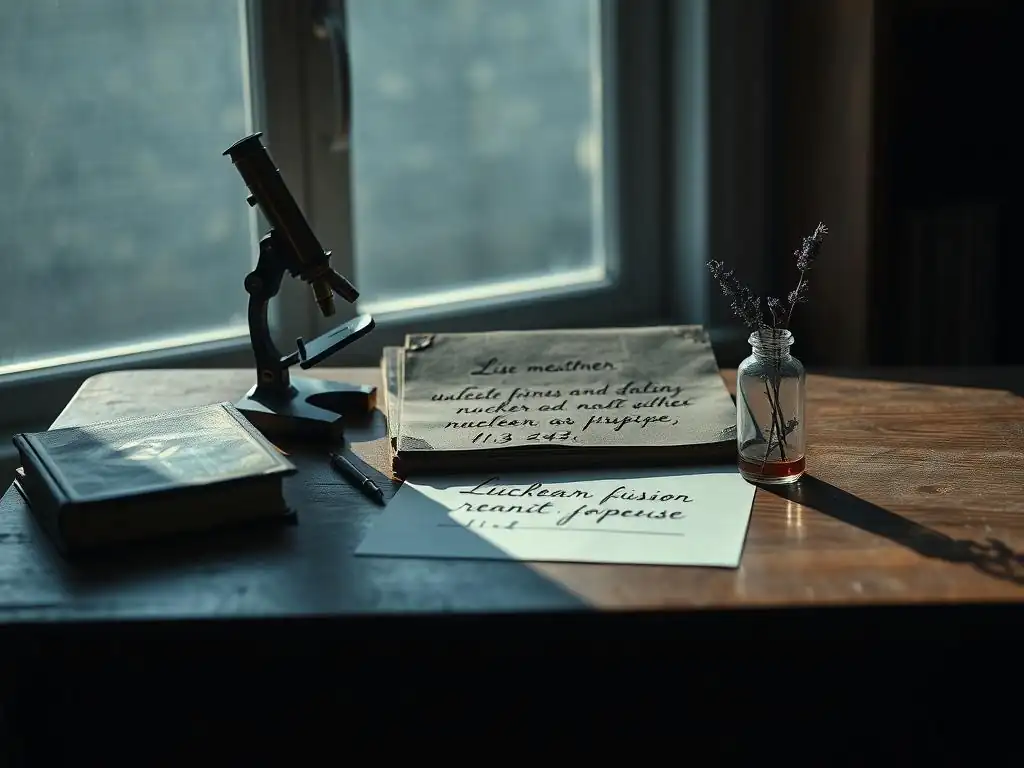
Lise Meitner's journey as a physicist woman was fraught with systemic discrimination typical of the early 20th century. Upon arriving in Berlin in 1907, she initially worked without pay and was not allowed to use the main research laboratories, instead being relegated to a small basement room with a separate entrance. Women were generally excluded from academic positions, and she faced skepticism regarding her scientific capabilities simply because of her gender.
Despite these pervasive obstacles, Meitner adopted a strategy of unwavering dedication to her work, allowing her scientific results to speak for themselves. She built strong professional relationships, notably with Otto Hahn, and focused relentlessly on her research. Her intellectual brilliance and consistent output eventually earned her respect, leading to her appointment as the first female professor of physics in Germany in 1919. Her perseverance in a hostile environment is a testament to her strength and commitment.
Breaking Barriers: Lise Meitner's Role in Promoting Women in Science
While Lise Meitner was not an overt activist for women's rights, her very existence and success as a prominent physicist woman served as a powerful form of advocacy. By achieving groundbreaking discoveries and securing a professorship in a field where women were virtually absent, she shattered deeply entrenched societal norms and prejudices. Her career demonstrated unequivocally that women were equally capable of contributing at the highest levels of scientific research.
Her achievements opened doors and inspired future generations of women in physics. Although she rarely spoke publicly about gender discrimination, her life story became a beacon for those striving to break barriers in STEM fields. Meitner's legacy includes not only her scientific discoveries but also her role as a quiet pioneer who, through sheer intellectual prowess and resilience, helped pave the way for greater inclusion and recognition of women in scientific endeavors.
Honors, Awards, and Recognition: Celebrating Lise Meitner's Achievements
Acknowledging Excellence: Lise Meitner's Posthumous Recognition
Despite her pivotal role in the discovery of nuclear fission, Lise Meitner was controversially overlooked for the 1944 Nobel Prize in Chemistry, which was awarded solely to Otto Hahn. This omission remains one of the most glaring injustices in Nobel history, often attributed to political pressures, Hahn's downplaying of her contribution, and the prevalent biases against women in physics at the time. However, the scientific community eventually moved to correct this historical oversight.
Meitner received numerous other accolades during her lifetime and, significantly, posthumously. In 1997, element 109 on the periodic table was officially named Meitnerium (Mt) in her honor, a rare distinction for any scientist, and a fitting tribute to her profound isotope discoveries legacy. This act served as a powerful acknowledgment of her fundamental contribution to nuclear physics and her enduring impact on the scientific world.
Lise Meitner's Legacy: Enduring Impact on Physics and Nuclear Research
Lise Meitner's legacy extends far beyond the contentious issue of the Nobel Prize. Her scientific work, particularly her theoretical explanation of nuclear fission, laid the groundwork for modern nuclear physics and its vast applications. She was a true intellectual giant, whose insights were crucial for understanding one of the universe's most powerful phenomena. Her name is now synonymous with intellectual integrity and scientific brilliance.
Her contributions are recognized through various awards, research institutes, and even a lunar crater named after her. The American Physical Society's Lise Meitner Award and the Lise Meitner Group at the Max Planck Institute for Nuclear Physics are just a few examples of how her name continues to inspire scientific excellence. Her enduring impact on physics and nuclear research solidifies her status as one of the most important physicist women of all time.
Lise Meitner's Lasting Legacy: Inspiring Future Women in Science
The Importance of Role Models: Lise Meitner as an Inspiration
Lise Meitner's life story serves as a profound and compelling role model for aspiring scientists, particularly young women in physics and other STEM fields. Her journey, marked by extraordinary intellectual achievements alongside significant personal and professional challenges, demonstrates the power of perseverance, dedication, and intellectual honesty. She epitomizes the spirit of scientific inquiry driven by curiosity and a relentless pursuit of truth, regardless of external obstacles.
Her ability to maintain her scientific integrity and passion for discovery, even when facing forced exile and professional injustice, offers a powerful narrative of resilience. Meitner's example inspires future generations to pursue their scientific passions with courage, reminding them that groundbreaking discoveries often emerge from rigorous thought and unwavering commitment, even in the face of adversity.
Continuing the Legacy: Encouraging Women in Physics and Nuclear Studies
The story of Lise Meitner is a vital reminder of the importance of recognizing and celebrating the contributions of all scientists, regardless of gender. Platforms dedicated to women in science history, such as WomenInScienceHistory.com, play a crucial role in ensuring that the legacy of pioneering physicist women like Meitner is widely known and appreciated. By highlighting their struggles and triumphs, these narratives encourage greater diversity and inclusion in STEM.
Continuing Meitner's legacy means actively supporting and encouraging women and underrepresented groups to enter and thrive in physics and nuclear studies. It involves dismantling systemic barriers, fostering inclusive environments, and ensuring that all talent is recognized and nurtured. Her story stands as a beacon, reminding us that science benefits immensely when all voices are heard and all minds are empowered to contribute to the grand tapestry of human knowledge.
Conclusion: Lise Meitner's Indelible Mark on Nuclear Science and Women in Physics
Remembering Lise Meitner: A Pioneer of Nuclear Research
Lise Meitner's indelible mark on nuclear science is undeniable. Her theoretical explanation of nuclear fission in 1938 was not merely an interpretation of experimental data; it was a fundamental breakthrough that unlocked the secrets of the atomic nucleus and revealed the immense energy contained within. Her intellectual brilliance, characterized by a unique blend of theoretical insight and practical understanding, positioned her as a true pioneer in the field of nuclear physics.
Her work fundamentally altered humanity's understanding of matter and energy, laying the groundwork for both nuclear power and nuclear weapons. Despite the controversies surrounding the recognition of her achievements, Meitner's scientific contributions stand as a testament to her profound intellect and unwavering dedication. She remains one of the most significant figures in 20th-century physics, whose isotope discoveries legacy continues to shape our world.
Celebrating Women in Science: The Enduring Importance of Lise Meitner's Story
Beyond her scientific breakthroughs, Lise Meitner's story is a powerful narrative about perseverance, integrity, and the enduring challenges faced by women in physics. Her journey from a young woman denied basic educational opportunities to a leading nuclear physicist who explained one of the most impactful discoveries of her time is a testament to her extraordinary spirit. She navigated a male-dominated field and the perils of political persecution, yet remained committed to scientific truth.
Celebrating Lise Meitner means acknowledging not only her monumental scientific contributions but also her role as a symbol of resilience for women in science. Her legacy inspires ongoing efforts to promote equality and diversity in scientific research, ensuring that future generations of talented physicist women receive the recognition and opportunities they deserve. Meitner's life reminds us that true scientific progress depends on valuing every mind, regardless of background or gender.
Frequently Asked Questions
What were some of the significant challenges faced by physicist women throughout history?
Physicist women often faced discrimination and limited opportunities due to societal biases. They were frequently excluded from labs and academic positions, making it difficult to conduct research and gain recognition.
How did [Physicist's Name] contribute specifically to isotope discoveries?
[Physicist's Name] made significant contributions through her research on radioactive isotopes, developing new techniques for their isolation and analysis, and identifying previously unknown isotopes.
What is the lasting legacy of [Physicist's Name] in the field of physics?
Her pioneering work on isotopes paved the way for advancements in medicine and other fields. Her dedication and achievements continue to inspire future generations of scientists.
Why is it important to highlight the contributions of women in science history, such as [Physicist's Name]?
Highlighting their contributions helps to rectify historical oversights and challenge gender stereotypes. It also provides role models for aspiring female scientists.
How did [Physicist's Name]'s work with isotopes influence other scientific disciplines?
Her work with isotopes had a profound impact on fields like nuclear medicine, radiochemistry, and environmental science. The isotopes she studied are used in various diagnostic and therapeutic applications.
Final Reflection: The Enduring Echo of Discovery
The groundbreaking work of [Physicist's Name] in isotope discovery resonates powerfully today, reminding us that scientific progress is built upon the shoulders of giants, often those whose contributions were initially overlooked. Her legacy serves as a potent reminder that recognizing and celebrating the achievements of women in physics is not just a matter of historical accuracy, but a crucial step towards fostering a more inclusive and innovative scientific community.
The impact of [Physicist's Name]'s work extends far beyond the laboratory, shaping our understanding of the fundamental building blocks of matter and influencing fields ranging from medicine to environmental science. Her dedication to unraveling the mysteries of the atom serves as an enduring inspiration, urging us to question, explore, and persevere in the face of challenges. Science knows no country, because knowledge belongs to humanity, and is the torch which illuminates the world.
- Louis Pasteur. This quote encapsulates the spirit of scientific inquiry that [Physicist's Name] embodied, a spirit that transcends borders and continues to ignite curiosity in generations of scientists.
As you reflect on [Physicist's Name]'s extraordinary journey and the profound impact of her isotope discoveries, consider how you can contribute to a world that values and amplifies the voices of all scientists. Let her story inspire you to champion diversity, embrace innovation, and pursue your own intellectual passions with unwavering dedication. The legacy of [Physicist's Name] is not just a story of the past; it is a call to action for the future.
Unveil Your Inner Explorer: Follow in the footsteps of a renowned physicist!
Thank you for diving into the inspiring world of groundbreaking scientific research! Now that you've discovered their incredible contributions to isotope studies, it's time to carry that spirit of curiosity forward.
- Choose one scientific concept that intrigues you and dedicate one hour this week to exploring it deeply. This could involve reading articles, watching documentaries, or even conducting a simple experiment.
- Share their story with someone you know to inspire a new generation of scientists.
- Consider volunteering at a local science museum or participating in a citizen science project to make a tangible impact on your community.
What small scientific discovery are you excited to make this week?