
Her Code, Her Powerful Voice: How a CS Advocate Challenged Industry Norms


Welcome to WomenInScienceHistory.com, where we uncover the remarkable stories of women who shaped the scientific landscape. Dive into a world of groundbreaking discoveries and unwavering determination. Ever wondered about the real story behind the first computer programmer? Today, we explore Ada Lovelace’s programming legacy, revealing how her visionary insights challenged industry norms and continue to inspire coders today. Intrigued? Read on to discover the powerful voice behind the code.
- Grace Hopper: How a CS Advocate Challenged Industry Norms
- Introduction: Celebrating Women in Computer Science History
- Early Life and Education: Laying the Foundation for a Tech Career
- Breaking Barriers in a Male-Dominated Field: Challenges Faced
- Ada Lovelace's Programming Legacy: Inspiring Future Generations of Female Coders
- Hopper's Contributions to Computer Science: Beyond the Code
- Championing Women in Computer Science: A Powerful Voice for Change
- Legacy and Impact: A Lasting Contribution to Women in Science History
-
Frequently Asked Questions
- How did Ada Lovelace contribute to the field of computer science?
- What were some of the main challenges faced by women in science, as exemplified by Ada Lovelace's experience?
- Why is it important to highlight the stories of women in science history?
- What is Ada Lovelace's programming legacy, and why is it still relevant today?
- How does WomenInScienceHistory.com aim to promote the recognition of women's contributions to science?
- Final Reflection: Amplifying Ada's Legacy
- Ignite Your Inner Advocate: Amplify Women's Voices in Tech!
Grace Hopper: How a CS Advocate Challenged Industry Norms
Introduction: Celebrating Women in Computer Science History
The Underrepresentation of Women in Tech: A Historical Perspective
The landscape of technology, particularly computer science, has historically been and largely remains, male-dominated. Data from the National Center for Women & Information Technology (NCWIT) consistently shows that women hold only about 26% of computing jobs, a figure that has seen only marginal shifts over decades. This underrepresentation is not a recent phenomenon but a deeply rooted issue stemming from societal biases, educational pathways, and the early framing of computing as a masculine pursuit.
Historically, women played crucial roles as "computers" in the early days of computing, performing complex calculations by hand. However, as machines evolved and the field professionalized, women were often relegated to less visible roles, or their contributions were overshadowed. This created a challenging environment for those who dared to break through, making the stories of pioneers like Grace Hopper even more significant in illuminating the persistent hurdles faced by women seeking recognition and leadership in tech.
Grace Hopper: A Champion for Diversity in STEM
Within this challenging historical context, Grace Murray Hopper emerged as a formidable force, not only for her technical brilliance but also for her unwavering advocacy for inclusivity in the burgeoning field of computer science. Her career, spanning over five decades, was marked by groundbreaking innovations and a tireless commitment to making technology accessible and understandable to a broader audience.
Hopper understood that true progress in STEM required diverse perspectives and actively worked to dismantle barriers for women and other underrepresented groups. Her efforts went beyond mere rhetoric; she actively mentored young programmers, tirelessly promoted computer literacy, and challenged the rigid norms that often excluded talented individuals based on gender or background. She stands as a beacon, demonstrating how individual passion and advocacy can profoundly shape an entire industry.
Early Life and Education: Laying the Foundation for a Tech Career
Early Interests and Influences: A Fascination with Machines
Grace Brewster Murray was born in New York City in 1906, the eldest of three children. From a very young age, she displayed an insatiable curiosity and a mechanical aptitude that set her apart. A famous anecdote recounts her disassembling seven alarm clocks in her childhood home to understand how they worked, a clear precursor to her later analytical brilliance in the complex world of computing.
Her parents, particularly her father, encouraged her intellectual pursuits, a rarity for girls of her era. This supportive environment fostered her natural inclination towards mathematics and science, fields that were not typically considered suitable for women. These early experiences ingrained in her a lifelong passion for understanding systems and a fearless approach to breaking things apart to see how they could be put back together, or improved upon.
Overcoming Barriers: A PhD in Mathematics During WWII
Hopper pursued higher education at a time when very few women did, especially in mathematics. She graduated from Vassar College in 1928 with a bachelor's degree in mathematics and physics, and then earned her master's degree from Yale University in 1930. Demonstrating exceptional academic prowess, she completed her Ph.D. in mathematics from Yale in 1934, making her one of the very few women to hold a doctorate in mathematics at that time.
Her academic journey was not without its challenges, navigating a predominantly male faculty and student body. Despite these societal pressures, her dedication to her studies remained unwavering. Upon the outbreak of World War II, driven by a patriotic desire to contribute, she joined the U.S. Naval Reserve WAVES (Women Accepted for Volunteer Emergency Service) in 1943. This pivotal decision led her directly into the nascent field of computing, applying her profound mathematical knowledge to the war effort.
Breaking Barriers in a Male-Dominated Field: Challenges Faced
Grace Hopper entered the world of computing at a time when the field was just beginning to take shape, and gender roles were rigidly defined within both military and civilian sectors. As one of the first programmers of the Harvard Mark I computer during World War II, she often found herself as the only woman, or one of very few, in highly technical environments. This exposed her to pervasive gender bias and skepticism regarding women's capabilities in complex engineering and mathematical tasks.
She faced the challenge of being underestimated and sometimes dismissed, despite her superior intellect and innovative contributions. Her experiences mirrored those of many pioneering women in STEM who had to consistently prove their competence in a culture that often presumed their inferiority. Yet, Hopper's resilience and unwavering focus on the technical challenges at hand allowed her to not only survive but thrive, becoming a respected authority in a field that was largely unwelcoming to women.
The Power of Mentorship: Guiding Junior Programmers
Despite the personal challenges she faced, Hopper was a fervent believer in the power of collaboration and, crucially, mentorship. Recognizing the isolation and lack of support many new programmers, especially women, might experience, she made it a point to actively guide and encourage junior colleagues. She was known for her open-door policy and her willingness to patiently explain complex concepts, fostering an environment of learning and growth.
Her mentorship extended beyond technical guidance; she often provided career advice and advocated for her protégés, helping them navigate the often-intimidating corporate and military hierarchies. This dedication to nurturing new talent was a stark contrast to the competitive and often secretive nature of early tech development. Hopper's commitment to building a supportive community was instrumental in retaining and empowering a diverse workforce, demonstrating a forward-thinking approach to talent development that was decades ahead of its time.
Ada Lovelace's Programming Legacy: Inspiring Future Generations of Female Coders
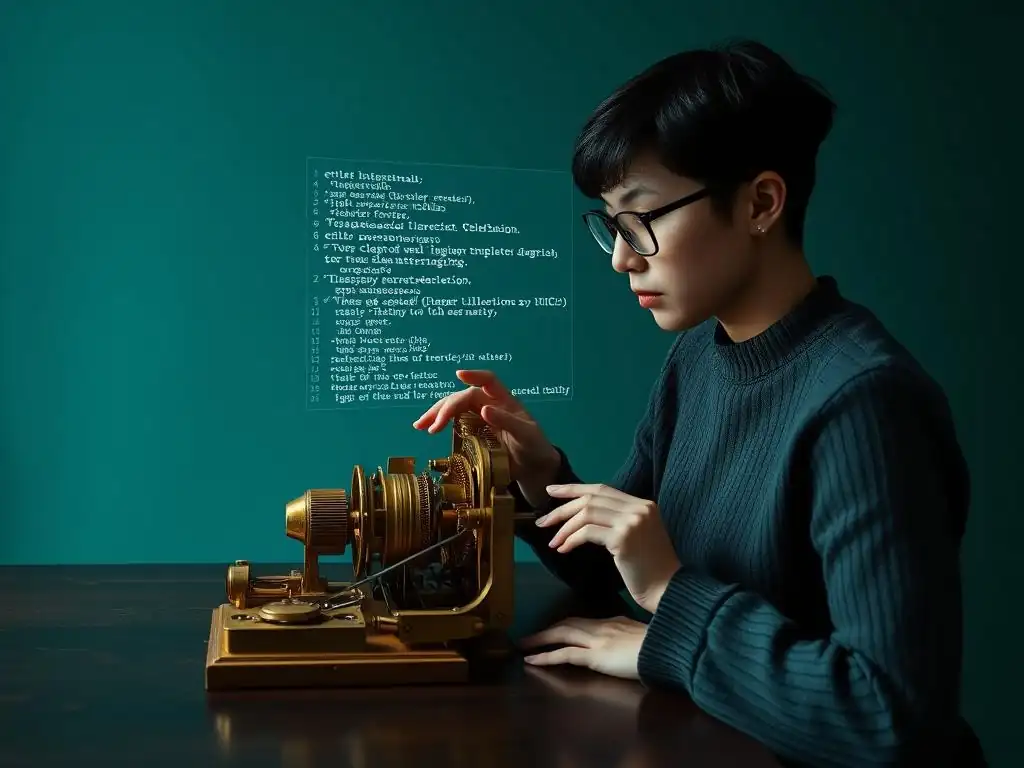
Hopper's Connection to Ada Lovelace's Vision: Pioneering Programming Concepts
Grace Hopper, often hailed as the "mother of COBOL" and a pioneer in compiler technology, shared a profound intellectual lineage with Ada Lovelace, the 19th-century mathematician and daughter of Lord Byron. While separated by over a century, both women possessed an extraordinary foresight into the potential of computing machines beyond mere calculation. Lovelace is famously credited with writing what is considered the world's first computer program – an algorithm for Charles Babbage's Analytical Engine, detailing how it could calculate Bernoulli numbers. Her detailed notes anticipated concepts like loops and subroutines, laying a theoretical groundwork for programming.
Hopper, in turn, took these theoretical underpinnings and transformed them into practical realities. Her development of the first compiler in the early 1950s was a monumental step, enabling programmers to write code in a language closer to English rather than machine-specific binary. This innovation made programming accessible to a wider audience, much in the spirit of Lovelace's vision that machines could process more than just numbers, extending their utility to manipulate symbols and even compose music. Hopper's work directly actualized Lovelace's conceptual breakthroughs, bridging the gap between abstract algorithmic thought and executable code.
The Enduring Impact of Ada Lovelace on Modern Programming
The profound influence of Ada Lovelace’s programming legacy continues to resonate deeply within the contemporary landscape of computer science and software development. Her groundbreaking insights, articulated in her 1843 notes on the Analytical Engine, established fundamental principles that are still central to every line of code written today. Lovelace was the first to articulate that a machine could follow a sequence of instructions to perform complex tasks, effectively defining the concept of a program.
Her visionary understanding that computers could process more than just numerical data—foreseeing their application in manipulating symbols, generating graphics, or even composing music—was centuries ahead of its time. This expansive view of computing's potential directly informs the diverse applications we see in modern technology, from artificial intelligence and data visualization to multimedia production. Ada Lovelace’s programming legacy is not just a historical footnote; it is the conceptual bedrock upon which the entire edifice of modern software engineering is built, making her an enduring inspiration for generations of coders, particularly women drawn to the field.
Hopper's Contributions to Computer Science: Beyond the Code
Innovation and Leadership: Developing the First Compiler
Grace Hopper's most significant technical contribution was her pioneering work on compilers, which revolutionized programming by making it more efficient and user-friendly. In the early 1950s, programming was a laborious process, requiring engineers to write code in machine language, a series of binary digits specific to each computer. Hopper envisioned a way for computers to understand instructions written in a language closer to human English.
Her team at Remington Rand developed A-0, the first compiler, in 1952. This program translated symbolic mathematical code into machine code, dramatically simplifying the programming process. Subsequent versions, including Math-Matic and Flow-Matic, further refined this concept. Flow-Matic, developed in 1957, was particularly groundbreaking as it was the first English-language data processing compiler, directly laying the groundwork for more universal programming languages and solidifying her reputation as a true innovator in computer science.
Advocacy for Accessible Technology: Popularizing COBOL
Beyond her technical innovations, Grace Hopper was a passionate advocate for making computer technology accessible to a wider audience, particularly in business and administrative applications. She believed that programming languages should be standardized and written in a way that was easy for non-specialists to understand and use. This philosophy directly led to her instrumental role in the development of COBOL (COmmon Business-Oriented Language).
COBOL, first specified in 1959, was designed to be platform-independent and readable, using English-like syntax. Hopper's relentless advocacy for COBOL's adoption by both government and private industry was crucial to its widespread success. Her famous "nanosecond" analogy, where she would show a piece of wire representing the distance light travels in a nanosecond, was a powerful tool to demystify computing and emphasize the speed of operations, making complex concepts relatable to a broader audience and championing computer literacy across various sectors.
Championing Women in Computer Science: A Powerful Voice for Change
Mentoring and Empowering Young Women in STEM Fields
Grace Hopper was not just a brilliant technologist; she was a tireless champion for women in STEM. Throughout her career, she actively sought out opportunities to mentor young women, offering guidance, encouragement, and practical advice on navigating a male-dominated field. She understood that simply having talent was not enough; women needed strong advocates and role models to overcome systemic barriers.
Hopper regularly spoke at universities and conferences, directly addressing students and encouraging girls to pursue careers in mathematics and computer science. She often shared her own experiences, demonstrating that it was possible to achieve extraordinary success despite societal expectations. Her personal commitment to fostering the next generation of female technologists had a tangible impact, inspiring countless women to pursue their passions and contribute to the rapidly evolving world of computing.
Promoting STEM Education: The "Nanosecond" Analogy
Hopper's advocacy for STEM education extended to making complex technical concepts understandable to a general audience, a critical step in democratizing access to computing knowledge. Her most famous teaching tool was the "nanosecond" analogy, where she carried around 11.8-inch pieces of wire. She would explain that this length represented the maximum distance electricity could travel in one billionth of a second (a nanosecond), the basic unit of time in a computer's operation.
This simple, tangible demonstration demystified the incredible speed of computers and the microscopic scale at which they operate. It was an effective way to engage audiences, from students to corporate executives, and illustrate the importance of efficiency in programming. By breaking down intimidating concepts into relatable terms, Hopper not only promoted computer literacy but also inspired a sense of wonder and possibility, encouraging more individuals, especially young people, to explore the fascinating world of science and technology.
Legacy and Impact: A Lasting Contribution to Women in Science History
Recognition and Awards: The National Medal of Technology
Grace Hopper's unparalleled contributions to computer science and her tireless advocacy for women in STEM did not go unnoticed, earning her numerous accolades throughout her distinguished career. In 1991, she was awarded the National Medal of Technology by President George H.W. Bush, making her the first individual woman to receive the prestigious award. This recognition acknowledged her pioneering work in developing programming languages and compilers, which fundamentally transformed the way humans interact with computers.
Beyond this highest civilian honor in technology, Hopper received over 40 honorary degrees from universities worldwide, was inducted into the National Women's Hall of Fame, and had a U.S. Navy destroyer, the USS Hopper, named in her honor. These awards not only celebrated her technical genius but also underscored her profound impact on the field and her enduring status as a role model for aspiring scientists and engineers across the globe.
Continuing the Fight: The Future of Women in Computer Science
Grace Hopper's legacy extends far beyond her technical innovations; it lies significantly in her relentless fight for diversity and inclusion in computer science. While significant progress has been made since her time, the underrepresentation of women in tech remains a pressing issue, with women holding only a fraction of leadership positions and facing ongoing challenges like bias and lack of mentorship. Hopper's life serves as a powerful reminder that continuous advocacy and systemic change are necessary.
Organizations like the AnitaB.org Institute, which hosts the Grace Hopper Celebration of Women in Computing, continue her mission by creating spaces for women technologists to connect, learn, and advance their careers. Her pioneering spirit and belief in the potential of every individual, regardless of gender, continue to inspire efforts to create a more equitable and inclusive tech industry. The ongoing push for STEM education for girls, mentorship programs, and policies that support work-life balance are all part of fulfilling Grace Hopper's vision for a diverse and innovative future in computer science.
Frequently Asked Questions
How did Ada Lovelace contribute to the field of computer science?
Ada Lovelace is often considered the first computer programmer because she wrote an algorithm for a machine, the Analytical Engine, that was designed but never built. Her notes contained what many recognize as the first published algorithm intended to be processed by a machine. This is a foundational element of computer science.
What were some of the main challenges faced by women in science, as exemplified by Ada Lovelace's experience?
Ada Lovelace faced skepticism and societal limitations due to her gender. Women were often excluded from formal scientific education and faced discrimination in accessing resources and recognition for their work. These biases are often reflected in historical records.
Why is it important to highlight the stories of women in science history?
It's crucial to highlight these stories to correct historical imbalances and provide role models for future generations. By showcasing the contributions of women like Ada Lovelace, we inspire young girls to pursue STEM fields and challenge existing gender stereotypes.
What is Ada Lovelace's programming legacy, and why is it still relevant today?
Ada Lovelace's legacy resides in her visionary understanding of computing beyond mere calculation. Her insights into the potential of machines to manipulate symbols and create complex processes laid the groundwork for modern programming concepts and remain relevant as technology evolves.
How does WomenInScienceHistory.com aim to promote the recognition of women's contributions to science?
WomenInScienceHistory.com aims to promote recognition by featuring biographies, articles, and discussions about pioneering female scientists. It seeks to raise awareness of their groundbreaking work and the obstacles they overcame, thus reshaping the narrative of scientific history.
Final Reflection: Amplifying Ada's Legacy
The journey through the life and work of a modern CS advocate, echoing Ada Lovelace's pioneering spirit, underscores the enduring power of representation and advocacy in technology. We've seen how challenging industry norms can pave the way for a more inclusive and innovative future, proving that one voice, amplified by code, can indeed reshape the landscape.
The impact of Ada Lovelace's vision, and the modern advocate's efforts, continues to ripple through the cultural and social landscape. It reminds us that progress isn't a passive occurrence but a conscious choice, a relentless pursuit of equity and opportunity. I am now about to set seriously to work upon the purposes for which I came to this place; namely, to become a mathematician.
- Ada Lovelace, highlighting her unwavering determination, a quality mirrored in the advocate we've explored.
As we close this exploration of Ada Lovelace's programming legacy and its modern echoes, I invite you to consider your own role in shaping the future of technology. How can you amplify voices, challenge norms, and contribute to a more inclusive and innovative world? Let Ada's legacy, and the advocate's actions, inspire you to code not just programs, but a better future for all.
Ignite Your Inner Advocate: Amplify Women's Voices in Tech!
Thank you for joining us on this inspiring journey through the life and work of a remarkable CS advocate. We hope her story has empowered you to recognize the importance of challenging norms and championing inclusivity. Now, let's translate that inspiration into action!
- Share this story with your network to amplify her message and inspire others to join the cause.
- Explore resources for promoting diversity in STEM and identify concrete steps you can take in your own community.
- Consider mentoring a young woman interested in tech – your guidance could be transformative.
What small, but impactful, action will you take today to support and uplift women in the world of science and technology?