
Mary Putnam Jacobi: Debunking 19thCentury Myths About Women's Health with Rigorous Science

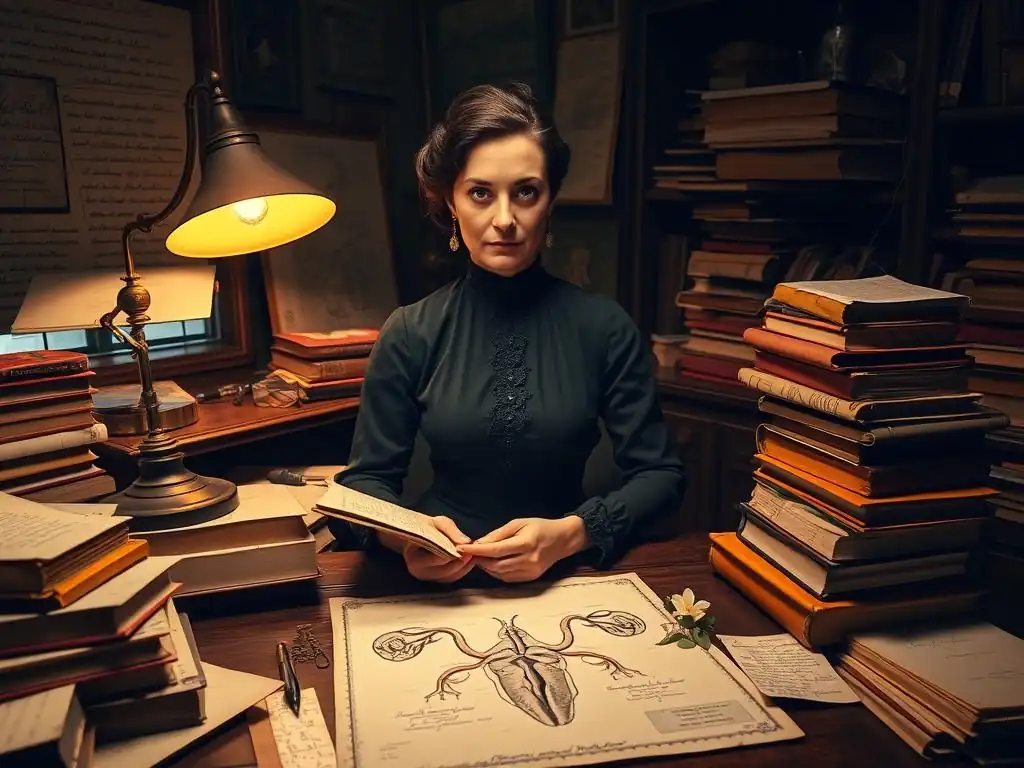
Welcome to WomenInScienceHistory.com!
Prepare to be inspired by the untold stories of women who defied expectations and revolutionized science. This month, we delve into the fascinating life and work of Mary Putnam Jacobi, a true pioneer who fearlessly challenged prevailing 19th-century beliefs about women's health. Her rigorous scientific approach and groundbreaking research debunked myths and paved the way for modern understanding. Intrigued? Read on to discover how Jacobi's legacy continues to shape women’s health science today.
- Introduction: Mary Putnam Jacobi - A Pioneer in Women's Health Science
- Challenging Prevailing Myths About Women's Health in the 19th Century
- Mary Putnam Jacobi's Scientific Contributions to Women's Health
- Mary Putnam Jacobi’s Rigorous Scientific Methodology
- Impact and Legacy of Mary Putnam Jacobi's Work
- Mary Putnam Jacobi: A Role Model for Women in Science
- Conclusion: Mary Putnam Jacobi's Enduring Contribution to Women’s Health Science
-
Frequently Asked Questions
- What was Mary Putnam Jacobi's primary contribution to women's health science?
- Why is Mary Putnam Jacobi considered a pioneering figure in science?
- What were some of the challenges Mary Putnam Jacobi faced as a woman in science?
- How did Mary Putnam Jacobi's work impact the understanding of women's health?
- Where can I learn more about women who have contributed to science throughout history?
- Final Reflection: Illuminating the Path of Scientific Truth
- Ignite Your Inner Scientist: Challenge the Status Quo!
Introduction: Mary Putnam Jacobi - A Pioneer in Women's Health Science
Mary Putnam Jacobi stands as a monumental figure in the history of medicine, particularly for her groundbreaking work in challenging prevailing 19th-century misconceptions about women's health. In an era when medical understanding of female physiology was often shrouded in myth and cultural bias, Jacobi emerged as a relentless advocate for scientific rigor. Her contributions were pivotal in establishing an evidence-based approach to Mary Jacobi women's health science, fundamentally altering how the medical community viewed women's bodies and capabilities.
Her pioneering efforts were not merely academic; they had profound implications for women's lives, debunking theories that limited their educational pursuits, professional opportunities, and even their physical autonomy. Through meticulous research and a steadfast commitment to empirical data, Mary Putnam Jacobi laid the groundwork for a more accurate and empowering understanding of women's health science, setting a precedent for future generations of medical professionals.
Early Life and Education of Mary Putnam Jacobi
Born in London in 1842 to American parents George Palmer Putnam, a prominent publisher, and Victorine Haven Putnam, Mary grew up in an intellectually stimulating environment. Her family moved back to the United States when she was young, settling in New York City. From an early age, Jacobi displayed an exceptional intellect and an insatiable curiosity, particularly towards scientific inquiry, which was unusual for girls of her time. Her parents, notably progressive for their era, encouraged her intellectual pursuits, providing her with access to resources and education that fueled her burgeoning interest in medicine and women's health science.
Mary Putnam Jacobi pursued her initial formal medical training at the New York College of Pharmacy, from which she graduated in 1863. This achievement alone was significant, as it made her one of the very few women in the United States to hold such a degree. Her thirst for deeper, more comprehensive medical knowledge, however, led her to seek further education, driven by a desire to contribute meaningfully to Mary Jacobi women's health science and practice.
Overcoming Barriers: Mary Putnam Jacobi's Journey into Medicine
The mid-19th century presented formidable barriers for women aspiring to enter the medical profession. Most established medical schools were exclusively open to men, and the idea of a woman practicing medicine was widely met with skepticism, if not outright hostility. Despite these pervasive obstacles, Mary Putnam Jacobi's determination remained unshaken. She initially faced rejections from several institutions but ultimately earned her medical degree from the New York Medical College for Women in 1864, a crucial step in her path toward advancing women's health science.
However, Jacobi was not content with the standard of medical education available to women in the U.S. at the time. She sought the most rigorous training available, which meant studying in Europe.
In a truly groundbreaking move, she gained admission to the prestigious École de Médecine in Paris in 1868, becoming the first woman to be formally admitted to this renowned institution. Her graduation in 1871, with honors, from such an esteemed European medical school provided her with an unparalleled scientific foundation, empowering her to critically assess and profoundly influence Mary Jacobi women's health science upon her return to the United States.
Challenging Prevailing Myths About Women's Health in the 19th Century
The Societal Context: 19th Century Views on Women's Health and Physiology
The 19th century was characterized by widely held, yet scientifically unsubstantiated, beliefs about women's health and physiology. A dominant theory, often referred to as the "energy conservation theory," posited that women possessed a finite amount of vital energy, with their reproductive organs consuming the majority of it.
This led to the pervasive notion that intellectual activity, higher education, or strenuous physical exertion would divert energy from the uterus and ovaries, leading to a host of ailments, including "nervous debility," infertility, or even mental illness. Influential physicians, such as Edward H. Clarke, reinforced these ideas in works like his 1873 book Sex in Education; or, A Fair Chance for the Girls, which argued that women's brains and wombs were in competition, making higher education a threat to their reproductive health.
These deeply entrenched views had profound societal implications, often serving to justify the restriction of women's roles to the domestic sphere. Women were frequently advised against pursuing education beyond a rudimentary level, engaging in professional careers, or participating in vigorous physical activity, particularly during menstruation. The medical establishment widely prescribed prolonged periods of rest, especially for women experiencing any form of "nervous prostration" or perceived fragility, reinforcing a narrative of inherent female weakness that Mary Putnam Jacobi would relentlessly challenge through her women's health science.
Popular Misconceptions about Women's Health Debunked by Jacobi
Mary Putnam Jacobi directly confronted these prevailing medical dogmas with her scientific acumen. A primary target of her critique was the deeply ingrained belief that menstruation was a debilitating illness requiring complete rest and isolation, rather than a normal physiological process. This myth often led to women being confined to bed, isolated from social interaction, and excused from any intellectual or physical exertion for a significant portion of each month. Jacobi recognized the detrimental impact of such prescriptions on women's physical and mental well-being, as well as their societal contributions.
She also challenged the notion that women's brains and reproductive organs were in an antagonistic relationship, competing for a limited energy supply. This theory underpinned arguments against women's access to higher education, suggesting that intellectual development would inevitably compromise their reproductive capacity. Mary Jacobi women's health science was distinguished by its empirical approach; she refused to accept these assumptions without rigorous scientific investigation. Her work aimed to provide evidence-based counter-arguments to these harmful misconceptions, advocating for a rational and objective understanding of female physiology.
Mary Putnam Jacobi's Scientific Contributions to Women's Health
Jacobi's Research on Women's Physiology and Exercise
Mary Putnam Jacobi's scientific contributions were rooted in empirical observation and data collection, a stark contrast to the speculative theories prevalent in her time. She actively engaged in research to understand women's physiological capabilities, particularly concerning physical activity.
Her clinical observations led her to conclude that many women, even those diagnosed with vague conditions like "nervous debility," often showed significant improvements in their overall health and vitality when encouraged to engage in moderate physical exercise, rather than being confined to rest. She championed the idea that exercise was not only safe but beneficial for women, challenging the prevailing medical wisdom that prescribed inactivity.
Her findings directly contradicted the common medical advice of her era, which often depicted women as inherently fragile and susceptible to collapse under physical strain. For instance, while many male physicians advised against any strenuous activity during menstruation, Jacobi's work suggested that for the vast majority of healthy women, engaging in normal daily activities, including appropriate exercise, posed no harm and could even contribute to overall well-being. This formed a crucial tenet of her pioneering Mary Jacobi women's health science, advocating for an active, rather than passive, approach to female health.
The "Rest Cure" Controversy: Jacobi's Scientific Stance
One of the most prominent medical treatments of the late 19th century for women suffering from "nervous prostration" or hysteria was the "rest cure," popularized by American neurologist Dr. S. Weir Mitchell. This controversial regimen typically involved complete bed rest, isolation from family and friends, overfeeding, and often massage or electrotherapy. While intended to be therapeutic, the rest cure often reinforced the perception of women as inherently weak and dependent, stripping them of their agency and exacerbating feelings of helplessness.
Mary Putnam Jacobi was a vocal and rigorous opponent of the rest cure. She viewed it as unscientific, counterproductive, and ultimately harmful, especially for women who were perfectly capable of leading active lives. Jacobi argued that prolonged inactivity could lead to physical deconditioning, muscle atrophy, and mental deterioration, rather than genuine recovery. Her stance was not merely an opinion but was grounded in her extensive medical knowledge and clinical observations, solidifying her commitment to evidence-based Mary Jacobi women's health science over popular, yet unproven, treatments that often served to disempower women.
Mary Putnam Jacobi's Dissertation: The Question of Rest for Women During Menstruation
Mary Putnam Jacobi's most celebrated and impactful scientific contribution was her 1876 essay, The Question of Rest for Women During Menstruation, which earned her the prestigious Boylston Prize from Harvard Medical School. This landmark work systematically dismantled the widespread medical myth that menstruation was inherently debilitating and necessitated complete rest for women. It stands as a seminal piece in the history of Mary Jacobi women's health science, directly challenging deeply ingrained societal and medical assumptions.
In her dissertation, Jacobi meticulously collected and analyzed physiological data from a cohort of 268 women, a remarkably large sample size for the era. She investigated their experiences, symptoms, and functional capabilities throughout their menstrual cycles. Her empirical findings clearly demonstrated that for the vast majority of healthy women, menstruation was a normal physiological process that did not significantly impair their physical or intellectual capacities, nor did it necessitate periods of enforced rest.
She presented compelling evidence that the symptoms often attributed to menstruation were frequently the result of poor health habits, restrictive clothing, or the psychological impact of societal expectations, rather than an inherent biological weakness. This rigorous, data-driven approach was a hallmark of Mary Jacobi women's health science.
Mary Putnam Jacobi’s Rigorous Scientific Methodology

Applying Scientific Rigor to the Study of Women's Health
Mary Putnam Jacobi was a pioneer in applying truly rigorous, evidence-based scientific methodology to the study of women's health, a field that was largely dominated by anecdotal observations, traditional beliefs, and gendered assumptions in the 19th century. She insisted on objective observation, systematic data collection, and rational analysis, a radical departure from the prevailing medical practices of her time, especially concerning "women's issues."
Her unwavering commitment to scientific principles meant she did not shy away from challenging popular medical opinions, even those held by respected male colleagues, when her research indicated otherwise. This commitment defined her profound contributions to Mary Jacobi women's health science.
She meticulously differentiated between pathological conditions requiring medical intervention and normal physiological processes that did not. Jacobi argued that many symptoms and conditions attributed to an inherent "female weakness" were, in fact, either normal variations of human experience or direct consequences of societal restrictions and unhealthy lifestyles imposed upon women. Her work represented a paradigm shift, moving the discussion of women's health from speculative theories and moralistic judgments to empirical investigation and scientific understanding, setting a new standard for women's health science.
Statistical Analysis and Data Collection in Jacobi's Research
A distinguishing feature of Mary Putnam Jacobi's research, particularly evident in her Boylston Prize-winning essay, was her pioneering use of statistical methods in medical inquiry. In an era where quantitative data analysis was still nascent in medicine, she collected detailed information from a substantial sample of 268 women regarding their menstrual experiences, activity levels, and reported symptoms. This systematic and quantitative approach allowed her to move beyond individual case studies and anecdotal evidence, which were common at the time, towards identifying broader patterns and drawing statistically significant conclusions.
By compiling and analyzing this extensive dataset, Jacobi was able to demonstrate empirically that only a small percentage of women experienced significant debilitating symptoms during menstruation, thereby challenging the universal prescription of rest. Her meticulous data collection and analytical rigor allowed her to present a compelling scientific argument that directly countered prevailing medical dogma. This innovative use of empirical data and statistical reasoning was a foundational aspect of her contribution to Mary Jacobi women's health science, establishing a precedent for evidence-based research in the field.
Impact and Legacy of Mary Putnam Jacobi's Work
Influence on Women's Health Practices and Medical Understanding
Mary Putnam Jacobi's groundbreaking work, particularly her Boylston Prize essay The Question of Rest for Women During Menstruation, gradually began to influence medical understanding, though its full acceptance was not immediate. Her rigorous scientific arguments challenged deeply entrenched myths about female fragility, fostering a more nuanced and accurate view of women's physiology within the medical community. While the "rest cure" and similar disempowering treatments persisted for some time, Jacobi's articulate and evidence-based opposition laid crucial groundwork for their eventual decline and for the adoption of more active, healthful approaches to women's health science.
Beyond specific treatments, Jacobi's broader impact was on the very methodology of medical research concerning women. By demonstrating that women's health could and should be studied with the same scientific rigor as men's, she opened the door for future empirical research. Her efforts contributed significantly to the evolution of modern gynecology and women's healthcare, shifting the focus from patriarchal assumptions to a foundation of empirical evidence, thereby advancing Mary Jacobi women's health science for generations.
Mary Putnam Jacobi's Advocacy for Women's Medical Education
Beyond her profound research, Mary Putnam Jacobi was a tireless and formidable advocate for women's access to high-quality medical education and professional opportunities. She firmly believed that women physicians were indispensable for a comprehensive and empathetic understanding and treatment of women's health issues. In 1874, she co-founded the Women's Medical Association of New York City, serving as its president, with the aim of elevating the standards of medical education available to women and promoting their integration into the medical profession.
Her advocacy extended to ensuring that women received training equal in rigor and scope to that of men. She was instrumental in campaigning for the admission of women to co-educational medical schools and for their curriculum to be on par with that of their male counterparts. Jacobi understood that true progress in Mary Jacobi women's health science depended not only on new research but also on a robust pipeline of well-trained female medical practitioners who could apply scientific principles to patient care. Her efforts directly contributed to expanding educational opportunities for women in medicine.
Recognition and Awards Received by Mary Putnam Jacobi
Mary Putnam Jacobi's intellect and scientific contributions garnered significant, albeit sometimes reluctant, recognition from the male-dominated medical establishment of her era. The most prominent acknowledgment came in 1876 when her seminal essay, The Question of Rest for Women During Menstruation, was awarded the prestigious Boylston Prize by Harvard Medical School. This was a remarkable achievement, as it signified that her rigorous scientific work had earned validation from one of the nation's leading medical institutions, despite its challenge to prevailing views on women's health science.
Further demonstrating her esteemed standing, Jacobi was elected as the first female member of the New York Academy of Medicine in 1874, a significant milestone that broke gender barriers within a prominent professional organization. She also held faculty positions, serving as a professor at the New York Infirmary for Women and Children, where she continued to teach and practice. These appointments and accolades, though perhaps fewer than a male contemporary with similar achievements might have received, underscore the respect she commanded within the scientific community for her dedication to Mary Jacobi women's health science.
Mary Putnam Jacobi: A Role Model for Women in Science
Inspiring Future Generations of Female Scientists and Physicians
Mary Putnam Jacobi's remarkable career serves as an enduring source of inspiration for women aspiring to careers in science and medicine. Her unwavering perseverance in the face of widespread discrimination, her resolute commitment to acquiring a rigorous scientific education, and her intellectual courage in challenging deeply entrenched medical dogmas demonstrated that women could not only enter but also excel in fields traditionally reserved for men. She effectively shattered numerous glass ceilings, paving the way for countless women who followed in her footsteps, aspiring to contribute to women's health science and beyond.
Her story continues to resonate with women in STEM fields today, serving as a powerful reminder of the importance of critical thinking, evidence-based inquiry, and the courage to challenge established norms when scientific truth demands it. Jacobi's legacy is one of intellectual bravery and an unwavering dedication to improving human well-being through scientific advancement, making her an exemplary figure in the history of Mary Jacobi women's health science and a beacon for aspiring female scientists.
Jacobi's Commitment to Scientific Truth and Women's Empowerment
A defining characteristic of Mary Putnam Jacobi's professional life was her unyielding commitment to scientific truth, even when it meant confronting popular opinions or the authority of her male colleagues. She believed that medicine, particularly women's health science, must be grounded in objective observation and empirical evidence, not in tradition, prejudice, or unverified assumptions about gender. This intellectual honesty was a cornerstone of her approach, allowing her to dismantle myths that had long constrained women's lives and opportunities.
Furthermore, Jacobi's scientific work was inextricably linked to the broader movement for women's empowerment. By systematically debunking myths about female fragility and advocating for women's physical and intellectual capabilities, she provided a robust scientific basis for challenging societal limitations placed on women. Her rigorous research demonstrated that women were not inherently weak or destined for domesticity, but were capable, intelligent, and physically robust individuals. Through her contributions to Mary Jacobi women's health science, she provided powerful scientific arguments for women's autonomy, education, and full participation in society.
Conclusion: Mary Putnam Jacobi's Enduring Contribution to Women’s Health Science
Remembering Mary Putnam Jacobi: A Legacy of Scientific Excellence and Advocacy
Mary Putnam Jacobi stands as a towering figure whose contributions profoundly shaped the understanding and practice of women's health. Her legacy is multifaceted, encompassing her pioneering research, her rigorous scientific methodology, and her tireless advocacy. She was instrumental in debunking harmful 19th-century myths about female fragility, particularly concerning menstruation and women's capacity for education and physical activity. Her 1876 Boylston Prize essay, The Question of Rest for Women During Menstruation, remains a testament to her empirical approach, systematically challenging prevailing medical dogma with irrefutable data.
Beyond her scientific discoveries, Jacobi was a fierce champion for women's access to high-quality medical education, ensuring that future generations of female physicians would be equipped with the knowledge and skills necessary to advance women's health science. Her work shifted the paradigm from speculative, often prejudiced, assumptions to an evidence-based understanding of female physiology. Mary Putnam Jacobi's enduring contribution to Mary Jacobi women's health science continues to inspire, reminding us of the power of scientific excellence and unwavering advocacy to challenge injustice and improve the well-being of all.
Frequently Asked Questions
What was Mary Putnam Jacobi's primary contribution to women's health science?
Mary Putnam Jacobi is best known for her research debunking prevailing 19th-century myths about women's health, particularly regarding menstruation and its impact on women's abilities. She used rigorous scientific methodology to challenge these harmful beliefs.
Why is Mary Putnam Jacobi considered a pioneering figure in science?
Jacobi was a trailblazer because she actively challenged the male-dominated scientific establishment of her time. Her work helped to pave the way for more women to enter and succeed in scientific fields.
What were some of the challenges Mary Putnam Jacobi faced as a woman in science?
She faced gender bias and discrimination in education, research opportunities, and professional recognition. Many doubted her capabilities simply because she was a woman in a field largely reserved for men.
How did Mary Putnam Jacobi's work impact the understanding of women's health?
Her evidence-based research significantly improved understanding of women's health by debunking myths and providing a more accurate and scientific perspective. This laid the foundation for better healthcare practices for women.
Where can I learn more about women who have contributed to science throughout history?
Websites like WomenInScienceHistory.com are dedicated to celebrating the achievements of women in science. They offer biographies and information about their groundbreaking work and the challenges they overcame.
Final Reflection: Illuminating the Path of Scientific Truth
The life and work of Mary Putnam Jacobi serve as a powerful reminder that rigorous science can dismantle deeply ingrained societal biases. Her unwavering commitment to evidence-based medicine, particularly in the face of widespread misconceptions about women's health, continues to resonate today as we grapple with persistent inequalities and the need for inclusive research. Jacobi's legacy is not just historical; it's a call to action for continued vigilance against prejudice masquerading as fact.
Jacobi's influence extends far beyond the medical field; she demonstrated the transformative power of challenging established norms and advocating for marginalized voices. Her dedication to scientific inquiry, even when facing immense opposition, paved the way for future generations of women in science and medicine. We must not accept the opinions of the past as the truth of the present, but must always be ready to question and to test.
This quote, though not directly from Jacobi, perfectly encapsulates the spirit that drove her work and continues to inspire progress.
Let us all be inspired by Mary Putnam Jacobi's unwavering pursuit of truth. Consider how you can challenge assumptions, advocate for evidence-based understanding, and contribute to a more equitable and informed world. Her story reminds us that progress is not inevitable, but rather the result of courageous individuals who dare to question, investigate, and illuminate the path forward.
Ignite Your Inner Scientist: Challenge the Status Quo!
Thank you for exploring the groundbreaking work of Mary Putnam Jacobi with us. We hope you've gained a new appreciation for her dedication to scientific rigor and her fearless fight against misinformation. Now, it's your turn to carry the torch!
Here's how you can get involved:
- Challenge a misconception you hold about women's health by researching credible, scientific sources and sharing your findings with others.
- Share this article with three friends, family members, or colleagues who would appreciate learning about Mary Putnam Jacobi's inspiring story.
- Nominate a contemporary woman scientist who you believe is making a significant impact in women's health for recognition on WomenInScienceHistory.com.
What steps will you take to ensure that future generations benefit from accurate and equitable healthcare information?