
Marie Tharp: Mapping the Ocean's Secrets, The Woman Who Revealed Seafloor Spreading

Welcome to WomenInScienceHistory.com!
Prepare to be inspired by the untold stories of brilliant women who shaped the scientific landscape. Today, we delve into the fascinating life and groundbreaking work of a true pioneer in Environmental Science. Discover how Marie Tharp, armed with unwavering dedication and groundbreaking vision, mapped the ocean floor and played a pivotal role in revealing the theory of Marie Tharp seafloor spreading. What secrets did she uncover, and what obstacles did she overcome in a world that often overlooked her contributions? Explore the article below to unravel the mysteries.
- Introduction: Unveiling the Pioneering Work of Marie Tharp
- Early Life and Education: The Foundation of a Scientific Career
- Collaborating with Bruce Heezen: A Groundbreaking Partnership
- Mapping the Ocean Floor: Discovering the Mid-Atlantic Ridge Rift Valley
- The Revelation of Seafloor Spreading: A Paradigm Shift in Geology
- Initial Skepticism and Acceptance within the Scientific Community
- The Importance of Visualizing Data: Tharp's Cartographic Genius
- Marie Tharp's Lasting Legacy: Inspiring Future Generations
- The Significance of Marie Tharp's Discoveries in Marine Science
- Conclusion: Celebrating Marie Tharp, A Visionary in Marine Geology
-
Frequently Asked Questions
- How did Marie Tharp contribute to the discovery of seafloor spreading?
- What were the main challenges Marie Tharp faced as a woman in science?
- Why is Marie Tharp's work on seafloor spreading considered groundbreaking?
- What impact did Marie Tharp's work have on the field of oceanography?
- Where can I learn more about Marie Tharp's contributions to science history?
- Final Reflection: Unveiling the Depths of Discovery
- Unveil the Mysteries Further: Your Next Steps!
Introduction: Unveiling the Pioneering Work of Marie Tharp
Highlighting Marie Tharp's Contribution to Marine Geology
Marie Tharp stands as a towering figure in the annals of marine geology, a visionary cartographer whose meticulous work fundamentally reshaped our understanding of Earth's dynamic processes. Before her groundbreaking contributions, the vast expanses of the ocean floor remained largely uncharted, a mysterious realm whose true topography was unknown. Tharp’s dedication to mapping this unseen world provided the empirical data necessary to reveal the intricate structures beneath the waves, paving the way for a geological revolution.
Her most significant and enduring legacy is the co-discovery of the Mid-Atlantic Ridge's central rift valley, which provided irrefutable evidence for Marie Tharp seafloor spreading. This revelation, initially met with skepticism, challenged the prevailing static view of the Earth and laid the essential groundwork for the acceptance of plate tectonics. Her ability to translate raw sonar data into compelling visual representations was unparalleled, transforming abstract numbers into concrete geographical features that told a story of a moving planet.
Women in Science History: Recognizing Marie Tharp's Legacy
Recognizing the contributions of women like Marie Tharp is crucial for a complete and accurate narrative of scientific progress. In the mid-20th century, Tharp navigated a scientific landscape heavily dominated by men, facing significant professional and societal barriers that often limited women's participation in fieldwork and leadership roles. Despite these systemic challenges, her intellectual prowess and unwavering commitment to scientific truth shone through, allowing her to make discoveries of global significance.
Marie Tharp's legacy extends far beyond her scientific findings; she serves as a powerful symbol of perseverance and intellectual courage in the face of adversity. Her story is a testament to the fact that groundbreaking insights can emerge from unexpected places and from individuals who defy conventional expectations. By highlighting her journey, we not only celebrate a scientific pioneer but also inspire future generations of women to pursue careers in STEM, ensuring that their vital contributions to discoveries like Marie Tharp seafloor spreading are recognized and celebrated.
Early Life and Education: The Foundation of a Scientific Career
Marie Tharp's Early Influences and Academic Pursuits
Marie Tharp's early life was profoundly shaped by her father, William Tharp, a soil surveyor for the U.S. Department of Agriculture. His work often involved mapping, and the family moved frequently, exposing Marie to diverse landscapes and instilling in her an early appreciation for meticulous observation and geographical representation. This formative exposure to surveying and mapping laid a subtle but crucial foundation for her future career in cartography.
Her academic journey further solidified this interdisciplinary approach. Tharp earned a bachelor's degree in geology and music from Ohio University in 1943. Following this, she pursued a master's degree in geology from the University of Michigan in 1944, at a time when many men were away fighting in World War II, creating temporary opportunities for women in scientific fields.
Later, she also earned a bachelor's degree in mathematics from the University of Tulsa in 1948. This unique combination of geology, which provided the conceptual framework, and mathematics, which offered the analytical tools, equipped her with the precise skills needed to interpret complex geophysical data and ultimately visualize the evidence for Marie Tharp seafloor spreading.
Overcoming Gender Barriers in the Mid-20th Century
The mid-20th century presented formidable gender barriers for women aspiring to careers in science. While the wartime context briefly opened doors, deeply entrenched societal norms and institutional policies often relegated women to supportive, less recognized roles. Marie Tharp faced these challenges directly; for instance, she was largely prohibited from participating in extended oceanographic expeditions on research vessels, simply because she was a woman.
This restriction meant that Tharp had to conduct her groundbreaking work primarily from onshore laboratories, relying on data collected by her male colleagues. Instead of being a disadvantage, this constraint perhaps honed her analytical and cartographic skills even further. She meticulously processed vast quantities of raw sonar soundings, transforming abstract numbers into tangible geological features. Her perseverance in the face of these limitations underscores her remarkable dedication and intellectual fortitude, which ultimately led to the pivotal discovery of evidence for Marie Tharp seafloor spreading.
Collaborating with Bruce Heezen: A Groundbreaking Partnership
The Heezen-Tharp Collaboration: A Synergistic Approach to Ocean Mapping
The groundbreaking collaboration between Marie Tharp and Bruce Heezen began in 1948 at the Lamont Geological Observatory (now Lamont-Doherty Earth Observatory of Columbia University). This partnership was a classic example of scientific synergy, where the complementary skills of two individuals led to discoveries far greater than either could have achieved alone. Heezen, a marine geologist, was primarily responsible for organizing and collecting the immense volume of sonar data from various research expeditions.
Tharp, on the other hand, was the analytical and visual genius. Her role involved meticulously processing this raw bathymetric data, plotting individual soundings by hand on large sheets of paper, and transforming them into detailed physiographic diagrams of the ocean floor. While Heezen brought the data from the sea, it was Tharp's keen eye, mathematical precision, and cartographic skill that allowed them to discern patterns and structures previously invisible, laying the crucial visual foundation for understanding Marie Tharp seafloor spreading.
Bruce Heezen's Role and the Initial Skepticism Towards Tharp's Findings
Bruce Heezen's role was indispensable in acquiring the vast datasets that formed the basis of their work. He was often at sea, gathering the sonar profiles that would later be handed over to Tharp for interpretation. However, despite their close collaboration, Heezen himself initially harbored significant skepticism regarding Tharp's most revolutionary observation: the continuous rift valley running along the crest of the Mid-Atlantic Ridge.
Upon Tharp's initial presentation of this feature, Heezen famously dismissed it as "girl talk," suggesting it was merely an artifact of her imagination or perhaps even Freudian in nature. This initial resistance, while indicative of the prevailing gender biases of the era, highlights the radical nature of Tharp's insight. Despite his doubt, Tharp persisted, refining her maps and accumulating more evidence, eventually convincing Heezen of the reality of the rift valley, a pivotal step towards the formal proposal of seafloor spreading revealed by Marie Tharp.
Mapping the Ocean Floor: Discovering the Mid-Atlantic Ridge Rift Valley
The Process of Ocean Floor Mapping: From Data Collection to Visual Representation
The process of mapping the ocean floor in the mid-20th century was a painstaking and laborious endeavor. It began with the collection of bathymetric data using sonar technology aboard research vessels. These instruments emitted sound waves downwards, measuring the time it took for the echoes to return, thereby calculating the depth of the seafloor. This yielded individual depth soundings along the ship's track, often taken at intervals of a few kilometers.
Marie Tharp's genius lay in transforming these disparate data points into a coherent visual representation. She would receive rolls of paper with thousands of individual depth readings and meticulously plot them by hand onto large, gridded sheets. This manual, iterative process of interpolation and contouring allowed her to identify subtle changes in depth and to discern continuous topographical features, ultimately leading to the creation of detailed physiographic diagrams that were essential for understanding the evidence for Marie Tharp seafloor spreading.
Identifying the Central Rift Valley: The Key to Seafloor Spreading
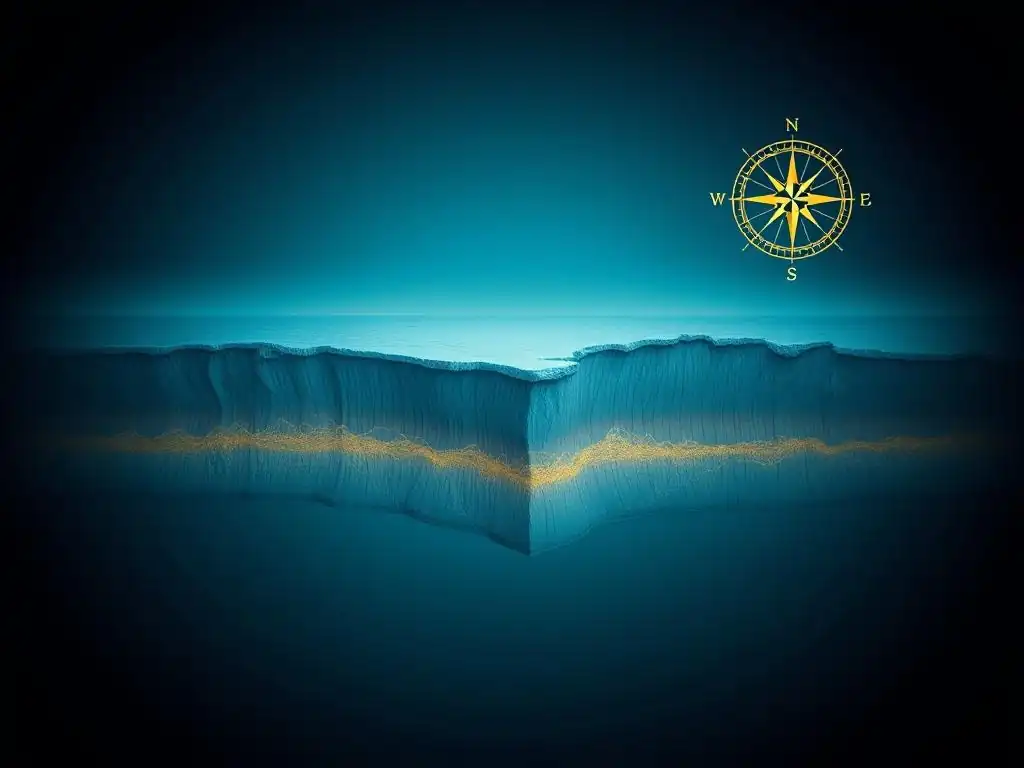
As Marie Tharp painstakingly pieced together the bathymetric data for the North Atlantic, a remarkable and unexpected pattern began to emerge. Running consistently along the crest of the Mid-Atlantic Ridge, she observed a deep, V-shaped indentation—a central rift valley. This feature, approximately 25 to 50 kilometers wide and 1 to 2 kilometers deep, was not an isolated anomaly but a continuous geological structure extending for thousands of kilometers.
This discovery was profoundly significant because it contradicted the prevailing geological theories of the time, which largely envisioned the ocean floor as a static, flat plain. The presence of a continuous rift valley strongly suggested a tensional, rather than compressional, force at play, implying that the Earth's crust was actively pulling apart at this location. This observation became the critical piece of evidence that directly pointed to the concept of Marie Tharp seafloor spreading, challenging the long-held paradigm of a static Earth and setting the stage for a revolution in Earth science.
The Revelation of Seafloor Spreading: A Paradigm Shift in Geology
Marie Tharp's Evidence for Seafloor Spreading
Marie Tharp's meticulous mapping provided compelling visual evidence for seafloor spreading. Her physiographic diagrams of the Atlantic Ocean floor clearly depicted the continuous, globally interconnected Mid-Ocean Ridge system, a massive underwater mountain range. Crucially, within this ridge, she identified the prominent central rift valley, a feature that suggested the Earth's crust was actively being pulled apart.
Further strengthening her hypothesis, Tharp correlated her mapped rift valley with data on earthquake epicenters. She observed that a significant number of seismic events occurred precisely along the length of this rift. This correlation between an active geological process (earthquakes) and a specific topographical feature (the rift valley) provided powerful empirical support for the idea that new crust was being generated at the ridge axis and moving outwards. This was the foundational insight of Marie Tharp's seafloor spreading hypothesis, demonstrating that the ocean floor was a dynamic, ever-changing landscape.
How Marie Tharp's Work Supported the Theory of Plate Tectonics
While the full theory of plate tectonics was formalized after Tharp's initial discovery, her work provided the indispensable empirical foundation for its development. Before Tharp, the concept of continental drift, proposed by Alfred Wegener, lacked a plausible mechanism for how continents could move. Tharp's identification of the Mid-Atlantic Ridge rift valley provided the crucial "engine" – the site where new oceanic crust is continuously formed and pushed outwards.
Scientists like Harry Hess and Robert Dietz later built upon Tharp and Heezen's cartographic evidence to articulate the full theory of seafloor spreading, proposing that the ocean floor acts like a conveyor belt, carrying continents with it. Tharp's maps, particularly the depiction of the continuous rift and its association with seismic activity, served as the primary visual proof that transformed a theoretical concept into a widely accepted scientific model. Her profound contributions to understanding Marie Tharp seafloor spreading were thus instrumental in ushering in the plate tectonics revolution, fundamentally altering our understanding of Earth's geological processes.
Initial Skepticism and Acceptance within the Scientific Community
Facing Resistance: The Challenges of a Female Scientist Proposing a Revolutionary Idea
Marie Tharp's revolutionary findings faced significant resistance within the scientific community, a challenge exacerbated by her gender in the mid-20th century. Her collaborator, Bruce Heezen, initially dismissed her discovery of the central rift valley as "girl talk," reflecting a pervasive bias that often undervalued women's intellectual contributions. The idea of a continuously splitting ocean floor was itself radical, challenging decades of geological dogma that posited a largely static Earth.
Furthermore, traditional scientific circles were often skeptical of findings that emerged from desk-bound analysis rather than direct fieldwork, a limitation imposed on Tharp due to gender restrictions on research vessels. This combination of inherent scientific conservatism and gender-based prejudice meant that Tharp's groundbreaking insights, particularly the evidence for Marie Tharp seafloor spreading, struggled to gain immediate traction. Her experience highlights the additional hurdles faced by pioneering women in science who not only had to prove their scientific hypotheses but also overcome systemic biases.
The Gradual Acceptance of Seafloor Spreading and Tharp's Role
Despite initial skepticism, the evidence for seafloor spreading, largely visualized by Marie Tharp, gradually became undeniable. As more bathymetric data accumulated from other ocean basins, the global nature of the mid-ocean ridge system with its central rift became increasingly apparent. Crucially, independent lines of evidence, such as paleomagnetic striping on the ocean floor (revealing symmetrical patterns of magnetic reversals away from the ridge), provided powerful confirmation of the spreading process Tharp had initially visualized.
While Harry Hess is often credited with formalizing the seafloor spreading hypothesis in 1960, he explicitly acknowledged the foundational work of Tharp and Heezen, stating that their maps provided the "conclusive evidence." By the late 1960s, with the rapid acceptance of plate tectonics, Marie Tharp seafloor spreading became a cornerstone of modern geology. Her maps became indispensable visual tools, transforming an abstract concept into a tangible reality and solidifying her place as a fundamental, albeit belatedly recognized, contributor to one of the 20th century's most significant scientific breakthroughs.
The Importance of Visualizing Data: Tharp's Cartographic Genius
The Impact of Marie Tharp's Maps
Marie Tharp's maps had a profound and transformative impact on marine geology and oceanography. Before her meticulous work, the ocean floor was largely a featureless void on geological charts, represented by vague depths and speculative contours. Her hand-drawn physiographic diagrams, culminating in the iconic 1977 "World Ocean Floor" map (co-published with Heezen), provided the first comprehensive and visually compelling representation of the global seafloor.
These maps were not just technical charts; they were powerful scientific instruments that revealed the intricate topography of the ocean basins, including vast underwater mountain ranges, abyssal plains, and deep oceanic trenches. Most significantly, they clearly depicted the continuous global mid-ocean ridge system and its central rift valley, making the abstract concept of Marie Tharp seafloor spreading tangible and understandable to a wide scientific audience. Her maps literally brought the ocean floor into view, allowing geologists to see the dynamic processes at play.
Using Cartography to Communicate Complex Scientific Concepts
Tharp's cartographic genius lay in her extraordinary ability to synthesize vast amounts of raw, numerical bathymetric data into clear, intuitive, and aesthetically powerful visual forms. She transformed thousands of individual depth soundings into coherent topographic features, allowing scientists to interpret complex geological processes that were otherwise hidden within columns of numbers. This skill was critical for communicating a revolutionary idea.
Her maps provided an undeniable visual argument for seafloor spreading that transcended disciplinary boundaries. They allowed scientists to "see" the Earth's tectonic plates in motion, to visualize the birth of new crust at the mid-ocean ridges, and to understand the implications for phenomena like earthquakes and volcanoes. Marie Tharp's work stands as a testament to the power of cartography as a fundamental tool for scientific discovery and communication, solidifying the visual proof for Marie Tharp seafloor spreading and its broader implications for Earth science.
Marie Tharp's Lasting Legacy: Inspiring Future Generations
Marie Tharp's Influence on Marine Biology and Oceanography
Marie Tharp's influence extends far beyond the realm of pure geology, significantly impacting marine biology and oceanography. Her detailed maps of the ocean floor provided the essential bathymetric context that was previously missing for researchers studying deep-sea environments. Understanding the physical structure of the ocean basins – the depths, ridges, trenches, and abyssal plains – is fundamental for comprehending marine habitats, oceanic currents, and the distribution of marine life.
Her work laid the foundation for subsequent discoveries, such as hydrothermal vents, unique deep-sea ecosystems thriving on chemosynthesis, often found along mid-ocean ridges. Tharp's maps allowed marine biologists to better understand the physical parameters influencing species distribution and evolution in the deep ocean, while oceanographers gained crucial insights into how seafloor topography influences ocean currents and heat transfer. Thus, the understanding of Marie Tharp seafloor spreading had profound ripple effects across the entire spectrum of marine sciences.
Honoring Marie Tharp: Recognition and Awards for Her Contributions
Despite the pivotal nature of her discoveries, formal recognition for Marie Tharp often came late in her career, reflecting the systemic biases she faced. However, in later years, her immense contributions began to receive the accolades they deserved. In 1999, the Lamont-Doherty Earth Observatory of Columbia University, where she spent most of her career, awarded her the Lamont-Doherty Heritage Award for her pioneering work in mapping the ocean floor.
In 2001, she was honored with the first annual Outstanding Achievement Award from the Women in Technology International (WITI) Hall of Fame, a recognition that underscored her groundbreaking use of data visualization in science. These awards, among others, represent a crucial, if delayed, acknowledgment of her perseverance, intellectual courage, and the transformative impact of her work. Her story continues to inspire women in STEM fields, highlighting the immense value of their contributions and the enduring scientific significance of Marie Tharp seafloor spreading.
The Significance of Marie Tharp's Discoveries in Marine Science
Understanding Plate Tectonics and its Connection to Seafloor Spreading
Marie Tharp's discovery of the Mid-Atlantic Ridge rift valley was the crucial empirical piece of evidence that confirmed the mechanism for seafloor spreading, which in turn became the driving force behind the theory of plate tectonics. Before her maps, the idea of continental drift, though proposed, lacked a credible explanation for how continents could move across the Earth's surface. Tharp provided the visual proof of the Earth's crust pulling apart and new crust being generated at the mid-ocean ridges.
This unified theory of plate tectonics revolutionized Earth sciences, providing a comprehensive framework for understanding a vast array of geological phenomena. It explained the distribution of earthquakes and volcanoes, the formation of mountain ranges, the opening and closing of ocean basins, and the long-term evolution of continents. The foundational understanding of Marie Tharp seafloor spreading thus became the bedrock upon which the entire edifice of modern plate tectonics was built, fundamentally altering our perception of the dynamic Earth.
Marie Tharp's Mapping and its Relevance to Modern Oceanographic Research
Even with the advent of advanced technologies like satellite altimetry and autonomous underwater vehicles, Marie Tharp's foundational maps and her conceptual understanding of the ocean floor remain profoundly relevant to modern oceanographic research. Her work established the baseline understanding of global ocean floor morphology, providing the initial framework for all subsequent detailed mapping efforts. The Mid-Atlantic Ridge, as depicted by Tharp, continues to be a primary area of intensive study.
Contemporary oceanographic research continually builds upon the framework established by Tharp, exploring the intricate dynamics of mid-ocean ridges, the processes of new crust formation, and the associated geological and biological phenomena. Scientists today investigate the precise rates of spreading, the characteristics of hydrothermal vents, and the seismic activity along these rifts, all within the context of the dynamic seafloor processes that Marie Tharp seafloor spreading first revealed. Her legacy endures as a testament to the enduring power of meticulous observation and cartographic innovation.
Conclusion: Celebrating Marie Tharp, A Visionary in Marine Geology
Marie Tharp: A Role Model for Women in STEM
Marie Tharp's journey is a powerful narrative of perseverance, intellectual courage, and groundbreaking achievement in the face of significant gender-based obstacles. As a woman working in a predominantly male scientific field in the mid-20th century, she defied expectations and challenged conventions, ultimately making a discovery that reshaped our understanding of the planet. Her story serves as an inspiring testament to the fact that talent and dedication can overcome even the most formidable barriers.
She stands as an exceptional role model for aspiring female scientists, engineers, and mathematicians, demonstrating that women can lead revolutionary discoveries and profoundly impact scientific thought. Her meticulous work and unwavering commitment to scientific truth, culminating in the visualization of Marie Tharp seafloor spreading, underscore the vital importance of diverse perspectives in driving scientific progress and ensuring that all voices contribute to our collective understanding of the world.
The Enduring Impact of Marie Tharp's Seafloor Maps
The enduring impact of Marie Tharp's seafloor maps cannot be overstated. They are not merely historical artifacts but are foundational scientific documents that fundamentally changed how humanity views its own planet. Before her work, the vast majority of the Earth's surface – the ocean floor – was largely unknown. Tharp's maps literally brought this hidden world to light, revealing its complex topography and dynamic processes.
Her meticulous hand-drawn charts provided the crucial visual evidence for seafloor spreading, a concept that became the cornerstone of plate tectonics. This discovery revolutionized geology, explaining phenomena from earthquakes to mountain building. Marie Tharp's cartographic genius and her relentless pursuit of scientific truth, which culminated in the revelation of Marie Tharp seafloor spreading, stand as one of the most significant and visually impactful scientific achievements of the 20th century, cementing her place as a true pioneer in marine geology.
Frequently Asked Questions
How did Marie Tharp contribute to the discovery of seafloor spreading?
Marie Tharp transformed raw echo-sounding data into detailed maps of the ocean floor. These maps revealed the Great Global Rift, a feature that provided crucial evidence supporting the theory of seafloor spreading.
What were the main challenges Marie Tharp faced as a woman in science?
Tharp faced gender bias and skepticism from her male colleagues. Her initial findings about the rift valley were dismissed as "girl talk" by Bruce Heezen, her collaborator, highlighting the challenges women faced in being taken seriously.
Why is Marie Tharp's work on seafloor spreading considered groundbreaking?
Tharp's mapping provided visual evidence for the theory of plate tectonics, specifically seafloor spreading. This evidence was pivotal in shifting scientific understanding of the Earth's structure and geological processes.
What impact did Marie Tharp's work have on the field of oceanography?
Her detailed maps revolutionized oceanography by providing the first comprehensive view of the ocean floor. They became essential tools for understanding underwater geological features and processes, shaping future research.
Where can I learn more about Marie Tharp's contributions to science history?
Websites like WomenInScienceHistory.com provide biographies and details about her work. Academic journals and books dedicated to the history of science are also valuable resources for in-depth information.
Final Reflection: Unveiling the Depths of Discovery
The story of Marie Tharp, a woman who dared to chart the unknown depths of our oceans, resonates powerfully today. Her unwavering dedication to scientific truth, despite facing skepticism and prejudice, serves as a potent reminder of the importance of challenging established norms. In a world still grappling with gender inequality and the underrepresentation of women in STEM fields, Tharp's legacy continues to inspire a new generation of explorers and innovators.
The impact of Tharp's work extends far beyond the scientific community. Her maps, beautifully rendered and scientifically groundbreaking, forever changed our understanding of the Earth and its dynamic processes. Her story underscores the power of perseverance and the profound impact one individual can have on shaping our collective knowledge. The whole world was spread out before me, to see, to learn about, to map. It was such a gift!
- Marie Tharp. This quote encapsulates the spirit of exploration and the joy of discovery that fueled her remarkable journey.
Let us all be inspired by Marie Tharp's courage and vision. Consider how you can embrace curiosity, challenge assumptions, and contribute to a deeper understanding of the world around you. Just as Tharp unveiled the hidden landscapes beneath the waves, may you also uncover your own unique potential to make a lasting difference.
Unveil the Mysteries Further: Your Next Steps!
Thanks for diving deep into the incredible story of Marie Tharp! Now that you've uncovered the secrets of her groundbreaking work, it's time to put that inspiration into action.
- Chart Your Own Course: Explore interactive ocean maps and compare them to Tharp's original hand-drawn charts to truly appreciate the magnitude of her accomplishment.
- Share Tharp's story: Discuss this amazing scientist's journey with your friends, family, or on social media using the hashtag #MarieTharpLegacy.
- Discover other women in oceanography: Research contemporary female oceanographers who are continuing Tharp's work and breaking new ground in marine science.
What unexpected insight did you glean from Marie Tharp's story that inspires you to explore the unknown?