
Victorian Values, Global Impact: How 19th Century Western Norms Shaped Women's Science Worldwide

Welcome to WomenInScienceHistory.com!
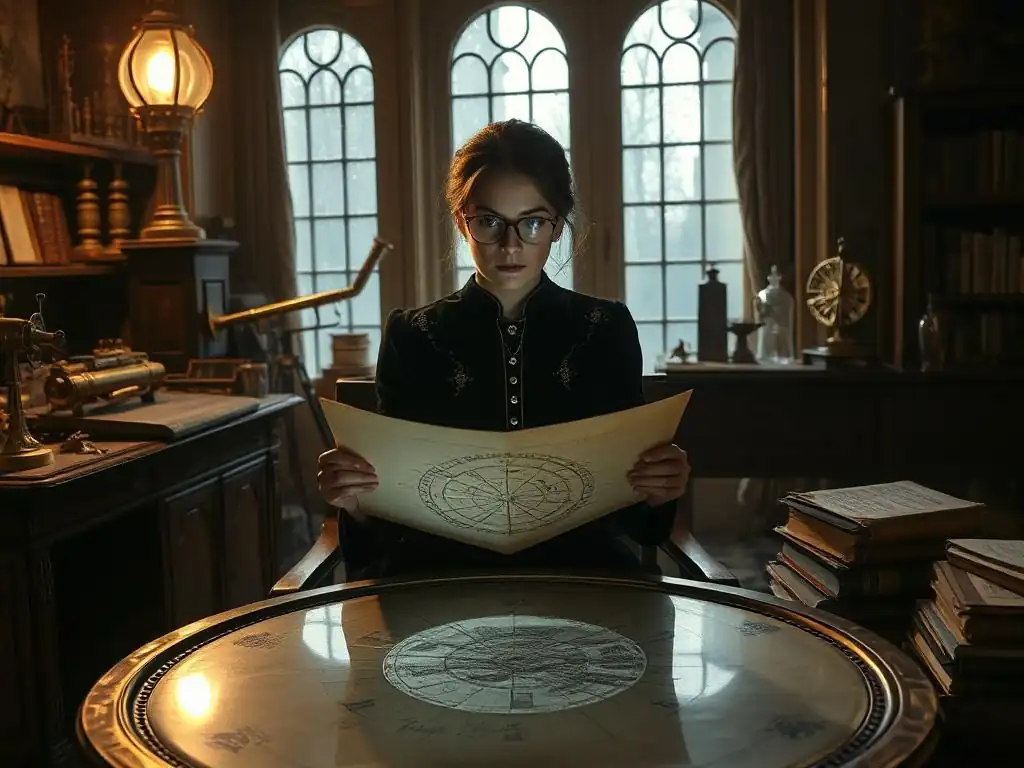
Delve into the untold stories of scientific innovation and resilience. Were you aware of the profound, yet often unseen, influence of Victorian ideals on women's scientific pursuits across the globe? Our featured article, "Victorian Values, Global Impact: How 19th Century Western Norms Shaped Women's Science Worldwide," explores this fascinating historical context. Uncover how the social landscape of the Victorian era both empowered and restricted female scientists, leaving a lasting legacy on the scientific world. What challenges did they overcome, and how did their contributions shape the landscape of science as we know it? Read on to discover more!
- Introduction: Victorian Era's Lasting Influence on Women in Science Globally
- The Victorian Ideal of Womanhood and its Constraints on Scientific Pursuits
- Global Diffusion of Victorian Norms: Impacts on Women Scientists Beyond the West
- Positive Impacts? Unintended Consequences of Victorian Influence
- Counter-Narratives: Women Who Defied Victorian Expectations in Science
- The Legacy of Victorian Values: Lingering Challenges for Women in Science Today
- Conclusion: Reassessing the Victorian Era's Complex Influence on Women's Science Worldwide
-
Frequently Asked Questions
- How did Victorian values influence the opportunities available to women in science during the 19th century?
- What were some of the key challenges faced by Victorian women pursuing scientific careers?
- In what ways did Victorian norms impact the global landscape of women's involvement in science?
- Can you provide an example of a Victorian woman who made a significant contribution to science despite the challenges she faced?
- Did Victorian women's scientific contributions have a lasting impact, and how is it being recognized today?
- Final Reflection: Echoes of the Victorian Era
- Empower Change: Championing Women in Science, Today!
Introduction: Victorian Era's Lasting Influence on Women in Science Globally
Setting the Stage: The Victorian Era and its Societal Expectations
The Victorian era, spanning Queen Victoria's reign from 1837 to 1901, was a period of immense change and paradox. Characterized by rapid industrialization, significant scientific advancements like Darwin's theory of evolution and Pasteur's germ theory, it was also a time of rigid social hierarchies and deeply entrenched gender roles. The prevailing societal expectation for women, particularly those of the middle and upper classes, was to embody domesticity, piety, purity, and submissiveness, often encapsulated by the "separate spheres" ideology where women belonged to the private realm of the home.
These societal expectations profoundly shaped the lives of Victorian women, dictating their educational opportunities, professional aspirations, and public participation. While men were encouraged to engage in the public sphere of work, politics, and intellectual pursuits, women's lives were largely confined to managing the household, raising children, and serving as moral guardians. This pervasive ideology created significant barriers for women aspiring to careers in science, a field increasingly gaining prominence and regarded as a masculine domain.
Thesis Statement: Exploring the global impact of Victorian values on women's access to and contributions in science.
This article argues that Victorian values, primarily originating from Britain, exerted a profound and complex global impact on the trajectory of women in science. This influence was not monolithic; it manifested differently across various regions, leading to a spectrum of constraints and, in some cases, unexpected avenues for scientific engagement. The export of these norms through colonialism and cultural exchange significantly shaped educational systems and societal perceptions of women's intellectual capabilities worldwide.
While often seen as restrictive, these prevailing norms also inadvertently paved the way for certain scientific avenues deemed "appropriate" for women, such as botany or nursing, and spurred the establishment of educational institutions that eventually benefited women. By exploring these multifaceted dynamics, we aim to shed light on how this intricate Victorian women’s science global impact unfolded, both limiting and, in some instances, subtly enabling women's contributions to the scientific landscape.
The Victorian Ideal of Womanhood and its Constraints on Scientific Pursuits
The "Angel in the House": Domesticity vs. Scientific Ambition
The pervasive ideal of the "Angel in the House," popularized by Coventry Patmore's 1854 poem, glorified women's roles as selfless, submissive domestic caregivers and moral guardians. This ideal was deeply ingrained in Victorian society, dictating that a woman's primary sphere of influence was the home, where she was expected to create a sanctuary from the harsh realities of the industrial world. Scientific ambition, with its demands for public engagement, rigorous intellectual training, and often messy experimentation, stood in direct opposition to this prescribed domestic ideal.
Consequently, women who harbored scientific aspirations faced immense societal pressure to conform. Engaging in scientific pursuits was often viewed as unfeminine, potentially damaging to a woman's delicate constitution, or even morally suspect. Many women who did pursue science were forced to do so privately, as amateurs, or within areas deemed "feminine" like botanical illustration, which allowed them to remain within the confines of their homes and avoid public scrutiny. This severely limited their formal recognition, access to resources, and the scope of their potential contributions, underscoring a significant aspect of the Victorian women’s science global impact.
Limited Educational Opportunities for Women in Science: A Victorian Reality
A primary barrier for women aspiring to scientific careers during the Victorian era was the severe lack of formal educational opportunities. Public schools and universities were predominantly male institutions, with established universities like Oxford and Cambridge not admitting women to full degrees until the late 19th or early 20th century. Even when women were allowed to attend lectures or take examinations, they were often denied the formal recognition of a degree, preventing them from accessing professional scientific networks or positions.
Secondary education for girls, where it existed, often focused on "accomplishments" such as music, art, and needlework, rather than rigorous scientific curricula. While some progressive institutions like Girton College (founded 1869) and Newnham College (founded 1871) at Cambridge began to offer higher education to women, access to science courses was still limited, and women were initially not considered full members of the university.
This systemic exclusion meant that most women lacked the foundational scientific knowledge and laboratory experience necessary to pursue advanced research or professional careers, effectively stifling their potential contributions and highlighting the restrictive nature of Victorian women’s science global impact.
Beyond educational limitations, women pursuing science in the Victorian era faced considerable social stigma and practical barriers within a thoroughly male-dominated scientific landscape. They were often viewed as anomalies, eccentric, or even intellectually inferior to men, making it challenging to gain acceptance and respect within scientific circles. Publications by women were sometimes published anonymously or under male pseudonyms to ensure they received fair consideration, free from gender bias.
Practical barriers included exclusion from professional scientific societies, which were crucial for networking, presenting research, and staying abreast of new discoveries. For instance, the prestigious Royal Society in London did not admit its first female Fellow until 1945, decades after the Victorian era concluded. Women also had limited access to well-equipped laboratories, funding, and mentorship opportunities. This exclusion from formal and informal scientific networks profoundly limited their ability to collaborate, disseminate their findings, and advance their careers, further emphasizing the pervasive nature of these barriers on Victorian women’s science global impact.
Global Diffusion of Victorian Norms: Impacts on Women Scientists Beyond the West
Colonialism and the Export of Victorian Gender Roles
The British Empire, at its peak during the Victorian era, served as a powerful conduit for the global diffusion of Victorian societal norms, including its rigid gender roles. This was not merely a cultural exchange but often an imposition, deeply altering indigenous social structures, educational systems, and perceptions of women's roles in colonized territories. Colonial administrators, missionaries, and settlers brought with them the ideal of the "proper" Victorian lady, a model that often undermined existing roles for women in non-Western societies.
In many colonized regions, traditional roles that might have afforded women agency in agriculture, healing, or local governance were devalued or suppressed in favor of a domestic ideal. Educational institutions established by colonial powers frequently replicated the British system, prioritizing domestic training or rudimentary literacy for girls, rather than rigorous scientific or professional education. This deliberate export of gendered expectations profoundly influenced the opportunities available to women in science in these regions, establishing a lasting framework for Victorian women’s science global impact far beyond Britain's shores.
India: Adapting and Resisting Victorian Ideals in Science
In British India, the imposition of Victorian gender norms was particularly pronounced, yet it also met with various forms of adaptation and subtle resistance. While some elite Indian women gained access to education through missionary schools or newly established colleges, the curriculum often emphasized subjects deemed "suitable" for women, such as domestic sciences or arts, over the hard sciences. The prevalent "Zenana system" (purdah), which dictated the seclusion of women, further limited their public engagement and access to external educational opportunities.
Despite these significant limitations, the unique needs of a colonized society inadvertently created some scientific openings. For example, the lack of male doctors permitted to treat women in purdah created a pressing need for female medical practitioners.
This led to the establishment of medical colleges for women, and some pioneering Indian women traveled abroad to pursue medical degrees. Anandibai Joshi, for instance, became one of the first Indian women to earn a medical degree in the United States in 1886, demonstrating a remarkable blend of seeking Western scientific knowledge while navigating and, in some ways, challenging traditional and colonial societal constraints.
South Africa: The Intersection of Race, Class, and Victorian Expectations
In South Africa, under British colonial rule, the influence of Victorian norms was intricately interwoven with existing complex racial and class hierarchies. For white women from settler communities, the expectation was largely to uphold the domestic ideal, though some found acceptable roles in fields like botany or nursing, which were often considered extensions of domestic or caregiving duties. These fields allowed for scientific engagement without overtly challenging established gender roles.
However, for Black African women, access to formal education, especially in scientific disciplines, was severely restricted by both colonial policies and pre-existing social structures. Educational opportunities were minimal and often focused on manual labor or basic religious instruction, rather than academic or scientific training. Furthermore, their rich contributions to traditional knowledge systems, encompassing areas like ethnobotany, healing, and agricultural practices, were often ignored, devalued, or actively suppressed by the incoming Western scientific paradigm. This complex interplay of race, class, and colonial power profoundly limited the recognized Victorian women’s science global impact originating from indigenous women in South Africa.
Positive Impacts? Unintended Consequences of Victorian Influence
The Rise of Women's Colleges and Scientific Education
Despite the overarching restrictions, the Victorian era also paradoxically witnessed the emergence of institutions dedicated to women's higher education, which eventually became crucial for scientific training. The establishment of colleges like Girton (1869) and Newnham (1871) in the UK, and later Vassar (1861) and Wellesley (1875) in the United States, provided vital, albeit initially limited, access to scientific instruction for women. These institutions were often founded by progressive educators and philanthropists who believed in women's intellectual capabilities.
While initially facing significant resistance from established universities and society at large, these women's colleges gradually expanded their science offerings. They enabled women to study subjects such as chemistry, physics, biology, and mathematics, laying the groundwork for future scientific careers. Though the path to formal degrees and professional recognition was often arduous and protracted, these pioneering institutions became vital incubators for future women scientists, providing them with the intellectual foundation and community necessary to challenge existing norms and contribute to the broader Victorian women’s science global impact.
Opportunities in Fields Deemed "Appropriate" for Women: Botany, Nursing, and Teaching
Victorian society, while largely excluding women from mainstream scientific professions, inadvertently created or expanded opportunities in fields deemed "appropriate" for them. These areas often aligned with perceived feminine attributes like nurturing, meticulousness, or a connection to nature. Botany, particularly plant collecting, classification, and illustration, became a popular and respectable pursuit for middle and upper-class women. It could be conducted from home or in gardens, fitting within the domestic sphere.
For instance, Marianne North (1830–1890) was a remarkable Victorian botanical artist and naturalist who traveled globally, collecting and painting thousands of plant species, contributing significantly to botanical records. Nursing, formalized and professionalized by Florence Nightingale (1820–1910), transformed into a respectable profession for women, requiring a scientific understanding of hygiene, sanitation, and patient care. Similarly, teaching, especially in the growing number of girls' schools, became a viable career path for educated women, allowing them to impart scientific knowledge and indirectly promote scientific literacy, thus contributing to a unique form of Victorian women’s science global impact.
Victorian Philanthropy and Support for Women's Scientific Endeavors
The Victorian era also saw the significant role of philanthropy in supporting women's scientific and educational endeavors. Wealthy individuals and charitable organizations, often driven by progressive ideals or a belief in social reform, provided crucial financial backing for initiatives that circumvented official barriers. These benefactors, sometimes women themselves or those sympathetic to the cause of women's education, funded scholarships, built laboratories, and established educational institutions specifically for women.
A notable example is the support for the founding of women's colleges. Emily Davies, a key figure in the women's higher education movement, relied heavily on private donations to establish Girton College. These private initiatives provided critical financial and institutional support that allowed women to access scientific training and pursue intellectual interests that would otherwise have been out of reach. This philanthropic spirit, while not overturning all societal restrictions, played a vital role in creating pathways for women to engage with science, indirectly influencing the Victorian women’s science global impact.
Counter-Narratives: Women Who Defied Victorian Expectations in Science
Marie Curie: A Pioneering Woman Scientist Who Challenged Gender Norms
Marie Curie (1867–1934) stands as a monumental figure who transcended the limitations imposed by Victorian gender norms, demonstrating the power of individual brilliance and determination. Born Maria Skłodowska in Poland, a country under Russian rule, she pursued higher education in Paris, where opportunities for women in science were comparatively more accessible than in Britain or her homeland. Her groundbreaking work with radioactivity, conducted alongside her husband Pierre Curie, led to her becoming the first woman to win a Nobel Prize (Physics, 1903) and the only person to win Nobel Prizes in two different scientific fields (Chemistry, 1911).
Curie's relentless dedication to laboratory research, her public scientific presentations, and her eventual appointment as a professor at the Sorbonne directly challenged the prevailing notion that women were confined to domestic roles or incapable of rigorous scientific thought. Her achievements were undeniable and globally recognized, proving that scientific genius was not gender-specific. She became a powerful symbol of what women could achieve in science, setting an international standard and offering a compelling counter-narrative to the restrictive aspects of Victorian women’s science global impact.
Hertha Ayrton: Another Trailblazing Woman Scientist and Her Contributions
Hertha Ayrton (1854–1923), a British engineer, mathematician, and physicist, provides another compelling example of a woman who defied Victorian expectations. Despite facing significant institutional barriers—she studied at Girton College but could not formally receive a Cambridge degree due to her gender—Ayrton pursued crucial research on electric arcs and ripples in sand and water. She was the first woman to be elected a member of the Institution of Electrical Engineers in 1899 and, in 1904, achieved the distinction of being the first woman to read her own paper before the Royal Society, an unprecedented feat for her time.
Ayrton's work was not merely theoretical; it had practical applications, particularly her research on the electric arc, which was vital for the burgeoning electrical industry. Her persistence in a field overwhelmingly dominated by men, her numerous patents, and her active participation in scientific discourse, despite the resistance she faced, provided a powerful example of a woman asserting her intellectual authority and making tangible contributions to physics and engineering. Her story demonstrates that even within the restrictive framework of the era, individual agency could lead to profound scientific advancements, showcasing a more nuanced aspect of Victorian women’s science global impact.
Examining the Agency and Resilience of Women Scientists
The stories of Marie Curie, Hertha Ayrton, and countless other less-known women scientists of the Victorian era are testaments to immense personal agency, unwavering resilience, and a deep, often unshakeable, passion for scientific inquiry. Many women navigated the rigid societal expectations of their time by finding unconventional paths, collaborating with supportive male relatives (fathers, brothers, or husbands), or by initially focusing on "acceptable" scientific niches before pushing the boundaries of what was considered appropriate for women.
Their journeys were not merely about overcoming external obstacles but about actively shaping the scientific landscape through sheer determination, intellectual prowess, and a refusal to be confined by societal norms. These pioneering women laid crucial groundwork for future generations, demonstrating that scientific talent knows no gender and that the pursuit of knowledge is a universal human drive. Their achievements serve as powerful reminders that even in the face of widespread limitations, individual brilliance can shine through and challenge the restrictive aspects of Victorian women’s science global impact.
The Legacy of Victorian Values: Lingering Challenges for Women in Science Today
Gender Bias in STEM: A Persistent Problem with Roots in the Past
The historical exclusion of women from formal scientific education and professional networks during the Victorian era contributed significantly to the perception of science as an inherently male domain. This perception, deeply ingrained over generations, continues to manifest in subtle forms of gender bias within STEM fields today. While overt discrimination is less common, unconscious biases persist in hiring, promotion, and grant allocation processes, often favoring male candidates.
For instance, a 2012 Yale University study published in the Proceedings of the National Academy of Sciences found that science faculty members, both male and female, rated a male applicant for a lab manager position as significantly more competent and hirable than an identical female applicant, offering a lower starting salary and less mentoring. This type of unconscious bias echoes the historical devaluation of women's scientific capabilities, demonstrating how the legacy of Victorian women’s science global impact continues to influence contemporary academic and professional environments.
The Ongoing Struggle for Equal Opportunities and Recognition
Despite significant progress since the Victorian era, the struggle for true equality and recognition for women in science continues. While women now have widespread access to education and professional roles, disparities in representation, particularly in leadership positions and certain STEM subfields like computer science and engineering, remain. Women are still underrepresented in senior academic roles, prestigious scientific academies, and high-level research positions across many countries.
According to various reports, women constitute approximately 28% of the workforce in STEM fields globally, and their representation decreases significantly at higher career stages. For example, in 2020, while women earned roughly 35% of STEM PhDs in some Western nations, they held only about 20% of full professorships in STEM at research universities. This "leaky pipeline" phenomenon, where women leave STEM careers at higher rates than men, suggests that the playing field is still not entirely level, indicating a persistent challenge rooted in historical norms and the long-term Victorian women’s science global impact.
The Gender Pay Gap in STEM: A Current Issue Rooted in Historical Norms
The gender pay gap in STEM is another persistent issue that can be traced back to historical norms, including the Victorian-era ideology that often positioned women as secondary earners or that their professional contributions were less valuable or temporary. This historical devaluation of women's work has had lasting economic consequences, contributing to a persistent disparity in earnings even for women working in highly skilled scientific and technical fields.
Current data from various sources, such as the American Association of University Women (AAUW) in the United States, consistently show that women in STEM occupations typically earn about 80 to 90 cents for every dollar earned by men, even when controlling for factors like education, experience, and hours worked. This gap is often wider in specific scientific disciplines. This enduring economic disparity underscores how deeply ingrained historical attitudes, stemming partly from the Victorian women’s science global impact, continue to affect the financial recognition and career progression of women in science today.
Conclusion: Reassessing the Victorian Era's Complex Influence on Women's Science Worldwide
Summarizing the Key Impacts and Legacies
The Victorian era exerted a profoundly complex and often contradictory influence on women's access to and contributions in science. While it imposed significant constraints through rigid gender roles, the pervasive "Angel in the House" ideal, and limited formal educational opportunities, it also inadvertently fostered avenues for scientific engagement in specific, deemed "appropriate" fields like botany and nursing. Crucially, the period saw the rise of dedicated women's colleges and the support of philanthropists, which laid essential groundwork for future generations of women scientists.
The Victorian women’s science global impact was not confined to Britain; it spread extensively through colonialism and cultural exchange, affecting women's scientific trajectories in diverse cultures like India and South Africa. This diffusion prompted both adaptation and resistance, shaping the foundational environment within which women could pursue scientific endeavors. Understanding this dual legacy — both the restrictions and the unexpected opportunities — is vital for comprehending the historical landscape of women in science.
A Call for Continued Efforts to Promote Gender Equity in Science
Recognizing the historical roots of gender inequality in science is paramount for informing and strengthening contemporary efforts to promote gender equity. The lingering shadows of Victorian norms, manifesting as unconscious biases, representation gaps, and pay disparities, highlight that the struggle for full inclusion is far from over. Understanding how past societal structures limited women's participation allows us to more effectively dismantle persistent barriers.
Therefore, continued advocacy for equal pay, increased representation in leadership and decision-making roles, equitable access to resources and funding, and proactive challenging of unconscious biases are essential. By actively working to create truly inclusive scientific environments, we can fully realize the potential of all individuals in science, moving beyond the historical limitations and ensuring that scientific talent is recognized and nurtured regardless of gender.
Further Research: Exploring the role of non-Western cultures in shaping women's scientific contributions during the Victorian era.
While this article has focused on the pervasive influence of Western Victorian norms, a critical area for further academic inquiry lies in exploring the nuanced role of non-Western cultures in shaping women's scientific contributions during the same period. It is vital to move beyond a Eurocentric perspective and investigate how indigenous knowledge systems and unique cultural contexts also informed and enabled women's scientific engagement, either independently of or in complex interaction with Victorian influences.
Future research could delve into specific case studies of women scientists in non-Western societies who navigated their own cultural expectations alongside colonial impositions. This could involve examining how traditional healing practices, agricultural innovations, or astronomical observations were maintained, adapted, or devalued. Such studies would provide a more comprehensive and nuanced understanding of the true global landscape of Victorian women’s science global impact, acknowledging the diverse ways women contributed to scientific knowledge worldwide.
Frequently Asked Questions
How did Victorian values influence the opportunities available to women in science during the 19th century?
Victorian values often restricted women's access to formal scientific education and professional roles. However, they also encouraged women’s amateur scientific pursuits within the domestic sphere, which could then lead to broader influence.
What were some of the key challenges faced by Victorian women pursuing scientific careers?
Victorian women faced significant societal barriers, including limited access to education, exclusion from scientific societies, and prevailing gender stereotypes that questioned their intellectual capabilities.
In what ways did Victorian norms impact the global landscape of women's involvement in science?
The spread of Victorian ideals through colonialism and missionary work influenced the development of science education for women in various parts of the world, sometimes creating opportunities while simultaneously reinforcing gendered expectations.
Can you provide an example of a Victorian woman who made a significant contribution to science despite the challenges she faced?
Mary Anning, a British fossil collector, made crucial discoveries in paleontology despite facing social class and gender discrimination. Her work was often attributed to male scientists at the time.
Did Victorian women's scientific contributions have a lasting impact, and how is it being recognized today?
Yes, their contributions, although often overlooked, laid the groundwork for future generations of female scientists. Today, initiatives and resources like WomenInScienceHistory.com help to recover and celebrate their achievements and understand their Victorian women’s science global impact.
Final Reflection: Echoes of the Victorian Era
The exploration of Victorian women's science and its global impact reveals a complex legacy that continues to resonate within contemporary scientific landscapes. The constraints and opportunities afforded to women in 19th-century Western science, as we've seen, cast a long shadow, influencing access, representation, and even the very methodologies employed in scientific inquiry across the globe today. Understanding this historical context is crucial for dismantling persistent biases and fostering a truly inclusive scientific community.
The enduring influence of Victorian norms on women in science is undeniable. It's a reminder that progress is not linear, and that deeply ingrained societal expectations can subtly shape career trajectories and limit potential. Science knows no country, because knowledge belongs to humanity, and is the torch which illuminates the world.
- Louis Pasteur. This quote, while aspirational, highlights the inherent tension between the universal pursuit of knowledge and the very real, geographically and culturally specific barriers that women faced, and in some cases, continue to face.
As we conclude this journey through the past, let us not simply observe history, but actively shape the future. Consider how the echoes of Victorian values might still be present in your own field, your own institution, your own assumptions. What can you do, today, to challenge those echoes and create a more equitable and inclusive scientific world for all? The torch of knowledge must be held high, illuminating a path forward where every mind, regardless of gender or background, can contribute to the advancement of science.
Empower Change: Championing Women in Science, Today!
Thanks for exploring how Victorian values influenced women in science globally. You’ve now seen how the past shapes the present, and the power we have to build a more equitable future.
Now, it's time to act!
- Become an Advocate: Share this article to spark conversations and challenge historical biases.
- Explore our website for more inspiring stories of unsung heroines in science.
- Mentor a young woman interested in STEM and help her navigate challenges.
What steps will you take this week to amplify the voices of women in science?