
Legacy of Light: How 20th Century Women Physicists Inspire Today's Scientists

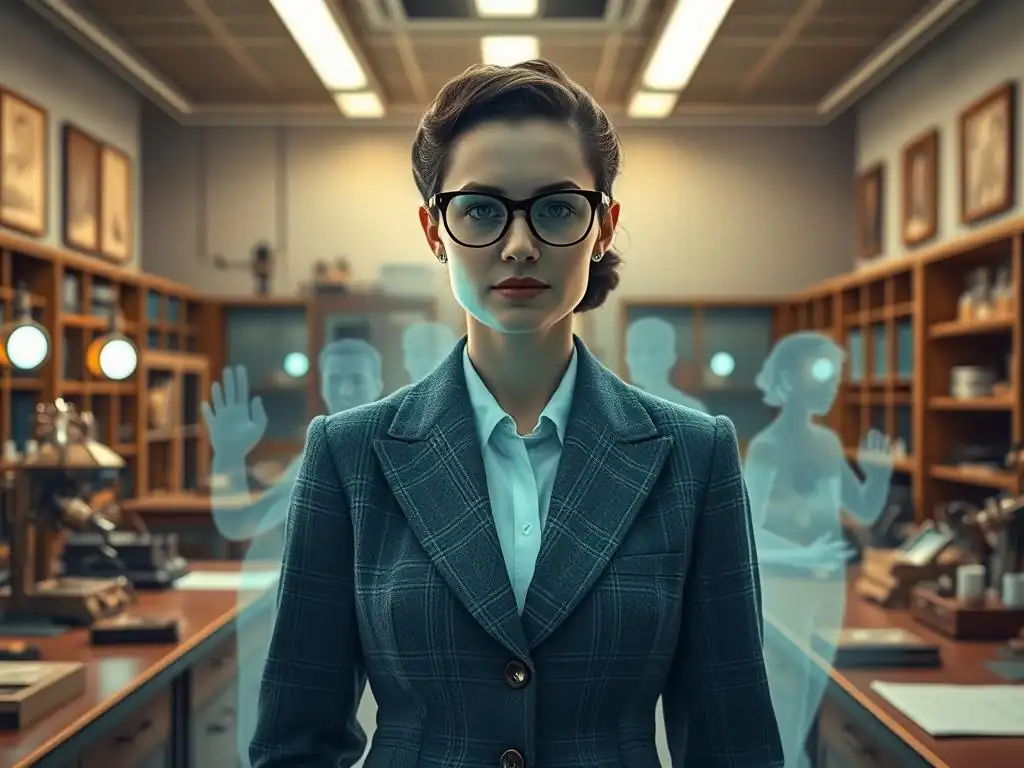
Welcome to WomenInScienceHistory.com!
Delve into the captivating stories of brilliant minds and groundbreaking discoveries. Are you ready to uncover the unsung legacies of women who shaped the world of physics? This month, we shine a spotlight on the 20th century women physicists who defied expectations and left an indelible mark on science. Prepare to be inspired by their resilience, ingenuity, and the enduring impact of their work. What challenges did they overcome, and how did their contributions pave the way for future generations? Read on to find out!
- Introduction: The Enduring Impact of 20th Century Women Physicists
-
Pioneering Figures: Groundbreaking Contributions of Women in 20th Century Physics
- Chien-Shiung Wu: Challenging the Laws of Physics and Breaking Barriers
- Wu Experiment: Verifying Parity Violation in Weak Interactions and its Paradigm Shift
- Mildred Dresselhaus: The Queen of Carbon Science and Nanomaterials
- Pioneering Work on Carbon Nanotubes: Establishing Fundamental Properties and Applications
- Vera Rubin: Unveiling Dark Matter and Revolutionizing Cosmology
- Galaxy Rotation Curves: Providing Evidence for Dark Matter's Existence
- Maria Goeppert Mayer: Nuclear Shell Model and Nobel Prize Recognition
- Nuclear Shell Model Development: Explaining Nuclear Structure and Stability
- Overcoming Obstacles: Challenges Faced by Women in Physics During the 20th Century
- The Ripple Effect: How 20th Century Women Physicists Shaped Modern Science
- Lessons Learned: Key Takeaways from the Lives and Careers of 20th Century Women in Physics
- Continuing the Legacy: How to Support and Promote Women in Physics Today
- Conclusion: The Bright Future of Women in Physics, Inspired by the 20th Century Pioneers
-
Frequently Asked Questions
- How did 20th-century women physicists contribute to the field despite facing societal barriers?
- What are some examples of groundbreaking discoveries made by women physicists in the 20th century?
- Why is it important to learn about the history of women in science, particularly in physics?
- What challenges did 20th-century women physicists face that are less prevalent today, and which challenges still remain?
- How can learning about the legacy of 20th-century women physicists inspire today's scientists, regardless of gender?
- Final Reflection: Illuminating Paths Forward
- Ignite Your Inner Scientist: Explore, Connect, and Empower!
Introduction: The Enduring Impact of 20th Century Women Physicists
Celebrating the Unsung Heroes of Physics: A Look at 20th Century Achievements
The 20th century was a period of unprecedented scientific discovery, marked by revolutions in physics from quantum mechanics to cosmology. While often dominated by male narratives, this era also saw a quiet but profound rise in the contributions of 20th century women physicists. These pioneering individuals, often working against considerable odds, laid foundational groundwork in diverse fields such as nuclear physics, condensed matter, and astrophysics, shaping our understanding of the universe from its smallest particles to its grandest structures.
Their achievements, though sometimes overlooked in historical accounts, were instrumental in advancing scientific knowledge. From verifying fundamental laws to uncovering new phenomena, these women in physics from the 20th century pushed the boundaries of what was known, contributing to breakthroughs that continue to resonate in today's research labs and educational institutions. Their intellectual rigor and experimental prowess were second to none, despite the systemic barriers they faced.
Why the Stories of Women in Physics Matter: Inspiring Future Generations
The narratives of 20th century women physicists are more than just historical footnotes; they are powerful sources of inspiration for contemporary and future generations. By illuminating the challenges these women overcame—including gender bias, limited opportunities, and the struggle for recognition—we gain a deeper appreciation for their resilience and unwavering dedication to science. Their stories serve as crucial reminders that talent and intellect know no gender.
Highlighting the triumphs of these pioneering women in physics helps to dismantle persistent stereotypes and encourages young girls and aspiring scientists from all backgrounds to pursue careers in STEM. Understanding the paths forged by figures like Chien-Shiung Wu or Vera Rubin provides tangible role models, demonstrating that it is possible to achieve scientific excellence and make a lasting impact, even in the face of significant adversity.
Pioneering Figures: Groundbreaking Contributions of Women in 20th Century Physics
Chien-Shiung Wu: Challenging the Laws of Physics and Breaking Barriers
Chien-Shiung Wu, often referred to as the "First Lady of Physics," was a formidable experimental physicist whose meticulous work reshaped fundamental understandings of the universe. Born in China in 1912, she moved to the United States for her graduate studies, earning her Ph.D. from the University of California, Berkeley, in 1940. Her exceptional skill in experimental design and execution quickly earned her a reputation for precision, making her the go-to expert for difficult and critical experiments.
Wu's career flourished at Columbia University, where she became a leading authority on beta decay. Her expertise was so profound that she was recruited for the Manhattan Project during World War II, contributing to the development of the atomic bomb by researching uranium enrichment. However, it was her post-war work that would truly cement her legacy as one of the most influential 20th century women physicists.
Wu Experiment: Verifying Parity Violation in Weak Interactions and its Paradigm Shift
Chien-Shiung Wu's most celebrated achievement was her groundbreaking experiment in 1956, which experimentally verified the theoretical prediction of parity violation in weak interactions, proposed by Tsung-Dao Lee and Chen-Ning Yang. The prevailing belief in physics was that parity (the idea that the laws of physics are the same for left-handed and right-handed coordinate systems) was conserved in all interactions. Lee and Yang theorized it might not hold true for weak nuclear forces, but they needed experimental proof.
Wu meticulously designed and executed an experiment involving cooled cobalt-60 nuclei to temperatures near absolute zero (approximately 0.01 Kelvin). She observed that the electrons emitted during the beta decay of cobalt-60 showed a preferred direction relative to the nuclei's spin, demonstrating that the weak interaction indeed distinguishes between left and right.
This stunning revelation overturned a fundamental principle of physics that had been accepted for decades, earning Lee and Yang the Nobel Prize in Physics in 1957. While Wu's experimental verification was absolutely crucial for their Nobel, she was controversially not awarded the prize herself, a stark example of the recognition challenges faced by many 20th century women physicists.
Mildred Dresselhaus: The Queen of Carbon Science and Nanomaterials
Mildred Dresselhaus, born in 1930, was an extraordinary physicist who revolutionized the field of condensed matter physics, particularly through her pioneering work on carbon materials. A professor at MIT for over five decades, her research laid the theoretical and experimental groundwork for understanding the electronic and thermal properties of carbon allotropes. Her meticulous studies on graphite, fullerenes, and especially carbon nanotubes established her as a preeminent figure in the nascent field of nanoscience.
Dresselhaus was renowned for her innovative use of Raman spectroscopy to characterize carbon materials, developing techniques that became standard across the globe. Her leadership in the field was undeniable; she not only conducted groundbreaking research but also fostered a vibrant research environment, mentoring countless students and colleagues who would go on to shape the future of materials science. Her impact on the understanding of carbon's diverse forms was profound, bridging the gap between fundamental physics and practical applications.
Pioneering Work on Carbon Nanotubes: Establishing Fundamental Properties and Applications
Mildred Dresselhaus's most significant contributions arguably lie in her seminal work on carbon nanotubes. Even before their widespread synthesis, her theoretical models and experimental measurements provided crucial insights into their unique properties. Her research group was instrumental in characterizing the electronic band structure, phonon dispersion, and thermal conductivity of single-walled and multi-walled carbon nanotubes. For instance, her work demonstrated that single-walled carbon nanotubes could exhibit thermal conductivity values exceeding 3000 W/mK at room temperature, significantly higher than copper (around 400 W/mK), making them exceptional heat conductors.
The fundamental understanding of these properties, meticulously established by Dresselhaus and her team, was critical for the subsequent explosion of research and development in nanotechnology. Her work elucidated how the chirality (the way the graphene sheet is rolled) of a nanotube affects its electrical properties, determining whether it behaves as a metal or a semiconductor. This foundational knowledge enabled the design and development of countless applications, from advanced electronic devices and lightweight composites to energy storage solutions, cementing her legacy as one of the most influential 20th century women physicists in materials science.
Vera Rubin: Unveiling Dark Matter and Revolutionizing Cosmology
Vera Rubin, born in 1928, was an American astronomer whose groundbreaking observations provided compelling evidence for the existence of dark matter, fundamentally altering our understanding of the universe's composition. Beginning her career at a time when women were rarely welcomed in astronomy, Rubin persevered, eventually joining the Carnegie Institution of Washington in 1965, where she conducted her most influential work. Her meticulous and persistent observations of galaxy rotation curves challenged prevailing cosmological models.
Rubin's work focused on measuring the rotational velocities of stars and gas within spiral galaxies. Using advanced spectroscopic techniques, she and her colleague Kent Ford, Jr., systematically observed numerous galaxies, collecting precise data on how quickly material at varying distances from the galactic center was orbiting. What they found was consistently puzzling and revolutionary.
Galaxy Rotation Curves: Providing Evidence for Dark Matter's Existence
Vera Rubin's observations of galaxy rotation curves revealed a startling discrepancy: stars and gas at the outer edges of spiral galaxies were orbiting at speeds far greater than could be accounted for by the visible matter alone. According to Newtonian mechanics, if the visible stars and gas constituted the majority of a galaxy's mass, then objects farther from the galactic center should orbit more slowly, similar to how planets in our solar system orbit the Sun.
However, Rubin consistently found that rotational velocities remained flat or even slightly increased at large distances from the galactic core. For example, in the Andromeda Galaxy (M31), stars at distances of 30,000 parsecs from the center maintained speeds of approximately 250 kilometers per second, whereas calculations based solely on visible matter predicted a significant drop to around 150 kilometers per second.
This persistent anomaly across dozens of galaxies strongly implied the existence of a vast amount of unseen, non-luminous mass—dubbed "dark matter"—exerting gravitational pull. Rubin's work provided the most robust observational evidence to date for dark matter, which is now estimated to constitute about 27% of the universe's total mass-energy content. Her pioneering observations transformed cosmology, shifting the scientific focus from visible matter to the dominant dark components of the universe, and setting the stage for decades of ongoing dark matter research, solidifying her place among the most impactful 20th century women physicists.
Maria Goeppert Mayer: Nuclear Shell Model and Nobel Prize Recognition
Maria Goeppert Mayer, born in 1906 in Germany, was a theoretical physicist who, despite facing immense institutional barriers, made a monumental contribution to nuclear physics. After earning her Ph.D. in theoretical physics from the University of Göttingen in 1930, she moved to the United States. For years, due to "anti-nepotism" rules that prevented wives of faculty members from holding paid positions, she worked in unpaid or volunteer capacities at institutions like Johns Hopkins University and Columbia University, often labeled as a "guest" or "associate" researcher.
Her early career included work on the Manhattan Project during World War II, where she researched isotope separation. However, it was her post-war research at the University of Chicago and Argonne National Laboratory that led to her most significant breakthrough. She became fascinated by the puzzle of nuclear structure, particularly why certain numbers of protons or neutrons (the "magic numbers" 2, 8, 20, 28, 50, 82, 126) resulted in unusually stable atomic nuclei, a phenomenon not fully explained by the prevailing "liquid drop model" of the nucleus.
Nuclear Shell Model Development: Explaining Nuclear Structure and Stability
Maria Goeppert Mayer's seminal work involved the development of the nuclear shell model, for which she was awarded the Nobel Prize in Physics in 1963. Working independently and then in collaboration with Hans Jensen, she proposed that nucleons (protons and neutrons) within the nucleus occupy distinct energy levels or "shells," analogous to how electrons occupy orbitals in an atom.
The key insight that unlocked the puzzle of the "magic numbers" was the introduction of a strong spin-orbit coupling. This meant that the interaction between a nucleon's spin and its orbital motion significantly influenced its energy level, leading to tightly bound shells.
Her model provided a comprehensive and elegant explanation for the observed stability of nuclei with magic numbers of nucleons, as well as for other nuclear properties like magnetic moments and quadrupole moments. This revolutionary framework brought order and predictability to the complex world of the atomic nucleus, fundamentally changing nuclear physics. Maria Goeppert Mayer became only the second woman to win the Nobel Prize in Physics, a testament to her profound impact and resilience as one of the most distinguished 20th century women physicists.
Overcoming Obstacles: Challenges Faced by Women in Physics During the 20th Century
Throughout the 20th century, women in physics faced pervasive gender bias deeply entrenched within academic and research institutions. This bias manifested in various forms, from overt discrimination to subtle, systemic exclusions. For instance, "anti-nepotism" rules, prevalent in many universities, often prevented highly qualified women from securing paid faculty positions if their husbands were already employed by the same institution, as famously experienced by Maria Goeppert Mayer for many years.
Beyond formal policies, 20th century women physicists often encountered an unwelcoming culture. They were frequently excluded from informal networks, discussions, and collaborations that were vital for career advancement. Their contributions were often undervalued, dismissed, or even attributed to male colleagues, making it a constant struggle to gain the recognition their groundbreaking work deserved in a field largely dominated by men.
Limited Opportunities and Recognition: Fighting for Equality in Physics
The journey for 20th century women physicists was further complicated by significantly limited opportunities compared to their male counterparts. They faced immense challenges in securing tenured positions, research funding, and access to state-of-the-art facilities. Even when they did secure roles, these were often lower-paying, less prestigious, or temporary, despite their comparable or superior qualifications and scientific output.
The lack of recognition for their achievements was a recurring theme. The exclusion of Chien-Shiung Wu from the 1957 Nobel Prize for parity violation, despite her indispensable experimental verification, is a stark and well-known example of this systemic issue. This pattern of overlooking or downplaying the contributions of women in physics meant that their groundbreaking work was often underrepresented in textbooks and historical accounts, further perpetuating the gender gap in scientific visibility.
Balancing Personal Life and Scientific Pursuits: The Unique Challenges for Women
In addition to professional biases, 20th century women physicists contended with societal expectations that placed the primary burden of domestic responsibilities and childcare on women. This often meant juggling demanding scientific careers with significant personal obligations, a dual role that male colleagues rarely had to navigate. The lack of institutional support, such as parental leave or affordable childcare, compounded these challenges.
Many women in physics in the 20th century had to make difficult choices, sacrificing personal aspirations or delaying family life to pursue their scientific passions. This double burden often led to burnout or forced women to leave the field prematurely. Their ability to persevere and make monumental discoveries despite these unique personal and professional pressures underscores their remarkable dedication and resilience.
The Ripple Effect: How 20th Century Women Physicists Shaped Modern Science

Inspiring Future Generations of Female Scientists: Role Models and Mentors
The groundbreaking work and perseverance of 20th century women physicists created an invaluable legacy of inspiration for subsequent generations of female scientists. Figures like Vera Rubin, Maria Goeppert Mayer, Chien-Shiung Wu, and Mildred Dresselhaus demonstrated unequivocally that women could excel in the most challenging scientific disciplines, shattering stereotypes and paving the way for others. Their very existence and success provided crucial role models at a time when visible female scientists were rare.
Beyond their scientific achievements, many of these pioneers actively mentored younger colleagues, both formally and informally. Mildred Dresselhaus, for example, was celebrated for her commitment to advising students, including a significant number of women, and her efforts to foster an inclusive environment at MIT. This direct and indirect mentorship has been vital in encouraging and retaining women in physics, proving that a career in science is not only possible but deeply rewarding for women.
Advancing Physics Research: Building Upon the Foundations Laid by Women
The discoveries made by 20th century women physicists were not merely isolated achievements; they formed foundational pillars upon which much of modern physics research is built. Vera Rubin's observational evidence for dark matter, for instance, transformed cosmology and remains a central pillar of astrophysical research today, with billions of dollars invested globally in experiments searching for dark matter particles. Similarly, Mildred Dresselhaus's fundamental understanding of carbon materials directly underpins the vast and rapidly expanding field of nanotechnology, impacting everything from advanced electronics to biomedical applications.
Maria Goeppert Mayer's nuclear shell model continues to be a cornerstone of nuclear physics, providing the framework for understanding nuclear structure, stability, and reactions, which is crucial for applications ranging from nuclear energy to medical isotopes. Chien-Shiung Wu's verification of parity violation fundamentally altered our understanding of fundamental symmetries and the nature of weak interactions, influencing particle physics research for decades. Their intellectual legacies continue to drive innovation and exploration in their respective fields.
Shaping Science Policy and Advocacy: Promoting Diversity and Inclusion
The experiences and successes of 20th century women physicists played a crucial role in bringing attention to the systemic issues of gender inequality in science, thereby shaping science policy and advocacy efforts. Their struggles against bias and for recognition provided compelling evidence for the need for change within academic and research institutions. This awareness contributed to the establishment of committees and initiatives dedicated to promoting diversity and inclusion in STEM.
For example, the American Physical Society's Committee on the Status of Women in Physics, formed in 1972, emerged from a growing recognition of the barriers faced by women in physics. The advocacy rooted in the experiences of these pioneers has led to ongoing efforts to implement fair hiring practices, develop supportive mentorship programs, and create more equitable environments. Their legacy continues to fuel the push for policies that ensure all talented individuals, regardless of gender, have the opportunity to contribute to scientific advancement.
Lessons Learned: Key Takeaways from the Lives and Careers of 20th Century Women in Physics
Perseverance and Resilience: Overcoming Obstacles in Pursuit of Scientific Excellence
The lives and careers of 20th century women physicists offer profound lessons in perseverance and resilience. Despite facing entrenched gender bias, limited opportunities, and often outright discrimination, these women continued their scientific pursuits with unwavering dedication. Maria Goeppert Mayer, for instance, worked for years in unpaid or poorly compensated "guest" positions, simply because her passion for physics compelled her to continue research. Her eventual Nobel Prize is a testament to her unyielding commitment.
Similarly, Chien-Shiung Wu's meticulous experimental work, often conducted under immense pressure and with limited resources, exemplifies extraordinary scientific rigor and determination. Her ability to deliver definitive results, even when the theoretical stakes were incredibly high, underscores the importance of steadfastness in the face of adversity. Their stories teach that true scientific excellence often requires not just intellect, but profound inner strength to overcome external barriers.
Collaboration and Mentorship: The Importance of Supporting Other Women in Science
While institutional support for women in physics was scarce during the 20th century, many pioneers found strength in collaboration and actively fostered environments of mentorship. Although formal programs were rare, individual efforts to support and uplift other women were critical. Mildred Dresselhaus, for example, was widely known for her open-door policy and her dedication to mentoring hundreds of students, many of whom were women, encouraging them to pursue their scientific passions and navigate academic challenges.
These informal networks and individual acts of mentorship provided crucial support systems in a male-dominated field. They demonstrated that by sharing knowledge, offering guidance, and championing each other's work, 20th century women physicists could create pockets of solidarity that helped counter the isolating effects of systemic bias. This highlights the enduring importance of community and mutual support in advancing women in science.
Challenging the Status Quo: Advocating for Equality and Opportunity in Physics
The very act of excelling in physics as a woman in the 20th century was a powerful challenge to the prevailing status quo. Beyond their scientific breakthroughs, many of these women in physics contributed to the broader movement for gender equality, whether through their personal example or through more direct advocacy. Vera Rubin, for instance, was a vocal advocate for increasing the representation of women in astronomy and science, often refusing to attend meetings where women were not invited to speak.
Their collective experiences laid the groundwork for future generations to demand and achieve greater equity. By demonstrating their undeniable intellectual capacity and scientific prowess, these pioneers helped to dismantle harmful stereotypes and pushed for a more inclusive scientific community. Their legacy continues to inspire advocacy for fair treatment, equal opportunities, and the recognition of talent regardless of gender in all scientific fields.
Continuing the Legacy: How to Support and Promote Women in Physics Today
Encouraging Young Girls to Pursue STEM Fields: Breaking Down Stereotypes
To truly continue the legacy of 20th century women physicists, it is crucial to actively encourage young girls to pursue STEM fields from an early age. This involves breaking down persistent stereotypes that portray science and technology as male-dominated domains. Initiatives such as hands-on science workshops, coding camps specifically for girls, and school curricula that highlight the achievements of female scientists can inspire interest and confidence.
Providing access to visible role models, like those celebrated on platforms such as Women in Science History, is also vital. When young girls see successful women in physics throughout history, they are more likely to envision themselves in similar roles, understanding that their intellectual curiosity and potential are limitless regardless of gender. Early exposure and positive reinforcement are key to fostering a lifelong engagement with science.
Creating Inclusive and Supportive Environments in Academia and Research
Beyond inspiring interest, it is equally important to create and maintain inclusive and supportive environments within academia and research institutions to retain women in physics. This requires systemic changes that address historical biases and actively promote equity. Implementing fair hiring and promotion practices, ensuring equal pay, and establishing robust anti-harassment policies are fundamental steps.
Furthermore, providing practical support such as accessible childcare, flexible work arrangements, and comprehensive parental leave policies can significantly impact the retention of women in demanding scientific careers. Fostering a culture of mentorship, collaboration, and psychological safety ensures that women feel valued, supported, and empowered to thrive in their scientific pursuits, building on the foundation laid by 20th century women physicists.
Celebrating the Achievements of Women in Physics: Raising Awareness and Recognition
A critical component of continuing the legacy of 20th century women physicists is the ongoing celebration and recognition of their achievements, as well as those of contemporary female scientists. This involves actively raising awareness about their contributions through various channels, from educational materials and public lectures to awards and media coverage. Platforms dedicated to women in science history play an indispensable role in making these stories visible and accessible.
By consistently highlighting the groundbreaking work of women in physics, we not only honor their past efforts but also inspire current and future generations. Increased recognition helps to correct historical oversights, ensures that the full breadth of scientific progress is acknowledged, and encourages a more diverse and inclusive scientific community. This continuous celebration reinforces the message that scientific excellence knows no gender and that every contribution matters.
Conclusion: The Bright Future of Women in Physics, Inspired by the 20th Century Pioneers
Honoring the Past, Embracing the Future: Building a More Equitable and Diverse Scientific Community
The journey of 20th century women physicists is a testament to extraordinary intellect, unwavering dedication, and profound resilience in the face of systemic barriers. Their groundbreaking discoveries, from unveiling dark matter to unraveling the secrets of the atomic nucleus, irrevocably shaped our understanding of the universe. While significant progress has been made since their time, the challenges they faced continue to resonate, reminding us that the pursuit of true equity in science is an ongoing endeavor.
By honoring their past struggles and triumphs, we gain invaluable insights that inform our efforts to build a more equitable and diverse scientific community for the future. The experiences of these pioneering women in physics provide a blueprint for fostering inclusive environments where talent can flourish, unhindered by gender or any other superficial barrier.
The Enduring Legacy of 20th Century Women Physicists: A Source of Inspiration for All
The enduring legacy of 20th century women physicists extends far beyond their individual scientific contributions. Their stories are powerful narratives of perseverance, intellectual courage, and the transformative power of curiosity. They continue to inspire not just women and girls, but all who aspire to push the boundaries of knowledge and contribute meaningfully to the world.
Their light, shining brightly from the past, continues to illuminate the path forward for science. By celebrating these remarkable women in physics, we not only give them the recognition they deserve but also reaffirm our commitment to a future where science is truly open to all, enriched by the diverse perspectives and brilliant minds of every individual.
Frequently Asked Questions
How did 20th-century women physicists contribute to the field despite facing societal barriers?
Many overcame significant obstacles, like lack of funding and gender bias, to make groundbreaking contributions. They often had to fight for recognition and opportunities in a male-dominated field.
What are some examples of groundbreaking discoveries made by women physicists in the 20th century?
Examples include Lise Meitner's work on nuclear fission, Emmy Noether's theorems in theoretical physics, and Chien-Shiung Wu's experiments on parity violation.
Why is it important to learn about the history of women in science, particularly in physics?
Understanding their stories helps correct historical imbalances, inspires future generations of scientists, and highlights the importance of diversity and inclusion in STEM.
What challenges did 20th-century women physicists face that are less prevalent today, and which challenges still remain?
While overt sexism has decreased, challenges like implicit bias and lack of representation in leadership positions still exist. The gender pay gap also persists in many scientific fields.
How can learning about the legacy of 20th-century women physicists inspire today's scientists, regardless of gender?
Their resilience, determination, and innovative thinking serve as a powerful example. Their stories demonstrate that scientific excellence knows no gender and encourage pursuit of passion despite obstacles.
Final Reflection: Illuminating Paths Forward
The stories of 20th-century women physicists, as we've explored, are not just historical accounts; they are living testaments to resilience, ingenuity, and the unwavering pursuit of knowledge in the face of adversity. Their contributions, often overlooked or minimized, continue to shape our understanding of the universe and inspire a new generation to break barriers and push the boundaries of scientific exploration.
The enduring impact of these pioneers lies not only in their groundbreaking discoveries but also in the cultural shift they helped initiate, paving the way for greater inclusivity and equity in STEM fields. Their struggles and triumphs serve as a powerful reminder that scientific progress thrives on diverse perspectives and that talent knows no gender. The important thing is never to stop questioning.
- Albert Einstein (While not a woman physicist, this quote encapsulates the spirit of inquiry that drove them).
Let us, therefore, carry forward the legacy of these remarkable women. Let their stories fuel our own passions, embolden us to challenge the status quo, and remind us that the pursuit of knowledge is a collective endeavor. Embrace the spirit of inquiry, champion diversity, and strive to create a future where every aspiring scientist, regardless of background, has the opportunity to shine.
Ignite Your Inner Scientist: Explore, Connect, and Empower!
Thank you for diving into the remarkable stories of these pioneering women in physics. We hope their journeys have inspired you as much as they inspire us. Now, let's translate that inspiration into action!
Here are a few things you can do next:
- Champion a woman in STEM! Consider mentoring a young woman interested in science, or simply sharing the stories of these incredible physicists with others.
- Dive deeper into the history of women in science. Visit WomenInScienceHistory.com to uncover more untold stories and expand your knowledge.
- Share your favorite quote from one of these trailblazers on social media, inspiring others with their wisdom and resilience.
Which of these incredible women physicists resonates most with you, and how will you carry their legacy forward?