
The Sisterhood Secret: Did Female Colleagues Forge Alliances for FamilyCareer Survival?

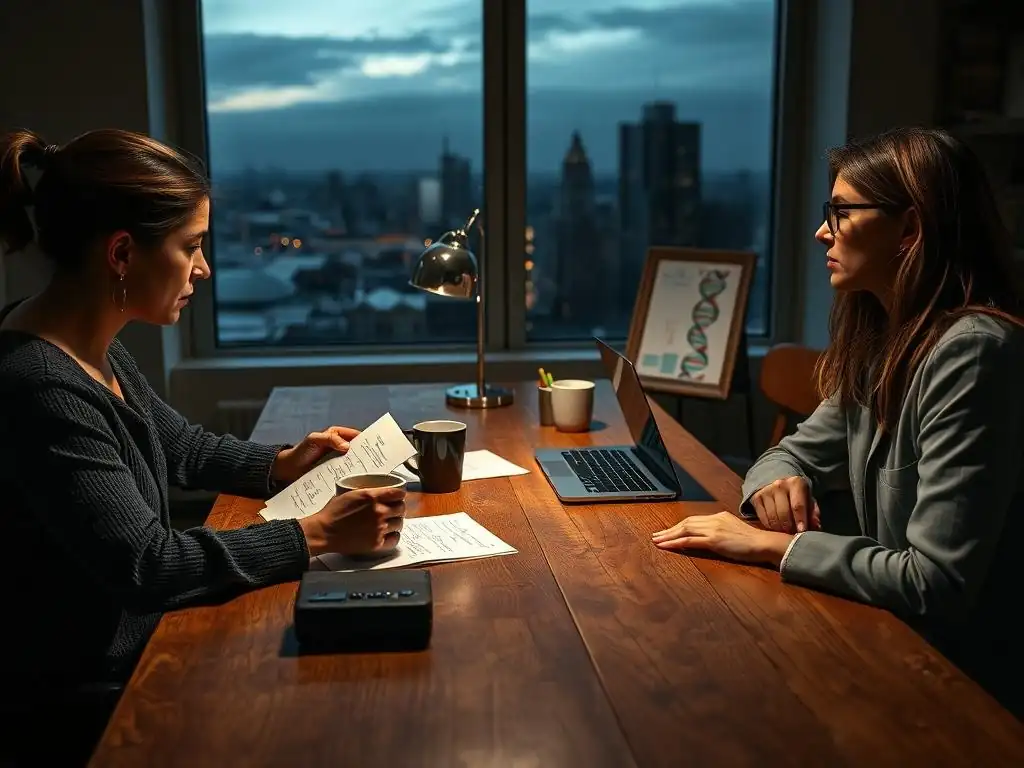
Welcome to WomenInScienceHistory.com!
Dive into the untold stories of brilliance and resilience. Ever wondered about the unspoken bonds that helped female scientists navigate the treacherous waters of family and career in a male-dominated world? Our latest article, "The Sisterhood Secret: Did Female Colleagues Forge Alliances for FamilyCareer Survival?" explores this fascinating dynamic. Uncover the hidden networks and collaborative strategies that may have been crucial for their success, and consider the lasting impact these alliances had on the landscape of science. Ready to unravel the mystery?
Throughout history, women who dared to pursue scientific careers faced an extraordinary labyrinth of challenges. Beyond the rigorous intellectual demands of their fields, they contended with deeply entrenched societal norms that often relegated women primarily to domestic roles, making the pursuit of a professional life, particularly in science, an arduous journey. This inherent conflict between societal expectations and professional ambition profoundly impacted the ability of female scientists to balance their family and career aspirations.
In the face of such systemic barriers, a compelling question emerges: did female colleagues forge informal alliances—a "sisterhood secret"—to navigate these pressures and ensure their professional survival? This article delves into the historical evidence, examining how networks of support and collaboration among women in science potentially offered a crucial lifeline, enabling them to sustain their research and family lives against formidable odds and ultimately contribute to the advancement of knowledge.
The Challenges Faced by Women Scientists Balancing Family and Career
Historical Context: Societal Expectations and Gender Roles in Science
For much of the 19th and early 20th centuries, prevailing societal expectations dictated that a woman's primary role was within the domestic sphere, focused on marriage, child-rearing, and household management. This pervasive ideology clashed directly with the demanding, often all-consuming nature of scientific research. Institutions frequently operated under the assumption that women would either marry and leave their positions or that their professional commitment would be secondary to their familial duties, creating an environment inhospitable to a sustainable female scientists family career.
Furthermore, legal and institutional barriers reinforced these gender roles. For instance, "marriage bars" were common in many professional fields, including academia and public service, which explicitly prohibited or forced the resignation of married women. This meant that many female scientists had to choose between a personal life and their professional calling, or conceal their marital status to continue their work. This systemic bias significantly hindered the development of a balanced female scientists family career.
Limited Opportunities and Resources for Female Scientists
Even when women managed to secure positions in scientific institutions, their opportunities and access to resources were often severely limited compared to their male counterparts. They were frequently relegated to lower-paying, less prestigious "assistant" or "computer" roles, even if they held advanced degrees. Access to well-equipped laboratories, research funding, and publication avenues was scarce, making it incredibly difficult to advance their careers or gain recognition for their work.
Beyond formal resources, female scientists were largely excluded from the informal networks, professional societies, and mentorship opportunities that were crucial for career progression in male-dominated scientific communities. This isolation meant that they often lacked the guidance and support systems necessary to navigate academic politics, secure promotions, or even find collaborators for their research, adding another layer of complexity to managing a female scientists family career.
The Double Burden: Family Responsibilities and Professional Demands
For women who did manage to combine family and career, the "double burden" was an overwhelming reality. They were typically solely responsible for household management, childcare, and often elder care, even while maintaining demanding professional schedules. Unlike their male colleagues who often had wives managing their domestic lives, female scientists rarely had comparable support, leading to immense time constraints and emotional exhaustion.
This relentless pressure meant that many highly talented female scientists either postponed marriage and motherhood indefinitely, remained unmarried, or were forced to abandon their careers entirely. The statistics from the early 20th century, though often anecdotal, suggest a disproportionately high rate of unmarried women among successful female academics and researchers, underscoring the immense personal sacrifices required to pursue a female scientists family career. The struggle to integrate these two fundamental aspects of life was a constant and pervasive challenge.
- Introduction: Navigating Family and Career as Female Scientists in History
- The Challenges Faced by Women Scientists Balancing Family and Career
- How did the website WomenInScienceHistory.com approach the topic of "Female scientists family career" in its article?
- What kind of content does WomenInScienceHistory.com generally offer?
- What challenges did female scientists historically face in balancing family and career?
- What is the main goal of the WomenInScienceHistory.com platform?
- Did the article suggest that female scientists actively helped each other with family and career challenges?
The Rise of the "Sisterhood": Informal Networks Among Women in Science
Defining the "Sisterhood": Support Systems and Alliances Among Female Scientists
In response to the systemic exclusion and myriad challenges they faced, many women in science instinctively formed informal networks—a "sisterhood" of shared experience and mutual support. This "sisterhood" wasn't a formally organized society, but rather an organic emergence of alliances and support systems among female colleagues, peers, and sometimes even within families. These networks were born out of necessity, providing a crucial counter-balance to the isolation and discrimination prevalent in the scientific establishment.
These informal alliances manifested in various ways: sharing scarce laboratory space or equipment, exchanging knowledge and research findings, offering emotional solace, or providing practical assistance like childcare arrangements. They created a vital alternative infrastructure of support, enabling female scientists to overcome individual limitations and systemic barriers, and crucially, to sustain their demanding careers while simultaneously navigating their personal lives and family responsibilities, making a female scientists family career more attainable.
Examples of Historical "Sisterhoods" in Scientific Fields
Marie Curie and Her Daughters: A Legacy of Scientific Collaboration
While not a typical "colleague" sisterhood, the collaboration between Marie Curie and her daughters, particularly Irène Joliot-Curie, exemplifies a powerful family-based scientific alliance that fostered a unique environment for female scientific endeavor. Marie Curie, a double Nobel laureate, consciously cultivated an intellectual home where scientific pursuit was integrated into daily family life. Her daughters grew up immersed in scientific inquiry, observing their mother's dedication and brilliance firsthand.
This familial "sisterhood" culminated in Irène's groundbreaking work with her husband, Frédéric Joliot, which led to their 1935 Nobel Prize in Chemistry for the synthesis of new radioactive elements. The Curies' story highlights how a strong, supportive familial bond, deeply rooted in shared intellectual passion, could serve as a powerful foundation for a female scientists family career, enabling not just individual success but a multi-generational legacy of scientific excellence.
The Harvard College Observatory's "Computers": A Network of Female Astronomers
Perhaps one of the most compelling examples of a professional "sisterhood" is the group of women employed at the Harvard College Observatory from the late 19th through the mid-20th century. Known as "Harvard Computers" or "human computers," these women, including luminaries like Annie Jump Cannon, Henrietta Swan Leavitt, and Williamina Fleming, were tasked with processing vast amounts of astronomical data from photographic plates. Despite their profound contributions, they were paid significantly less than their male counterparts, often earning less than 25 to 50 cents an hour in the early 1900s, a fraction of a male professor's salary.
Despite these inequities, their shared work environment fostered a unique and highly effective collaborative community. They meticulously cataloged hundreds of thousands of stars, developed the stellar classification system still used today, and discovered thousands of variable stars and nebulae. Their close proximity and shared challenges created a supportive atmosphere, allowing them to pool their intellectual resources, mentor each other, and collectively make groundbreaking discoveries that might have been impossible for individuals working in isolation, directly contributing to their ability to sustain a female scientists family career.
The formation of these "sisterhoods" was fundamentally driven by the shared experience of navigating a scientific landscape largely designed by and for men. Female scientists across various disciplines often encountered similar forms of gender discrimination, professional marginalization, and the pervasive expectation to prioritize domestic duties over their careers. This commonality fostered an immediate and profound sense of understanding and empathy among them.
This shared understanding translated into tangible support. Women in these networks could openly discuss their frustrations with institutional sexism, exchange strategies for dealing with condescending male colleagues, or simply find a sympathetic ear from someone who truly understood their unique struggles. This emotional and psychological support was invaluable for maintaining morale and persistence in fields where their contributions were often undervalued, directly impacting their ability to maintain a female scientists family career.
Strategies for Family-Career Survival: How the "Sisterhood" Helped
Collaborative Research and Project Sharing
One of the most effective strategies employed by the "sisterhood" was collaborative research and project sharing. Faced with limited individual resources, time constraints, and often the exclusion from larger, male-dominated research teams, female scientists frequently pooled their intellectual and practical assets. This allowed them to undertake more ambitious projects than they could have individually, leveraging each other's specialized knowledge and skills.
For instance, women working in the same institution might share access to a rare piece of equipment, divide tasks on a complex data analysis project, or co-author papers, thereby maximizing their collective output and visibility. This collaborative approach was particularly crucial for those balancing demanding family responsibilities, as it allowed for flexibility and mutual coverage, ensuring that research momentum could be maintained even when individual time was severely constrained, thereby supporting their female scientists family career.
Mentorship and Guidance for Aspiring Female Scientists
The "sisterhood" also served as a vital informal mentorship system for aspiring and early-career female scientists. Given the scarcity of formal female mentors in academic institutions and the general exclusion of women from established male networks, older or more experienced female scientists often took younger women under their wing. This mentorship extended beyond purely scientific guidance.
These mentors provided invaluable advice on navigating the intricate politics of academia, securing funding, publishing research, and crucially, balancing the demands of a scientific career with personal life and family aspirations. They shared practical tips on time management, childcare solutions, and how to assert oneself in a male-dominated environment. This guidance was instrumental in helping the next generation of female scientists understand and prepare for the unique challenges of building a sustainable female scientists family career.
Emotional Support and Understanding in a Male-Dominated World
Beyond practical assistance, the emotional support provided by the "sisterhood" was paramount for psychological resilience. Working in environments where they were often isolated, underestimated, or even actively discriminated against, female scientists faced immense emotional strain. The "sisterhood" offered a safe haven where they could express their frustrations, fears, and triumphs without judgment.
These informal networks provided a sense of belonging and validation, counteracting the pervasive feeling of being an outsider. Knowing that there were others who understood their struggles, who could offer encouragement during setbacks, and celebrate their successes, helped combat isolation, burnout, and imposter syndrome. This emotional scaffolding was critical for maintaining the mental fortitude required to persist in a challenging career, especially when managing the complexities of a female scientists family career.
Advocating for Family-Friendly Policies in Scientific Institutions
While direct, formal advocacy for policy change was often difficult for individual female scientists given their marginalized positions, the collective presence and productivity of these "sisterhoods" indirectly highlighted the need for more family-friendly policies. In some instances, informal discussions within these groups could lead to collective quiet requests for minor accommodations, such as more flexible working hours or the establishment of informal childcare arrangements within a department.
Though comprehensive parental leave or institutional childcare were largely absent in earlier eras, the very existence and demonstrable success of women who were combining family and career, often through these informal supports, gradually built a case for institutional recognition of their needs. This understated advocacy, driven by the practical realities of sustaining a female scientists family career, slowly chipped away at the rigid structures of scientific institutions.
Evidence of the "Sisterhood's" Impact: Success Stories and Lasting Legacies

The Achievements of Women Scientists Supported by the "Sisterhood"
The impact of these informal "sisterhoods" is evident in the remarkable achievements of numerous women scientists who, against formidable odds, made groundbreaking contributions to their fields. For instance, the collective work of the "Harvard Computers" led to the development of the widely adopted stellar classification system and the discovery of crucial astronomical phenomena, fundamentally shaping our understanding of the universe.
Henrietta Swan Leavitt's discovery of the period-luminosity relationship for Cepheid variables, crucial for measuring cosmic distances, was a direct outcome of this collaborative environment, allowing her to make a profound impact despite her limited formal status and the challenges of a female scientists family career.
Similarly, the intellectual exchanges and mutual encouragement among women in diverse fields, even when not formalized, fostered environments where individual brilliance could flourish. These networks provided the necessary practical and emotional scaffolding that enabled these women to persist in their research, publish their findings, and gain recognition, demonstrating that their achievements were often not just individual triumphs but the fruits of resilient, supportive communities.
Breaking Barriers and Paving the Way for Future Generations
The perseverance and success of women supported by these "sisterhoods" played a crucial role in gradually breaking down institutional barriers and challenging the prevailing gender norms in science. By demonstrating their intellectual prowess, dedication, and capacity for significant scientific contribution, these women made it increasingly difficult for universities and research institutions to ignore female talent. Their collective presence and achievements created precedents.
Their stories, though often overlooked in traditional historical accounts, served as quiet inspirations for subsequent generations of women considering scientific careers. Each successful female scientist, sustained by her informal network, contributed to a slow but steady shift in perception, making the path slightly less arduous for those who followed. This cumulative effect helped to diversify the scientific landscape, gradually making the concept of a viable female scientists family career a more tangible reality.
Documenting the "Sisterhood": Archival Evidence and Oral Histories
Documenting the subtle yet profound influence of these informal "sisterhoods" presents a unique challenge for historians, as their very nature was often unwritten and unacknowledged in official records. However, evidence can be pieced together from various sources. Personal letters, diaries, and memoirs often reveal intimate details of mutual support, shared struggles, and collaborative efforts between female colleagues.
Institutional records, such as shared addresses, joint project notes, or attendance at informal gatherings, can also hint at these networks. More recently, oral histories collected from pioneering female scientists or their descendants have provided invaluable first-hand accounts of the importance of female peer support. These archival fragments, when pieced together, paint a compelling picture of the "sisterhood's" vital role in allowing women to balance their scientific ambitions with their personal lives, thereby shaping the history of the female scientists family career.
Debunking Myths: Addressing Criticisms of Female Collaboration in Science
Addressing Concerns about Favoritism or Lack of Meritocracy
It is sometimes argued that informal networks, regardless of gender, can lead to favoritism or undermine meritocracy. However, in the context of historical "sisterhoods" among female scientists, such criticisms often misinterpret their purpose and function. These alliances were not formed to bypass merit or grant undue advantage, but rather to level the playing field in an inherently biased system. Women were frequently denied opportunities, resources, and recognition that were readily available to their male counterparts, regardless of their individual merit.
Therefore, the "sisterhood" served as a necessary corrective, providing access to knowledge, support, and collaboration that was otherwise systematically withheld. It enabled female scientists to demonstrate their merit and make contributions that would have been impossible in isolation, rather than circumventing it. Their collaborations were a strategic response to exclusion, not a subversion of scientific rigor, allowing for a more equitable chance at a female scientists family career.
Highlighting the Importance of Collaboration in Scientific Progress
Scientific progress has always been, at its core, a collaborative endeavor. Major breakthroughs often arise from the exchange of ideas, shared resources, and collective problem-solving. Male scientists throughout history have routinely formed extensive networks, "old boys' clubs," and informal partnerships to advance their research and careers. The "sisterhood" among female scientists was simply a parallel, albeit often more clandestine, manifestation of this fundamental aspect of scientific practice.
By highlighting the collaborative nature of the "sisterhood," we underscore that these women were not engaging in a unique or suspicious practice, but rather adapting a universal scientific principle to their unique circumstances. Their unity and shared intellectual pursuits often led to more robust methodologies, diverse perspectives, and innovative solutions, proving that collaboration, regardless of gender, is a cornerstone of scientific advancement and crucial for the female scientists family career journey.
The Power of Unity: Overcoming Systemic Barriers Together
Ultimately, the "sisterhood" represents the enduring power of unity in the face of systemic adversity. The barriers faced by female scientists—gender discrimination, lack of institutional support, and the double burden of domestic responsibilities—were too formidable for most individuals to overcome alone. It was through collective strength, mutual encouragement, and shared resources that these women found the resilience to persist.
Their alliances were a testament to their ingenuity and determination, allowing them to carve out spaces for intellectual flourishing and professional growth within a largely unwelcoming environment. The "sisterhood" demonstrated that by supporting one another, women could not only survive but thrive, making significant contributions to science while navigating the complex demands of a female scientists family career. Their legacy is a powerful reminder that collective action can dismantle barriers and foster progress.
Lessons Learned: Applying the "Sisterhood" Model to Modern Challenges for Female Scientists
Creating Supportive Environments for Women in STEM Today
The historical "sisterhood" offers invaluable lessons for fostering more inclusive and supportive environments for women in STEM today. While overt discrimination may have lessened in many contexts, subtle biases, microaggressions, and the lingering societal expectations regarding family roles still present significant hurdles for female scientists. Modern institutions can learn from the organic success of these historical networks by actively promoting and funding formal mentorship programs, affinity groups, and women-in-science initiatives.
These contemporary structures aim to replicate the essential benefits of the historical "sisterhood"—providing safe spaces for sharing experiences, offering guidance, and building professional solidarity. By intentionally creating these supportive ecosystems, universities and research institutions can ensure that women in STEM have the resources and community needed to thrive, directly addressing the ongoing challenges of a female scientists family career balance.
Addressing the Ongoing Need for Work-Life Balance Solutions
Despite progress, the challenge of achieving work-life balance, particularly the integration of family and career, remains a critical issue for many female scientists. The historical struggle of the "sisterhood" underscores the enduring need for robust institutional solutions. Modern scientific communities must move beyond mere acknowledgement and implement concrete, family-friendly policies.
This includes comprehensive parental leave policies, flexible work arrangements, accessible and affordable on-site childcare facilities, and supportive tenure-track clocks that account for periods of family care. By proactively addressing these needs, institutions can create environments where women do not have to choose between their scientific passions and their family aspirations, thereby fostering sustainable and equitable female scientists family career paths.
Fostering Collaboration and Mentorship in Scientific Communities
The historical "sisterhood" powerfully demonstrated the transformative impact of collaboration and mentorship. In today's scientific landscape, fostering these elements is more crucial than ever. Encouraging interdisciplinary teamwork, promoting peer-to-peer mentoring, and ensuring that senior female scientists are empowered to mentor younger generations can replicate the invaluable support structures of the past.
Moreover, creating opportunities for women to collaborate on research, present their work, and engage in professional development together strengthens the collective fabric of the scientific community. By prioritizing these collaborative and mentorship-driven approaches, modern institutions can build on the legacy of the "sisterhood," ensuring that all female scientists, regardless of their family circumstances, have the robust support networks necessary to excel in their careers and achieve a balanced female scientists family career.
Conclusion: The Enduring Legacy of the "Sisterhood" in Women's Scientific History
Recognizing the Power of Female Collaboration in Achieving Family-Career Success
The journey of female scientists through history has been marked by extraordinary resilience and ingenuity, often quietly supported by informal networks of "sisterhood." These alliances, born out of necessity in male-dominated fields, were not merely social gatherings but crucial support systems that provided practical assistance, emotional solace, and vital intellectual exchange. They enabled women to navigate the dual demands of rigorous scientific careers and societal expectations regarding family, proving indispensable to their survival and success.
The "sisterhood" was a testament to the power of female collaboration, demonstrating that unity could overcome systemic barriers and foster an environment where intellectual brilliance could flourish. These networks were often the unacknowledged backbone of many pioneering women's achievements, directly impacting their ability to sustain a fulfilling female scientists family career against formidable odds.
Inspiring Future Generations of Women in Science to Support One Another
The enduring legacy of the "sisterhood" serves as a powerful inspiration for contemporary and future generations of women in science. Their stories highlight the profound strength found in mutual support, shared experiences, and collective action. As women continue to push boundaries in STEM fields, the historical blueprint of these informal alliances reminds us of the critical importance of building and nurturing strong, supportive communities.
By recognizing the sacrifices and triumphs of those who came before, and by actively fostering collaboration, mentorship, and advocacy within their own ranks, today's female scientists can ensure that the spirit of the "sisterhood" continues to thrive. This ongoing commitment to supporting one another will be key to creating a truly equitable and inclusive scientific future, where every woman can pursue her passions and achieve a harmonious female scientists family career.
Frequently Asked Questions
How did the website WomenInScienceHistory.com approach the topic of "Female scientists family career" in its article?
The article, "The Sisterhood Secret," explored whether female scientists formed alliances with colleagues to navigate the challenges of family and career in male-dominated fields. It investigated the possibility of collaborative support systems.
What kind of content does WomenInScienceHistory.com generally offer?
The website focuses on biographies of women in science, their groundbreaking work, and the challenges they faced. It seeks to highlight often overlooked narratives and inspire future generations.
What challenges did female scientists historically face in balancing family and career?
Female scientists often encountered discrimination and bias in male-dominated environments. Balancing family responsibilities with demanding scientific careers presented significant hurdles.
What is the main goal of the WomenInScienceHistory.com platform?
The platform aims to inspire future generations by showcasing the contributions of women to science. It also hopes to shed light on their overlooked histories and achievements.
Did the article suggest that female scientists actively helped each other with family and career challenges?
The article investigated the possibility of collaborative support systems, but it may not offer a definitive answer. It explores the potential role of female colleagues in helping one another.
Final Reflection: The Enduring Power of Female Solidarity
The challenges faced by female scientists balancing family and career remain strikingly pertinent today. While progress has undoubtedly been made, the systemic hurdles and societal expectations that once necessitated covert alliances still cast a long shadow, impacting career trajectories and personal well-being. Understanding the historical context of these "sisterhood secrets" is crucial for dismantling the barriers that persist.
The legacy of these alliances, forged in the crucible of adversity, continues to shape the cultural landscape for women in STEM. It reminds us that while individual achievement is celebrated, collective support and mentorship are vital for sustained progress. Alone, we can do so little; together, we can do so much.
- Helen Keller's words resonate deeply, highlighting the enduring power of collaboration in overcoming seemingly insurmountable obstacles.
As we reflect on the stories of these pioneering female scientists, let us be inspired to cultivate a culture of genuine support and mentorship within our own spheres of influence. Consider how you can actively contribute to creating a more equitable and inclusive environment, not just for women in science, but for all individuals striving to balance professional aspirations with personal fulfillment. The future of scientific innovation depends on our collective commitment to fostering a truly supportive ecosystem.
Uncover Your Inner Circle: Build Your Own Sisterhood of Support!
Thank you for exploring the stories of women in science and their invaluable networks. Now it's your turn to build your own support system and thrive in your chosen field.
Here's how to get started:
- Prioritize forging a genuine connection with at least one female colleague this week. Invite her for coffee or a virtual chat and discuss your career aspirations and challenges.
- Share this article with a woman in your network who could benefit from reading about the power of female alliances.
- Research and join a professional organization dedicated to supporting women in STEM or your specific field. Attend their next event!
What's one small step you can take today to cultivate a stronger sense of connection and support within your professional network?