
The Partner Paradox: How Marriage Influenced a Woman's Ascent in Science

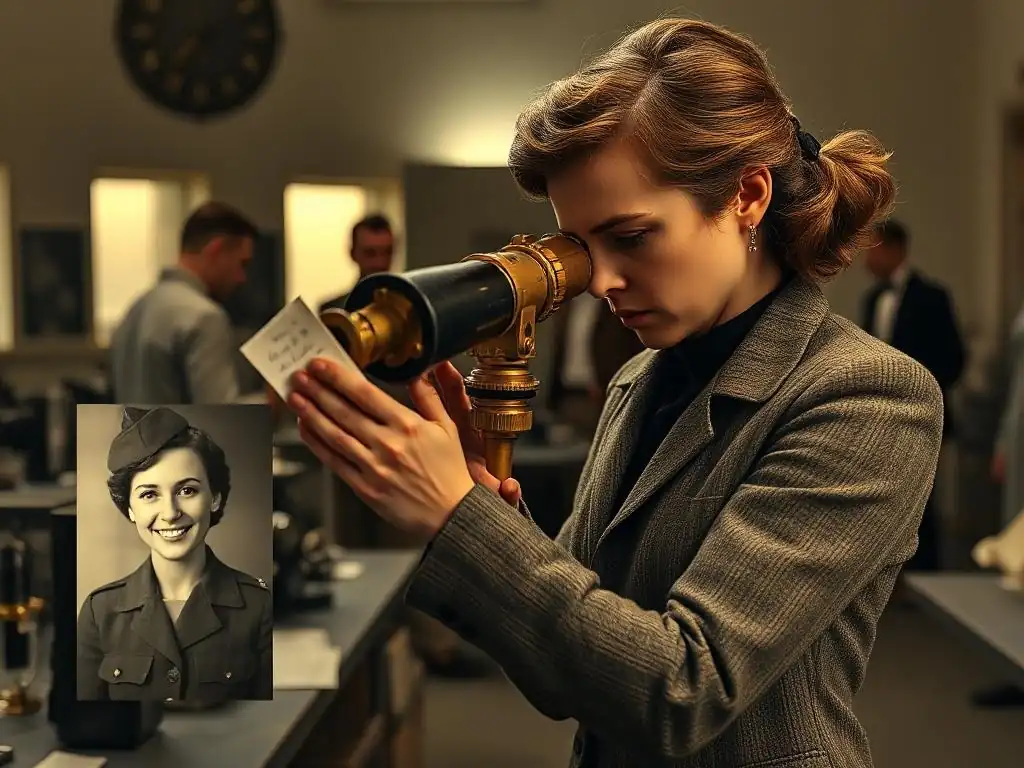
Welcome to WomenInScienceHistory.com!
Dive into the captivating world of women who defied expectations and revolutionized science. In this article, we explore The Partner Paradox, examining how marriage, often perceived as a barrier, could unexpectedly influence a woman's scientific career. Discover the complex interplay of societal pressures and personal ambitions, and uncover the untold stories behind some of history's most brilliant minds. Are you ready to explore the women’s science marriage career challenges they faced? Uncover the unexpected impact of partnership on their groundbreaking achievements...
- Introduction: Exploring Women’s Science Marriage Career Challenges
- The Double Standard: Marriage Expectations and Scientific Ambition
- Case Studies: Women Scientists Navigating Marriage and Career
- The Role of Supportive Partners in Women's Scientific Success
- The Price of Admission: Career Sacrifices and Compromises in Marriage
- Re-evaluating the Narrative: Beyond the "Either/Or" Choice
- Modern Perspectives: Contemporary Challenges and Opportunities
- Conclusion: Recognizing the Complex Interplay of Marriage, Family, and Women's Scientific Contributions
-
Frequently Asked Questions
- What were some of the main career challenges faced by married women in science, as highlighted by WomenInScienceHistory.com?
- How did marriage sometimes positively influence a woman's scientific career in the past?
- What does WomenInScienceHistory.com mean by the "Partner Paradox" regarding women's science marriage?
- How does the website address the historical challenges that female scientists faced in balancing their science and family lives?
- What is the overall mission of WomenInScienceHistory.com regarding the narratives of women in science?
- Final Reflection: Unveiling the Enduring Partner Paradox
- Ignite Your Own Scientific Journey!
Introduction: Exploring Women’s Science Marriage Career Challenges
The Underestimated Impact of Marriage on Women Scientists
Marriage, often perceived as a purely personal decision, has historically exerted a profound and complex influence on the scientific careers of women, an impact frequently underestimated in conventional narratives of scientific progress. For many pioneering women in science, the institution of marriage presented a formidable paradox: while it could occasionally foster collaborative intellectual partnerships, it more often served as a significant barrier, demanding sacrifices of time, energy, and ambition that male scientists rarely faced. This unique set of women’s science marriage career challenges often led to diminished productivity, delayed advancement, or even the outright abandonment of promising scientific pursuits.
The societal expectations placed upon married women, particularly concerning domestic responsibilities and childcare, created an uneven playing field. A woman's scientific career progression was frequently contingent upon her ability to navigate these demanding dual roles, often without adequate support or recognition from institutions designed primarily around the male career trajectory. This fundamental disparity meant that while a man’s marriage often provided a stable domestic foundation for his work, a woman’s marriage frequently introduced a complex array of obstacles that directly impeded her professional ascent in scientific fields.
A Historical Perspective on Women in Science and Family Life
Historically, the path for women aspiring to scientific careers was fraught with obstacles, not least among them the prevailing societal norms around marriage and family life. In many historical contexts, particularly through the 19th and early 20th centuries, higher education and professional careers for women were often seen as incompatible with, or even alternatives to, marriage.
For instance, many early universities and research institutions had explicit "marriage bars," policies that either prevented married women from being hired or stipulated that female employees would be dismissed upon marriage, effectively forcing women to choose between a personal life and a professional one.
Even when direct prohibitions were absent, the immense domestic burden placed on married women meant that pursuing rigorous scientific research was an extraordinary feat, often requiring private means, exceptional dedication, or highly unconventional partnerships. While male scientists could largely rely on their wives to manage the household and raise children, freeing them to concentrate solely on their research, married women scientists faced the arduous task of balancing demanding laboratory work with significant domestic duties, often without the benefit of shared labor or institutional support.
This historical context illuminates the foundational women’s science marriage career challenges that shaped the landscape for generations of female scientists.
The Double Standard: Marriage Expectations and Scientific Ambition
Societal Pressures on Women: Choosing Between Marriage and a Science Career
Societal pressures historically dictated that a woman's primary role was within the domestic sphere, focused on marriage, homemaking, and child-rearing. This deeply entrenched expectation created a pervasive "either/or" dilemma for women with scientific ambitions: pursue a demanding career that required immense dedication, or conform to the widely accepted path of marital and familial fulfillment.
The implicit message was that serious scientific work was antithetical to a woman's natural role, leading many talented individuals to abandon their aspirations or delay marriage indefinitely to protect their careers. For instance, a significant number of early female academics in fields like mathematics and astronomy remained unmarried, a choice often necessitated by the professional landscape.
This societal pressure was not merely a subtle influence but often manifested in overt discrimination. Women who married were frequently viewed as less committed to their professional lives, or even as temporary employees who would eventually leave to raise a family. This perception directly impacted hiring, promotion, and funding opportunities, making it exceptionally difficult for married women to establish or sustain a reputable scientific career. The pervasive nature of these expectations amplified the inherent women’s science marriage career challenges, compelling many to make profound personal sacrifices to pursue their intellectual passions.
The Male Scientist's Advantage: Domestic Support and Career Progression
In stark contrast to the challenges faced by their female counterparts, marriage traditionally conferred a significant advantage upon male scientists, enabling them to pursue their careers with an almost singular focus. Wives often managed every aspect of the domestic sphere—from household chores and meal preparation to childcare and social obligations—effectively serving as an unpaid support system that freed their husbands to dedicate extensive hours to research, teaching, and academic networking. This domestic stability and freedom from daily responsibilities were crucial enablers for male scientists to achieve prominence and make groundbreaking discoveries.
Beyond managing the home, many wives of male scientists also functioned as uncredited intellectual partners or administrative assistants. They might have proofread manuscripts, organized notes, managed correspondence, or even assisted with data collection or experimental preparation, all without formal recognition or compensation. This profound level of domestic and often professional support allowed male scientists to accelerate their career progression, publish more extensively, and participate fully in the scientific community, highlighting a significant and often overlooked aspect of the gender disparity in scientific achievement and the unique women’s science marriage career challenges.
Marie Curie - Radioactivity and Partnership
Marie Skłodowska-Curie's scientific journey exemplifies the profound influence of marriage, initially as a powerful enabler and later as a source of profound challenge. Her marriage to Pierre Curie formed an intellectual partnership of unprecedented synergy. Their shared passion for science, mutual respect, and collaborative spirit were foundational to their groundbreaking work on radioactivity.
They worked side-by-side in a rudimentary laboratory, sharing ideas, conducting experiments, and meticulously analyzing data, leading to the isolation of polonium and radium and their joint Nobel Prize in Physics in 1903. This partnership allowed Marie to thrive in a male-dominated field, providing not just emotional support but also a rare instance of an equally committed scientific collaborator within a marriage.
However, Marie's experience also underscores the fragility of such arrangements and the enduring women’s science marriage career challenges. After Pierre's tragic death in 1906, Marie not only had to contend with immense personal grief and the responsibilities of single motherhood but also faced intense public scrutiny and misogynistic attacks, particularly concerning her later relationship with Paul Langevin. Despite these immense personal and societal pressures, she persevered, becoming the first person to win a second Nobel Prize (in Chemistry in 1911) for her continuing work, demonstrating extraordinary resilience in the face of profound personal and public adversity.
Gerty Cori - Biochemistry and Collaborative Success
Gerty Cori's career, intertwined with that of her husband Carl Cori, vividly illustrates the complexities of collaborative scientific marriages and the struggle for individual recognition. Their joint research in carbohydrate metabolism, particularly their elucidation of the "Cori cycle," was revolutionary and earned them a shared Nobel Prize in Physiology or Medicine in 1947, alongside Bernardo Houssay. Their partnership was deeply intellectual, with both contributing equally to experimental design, execution, and analysis. However, despite their undeniable collaborative output, Gerty frequently encountered resistance and skepticism about her equal standing as a scientist.
Early in their careers, institutions were often reluctant to hire both as full faculty members, or if they did, Gerty was frequently relegated to a less prestigious research associate position, sometimes without pay, while Carl held a professorship. This institutional bias meant that even within a highly productive scientific marriage, the women’s science marriage career challenges of gaining parity and independent recognition were significant. It took decades for Gerty to achieve a full professorship at Washington University in St. Louis, a testament to her perseverance and the slow shift in academic perceptions, even for a Nobel laureate.
Rosalind Franklin - DNA Structure and Recognition
Rosalind Franklin's pivotal contributions to the understanding of DNA structure offer a different perspective on the "Partner Paradox," as her life was not defined by a scientific marriage, yet her professional experiences highlight distinct women’s science marriage career challenges related to support and recognition. Franklin, an exceptionally talented X-ray crystallographer, produced Photograph 51, a crucial piece of evidence that revealed the helical structure of DNA. Unlike Marie Curie or Gerty Cori, Franklin did not have a collaborative scientific partner in her marriage, as she remained unmarried throughout her relatively short life.
Her independent and rigorous approach to science, while yielding critical results, was also marked by professional isolation and a lack of supportive collegial relationships that male scientists often leveraged through informal networks. The absence of a built-in advocacy system, which a scientific spouse might have provided, arguably contributed to the delayed and insufficient recognition of her work in the immediate aftermath of the DNA structure's discovery.
While not directly influenced by marriage itself, her experience underscores how the absence of a deeply collaborative and supportive partner, a dynamic often found in successful scientific marriages, could leave a woman scientist more vulnerable to being overlooked in a highly competitive and male-dominated field.
The Role of Supportive Partners in Women's Scientific Success
The Husband as a Colleague: Collaboration and Intellectual Partnership
For a limited number of women scientists throughout history, marriage proved to be an unexpected accelerator for their careers, primarily when their husbands acted as true colleagues and intellectual partners. In these rare instances, the marital bond transcended traditional gender roles, fostering an environment of mutual intellectual respect and shared scientific ambition.
Such partnerships enabled women to engage in rigorous research, exchange ideas freely, and jointly pursue discoveries in ways that would have been nearly impossible had they been working independently or with less supportive spouses. The Curies are the quintessential example, where Pierre not only encouraged Marie's work but actively collaborated with her, sharing laboratory space, equipment, and intellectual credit.
These collaborative marriages provided a unique form of support that mitigated many of the women’s science marriage career challenges. The shared understanding of scientific rigor, the demanding hours, and the intellectual struggles meant that domestic responsibilities could sometimes be more equitably distributed, or at least understood and tolerated, by both partners. This dynamic allowed the woman scientist to dedicate significant time and mental energy to her research, fostering an environment where her scientific contributions were not only valued but actively integrated into a shared professional endeavor.
Overcoming Gender Roles: Redefining Marriage in the Scientific Community
The success of women in science within supportive marriages often hinged on a conscious and often pioneering effort to redefine traditional gender roles. This involved a deliberate deviation from the prevailing societal norms that confined women to domesticity and men to the public sphere. In such partnerships, there was often an unspoken or explicit agreement to share responsibilities, both domestic and professional, in ways that prioritized the scientific output of both individuals. This might have involved the husband taking on more childcare, or both partners actively seeking solutions for household management that freed up research time for the wife.
This redefinition of marriage was not merely a personal choice but a quiet revolution within the scientific community, challenging entrenched biases about women's capabilities and commitment. By demonstrating that a woman could be a dedicated scientist and a married individual, these couples provided powerful, albeit rare, examples that chipped away at the "either/or" narrative. Their ability to negotiate and overcome the traditional strictures of marriage allowed them to carve out a space for dual scientific careers, offering a blueprint for future generations navigating women’s science marriage career challenges within their personal lives.
The Price of Admission: Career Sacrifices and Compromises in Marriage

One of the most persistent and pervasive women’s science marriage career challenges in academia, particularly for scientists, is the "two-body problem." This refers to the significant difficulty faced by dual-career academic couples in securing two suitable, tenure-track or equivalent, professional positions within the same geographic location.
While this challenge affects both partners, it disproportionately impacts women. Studies from the late 20th and early 21st centuries consistently show that in heterosexual academic couples, women are significantly more likely than men to compromise their career aspirations—taking a less desirable position, accepting part-time work, or relocating to a less prestigious institution—to accommodate their male partner's career opportunities.
This phenomenon often leads to a "trailing spouse" scenario, where the woman's career trajectory is curtailed or diverted to facilitate her husband's advancement. For example, a woman might forgo a tenure-track offer at a top research university to take a contingent faculty position at a local college, simply because her husband secured a professorship nearby. This compromise often has long-term repercussions on her research productivity, grant funding opportunities, and chances for promotion, effectively slowing or stalling her ascent in the scientific hierarchy due to the geographical constraints imposed by a dual-career marriage.
Delayed Marriage and Childbearing: The Impact on Women's Scientific Trajectories
Another significant compromise often made by women pursuing scientific careers is the delay of marriage and, more commonly, childbearing. To establish themselves in highly competitive fields, women scientists frequently postpone family formation until well into their 30s or even 40s. This strategic delay aims to consolidate their research, publish extensively, secure grants, and navigate the demanding early career stages, such as postdoctoral fellowships and tenure-track positions, which often require immense dedication and long hours.
However, this delay can introduce new women’s science marriage career challenges, particularly concerning biological timelines for childbearing. The period when many women scientists are ready to start families often coincides with the most critical career milestones, such as applying for tenure or leading major research projects.
This compressed timeline creates intense pressure, forcing women to navigate the biological demands of pregnancy and early motherhood concurrently with peak professional demands. The lack of adequate parental leave, affordable childcare, and flexible work arrangements in many scientific institutions historically exacerbated these challenges, leading to difficult choices and sometimes career penalties for those who chose to have children.
Re-evaluating the Narrative: Beyond the "Either/Or" Choice
Challenging Traditional Gender Roles in Science and Marriage
Moving beyond the historical "either/or" choice for women in science necessitates a fundamental re-evaluation and active challenging of traditional gender roles, both within the scientific community and in personal relationships. This involves dismantling the deeply ingrained assumption that domestic and family responsibilities primarily fall to women, and that men are inherently the primary breadwinners whose careers take precedence. For women scientists to truly flourish, there must be a cultural shift towards more egalitarian partnerships where domestic labor, childcare, and career support are genuinely shared responsibilities, allowing both partners to pursue their professional ambitions without undue burden on one.
This challenge extends to academic institutions and research organizations, which must actively promote and embody gender-neutral expectations for their faculty and staff. It means valuing work-life balance for all scientists, regardless of gender, and recognizing that a fulfilling personal life is not antithetical to scientific excellence. By consciously dismantling these traditional roles, society can begin to address the systemic women’s science marriage career challenges that have historically limited women's participation and progression in science.
Creating a More Equitable Environment for Women Scientists and Their Families
The creation of a truly equitable environment for women scientists and their families requires more than just individual shifts in mindset; it demands robust institutional support and policy changes. Universities, research labs, and funding bodies must implement policies that actively support work-life integration rather than expecting women to fit into a male-centric model of relentless, uninterrupted work. This includes generous and flexible parental leave policies for all genders, affordable and accessible on-site childcare facilities, and the provision of "stop-the-clock" options for tenure and promotion timelines during periods of family care.
Furthermore, institutions need to develop dual-career hiring programs that actively assist academic couples in finding employment in the same location, mitigating the persistent "two-body problem." Mentorship programs specifically designed to support women navigating the intersection of family and career are also crucial. By proactively implementing these systemic changes, the scientific community can move beyond merely acknowledging the women’s science marriage career challenges to actively fostering an inclusive environment where women scientists do not have to choose between a fulfilling personal life and a successful, impactful career.
Modern Perspectives: Contemporary Challenges and Opportunities
Work-Life Integration: Strategies for Women in Science and Marriage Today
In contemporary science, the conversation has shifted from a rigid "work-life balance" to a more fluid "work-life integration," particularly for women navigating marriage and career. This approach recognizes that the boundaries between professional and personal life are often permeable and seeks strategies to blend them effectively rather than keeping them strictly separate.
For women scientists today, this might involve leveraging remote work capabilities for certain tasks, negotiating flexible hours to accommodate family needs, or strategically structuring their research schedule to align with childcare responsibilities. The rise of digital communication and collaborative tools has offered new avenues for maintaining productivity outside traditional office hours.
However, despite these opportunities, women’s science marriage career challenges persist. The "always-on" culture, coupled with the continued pressure to publish and secure funding, can make true integration difficult. Many women still bear the primary burden of domestic management, even in dual-income households. Therefore, successful work-life integration often relies heavily on open communication with partners, clear division of labor, and a proactive approach to managing both professional deadlines and personal commitments, often requiring significant personal ingenuity and resilience.
The Importance of Institutional Support: Policies and Programs for Working Families
The enduring presence of women’s science marriage career challenges underscores the critical importance of robust institutional support in enabling women scientists to thrive while also managing family responsibilities. Progressive universities and research organizations are increasingly recognizing that attracting and retaining top female talent requires more than just equal opportunity; it demands proactive policies that accommodate the realities of working families. Examples include extended parental leave policies that allow both mothers and fathers to take time off without career penalty, and the provision of on-site childcare centers that alleviate a significant logistical and financial burden.
Furthermore, some institutions are implementing tenure clock extensions for faculty members who take parental leave, ensuring that a period of reduced productivity for family reasons does not derail their career progression. Dual-career hiring programs are also becoming more common, designed to assist academic couples in finding positions in the same geographical area, thereby addressing the "two-body problem" directly. These institutional commitments are vital for creating a scientific ecosystem where women do not have to choose between professional ambition and personal fulfillment, fostering a more diverse and ultimately more innovative scientific community.
Conclusion: Recognizing the Complex Interplay of Marriage, Family, and Women's Scientific Contributions
Acknowledging the Partner's Influence on Women's Scientific Career Paths
The journey of women in science reveals a complex and often paradoxical relationship between marriage and career progression. From the explicit "marriage bars" of the early 20th century to the subtle biases and logistical hurdles of modern academia, a partner's influence—whether through active collaboration, passive domestic support, or even the lack thereof—has profoundly shaped a woman's scientific trajectory.
For some, like Marie Curie, a truly egalitarian scientific partnership provided an invaluable foundation for groundbreaking work. For many others, however, marriage represented a significant compromise, demanding sacrifices in career advancement, research output, or even the abandonment of their scientific dreams due to pervasive societal expectations and institutional inertia.
This historical and contemporary analysis highlights that marriage, for women in science, has rarely been a neutral factor. It has consistently presented unique women’s science marriage career challenges that male scientists largely avoided, forcing women to navigate a labyrinth of societal expectations, domestic responsibilities, and professional biases. Recognizing this intricate interplay is crucial for a complete understanding of women's historical contributions to science and the obstacles they overcame.
Moving Forward: Fostering a More Inclusive and Supportive Scientific Community for Women
To foster a truly inclusive and supportive scientific community, it is imperative to move beyond merely acknowledging the historical women’s science marriage career challenges and actively implement systemic changes. This requires a concerted effort from academic institutions, funding bodies, and the scientific community at large to dismantle traditional gender roles, both within the workplace and in personal lives. Policies such as comprehensive parental leave, flexible work arrangements, affordable childcare, and robust dual-career hiring programs are not just beneficial for individual women; they are essential for harnessing the full spectrum of scientific talent.
By creating an environment where women scientists are not forced to choose between a fulfilling personal life and a successful career, we can unlock greater innovation, diversity, and equity within the scientific enterprise. The lessons learned from the "Partner Paradox" — that marriage for women has often been a complex variable, demanding unique navigation and resilience — must inform our future efforts to build a scientific world where all brilliant minds, regardless of gender or marital status, can contribute their fullest potential.
Frequently Asked Questions
What were some of the main career challenges faced by married women in science, as highlighted by WomenInScienceHistory.com?
The site emphasizes that married women in science often faced limited access to resources, societal expectations to prioritize family, and discrimination in male-dominated scientific fields.
How did marriage sometimes positively influence a woman's scientific career in the past?
In some cases, a supportive husband, especially one also in science, provided access to labs and equipment, offered collaboration opportunities, and helped overcome institutional barriers for his wife.
What does WomenInScienceHistory.com mean by the "Partner Paradox" regarding women's science marriage?
The "Partner Paradox" refers to the conflicting influence marriage could have: either enabling a woman's scientific pursuits through collaboration and support, or hindering it due to societal expectations and gender roles limiting her professional opportunities.
How does the website address the historical challenges that female scientists faced in balancing their science and family lives?
WomenInScienceHistory.com showcases the stories of women who navigated these challenges, often through unique strategies and compromises, highlighting the societal pressures and the unequal burden placed on women to manage both home and scientific work.
What is the overall mission of WomenInScienceHistory.com regarding the narratives of women in science?
The platform's mission is to shed light on the often-overlooked contributions of pioneering female scientists, inspire future generations, and challenge the historical narrative that has largely excluded or minimized the role of women in scientific advancements.
Final Reflection: Unveiling the Enduring Partner Paradox
The journey through the lives of women scientists, as illuminated in this article, reveals a persistent truth: the intersection of marriage and career presents a complex and often paradoxical landscape. While societal expectations have evolved, the challenges faced by women navigating both personal and professional aspirations remain strikingly relevant today. Understanding these historical struggles is crucial for dismantling the systemic barriers that continue to hinder women's full participation and leadership in scientific fields.
The enduring influence of the "Partner Paradox" is undeniable, shaping not only individual career trajectories but also the broader cultural narrative surrounding women's roles. This exploration has personally reinforced the importance of advocating for supportive partnerships and equitable societal structures that empower women to thrive in all aspects of their lives. The question isn't who is going to let me; it's who is going to stop me.
- Ayn Rand. This quote encapsulates the spirit of resilience and determination required to overcome the obstacles detailed in this article, a spirit that must be fostered and celebrated.
As we close this chapter, I invite you to reflect on the lessons learned from these pioneering women. How can we, individually and collectively, contribute to a future where marriage is not a barrier, but rather a catalyst for women's scientific success? Let us commit to fostering environments that champion equality, celebrate diverse paths, and empower all individuals to reach their full potential, regardless of gender or marital status. The future of science depends on it.
Ignite Your Own Scientific Journey!
Thank you for exploring the inspiring story of how marriage unexpectedly shaped a woman's path in science. Now, it's time to translate that inspiration into action in your own life and community.
Here are a few steps you can take right now:
- Share this article with a friend or family member who might find it inspiring. Help spread the word about the unsung stories of women in science!
- Explore our website, WomenInScienceHistory.com, to uncover other fascinating stories of groundbreaking women and their unique contributions.
- Research and identify a contemporary woman scientist whose work you admire and learn more about her journey.
What small step will you take today to further the legacy of women in science?