
Ynes Mexia: How a Late Bloomer Became One of Botany's Most Prolific Collectors

Welcome to WomenInScienceHistory.com, where we unearth the captivating stories of groundbreaking women who shaped the scientific landscape! Prepare to be inspired as we delve into the remarkable life of Ynes Mexia, a woman who defied expectations and became one of botany's most prolific collectors. But what drove this "late bloomer" to amass such an impressive collection, and what secrets lie hidden within her botanical discoveries? Join us as we explore her extraordinary journey and the lasting impact she had on the world of environmental science.
- Introduction: Unveiling the Botanical Legacy of Ynes Mexia
- Early Life and Unexpected Turning Point: The Genesis of a Botany Collector
- From Student to Explorer: Ynes Mexia's Botanical Training and Expeditions
- Ynes Mexia's Botanical Expeditions: Documenting the Flora of the Americas
- Challenges and Triumphs: Overcoming Obstacles in a Male-Dominated Field
- Ynes Mexia's Lasting Impact on Botany and Plant Science
- Ynes Mexia: A Role Model for Women in Science and Beyond
- Conclusion: Remembering Ynes Mexia, the Unlikely Botanical Hero
-
Frequently Asked Questions
- What is Ynes Mexia best known for in the field of botany?
- When did Ynes Mexia begin her career as a botanical collector?
- What challenges did Ynes Mexia face as a woman in science during her time?
- Where did Ynes Mexia primarily conduct her botanical collecting expeditions?
- Why is it important to remember and celebrate the contributions of figures like Ynes Mexia?
- Final Reflection: The Enduring Bloom of Potential
- Ignite Your Inner Explorer: Follow Ynes Mexia's Trail!
Introduction: Unveiling the Botanical Legacy of Ynes Mexia
Ynes Mexia embarked on an extraordinary path, transforming from a social worker and land manager into one of the most prolific botanical collectors of her time. Born in 1870, her life took an unexpected turn in her early fifties when she decided to pursue a passion for the natural world. This late-blooming dedication led her to venture into remote and challenging terrains, a stark contrast to her earlier life, ultimately redefining her legacy.
Her journey as a pioneering Ynes Mexia botany collector spanned just 13 years, yet in that relatively short period, she amassed an astounding collection of plant specimens. Her expeditions, primarily across the Americas, were not merely scientific endeavors but also incredible feats of endurance and determination. This transformation highlights the power of pursuing one's true calling, regardless of age or conventional expectations.
Why Ynes Mexia's Contributions to Botany Matter
Ynes Mexia's contributions to botany are invaluable, providing a rich tapestry of data that continues to inform scientific research today. Her meticulous collection of plant specimens, often from previously unexplored regions, significantly expanded the known biodiversity of the Americas, particularly in Mexico and South America. These collections served as crucial baseline data for understanding plant distribution, ecological relationships, and taxonomic classifications.
Beyond the sheer volume of her specimens, Mexia's work holds immense historical and inspirational significance. As a woman of Mexican heritage operating in a male-dominated scientific field during the early 20th century, she broke considerable barriers. Her story serves as a powerful testament to perseverance, demonstrating that passion and dedication can lead to groundbreaking achievements, inspiring future generations to pursue their scientific aspirations.
Early Life and Unexpected Turning Point: The Genesis of a Botany Collector
Ynes Mexia's Formative Years: Privileged Upbringing, Education in Europe, and Early Adulthood
Ynes Enriquetta Julietta Mexia was born in Washington D.C. in 1870, the daughter of Enrique Mexia, a Mexican diplomat, and Sarah Wilmer Mexia. Her early life was characterized by privilege, with her formative education taking place in private schools in Maryland, followed by studies in Europe, including institutions in Germany and Paris. This cosmopolitan upbringing exposed her to diverse cultures and languages, skills that would later prove invaluable in her global expeditions.
Despite her privileged background, Mexia's early adulthood was marked by personal challenges, including two marriages that ended in divorce. She also managed family land holdings in Mexico and California. However, none of these experiences hinted at the adventurous and scientifically rigorous life she would later embrace as a world-renowned Ynes Mexia botany collector.
A Mid-Life Transformation: Discovering a Passion for Botany
The pivotal turning point in Ynes Mexia's life occurred around 1921, when, in her early fifties, she enrolled as a special student at the University of California, Berkeley. Initially drawn to veterinary medicine, her academic curiosity soon led her to the departments of botany and zoology. This shift was a profound reorientation, as she had no prior formal scientific training or professional experience in these fields.
Her time at Berkeley opened her eyes to the systematic study of the natural world, particularly the intricate diversity of plants. She was captivated by the process of scientific discovery and the meticulous work involved in botanical research. This academic exposure ignited a deep-seated passion for botany, setting her on an entirely new trajectory for the remainder of her life.
The Influence of Alice Eastwood and the California Academy of Sciences: Sparking Mexia's Botanical Interest
A significant influence in Ynes Mexia's burgeoning botanical interest was Alice Eastwood, a celebrated botanist and curator at the California Academy of Sciences. Eastwood, a prominent figure in the field, recognized Mexia's keen intellect and adventurous spirit, providing crucial mentorship and encouragement. Their connection was instrumental in guiding Mexia's initial forays into botanical fieldwork.
The vibrant scientific community in California, particularly centered around institutions like the California Academy of Sciences, offered Mexia the intellectual environment and practical resources she needed. This network provided access to experienced botanists, herbarium collections, and opportunities for field excursions, all of which were vital in nurturing her skills and preparing her for her future as an intrepid Ynes Mexia botany collector.
From Student to Explorer: Ynes Mexia's Botanical Training and Expeditions
Formal Botanical Training: Short Courses at UC Berkeley and Mentorship from Experienced Botanists
Though Ynes Mexia never completed a formal degree, her time at the University of California, Berkeley, provided her with essential practical botanical training. She immersed herself in short courses and lectures, gaining fundamental knowledge in plant identification, classification, and ecological principles. Her education was characterized by a hands-on approach, emphasizing fieldwork and specimen preparation.
Crucially, Mexia benefited immensely from the mentorship of established botanists, including figures like Willis Linn Jepson, a renowned professor at UC Berkeley. These experienced professionals guided her in the meticulous techniques required for collecting, preserving, and documenting plant specimens. This direct, practical tutelage was paramount in shaping her into a highly capable and respected Ynes Mexia botany collector.
The First Expedition: A Glimpse into Ynes Mexia's Collecting Style
Ynes Mexia's first major botanical expedition took place in 1925, when she joined Stanford University botanist Roxana Ferris on a trip to western Mexico. While the expedition was cut short due to Mexia falling ill, it proved to be a transformative experience. During this initial foray, she collected approximately 500 specimens, demonstrating an innate aptitude for fieldwork and a keen eye for botanical diversity.
Even on this early expedition, Mexia began to exhibit the independent and tenacious spirit that would define her career. She often ventured off on her own, exploring areas that Ferris did not, foreshadowing her preference for solitary exploration and her rigorous approach to collecting. This trip, despite its brevity, firmly established her commitment to becoming a dedicated Ynes Mexia botany collector.
Documenting Flora: Mexia's Unique Approach to Plant Collection and Preservation
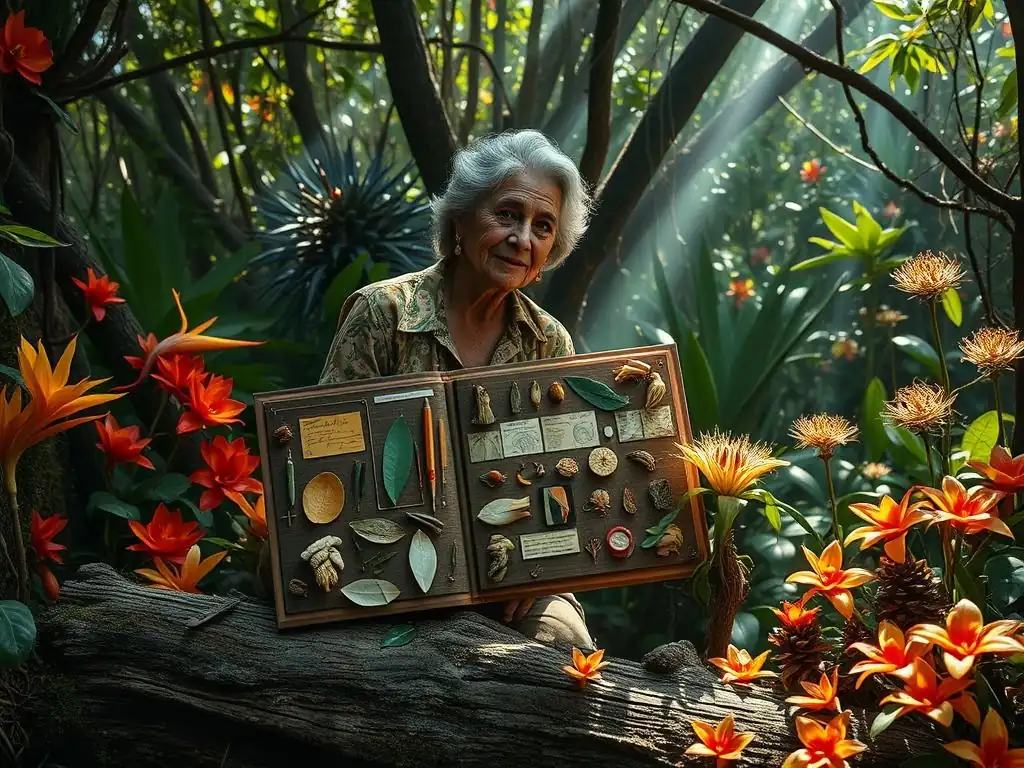
Ynes Mexia was renowned for her meticulous and comprehensive approach to plant collection. She didn't merely collect flowering plants; her specimens included fungi, mosses, lichens, and ferns, reflecting a holistic interest in botanical diversity. Her field notes were exceptionally detailed, documenting not only the plant's morphological characteristics but also its habitat, soil type, associated species, and local uses, providing rich ecological context.
Her preservation techniques were equally rigorous, ensuring the long-term scientific value of her specimens. She meticulously pressed and dried her plants, carefully labeling each with precise location data, collection dates, and observations. This dedication to thorough documentation and preservation made her collections invaluable resources for herbaria worldwide, cementing her reputation as an exemplary Ynes Mexia botany collector.
Ynes Mexia's Botanical Expeditions: Documenting the Flora of the Americas
Exploring Mexico: Uncovering Botanical Treasures in Her Homeland
Following her initial expedition, Ynes Mexia dedicated significant effort to exploring the botanical richness of her ancestral homeland, Mexico. From 1925 onwards, she conducted numerous extensive expeditions across various states, including Oaxaca, Guerrero, and Michoacán. Often traveling alone or with local guides, she ventured into remote and challenging terrains, reaching areas rarely visited by botanists.
Her Mexican collections alone amounted to thousands of specimens, many of which represented new records for specific regions or even species new to science. For example, her work in the Sierra Madre Occidental yielded significant discoveries. Her deep understanding of Mexican culture and her fluency in Spanish facilitated unique access and rapport with local communities, which was crucial for navigating the diverse landscapes and learning about indigenous plant uses.
South American Adventures: Documenting the Rich Biodiversity of the Andes and Amazon Basin
Ynes Mexia's most ambitious undertaking was her nearly two-and-a-half-year expedition to South America, from 1929 to 1932, which solidified her reputation as a formidable Ynes Mexia botany collector. She traversed thousands of miles across Brazil, Peru, Ecuador, and Argentina, utilizing various modes of transport including canoes, mules, and often, her own two feet. This journey was an unparalleled feat of endurance and scientific dedication.
A particularly notable segment of this expedition involved her journey down the Amazon River, where she became the first woman to collect botanical specimens from the upper reaches of the Amazon basin. During this epic venture, she amassed an astonishing number of specimens, estimated to be over 65,000, representing the incredible biodiversity of the Andean cloud forests and the Amazonian rainforests. These collections provided an unprecedented glimpse into the flora of these complex ecosystems.
Notable Discoveries: Identifying New Plant Species and Expanding Botanical Knowledge
The immense scope and meticulous nature of Ynes Mexia's collections led to a significant expansion of botanical knowledge. Her specimens contributed to the identification of over 500 new species previously unknown to science. In recognition of her profound contributions, a new genus, Mexianthus, a member of the Asteraceae family, was named in her honor.
Furthermore, numerous individual plant species bear her name, such as Mimosa mexiae, Salvia mexiae, and Echeveria mexiae, serving as enduring tributes to her discoveries. Her work provided invaluable data for understanding phytogeography, the distribution of plant species, and their evolutionary relationships, particularly within the Neotropical flora. Her tireless efforts as a Ynes Mexia botany collector truly advanced the scientific community's understanding of global plant diversity.
Challenges and Triumphs: Overcoming Obstacles in a Male-Dominated Field
In the early 20th century, the field of scientific exploration, particularly arduous fieldwork, was almost exclusively dominated by men. Ynes Mexia, as a woman, faced significant gender bias and skepticism regarding her capabilities to undertake extensive, often solitary, expeditions in remote and challenging environments. While she had supportive mentors, she also encountered colleagues who underestimated her endurance and scientific rigor.
Despite these prevailing societal norms, Mexia consistently defied expectations. Her unwavering determination and proven ability to conduct successful, rigorous botanical fieldwork in the face of physical and social challenges directly challenged the gender stereotypes of her era. She proved that women were equally, if not more, capable of excelling in demanding scientific endeavors.
Logistical Hurdles: Overcoming the Difficulties of Remote Expeditions
Ynes Mexia's expeditions were fraught with immense logistical and physical challenges. She navigated treacherous terrains, from dense Amazonian rainforests to high Andean mountain passes, often enduring extreme climates including intense humidity, sweltering heat, and bitter cold. Her journeys were not without personal cost; she suffered injuries, including a broken leg during an expedition in Peru, and frequently faced health issues.
Beyond the physical demands, the practicalities of conducting fieldwork in remote areas were formidable. She had to secure her own funding, hire reliable local guides and porters, and transport thousands of delicate specimens and equipment without modern communication or infrastructure. Her resilience in managing these complex logistics, often with limited resources, underscores her extraordinary dedication as a Ynes Mexia botany collector.
Recognition and Acclaim: Celebrating Ynes Mexia's Achievements in Botany
Despite the significant obstacles she faced, Ynes Mexia's scientific achievements garnered considerable recognition within the botanical community. Her meticulously collected specimens were highly sought after by major herbaria and research institutions worldwide, eager to acquire the rare and valuable flora she discovered. She regularly corresponded with leading botanists, who recognized the exceptional quality and importance of her work.
Mexia also published several articles detailing her expeditions and findings, sharing her firsthand experiences and scientific observations with a broader audience. Her dedication and scientific contributions led to her induction as an honorary member of the California Botanical Society. By the end of her career, she was widely respected by her peers for her adventurous spirit, scientific rigor, and unparalleled success as a pioneering Ynes Mexia botany collector.
Ynes Mexia's Lasting Impact on Botany and Plant Science
The Mexia Collection: Preserving a Legacy of Botanical Specimens
Ynes Mexia's most tangible and enduring legacy is the immense collection of botanical specimens she amassed during her relatively short but incredibly productive career. Over her 13 years of active fieldwork, she collected approximately 150,000 specimens, making her one of the most prolific individual collectors in the history of Neotropical botany. This vast collection represents an unparalleled snapshot of plant diversity from nearly a century ago.
These specimens are far more than just dried plants; they are invaluable historical records. They provide critical baseline data for understanding changes in plant distribution, genetic diversity, and ecological conditions over time. Researchers today still consult her collections to study climate change impacts, track species migrations, and understand past biodiversity, underscoring the timeless scientific value of her work.
Contributions to Herbaria: University of California, Berkeley and Gray Herbarium at Harvard University
Ynes Mexia's extensive collections were distributed to numerous major herbaria and botanical institutions across the globe, maximizing their scientific accessibility and impact. The University of California, Berkeley Herbarium (now part of the University and Jepson Herbaria) received the largest share of her specimens, serving as a primary repository for her monumental work. This institution continues to curate and research her collections.
Other prominent recipients of her specimens included the Gray Herbarium at Harvard University, the Field Museum in Chicago, and the Royal Botanic Gardens, Kew, in the United Kingdom, among many others. This widespread distribution ensured that her unique and diverse specimens were available to botanists worldwide, fostering international collaboration and significantly contributing to global plant science.
Inspiring Future Generations of Women Botanists and Plant Collectors
Ynes Mexia's life story continues to serve as a profound source of inspiration for aspiring scientists, particularly women and individuals from underrepresented backgrounds. Her journey, beginning her serious botanical work in her fifties, powerfully demonstrates that age is not a barrier to pursuing one's passion and making significant scientific contributions. She broke ground for women in a field that was largely inaccessible to them.
Her unwavering determination, resilience in the face of adversity, and deep love for the natural world resonate with those looking to forge their own paths in science. The legacy of Ynes Mexia, the intrepid Ynes Mexia botany collector, encourages future generations to embrace curiosity, overcome challenges, and pursue their scientific endeavors with unwavering dedication, much like she did.
Ynes Mexia: A Role Model for Women in Science and Beyond
The Importance of Representation: Ynes Mexia's Example for Aspiring Scientists
Ynes Mexia's life provides crucial representation in the narrative of scientific history, particularly for women and individuals of Mexican heritage. In a field historically dominated by white men, her achievements showcase a different pathway to scientific excellence and highlight the valuable contributions that diverse perspectives bring to research. Her story challenges the traditional archetypes of a scientist.
Her narrative serves as a powerful beacon for aspiring scientists, especially young women and those from underrepresented communities, allowing them to envision themselves in scientific roles. By seeing a woman like Mexia, who defied societal expectations and overcame significant hurdles, they are encouraged to pursue their own interests and talents in STEM, regardless of perceived limitations or conventional paths.
Lessons from Mexia's Life: Perseverance, Passion, and the Pursuit of Knowledge
Ynes Mexia's life offers invaluable lessons in perseverance, passion, and the relentless pursuit of knowledge. Her unwavering determination to continue her expeditions despite physical hardships, dangerous conditions, and societal skepticism is a testament to her strength of character. She embodied a profound resilience that allowed her to overcome numerous obstacles and achieve remarkable feats.
Furthermore, her deep-seated passion for the natural world was the driving force behind her tireless exploration and meticulous collection. She was motivated by an insatiable curiosity and a desire to contribute to scientific understanding, not by personal glory. Her life exemplifies the profound impact one can make when dedicating oneself wholeheartedly to intellectual curiosity and the advancement of knowledge.
Celebrating the Legacy of a Prolific Female Botany Collector
Ynes Mexia stands as a unique figure in the annals of botanical history, recognized as one of the most prolific collectors of her era, irrespective of gender. Her contributions continue to be studied, referenced, and celebrated by botanists, ecologists, and historians alike. Her vast collections remain a living resource, providing insights into biodiversity and ecological change.
Her legacy transcends mere scientific output; it is also a powerful narrative of empowerment and self-discovery. Celebrating Ynes Mexia, the unparalleled Ynes Mexia botany collector, means acknowledging her significant scientific impact, her pioneering spirit as a woman in science, and her enduring role model status for anyone who believes in the transformative power of pursuing a passion later in life.
Conclusion: Remembering Ynes Mexia, the Unlikely Botanical Hero
Frequently Asked Questions
What is Ynes Mexia best known for in the field of botany?
Ynes Mexia is best known for being one of botany's most prolific collectors. She gathered an astonishing number of specimens, contributing significantly to scientific knowledge of plant life. Her work spanned various regions, particularly in South America.
When did Ynes Mexia begin her career as a botanical collector?
Mexia started her botanical collecting career relatively late in life. She was already in her 50s when she embarked on her first major expedition, proving that it's never too late to pursue a passion.
What challenges did Ynes Mexia face as a woman in science during her time?
As a woman in science, Mexia faced numerous challenges, including gender bias and limited opportunities. She navigated a male-dominated field where recognition and resources were often scarce for women.
Where did Ynes Mexia primarily conduct her botanical collecting expeditions?
Ynes Mexia conducted her botanical collecting expeditions primarily in South America, including countries like Mexico, Brazil, and Argentina. She explored diverse environments, contributing to understanding regional biodiversity.
Why is it important to remember and celebrate the contributions of figures like Ynes Mexia?
Celebrating figures like Ynes Mexia is important because it highlights the often-overlooked contributions of women in science. It also serves to inspire future generations, particularly young women, to pursue careers in STEM fields and overcome gender barriers.
Final Reflection: The Enduring Bloom of Potential
The story of Ynes Mexia serves as a potent reminder that passion and purpose can ignite at any stage of life, transforming perceived limitations into extraordinary achievements. Her journey, from a late-blooming botanist to a prolific collector, resonates deeply in a world often obsessed with early success, proving that dedication and a thirst for knowledge can overcome any perceived disadvantage.
Ynes Mexia's legacy extends far beyond the thousands of plant specimens she collected; it underscores the importance of embracing unconventional paths and challenging societal expectations. Her story is a powerful testament to the resilience of the human spirit and the transformative power of pursuing one's true calling, regardless of age or circumstance. Adventure is worthwhile.
- Ynes Mexia
Let Ynes Mexia's remarkable life inspire you to cultivate your own passions, no matter how late they may blossom. Embrace the unknown, challenge your own self-imposed limitations, and remember that the most significant contributions often come from those who dare to bloom in their own time. The world awaits the unique gifts you have to offer.
Ignite Your Inner Explorer: Follow Ynes Mexia's Trail!
Thank you for joining us on this incredible journey through the life of Ynes Mexia. We hope you've found her story as inspiring as we do, and that it's sparked a renewed sense of possibility within you. Now, it's your turn to act!
- Boldly begin your own exploration: Just like Ynes, it’s never too late to pursue a passion. What's a hidden interest you've always wanted to explore? Today is the perfect day to start researching, reading, or even taking a beginner's class related to that interest.
- Share Ynes's Story: Help inspire others by sharing this article on your favorite social media platform. Let’s spread the word about her incredible achievements!
- Dive deeper: Visit a local botanical garden or nature reserve. Take photos, document your observations, and start your own mini botanical collection!
What small step will you take today to embrace your own adventurous spirit and contribute to the world around you?