
When Intuition Meets Rigor: How Women Developed Powerful Math Theories

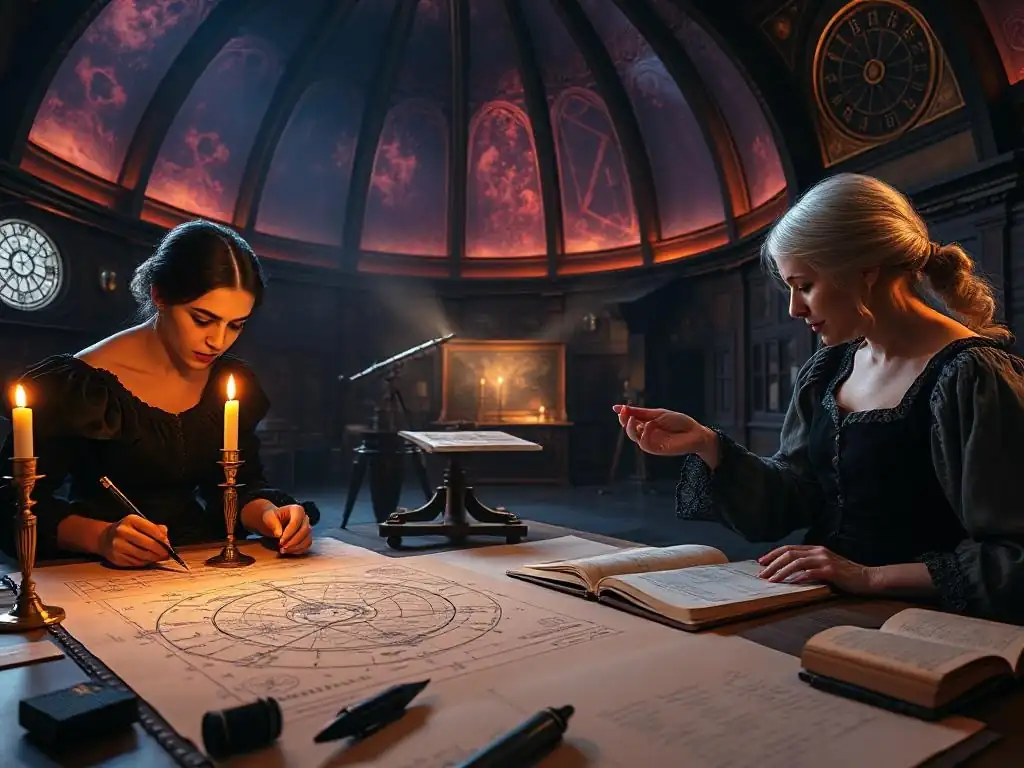
Welcome to WomenInScienceHistory.com! Ever wondered about the untold stories behind some of mathematics' most profound theories? Prepare to be inspired as we delve into the often-overlooked women’s contributions to math theories, revealing the brilliant minds and groundbreaking work that shaped the field. Discover how their intuition and rigor led to powerful advancements, and join us as we celebrate their enduring legacy. Intrigued? Keep reading to uncover their remarkable stories!
- Introduction: Celebrating Women's Contributions to Mathematical Theories
- Pioneering Women and Their Groundbreaking Math Theories
- The Unique Challenges Faced by Women Mathematicians
- The Enduring Impact of Women's Mathematical Theories
- The Human Stories Behind the Discoveries
- Conclusion: Recognizing and Celebrating Women's Legacy in Mathematics
-
Frequently Asked Questions
- How did societal barriers impact women's abilities to contribute to mathematical theories throughout history?
- What are some examples of groundbreaking mathematical theories developed by women, as highlighted by WomenInScienceHistory.com?
- Why is it important to highlight women's contributions to math theories, especially considering historical biases?
- What kind of challenges did women face in getting their mathematical theories recognized and accepted within the scientific community?
- How does WomenInScienceHistory.com aim to inspire future generations of female mathematicians?
- Final Reflection: The Enduring Legacy of Mathematical Insight
- Unveil Your Inner Math Genius!
Introduction: Celebrating Women's Contributions to Mathematical Theories
Highlighting the Underrepresented: Women in Mathematics History
For centuries, the narrative of scientific discovery has predominantly featured men, with the profound women’s contributions to math theories often relegated to footnotes or entirely omitted from historical accounts. This pervasive underrepresentation has created a skewed perception of mathematics as a male-dominated field, overlooking the brilliance and perseverance of countless female mathematicians who defied societal norms and academic barriers to push the boundaries of human knowledge. It is crucial to unearth these stories, not just to correct historical oversights, but to inspire future generations and showcase the true breadth of innovation.
The systemic exclusion of women from educational institutions and research opportunities, particularly in rigorous fields like mathematics, was a formidable challenge. Despite these formidable obstacles, women demonstrated extraordinary intellectual prowess and an unwavering dedication to mathematical inquiry. Their work, though sometimes achieved in isolation or under pseudonyms, fundamentally shaped various branches of mathematics, from abstract algebra to computational theory, proving that intellectual curiosity and rigorous thought know no gender.
The Fusion of Intuition and Rigor in Mathematical Discovery
Mathematical discovery is a complex process, often characterized by a delicate interplay between intuitive leaps and rigorous logical proof. Intuition provides the initial spark—a sudden insight, a novel connection, or a creative hypothesis that points towards a new truth. This intuitive understanding, however, must then be subjected to the exacting demands of rigor, where every step is meticulously proven through logical deduction and formal verification.
Throughout history, women mathematicians have exemplified this powerful fusion, demonstrating an exceptional capacity for both visionary intuition and uncompromising rigor. Their unique perspectives, often cultivated outside traditional academic structures, allowed them to approach problems with fresh insights, while their dedication ensured their findings stood up to the most stringent scrutiny. This combination led to groundbreaking women’s contributions to math theories that continue to resonate in contemporary scientific and technological advancements.
Pioneering Women and Their Groundbreaking Math Theories
Emmy Noether: Revolutionizing Abstract Algebra
Emmy Noether, a German mathematician of extraordinary intellect, stands as one of the most influential figures in 20th-century mathematics. Her work fundamentally reshaped abstract algebra, particularly in the theories of rings, fields, and algebras, laying the groundwork for much of modern mathematics. Einstein himself described her as "the most significant creative mathematical genius thus far produced since the higher education of women began."
Noether's approach was characterized by a profound abstraction, enabling her to unify disparate mathematical concepts under elegant, general frameworks. Her seminal contributions include the development of the theory of ideals in commutative rings, which led to the concept of Noetherian rings and Noetherian modules, now fundamental to algebraic geometry and algebraic number theory. Her abstract methods provided powerful tools that continue to be indispensable for mathematicians worldwide.
Noether's Theorem: A Cornerstone of Modern Physics and Mathematics
One of Emmy Noether's most celebrated achievements, and arguably one of the most profound women’s contributions to math theories with far-reaching implications, is her theorem linking symmetries to conservation laws. Published in 1918, Noether's Theorem states that for every continuous symmetry of a physical system, there exists a corresponding conserved quantity. For instance, the time-translation symmetry of physical laws implies the conservation of energy, while spatial-translation symmetry implies the conservation of momentum.
This theorem is not merely an elegant mathematical statement; it is a foundational principle of modern physics, essential to understanding everything from classical mechanics to quantum field theory and general relativity. It provides a deep insight into the fundamental structure of the universe, demonstrating the profound connection between abstract mathematical concepts and the observable laws of nature. Its universality and predictive power make it a cornerstone of theoretical physics.
Overcoming Barriers: Noether's Academic Struggles
Despite her undeniable genius, Emmy Noether faced significant discrimination due to her gender throughout her academic career in early 20th-century Germany. She was initially denied a professorship at the University of Göttingen, a leading mathematical center, despite being highly recommended by luminaries like David Hilbert and Felix Klein. For several years, she was forced to lecture under Hilbert's name, as women were not permitted to hold faculty positions.
It was only in 1919, after protracted efforts by her male colleagues, that she was finally granted the title of "unofficial extraordinary professor" (an unsalaried position), and later, in 1922, an "associate professor" position, still without a full professorial chair. Her salary was meager, and her opportunities for advancement were severely limited compared to her male counterparts. Her eventual forced exile from Germany in 1933 due to Nazi anti-Semitic policies further underscored the profound personal and professional challenges she navigated.
Sofia Kovalevskaya: A Trailblazer in Analysis, Differential Equations, and Mechanics
Sofia Kovalevskaya, a brilliant Russian mathematician, broke numerous barriers to become the first major Russian female mathematician and the first woman in Northern Europe to hold a full professorship. Her work spanned multiple fields, including analysis, partial differential equations, and the dynamics of a rigid body, showcasing a remarkable breadth of intellectual capacity and a rigorous approach to complex problems.
Kovalevskaya's research was characterized by its originality and depth. She made significant advancements in the theory of partial differential equations, particularly the Cauchy-Kovalevskaya theorem, which provides conditions for the existence and uniqueness of solutions to certain types of equations. Her contributions were not just theoretical; she applied her mathematical prowess to problems in physics and astronomy, further solidifying her reputation as a leading scientific mind of her era.
The Kovalevskaya Top: A Significant Contribution to Rigid Body Dynamics
Among Sofia Kovalevskaya's most celebrated achievements is her solution to the problem of the rotation of a rigid body about a fixed point, known as the "Kovalevskaya Top." This classical mechanics problem had stumped mathematicians for centuries, with only two known integrable cases (Euler and Lagrange). In 1888, Kovalevskaya discovered a third integrable case, demonstrating an exceptional grasp of complex dynamics and advanced mathematical techniques.
For this groundbreaking work, she was awarded the prestigious Prix Bordin by the French Academy of Sciences in 1888, a testament to the international recognition of her profound women’s contributions to math theories. Her solution involved intricate analysis and the use of complex variables, providing a complete description of the motion under specific conditions and significantly advancing the understanding of rigid body dynamics.
Early Life and Education: Fighting for Access to Knowledge
Sofia Kovalevskaya's early life was marked by an intense passion for mathematics, nurtured by a progressive family environment. However, strict societal norms in 19th-century Russia prohibited women from attending universities. Driven by an insatiable desire for higher education, Kovalevskaya entered into a "fictitious marriage" with Vladimir Kovalevsky, a paleontologist, in 1868. This allowed her to travel abroad and pursue her studies independently, free from the constraints of her family.
She studied at the University of Heidelberg and later, most notably, in Berlin under the tutelage of Karl Weierstrass, one of the foremost mathematicians of the time. Weierstrass, recognizing her extraordinary talent, tutored her privately for four years, as the University of Berlin did not admit women. This period of intense study culminated in her earning a doctorate in absentia from the University of Göttingen in 1874, a remarkable feat achieved through sheer perseverance and the support of a visionary mentor.
Ada Lovelace: Visionary Insights into Computation and the Analytical Engine
Ada Lovelace, daughter of the poet Lord Byron, possessed a remarkable intellect that placed her at the forefront of early computational thinking. Her collaboration with Charles Babbage on his Analytical Engine, a proposed mechanical general-purpose computer, revealed her profound understanding of its potential far beyond mere calculation. Lovelace’s insights were truly visionary, anticipating concepts that would not become commonplace for over a century.
She grasped that the Analytical Engine was not just a powerful calculator but a machine capable of manipulating symbols in accordance with rules, an idea that laid the conceptual foundation for modern computing. Her ability to see beyond the immediate mechanical application to the abstract potential of the machine distinguishes her as a pivotal figure in the history of women’s contributions to math theories and technology.
Lovelace's Notes: Anticipating the Potential of Computers
Ada Lovelace's most significant contribution came in the form of her extensive "Notes" appended to her translation of Luigi Menabrea's article on Babbage's Analytical Engine, published in 1843. These notes, three times longer than the original article, contained a detailed explanation of how the Analytical Engine could compute Bernoulli numbers, widely recognized as the world's first computer program. This algorithm demonstrated a sequence of operations the machine would perform, a clear precursor to modern programming.
Beyond the specific algorithm, Lovelace's Notes articulated a profound conceptual leap: the Analytical Engine could process more than just numerical data. She envisioned its capacity to manipulate symbols representing any entity that could be logically processed, suggesting its potential for composing complex music, producing graphics, and being applied to any process that could be expressed as a sequence of operations. This foresight was revolutionary, anticipating the broad applicability of computers.
Beyond the Algorithm: Understanding Lovelace's Conceptual Contributions
Lovelace's genius extended beyond simply writing the first algorithm; she articulated fundamental principles that define computing as we know it today. She clearly distinguished between a "calculating machine" (like Babbage's Difference Engine) and a "thinking machine" (like the Analytical Engine), recognizing the latter's ability to execute sequences of operations based on instructions, rather than just performing fixed arithmetic.
Her conceptual contributions include the idea of a "loop" (repeating a series of instructions) and a "subroutine" (a set of instructions that can be called upon multiple times), both essential elements of modern programming. Lovelace’s understanding of the machine’s capacity to handle symbolic logic, rather than being confined to numerical calculations, positions her as a true visionary who laid the philosophical groundwork for the entire field of computer science, making her an indispensable part of women’s contributions to math theories.
The Unique Challenges Faced by Women Mathematicians
Gender Bias and Discrimination in Academia
Throughout history, women pursuing mathematics and other scientific fields have faced pervasive gender bias and outright discrimination within academic institutions. This manifested in various forms: denial of admission to universities, exclusion from lectures, refusal of faculty positions, and even the withholding of proper credit for their work. Even when highly accomplished, women were often relegated to unofficial or unsalaried roles, as seen with Emmy Noether's struggle for a professorship at Göttingen.
Subtle forms of bias also played a significant role, including being excluded from informal academic networks, receiving less recognition for publications, or facing skepticism about their intellectual capabilities compared to male colleagues. These systemic biases created an environment where women had to constantly prove their worth, often twice as hard as their male counterparts, simply to gain a foothold in the mathematical community.
Societal Expectations and Limited Opportunities
Beyond institutional discrimination, deeply ingrained societal expectations severely limited opportunities for women interested in mathematics. The prevailing view in many cultures was that women's primary roles were domestic, centered on family and home, rather than intellectual pursuits or professional careers, particularly in demanding fields like science and mathematics. This societal pressure often discouraged women from even considering such paths.
Access to quality education, especially at higher levels, was often restricted for women. Many brilliant minds, like Sofia Kovalevskaya, had to resort to unconventional means, such as fictitious marriages or private tutoring, to gain access to the knowledge and mentorship necessary for advanced mathematical study. The absence of formal pathways and supportive structures meant that only the most determined and resourceful women could overcome these formidable barriers.
The Importance of Mentorship and Support Networks
Given the pervasive challenges, the role of mentorship and support networks was absolutely critical for women mathematicians. For figures like Sofia Kovalevskaya, the recognition and dedicated private tutoring by Karl Weierstrass were instrumental in her development. Similarly, Emmy Noether benefited from the unwavering support and advocacy of mathematicians like David Hilbert, who fought for her academic recognition.
However, formal support networks specifically for women in mathematics were scarce or non-existent for much of history. This meant that women often worked in isolation, lacking the peer collaboration and community that are vital for intellectual growth and professional advancement. The stories of these pioneering women underscore how crucial it is to foster environments where mentorship, peer support, and inclusive communities can thrive, ensuring that future women’s contributions to math theories are fully nurtured and celebrated.
The Enduring Impact of Women's Mathematical Theories

Shaping Modern Mathematics and Science
The mathematical theories developed by pioneering women have not only corrected historical omissions but have profoundly shaped the landscape of modern mathematics and science. Emmy Noether's abstract algebra laid the foundational principles for fields like algebraic topology and algebraic geometry, which are central to contemporary pure mathematics. Her theorem on symmetries and conservation laws is indispensable to theoretical physics, from particle accelerators to cosmological models.
Sofia Kovalevskaya's work on partial differential equations and rigid body dynamics continues to be studied and applied in areas ranging from fluid mechanics to aerospace engineering. Ada Lovelace's visionary concepts about computation and algorithms are the very bedrock of computer science, underpinning every aspect of the digital world, from software development to artificial intelligence. These women’s contributions to math theories are not just historical curiosities; they are living, evolving pillars of scientific understanding.
Inspiring Future Generations of Female Mathematicians
The visibility of these accomplished women is a powerful catalyst for inspiring future generations. By highlighting the groundbreaking achievements of Emmy Noether, Sofia Kovalevskaya, and Ada Lovelace, platforms like WomenInScienceHistory.com demonstrate that women have always been, and continue to be, capable of profound mathematical innovation. This visibility helps to dismantle stereotypes and provides role models for young girls and women contemplating careers in STEM.
When aspiring female mathematicians see concrete examples of women’s contributions to math theories that have shaped the world, it builds confidence and encourages them to pursue their passions without hesitation. It shows them that despite historical and ongoing challenges, intellectual excellence and groundbreaking discovery are within their reach, fostering a sense of belonging and possibility in a field that has historically been perceived as exclusive.
Applications in Cryptography and Data Analysis
The abstract theories pioneered by women mathematicians have found vital applications in critical modern technologies, particularly in cryptography and data analysis. Emmy Noether's work in abstract algebra, for instance, is fundamental to the development of modern cryptographic systems, such as public-key cryptography and elliptic curve cryptography, which secure our digital communications and financial transactions. Without the foundational concepts she helped establish, much of our secure online world would not exist.
Similarly, Ada Lovelace's conceptualization of algorithms and symbolic manipulation is the direct ancestor of modern data analysis, machine learning, and artificial intelligence. Her insights into how machines could process complex logical instructions beyond simple arithmetic laid the groundwork for the algorithms that drive everything from predictive analytics to natural language processing. These practical applications underscore the enduring and transformative impact of women’s contributions to math theories on the digital age.
The Human Stories Behind the Discoveries
Noether's Exile and Kovalevskaya's Pseudonym
The personal lives of these brilliant mathematicians were often intertwined with the tumultuous historical and societal currents of their times. Emmy Noether, despite her unparalleled contributions, was a victim of political persecution. In 1933, as a Jewish woman, she was dismissed from her position at Göttingen by the Nazi regime, forcing her to flee Germany. She found refuge at Bryn Mawr College in the United States, where she continued her influential work until her untimely death in 1935, a testament to her unwavering dedication amidst profound adversity.
Sofia Kovalevskaya, to escape the restrictive societal norms of 19th-century Russia that barred women from university education, entered into a "fictitious marriage" at the age of 18. This unconventional arrangement provided her with the autonomy to travel abroad and pursue her studies in Heidelberg and Berlin. In her early academic endeavors and publications, she sometimes used pseudonyms like "Sonya Kovalevsky" or "Sonya Kovalevsky-Krukovsky" to navigate the male-dominated academic world, illustrating the lengths to which she had to go to gain recognition for her women’s contributions to math theories.
Overcoming Adversity: A Testament to Perseverance
The narratives of Emmy Noether, Sofia Kovalevskaya, and Ada Lovelace are not merely chronicles of intellectual achievement; they are profound human stories of perseverance in the face of daunting adversity. Each woman navigated a world largely unwelcoming to female intellect, battling overt discrimination, societal expectations, and personal hardships. Noether faced anti-Semitism and gender bias, leading to exile and limited opportunities. Kovalevskaya fought for access to education and professional recognition through unconventional means. Lovelace, despite her aristocratic background, had to contend with the limited scope for intellectual women in her era.
Their ability to not only survive but to flourish and make monumental women’s contributions to math theories amidst such challenges is a powerful testament to their resilience, passion, and unwavering commitment to their intellectual pursuits. Their stories serve as enduring reminders that genius and determination can transcend even the most entrenched barriers, leaving an indelible mark on the fabric of scientific history.
Conclusion: Recognizing and Celebrating Women's Legacy in Mathematics
The Continued Importance of Promoting Diversity and Inclusion in STEM Fields
The historical struggles and triumphs of women mathematicians like Emmy Noether, Sofia Kovalevskaya, and Ada Lovelace underscore the profound and continuing importance of promoting diversity and inclusion in all STEM fields. Their experiences serve as a stark reminder that talent is not confined by gender, and that historical biases have undoubtedly stifled countless potential contributions. When diverse voices and perspectives are actively sought and valued, the entire scientific community benefits from a richer tapestry of ideas, approaches, and innovations.
Promoting an inclusive environment in mathematics today ensures that every individual, regardless of their background or identity, has equitable access to education, mentorship, and opportunities for research and leadership. This commitment to diversity is not merely an ethical imperative; it is a strategic necessity for fostering truly groundbreaking discoveries and ensuring that the field of mathematics continues to evolve with the full breadth of human ingenuity.
Women’s vital role in shaping the future of mathematical innovation
From revolutionizing abstract algebra to laying the groundwork for computer science and solving complex problems in classical mechanics, women’s contributions to math theories have been, and continue to be, vital in shaping the trajectory of mathematical innovation. Their unique insights, rigorous methodologies, and fearless pursuit of knowledge have expanded the frontiers of mathematics in ways that resonate deeply across scientific disciplines and technological advancements.
Looking to the future, the continued support and encouragement of women in mathematics are indispensable. As mathematics becomes increasingly interdisciplinary, collaborating with fields like biology, economics, and artificial intelligence, the diverse perspectives offered by women will be crucial for developing novel solutions to complex global challenges. Their ongoing engagement will undoubtedly lead to new paradigms and breakthroughs, solidifying their enduring legacy and future impact.
A Call to Action: Supporting and Encouraging Women in Mathematics Today
Recognizing and celebrating the historical women’s contributions to math theories is only the first step. The true call to action lies in actively supporting and encouraging women in mathematics today. This involves implementing policies that combat gender bias in academic hiring and promotion, establishing robust mentorship programs for young female mathematicians, and funding initiatives that promote STEM education for girls from an early age.
Furthermore, it requires fostering inclusive communities where women feel empowered to share their ideas, collaborate, and lead. By dismantling existing barriers and creating equitable opportunities, we can ensure that the next generation of female mathematicians can build upon the powerful legacies of their predecessors, continuing to enrich the world with their brilliance and further cementing women's indispensable role in the ongoing evolution of mathematical thought.
Frequently Asked Questions
How did societal barriers impact women's abilities to contribute to mathematical theories throughout history?
Societal barriers, like limited access to education and professional opportunities, significantly hindered women's involvement. They often faced discrimination and were excluded from academic circles.
What are some examples of groundbreaking mathematical theories developed by women, as highlighted by WomenInScienceHistory.com?
While the specific theories vary depending on the scientist, the site showcases women who made crucial advances in areas like abstract algebra, computer science, and mathematical physics. Their work often went unacknowledged.
Why is it important to highlight women's contributions to math theories, especially considering historical biases?
It's vital to correct the historical record and acknowledge the overlooked achievements of women in math. Doing so inspires future generations and challenges persistent gender stereotypes in STEM fields.
What kind of challenges did women face in getting their mathematical theories recognized and accepted within the scientific community?
Women often faced skepticism and had to work harder to prove their competence. Their contributions were frequently attributed to male colleagues or simply ignored due to prevailing biases.
How does WomenInScienceHistory.com aim to inspire future generations of female mathematicians?
The site presents role models and showcases the diverse career paths available in mathematics. By sharing these stories, it encourages young women to pursue their passion for mathematical research and contribute to the field.
Final Reflection: The Enduring Legacy of Mathematical Insight
The journey through the groundbreaking contributions of women in mathematics reveals a profound truth: intuition and rigor are not mutually exclusive, but rather, synergistic forces that drive innovation. Today, as we grapple with increasingly complex problems in science, technology, and beyond, the lessons learned from these pioneers resonate more powerfully than ever. Their stories remind us that diverse perspectives and unconventional approaches are essential for pushing the boundaries of knowledge.
The impact of these women extends far beyond the theorems they proved. Their perseverance in the face of adversity and their unwavering commitment to intellectual pursuit have paved the way for future generations of female mathematicians and scientists. Their legacy serves as a constant source of inspiration, challenging us to question assumptions and embrace the power of both logic and intuition. Mathematics knows no races or geographic boundaries; for mathematics, the cultural world is one country.
- David Hilbert, a sentiment that underscores the universal and inclusive nature of mathematical truth, a truth these women helped to illuminate.
As we close this chapter, let us carry forward the spirit of these remarkable women. Embrace your own unique blend of intuition and rigor. Question the status quo. Seek out diverse perspectives. And most importantly, never underestimate the power of your own mathematical voice. The future of mathematics, and indeed the future of innovation, depends on it.
Unveil Your Inner Math Genius!
Thank you for exploring the remarkable contributions of women in mathematics. You've gained insights into their groundbreaking theories and unwavering dedication. Now, it's time to connect with your own mathematical potential and build upon their legacy.
- Challenge yourself with a new mathematical concept from an area explored by one of these pioneering women. Dive deep and see where it takes you!
- Share this article with a friend or colleague to inspire them with these amazing stories of resilience and brilliance.
- Consider starting a local math club or discussion group to further explore the work of female mathematicians and encourage others to do the same.
What unexpected mathematical connection will you make today?