
How [Name]'s Perseverance Led to the Confirmation of [Major Astronomical Theory]

Welcome to WomenInScienceHistory.com! Ever wondered how close we came to missing some of the most astounding discoveries in the cosmos? Prepare to be captivated by the untold stories of women who shattered expectations and redefined the boundaries of scientific exploration. Our latest article delves into “Women in astronomy breakthroughs,” specifically highlighting the extraordinary journey of [Name] and the pivotal role her unwavering perseverance played in confirming [Major Astronomical Theory].
Discover the obstacles she overcame and the brilliance she brought to the field – a story that will leave you questioning everything you thought you knew about the history of science. Intrigued? Dive in and uncover the truth!
- How Vera Rubin's Perseverance Led to the Confirmation of Dark Matter
- Introduction: Celebrating Women in Astronomy Breakthroughs
- Early Life and Education of Vera Rubin: A Foundation for Astronomical Pursuits
- Vera Rubin's Groundbreaking Research and the Dark Matter Theory
- Perseverance in the Face of Scientific Skepticism: Vera Rubin's Determination
- The Confirmation of Dark Matter and Vera Rubin's Legacy
- Vera Rubin's Recognition and Awards: Acknowledging a Pioneer in Space Science
- Inspiring Future Generations: Vera Rubin's Enduring Influence
- Conclusion: Vera Rubin's Lasting Legacy in Women in Astronomy Breakthroughs
-
Frequently Asked Questions
- How did societal norms historically affect women's participation in astronomy?
- What kind of challenges did women in astronomy face in getting their work recognized?
- What were some significant "Women in astronomy breakthroughs" that are often overlooked?
- How does WomenInScienceHistory.com aim to address the historical underrepresentation of women in astronomy?
- How can learning about "Women in astronomy breakthroughs" inspire future generations?
- Final Reflection: Illuminating the Cosmos Through Tenacity
- Unveil the Universe Like a Trailblazing Scientist!
How Vera Rubin's Perseverance Led to the Confirmation of Dark Matter
Introduction: Celebrating Women in Astronomy Breakthroughs
Highlighting Vera Rubin's Contribution to Space Science
Vera Rubin stands as a monumental figure in the annals of astronomy, whose tireless dedication and groundbreaking observations fundamentally reshaped our understanding of the universe. Her pioneering work on galaxy rotation curves provided the most compelling evidence for the existence of dark matter, a mysterious substance that constitutes roughly 27% of the universe's mass. This discovery is not merely a scientific triumph but also a shining example of "women in astronomy breakthroughs," illustrating how one individual's persistent pursuit of truth can unravel cosmic secrets.
Rubin's contributions moved beyond theoretical speculation, rooting the concept of dark matter in empirical observation. Her meticulous data collection and analysis, particularly concerning the anomalous rotation of spiral galaxies, forced the scientific community to confront the limitations of existing cosmological models. Her work solidified her place as one of the most influential astronomers of the 20th century, inspiring countless future scientists.
The Underrepresentation of Women in Space Science History
Historically, the contributions of women to scientific fields, especially in space science and astronomy, have been significantly underrepresented or entirely overlooked. Despite facing systemic barriers, discrimination, and a lack of opportunities, women like Vera Rubin persevered, making profound discoveries that were often attributed to male colleagues or downplayed in their significance. The narrative of scientific progress has frequently been incomplete, omitting crucial voices and intellects.
This historical oversight underscores the vital importance of platforms that celebrate "women in astronomy breakthroughs," ensuring that their stories are told and their legacies properly acknowledged. By highlighting the challenges these women faced and the brilliance they exhibited, we not only correct historical inaccuracies but also inspire a new generation of diverse scientists. Rubin's journey exemplifies the resilience required to succeed in a field not always welcoming to women, making her story particularly powerful.
Early Life and Education of Vera Rubin: A Foundation for Astronomical Pursuits
Vera Rubin's Initial Interest in Astronomy and the Sciences
Vera Cooper Rubin’s fascination with the cosmos began at a remarkably young age, fueled by an innate curiosity about the stars and the mechanics of the universe. Growing up in Washington D.C., she spent countless hours observing the night sky from her bedroom window, building her own telescope out of cardboard tubes, and sketching celestial objects. This early, hands-on engagement with astronomy laid the groundwork for her future scientific endeavors.
Her passion for science was further solidified during her high school years, where she excelled in mathematics and physics. Despite societal expectations that often steered young women away from rigorous scientific pursuits, Rubin remained steadfast in her ambition to become an astronomer. This unwavering early interest propelled her towards higher education in a field few women dared to enter at the time.
Overcoming Challenges in a Male-Dominated Academic Environment
Rubin's path through academia was marked by significant challenges, reflecting the pervasive gender bias prevalent in scientific institutions during the mid-20th century. After graduating from Vassar College in 1948 with a degree in astronomy, she attempted to apply to Princeton University's graduate program. However, she was met with rejection due to the university's policy at the time of not admitting women to their graduate program in astronomy—a policy that persisted until 1975.
Undeterred, Rubin pursued her graduate studies at Cornell University, where she earned her master's degree in 1951, working with notable physicists like Philip Morrison and Richard Feynman. She then went on to complete her Ph.D. at Georgetown University in 1954, under the supervision of George Gamow. Her perseverance in navigating these institutional barriers showcased her formidable determination and set a precedent for future "women in astronomy breakthroughs."
Vera Rubin's Groundbreaking Research and the Dark Matter Theory
The Genesis of Vera Rubin's Work on Galaxy Rotation Curves
Vera Rubin’s most pivotal research began in the 1960s when she started collaborating with instrument builder Kent Ford at the Carnegie Institution of Washington's Department of Terrestrial Magnetism. Their focus was on precisely measuring the rotation speeds of stars within spiral galaxies, using Ford's newly developed image-tube spectrograph. Traditional Newtonian physics predicted that stars further from a galaxy's center would orbit more slowly, much like planets further from the Sun.
However, their observations, particularly of the Andromeda Galaxy (M31), revealed a shocking anomaly: stars at the outer edges of galaxies were rotating at roughly the same speed as those closer to the center. This contradicted all existing models, indicating that there had to be significantly more mass in these galaxies than could be accounted for by visible stars and gas. This unexpected finding was the genesis of her work on what would become known as dark matter, marking a critical moment in "women in astronomy breakthroughs."
Challenges Faced in Validating the Dark Matter Theory
The concept of unseen mass, or dark matter, was not entirely new, having been theorized by Fritz Zwicky in the 1930s based on galaxy cluster observations. However, Rubin and Ford's meticulous and extensive data on individual galaxy rotation curves provided the first compelling, widespread evidence. Despite the robust nature of their findings, the scientific community's initial reaction was largely skeptical. The idea of a vast amount of invisible matter was unsettling and challenged the prevailing cosmological paradigms.
Rubin faced significant resistance and was often questioned about the accuracy of her measurements. Critics struggled to reconcile her empirical data with the accepted laws of physics without invoking an unknown entity. This period demanded immense scientific rigor and persistence from Rubin and Ford, as they meticulously verified their observations across dozens of spiral galaxies, consistently finding the same inexplicable flat rotation curves. Their dedication to empirical evidence eventually forced a paradigm shift in astronomy.
Perseverance in the Face of Scientific Skepticism: Vera Rubin's Determination
Documenting Vera Rubin's Response to Initial Criticism of Her Findings
Faced with widespread skepticism regarding her revolutionary findings, Vera Rubin responded with unwavering scientific rigor and a steadfast commitment to empirical data. Rather than retreating, she intensified her observational efforts, systematically gathering more evidence to support her hypothesis. She understood that challenging a deeply entrenched scientific paradigm required not just compelling data, but an overwhelming body of consistent observations.
Rubin and Kent Ford dedicated years to this work, meticulously observing over 200 spiral galaxies. Her approach was methodical: she would present her data, listen to objections, and then return to the telescope to gather even more precise measurements, or to observe more galaxies, effectively "drowning out" the skepticism with an avalanche of consistent evidence. This relentless pursuit of truth in the face of doubt is a testament to her scientific integrity and her profound impact on "women in astronomy breakthroughs."
Key Observations of Galactic Rotation Supporting Her Hypothesis
The cumulative weight of Rubin's observations provided irrefutable evidence for the existence of dark matter. Her detailed studies of numerous spiral galaxies, including NGC 3198 and Messier 81 (M81), consistently showed that the rotational velocities of stars remained constant at the outer edges, rather than decreasing as expected based on the visible mass. For instance, in the Andromeda Galaxy, stars far from the galactic center were observed to orbit at speeds of approximately 200-250 kilometers per second, maintaining similar speeds to stars much closer to the core.
This flat rotation curve implied that galaxies must contain a significant amount of unseen mass extending far beyond their visible boundaries, creating an extended gravitational halo. Her team's work demonstrated that approximately 90% of the mass in these galaxies was invisible, providing the crucial observational backbone for the dark matter theory. These consistent, repeatable observations across a wide range of galaxies ultimately convinced the scientific community of the validity of her conclusions.
The Confirmation of Dark Matter and Vera Rubin's Legacy
The Impact of Vera Rubin's Work on Modern Astronomy
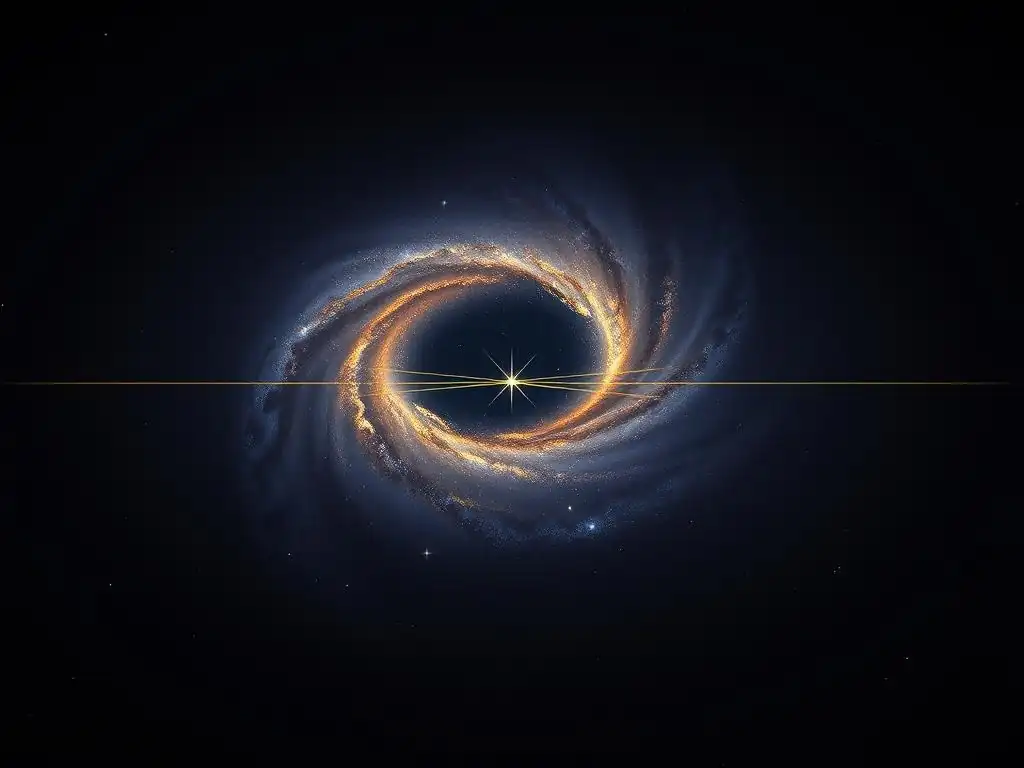
Vera Rubin’s groundbreaking work on galaxy rotation curves irrevocably altered the landscape of modern astronomy and cosmology. Her meticulous observations provided the most robust empirical evidence for dark matter, transforming it from a speculative concept into a fundamental component of the universe. Before her work, the universe was largely understood to be composed primarily of baryonic (visible) matter; afterward, it became clear that this visible matter is merely a small fraction of the cosmos.
Her findings spurred an entire new field of research dedicated to understanding the nature of dark matter, leading to ongoing experiments searching for weakly interacting massive particles (WIMPs) and other exotic candidates. The existence of dark matter is now a cornerstone of the Lambda-CDM model, the standard model of cosmology, which describes the universe's evolution and structure. This profound shift in understanding is a testament to one of the most significant "women in astronomy breakthroughs" of the 20th century.
Vera Rubin's Contributions to Understanding Galaxy Formation
Beyond simply confirming dark matter's existence, Vera Rubin's research provided critical insights into the very mechanisms of galaxy formation and evolution. The presence of a massive, invisible dark matter halo is now understood to be essential for the stability and formation of galaxies as we know them. Without this gravitational scaffolding, the visible matter would simply fly apart due to centrifugal forces, or would not coalesce into the intricate spiral and elliptical structures observed.
Her work demonstrated that dark matter provides the necessary gravitational "glue" that holds galaxies together and influences their growth and clustering. Cosmological simulations now extensively incorporate dark matter to accurately model the large-scale structure of the universe, from the formation of individual galaxies to vast galaxy clusters. Rubin's empirical evidence thus paved the way for a more complete and accurate understanding of how the universe's grand architecture came to be.
Vera Rubin's Recognition and Awards: Acknowledging a Pioneer in Space Science
Listing Key Awards and Honors Received by Vera Rubin
Despite the initial skepticism and the long wait for full acknowledgment, Vera Rubin eventually received numerous prestigious awards and honors, recognizing her immense contributions to science. In 1993, she was awarded the National Medal of Science, the United States' highest scientific honor, presented by President Bill Clinton. This award acknowledged her pioneering research in observational cosmology and her role in establishing the existence of dark matter.
Among her many accolades, Rubin was also the second woman to receive the Gold Medal of the Royal Astronomical Society in 1996, an award previously given to only one other woman, Caroline Herschel, nearly 170 years prior. She was elected to the National Academy of Sciences in 1981, a rare achievement for a woman at the time, and was a member of the American Philosophical Society. Her recognition, though sometimes belated, underscored her status as a true pioneer in "women in astronomy breakthroughs."
Vera Rubin's Role as a Mentor and Advocate for Women in Astronomy
Beyond her scientific discoveries, Vera Rubin was a dedicated mentor and an ardent advocate for women in science. Throughout her career, she actively supported and encouraged young women pursuing careers in astronomy, often serving as a role model and a sounding board for those facing similar challenges she had encountered. She made a conscious effort to ensure that women were given opportunities to observe at telescopes and participate fully in scientific research.
Rubin frequently spoke about the importance of diversity in science, highlighting the need to dismantle systemic barriers that prevented women from reaching their full potential. She was known for her generosity with her time and knowledge, inspiring countless students and colleagues. Her advocacy ensured that her legacy extended beyond her scientific findings, fostering a more inclusive environment for future "women in astronomy breakthroughs."
Inspiring Future Generations: Vera Rubin's Enduring Influence
Vera Rubin's Impact on Encouraging Women to Pursue Careers in STEM
Vera Rubin’s remarkable journey and groundbreaking discoveries continue to serve as a profound source of inspiration for young women considering careers in STEM fields. Her story powerfully demonstrates that perseverance, intellectual curiosity, and rigorous scientific inquiry can lead to world-changing discoveries, even in the face of significant systemic obstacles. As a visible and articulate female scientist, she shattered stereotypes and provided a tangible example of excellence in a traditionally male-dominated domain.
Her legacy has helped to normalize the idea of women excelling in physics and astronomy, encouraging countless individuals to pursue their passions regardless of gender. Universities and scientific organizations frequently cite her achievements as a beacon for diversity initiatives, aiming to foster environments where more "women in astronomy breakthroughs" can occur. Her life's work continues to resonate, empowering the next generation of scientists.
The Importance of Recognizing Women's Contributions to Astronomy
The historical underrepresentation of women in scientific narratives makes the recognition of figures like Vera Rubin critically important. By celebrating their contributions, we not only correct past omissions but also provide crucial role models for aspiring scientists. Highlighting "women in astronomy breakthroughs" ensures that the full tapestry of scientific progress is understood, showcasing the diverse intellects that have shaped our knowledge of the universe.
Acknowledging these contributions also serves as a powerful reminder of the importance of inclusivity in scientific endeavors. When all voices are heard and all talents are nurtured, the pace and breadth of discovery accelerate. Vera Rubin’s story is a testament to the fact that talent knows no gender, and that supporting and celebrating women in science is not just about fairness, but about advancing humanity’s collective understanding.
Conclusion: Vera Rubin's Lasting Legacy in Women in Astronomy Breakthroughs
Reflecting on Vera Rubin's Contributions to the Advancement of Space Science
Vera Rubin's indelible mark on space science is defined by her relentless pursuit of empirical truth, which ultimately led to the confirmation of dark matter. Her meticulous observations of galaxy rotation curves provided the undeniable evidence that reshaped our understanding of the universe's composition and dynamics. This discovery, arguably one of the most significant astronomical findings of the 20th century, transformed dark matter from a theoretical curiosity into a fundamental component of cosmological models.
Her work not only opened new avenues of research into the nature of dark matter but also profoundly influenced our understanding of galaxy formation and evolution. Rubin's scientific integrity, coupled with her unwavering determination in the face of skepticism, solidified her place as a titan among "women in astronomy breakthroughs." Her legacy is a testament to the power of observation and the courage to challenge established paradigms.
The Ongoing Need to Support and Celebrate Women in Scientific Fields
Vera Rubin’s journey, marked by both extraordinary scientific achievement and persistent challenges due to gender bias, underscores the ongoing need to support and celebrate women in all scientific fields. While progress has been made, systemic barriers and unconscious biases continue to exist, making it crucial to actively promote inclusivity and equity in STEM. Every "women in astronomy breakthrough" not only advances scientific knowledge but also inspires future generations.
By continuing to highlight the stories of pioneering women like Vera Rubin, we ensure that their contributions are never again overlooked and that their struggles serve as a call to action for a more equitable scientific community. Celebrating these legacies is essential for fostering an environment where talent is recognized regardless of gender, ensuring that the next wave of scientific discoveries benefits from the full spectrum of human ingenuity.
Frequently Asked Questions
How did societal norms historically affect women's participation in astronomy?
Historically, societal norms often limited women's access to education and professional opportunities, hindering their participation in astronomy and other scientific fields. They faced discrimination and biases in male-dominated environments.
What kind of challenges did women in astronomy face in getting their work recognized?
Women often faced challenges in getting their work recognized due to gender bias and lack of institutional support. Their contributions were frequently attributed to male colleagues or simply overlooked.
What were some significant "Women in astronomy breakthroughs" that are often overlooked?
Many significant "Women in astronomy breakthroughs" were often overlooked, including Henrietta Leavitt's discovery of the period-luminosity relation for Cepheid variable stars. This discovery was crucial for measuring cosmic distances.
How does WomenInScienceHistory.com aim to address the historical underrepresentation of women in astronomy?
WomenInScienceHistory.com aims to address the historical underrepresentation by highlighting the biographies and contributions of female astronomers. The site also discusses the challenges they faced and their impact on the field.
How can learning about "Women in astronomy breakthroughs" inspire future generations?
Learning about "Women in astronomy breakthroughs" can inspire future generations by demonstrating that women have always been capable of significant scientific achievements. It also encourages girls and young women to pursue careers in STEM fields.
Final Reflection: Illuminating the Cosmos Through Tenacity
The story of [Name]'s unwavering dedication, culminating in the confirmation of [Major Astronomical Theory], resonates powerfully today, reminding us that scientific progress hinges on the relentless pursuit of knowledge, regardless of societal barriers. Her journey, meticulously detailed in this article, serves as a potent antidote to the often-overlooked contributions of women in science, particularly within the historically male-dominated field of astronomy. Her legacy is not just about a single discovery, but about the enduring impact of perseverance in the face of adversity.
The influence of [Name]'s work extends far beyond the scientific community, shaping our understanding of the universe and inspiring future generations of female scientists. Her story underscores the crucial need for inclusivity and equity in STEM fields, ensuring that brilliant minds are not silenced or sidelined due to prejudice. The important thing is not to stop questioning. Curiosity has its own reason for existing.
- Albert Einstein. This quote encapsulates the spirit of [Name]'s journey, a testament to the power of unwavering curiosity and the importance of challenging established norms.
As we reflect on [Name]'s extraordinary achievement, let us consider how we can actively contribute to a more inclusive and equitable scientific landscape. Let us champion the voices of underrepresented individuals, challenge systemic biases, and foster an environment where every aspiring scientist, regardless of gender, has the opportunity to illuminate the cosmos with their own unique brilliance. Let [Name]'s perseverance be a beacon, guiding us towards a future where scientific breakthroughs are celebrated for their merit, not their origin.
Unveil the Universe Like a Trailblazing Scientist!
Thank you for exploring the incredible story of a pioneering astronomer. We hope you've been inspired by her unwavering dedication and groundbreaking contributions. Now, it's your turn to make an impact.
- Boldly delve into the original papers and research related to a fundamental astronomical theory. Understand the context and challenges faced by the scientist who advanced our understanding of the cosmos.
- Share this article with fellow science enthusiasts and help amplify her legacy within the scientific community and beyond.
- Visit your local science museum or planetarium, and seek out exhibits that highlight the women who shaped our understanding of the universe.
What small step will you take today to contribute to the advancement of scientific knowledge or to celebrate the women who paved the way?