
Florence Nightingale: The Lady with the Lamp & Her Groundbreaking Statistical Diagrams

Welcome to WomenInScienceHistory.com!
Delve into the untold stories of remarkable women who shaped the scientific landscape. Prepare to be amazed by the enduring legacy of individuals like Florence Nightingale, a name synonymous with nursing, but also a pioneer in mathematics. This month, we shine a light on her groundbreaking statistical analysis methods and how her innovative diagrams revolutionized data visualization. Discover how her work extended far beyond the battlefield, impacting public health policy and leaving an indelible mark on the world. Intrigued? Join us as we explore the brilliance and impact of this extraordinary woman.
- Introduction: Florence Nightingale - Beyond the Lamp
- Early Life and Influences Shaping Nightingale's Statistical Mindset
- The Crimean War: A Turning Point for Nightingale and Public Health Statistics
- Pioneering Statistical Analysis Methods: Nightingale's Contributions
- "Notes on Matters Affecting the Health, Efficiency and Hospital Administration of the British Army": A Statistical Masterpiece
- Beyond the Crimean War: Applying Statistical Principles to Civilian Healthcare
- Challenges Faced as a Woman Statistician: Overcoming Gender Barriers
- Legacy and Impact: Florence Nightingale's Enduring Influence on Statistics and Public Health
- Florence Nightingale's Statistical Analysis Methods: A Summary of Key Contributions
-
Frequently Asked Questions
- How did Florence Nightingale contribute to statistics beyond nursing?
- What was the "coxcomb" diagram, and how did Nightingale use it?
- What challenges did Florence Nightingale face as a woman in science?
- How did Nightingale's statistical analysis impact public health?
- Why is Florence Nightingale considered important in the history of women in science?
- Final Reflection: Illuminating Data, Inspiring Change
- Transform Insights into Impact: Illuminate the World with Data!
Introduction: Florence Nightingale - Beyond the Lamp
Recognizing Florence Nightingale's Legacy in Nursing and Statistics
Florence Nightingale is widely revered as the founder of modern nursing, her iconic image as "The Lady with the Lamp" forever etched in public consciousness. Her tireless efforts during the Crimean War transformed unsanitary military hospitals and laid the groundwork for professional nursing education. Yet, her immense contributions extended far beyond the bedside; she was a pioneering statistician whose rigorous application of data analysis fundamentally reshaped public health and healthcare administration.
Nightingale’s true genius lay in her analytical mind and her unwavering belief in the power of numbers to drive systemic change. She meticulously collected, analyzed, and presented data to expose the preventable causes of death and illness, establishing foundational principles for evidence-based healthcare. Her statistical rigor was instrumental in demonstrating that improved sanitation and administrative efficiency could drastically reduce mortality rates, thereby saving countless lives.
Women in Science History: Highlighting Nightingale's Statistical Innovations
In an era when intellectual pursuits, particularly in mathematics and science, were largely considered unsuitable for women, Florence Nightingale defied societal expectations. Her journey into statistics was born out of a profound humanitarian impulse and an acute understanding that mere observation was insufficient to solve complex public health crises. She recognized that quantifiable evidence was the most potent tool for advocacy and reform.
Through her innovative use of statistical diagrams and reports, Nightingale became a formidable force in the male-dominated scientific and political spheres. Her work stands as a testament to the fact that women, even when facing significant barriers, can make groundbreaking contributions to scientific disciplines. Highlighting Florence Nightingale statistical analysis methods underscores her role not just as a nurse, but as a pivotal figure in the history of data science and public health.
Early Life and Influences Shaping Nightingale's Statistical Mindset
Family Background and Education: A Foundation for Analytical Thinking
Born into a wealthy, well-connected British family in 1820, Florence Nightingale received an unusually comprehensive education for a woman of her time. Her father, William Edward Nightingale, a Cambridge graduate, personally tutored her in a wide range of subjects, including history, philosophy, and, crucially, mathematics. This rigorous academic grounding fostered her innate analytical abilities and her lifelong appreciation for logical reasoning and quantitative precision.
Her early exposure to advanced mathematical concepts, including algebra, geometry, and statistics, set her apart. While many women of her social standing were confined to accomplishments like drawing and music, Nightingale gravitated towards subjects that demanded intellectual rigor. This foundational education was instrumental in shaping her methodical approach to problem-solving and her later groundbreaking work in Florence Nightingale statistical analysis methods.
Even before embarking on her nursing career, Nightingale exhibited a deep concern for social welfare and a nascent interest in data collection. As a young woman, she traveled extensively across Europe, observing and documenting the social conditions, poverty, and healthcare systems in various countries. These firsthand experiences fueled her growing conviction that societal problems could be understood and addressed through systematic observation and measurement.
She meticulously kept notebooks filled with observations, facts, and figures, demonstrating an early aptitude for collecting and organizing data related to public health and social issues. This period laid the intellectual groundwork for her later statistical triumphs, solidifying her belief that empirical data, rather than anecdotal evidence, was the only reliable basis for advocating for and implementing effective social and health reforms.
The Crimean War: A Turning Point for Nightingale and Public Health Statistics
The Horrors of Military Hospitals: Data Gathering Amidst Chaos
In October 1854, Florence Nightingale arrived at the British army hospital in Scutari (modern-day Üsküdar, Istanbul) during the Crimean War. The conditions she encountered were horrific: overcrowding, rampant infections, inadequate sanitation, and a severe lack of supplies. Soldiers were dying not primarily from their wounds, but from preventable diseases like cholera, typhus, and dysentery, exacerbated by squalor. The initial mortality rate at Scutari was alarmingly high, at times exceeding 40% of admitted cases.
Amidst this chaos, Nightingale immediately recognized the urgent need for systematic data. She began meticulously recording every detail: admissions, discharges, deaths, and, critically, the causes of death. This rigorous data collection, often met with resistance from military officials, allowed her to transform anecdotal observations into quantifiable evidence, laying the essential groundwork for her groundbreaking Florence Nightingale statistical analysis methods.
Nightingale's Insight: Connecting Sanitation and Mortality Rates
Nightingale's statistical prowess enabled her to make a critical insight: the vast majority of soldier deaths were not due to battle wounds, but to disease. Her data revealed that of the approximate 18,000 British soldiers who died in the Crimean War, roughly 16,000 (nearly 90%) succumbed to preventable diseases. This stark reality challenged the prevailing narrative and highlighted a profound failure in military public health.
By meticulously tracking and comparing mortality rates before and after her sanitary interventions, Nightingale was able to demonstrate a direct, undeniable correlation between improved hygiene and reduced deaths. Her statistical evidence showed that simple measures like clean water, proper ventilation, and adequate sewage disposal could dramatically lower disease rates, proving that the battlefield was less deadly than the hospital environment itself.
Pioneering Statistical Analysis Methods: Nightingale's Contributions
Developing the "Coxcomb" Chart: Visualizing Mortality Data Effectively
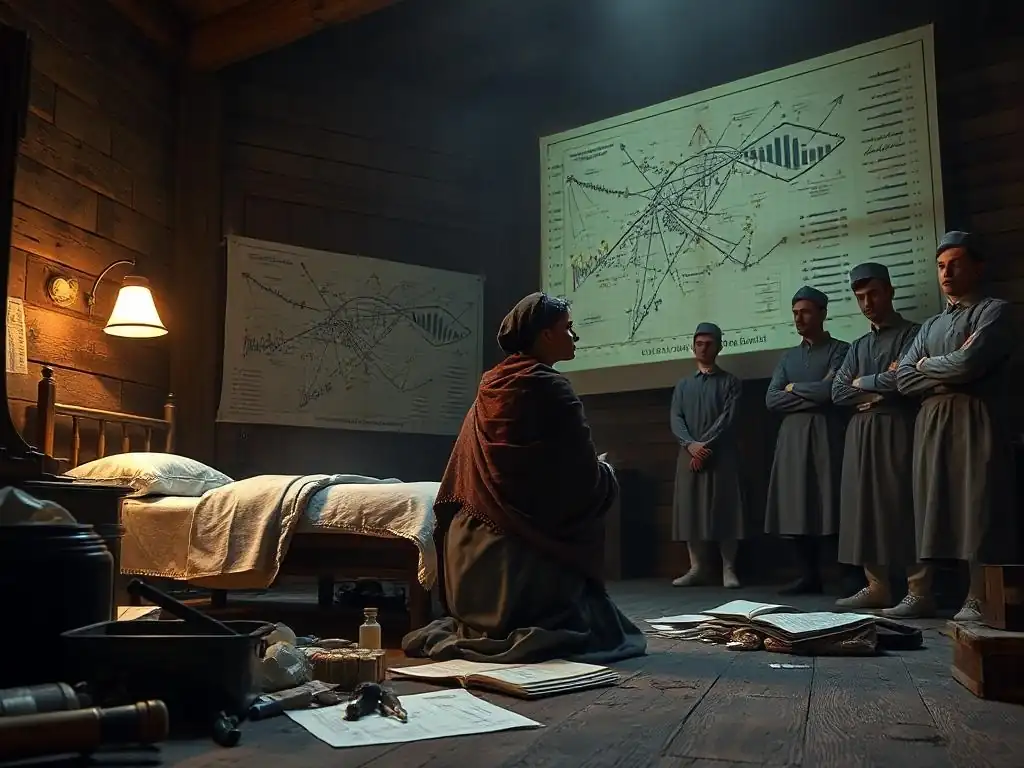
One of Florence Nightingale's most significant contributions to statistical analysis was her innovative use of visual data representation, most famously the "Coxcomb" chart, also known as the Polar Area Diagram or Nightingale Rose Diagram. Developed to present complex mortality data to government officials and Queen Victoria, this chart was revolutionary for its clarity and immediate impact. It comprised 12 segments, each representing a month of the year, with the area of each segment indicating the number of deaths.
The Coxcomb chart effectively illustrated the devastating impact of preventable diseases. For example, the blue outer wedges, representing deaths from preventable diseases like cholera and typhus, were conspicuously larger than the red inner wedges for deaths from wounds, and the black central wedges for "other causes." This visual disparity made it instantly clear that disease, not combat, was the primary killer, providing compelling evidence for the urgent need for sanitary reform.
Polar Area Diagrams: A Powerful Tool for Communicating Statistical Findings
Nightingale's Polar Area Diagrams were not just aesthetically innovative; they were powerful communication tools. They transformed raw, often overwhelming, statistical tables into easily digestible visual narratives that even non-statisticians could grasp. This ability to convey complex data with such striking simplicity was a hallmark of her Florence Nightingale statistical analysis methods. Her charts highlighted the disproportionate mortality from disease, making the case for intervention undeniable.
These diagrams were particularly effective in influencing policy makers who might otherwise have been disinclined to wade through pages of numerical data. By presenting the data in such a compelling visual format, Nightingale bypassed traditional resistance and ensured her findings resonated, compelling action on public health reform both within the military and later in civilian life.
Applying Statistical Techniques to Improve Hospital Conditions
Beyond visualization, Nightingale's statistical techniques directly informed her practical reforms at Scutari. Her analysis of patient admissions, common ailments, and mortality trends allowed her to identify specific areas for improvement. For instance, by understanding the prevalence of dysentery, she could advocate for better water purification and waste management systems. Her data-driven approach transformed hospital management from a reactive, chaotic process into a systematic, evidence-based endeavor.
The impact of her statistical applications was profound: after the implementation of her reforms, the mortality rate at Scutari plummeted. While exact figures varied, reports indicate that the death rate among British soldiers in the hospital decreased from a peak of over 40% (e.g., 407 deaths per 1,000 in January 1855) to approximately 2% by June 1856. This dramatic reduction provided irrefutable statistical proof of the efficacy of her sanitary interventions and the power of Florence Nightingale statistical analysis methods.
"Notes on Matters Affecting the Health, Efficiency and Hospital Administration of the British Army": A Statistical Masterpiece

Analyzing Army Mortality: Identifying Preventable Deaths
In 1858, Florence Nightingale published her influential report, "Notes on Matters Affecting the Health, Efficiency and Hospital Administration of the British Army." This seminal work, presented to Queen Victoria and the British government, was a comprehensive statistical analysis of military mortality, extending beyond the Crimean War to include peacetime barracks data. It meticulously detailed her findings, using precise figures to underscore the devastating impact of preventable diseases.
The report famously demonstrated that of the approximate 18,000 British soldiers who died during the Crimean War, a staggering 16,000 (nearly 90%) succumbed to diseases like typhus, cholera, and dysentery, rather than battle wounds. This powerful statistical revelation exposed the critical deficiencies in military healthcare and sanitation, challenging the prevailing notion that combat was the primary killer.
Recommending Sanitary Reforms Based on Statistical Evidence
Nightingale’s report was not merely a collection of grim statistics; it was a blueprint for reform. It contained a comprehensive set of evidence-based recommendations for improving sanitary conditions in military hospitals and barracks. These included specific proposals for better drainage, ventilation, water supply, waste disposal, and general hygiene practices. Each recommendation was directly supported by the compelling statistical evidence she had painstakingly gathered and analyzed.
Her advocacy for these reforms was revolutionary because it was rooted in irrefutable data, making it difficult for authorities to dismiss her arguments. The report exemplified her Florence Nightingale statistical analysis methods: using quantitative proof to drive practical, life-saving changes in public health policy and administration.
Impact on Military Healthcare: Reducing Mortality and Improving Efficiency
The impact of Nightingale's "Notes" was immediate and far-reaching. Her work led to the establishment of a Royal Commission on the Health of the Army, which adopted many of her recommendations. This resulted in widespread reforms across the British military, including the overhaul of hospital administration, improvements in barrack design, and the implementation of strict sanitary regulations.
The long-term effects were profound. Within a few years of these reforms, the peacetime mortality rate for soldiers in army barracks dropped dramatically, by approximately 75%. For example, the annual death rate for soldiers in home barracks fell from about 17 per 1,000 before the reforms to around 4 per 1,000 afterwards. This significant reduction in preventable deaths stands as a monumental testament to the power of Florence Nightingale statistical analysis methods and her unwavering commitment to evidence-based reform.
Beyond the Crimean War: Applying Statistical Principles to Civilian Healthcare
Improving Sanitation in India: A Statistical Approach to Public Health
Florence Nightingale's commitment to public health through statistical analysis extended far beyond the battlefields of Crimea. She turned her attention to the dire sanitary conditions in India, particularly concerning the health of British soldiers stationed there, and later, the civilian population. Despite never visiting India, she meticulously analyzed vast quantities of statistical data on mortality, morbidity, and environmental factors, often working with official reports and correspondence.
Her extensive reports and detailed statistical analyses revealed that diseases caused by poor sanitation were devastating the British army in India, with mortality rates sometimes exceeding 69 per 1,000, significantly higher than in Britain. Her persistent advocacy, based on these compelling statistical findings, eventually led to the establishment of sanitary departments in India and the implementation of significant public health improvements, including water purification projects and improved drainage systems.
Advocating for Evidence-Based Healthcare: Nightingale's Lasting Influence
Nightingale was a tireless advocate for the systematic collection and analysis of health statistics across all hospitals in Britain. She proposed a standardized system for hospital record-keeping, emphasizing the need for uniform data collection on patient admissions, diagnoses, treatments, and outcomes. This vision was a crucial precursor to modern health informatics and quality assurance in healthcare.
She firmly believed that medical practice should be based on empirical evidence and data, not merely tradition or anecdotal observation. Her insistence on quantifiable results and rigorous analysis laid the philosophical and practical groundwork for what we now call evidence-based medicine. This enduring legacy underscores the profound and lasting influence of Florence Nightingale statistical analysis methods on global healthcare.
Challenges Faced as a Woman Statistician: Overcoming Gender Barriers
Societal Expectations and Limited Opportunities for Women in Science
In the Victorian era, societal norms strictly relegated women to the domestic sphere, emphasizing roles as wives and mothers. Intellectual pursuits, particularly in fields like mathematics, statistics, and medicine, were largely considered masculine domains and deemed inappropriate for women. Florence Nightingale faced immense pressure from her family and society to conform to these expectations, resisting repeated proposals of marriage to pursue her intellectual and professional ambitions.
Her decision to delve into complex statistical analysis and public health reform was a radical departure from the prescribed path for women of her standing. She had to overcome deeply ingrained prejudices that questioned women's intellectual capabilities and their right to participate in public life, let alone in rigorous scientific inquiry.
Fighting for Recognition in a Male-Dominated Statistical Community
Despite her undeniable genius and the life-saving impact of her work, Nightingale often struggled for formal recognition within the male-dominated statistical and medical communities. While her nursing achievements were celebrated, her statistical contributions were sometimes downplayed or attributed to male colleagues. She had to continually assert her intellectual ownership and fight for her analytical insights to be taken seriously.
Nevertheless, her undeniable statistical prowess eventually earned her significant accolades. In 1858, Florence Nightingale became the first woman elected a Fellow of the Royal Statistical Society, an extraordinary achievement that underscored the undeniable quality and impact of her Florence Nightingale statistical analysis methods. This recognition, though hard-won, paved the way for future women to enter and excel in quantitative fields.
Legacy and Impact: Florence Nightingale's Enduring Influence on Statistics and Public Health
Inspiring Future Generations of Statisticians and Healthcare Professionals
Florence Nightingale's pioneering work established the critical importance of statistics in public health and healthcare administration, fundamentally changing how these fields operated. Her meticulous data collection, innovative visualization techniques, and compelling evidence-based advocacy inspired countless individuals to pursue careers in public health, epidemiology, and biostatistics. She demonstrated that numerical analysis was not just an academic exercise but a powerful tool for social change and improving human well-being.
Her story continues to serve as a beacon for aspiring statisticians and healthcare professionals, particularly for women in STEM. Nightingale proved that rigorous analytical thinking, combined with compassion and determination, could lead to profound and lasting societal transformations, leaving an indelible mark on the development of modern public health.
The Lasting Relevance of Nightingale's Statistical Methods in Modern Healthcare
The core principles of Florence Nightingale statistical analysis methods remain profoundly relevant in contemporary healthcare. Her emphasis on systematic data collection, the use of visual aids to communicate complex health trends, and the application of statistical proof to drive policy decisions are cornerstones of modern epidemiology, hospital quality improvement initiatives, and public health surveillance. From tracking disease outbreaks to evaluating the effectiveness of new treatments, the spirit of Nightingale's data-driven approach permeates every aspect of modern medical science.
Her advocacy for standardized hospital records directly foreshadowed today's electronic health records and health informatics systems, which are vital for research, patient care, and public health planning. Her work underscores the timeless truth that effective healthcare relies on robust data and insightful statistical analysis.
Women in Statistics & Probability: Celebrating Nightingale's Pioneering Work
On WomenInScienceHistory.com, we celebrate Florence Nightingale not only as the beloved "Lady with the Lamp" but also as a formidable intellectual pioneer in statistics and probability. Her unwavering commitment to using data to expose injustice and improve human lives laid a crucial foundation for women in quantitative fields. She demonstrated that statistical rigor could be wielded as a powerful instrument for humanitarian reform.
Her legacy serves as a powerful reminder that the contributions of women to science have often been overlooked or undervalued. By highlighting her groundbreaking Florence Nightingale statistical analysis methods, we honor her profound impact and inspire future generations of women to pursue their passions in statistics, healthcare, and beyond, continuing her legacy of evidence-based progress.
Florence Nightingale's Statistical Analysis Methods: A Summary of Key Contributions
Key Statistical Innovations: A Quick Recap
- Systematic Data Collection: Pioneered the meticulous and standardized collection of health and mortality data in military and civilian hospitals, transforming anecdotal observations into quantifiable evidence.
- Visual Data Representation: Developed and popularized the "Coxcomb" or Polar Area Diagram to effectively communicate complex mortality statistics to non-expert audiences, making the impact of preventable diseases starkly visible.
- Evidence-Based Advocacy: Utilized statistical proof to demonstrate the direct link between poor sanitation and high mortality rates, compelling governmental and military authorities to implement sanitary reforms.
- Public Health Informatics: Advocated for the standardization of hospital records and the systematic aggregation of health data across institutions, laying the groundwork for modern health information systems.
- Foundational Epidemiology: Applied statistical methods to identify patterns of disease and mortality, contributing significantly to the early development of epidemiology and public health policy based on empirical data.
Further Research and Resources: Exploring Nightingale's Statistical Legacy
Florence Nightingale's statistical legacy is vast and continues to be a subject of academic study and historical inquiry. Readers interested in delving deeper into her groundbreaking Florence Nightingale statistical analysis methods are encouraged to explore her published reports, particularly "Notes on Matters Affecting the Health, Efficiency and Hospital Administration of the British Army," and academic analyses of her contributions to statistics, public health, and data visualization. Her pioneering work offers a rich tapestry of historical insight into the transformative power of data.
Frequently Asked Questions
How did Florence Nightingale contribute to statistics beyond nursing?
Florence Nightingale pioneered the use of statistical diagrams to visualize mortality data, making it easier to understand and influence public health policy. Her polar area diagrams, similar to pie charts, were revolutionary.
What was the "coxcomb" diagram, and how did Nightingale use it?
The "coxcomb" diagram, or polar area diagram, was a visual representation of monthly mortality rates. Nightingale used it to demonstrate that more soldiers died from preventable diseases than from battle wounds, and to highlight the need for sanitation improvements.
What challenges did Florence Nightingale face as a woman in science?
As a woman in the 19th century, Nightingale faced significant gender biases and societal expectations that limited her access to formal scientific training and recognition. Her work was often undervalued due to her gender.
How did Nightingale's statistical analysis impact public health?
Her statistical analysis directly led to improved sanitation and hygiene practices in hospitals and military settings. This resulted in a significant reduction in mortality rates and fundamentally changed public health approaches.
Why is Florence Nightingale considered important in the history of women in science?
Nightingale's use of statistical analysis to advocate for public health reforms demonstrated the power of data-driven decision-making. She proved that scientific approaches could save lives, and her work is an example of how women have historically contributed to science, despite facing huge obstacles.
Okay, I can help you craft a final reflection for your article on Florence Nightingale and her statistical diagrams, optimized for the keyword "Florence Nightingale statistical analysis methods." Here's a draft:
Final Reflection: Illuminating Data, Inspiring Change
The enduring legacy of Florence Nightingale extends far beyond her compassionate nursing; it lies in her pioneering use of statistical analysis methods to revolutionize healthcare. Her "coxcomb" diagrams weren't mere illustrations; they were powerful tools that translated raw data into compelling arguments for reform, a testament to the power of data visualization that resonates even today.
Nightingale's unwavering commitment to evidence-based practice, driven by her statistical insights, continues to inspire a data-driven approach in modern healthcare. Her work reminds us that numbers, when presented effectively, can be a catalyst for profound social change. I attribute my success to this – I never gave or took any excuse.
This quote encapsulates her relentless pursuit of truth through data, a principle that should guide us in our own endeavors to improve the world around us.
As we reflect on Florence Nightingale's groundbreaking contributions, let us be inspired to embrace the power of data in our own lives. Consider how you can use data, whether in your professional field or personal life, to illuminate problems, advocate for change, and ultimately, create a more informed and equitable future. Let Nightingale's lamp guide your own journey towards data-driven enlightenment.
Transform Insights into Impact: Illuminate the World with Data!
Thank you for exploring Florence Nightingale's revolutionary use of statistical diagrams and their lasting impact! Now, it's your turn to channel that inspiration into action.
Here are a few things you can do to further your understanding and contribute:
- Create your own Nightingale Rose diagram. Find a data set that interests you and visualize it in a compelling and informative way, using Nightingale's polar area diagram or another method.
- Explore modern data visualization techniques to see how Nightingale's work has evolved and discover new ways to communicate complex information.
- Share this article and discuss how women scientists of the past have influenced modern data visualization and science with your friends, family, or even your school.
How will you use the power of data to make a difference in the world today?