
Resilience & Renewal: Women Ecologists Studying Nature's Astonishing Power to Heal

Welcome to WomenInScienceHistory.com, where we illuminate the untold stories of female pioneers!
Delve into the fascinating world of environmental science with our latest exploration of women ecologists nature healing. Discover how these remarkable individuals are unraveling nature's secrets to restoration and the profound impact they're having on our planet. Intrigued by the power of the natural world and the women who are dedicated to understanding it? Read on to uncover their groundbreaking work and the vital lessons they hold for us all...
- Introduction: Celebrating Women Ecologists and Nature's Healing Capabilities
- Pioneering Women Ecologists: Guardians of Environmental Renewal
- The Science Behind Nature's Healing: Ecological Restoration and Renewal
- Case Studies: Women Leading Ecological Restoration Projects
- The Interconnectedness of Human and Environmental Health: Women Ecologists' Perspective
- Inspiring Future Generations: The Legacy of Women Ecologists
- Conclusion: Honoring Women Ecologists and Their Vital Role in Environmental Stewardship
-
Frequently Asked Questions
- What is the central focus of WomenInScienceHistory.com regarding women ecologists?
- What kinds of challenges did women ecologists historically face?
- How does the "Resilience & Renewal" article relate to the broader theme of WomenInScienceHistory.com?
- Why is it important to recognize the contributions of women ecologists?
- What specific aspects of women ecologists' work on nature's healing power are explored?
- Final Reflection: Embracing Nature's Healing Wisdom
- Ignite Your Inner Ecologist: Explore Nature's Healing Secrets!
Introduction: Celebrating Women Ecologists and Nature's Healing Capabilities
Historically, the field of ecology, like many scientific disciplines, presented significant barriers for women. Early female naturalists and scientists often faced exclusion from academic institutions, fieldwork opportunities, and professional recognition, with their contributions frequently overlooked or attributed to male colleagues. Despite these systemic challenges, a quiet revolution was brewing as determined women persisted in their passion for understanding the natural world, laying foundational groundwork for future ecological thought.
Over time, the resilience of these pioneering women ecologists gradually broke down these barriers, paving the way for a more inclusive scientific community. Their dedication to rigorous observation and innovative research helped to illuminate complex ecological processes, from intricate food webs to the delicate balance of ecosystems. This quiet yet powerful emergence ensured that crucial insights into environmental dynamics and the capacity for nature's healing would not remain hidden.
The Power of Nature to Heal: An Ecological Perspective
From an ecological standpoint, the "power of nature to heal" refers to the intrinsic capacity of ecosystems to recover and regenerate after disturbances, a process often termed ecological succession or natural regeneration. This remarkable ability can be observed in various scenarios, such as forests regrowing after wildfires, coastal wetlands re-establishing after storm damage, or degraded soils slowly regaining fertility. These processes are driven by complex interactions between organisms and their environment, leading to a gradual return to a more stable and functional state.
Understanding these restorative mechanisms is crucial for effective environmental stewardship. Women ecologists have been at the forefront of studying these natural recovery pathways, providing invaluable insights into how ecosystems rebound from human impacts and natural disasters. Their research highlights that while nature possesses an astonishing ability to heal, this capacity is not limitless and often requires human intervention and support to accelerate or guide the process, particularly in severely damaged landscapes.
Pioneering Women Ecologists: Guardians of Environmental Renewal
Dr. Suzanne Simard: Contributions to Understanding Forest Ecosystem Resilience
Dr. Suzanne Simard, a renowned forest ecologist from the University of British Columbia, has revolutionized our understanding of forest ecosystems with her groundbreaking research on "Mother Trees" and the intricate subterranean networks that connect them. Her seminal work, spanning over three decades, demonstrated that trees in a forest are not isolated entities but are interconnected through vast mycorrhizal fungal networks, facilitating the exchange of carbon, water, and nutrients between different species. This discovery profoundly reshaped the view of forests as complex, cooperative superorganisms.
Simard's findings have critical implications for understanding nature's healing capacity in forests. She showed that older, larger "Mother Trees" act as central hubs, supporting younger seedlings and even different species by sharing vital resources, especially during periods of stress or disturbance. This cooperative resource allocation enhances the overall resilience of the forest ecosystem, allowing it to better withstand and recover from threats like disease outbreaks, insect infestations, or climate-induced droughts. Her work underscores the profound interconnectedness that allows forests to self-regulate and heal, a vital contribution by a leading woman ecologist.
Dr. Sandra Diaz: Research on Biodiversity and Ecosystem Functioning
Dr. Sandra Díaz, an Argentinian ecologist, has made monumental contributions to the understanding of biodiversity and its crucial role in maintaining ecosystem functioning and services. Her research, often conducted through global collaborations and her leadership in initiatives like the Intergovernmental Science-Policy Platform on Biodiversity and Ecosystem Services (IPBES), has focused on how the functional traits of species influence the way ecosystems operate and provide benefits to humanity. Her work transcends mere species counts, delving into the roles different organisms play in an ecosystem's health.
Díaz's findings consistently demonstrate that ecosystems with higher functional diversity—meaning a greater variety of roles played by different species—are more productive, stable, and resilient in the face of environmental change. For example, a diverse plant community with varied root depths and nutrient uptake strategies can better withstand drought or nutrient scarcity, ensuring the continued provision of services like carbon sequestration or water filtration. Her work highlights that a robust and varied biodiversity is fundamental to nature's healing processes, enabling ecosystems to adapt and recover from disturbances, a key insight from a leading woman ecologist.
Overcoming Challenges: Women in Science and the Fight for Recognition
Throughout history, women in science, including women ecologists, have faced formidable challenges in gaining recognition and equity within their fields. Systemic biases, limited access to funding and leadership positions, and the pervasive "old boys' club" mentality often hindered their advancement and visibility. Many encountered skepticism regarding their capabilities, particularly in fieldwork-intensive disciplines like ecology, which were often deemed unsuitable for women.
Despite these significant hurdles, the sheer determination and intellectual prowess of these women ecologists allowed them to persist and excel. They often had to work harder to prove their competence, navigate unwelcoming environments, and advocate fiercely for their research to be taken seriously. Their resilience not only led to groundbreaking scientific discoveries but also slowly chipped away at discriminatory practices, inspiring future generations and demonstrating that scientific excellence knows no gender.
The Science Behind Nature's Healing: Ecological Restoration and Renewal
Understanding Ecological Succession: A Key to Natural Recovery
Ecological succession is a fundamental concept in ecology, describing the predictable process of change in an ecosystem over time, particularly after a disturbance or in newly formed habitats. It involves a series of stages where different plant and animal communities colonize and modify the environment, gradually leading towards a more stable climax community. For instance, after a severe forest fire, pioneer species like grasses and shrubs emerge, followed by fast-growing trees, eventually giving way to the slower-growing, long-lived species characteristic of a mature forest.
Understanding the mechanisms and pathways of ecological succession is paramount for women ecologists involved in restoration efforts. This knowledge allows them to predict how a degraded ecosystem might recover naturally and identify where human intervention can accelerate or guide the process. By recognizing the specific stages of recovery and the environmental conditions required for each, women ecologists can design effective restoration strategies that harness nature's healing capabilities rather than working against them.
The Role of Biodiversity in Ecosystem Resilience
Ecosystem resilience refers to the capacity of an ecosystem to absorb disturbance and reorganize while undergoing change so as to retain essentially the same function, structure, identity, and feedbacks. A cornerstone of this resilience is biodiversity, which encompasses the variety of life at all levels—from genes within a species to the diversity of species within an ecosystem, and the variety of ecosystems across a landscape. Higher biodiversity often translates to greater stability and adaptability in the face of environmental shifts.
For example, a diverse plant community is more likely to contain species with varying tolerances to stressors like drought, disease, or extreme temperatures. If one species is negatively affected, others can compensate, maintaining the overall productivity and function of the ecosystem. This functional redundancy and response diversity are critical for nature's healing, ensuring that ecosystems can continue to provide essential services even after disturbances. Research by women ecologists frequently highlights how the loss of biodiversity compromises this inherent resilience, making ecosystems more vulnerable to collapse and diminishing their ability to recover.
Women Ecologists and the Science of Restoration Ecology
Restoration ecology is a scientific discipline focused on assisting the recovery of ecosystems that have been degraded, damaged, or destroyed. Women ecologists have played a pivotal role in shaping this field, translating theoretical ecological principles into practical, on-the-ground solutions. Their contributions range from developing innovative techniques for reintroducing native species and reconstructing habitats to pioneering methods for remediating contaminated sites.
These dedicated women ecologists often lead interdisciplinary teams, integrating knowledge from soil science, hydrology, botany, and social sciences to design comprehensive restoration plans. Their work is characterized by a strong emphasis on evidence-based approaches, rigorous monitoring, and adaptive management, ensuring that restoration efforts are effective and sustainable. By applying the science of restoration ecology, these women ecologists are actively facilitating nature's healing on a global scale, transforming damaged landscapes into thriving ecosystems.
Case Studies: Women Leading Ecological Restoration Projects
Case Study 1: Restoring Coastal Wetlands with Living Shorelines Led by Dr. Christine Shepard
Dr. Christine Shepard, a prominent coastal ecologist and former Chief Scientist for The Nature Conservancy's coastal program, has been a leading advocate for "living shorelines" as a sustainable alternative to traditional hardened coastal infrastructure like seawalls. Her work focuses on using natural materials and ecological engineering principles to protect coastlines from erosion and storm surge while simultaneously restoring vital habitats. This innovative approach leverages the inherent power of nature to heal and adapt.
An exemplary project led by Dr. Shepard and her teams involved the restoration of oyster reefs and salt marshes along the North Carolina coast. Instead of concrete barriers, they deployed strategically placed oyster shells to create new reefs that dissipate wave energy, allowing marsh grasses to establish behind them. Over a five-year period, these living shorelines demonstrated remarkable success, reducing wave heights by an average of 40-60% during storm events and increasing local fish and crab populations by up to 30%, illustrating a powerful example of women ecologists nature healing coastal environments.
Case Study 2: A Woman-Led Initiative for Mine Tailings Remediation in Montana
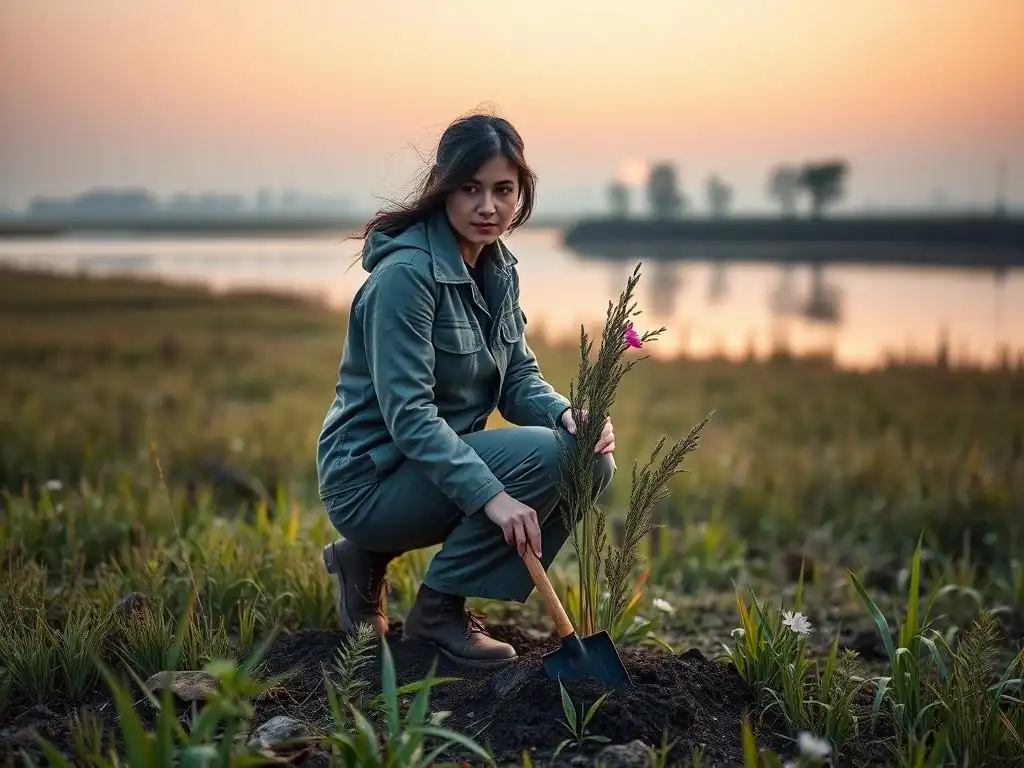
In Montana, a significant challenge lies in remediating vast landscapes scarred by historical mining activities, particularly the toxic legacy of mine tailings. Dr. Anya Sharma, a biogeochemist and a leading woman ecologist at the Montana Bureau of Mines and Geology, spearheaded an innovative phytoremediation project at a former copper mine site near Anaconda. This site was heavily impacted by acid mine drainage and high concentrations of heavy metals like arsenic, lead, and cadmium, rendering the soil barren.
Dr. Sharma's team focused on identifying and cultivating specific native plant species, such as willow (Salix spp.) and specific poplar (Populus spp.) varieties, known for their exceptional ability to absorb and stabilize heavy metals in their root systems and biomass.
Over a seven-year span, their carefully managed planting and cultivation efforts resulted in a measurable reduction of lead concentrations in the topsoil by approximately 25% and a significant increase in soil pH from 3.5 to 5.8, making the soil more hospitable for other native vegetation. This initiative exemplifies how women ecologists are at the forefront of employing biological solutions for complex environmental nature healing challenges.
Measuring Success: Quantifying the Impact of Women Ecologists' Work
Quantifying the success of ecological restoration projects is a complex yet crucial task, central to the work of women ecologists. Success is typically measured through a combination of ecological indicators, which track the return of biodiversity and ecosystem function, and often socio-economic metrics, assessing benefits to human communities.
Key ecological parameters include changes in species richness and abundance (e.g., a 50% increase in native bird species), improvements in water quality (e.g., a 70% reduction in nitrogen runoff), soil health indicators (e.g., a 2% increase in organic matter content), and the re-establishment of critical ecosystem processes like nutrient cycling or hydrological regulation.
Women ecologists often employ advanced monitoring techniques, from remote sensing and drone imagery to detailed field surveys and genetic analyses, to rigorously evaluate the effectiveness of their interventions. They meticulously document the progress of nature's healing, comparing restored sites to reference ecosystems or pre-disturbance conditions. This data-driven approach not only validates the efficacy of restoration methods but also informs adaptive management strategies, ensuring continuous improvement and demonstrating the tangible impact of women ecologists on environmental renewal.
The Interconnectedness of Human and Environmental Health: Women Ecologists' Perspective
The Impact of Environmental Degradation on Human Well-being
The degradation of natural environments has profound and far-reaching consequences for human well-being, a connection frequently highlighted by women ecologists. Air pollution, stemming from industrial emissions and vehicle exhaust, contributes significantly to respiratory diseases like asthma and chronic obstructive pulmonary disease, affecting millions globally. Contaminated water sources, a result of industrial discharge and agricultural runoff, lead to widespread gastrointestinal illnesses and other severe health issues, particularly in vulnerable communities lacking access to clean water.
Beyond direct health impacts, the loss of biodiversity and ecosystem services also diminishes human quality of life. Deforestation can exacerbate climate change and increase the frequency of extreme weather events, while the destruction of green spaces in urban areas is linked to higher rates of mental health issues and reduced physical activity. Women ecologists often emphasize that investing in nature's healing is not merely an environmental imperative but a public health necessity, as healthy ecosystems provide the foundational support for human health and prosperity.
Women Ecologists Advocating for Sustainable Practices
Beyond their research and restoration efforts, women ecologists are increasingly recognized as powerful advocates for sustainable practices and informed environmental policy. Leveraging their scientific expertise, they frequently participate in international conferences, advise governmental bodies, and engage with local communities to translate complex ecological findings into actionable strategies. Their advocacy often focuses on promoting resource efficiency, circular economy models, and the adoption of renewable energy sources.
For example, many women ecologists actively champion the integration of ecosystem services into economic planning, demonstrating the tangible value of healthy natural systems in providing clean air, water, and climate regulation. Their voices are critical in pushing for policies that protect biodiversity, mitigate climate change, and encourage responsible land use, thereby fostering long-term nature's healing and ensuring a sustainable future for all.
Promoting Environmental Justice: The Role of Women in Science
Environmental justice, the principle that all people, regardless of race, income, or national origin, should have equal protection from environmental hazards and equal access to environmental benefits, is a key area where women in science are making significant strides. Women ecologists, in particular, often bring a crucial perspective to this movement, recognizing that marginalized communities disproportionately bear the burden of pollution and environmental degradation, often living near hazardous waste sites or lacking access to green spaces.
Their research frequently exposes these inequities, providing empirical data on the differential impacts of environmental damage on vulnerable populations. Furthermore, many women ecologists actively engage in community-based participatory research, empowering local residents to identify environmental challenges and co-create solutions. By advocating for equitable access to clean environments and the benefits of nature's healing, these scientists are not only advancing ecological understanding but also promoting social equity and human rights.
Inspiring Future Generations: The Legacy of Women Ecologists
Mentorship and Education: Empowering the Next Wave of Scientists
The legacy of pioneering women ecologists extends far beyond their scientific discoveries; it profoundly impacts the next generation through dedicated mentorship and educational initiatives. Established female scientists often serve as invaluable role models, providing crucial guidance, support, and practical advice to aspiring young researchers, particularly girls and young women considering STEM careers. These mentorship relationships help navigate academic and professional challenges, fostering resilience and confidence.
Moreover, women ecologists are actively involved in designing and leading educational programs that introduce ecological concepts to children and young adults. Through hands-on field experiences, citizen science projects, and engaging classroom curricula, they ignite a passion for nature and science. These initiatives are vital in inspiring the next wave of scientists who will continue to explore and leverage nature's healing potential, ensuring a pipeline of diverse talent in environmental stewardship.
Resources for Aspiring Women Ecologists: Scholarships, Internships, and Mentorship Programs
For aspiring women ecologists, a growing number of resources are available to support their educational and professional journeys. Scholarships from organizations such as the Ecological Society of America (ESA) and specific university endowments provide crucial financial assistance, helping to alleviate the burden of tuition and research costs. These scholarships often specifically target underrepresented groups in science, including women.
Internship opportunities at leading research institutions like the Smithsonian Environmental Research Center, national parks, and environmental non-governmental organizations (e.g., National Audubon Society, local land trusts) offer invaluable hands-on experience in fieldwork, lab analysis, and conservation project management. Furthermore, dedicated mentorship programs, sometimes facilitated by professional societies or university departments, pair students with experienced women ecologists who provide career guidance, networking opportunities, and personal development support, ensuring that talent is nurtured to contribute to understanding nature's healing.
Continuing the Journey: Further Research and Exploration of Nature's Healing Potential
The journey of understanding and facilitating nature's healing is far from complete, necessitating continued research and exploration. As global environmental challenges like climate change, habitat fragmentation, and novel infectious diseases intensify, the need for robust ecological science becomes ever more critical. Future research will likely focus on developing adaptive restoration strategies for rapidly changing environments, understanding the ecological impacts of emerging contaminants, and leveraging advanced technologies like AI and big data for predictive ecological modeling.
The foundational work laid by current women ecologists provides a strong springboard for these future endeavors. Their legacy will undoubtedly inspire new generations of scientists to push the boundaries of ecological knowledge, ensuring that humanity continues to uncover and harness nature's astonishing power to heal. This ongoing commitment to scientific inquiry is essential for safeguarding planetary health and securing a sustainable future.
Conclusion: Honoring Women Ecologists and Their Vital Role in Environmental Stewardship
The Enduring Impact of Women in Ecology
The enduring impact of women ecologists on our understanding of the natural world and its capacity for renewal is immeasurable. From pioneering the study of forest communication to demonstrating the critical role of biodiversity in ecosystem resilience, their contributions have profoundly shaped the field of environmental science. These dedicated scientists have not only advanced fundamental ecological knowledge but have also translated complex scientific principles into tangible solutions for environmental degradation.
Their work consistently highlights the inherent ability of nature to heal and regenerate, provided it is given the opportunity and support. Through their rigorous research, innovative restoration projects, and unwavering advocacy, women ecologists have become indispensable stewards of our planet, inspiring both scientific progress and a deeper appreciation for the interconnectedness of all life.
A Call to Action: Supporting Ecological Research and Conservation Efforts
The insights and achievements of women ecologists underscore a vital call to action: we must collectively support ecological research and conservation efforts to ensure the continued health and healing of our planet. This support can manifest in various ways, including advocating for increased funding for scientific research, promoting evidence-based environmental policies, and actively participating in local conservation initiatives such as habitat restoration or citizen science programs.
By investing in the work of women ecologists and the broader scientific community, we empower the ongoing discovery of how ecosystems function and how they can be best protected and restored. It is through this sustained commitment that we can harness nature's healing potential, mitigating the impacts of human activity and fostering a more resilient, sustainable, and equitable future for generations to come.
Frequently Asked Questions
What is the central focus of WomenInScienceHistory.com regarding women ecologists?
The site highlights the contributions of women to the field of ecology, showcasing their groundbreaking work. It aims to inspire future generations by sharing their stories.
What kinds of challenges did women ecologists historically face?
Women ecologists often faced challenges in male-dominated scientific arenas. They had to overcome gender bias and limited opportunities.
How does the "Resilience & Renewal" article relate to the broader theme of WomenInScienceHistory.com?
The article focuses on women ecologists and their work on the healing power of nature. This directly aligns with the site's mission to celebrate women's contributions to science.
Why is it important to recognize the contributions of women ecologists?
Recognizing their contributions helps rectify historical oversights. It also provides crucial role models for aspiring female scientists.
What specific aspects of women ecologists' work on nature's healing power are explored?
The website showcases their research and understanding of ecological processes. This includes how nature contributes to well-being.
Final Reflection: Embracing Nature's Healing Wisdom
The stories of women ecologists highlighted in this article demonstrate that nature's capacity for renewal is mirrored in the resilience of the human spirit. Their dedication to understanding and protecting ecosystems, even in the face of adversity, underscores the profound connection between environmental health and human well-being. Their work is not just science; it's a testament to the power of hope and the enduring strength of the natural world.
The influence of these women extends far beyond scientific publications and research grants. Their passion and perseverance inspire a new generation of ecologists, particularly young women, to pursue careers in STEM and to champion environmental stewardship. Their work reminds us that we are all interconnected with the natural world and that our actions have consequences. Look deep into nature, and then you will understand everything better.
- Albert Einstein. This quote encapsulates the profound wisdom these women ecologists seek and share, urging us to look beyond the surface and appreciate the intricate web of life.
As you reflect on the journeys of these remarkable women, consider how you can cultivate your own resilience and contribute to the healing of our planet. What small steps can you take to connect with nature, to support sustainable practices, and to advocate for a healthier future? Let their dedication inspire you to become an active participant in the ongoing story of resilience and renewal, ensuring that future generations can also witness and benefit from nature's astonishing power to heal.
Ignite Your Inner Ecologist: Explore Nature's Healing Secrets!
Thank you for delving into the world of women ecologists and their remarkable discoveries about nature's resilience! You've seen how they're unraveling the power of ecological renewal, and now it's time to take inspiration from their work.
Here's how you can connect with the healing power of nature and contribute to a healthier world:
- Immerse yourself in a local ecosystem: Visit a nearby park, forest, or wetland, and spend time observing the intricate relationships between plants, animals, and the environment. Record your observations in a journal to deepen your connection.
- Share this article and the WomenInScienceHistory.com website with friends, family, and colleagues, sparking conversations about the vital role of women in ecology and the importance of ecological preservation.
- Consider planting native species in your garden or supporting organizations dedicated to restoring natural habitats in your area. Even small actions can contribute to a big difference.
What small step will you take this week to reconnect with nature and foster its healing potential?