
The Cloud Atlas of Their Minds: Women Who Reimagined Atmospheric Dynamics

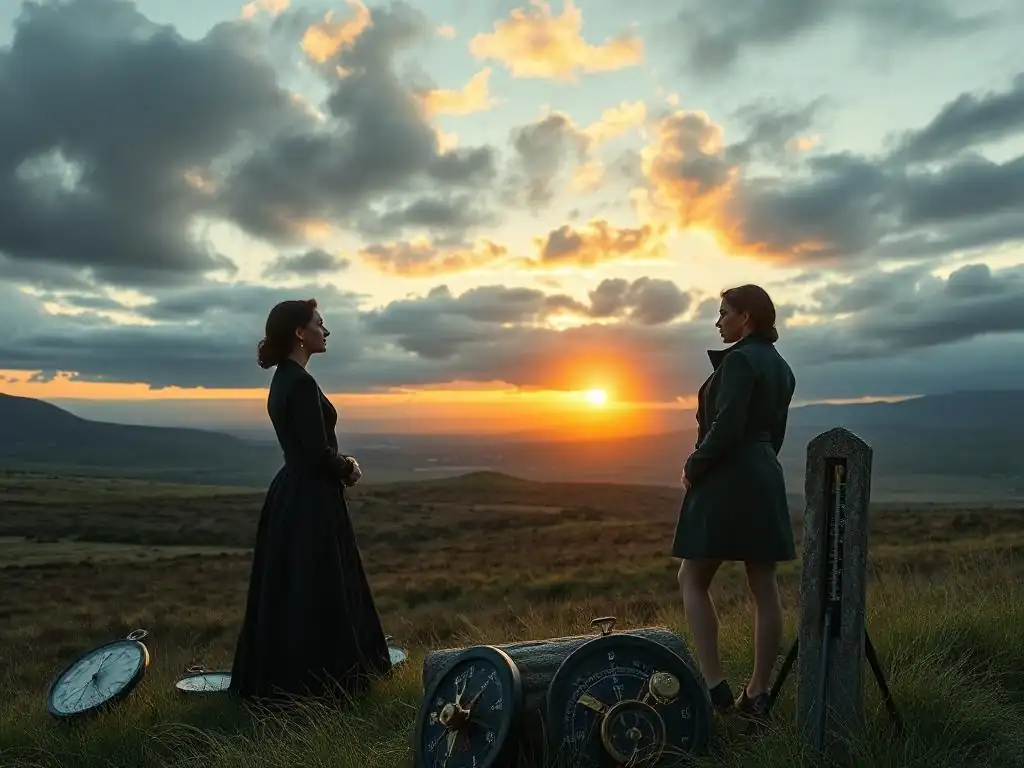
Welcome to WomenInScienceHistory.com, where we uncover the untold stories of remarkable women who shaped the scientific landscape. Prepare to be inspired by the brilliance and resilience of these pioneers.
Today, we delve into the fascinating world of environmental science with " The Cloud Atlas of Their Minds: Women Who Reimagined Atmospheric Dynamics." Discover the captivating women atmospheric science biographies of those who dared to challenge conventional wisdom and unlock the secrets of our atmosphere. What innovative contributions did they make, and what obstacles did they overcome? Read on to find out!
- Introduction: Celebrating Women Atmospheric Science Biographies
- Early Pioneers in Meteorology: Laying the Foundation
- The 20th Century: A New Era for Women in Atmospheric Research
- Key Women Atmospheric Science Biographies: Shaping Our Understanding
- Contributions to Specific Areas of Atmospheric Science
- The Impact of Women's Contributions on Climate Change Research
- Inspiring Future Generations: The Legacy of These Women in Science
- Conclusion: Recognizing and Celebrating Women's Achievements in Atmospheric Science
-
Frequently Asked Questions
- What is the primary focus of WomenInScienceHistory.com?
- Why is it important to highlight the stories of women in science?
- What kind of challenges did women in science often face?
- What does the title "The Cloud Atlas of Their Minds: Women Who Reimagined Atmospheric Dynamics" suggest about the article's content?
- Where can I find biographies of women in atmospheric science?
- Final Reflection: Whispers in the Wind, Legacies in the Sky
- Ignite Your Own Atmospheric Journey!
Introduction: Celebrating Women Atmospheric Science Biographies
For centuries, the intricate dance of clouds, the fury of storms, and the subtle shifts in climate have captivated humanity. Yet, the narratives of those who dedicated their lives to unraveling these atmospheric mysteries often overlook a significant portion of their contributors: women. From unheralded data recorders to groundbreaking theoretical physicists and field researchers, women have consistently reshaped our understanding of Earth's atmosphere. This article celebrates these pioneering individuals, delving into their profound contributions and the formidable challenges they overcame.
By exploring key women atmospheric science biographies, we aim to illuminate their ingenuity and perseverance, demonstrating how their intellect and dedication have been instrumental in advancing meteorology, climate science, and environmental understanding. Their stories are not merely historical footnotes but vibrant testaments to the power of scientific inquiry, inspiring future generations to look up at the sky and see the potential within themselves.
Early Pioneers in Meteorology: Laying the Foundation
Before the 20th century, the study of the atmosphere was largely informal, often conducted by amateur observers or within nascent scientific societies. Formal scientific institutions were few, and access to them was severely restricted. This era saw the very beginnings of systematic weather observation, with individuals meticulously recording atmospheric conditions, temperature, and precipitation. However, the societal norms of the time heavily influenced who could participate in, and be recognized for, scientific endeavors.
Early Challenges and Limited Opportunities for Women in Science
The 18th and 19th centuries presented formidable barriers for women aspiring to careers in any scientific field, including the emerging discipline of meteorology. Societal expectations largely confined women to domestic roles, making formal education, especially in advanced sciences, an almost unattainable luxury. Universities and scientific academies were predominantly male domains, often explicitly barring women from enrollment or membership, thereby denying them access to critical knowledge, laboratory facilities, and professional networks.
Even when women managed to acquire some scientific training, their professional opportunities were severely limited. Many were relegated to uncredited or low-status positions, such as "human computers," meticulously processing vast amounts of data for male scientists without receiving recognition, authorship, or career advancement. This systemic exclusion was rooted in prevailing beliefs that women lacked the intellectual rigor for complex scientific thought, effectively stifling the potential emergence of numerous women atmospheric science biographies.
Notable Figures Pre-20th Century: Brief Overview
Despite the pervasive societal and institutional barriers, some women made indirect but significant contributions to early atmospheric understanding. While few were formally recognized as meteorologists, their efforts in data collection were foundational. For instance, in the early to mid-19th century, numerous women meticulously maintained weather diaries and observation logs, often as part of family enterprises or as part of burgeoning national weather networks.
These individual efforts, though often behind the scenes, were critical in accumulating the empirical evidence necessary for the eventual emergence of meteorology as a distinct scientific discipline. For example, Martha Washington, though not a scientist, kept detailed weather records at Mount Vernon, contributing to long-term climate data. Similarly, women in various communities across Europe and America diligently recorded local weather phenomena, providing localized datasets that early meteorologists relied upon to identify patterns and develop rudimentary forecasting techniques, thereby paving the way for future women atmospheric science biographies.
The 20th Century: A New Era for Women in Atmospheric Research
The 20th century marked a gradual but significant shift, particularly after major global conflicts like World War I and World War II, which necessitated greater participation of women in the workforce, including scientific and technical fields. As the demand for scientific expertise grew, so too did opportunities, albeit slowly, for women to enter and contribute to atmospheric research. This era saw the establishment of formal meteorological organizations and the advent of new technologies, providing new avenues for engagement.
Overcoming Gender Barriers in Meteorology
Even as opportunities expanded in the 20th century, women entering meteorology continued to face significant gender barriers. These included skepticism from male colleagues, limited access to leadership roles, and a pervasive "old boys' club" mentality that made networking and career progression challenging. Many highly qualified women were initially relegated to support roles, such as data analysis or technical assistance, rather than being recognized as lead researchers or forecasters, despite their capabilities.
However, the increasing sophistication of meteorological science, coupled with the sheer demand for talent, gradually chipped away at these traditional structures. Women often excelled in areas requiring meticulous data analysis, computational skills, and interdisciplinary thinking, proving their capabilities and slowly gaining acceptance. This hard-won progress allowed more women atmospheric science biographies to emerge, slowly but steadily changing the landscape of the field and demonstrating the immense value of diverse perspectives.
Specific Examples of Institutional Discrimination
Institutional discrimination against women in atmospheric science was rampant and often overt throughout much of the 20th century. Women were frequently denied admission to advanced degree programs in prestigious universities, excluded from critical field research expeditions due to perceived "safety concerns" or lack of appropriate facilities, and systematically paid significantly less than their male counterparts for equivalent work. For example, during the mid-20th century, some government agencies and academic departments had unwritten rules or explicit policies that limited the number of women hired or promoted in scientific roles, effectively capping their career progression regardless of their qualifications.
Furthermore, securing research grants, gaining recognition for publications, or being considered for prestigious awards proved to be an uphill battle for many women. Their work might be inadvertently or deliberately attributed to male supervisors, or they might be overlooked for academic positions and leadership roles that were routinely offered to less qualified men. This systemic bias meant that many brilliant women atmospheric science biographies remained untold or undervalued for decades, hindering their ability to lead research teams and shape scientific discourse.
Key Women Atmospheric Science Biographies: Shaping Our Understanding
Dr. Joanne Simpson: Her Groundbreaking Work in Cloud Dynamics and Tropical Meteorology
Dr. Joanne Simpson (1923-2010) was a pivotal figure in atmospheric science, becoming the first woman in the United States to earn a Ph.D. in meteorology in 1949 from the University of Chicago. Her career was marked by pioneering contributions to understanding cloud dynamics, tropical meteorology, and the crucial role of clouds in Earth's energy budget. Simpson's innovative approach combined theoretical modeling with rigorous field observations, transforming the study of atmospheric convection.
Her leadership and intellectual rigor paved the way for many subsequent women atmospheric science biographies. She was a formidable advocate for women in science and a prolific researcher, publishing over 200 scientific papers. Her legacy extends beyond her scientific findings to her mentorship and unwavering dedication to the scientific community.
Project Stormfury and Cloud Seeding Experiments
One of Dr. Joanne Simpson's most notable involvements was with Project Stormfury, a controversial but significant effort by the U.S. government from 1962 to 1983 to weaken tropical cyclones through cloud seeding. As a leading expert in cloud physics, Simpson played a crucial role in designing the experiments and interpreting the complex data. The project aimed to introduce silver iodide into the eyewall of hurricanes to promote freezing and encourage the formation of new eyewalls further from the storm's center, theoretically reducing its intensity.
Although Project Stormfury ultimately proved inconclusive in demonstrating a reliable method for hurricane modification, Simpson's involvement highlighted her expertise and willingness to tackle complex, real-world atmospheric challenges. Her meticulous analysis of storm structure and energy transfer during these experiments laid foundational knowledge about the internal workings of hurricanes, contributing significantly to the emerging field of tropical meteorology and solidifying her place among prominent women atmospheric science biographies.
Development of Numerical Cloud Models and Understanding of Tropical Cyclones
Beyond Project Stormfury, Dr. Simpson was instrumental in developing the first numerical cloud models, a revolutionary step in atmospheric science. In the late 1960s and early 1970s, she collaborated with Dr. Victor Wiggert to create sophisticated computer models that simulated the life cycle of cumulus clouds, including their growth, precipitation processes, and interaction with the surrounding atmosphere. These models were critical for moving beyond theoretical understanding to quantitative prediction and analysis of cloud behavior, providing a framework for modern atmospheric modeling.
Her insights from these models, combined with her extensive field observations, profoundly advanced the understanding of tropical cyclones. Simpson emphasized the role of latent heat release from cloud condensation in fueling the intensity of hurricanes, a concept that became central to modern hurricane forecasting. Her work on the energy budget of tropical systems and the interaction between clouds and the larger atmospheric circulation established her as a trailblazer whose women atmospheric science biographies continue to inspire.
Dr. Susan Solomon: Revolutionizing Understanding of Ozone Depletion
Dr. Susan Solomon (born 1956) is an atmospheric chemist of immense stature, widely recognized for her groundbreaking work on stratospheric ozone depletion. As a senior scientist at the National Oceanic and Atmospheric Administration (NOAA) for many years, she led critical research that transformed our understanding of how human-made chemicals were affecting the Earth's protective ozone layer. Her ability to synthesize complex chemical processes with atmospheric dynamics proved pivotal.
Solomon's pioneering efforts not only advanced scientific knowledge but also had direct and profound policy implications, making her a towering figure in environmental science and a key entry in women atmospheric science biographies. She has been awarded numerous accolades, including the National Medal of Science in 1999, for her exceptional contributions.
Leading the Discovery of the Ozone Hole Mechanism
In the mid-1980s, when satellite data revealed a massive and unprecedented depletion of the ozone layer over Antarctica, the scientific community was puzzled. Dr. Susan Solomon, then a scientist at NOAA, proposed the groundbreaking theory that polar stratospheric clouds (PSCs) provided the necessary surface for heterogeneous chemical reactions involving chlorofluorocarbons (CFCs) to rapidly destroy ozone in the extreme cold of the Antarctic winter. This was a critical insight, as gas-phase reactions alone could not explain the observed rapid depletion.
To test her hypothesis, Dr. Solomon led the U.S. National Ozone Expedition to Antarctica in 1986 and 1987. Her team's meticulous measurements, taken directly from the stratosphere using instruments on aircraft and balloons, provided compelling evidence supporting her theory, confirming the role of PSCs and chlorine chemistry in ozone depletion. This direct observational proof was a monumental scientific achievement, solidifying her reputation and cementing her contribution to women atmospheric science biographies as one of the most impactful in modern environmental science.
The Significance of Her Findings on Atmospheric Chemistry and Climate
The significance of Dr. Solomon's findings extended far beyond simply identifying the cause of the ozone hole. Her work provided the unequivocal scientific basis for the Montreal Protocol on Substances that Deplete the Ozone Layer, an international treaty signed in 1987 that successfully phased out the production of CFCs and other ozone-depleting substances. This protocol is widely regarded as one of the most successful international environmental agreements in history, directly stemming from the clarity and certainty provided by Solomon's rigorous research.
Furthermore, her work fundamentally reshaped our understanding of atmospheric chemistry and its intricate links to climate. It demonstrated how human activities could profoundly alter the global atmosphere and highlighted the urgent need for interdisciplinary research. Solomon's subsequent research has continued to explore the interactions between ozone depletion, climate change, and atmospheric aerosols, underscoring her enduring impact on environmental science and making her a central figure in women atmospheric science biographies.
Dr. Inez Fung: Pioneering Work in Global Carbon Cycle and Climate Modeling
Dr. Inez Fung (born 1949) is a distinguished climate scientist at the University of California, Berkeley, and a leading expert in the global carbon cycle and climate modeling. Her innovative approach integrates atmospheric chemistry, oceanography, and terrestrial ecology to understand how Earth's systems interact and influence climate. Her work has been crucial in quantifying the sources and sinks of greenhouse gases, particularly carbon dioxide.
Fung's scientific leadership has earned her numerous accolades, including the National Academy of Sciences membership and the Carl-Gustaf Rossby Research Medal, the highest honor of the American Meteorological Society. Her contributions are vital examples of how women atmospheric science biographies have shaped our understanding of Earth's complex climate system.
Modeling the Global Carbon Cycle and Its Interaction with Climate
Dr. Inez Fung has made profound contributions to our understanding of the global carbon cycle and its interaction with Earth's climate system. Her pioneering work involved developing sophisticated three-dimensional atmospheric transport models that track the movement of carbon dioxide (CO2) through the atmosphere, oceans, and terrestrial biosphere. This allowed scientists to better quantify the sources and sinks of CO2 globally, providing critical insights into how natural processes and human activities influence atmospheric CO2 concentrations. Her early models, developed in the 1980s, were among the first to integrate these complex interactions.
Her research has been pivotal in revealing the complex feedbacks between climate change and the carbon cycle, such as how changes in temperature and precipitation affect the ability of forests and oceans to absorb CO2. For instance, her early work in the 1980s and 1990s helped to constrain the "missing carbon sink" problem, demonstrating that terrestrial ecosystems played a larger role in absorbing atmospheric CO2 than previously understood. This foundational work is central to current climate projections and places her firmly among leading women atmospheric science biographies.
Informing Climate Policy through Earth System Science
Dr. Fung's innovative modeling approaches have had a long-term, transformative impact on climate modeling. Her development of coupled carbon-climate models allowed for a more integrated understanding of Earth's systems, moving beyond isolated atmospheric models to comprehensive Earth system models that simulate the interactions between the atmosphere, oceans, land, and ice. These models are indispensable tools for projecting future climate change scenarios and assessing the effectiveness of mitigation strategies, providing a more holistic view of climate dynamics.
The insights derived from her work have directly informed international climate assessments, including those by the Intergovernmental Panel on Climate Change (IPCC), where she has served as a lead author. Her emphasis on the dynamic nature of the carbon cycle and its sensitivity to climate change has provided crucial data for policymakers to develop strategies for greenhouse gas reductions and adaptation. Her contributions are vital examples of how women atmospheric science biographies have shaped global climate policy and scientific understanding.
Contributions to Specific Areas of Atmospheric Science

The impact of women in atmospheric science extends across numerous specialized sub-disciplines, each critical to a comprehensive understanding of our planet's atmosphere. Their work has not only filled knowledge gaps but has also introduced new perspectives and methodologies, enriching the scientific community as a whole. From the microscopic world of cloud droplets to the vast scales of global climate patterns, women have left an indelible mark.
Women in Cloud Physics and Microphysics
Women have made indelible marks in cloud physics and microphysics, disciplines crucial for understanding precipitation formation and climate regulation. Beyond Dr. Joanne Simpson's foundational work, numerous other women have contributed to the detailed study of cloud droplets, ice crystals, and aerosol-cloud interactions. Their research has advanced our knowledge of how clouds form, evolve, and influence Earth's energy balance, often involving meticulous laboratory experiments and complex field observations using specialized instruments.
For example, Dr. Sarah Doherty, a prominent atmospheric scientist at the University of Washington and a lead author for the IPCC, has contributed significantly to understanding aerosol-cloud interactions and their role in climate. Her work on the direct and indirect effects of aerosols on radiation and cloud properties has been crucial for refining climate models and understanding regional climate impacts. These contributions highlight how women atmospheric science biographies in cloud microphysics are essential for accurate weather forecasting and climate projections.
Women in Weather Forecasting and Prediction
The field of weather forecasting and prediction has also seen the increasing presence and influence of women, particularly from the mid-20th century onwards. Initially, many women entered the field as "human computers" during wartime, processing vast amounts of meteorological data for military operations. Over time, their roles evolved to include operational forecasting, developing new predictive models, and leading forecast centers, with their precision and analytical skills proving invaluable in enhancing the accuracy of daily weather predictions.
A notable example is Dr. Mary G. Olsen, who became one of the first female meteorologists to work for the U.S. Weather Bureau (now the National Weather Service) in the 1940s, breaking significant barriers in a male-dominated operational environment. Her work, alongside many others, helped improve the reliability of forecasts for aviation, agriculture, and public safety, proving that women could excel in high-pressure, real-time decision-making roles. These pioneering efforts underscore the vital role of women atmospheric science biographies in shaping modern weather services and protecting communities.
Women in Climate Modeling and Analysis
Women have been at the forefront of developing and refining complex climate models, which are indispensable tools for projecting future climate scenarios and understanding past climate variability. Their work often involves integrating vast datasets from various sources, including satellite observations, historical records, and geological proxies, to create comprehensive simulations of Earth's climate system. This requires deep expertise in physics, mathematics, and computational science, as well as a meticulous approach to data interpretation.
Dr. Clara Deser, a senior scientist at the National Center for Atmospheric Research (NCAR), is a leading figure in climate variability and change, particularly concerning ocean-atmosphere interactions. Her research has significantly advanced our understanding of natural climate oscillations like ENSO (El Niño-Southern Oscillation) and the Pacific Decadal Oscillation, and their influence on global climate patterns. Her work, alongside that of Dr. Inez Fung, exemplifies the critical contributions of women atmospheric science biographies to the sophisticated realm of climate modeling, providing crucial insights into long-term climate trends.
Women in Atmospheric Chemistry and Air Quality
In atmospheric chemistry and air quality, women scientists have been instrumental in unraveling the complex chemical processes that govern the composition of our atmosphere and the dynamics of air pollution. Their research often involves analyzing trace gases, aerosols, and their reactions, both in controlled laboratory environments and through extensive field measurements, to understand phenomena like smog formation, acid rain, and the long-range transport of pollutants. This work is directly relevant to public health and environmental policy.
Dr. Barbara Finlayson-Pitts, a distinguished professor of chemistry at the University of California, Irvine, has conducted groundbreaking research on atmospheric reactions of pollutants, particularly volatile organic compounds (VOCs) and nitrogen oxides, which are key precursors to ground-level ozone and particulate matter. Her work has provided fundamental insights into urban air pollution mechanisms, directly informing air quality regulations worldwide. Her contributions, alongside Dr. Susan Solomon's, highlight the indispensable role of women atmospheric science biographies in protecting public health and the environment by understanding atmospheric composition.
The Impact of Women's Contributions on Climate Change Research
The collective insights and tireless efforts of women in atmospheric science have been absolutely fundamental to our current understanding of climate change. Their scientific rigor and innovative approaches have not only identified key processes but have also contributed significantly to the consensus view on anthropogenic climate change. Their work has provided the empirical data and theoretical frameworks necessary to assess climate risks and inform global policy responses.
Specific Studies Led by Women That Advanced Climate Change Understanding
The collective body of work by women in atmospheric science has profoundly advanced our understanding of climate change. Beyond Dr. Susan Solomon's definitive work on ozone depletion, other women have led critical studies across various facets of climate science.
For instance, Dr. Katharine Hayhoe, an atmospheric scientist and climate communicator at Texas Tech University, has conducted extensive research on the impacts of climate change at regional scales, providing vital data for adaptation strategies in North America. Her work often involves downscaling global climate models to local impacts, making climate change relevant and actionable for communities, with over 120 peer-reviewed publications to her name.
Another significant contribution comes from Dr. Marcia McNutt, a geophysicist and former editor-in-chief of Science magazine, who, while not strictly an atmospheric scientist, has overseen and championed numerous climate-related publications, shaping the discourse and dissemination of climate research. Her leadership roles have ensured that critical findings on climate change, including atmospheric processes, reach a broad scientific audience and are rigorously peer-reviewed. These diverse contributions demonstrate how women atmospheric science biographies have been central to building the robust scientific consensus on climate change.
The Role of Women in IPCC Reports and Policy Recommendations
Women have played an increasingly prominent and indispensable role in the Intergovernmental Panel on Climate Change (IPCC), the leading international body for assessing climate change science. They have served as lead authors, contributing authors, and review editors across multiple assessment reports, synthesizing thousands of scientific papers into comprehensive summaries for policymakers. Their expertise has been crucial in translating complex atmospheric science into actionable policy recommendations, influencing global climate negotiations like the Paris Agreement.
For example, Dr. Valerie Masson-Delmotte, a French climate scientist specializing in paleoclimate, has served as a co-chair of Working Group I (the Physical Science Basis) for the IPCC's Sixth Assessment Report (AR6), published in 2021. Her leadership in this pivotal role ensured the rigorous scientific assessment of atmospheric processes, climate sensitivity, and future climate projections, providing the most up-to-date scientific basis for climate action. The significant and growing presence of women atmospheric science biographies within the IPCC reflects their increasing influence and indispensable contributions to global climate governance and scientific integrity.
Inspiring Future Generations: The Legacy of These Women in Science
The stories and achievements of these pioneering women in atmospheric science are not just historical records; they are powerful sources of inspiration for future generations. Their resilience in the face of adversity, their intellectual brilliance, and their unwavering commitment to scientific discovery serve as a beacon for young individuals considering careers in STEM. Their legacy is a testament to the idea that diversity in science leads to richer insights and more robust solutions.
Current Initiatives and Programs Supporting Women in STEM
The inspiring legacies of pioneering women in atmospheric science have spurred numerous current initiatives and programs aimed at supporting and empowering women in STEM fields. Organizations like the American Meteorological Society (AMS) and the Earth Science Women's Network (ESWN) offer scholarships, mentorship programs, and networking opportunities specifically designed to encourage young women to pursue careers in atmospheric and related sciences. For example, the AMS has initiatives like the "Women in Atmospheric Sciences" scholarship, which provides financial support to female students.
Furthermore, many universities and research institutions have implemented diversity and inclusion policies to foster a more equitable environment for women in science. These efforts include promoting female faculty, ensuring equal pay, and providing family-friendly policies to retain women in demanding research careers. The goal is to build on the foundations laid by earlier women atmospheric science biographies and ensure a robust pipeline of female talent for the future, recognizing that a diverse scientific workforce is more innovative and effective.
The Importance of Mentorship and Role Models
Mentorship and the visibility of role models are paramount in attracting and retaining women in atmospheric science. When young women see successful female scientists like Dr. Joanne Simpson or Dr. Susan Solomon, it demystifies the path and provides tangible proof that a career in a traditionally male-dominated field is achievable. Mentors offer invaluable guidance, support, and practical advice, helping navigate academic challenges, research hurdles, and career progression, often sharing insights gained from their own struggles and triumphs.
Many established women in atmospheric science actively engage in mentoring, recognizing the struggles they faced and striving to ease the path for the next generation. This intergenerational support system is crucial for fostering confidence, combating impostor syndrome, and building a strong community among female scientists, ensuring that young women feel supported and valued. Highlighting more women atmospheric science biographies in educational materials and public discourse is a powerful way to inspire the next wave of atmospheric innovators and ensure continued progress in the field.
Conclusion: Recognizing and Celebrating Women's Achievements in Atmospheric Science
Women atmospheric science biographies: A continuing story
The stories of women who reimagined atmospheric dynamics are not just historical footnotes; they are vibrant narratives of resilience, intellectual brilliance, and profound impact. From the early "human computers" who meticulously cataloged weather data to the leading scientists who uncovered the secrets of the ozone layer and modeled the complexities of climate change, women have consistently pushed the boundaries of our understanding of Earth's atmosphere. Their contributions, often made in the face of significant systemic barriers and a lack of recognition, have been indispensable to the advancement of meteorology, climate science, and environmental protection.
As we look to the future, the ongoing narrative of women atmospheric science biographies continues to unfold. With increasing recognition, improved opportunities, and dedicated mentorship, more women are entering and excelling in these critical fields. Celebrating their past achievements and supporting their future endeavors is not just about correcting historical oversight; it is about strengthening the scientific enterprise itself, ensuring that the diverse perspectives and talents of all individuals are harnessed to address the pressing atmospheric challenges of our time, from extreme weather events to global climate change.
Frequently Asked Questions
What is the primary focus of WomenInScienceHistory.com?
The website primarily focuses on celebrating the contributions of women to various scientific fields throughout history, providing biographies and highlighting their work.
Why is it important to highlight the stories of women in science?
It's important to highlight these stories to inspire future generations and to address the historical underrepresentation of women in scientific fields.
What kind of challenges did women in science often face?
Women in science often faced challenges related to gender bias and limited opportunities in male-dominated arenas.
What does the title "The Cloud Atlas of Their Minds: Women Who Reimagined Atmospheric Dynamics" suggest about the article's content?
The title suggests the article focuses on women's contributions to the field of atmospheric science, specifically how they reshaped our understanding of atmospheric dynamics.
Where can I find biographies of women in atmospheric science?
You can find women atmospheric science biographies on WomenInScienceHistory.com, which aims to provide information on the lives and work of these pioneering figures.
Okay, here's a final reflection designed to close your article "The Cloud Atlas of Their Minds: Women Who Reimagined Atmospheric Dynamics," optimized for the keyword "Women atmospheric science biographies" and adhering to the structure you provided:
Final Reflection: Whispers in the Wind, Legacies in the Sky
The stories of these pioneering women, once relegated to the margins of scientific history, resonate with a profound urgency today. Their unwavering pursuit of knowledge in the face of adversity serves as a potent reminder that scientific progress is not a monolithic endeavor, but a tapestry woven from diverse perspectives and relentless dedication. Understanding their struggles and triumphs is crucial not only for acknowledging their contributions but also for inspiring future generations to break down barriers and redefine the boundaries of what's possible.
The impact of these women extends far beyond the equations they solved and the theories they developed. Their lives are a testament to the power of resilience and the importance of challenging societal norms, paving the way for greater inclusivity in STEM fields. Their stories are not just historical accounts; they are living narratives that continue to shape the cultural landscape of science. The most effective way to do it, is to do it.
- Amelia Earhart, a sentiment echoing the spirit of these women who dared to defy expectations.
As you reflect on the lives and legacies of these remarkable women, consider the winds of change they set in motion. What personal barriers have you faced, and how can you draw inspiration from their unwavering spirit to overcome them? Let their stories empower you to embrace your own unique potential and contribute to a world where every voice is heard, and every mind has the opportunity to soar.
Ignite Your Own Atmospheric Journey!
Thank you for delving into the inspiring stories of these pioneering women! We hope you've found their dedication to unraveling the mysteries of atmospheric dynamics as captivating as we do. Ready to translate that inspiration into action?
- Embark on your own atmospheric exploration by researching a specific weather phenomenon or climate pattern that piques your interest. Share your findings on social media using #WomenInScienceHistory and let's amplify their legacy!
- Explore online courses or workshops related to meteorology or climate science – rediscover the fundamentals and push your understanding to new heights.
- Support organizations dedicated to promoting women in STEM fields; your contribution, no matter the size, can make a tangible difference.
What small but meaningful step will you take today to honor these trailblazers and contribute to a brighter, more equitable future for women in science?