
For the Love of the Small: Women Championing Insect and Invertebrate Conservation

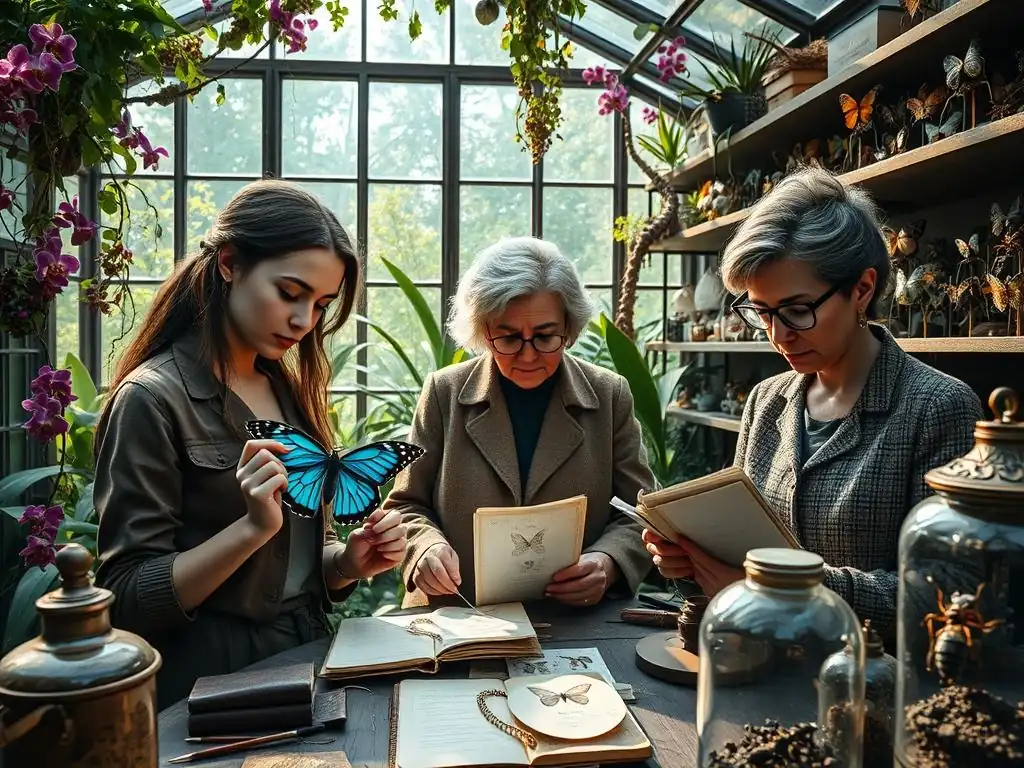
Welcome to WomenInScienceHistory.com, where we uncover the fascinating stories of women who shaped the scientific world! Prepare to be inspired as we delve into the remarkable contributions of women in diverse fields. Today, we shine a spotlight on an often-overlooked area: environmental science. Ever wondered about the unsung heroines dedicated to protecting our planet's smallest creatures? Join us as we explore " Women insect conservation history" and discover the pioneering women who fought – and continue to fight – for the delicate balance of our ecosystems. Their stories are more vital than ever; let's uncover them together...
- Introduction: The Unsung Heroines of Insect Conservation
- A Historical Overview of Women in Insect Conservation History
- Contemporary Leaders in Insect and Invertebrate Conservation
- Challenges Faced by Women in Invertebrate Conservation Science
- Case Studies: Women Making a Difference in Invertebrate Protection
- The Importance of Mentorship: Inspiring the Next Generation of Female Insect Conservationists
- The Future of Insect Conservation: A Call to Action for Women in Science
- Resources for Women in Insect Conservation and Entomology
- Conclusion: Celebrating the Legacy of Women in Invertebrate Preservation
-
Frequently Asked Questions
- What obstacles did women in insect conservation history often face?
- Who are some notable women in insect conservation history mentioned on the website?
- Why is it important to highlight the contributions of women in insect conservation history?
- What is the main goal of "WomenInScienceHistory.com" regarding insect conservation history?
- What scientific disciplines are covered by the women whose stories are featured on the website?
- Final Reflection: A Symphony of Small Voices
- Ignite Your Inner Champion: Take Action for Tiny Lives!
Introduction: The Unsung Heroines of Insect Conservation
Highlighting Women's Contributions to Invertebrate Preservation
Insects and other invertebrates, though often small and overlooked, form the foundational bedrock of nearly all terrestrial and freshwater ecosystems. They are the primary pollinators, decomposers, pest controllers, and a vital food source for countless other species. Despite their immense ecological importance, their conservation has historically received less attention than that of charismatic megafauna.
However, a dedicated cohort of individuals has long championed these minute marvels, and among them, women have played an exceptionally significant, albeit often unsung, role in their study and preservation. This article aims to shine a light on these extraordinary contributions, exploring the rich tapestry of women insect conservation history.
From meticulous early naturalists to leading contemporary scientists and passionate advocates, women have navigated societal barriers and scientific skepticism to advance our understanding of invertebrates and spearhead critical conservation efforts. Their work spans diverse fields, including groundbreaking research, the development of sustainable agricultural practices, policy advocacy for endangered species, and hands-on habitat restoration. By delving into their stories, we gain a deeper appreciation for the profound impact of women in insect conservation and the enduring legacy they are building for future generations and the planet's smallest inhabitants.
A Historical Overview of Women in Insect Conservation History
Early Pioneers: Maria Merian and the Dawn of Insect Illustration and Study
The story of women insect conservation history arguably begins with figures like Maria Sibylla Merian (1647-1717), a German-born naturalist and scientific illustrator. Merian defied the conventions of her time by embarking on an extraordinary expedition to Suriname in 1699, at the age of 52, to study insects in their natural habitats. Her seminal work, Metamorphosis Insectorum Surinamensium (1705), meticulously documented the life cycles of insects, challenging the then-prevalent belief in spontaneous generation and providing some of the earliest and most accurate depictions of insect metamorphosis.
Merian’s detailed observations and exquisite illustrations were revolutionary, demonstrating insects' complex relationships with their host plants and their full life cycles. While not explicitly "conservation" in the modern sense, her work laid crucial groundwork for understanding insect ecology, a prerequisite for any conservation effort. Her independent spirit and dedication to direct observation in the field set a precedent for future generations of women in insect conservation, proving that women could be rigorous scientists and contribute significantly to natural history.
The Rise of Ecological Awareness and Women's Role in Insect Protection
As ecological awareness began to blossom in the 19th and 20th centuries, women continued to emerge as influential figures in the study and protection of insects. Anna Botsford Comstock (1854-1930), a prominent entomologist and educator in the United States, championed nature study and popularized entomological education. Through her extensive writings and teaching at Cornell University, she instilled a deep appreciation for the natural world, including insects, among countless students and the general public, fostering an understanding that was essential for future conservation efforts.
The mid-20th century saw a monumental shift with the publication of Rachel Carson’s (1907-1964) Silent Spring in 1962. While Carson was not an entomologist, her meticulously researched exposé on the devastating effects of synthetic pesticides, particularly DDT, on birds and other wildlife, brought the plight of insects and ecosystems into sharp public focus.
Her work galvanized the modern environmental movement and directly led to policy changes, including the eventual ban of DDT in the U.S. Her courage and scientific integrity profoundly influenced the trajectory of women insect conservation history by demonstrating the power of scientific advocacy in protecting the natural world from human-induced harm.
Contemporary Leaders in Insect and Invertebrate Conservation
Dr. May Berenbaum: Research and Advocacy for Insect Biodiversity and Chemical Ecology
Dr. May Berenbaum (b. 1953) stands as a towering figure in contemporary entomology and a beacon in women insect conservation history. As a professor of entomology at the University of Illinois Urbana-Champaign, her groundbreaking research focuses on chemical ecology, specifically the intricate coevolutionary relationships between insects and plants.
Her work has elucidated how insects detoxify plant compounds and how plants defend themselves, providing critical insights into insect biodiversity and the ecological roles they play. She has also served as the editor-in-chief of the Proceedings of the National Academy of Sciences and holds a seat in the National Academy of Sciences, reflecting her immense scientific stature.
Beyond her rigorous academic contributions, Dr. Berenbaum is a tireless advocate for insect conservation. She has been instrumental in raising public awareness about the global decline of insect populations, often using accessible language and engaging metaphors to explain complex scientific concepts to a broad audience. Her advocacy has influenced policy discussions regarding pesticide use, genetically modified crops, and sustainable agricultural practices, consistently emphasizing the irreplaceable value of insect biodiversity. Her leadership exemplifies the profound impact women continue to have on the field of insect conservation.
Dr. Claire Kremen: Protecting Pollinators and their Habitats Through Agroecological Approaches
Another leading voice in contemporary women insect conservation history is Dr. Claire Kremen (b. 1964), an ecologist and conservation biologist at the University of California, Berkeley. Her research is primarily focused on pollinator conservation, particularly wild bees, and how agricultural practices can be adapted to support these crucial species. Dr. Kremen’s work bridges the gap between fundamental ecological research and applied conservation, exploring how agricultural intensification impacts biodiversity and ecosystem services like pollination.
Dr. Kremen is a strong proponent of agroecological approaches, which seek to integrate ecological principles into farming systems to enhance sustainability and biodiversity. Her research has demonstrated that diversified farming systems, which incorporate natural habitats and reduce pesticide use, can significantly bolster wild pollinator populations and improve crop yields. Her practical, science-based solutions offer pathways for farmers and policymakers to protect pollinators and their habitats, contributing significantly to the ongoing efforts in women in insect conservation by providing actionable strategies for sustainable agriculture.
Challenges Faced by Women in Invertebrate Conservation Science
Overcoming Gender Bias in Entomology and Conservation Fields
Despite significant progress, women in entomology and conservation science continue to face persistent challenges, including various forms of gender bias. Historically, these fields, like many STEM disciplines, were largely male-dominated, and while more women are entering at undergraduate and graduate levels, a "leaky pipeline" often sees their representation dwindle at senior academic and leadership positions. For instance, while women might constitute approximately 50-60% of biology undergraduates, their presence in full professorships or departmental leadership roles in entomology can still be significantly lower, often in the range of 20-30% in many institutions.
This disparity can be attributed to several factors, including implicit bias in hiring and promotion, a lack of visible female mentors and role models, and exclusion from informal professional networks. Women may also face greater challenges in balancing demanding research careers with family responsibilities, which can impede career progression. Addressing these systemic biases is crucial for fostering an inclusive environment where all talent, regardless of gender, can thrive and contribute fully to women insect conservation history.
Securing Funding and Recognition for Insect-Focused Research
A significant challenge for all invertebrate conservation scientists, which can be compounded for women, is securing adequate funding and recognition for their research. Historically, insect and invertebrate conservation has often received less public attention and financial support compared to efforts focused on charismatic megafauna like elephants or tigers. This funding disparity means that researchers in this field must often work harder to secure grants and resources.
For women, this challenge can be exacerbated by existing biases in grant review processes or a lack of visibility in academic and professional networks that facilitate funding opportunities. Furthermore, gaining recognition through publications in high-impact journals, prestigious awards, and invitations to speak at major conferences is vital for career advancement and securing future funding. Women in insect conservation may face an uphill battle to achieve this level of recognition, requiring them to consistently demonstrate exceptional scientific rigor and advocacy to ensure their vital work on the planet's smallest creatures receives the attention it deserves.
Case Studies: Women Making a Difference in Invertebrate Protection
Case Study 1: Xerces Society's Pollinator Conservation Program - A Woman-Led Initiative to Save Pollinator Species
The Xerces Society for Invertebrate Conservation stands as a global leader in invertebrate protection, and its Pollinator Conservation Program is a testament to the impactful leadership of women in the field. Key figures, including Mace Vaughan, Conservation Director, and Sarina Jepsen, Endangered Species Program Director, have been pivotal in shaping and driving the organization's strategic initiatives. Their vision and expertise have guided programs that have restored thousands of acres of pollinator habitat across North America.
Under female leadership, the Xerces Society has developed scientifically sound best management practices for pollinator habitat creation and management, providing invaluable resources for farmers, land managers, and home gardeners. Their work includes critical initiatives like the Monarch Conservation Program, which has focused on restoring milkweed habitats and addressing pesticide impacts, and various programs aimed at conserving declining bumble bee species. These efforts underscore the tangible impact of women insect conservation history on the ground, translating scientific knowledge into practical, large-scale conservation outcomes.
Case Study 2: Butterfly Conservation (UK) - Female Leadership in Habitat Restoration for Butterflies and Moths
In the United Kingdom, Butterfly Conservation is a prominent charity dedicated to saving butterflies, moths, and their habitats. Women have long held significant leadership and scientific roles within the organization, contributing profoundly to its success. For example, Julie Williams serves as the Chief Executive, overseeing the strategic direction and operational aspects of the charity, which manages over 30 nature reserves across the UK.
Female conservation officers and researchers within Butterfly Conservation have led numerous habitat restoration projects that have brought critically endangered species back from the brink. These projects often involve working with landowners and volunteers to restore specific habitats, such as chalk grasslands for species like the Adonis Blue butterfly or woodland clearings for the Pearl-bordered Fritillary. Their work, often involving meticulous fieldwork, ecological surveys, and community engagement, highlights the practical and impactful contributions of women in insect conservation to the recovery of some of the UK's most cherished invertebrate species.
The Importance of Mentorship: Inspiring the Next Generation of Female Insect Conservationists
Programs and Initiatives Supporting Women in Entomology
Mentorship plays a critical role in nurturing the careers of aspiring female insect conservationists, providing guidance, support, and opportunities in a field that still presents unique challenges. Various professional organizations have recognized this need and established programs specifically designed to support women in entomology and conservation. For instance, the Entomological Society of America (ESA) often hosts mentorship programs and networking events at its annual meetings, connecting early-career women with seasoned professionals. Similarly, the Association for Women in Science (AWIS) offers broader STEM-focused mentorship, which includes women in invertebrate studies.
These initiatives are vital for addressing the "leaky pipeline" by providing practical advice on career navigation, grant writing, publishing, and leadership development. They foster a supportive community where women can share experiences, overcome obstacles, and build strong professional networks. Such programs are instrumental in retaining talented women in the field and ensuring a robust future for women insect conservation history.
Role Models and Their Impact on Aspiring Female Scientists
The presence of visible and accessible role models is profoundly impactful in inspiring the next generation of female insect conservationists. When young women see successful female entomologists, conservation biologists, and advocates, it breaks down stereotypes and demonstrates that a career in this field is not only possible but also achievable and rewarding. The historical figures like Maria Merian and Rachel Carson, alongside contemporary leaders such as Dr. May Berenbaum and Dr. Claire Kremen, serve as powerful inspirations, showcasing diverse paths to scientific contribution and leadership.
Role models provide more than just inspiration; they offer practical insights into the realities of the profession, share strategies for overcoming challenges, and often serve as direct mentors. Their experiences can guide aspiring scientists in choosing academic paths, identifying research opportunities, and navigating the complexities of scientific careers. By highlighting the achievements of these women, we not only celebrate their legacy but also actively encourage more young women to pursue their passion for insects and contribute to the ongoing narrative of women in insect conservation.
The Future of Insect Conservation: A Call to Action for Women in Science
Addressing the Global Insect Decline: Women Leading the Way
The planet is currently facing a profound and alarming global insect decline, with estimates suggesting significant losses in insect biomass in many regions, potentially at rates of 1-2% annually in some studies. This crisis poses an existential threat to ecosystem stability and human well-being. Addressing such a complex and multifaceted challenge requires diverse perspectives, innovative solutions, and strong leadership. Women in science are uniquely positioned to lead the way, bringing their rigorous scientific expertise, collaborative approaches, and often a deep-seated passion for the natural world to the forefront.
Women are increasingly leading research efforts to understand the drivers of insect decline, from habitat loss and pesticide use to climate change. They are also at the vanguard of developing and implementing sustainable agricultural practices, pioneering urban conservation initiatives, and advocating for policy changes that prioritize insect health. Their contributions are essential in shaping the future of insect conservation, ensuring that the critical work initiated by early pioneers continues to thrive and adapt to new challenges. The ongoing narrative of women insect conservation history is fundamentally tied to the success of these future endeavors.
Promoting Citizen Science and Community Engagement in Invertebrate Monitoring
A powerful avenue for addressing the global insect decline and fostering broader public engagement is through citizen science initiatives, where women are increasingly playing pivotal roles. These programs empower individuals, regardless of their scientific background, to contribute valuable data on insect populations and distributions, which is crucial for monitoring trends and informing conservation strategies. Women often excel in organizing and mobilizing community networks, leveraging their communication skills to promote participation in such initiatives.
Examples like the Bumble Bee Watch program, various iNaturalist projects focused on insect identification, and local butterfly count schemes demonstrate the effectiveness of citizen science. Women frequently lead these efforts, from coordinating volunteers and providing training to analyzing data and disseminating findings. By promoting and participating in citizen science, women are democratizing scientific inquiry, raising public awareness about the plight of insects, and directly contributing to the long-term monitoring and conservation of invertebrate biodiversity. This collective effort is a vital chapter in the evolving story of women in insect conservation.
Resources for Women in Insect Conservation and Entomology
Organizations Supporting Female Scientists in Invertebrate Studies
Several organizations provide crucial support and networking opportunities for women pursuing careers in insect conservation and entomology. The Entomological Society of America (ESA), for example, has various special interest groups and committees that promote diversity and inclusion, often facilitating mentorship and professional development for women. Similarly, the Royal Entomological Society (RES) in the UK and other national entomological societies offer platforms for female researchers to present their work, collaborate, and connect with peers.
Beyond discipline-specific groups, broader organizations like the Association for Women in Science (AWIS) and the Society for Women Environmental Professionals (SWEP) offer extensive resources, including career advice, leadership training, and advocacy for policies that support women in STEM fields. These organizations are instrumental in fostering a supportive environment, providing networking opportunities, and advocating for the advancement of women insect conservation history.
Educational Opportunities and Funding for Insect Conservation Research
For women aspiring to contribute to insect conservation, a range of educational opportunities and funding sources are available. Many universities worldwide offer specialized graduate programs in entomology, conservation biology, ecology, and environmental science, providing the necessary scientific foundation. Institutions with strong research programs in invertebrate ecology often have faculty actively involved in conservation projects.
Furthermore, various scholarships, fellowships, and grants are specifically designed to support women in STEM or conservation fields. These can come from governmental agencies, private foundations, or professional societies. For instance, the National Science Foundation (NSF) in the U.S. offers a range of grants, and many conservation-focused foundations provide targeted funding for research on endangered species or habitat restoration. Aspiring female insect conservationists are encouraged to meticulously research these opportunities and craft compelling proposals to secure the resources needed for their vital research.
Conclusion: Celebrating the Legacy of Women in Invertebrate Preservation
Recognizing the Enduring Impact of Female Entomologists and Conservationists
The narrative of insect and invertebrate conservation is inextricably linked with the tireless efforts and pioneering spirit of women throughout history. From Maria Merian's meticulous observations in the 17th century to Rachel Carson's groundbreaking advocacy in the 20th, and the cutting-edge research of contemporary leaders like Dr. May Berenbaum and Dr. Claire Kremen, women have consistently pushed the boundaries of scientific understanding and championed the cause of these essential creatures. Their contributions, often made in the face of societal and systemic barriers, have been fundamental to our current knowledge and protection strategies for the planet's smallest inhabitants.
The enduring impact of female entomologists and conservationists is profound and far-reaching. They have not only advanced scientific knowledge but have also inspired countless others, especially younger generations of women, to pursue careers in science and conservation.
By continuing to highlight and celebrate these stories, we reinforce the critical importance of diversity in scientific thought and leadership. The ongoing legacy of women insect conservation history serves as a powerful reminder that the health of our planet depends on the collective efforts of all, and that the dedication of women has been, and will continue to be, indispensable in safeguarding the delicate balance of life on Earth.
Frequently Asked Questions
What obstacles did women in insect conservation history often face?
Women often faced gender bias and lack of recognition in the scientific community. They were frequently excluded from research opportunities and leadership positions.
Who are some notable women in insect conservation history mentioned on the website?
While the website features many, it highlights women who made pioneering contributions to understanding insect behavior and the importance of invertebrates in ecosystems. Their specific names are detailed within their biographies.
Why is it important to highlight the contributions of women in insect conservation history?
Highlighting their contributions helps correct historical imbalances and inspires future generations of women to pursue careers in science and conservation. It also acknowledges the diverse perspectives they brought to the field.
What is the main goal of "WomenInScienceHistory.com" regarding insect conservation history?
The website aims to showcase the significant role women have played in insect and invertebrate conservation. It strives to raise awareness about their achievements and the challenges they overcame.
What scientific disciplines are covered by the women whose stories are featured on the website?
The website features women in fields like entomology, ecology, and conservation biology, all crucial for understanding and protecting insect populations. The focus is on those who have directly contributed to insect and invertebrate conservation efforts.
Final Reflection: A Symphony of Small Voices
The stories shared throughout this article, highlighting the pivotal role of women in insect and invertebrate conservation, resonate deeply in a world increasingly aware of its ecological fragility. These unsung heroines, often working against the grain, have laid the groundwork for a more sustainable future, reminding us that even the smallest creatures deserve our protection and respect. Their dedication underscores the vital connection between biodiversity and human well-being, a connection that demands our immediate attention.
The impact of these women extends far beyond scientific journals and conservation initiatives. Their passion has ignited a spark, inspiring a new generation of scientists, activists, and everyday citizens to appreciate the intricate beauty and essential functions of the invertebrate world. This legacy of empowerment and advocacy is crucial, especially as we face unprecedented environmental challenges. In the end, we will conserve only what we love; we will love only what we understand; and we will understand only what we are taught.
- Baba Dioum
As you reflect on the "Women insect conservation history" illuminated here, consider your own role in this ongoing narrative. What small actions can you take to support the conservation of insects and invertebrates in your community? How can you amplify the voices of those who champion their cause? Let the dedication of these remarkable women inspire you to cultivate a deeper appreciation for the small wonders that sustain our planet, and to become an active participant in safeguarding their future.
Ignite Your Inner Champion: Take Action for Tiny Lives!
Thank you for delving into the remarkable stories of women safeguarding our planet's smallest inhabitants. Now, let's translate inspiration into action!
- Champion a local insect or invertebrate in your area. Research what species need help locally, and find how you can support their conservation.
- Share this article with friends and family to spark more interest and inspire more advocates.
- Explore the "Women in Science History" site for more fascinating stories of pioneering women scientists!
What steps will you take to join the movement for invertebrate conservation?