
Mentorship Across Millennia: How Women Historically Supported Each Other in Scientific Endeavors

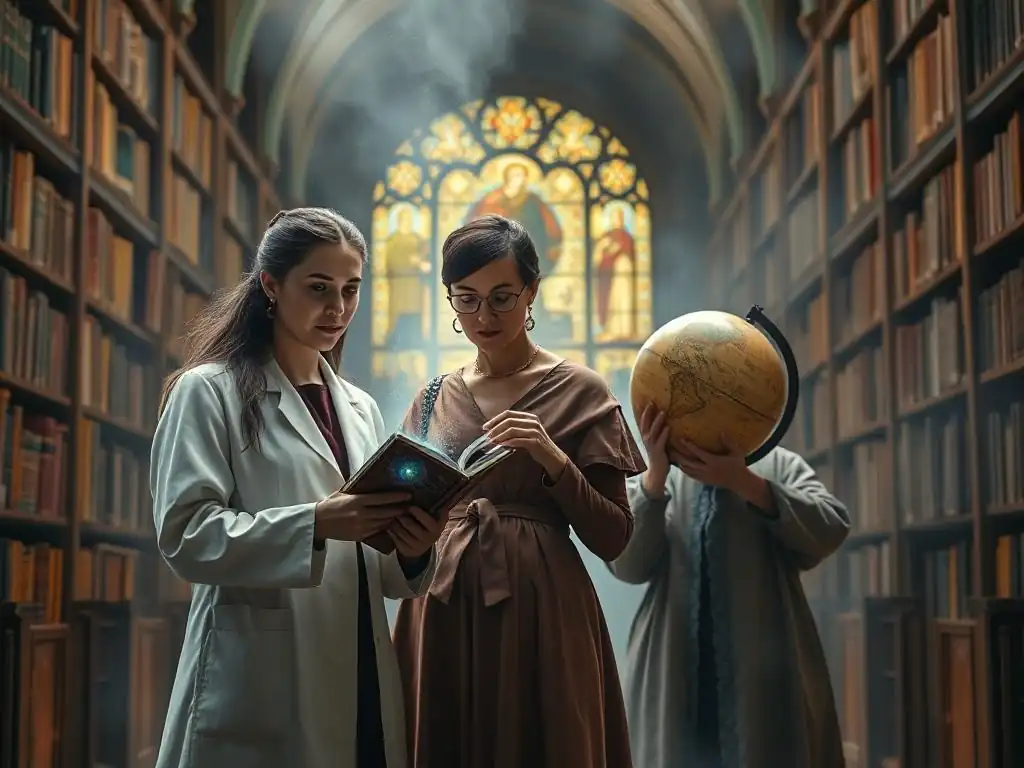
Welcome to WomenInScienceHistory.com!
Delve into the often untold stories of remarkable women who shaped the landscape of science. This platform celebrates their groundbreaking contributions and the hurdles they overcame. Ever wondered how these pioneering figures navigated a world that often sought to exclude them?
Our current feature, " Mentorship Across Millennia: How Women Historically Supported Each Other in Scientific Endeavors," explores the fascinating history of women scientists mentorship support history, revealing the crucial role of female networks in fostering innovation and resilience. Discover the power of collaboration and the enduring legacy of women supporting women in science. Read on to uncover the inspiring connections that paved the way for future generations!
- Introduction: Women Scientists, Mentorship, and the Unsung History of Support
- Early Examples of Female Scientific Mentorship: Laying the Foundation
- The Renaissance and Enlightenment: Nascent Networks of Women Scientists
- 19th Century: Formalizing Mentorship for Women in Scientific Fields
- 20th Century: Expanding the Scope of Women Scientists Mentorship Support
- Case Studies: Women Scientists and Their Mentors Throughout History
- The Legacy of Women Scientists Mentorship: Inspiring Future Generations
- Conclusion: Recognizing the Enduring Impact of Women's Scientific Support Networks
-
Frequently Asked Questions
- How did women in science historically provide mentorship and support to one another?
- What types of challenges did women in science face that made mentorship particularly important?
- Can you give an example of a historical mentorship relationship between women scientists?
- How does "WomenInScienceHistory.com" contribute to the understanding of women scientists' mentorship history?
- Why is understanding the history of "women scientists mentorship support" important for today?
- Final Reflection: The Enduring Power of Female Scientific Solidarity
- Ignite Your Inner Scientist: Connect, Contribute, and Champion!
Introduction: Women Scientists, Mentorship, and the Unsung History of Support
Overcoming Barriers: Mentorship as a Catalyst for Women's Advancement in Science
Throughout history, women pursuing scientific endeavors faced formidable systemic barriers, including limited access to formal education, exclusion from professional societies, and societal expectations that often confined them to domestic roles. In this challenging landscape, mentorship emerged as a crucial catalyst, providing women with pathways to knowledge, resources, and recognition that were otherwise denied.
A mentor, often a more established scholar or even a sympathetic male colleague, could offer invaluable guidance on experimental methods, introduce them to vital scientific networks, or even advocate for their work in male-dominated institutions. This form of support was not merely academic; it was a lifeline, enabling women to navigate institutional prejudices and gain the credibility necessary to contribute meaningfully to their fields.
For many women in science, mentorship provided direct access to laboratories, private libraries, or even the opportunity to participate in scientific discussions from which they were typically barred. For instance, without formal university admission, a woman might learn chemistry or botany through an apprenticeship with a sympathetic apothecary or a family member involved in scientific pursuits.
This informal yet powerful mentorship allowed them to acquire practical skills and theoretical knowledge, circumventing the rigid educational structures that largely excluded women. The historical trajectory of women scientists often reveals that behind every pioneering female figure, there was frequently a less visible network of individuals who offered critical encouragement, shared knowledge, or provided crucial logistical support, making their scientific contributions possible.
The Power of Peer Support: Building Communities for Women Scientists in History
Beyond individual mentorship, the formation of peer support networks proved equally vital for women scientists throughout history, fostering communities where intellectual exchange and mutual encouragement could flourish. In eras when women were largely isolated in their scientific pursuits, these informal gatherings, often held in private homes or salons, became essential spaces for sharing research, debating ideas, and validating each other's intellectual contributions. These nascent communities provided a sense of belonging and intellectual camaraderie that was often absent in formal academic or professional settings, which were overwhelmingly male.
These peer networks allowed women to discuss their findings, troubleshoot experimental challenges, and even collaborate on projects, providing a crucial counter-narrative to the prevailing belief that women were incapable of rigorous scientific thought. For example, during the Enlightenment, French salons hosted by intellectual women became vibrant centers for scientific discourse, where women could engage with leading thinkers and present their ideas without the formal strictures of universities or academies.
This collective support not only bolstered individual women's confidence but also contributed to the accumulation and dissemination of scientific knowledge among women, creating a powerful, albeit often unacknowledged, undercurrent of shared scientific progress.
Early Examples of Female Scientific Mentorship: Laying the Foundation
Ancient Alexandria: Hypatia's Influence on Mathematics and Philosophy
In the bustling intellectual hub of ancient Alexandria, Hypatia stands as a monumental figure of early female scientific mentorship, embodying the role of a teacher and intellectual leader in a period largely devoid of such opportunities for women. Born around 350-370 AD, Hypatia was the daughter of Theon, a prominent mathematician and astronomer, who himself acted as her primary mentor, providing her with an unparalleled education in mathematics, astronomy, and philosophy.
Building upon this foundation, Hypatia established herself as a leading scholar at the Neoplatonic school in Alexandria, where she taught and lectured to a diverse group of students, including prominent figures like Synesius of Cyrene, who later became a bishop.
Hypatia's influence extended far beyond mere instruction; she cultivated an environment of rigorous intellectual inquiry and critical thinking, attracting students from across the Roman Empire. Her commentaries on classical mathematical texts, such as Diophantus's Arithmetica and Apollonius's Conics, demonstrated her deep understanding and ability to clarify complex ideas, making them accessible to her students.
She also contributed to the development of astronomical instruments, like the astrolabe and the hydroscope. Her role as a public lecturer and philosophical guide made her a de facto mentor to many, empowering them to pursue knowledge and intellectual development in a male-dominated society, thereby laying an early foundation for women scientists mentorship support history.
Medieval Germany: Hildegard of Bingen's Holistic Approach to Science and Medicine
In medieval Germany, Hildegard of Bingen (1098-1179), a visionary abbess, polymath, and mystic, exemplified a unique form of female scientific mentorship within the confines of her Benedictine convents. While not a formal academic in the modern sense, Hildegard's comprehensive writings on natural history, medicine, and cosmology, primarily in her works Physica (Natural History) and Causae et Curae (Causes and Cures), showcased a sophisticated empirical understanding of the natural world. Within her abbeys, particularly Rupertsberg and Eibingen, she cultivated an environment where women could engage with the natural sciences, especially botany and herbal medicine, through practical application and observation.
Hildegard effectively served as a mentor to the nuns under her charge, teaching them about the medicinal properties of plants, the composition of the human body, and the intricate connections between nature and well-being. Her practical approach to healing and her detailed descriptions of hundreds of plants, minerals, and animals provided a foundational curriculum for the women in her care.
This informal yet highly impactful training allowed these women to become skilled practitioners of natural medicine, offering healthcare to their communities and preserving valuable knowledge about herbal remedies and treatments. Hildegard's leadership created a rare space where women could pursue scientific knowledge and apply it practically, contributing significantly to medieval medicine and establishing a powerful example of women scientists mentorship support history.
The Renaissance and Enlightenment: Nascent Networks of Women Scientists
Italian Scientific Circles: Laura Bassi and the Bologna Academy
During the Enlightenment, Italy, particularly Bologna, emerged as a surprisingly progressive center for women's intellectual pursuits, largely thanks to pioneering figures like Laura Bassi (1711-1778). Bassi holds the distinction of being the first woman to officially teach at a European university and the first woman to earn a doctorate in science, receiving her degree from the University of Bologna in 1732. Her appointment as professor of physics at the university was groundbreaking, but it was her dedication to experimental physics and her role as a teacher that truly cemented her legacy as a mentor.
Bassi actively engaged in scientific experimentation, conducting public demonstrations and teaching private courses in her own home. These courses attracted students eager to learn experimental physics, a field she championed. She provided practical, hands-on instruction, a rarity for any professor at the time, let alone a woman.
Her home became a vibrant hub of scientific learning, where she mentored students, both male and female, fostering their understanding of Newtonian physics and other contemporary scientific concepts. Bassi's success not only broke gender barriers but also inspired other women to pursue scientific education, creating a nascent network of intellectually curious individuals in Bologna and setting a precedent for women scientists mentorship support history.
French Salons: Émilie du Châtelet and the Dissemination of Newtonian Physics
In 18th-century France, while formal academies remained largely closed to women, intellectual salons provided crucial spaces for women to engage with scientific discourse and serve as mentors. One of the most prominent figures in this regard was Émilie du Châtelet (1706-1749), a brilliant mathematician and physicist whose salon at her château in Cirey became a renowned hub for Enlightenment thinkers. Du Châtelet, famous for her translation and commentary on Isaac Newton's Principia Mathematica, cultivated an environment where complex scientific ideas were debated, analyzed, and disseminated among a wide intellectual circle.
Her salon attracted leading intellectuals, including Voltaire, with whom she collaborated closely. Within this vibrant setting, du Châtelet acted as an informal mentor, guiding discussions, clarifying intricate scientific concepts, and encouraging rigorous intellectual inquiry among her peers.
Her personal dedication to the study of physics and mathematics, coupled with her exceptional ability to articulate and interpret advanced theories, made her an invaluable resource for others seeking to understand the new scientific paradigms. Her posthumously published translation of Newton's Principia (1759) remains the standard French version, a testament to her profound understanding and her lasting impact on the dissemination of scientific knowledge, showcasing a powerful instance of women scientists mentorship support history through intellectual community.
19th Century: Formalizing Mentorship for Women in Scientific Fields

British Institutions: Mary Somerville and the Royal Astronomical Society
The 19th century saw gradual shifts in access for women to scientific institutions, and figures like Mary Somerville (1780-1872) played a pivotal role in this evolution, becoming an influential mentor and advocate. Though largely self-taught, Somerville's profound understanding of mathematics and natural philosophy earned her widespread recognition. Her groundbreaking work, Mechanism of the Heavens (1831), a lucid interpretation of Laplace's Mécanique Céleste, made complex astronomical theories accessible to a broader English-speaking audience. This achievement, among others, led to her being one of the first two women elected as an honorary member of the Royal Astronomical Society in 1835.
Somerville's influence extended beyond her publications; she actively corresponded with leading scientists of her era, serving as a conduit for scientific ideas and indirectly mentoring younger generations through her example and advocacy. She was a vocal proponent of women's education, believing firmly in women's intellectual capabilities.
Her life and work provided a powerful model of intellectual pursuit for women who were still largely excluded from formal academic paths. By demonstrating exceptional scientific prowess and gaining recognition from established institutions, Somerville paved the way for future women scientists and inspired many to pursue scientific learning, underscoring her enduring legacy in women scientists mentorship support history.
American Observatories: Maria Mitchell and the Vassar College Observatory
In 19th-century America, Maria Mitchell (1818-1889) stands as a beacon of formalized women scientists mentorship support, particularly in the field of astronomy. Mitchell, who gained international recognition for discovering a comet in 1847, was subsequently appointed the first professor of astronomy at Vassar College in 1865, a position she held until 1888. At Vassar, she established the Vassar College Observatory as a unique learning environment where women could engage in hands-on scientific research, a rarity for female students at the time.
Mitchell was not merely a professor; she was a dedicated and inspiring mentor to her students. She eschewed traditional lecture-based teaching in favor of a practical, observational approach, engaging her students in actual astronomical research. Under her tutelage, over 100 women received rigorous training in astronomy, many of whom went on to pursue their own scientific careers or became educators themselves.
Her commitment to fostering an inclusive and supportive scientific community for women profoundly impacted a generation of female astronomers, proving that with dedicated mentorship and access to resources, women could excel in demanding scientific fields. The Vassar College Observatory under Mitchell became a vital institution in the history of women scientists mentorship support, creating a lasting legacy of female scientific achievement.
20th Century: Expanding the Scope of Women Scientists Mentorship Support
The Manhattan Project: Women's Contributions and Informal Mentoring Networks
The exigencies of World War II created unprecedented opportunities for women in scientific and technical fields, particularly within highly classified initiatives like the Manhattan Project. While formal mentorship programs for women were still largely absent, the sheer scale and collaborative nature of this monumental undertaking fostered robust informal mentoring networks among women scientists, engineers, and mathematicians. Thousands of women contributed to the project in various capacities, from "human computers" performing complex calculations to chemists, physicists, and technicians working on isotope separation and plutonium production.
In laboratories and facilities across the United States, women often found themselves working alongside other women, sharing expertise, problem-solving collectively, and providing mutual support in a high-pressure, often isolating environment. For example, at Los Alamos, women mathematicians and physicists collaborated on calculations crucial for bomb design, often teaching each other specialized techniques and sharing insights gained through their work.
This peer-to-peer learning and informal guidance were vital for navigating the complex scientific challenges and the demanding conditions of the project. This period highlighted how, even in the absence of structured programs, necessity could forge powerful bonds of mutual support, demonstrating a unique chapter in women scientists mentorship support history.
Cold War Era: Rosalind Franklin's Legacy and the Fight for Recognition
The Cold War era saw significant scientific advancements, yet it also exposed persistent challenges for women in science, particularly regarding recognition and equitable collaboration, making figures like Rosalind Franklin (1920-1958) a poignant case study. Franklin, a brilliant X-ray crystallographer, made indispensable contributions to understanding the molecular structures of DNA, RNA, viruses, coal, and graphite. Her meticulous X-ray diffraction images of DNA, most notably "Photo 51," were critical to James Watson and Francis Crick's elucidation of the DNA double helix structure.
However, Franklin's story is often cited as an example of the systemic barriers and the absence of adequate mentorship or sponsorship that women scientists frequently faced. Despite her pivotal intellectual contributions while working at King's College London, her work was often undervalued, and she faced a professional environment that was less than supportive.
The lack of a strong, advocating mentor who could champion her work and ensure her proper recognition, coupled with the prevailing gender biases of the time, contributed to her contributions being overlooked in favor of her male colleagues when the Nobel Prize was awarded. Her experiences underscore the critical need for robust women scientists mentorship support, not only to foster scientific growth but also to ensure equitable recognition and prevent the erasure of women's vital contributions to scientific history.
Case Studies: Women Scientists and Their Mentors Throughout History
Marie Curie and Her Daughters: A Family Legacy of Scientific Innovation and Support
The Curie family represents an extraordinary instance of multi-generational women scientists mentorship support, particularly evident in the relationship between Marie Curie (1867-1934) and her daughters, Irène Joliot-Curie (1897-1956) and Ève Curie (1904-2007). Marie Curie, the first woman to win a Nobel Prize (Physics, 1903) and the first person and only woman to win it twice (Chemistry, 1911), profoundly influenced her daughters' intellectual development. Her home and laboratory environment were steeped in scientific inquiry, providing a unique informal education.
Marie actively mentored Irène in the laboratory, teaching her the rigorous techniques of radiochemistry and instilling in her the same dedication to scientific discovery that characterized her own work. Irène followed directly in her mother's footsteps, eventually sharing the Nobel Prize in Chemistry in 1935 with her husband, Frédéric Joliot-Curie, for their discovery of artificial radioactivity.
This direct, familial mentorship allowed Irène to bypass many of the gender-based barriers prevalent in early 20th-century academia, providing her with immediate access to state-of-the-art facilities and a world-class scientific education. This unique family dynamic not only fostered exceptional scientific innovation but also created a powerful legacy of women scientists mentorship support, demonstrating the profound impact of familial intellectual nurturing.
Lise Meitner and Her Collaboration with Otto Hahn: A Story of Scientific Partnership and Injustice
The collaboration between Lise Meitner (1878-1968), an Austrian-Swedish physicist, and Otto Hahn, a German chemist, serves as a complex case study in women scientists mentorship support, highlighting both the potential for fruitful partnership and the devastating consequences of its absence in terms of recognition. For over 30 years, Meitner and Hahn collaborated closely at the Kaiser Wilhelm Institute for Chemistry in Berlin, making significant advancements in radioactivity research. Meitner, a brilliant theoretical physicist, provided the crucial intellectual framework for many of their joint discoveries, including the theoretical explanation of nuclear fission in 1938.
Despite their long-standing and highly productive partnership, Meitner's Jewish heritage forced her to flee Nazi Germany in 1938, disrupting their direct collaboration. Although she continued to provide critical insights from Sweden, it was Hahn who received the Nobel Prize in Chemistry in 1944 for the discovery of nuclear fission, with Meitner's pivotal role largely overlooked.
This case tragically illustrates how even a long-term scientific partnership, which functioned as a form of mentorship and collaboration, could ultimately fail to provide a woman scientist with due recognition when external political and institutional biases intervened. Meitner's exclusion from the Nobel Prize underscores the vital importance of equitable mentorship and sponsorship that actively champions and protects the contributions of women in science, ensuring their work is properly credited in the annals of scientific history.
The Legacy of Women Scientists Mentorship: Inspiring Future Generations
Lessons Learned: Key Factors for Successful Mentorship Programs for Women in STEM
The historical trajectory of women scientists mentorship support offers invaluable lessons for designing effective programs today, highlighting key factors essential for success. Firstly, access to resources—be it laboratories, funding, or publication opportunities—is paramount. Mentors must not only provide intellectual guidance but also actively leverage their networks and positions to open doors for their mentees, especially in fields where women remain underrepresented. Secondly, psychological and emotional support is crucial. Historically, women faced immense isolation and skepticism; modern mentorship must address these enduring challenges by fostering resilience, building confidence, and providing a safe space for discussing career hurdles.
Thirdly, advocacy and sponsorship are vital. It's not enough for a mentor to guide; they must also champion their mentee's work, ensuring their contributions are recognized and promoted within institutions and the broader scientific community. This includes nominating mentees for awards, recommending them for leadership positions, and actively combating biases. Finally, fostering strong networking opportunities, both with mentors and peers, is critical. Historical examples demonstrate the power of communities in combating isolation and facilitating collaborative learning. Successful modern programs for women scientists mentorship support integrate these elements, moving beyond mere advice-giving to active sponsorship and comprehensive career development.
Continuing the Tradition: Modern Initiatives Supporting Women Scientists
Building on the rich legacy of women scientists mentorship support history, contemporary initiatives are actively working to formalize and expand these vital networks for future generations. Recognizing the persistent gender disparities in STEM, numerous organizations, universities, and professional societies have launched targeted programs designed to empower and advance women in scientific fields. These initiatives often include structured one-on-one mentorship programs, where experienced female (and male) scientists guide early-career researchers through academic and industry challenges, offering advice on research, grant writing, and career navigation.
Beyond individual mentorship, modern efforts also focus on creating robust peer-support networks and professional development opportunities. Conferences and workshops specifically for women in STEM provide platforms for networking, sharing best practices, and collaborative problem-solving.
Organizations like the Association for Women in Science (AWIS), Women in STEM (WISE), and university-specific programs are dedicated to fostering communities where women can find allies, share experiences, and receive the encouragement needed to thrive. These multifaceted approaches ensure that the tradition of women supporting women in science continues to evolve, providing crucial infrastructure for inspiring and nurturing the next wave of female scientific leaders and innovators.
Conclusion: Recognizing the Enduring Impact of Women's Scientific Support Networks
Frequently Asked Questions
How did women in science historically provide mentorship and support to one another?
Women often formed informal networks and collaborative groups to share knowledge, resources, and encouragement. These networks helped them navigate the challenges of male-dominated scientific fields and advance their research. They also mentored younger women entering the sciences.
What types of challenges did women in science face that made mentorship particularly important?
Women faced significant gender bias and discrimination, limited access to education and resources, and societal expectations that discouraged them from pursuing scientific careers. Mentorship provided crucial support to overcome these obstacles.
Can you give an example of a historical mentorship relationship between women scientists?
While documented evidence can be sparse, the relationship between Marie Curie and her daughter Irène Joliot-Curie is a prime example. Marie Curie provided direct scientific mentorship to Irène, who later won her own Nobel Prize, highlighting the impact of intergenerational support.
How does "WomenInScienceHistory.com" contribute to the understanding of women scientists' mentorship history?
The website documents the lives and careers of numerous female scientists, showcasing their collaborative efforts and support networks. It aims to uncover the overlooked narratives and highlight the importance of mentorship in their success.
Why is understanding the history of "women scientists mentorship support" important for today?
Recognizing the historical challenges and support systems helps us understand the ongoing need for mentorship in STEM fields. It also inspires modern initiatives aimed at supporting women in science and promoting a more inclusive environment.
Final Reflection: The Enduring Power of Female Scientific Solidarity
The narratives explored within this article, detailing the historical mentorship and support among women in science, resonate profoundly today. Despite significant strides towards gender equality in STEM fields, the challenges persist, making the lessons learned from these historical relationships more vital than ever. Understanding the ingenuity and resilience of these women serves as a powerful reminder of the strength found in collective empowerment.
The impact of these historical networks extends far beyond the scientific discoveries themselves. They shaped the cultural landscape, demonstrating that women could not only participate in, but also lead and innovate within, traditionally male-dominated arenas. This legacy continues to inspire future generations of female scientists, fostering a sense of belonging and shared purpose. If I have seen further it is by standing on the shoulders of giants.
- Isaac Newton, a sentiment that applies equally to the unseen support networks of women scientists throughout history.
As we close this exploration of mentorship across millennia, I invite you to reflect on the power of connection and support in your own life. Consider how you can actively contribute to fostering a more inclusive and supportive environment for women in science, whether through mentorship, advocacy, or simply by amplifying their voices. The legacy of these pioneering women calls us to action, urging us to build upon their foundations and create a future where every woman has the opportunity to thrive in the pursuit of scientific knowledge.
Ignite Your Inner Scientist: Connect, Contribute, and Champion!
Thank you for diving into the stories of women who forged paths in science through mentorship and mutual support. Now, it's your turn to carry that spirit forward! Here's how you can contribute to a vibrant community of women in science:
- Boldly step forward: Initiate a mentorship relationship.: Reach out to a younger student or a peer in your field and offer your guidance or seek mentorship from a more experienced colleague.
- Share your knowledge: Contribute an article or resource to WomenInScienceHistory.com to help preserve and celebrate these remarkable stories.
- Suggest a lesser-known historical figure to be added to the Women in Science History database.
What small step will you take today to empower the next generation of women scientists?