
Profiles in Courage: The Life of [Engineer's Name], Engineering Pioneer


Welcome to WomenInScienceHistory.com!
Dive into the captivating world of female scientific pioneers and discover the untold stories that shaped our understanding of the universe. This week, we're profiling a true visionary in the field of engineering with a fascinating Female engineer historical biography. What challenges did she overcome to leave her indelible mark on history, and what lessons can we learn from her extraordinary life? Read on to uncover the inspiring journey of [Engineer's Name] and celebrate her enduring legacy in engineering.
- Profiles in Courage: The Life of Lillian Gilbreth, Engineering Pioneer
- Introduction: Honoring Lillian Gilbreth, a Pioneering Female Engineer in History
- Early Life and Education: The Formative Years of a Future Engineering Pioneer
- Groundbreaking Contributions to Engineering: Lillian Gilbreth's Impact
- Challenges and Triumphs: Navigating a Male-Dominated Field
- Recognition and Awards: Celebrating Lillian Gilbreth's Contributions to Engineering History
- Lillian Gilbreth's Lasting Impact on Women in Engineering
- Conclusion: The Enduring Legacy of a Historical Female Engineer
-
Frequently Asked Questions
- How does WomenInScienceHistory.com showcase female engineer historical biographies?
- What kind of challenges did female engineers typically face historically?
- Why is it important to highlight the stories of female engineers from the past?
- What types of information can I expect to find in a female engineer historical biography on WomenInScienceHistory.com?
- How does WomenInScienceHistory.com aim to inspire future generations through its profiles of female engineers?
- Final Reflection: Inspiring Future Engineers
- Embrace Innovation: Ignite Your Inner Pioneer!
Profiles in Courage: The Life of Lillian Gilbreth, Engineering Pioneer
Introduction: Honoring Lillian Gilbreth, a Pioneering Female Engineer in History
Women in Engineering: Remembering Lillian Gilbreth's Legacy
Lillian Gilbreth stands as a monumental figure in the annals of industrial engineering and organizational psychology, a truly pioneering female engineer whose contributions reshaped the way industries approached efficiency and human factors. Born in 1878, her life's work transcended conventional boundaries, integrating a deep understanding of human behavior with rigorous scientific principles to optimize workplaces and everyday life. Her unique blend of psychology and engineering made her a foundational influence in the field of scientific management, leaving an indelible mark on how businesses operate and how work is designed.
Her legacy is particularly vital for understanding the trajectory of women in STEM fields. Gilbreth not only excelled in a male-dominated profession but actively championed the inclusion of human elements in engineering, an often-overlooked aspect at the time. Her innovative perspectives and practical applications continue to inspire, demonstrating that intellectual rigor and empathetic design are not mutually exclusive, thereby enriching the narrative of every female engineer historical biography.
Early Life and Education: The Formative Years of a Future Engineering Pioneer
Lillian Gilbreth's Childhood and Early Interest in Psychology and Management
Lillian Moller Gilbreth was born on May 24, 1878, in Oakland, California, the eldest of ten children in a family that valued education and intellectual curiosity. Her childhood was marked by a vibrant home environment where she developed a keen observational sense and an early fascination with human behavior and efficiency, albeit not initially framed within an engineering context. Her initial academic pursuits leaned heavily towards literature and psychology, reflecting a deep interest in the human mind and its complexities, which would later become the bedrock of her groundbreaking work.
This early intellectual foundation in psychology was pivotal. While many engineers of her era focused solely on mechanical or physical processes, Gilbreth intuitively understood that human factors—motivation, fatigue, and satisfaction—were equally critical to overall efficiency. This unique perspective, cultivated from her early interests, set her apart and allowed her to approach industrial problems with a holistic view, laying the groundwork for her future as a pioneering female engineer in the realm of management science.
Overcoming Obstacles: Lillian Gilbreth's Pursuit of Psychology and Engineering Education
Lillian Gilbreth's path to higher education was marked by determination. She attended the University of California, Berkeley, where she earned a Bachelor of Letters in 1900 and a Master of Letters in 1902. Her graduate studies initially focused on literature and psychology, but her intellectual curiosity soon led her towards practical applications of psychological principles.
Despite facing the pervasive gender biases of the early 20th century, where opportunities for women in advanced academic studies, especially in fields bordering on science or engineering, were limited, she persevered. She completed her doctoral dissertation, "The Psychology of Management," in 1914, though it was initially rejected by the University of California and later by other institutions due to her gender. Undeterred, she finally received her PhD in psychology from Brown University in 1915, a significant achievement that cemented her academic credentials.
This arduous pursuit of her doctorate underscores her commitment to integrating psychology with practical applications, a vision that was ahead of its time. Her academic background, unusual for an engineering pioneer, enabled her to bring a unique blend of theoretical psychological insight and practical problem-solving to the burgeoning field of industrial engineering. Her story exemplifies the tenacity required for a female engineer historical biography to break through societal barriers and establish intellectual authority.
Groundbreaking Contributions to Engineering: Lillian Gilbreth's Impact
Lillian Gilbreth's Key Engineering Projects and Innovations
Lillian Gilbreth's impact on engineering extended far beyond theoretical concepts, manifesting in tangible innovations that improved efficiency in diverse settings. After her husband Frank's death in 1924, she continued their consulting work, applying their principles to new areas. One notable project involved her collaboration with General Electric in the 1930s, where she redesigned kitchen layouts to optimize workflow and reduce fatigue for homemakers.
Her insights led to the development of the "L-shaped kitchen" and the strategic placement of appliances, revolutionizing domestic efficiency. This work was critical in demonstrating that engineering principles could be applied effectively to everyday life, not just factories.
Beyond the domestic sphere, Gilbreth also applied her expertise to rehabilitation efforts for disabled individuals. She designed adaptive equipment and improved workspaces, recognizing that ergonomics and efficient movement were crucial for reintegrating people with disabilities into the workforce. For instance, she worked on optimizing surgical instrument trays and developing specialized tools that allowed individuals with physical limitations to perform tasks more effectively, showcasing her profound commitment to human-centered engineering and her unique perspective as a female engineer historical biography.
Time and Motion Studies: A Detailed Look
The Gilbreths are synonymous with time and motion studies, a systematic approach to analyzing work processes to improve efficiency. While Frank Gilbreth initially focused on "motion study"—breaking down tasks into fundamental movements to eliminate waste—Lillian brought the crucial psychological and "time" elements to the methodology. She emphasized that understanding the human mind and its response to work was as important as the physical movements themselves. Together, they developed "therbligs" (an anagram of Gilbreth, with 'th' and 'g' transposed), a set of 18 elementary motions used to categorize and analyze any task, from bricklaying to surgical operations.
Lillian Gilbreth's unique contribution was her insistence on including the worker's perspective and well-being in these studies. She argued that true efficiency wasn't just about speed but also about reducing fatigue, improving morale, and ensuring worker satisfaction. For example, in optimizing factory assembly lines, she advocated for proper lighting, ventilation, and rest breaks, understanding that these factors directly influenced productivity and reduced errors. This human-centered approach fundamentally changed the practice of industrial engineering, ensuring that the worker was not merely a cog in a machine but an integral part of the efficiency equation.
Applying Psychology to Industrial Efficiency: A Detailed Look
Lillian Gilbreth's most profound contribution was her pioneering application of psychological principles to industrial efficiency, a field she essentially created. Her doctoral dissertation, "The Psychology of Management" (published in 1914), laid the theoretical groundwork for this approach, arguing that human factors—motivation, fatigue, learning, and individual differences—were critical to optimizing productivity. She believed that understanding the worker's mental state and emotional well-being was just as important as analyzing their physical movements. This was a radical departure from the purely mechanical view of efficiency prevalent in her era.
She advocated for training programs that considered individual learning styles, and for management practices that fostered cooperation and job satisfaction rather than just strict adherence to procedures. For instance, in her work with the Macy's department store in the 1930s, she applied psychological insights to improve sales training and customer service, recognizing that employee morale directly impacted sales performance.
Her methodology ensured that improvements were not just about speed, but about sustainable, high-quality output achieved through a motivated and well-supported workforce. This holistic view solidified her status as a leading female engineer historical biography who championed the human element in industry.
Patents and Publications: Documenting Lillian Gilbreth's Engineering Expertise
Lillian Gilbreth's intellectual contributions were extensively documented through her prolific writing and, notably, several patents. Her seminal work, "The Psychology of Management," published in 1914, is widely regarded as the first book on industrial psychology and established her as a formidable intellectual force. She co-authored "Applied Motion Study" (1917) and "Fatigue Study" (1916) with Frank Gilbreth, further solidifying their joint methodology. After Frank's death, she continued to publish extensively, including her influential work "The Homemaker and Her Job" (1927), applying her efficiency principles to domestic management.
Beyond her literary output, Gilbreth also held patents that showcased her practical engineering acumen. One notable patent was for "Shelves within Refrigerator Doors" (U.S. Patent 1,939,634), granted in 1933, a common feature in modern refrigerators that stemmed directly from her studies on kitchen efficiency and user convenience. She also held a patent for a "Waste Water Disposal System" (U.S. Patent 2,367,006), demonstrating her diverse interests in practical problem-solving. These patents, alongside her numerous publications, collectively underscore her innovative spirit and her profound impact as a female engineer historical biography.
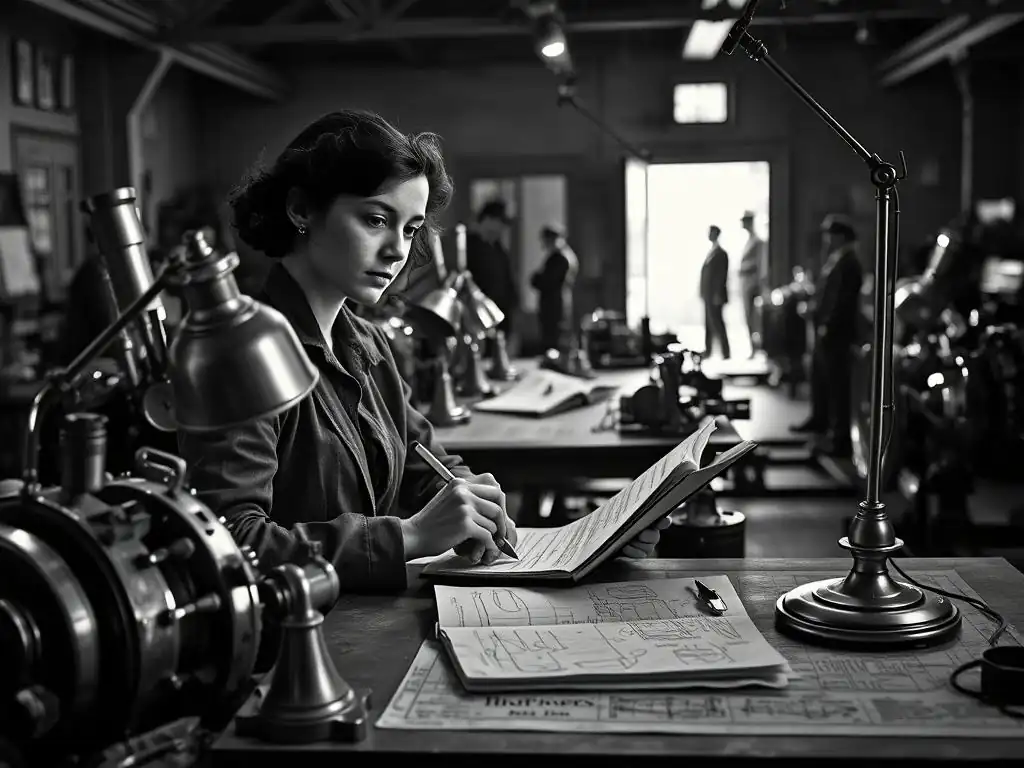
Balancing Family and Career in the Early 20th Century
Lillian Gilbreth faced the extraordinary challenge of balancing a burgeoning professional career with the demands of raising 12 children, a feat almost unimaginable in the early 20th century. Born between 1903 and 1922, her children famously became the subjects of the book and film "Cheaper by the Dozen," which highlighted the Gilbreths' unique household.
While Frank was alive, they often integrated their children into their work, using their home as a living laboratory for efficiency studies, from optimizing bath times to streamlining household chores. This blurred the lines between family and work in a way that was both innovative and intensely demanding.
Following Frank's sudden death in 1924, Lillian, then 46, was left to raise 11 dependent children (one had died earlier) and manage their consulting business alone. This period presented immense personal and professional strain. Despite the societal expectation for widows to retreat into domesticity, she not only persevered but thrived, continuing their work, delivering lectures, and consulting for major corporations. Her ability to navigate these dual roles with such grace and success makes her an unparalleled example in any female engineer historical biography.
Collaboration with Frank Gilbreth: A Unique Partnership
Lillian Gilbreth's professional journey was deeply intertwined with that of her husband, Frank Gilbreth, forming one of the most influential partnerships in the history of industrial engineering. While Frank was the initial pioneer of motion study, Lillian brought the critical psychological and humanistic dimension to their work. Their collaboration was truly symbiotic: Frank focused on the physical movements and mechanical aspects, while Lillian ensured that the human element—fatigue, motivation, and well-being—was central to their efficiency principles. They co-founded Gilbreth, Inc., and together developed comprehensive methodologies that integrated time and motion studies with psychological insights.
After Frank's untimely death in 1924, Lillian faced the daunting task of continuing their joint legacy. Many in the male-dominated field expected her to withdraw, but she proved her intellectual and professional independence. She continued their consulting contracts, often giving lectures that Frank had been scheduled to deliver, and adapted their methods to new industries. Her ability to not only sustain but expand their work demonstrated her own formidable intellect and leadership, solidifying her individual standing as a pivotal figure in this female engineer historical biography.
Breaking Barriers: Lillian Gilbreth's Achievements as a Female Engineer
Lillian Gilbreth consistently broke through the formidable barriers faced by women in science and engineering during her era. Despite her intellectual prowess and groundbreaking work, she often encountered skepticism and outright prejudice from male colleagues. Her doctoral dissertation was initially rejected by some universities, a clear indication of the academic resistance to women in fields perceived as male domains.
However, her persistence paid off when she earned her PhD from Brown University in 1915. Later, in 1926, she became the first woman admitted to the American Society of Mechanical Engineers (ASME), a significant milestone that began to dismantle professional barriers.
Her most profound achievement in breaking barriers came in 1965, when she was elected the first woman member of the National Academy of Engineering (NAE). This prestigious recognition, bestowed when she was 87 years old, was a testament to her lifelong contributions and undeniable influence on the field.
Throughout her career, she lectured globally, consulted for major corporations like Macy's and General Electric, and advised U.S. presidents on issues ranging from war production to disability rehabilitation. Her relentless pursuit of excellence and her consistent demonstration of intellectual leadership paved the way for future generations of women in engineering, marking her as an iconic figure in any female engineer historical biography.
Recognition and Awards: Celebrating Lillian Gilbreth's Contributions to Engineering History
Honors and Accolades Received by Lillian Gilbreth
Lillian Gilbreth's unparalleled contributions to engineering and management earned her widespread recognition and numerous accolades throughout her remarkable career. She was the recipient of 23 honorary degrees from prestigious institutions across the United States, including Rutgers University, the University of Michigan, and the University of California, Berkeley. These degrees acknowledged her innovative thinking and her profound impact on both academia and industry. Beyond academic honors, she was the first woman to be admitted to the American Society of Mechanical Engineers (ASME) in 1926, a groundbreaking step that opened doors for other female engineers.
Her influence was further recognized by various professional organizations. In 1993, the Society of Women Engineers (SWE) established the Lillian Gilbreth Lectureship, an annual event that honors her legacy by showcasing the achievements of prominent female engineers and inspiring new generations. These numerous honors underscore her lasting significance and firmly establish her as a pivotal figure in any comprehensive female engineer historical biography.
Hoover Medal: Significance and Impact
One of the most distinguished honors bestowed upon Lillian Gilbreth was the Hoover Medal, which she received in 1966. This prestigious award, named after President Herbert Hoover, is presented by a joint committee of several major engineering societies for "distinguished public service by an engineer." Lillian Gilbreth was the first woman to receive this esteemed recognition, a testament to her exceptional contributions not only to the technical aspects of engineering but also to its broader societal impact.
The Hoover Medal underscored her dedication to using engineering principles for the betterment of humanity. Her work on improving kitchen design, aiding individuals with disabilities, and fostering better working conditions demonstrated a profound commitment to public welfare. Receiving this medal solidified her status as not just a brilliant engineer but also a humanitarian, highlighting how her work transcended traditional industrial applications to positively influence daily life and community well-being. This significant award cemented her place as an enduring symbol of excellence in any female engineer historical biography.
Lillian Gilbreth's Lasting Impact on Women in Engineering
Inspiring Future Generations of Female Engineers and Managers
Lillian Gilbreth's life story serves as a profound source of inspiration for future generations of female engineers and managers. Her ability to navigate the complex demands of raising 12 children while simultaneously building a groundbreaking career in a male-dominated field demonstrated an extraordinary level of dedication and resilience. Her visibility as a successful professional, lecturing globally and consulting for major corporations, provided a tangible role model for women who aspired to careers beyond traditional domestic roles.
Her work in ergonomics and human factors, which emphasized the importance of designing systems and products with the user in mind, paved the way for more human-centered approaches in engineering. This focus on user experience and well-being continues to be a growing field that naturally attracts and benefits from diverse perspectives, including those brought by female engineers. Her legacy encourages women to pursue innovative paths and to integrate empathy and human understanding into technical solutions, enriching the scope of what it means to be an engineer.
Lillian Gilbreth's Role as a Role Model for Women in STEM and Business
Lillian Gilbreth's influence extends far beyond the confines of industrial engineering, positioning her as a multifaceted role model for women across STEM fields and business. She consistently advocated for women's inclusion in various professional capacities, from factory floors to executive boards, emphasizing their unique contributions to efficiency and innovation. She famously stated, "The one thing that has been wrong in all of the history of the world is that we have done things by halves. We have thought of half the human race as human, and the other half as just the other half."
Her pioneering work in applying psychology to management and her practical solutions for domestic and industrial efficiency demonstrated that intellectual rigor and practical application were not exclusive to any gender. By successfully blending her roles as a mother, scholar, and businesswoman, she shattered prevailing stereotypes and proved that women could excel in multiple spheres. Her life story remains a compelling narrative in any female engineer historical biography, showcasing how perseverance and intellectual brilliance can lead to transformative impact.
The Gilbreth Legacy: Continuing the Work in Ergonomics and Management
The enduring legacy of Lillian Gilbreth is most evident in the continued relevance of her foundational work in ergonomics, human factors engineering, and modern management principles. Her emphasis on understanding the worker's physical and psychological needs, rather than merely treating them as components of a machine, laid the groundwork for contemporary fields focused on workplace well-being, user-centered design, and organizational psychology. Today's efforts to create safer, more efficient, and more satisfying work environments directly trace their roots back to Gilbreth's pioneering insights.
Her principles are still taught in business schools and engineering programs worldwide. Concepts like task analysis, fatigue management, and the optimization of human-machine interfaces—all central to modern industrial design and engineering—were significantly shaped by her contributions. Industries continue to apply her ideas to improve productivity, reduce injuries, and enhance employee morale. The pervasive influence of her ideas ensures that her female engineer historical biography is not just a tale of the past but a living, breathing testament to the power of innovative and human-centered engineering.
Conclusion: The Enduring Legacy of a Historical Female Engineer
Remembering Lillian Gilbreth's Pioneering Spirit and Engineering Achievements
Lillian Gilbreth's life stands as a powerful testament to pioneering spirit, intellectual brilliance, and unwavering determination. As a groundbreaking female engineer, she fearlessly blended the seemingly disparate fields of psychology and engineering, creating an entirely new paradigm for industrial efficiency and human-centered design. Her achievements, from optimizing factory workflows and kitchen layouts to advocating for individuals with disabilities, demonstrate a profound commitment to improving everyday life through scientific principles. She not only conceptualized revolutionary ideas but also implemented them with practical ingenuity, leaving a tangible legacy of innovation.
Her courage in navigating a male-dominated professional landscape while simultaneously raising a large family highlights a resilience that continues to inspire. Lillian Gilbreth's contributions to time and motion studies, ergonomics, and management psychology fundamentally reshaped how industries operate, ensuring that human well-being remained central to the pursuit of efficiency. Her story is a beacon for all who seek to make a difference through intellect and perseverance.
Lillian Gilbreth's Place in Women in Science and Management History
Lillian Gilbreth holds an undeniable and prominent place in the history of women in science, engineering, and management. She was not merely a participant but a true trailblazer, breaking down barriers and forging new paths where none existed for women. Her election as the first woman to the National Academy of Engineering and her receipt of the Hoover Medal underscore her profound professional impact and the eventual recognition of her genius. She challenged societal norms by demonstrating that a woman could be both a devoted mother and a world-renowned engineer and scholar.
Her female engineer historical biography is a powerful narrative of intellectual independence and transformative leadership. Lillian Gilbreth's legacy continues to resonate, inspiring countless women to pursue careers in STEM and business, reminding us that diverse perspectives are essential for true innovation and progress. Her life's work ensures that the narrative of scientific and industrial advancement is incomplete without acknowledging the invaluable contributions of pioneering women like her.
Frequently Asked Questions
How does WomenInScienceHistory.com showcase female engineer historical biographies?
The website focuses on providing detailed biographies of pioneering women in engineering, highlighting their groundbreaking work and the obstacles they overcame in their careers. This information aims to elevate their historical importance.
What kind of challenges did female engineers typically face historically?
Many women faced gender bias and limited opportunities in male-dominated fields. They often had to prove their capabilities to be taken seriously and recognized for their work.
Why is it important to highlight the stories of female engineers from the past?
It's crucial to recognize their contributions, inspire future generations, and correct the historical underrepresentation of women in science and engineering. This ensures a more complete and accurate understanding of scientific progress.
What types of information can I expect to find in a female engineer historical biography on WomenInScienceHistory.com?
You'll find details about their early life, educational background, key engineering achievements, and the impact their work had on their specific field and the wider world.
How does WomenInScienceHistory.com aim to inspire future generations through its profiles of female engineers?
By showcasing the resilience, intelligence, and innovative spirit of these women, the website hopes to encourage young girls and women to pursue careers in STEM fields, particularly engineering.
Okay, here's a final reflection tailored for your article "Profiles in Courage: The Life of [Engineer's Name], Engineering Pioneer," designed to resonate with readers and encourage further thought, while also keeping the "Female engineer historical biography" keyword in mind:
Final Reflection: Inspiring Future Engineers
The story of [Engineer's Name] is more than just a historical account; it's a powerful testament to the enduring impact of courage and perseverance in the face of adversity. Her contributions to engineering, detailed throughout this biography, continue to resonate today, inspiring a new generation to break barriers and redefine what's possible, particularly for women in STEM fields.
[Engineer's Name]'s journey profoundly shaped the landscape of engineering, paving the way for countless others to follow in her footsteps. Her unwavering dedication serves as a constant reminder that progress is often born from the struggles of those who dare to challenge the status quo. As she herself once said, The most courageous act is still to think for yourself. Aloud.
This quote encapsulates the spirit of innovation and the importance of individual conviction, qualities that are essential for any aspiring engineer, regardless of gender.
Now, as you reflect on the life and legacy of [Engineer's Name], consider how her story can ignite your own passion and drive. Let her courage inspire you to overcome obstacles, to challenge conventional thinking, and to contribute your unique talents to the world. Embrace the spirit of innovation, and remember that every step you take, no matter how small, can contribute to a brighter future for all.
Embrace Innovation: Ignite Your Inner Pioneer!
Thank you for exploring the inspiring story of a trailblazing engineer. We hope her journey has ignited your passion for innovation and groundbreaking achievements. Now, it's your turn to take action!
- Identify a community problem and brainstorm three engineering solutions to solve it.
- Share this article with fellow aspiring engineers to inspire others and spread the message of innovation.
- Explore WomenInScienceHistory.com to discover the untold stories of other remarkable female innovators.
What is one small step you can take today to embody courage and make a positive impact in the world?