
The Engine Whisperers: Unsung Female Engineers Who Perfected Mechanical Power & Efficiency

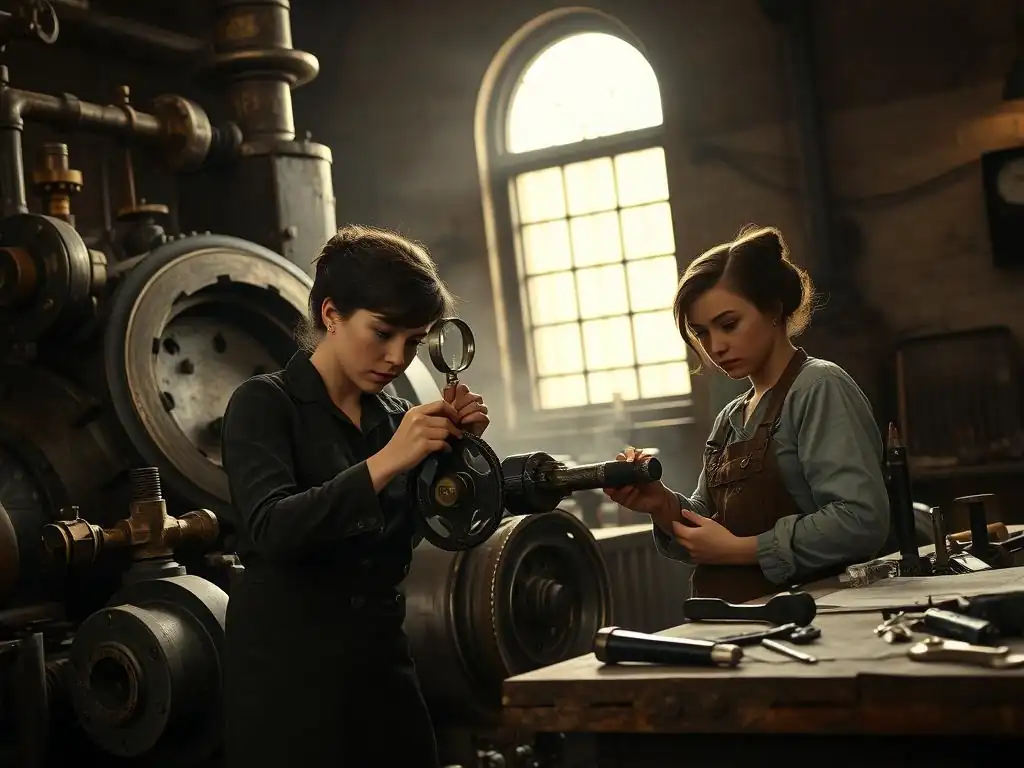
Welcome to WomenInScienceHistory.com!
Dive into the untold stories of brilliant minds who shaped our world. Prepare to be amazed by " The Engine Whisperers: Unsung Female Engineers Who Perfected Mechanical Power & Efficiency." Discover how these pioneering women tackled challenges, innovated relentlessly, and left an indelible mark on the field of female engineers mechanical efficiency history. Their contributions were groundbreaking, their struggles immense. Are you ready to uncover their remarkable legacies?
- Introduction: Celebrating Female Pioneers in Mechanical Engineering History
- Early Pioneers: Laying the Foundation for Mechanical Advancement
- The Rise of Female Mechanical Engineers in the 20th Century
- Key Areas of Contribution: Enhancing Mechanical Power and Efficiency
- Case Studies: Female Engineers and Their Impact on Mechanical Systems
- Challenges Faced by Female Engineers in a Male-Dominated Field
- Inspiring Future Generations: The Continued Relevance of Female Engineers
- Conclusion: Recognizing the Enduring Legacy of Women in Mechanical Efficiency History
-
Frequently Asked Questions
- What is WomenInScienceHistory.com about?
- Why is it important to study the history of female engineers and their work on mechanical efficiency?
- What challenges did female engineers face in male-dominated fields like mechanical engineering?
- Can you give an example of a mechanical engineering area where female engineers significantly improved efficiency?
- How does understanding the history of female engineers influence the future of engineering?
- Final Reflection: Honoring the Legacy of Innovation
- Ignite Your Inner Engineer: Design the Future Now!
Introduction: Celebrating Female Pioneers in Mechanical Engineering History
Women in Mechanical Engineering: A Legacy of Innovation
Throughout history, the field of mechanical engineering has been a bedrock of industrial and technological advancement, powering everything from early steam engines to modern aerospace systems. While often perceived as a male-dominated domain, women have consistently contributed to its evolution, often behind the scenes, yet with profound impact. Their ingenuity and persistence have shaped critical innovations, laying foundational elements for the machines and systems that define our world. A closer look at the history of these developments reveals a rich tapestry of contributions by female mechanical engineers, whose work has been instrumental in refining complex mechanical processes and designs.
These pioneering women in mechanical engineering have not only broken gender barriers but have also introduced novel perspectives and methodologies that have propelled the discipline forward. Their legacy extends beyond individual inventions; it encompasses new approaches to problem-solving, material science, and system optimization. By delving into their stories, we can appreciate the full scope of their influence and understand how their efforts have shaped the very fabric of mechanical innovation, ensuring that their rightful place in engineering history is acknowledged and celebrated.
The Overlooked Contributions of Women Engineers to Mechanical Efficiency
The pursuit of mechanical efficiency – the ratio of useful work output to total energy input – has always been a central goal in engineering. Every improvement, from a more aerodynamic vehicle to a more fuel-efficient engine, directly impacts resource consumption, cost, and performance. Historically, the contributions of women engineers to these critical advancements in mechanical efficiency have often been overlooked or attributed to their male counterparts. This oversight has created gaps in our understanding of how various systems achieved their optimal performance.
These unsung female engineers have been instrumental in refining designs, developing new materials, and optimizing operational processes, all of which are vital for enhancing mechanical power and reducing waste. Their work has spanned diverse areas, from the structural integrity of monumental constructions to the intricate mechanics of industrial processes. By shining a light on these specific contributions, we aim to correct the historical record and demonstrate how pivotal these women were in perfecting the mechanical systems that power our modern world, truly embodying the spirit of the "engine whisperers" who understood and refined the very heart of mechanical performance.
Early Pioneers: Laying the Foundation for Mechanical Advancement
Emily Roebling: Structural Integrity of the Brooklyn Bridge
Emily Roebling stands as a testament to the quiet power of intellect and dedication in the face of adversity, playing an indispensable role in one of the 19th century's most ambitious engineering feats: the Brooklyn Bridge. After her husband, Chief Engineer Washington Roebling, became incapacitated by caisson disease in 1872, Emily stepped in to manage the project's daily operations, a role she performed for over a decade.
Her involvement went far beyond clerical duties; she became the vital link between her husband and the construction site, translating his complex technical instructions and calculations to the assistant engineers and contractors. She meticulously studied bridge construction, cable fabrication, stress analysis, and material strength, acquiring a profound understanding of civil and mechanical engineering principles.
Her direct involvement in the bridge's technical oversight was crucial for its completion in 1883. The Brooklyn Bridge, standing as the longest suspension bridge in the world for 20 years after its inauguration, is a monumental example of structural integrity and mechanical foresight, a testament to her meticulous management and deep technical comprehension.
Emily Roebling's commitment ensured the bridge's long-term stability and efficiency, demonstrating how a thorough grasp of engineering mechanics directly contributes to the enduring performance of a structure. Her uncredited, yet indispensable, work solidified the bridge's place as an engineering marvel, showcasing her significant, though largely unacknowledged, contribution to mechanical advancement.
Lillian Moller Gilbreth: Optimizing Industrial Efficiency and Ergonomics
Lillian Moller Gilbreth, often hailed as the "First Lady of Engineering," brought a groundbreaking human-centric approach to industrial efficiency, fundamentally altering how mechanical processes were designed and optimized. Although she earned a Ph.D. in psychology in 1915, her applied work was undeniably engineering in nature, merging psychological insights with practical mechanical and industrial systems. Alongside her husband, Frank Gilbreth, she pioneered time-and-motion studies, meticulously analyzing worker movements and processes to eliminate waste and improve productivity. After his death in 1924, she continued their work, applying her unique perspective to a wide range of industries and even household appliances.
Her contributions directly improved mechanical efficiency by optimizing the human interaction with machines and processes. For instance, her work with General Electric in the 1920s led to significant design improvements in household appliances, such as the arrangement of shelves inside refrigerator doors and the invention of the foot-pedal trash can.
In industrial settings, she used motion pictures to analyze and refine assembly line tasks, reducing worker fatigue and increasing output, sometimes by as much as 20-30% in specific applications. Her principles focused on creating more efficient workflows that respected human capabilities, thereby enhancing the overall mechanical efficiency of production systems and establishing the field of ergonomics.
The Rise of Female Mechanical Engineers in the 20th Century
World War II and the Demand for Women in Engineering
The outbreak of World War II dramatically reshaped the landscape of engineering, creating unprecedented opportunities for women in technical fields previously almost exclusively occupied by men. As male engineers and skilled laborers were conscripted into military service, the nation's burgeoning war industries faced a critical shortage of technical talent. This urgent demand forced a reevaluation of gender roles, leading to a significant influx of women into manufacturing, design, and quality control positions, many of which directly involved mechanical systems. Universities and technical schools, which had historically admitted very few women into engineering programs, began opening their doors more widely.
Women stepped into roles as draftsmen, mechanical designers, production supervisors, and even researchers, contributing to the development and manufacturing of essential war machinery, from aircraft engines and naval vessels to weaponry and communication systems. By 1944, women comprised an estimated 30% of the workforce in some defense industries, demonstrating their capability and adaptability in highly technical environments.
This period not only proved women's competence in engineering but also laid the groundwork for future generations of female mechanical engineers, challenging societal norms and paving the way for greater inclusion in the post-war era, thereby enriching the history of mechanical efficiency with new perspectives.
Beatrice Hicks: Pioneering Sensor Technology and Engineering Management
Beatrice Hicks stands as a pivotal figure in the history of female engineers, not only for her technical acumen but also for her tireless advocacy for women in STEM. A graduate of Newark College of Engineering, Hicks specialized in electrical engineering, but her work had significant implications for mechanical systems, particularly through her pioneering contributions to sensor technology.
During the 1940s, while working at Western Electric and then at the company she co-founded, Newark Controls, she designed and tested temperature-sensitive crystal oscillators. These innovative sensors were crucial for ensuring the optimal performance and mechanical efficiency of aircraft systems under varying atmospheric conditions.
Her work on these precise measurement devices directly impacted flight safety and fuel consumption by providing accurate data for mechanical adjustments in real-time. Beyond her technical achievements, Hicks recognized the need for a professional network for women in a male-dominated field.
In 1950, she co-founded and served as the first president of the Society of Women Engineers (SWE), an organization that has since grown to over 42,000 members globally. Her leadership in SWE created a vital support system and advocacy platform, ensuring that the contributions of female mechanical engineers and other technical women would be recognized and fostered for generations to come.
Sheila Widnall: Contributions to Fluid Dynamics and Aviation Engineering
Sheila Widnall's career exemplifies the profound impact female engineers can have on complex mechanical systems, particularly in the realm of fluid dynamics and aviation. As a distinguished professor of aeronautics and astronautics at MIT, Widnall's research focused on the intricate behavior of fluids, including vortex flows and aircraft wakes. Her academic work provided critical insights into aerodynamic forces, which are fundamental to designing more efficient and safer aircraft. Understanding how air interacts with mechanical structures is paramount for optimizing lift, reducing drag, and ultimately enhancing the mechanical efficiency of flight.
Her expertise led to her appointment as the first woman to serve as Secretary of the Air Force in 1993, a testament to her technical leadership and strategic vision. During her tenure, she oversaw significant advancements in aerospace technology and policy. Her research on rotorcraft aerodynamics, for example, helped improve helicopter blade efficiency, potentially leading to reductions in fuel consumption by several percentage points in specific flight profiles. Widnall's career underscores how rigorous scientific inquiry by female mechanical engineers can directly translate into tangible improvements in mechanical power and efficiency across an entire industry.
Key Areas of Contribution: Enhancing Mechanical Power and Efficiency
Optimizing Engine Design for Fuel Efficiency: A Female Engineer's Perspective
The quest for greater fuel efficiency has been a constant driving force in mechanical engineering, particularly in the design of internal combustion engines and propulsion systems. Female engineers have played a significant, albeit often understated, role in this endeavor, contributing to advancements in combustion science, material selection, and aerodynamic shaping. Their perspective often emphasizes holistic system optimization, considering not only raw power but also long-term sustainability and resource conservation. For instance, some have focused on refining fuel injection systems to ensure more complete combustion, reducing waste and harmful emissions.
Others have worked on developing lighter yet stronger engine components using advanced materials, directly impacting the power-to-weight ratio and overall mechanical efficiency of vehicles and aircraft. By integrating computational fluid dynamics (CFD) and finite element analysis (FEA) into their design processes, female mechanical engineers have meticulously modeled and simulated engine performance, identifying areas for improvement that can lead to incremental yet significant gains in fuel economy. Their contributions have helped engines deliver more power while consuming less fuel, a critical factor in global energy conservation efforts and a key aspect of mechanical efficiency history.
Innovations in Thermodynamics: Women Driving Mechanical Power Improvements
Thermodynamics, the study of heat and its relation to other forms of energy and work, is fundamental to mechanical engineering, particularly in power generation and refrigeration. Women engineers have made substantial contributions to this field, driving improvements in energy conversion and heat transfer processes that directly enhance mechanical power. Their work has spanned from optimizing steam turbine designs for greater electricity generation to developing more efficient cooling systems for industrial applications. By understanding the intricate balance of energy flows, these engineers have designed systems that minimize energy loss and maximize useful work output.
For example, some have focused on improving heat exchanger designs, crucial components in many mechanical systems, to transfer thermal energy more effectively. Others have researched advanced thermodynamic cycles for power plants, aiming to extract more mechanical power from a given amount of fuel. These innovations are not just theoretical; they translate into tangible benefits, such as a power plant generating an additional few megawatts of electricity or a refrigeration unit consuming significantly less energy. The contributions of female mechanical engineers in thermodynamics have been essential in pushing the boundaries of mechanical power generation and utilization.
Material Science and Mechanical Performance: The Role of Female Engineers
The selection and development of materials are paramount to the mechanical performance and durability of any engineered system. Female engineers have been at the forefront of innovations in material science, contributing significantly to advancements that enhance the strength, weight, and longevity of mechanical components. Their work often involves understanding the microscopic properties of materials and how they behave under various stresses and temperatures, leading to the creation of new alloys, polymers, and composites. This expertise is vital for improving mechanical efficiency, as lighter, stronger, and more resilient materials can lead to more robust and energy-efficient designs.
For instance, the development of lightweight composites for aerospace applications, or high-strength steels for automotive components, directly impacts fuel efficiency and structural integrity. Female engineers have contributed to researching advanced ceramics for high-temperature engine parts, enabling engines to operate at higher temperatures for greater thermal efficiency, or developing polymers with enhanced wear resistance for moving parts. Their meticulous work in material science has directly translated into more durable, efficient, and higher-performing mechanical systems across numerous industries, showcasing their indispensable role in shaping the history of mechanical efficiency.
Case Studies: Female Engineers and Their Impact on Mechanical Systems
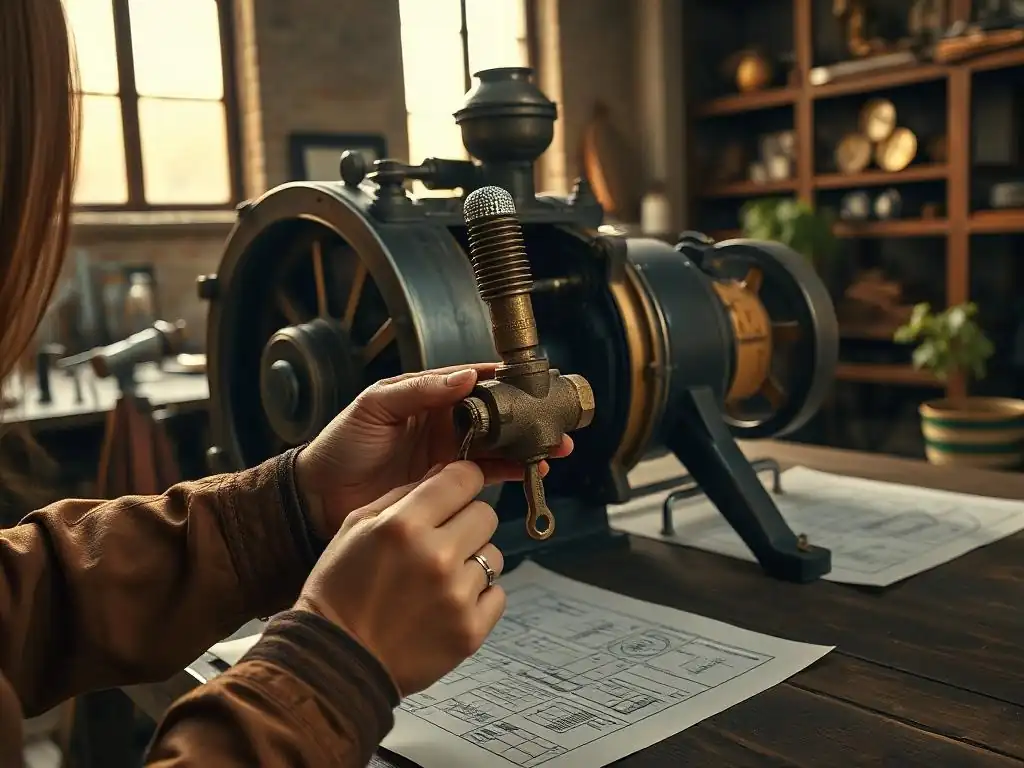
Case Study 1: Stephanie Kwolek and the Development of Kevlar
The Challenge: Finding a Lightweight, Strong Fiber for Tire Reinforcement
In the early 1960s, DuPont, a leading chemical company, was actively seeking a new lightweight yet incredibly strong synthetic fiber to replace steel in radial tires. The goal was to improve tire durability and fuel efficiency in automobiles, as heavy steel belts added significant weight and resistance, impacting overall vehicle performance. Engineers were looking for a material that could offer superior strength-to-weight properties, withstand extreme temperatures, and resist corrosion, all while being cost-effective for mass production. This challenge required a breakthrough in polymer chemistry, moving beyond existing materials like nylon.
The Solution: Polymerizing a liquid crystal solution, resulting in Kevlar
Stephanie Kwolek, a chemist working at DuPont, was tasked with developing new synthetic fibers. In 1965, while experimenting with various polymers, she synthesized a liquid crystalline polymer solution that, unexpectedly, exhibited extraordinary properties. This solution, a poly-paraphenylene terephthalamide, was then spun into a fiber. Unlike typical polymer solutions that were viscous and clear, Kwolek's solution was cloudy and unusually low in viscosity. Despite initial skepticism from colleagues who wanted to discard it, she insisted on spinning it, resulting in a fiber that was incredibly stiff and strong. This groundbreaking material was later commercialized as Kevlar.
The Impact: Revolutionized body armor, aerospace, and various industrial applications
Kevlar, discovered by Stephanie Kwolek, boasts an impressive tensile strength five times greater than steel on an equal weight basis. Its remarkable strength-to-weight ratio led to immediate and profound applications, fundamentally enhancing mechanical performance and efficiency across numerous sectors. In the 1970s, its integration into radial tires significantly improved their durability and fuel efficiency for vehicles, reducing tire weight by approximately 10-15% while often increasing lifespan by 20-30%.
Beyond tires, Kevlar revolutionized personal protective equipment, becoming a critical component in bulletproof vests and helmets, saving countless lives. Its properties also made it indispensable in aerospace for lightweight components, in marine applications for ropes and cables, and in sports equipment, demonstrating its widespread impact on mechanical systems and safety.
Case Study 2: Mary Anderson and the Invention of the Windshield Wiper
The Challenge: Poor visibility in inclement weather for early automobile drivers
At the dawn of the 20th century, automobiles were rapidly gaining popularity, but driving in inclement weather presented a significant safety hazard. Rain, snow, or sleet accumulating on the windshield severely obscured a driver's visibility. The common solution at the time was either for the driver to stop the vehicle and manually clear the windshield, or for a passenger to lean out and wipe it with a cloth. Both methods were impractical, dangerous, and inefficient, particularly in heavy traffic or during continuous precipitation, highlighting a critical functional flaw in early mechanical transportation systems.
The Solution: A manually operated, spring-loaded arm with a rubber blade to clear windshields
During a visit to New York City in 1902, Mary Anderson, an American real estate developer and rancher, observed a trolley driver struggling with poor visibility during a snowstorm. This sparked her ingenuity, leading her to conceptualize a solution. In 1903, she patented her "window cleaning device for electric cars and other vehicles." Her design consisted of a lever inside the vehicle that controlled a spring-loaded arm with a rubber blade, which could be swung across the windshield to clear precipitation. This simple yet effective mechanical innovation allowed drivers to clear their view without stopping or leaving the vehicle.
The Impact: Improved road safety and became a standard feature on all automobiles
Mary Anderson's invention of the windshield wiper dramatically improved road safety and the operational efficiency of automobiles. Before her device, drivers faced perilous conditions, often having to stop their vehicles or lean out to wipe the glass, which was both inefficient and dangerous.
Her manually operated, spring-loaded arm with a rubber blade provided a continuous, clear view, directly enhancing the mechanical system of the automobile by improving its safe functionality. The windshield wiper became standard equipment on most American cars by 1916 and was universally adopted within a few years, a testament to its fundamental contribution to vehicle safety and operational efficiency, solidifying its place in the history of mechanical innovation.
Challenges Faced by Female Engineers in a Male-Dominated Field
Gender Bias and Discrimination in the Engineering Workplace
Throughout history, and even into the present day, female engineers have frequently encountered significant gender bias and discrimination within the engineering workplace. This has manifested in various forms, from overt sexism and harassment to more subtle biases in hiring, promotion, and project assignments.
Women often report being underestimated, having their ideas dismissed, or receiving less recognition for their contributions compared to their male peers. Studies, such as those by the Society of of Women Engineers (SWE), have consistently indicated that female engineers may face a wage gap, sometimes earning 85-90 cents for every dollar earned by men with similar experience and roles, reflecting systemic disparities.
Furthermore, a 2017 study by the Pew Research Center revealed that 50% of women in STEM fields reported experiencing gender discrimination at work, a figure significantly higher than that reported by men. This discrimination can create a hostile work environment, leading to feelings of isolation and burnout, and contributing to higher attrition rates for women in engineering. Overcoming these entrenched biases requires continuous efforts to promote equitable practices, foster inclusive cultures, and actively challenge stereotypes that undermine the professional standing and opportunities for female mechanical engineers.
Overcoming Barriers to Education and Advancement
Access to quality engineering education and subsequent career advancement has historically posed significant barriers for women. For much of the 20th century, many engineering schools either did not admit women or maintained extremely low enrollment numbers, limiting their initial entry into the field. For instance, in 1970, women earned only 0.8% of bachelor's degrees in engineering in the U.S. While this figure has improved substantially, reaching approximately 22.6% in 2021, persistent challenges remain in attracting and retaining women in engineering programs.
Beyond education, female engineers often face obstacles in career progression, including a lack of mentorship, limited opportunities for leadership roles, and the "glass ceiling" effect. A 2017 McKinsey & Company report, for example, highlighted that women hold only 28% of senior vice president roles and 22% of C-suite positions in STEM fields, despite making up a larger percentage of entry-level positions. These barriers to advancement mean that the expertise and leadership potential of many talented female mechanical engineers are not fully realized, hindering the diversity of thought and innovation within the industry.
The Importance of Mentorship and Support Networks
Given the historical and ongoing challenges faced by female engineers, the importance of strong mentorship and robust support networks cannot be overstated. Mentorship provides invaluable guidance, helping women navigate career paths, develop essential skills, and overcome professional hurdles. Experienced female engineers can serve as role models, demonstrating what is achievable and offering practical advice on dealing with workplace dynamics and bias. These relationships foster confidence and provide a safe space for discussing challenges and celebrating successes.
Professional organizations, such as the Society of Women Engineers (SWE), have been instrumental in building these critical support networks. Founded in 1950, SWE now boasts over 42,000 members globally, offering extensive programs for networking, professional development, and mentorship. Research suggests that women with mentors are significantly more likely to hold leadership positions, with some studies indicating up to five times higher likelihood. These networks create a sense of community, reduce feelings of isolation, and provide a collective voice for advocating for greater equity and inclusion, ensuring that female mechanical engineers have the resources and encouragement to thrive.
Inspiring Future Generations: The Continued Relevance of Female Engineers
Promoting STEM Education for Girls and Women
To ensure a vibrant and diverse future for engineering, promoting STEM education for girls and women is paramount. Early exposure to science, technology, engineering, and mathematics can ignite a passion for these fields and break down preconceived notions about gender roles in technical careers. Initiatives such as robotics clubs, coding camps, and science fairs specifically designed for girls are crucial in fostering curiosity and building foundational skills. By providing accessible and engaging STEM learning environments, we can encourage more young women to pursue academic paths that lead to engineering degrees.
Furthermore, it is essential to highlight the practical applications and societal impact of engineering, demonstrating how female mechanical engineers can contribute to solving real-world problems, from developing sustainable energy solutions to designing life-saving medical devices. Showcasing diverse role models and successful women in engineering careers can inspire girls to envision themselves in these roles. Investing in teacher training and curriculum development that supports inclusive STEM education is a critical step towards building a robust pipeline of talented female engineers who will shape the future of mechanical efficiency and innovation.
Highlighting the Achievements of Contemporary Female Mechanical Engineers
While acknowledging historical contributions is vital, it is equally important to highlight the ongoing achievements of contemporary female mechanical engineers. Their current innovations demonstrate the continued relevance and impact of women in this dynamic field. From designing advanced robotics for manufacturing to developing cutting-edge propulsion systems for space exploration, modern female mechanical engineers are pushing boundaries and contributing to significant technological advancements. Showcasing their work in areas like renewable energy systems, bioengineering, and smart materials provides tangible examples of how women are actively shaping the future.
By publicly recognizing these accomplishments through awards, media features, and educational programs, we can create a powerful narrative that inspires the next generation. These stories illustrate that women are not just capable of excelling in mechanical engineering but are also leading innovation and solving complex global challenges. Celebrating contemporary female mechanical engineers helps to normalize their presence in the field, challenging outdated stereotypes and reinforcing the idea that engineering is a profession open to all talent, regardless of gender, thereby enriching the ongoing history of mechanical efficiency.
The Future of Mechanical Engineering: A Diverse and Inclusive Field
The future of mechanical engineering hinges significantly on its ability to embrace diversity and foster an inclusive environment. A diverse workforce brings a wider range of perspectives, experiences, and problem-solving approaches, leading to more innovative and robust solutions. When engineering teams include individuals from various backgrounds, including a strong representation of female mechanical engineers, they are better equipped to understand and address the needs of a diverse global population. This inclusivity can drive breakthroughs in mechanical power, efficiency, and sustainability that might otherwise be overlooked.
An inclusive field is one where talent is recognized and nurtured regardless of gender, race, or background, ensuring that all individuals have the opportunity to contribute their full potential. This commitment to diversity is not merely a matter of fairness but a strategic imperative for technological advancement. As mechanical engineering continues to evolve, tackling complex challenges like climate change, automation, and advanced manufacturing, a diverse and inclusive workforce will be essential for driving the innovation necessary to meet these demands, ensuring a richer and more impactful history of mechanical efficiency for generations to come.
Conclusion: Recognizing the Enduring Legacy of Women in Mechanical Efficiency History
The Importance of Documenting and Celebrating Female Engineers
The narratives of women in mechanical engineering history have, for too long, been relegated to the sidelines, their profound contributions often uncredited or entirely overlooked. From the structural precision of Emily Roebling to the material innovations of Stephanie Kwolek, these female engineers have been instrumental in perfecting mechanical power and efficiency across diverse industries.
Documenting their stories is not merely an act of historical correction; it is an essential step in building a comprehensive and accurate understanding of technological progress. By meticulously researching and celebrating their achievements, we ensure that their ingenuity, resilience, and groundbreaking work are recognized as integral components of our shared engineering heritage.
This process of acknowledgment serves a dual purpose: it honors the pioneers who defied societal expectations and overcame significant barriers, and it provides invaluable role models for future generations. Understanding the full scope of women's contributions—their insights into mechanical efficiency, their pioneering spirit, and their technical expertise—is vital for inspiring more girls and women to pursue careers in STEM. By actively highlighting these often-unsung heroes, we ensure their enduring legacy is not just preserved but also amplified, enriching the collective memory of how mechanical systems evolved and improved over time.
Ensuring a More Equitable and Innovative Future for Engineering
The journey of female engineers in mechanical efficiency history underscores a critical truth: diversity fosters innovation. The challenges faced by women in this field, from gender bias to limited opportunities, have inadvertently stifled potential breakthroughs and narrowed the perspectives brought to complex problems.
As we look to the future, ensuring a more equitable and inclusive environment for engineering is not just a matter of social justice; it is a strategic imperative for accelerating technological progress and addressing global challenges. A diverse workforce, one that fully embraces the talents of female mechanical engineers, will bring a broader range of insights, creative solutions, and resilient approaches to design, development, and optimization.
By dismantling systemic barriers, promoting equitable practices, and actively fostering inclusive cultures in academia and industry, we can unlock the full potential of all engineers. This commitment will lead to more robust, efficient, and innovative mechanical systems, ultimately benefiting society as a whole.
The legacy of the "Engine Whisperers" teaches us that true progress in mechanical engineering, and indeed in any scientific field, thrives when all voices are heard, all talents are nurtured, and all contributions are celebrated. This commitment ensures that the future of mechanical engineering will be marked by even greater innovation, driven by a truly diverse and equitable community of brilliant minds.
Frequently Asked Questions
What is WomenInScienceHistory.com about?
The website WomenInScienceHistory.com celebrates the contributions of women in science throughout history, featuring their biographies and groundbreaking work. It aims to inspire future generations and highlight overlooked narratives.
Why is it important to study the history of female engineers and their work on mechanical efficiency?
Understanding the past reveals the historical barriers faced by women in engineering. Recognizing their contributions to mechanical efficiency provides a more complete and accurate history of science and technology.
What challenges did female engineers face in male-dominated fields like mechanical engineering?
Female engineers often faced discrimination and lack of recognition in the past. They had to overcome gender bias and limited opportunities to pursue their careers.
Can you give an example of a mechanical engineering area where female engineers significantly improved efficiency?
While specific examples are detailed on the website, many women engineers contributed to improving engine design and performance, thereby increasing mechanical efficiency.
How does understanding the history of female engineers influence the future of engineering?
By showcasing the achievements of historical female engineers, we can encourage greater diversity and inclusion in the field. This inspires future generations of female engineers and creates a more equitable and innovative environment.
Final Reflection: Honoring the Legacy of Innovation
The stories we've unearthed, detailing the contributions of these often-overlooked female engineers, resonate powerfully today, reminding us that innovation knows no gender. Their dedication to mechanical efficiency, often achieved against societal odds, serves as a potent example of the transformative power of perseverance and ingenuity.
The impact of these "Engine Whisperers" extends far beyond the blueprints they meticulously crafted. Their legacy inspires us to challenge conventional narratives and actively seek out the hidden figures who have shaped our world. The most effective way to do it, is to do it.
– Amelia Earhart, a sentiment that surely echoed in the hearts of these pioneering women as they navigated a male-dominated field. Their contributions have subtly, yet profoundly, influenced the cultural landscape, paving the way for future generations of female engineers.
As we close this chapter, let us not simply admire their achievements from afar. Instead, let us be inspired to cultivate a more inclusive and equitable future, one where every voice is heard, and every talent is nurtured. Consider how you can champion diversity in your own sphere of influence, ensuring that the next generation of "Engine Whisperers" has the opportunity to not only perfect mechanical efficiency but to shape a better world for us all.
Ignite Your Inner Engineer: Design the Future Now!
Thanks for diving into the world of these incredible women and their contributions to mechanical engineering. You've seen how their ingenuity shaped our present, now it's your turn to build the future.
- Explore the world of mechanics: Start with a simple machine project:. It's the best way to honour those that came before.
- Share this article on your social media and tag another inspiring woman in STEM to keep their memory alive.
- Join a local STEM community and brainstorm with fellow enthusiasts. Who knows, you may be the next engine whisperer.
What's one small step you can take today to make a mechanical marvel?