
The Sky is Not the Limit: Pioneering Women in 21st Century Aviation Technology

Welcome to WomenInScienceHistory.com!
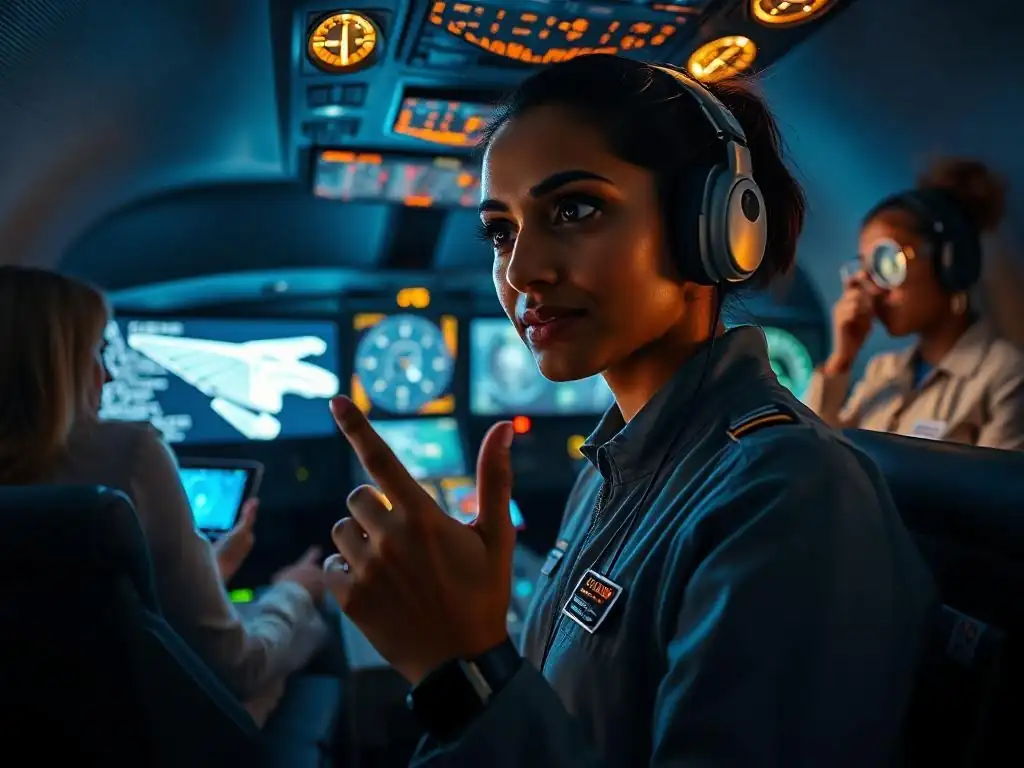
Discover how the sky is truly not the limit as we delve into the inspiring careers of Women Aviation Technology Pioneers. These groundbreaking women are not just breaking barriers; they're reshaping the future of flight. Prepare to be amazed by their innovative contributions and the challenges they've overcome in this fascinating field. Intrigued? Explore their stories and see how they're soaring to new heights!
- Introduction: Celebrating Women's Impact on Modern Aviation
- Breaking Barriers: Challenges Faced by Women in Aviation Technology
- Profiles of Leading Women in 21st Century Aviation Technology
- Key Innovations Driven by Women in Aviation Technology
- The Impact of Women on Sustainable Aviation Development
- Women in Aviation Leadership: Shaping Policy and Strategy
- Inspiring Future Generations: Pathways to Aviation Technology for Women
- The Future of Women in Aviation Technology: Trends and Opportunities
- Conclusion: Recognizing the Enduring Legacy
-
Frequently Asked Questions
- What are some of the key challenges faced by women pursuing careers in aviation technology in the 21st century?
- How does WomenInScienceHistory.com aim to promote the careers of women aviation technology pioneers?
- Can you name a few examples of women aviation technology pioneers whose work is featured on the WomenInScienceHistory.com website?
- What kind of impact have women aviation technology pioneers had on the field of aviation?
- How can young women interested in careers in aviation technology use WomenInScienceHistory.com for inspiration and guidance?
- Final Reflection: Soaring Beyond Expectations
- Soar Higher: Ignite Your Aviation Dreams!
Introduction: Celebrating Women's Impact on Modern Aviation
Highlighting Women's Contributions to 21st Century Aviation Technology
The 21st century has witnessed an extraordinary evolution in aviation technology, from advanced aerospace materials to sophisticated autonomous systems. Central to this transformation, though often understated, are the profound contributions of women. These pioneering individuals are not merely participants but are actively shaping the trajectory of modern flight, driving innovation in design, engineering, safety, and policy.
Their work ensures that the aviation sector continues to push boundaries, making air travel safer, more efficient, and increasingly sustainable. The impact of these women aviation technology pioneers careers extends across the entire industry, influencing everything from the cockpit to air traffic control towers and research labs.
These female trailblazers are making indelible marks in a global aviation industry valued at over $800 billion annually. Their expertise spans critical areas such as propulsion systems, avionics, cybersecurity for aircraft, and advanced manufacturing techniques. By bringing diverse perspectives and problem-solving approaches, women in aviation technology are instrumental in developing solutions to complex challenges, including reducing carbon emissions, enhancing passenger experience, and navigating increasingly crowded skies. Their leadership and technical prowess are vital in maintaining the competitive edge and ethical development of future aerospace endeavors.
Women in STEM: Shaping the Future of Flight
The broader landscape of Science, Technology, Engineering, and Mathematics (STEM) serves as the fertile ground from which aviation technology draws its talent. While women's representation in STEM fields, particularly engineering, has historically lagged, the 21st century has seen a gradual but significant increase. Today, women comprise approximately 28% of the STEM workforce, though their presence in aerospace engineering specifically remains lower, often around 15-20%. This growing pool of female talent is directly translating into breakthroughs in flight, as more women pursue and excel in specialized fields crucial to aviation.
The increasing participation of women in STEM is fundamentally altering the innovation pipeline for aviation. Their involvement introduces diverse perspectives that are essential for addressing complex, multi-faceted engineering challenges. From developing AI algorithms for predictive maintenance to designing ergonomic cockpits, women are at the forefront of creating the next generation of aircraft and air management systems. Their contributions are not just about technical skill; they also encompass leadership in project management, ethical considerations in autonomous flight, and strategic vision for the future of aerospace, truly shaping the future of flight.
Breaking Barriers: Challenges Faced by Women in Aviation Technology
Overcoming Gender Bias in STEM Fields
Despite the undeniable progress, women pursuing careers in aviation technology continue to face significant gender biases within STEM fields. These biases can manifest in various forms, from unconscious prejudices in hiring and promotion processes to a lack of visible female role models and persistent stereotypes about women's capabilities in technical roles. A common challenge is the "leaky pipeline," where women enter STEM fields at a reasonable rate but leave at higher rates than men, particularly in mid-career, due to factors like lack of support, work-life balance issues, and perceived limited opportunities for advancement.
Furthermore, salary disparities and unequal access to high-profile projects remain prevalent. Studies have indicated that women in aerospace engineering roles, for instance, may earn approximately 85-90% of their male counterparts for equivalent positions and experience. This financial disparity, coupled with often subtle but pervasive microaggressions and a culture that can sometimes feel unwelcoming, creates additional hurdles. Overcoming these systemic biases requires not only individual resilience from women but also concerted efforts from organizations to foster truly inclusive environments where meritocracy is paramount and diverse contributions are genuinely valued.
The Fight for Recognition: Historical Perspectives
The struggle for recognition for women in aviation technology is not a new phenomenon; it is a continuation of a historical battle. Throughout the 20th century, brilliant women like Katherine Johnson, Dorothy Vaughan, and Mary Jackson, whose mathematical prowess was critical to early space missions, often worked in the shadows, their contributions overlooked or attributed to male colleagues. While the 21st century offers greater visibility, the fight for full and equitable recognition persists. Modern women aviation technology pioneers careers still encounter situations where their innovations and leadership might be less celebrated or acknowledged compared to their male peers.
This ongoing challenge underscores the importance of actively highlighting and celebrating the achievements of contemporary women in aviation. Platforms dedicated to sharing these stories are vital in ensuring that future generations have visible role models and that the historical record accurately reflects the diverse minds behind technological advancements. By consciously amplifying the voices and accomplishments of women in this field, we can begin to dismantle the lingering effects of historical bias and ensure that their groundbreaking work receives the acknowledgment it truly deserves, inspiring countless others to follow in their footsteps.
Profiles of Leading Women in 21st Century Aviation Technology
Dr. Sheila Widnall - Pioneering Research in Fluid Dynamics
Dr. Sheila Widnall stands as a towering figure in aerospace engineering, renowned for her pioneering research in fluid dynamics. A distinguished professor of aeronautics and astronautics at MIT, Dr. Widnall's work has profoundly influenced aircraft design and performance. Her groundbreaking investigations into vortex flows, turbulence, and unsteady aerodynamics provided critical insights into how aircraft wings generate lift and how helicopters operate, leading to more efficient and stable flight. Beyond her academic contributions, she also served as the Secretary of the Air Force from 1993 to 1997, becoming the first woman to hold this cabinet-level position.
During her tenure as Secretary of the Air Force, Dr. Widnall oversaw a period of significant technological advancement and strategic realignment for the U.S. Air Force. She championed research and development initiatives that pushed the boundaries of aviation technology, ensuring the Air Force maintained its technological superiority. Her leadership in both academia and government exemplifies the diverse and impactful women aviation technology pioneers careers that have shaped the 21st-century aerospace landscape, bridging fundamental science with practical application and policy.
Marion Blakey - Advancing Aviation Safety and Policy
Marion Blakey has been a pivotal force in advancing aviation safety and policy globally. As the former Administrator of the Federal Aviation Administration (FAA) from 2002 to 2007, she led the world's largest aerospace safety organization during a critical post-9/11 period. Her leadership focused on modernizing the U.S. air traffic control system through the ambitious NextGen initiative, which aimed to transition from a ground-based radar system to a satellite-based system, significantly enhancing efficiency and safety. She also prioritized improving aviation security and integrating new technologies into the national airspace.
Following her impactful role at the FAA, Blakey served as the President and CEO of the Aerospace Industries Association (AIA) from 2007 to 2015. In this capacity, she was a leading advocate for the aerospace and defense industry, promoting policies that fostered innovation, global competitiveness, and continued investment in research and development. Her strategic vision and ability to navigate complex regulatory and industry landscapes have made her one of the most influential women aviation technology pioneers careers in the realm of aviation governance and advocacy.
Dr. Dava Newman - Leading Research in Aerospace Biomedical Engineering
Dr. Dava Newman, an MIT professor and former Deputy Administrator of NASA, is a leading voice and innovator in aerospace biomedical engineering. Her research focuses on human performance in extreme environments, particularly in space, aiming to make long-duration space missions safer and more sustainable for astronauts. She is best known for her pioneering work on the BioSuit, a revolutionary "second skin" spacesuit designed to provide constant mechanical counter-pressure without the bulk of traditional gas-pressurized suits, potentially enabling greater mobility and protection for astronauts during planetary exploration.
As NASA's Deputy Administrator from 2015 to 2017, Dr. Newman played a crucial role in guiding the agency's human spaceflight programs, scientific research, and technological development. She championed initiatives like the "Journey to Mars," advocating for innovative solutions to overcome the physiological and technological challenges of deep-space exploration. Her dedication to understanding and enhancing human-machine interaction in aerospace environments exemplifies the critical and often overlooked contributions of women aviation technology pioneers careers to the health and safety of space and air travel.
Gwynne Shotwell - Revolutionizing Space Transportation
Gwynne Shotwell, President and Chief Operating Officer of SpaceX, has played an indispensable role in revolutionizing the space transportation industry. With an engineering background, Shotwell joined SpaceX in 2002 as its seventh employee and has been instrumental in the company's meteoric rise. She oversees the day-to-day operations, strategic planning, and customer relations, transforming SpaceX from a fledgling startup into the world's leading private space launch provider. Her leadership has been crucial in the development and successful deployment of the Falcon rocket family and the Dragon spacecraft.
Under Shotwell's operational leadership, SpaceX has achieved unprecedented milestones, including the first private company to launch a spacecraft to the International Space Station, the first to land an orbital-class rocket booster, and the first to reuse a first-stage rocket. Her business acumen and technical understanding have made space access significantly more affordable and reliable, driving down launch costs by orders of magnitude. Shotwell's influence on commercial spaceflight is profound, making her one of the most impactful women aviation technology pioneers careers of the 21st century.
Key Innovations Driven by Women in Aviation Technology
Advancements in Aircraft Safety and Efficiency
Women in aviation technology have been at the forefront of developing innovations that significantly enhance aircraft safety and efficiency. Their contributions range from designing advanced materials that reduce aircraft weight and improve fuel economy to developing sophisticated avionics systems that prevent collisions and improve navigation. For example, female engineers have been instrumental in the research and implementation of next-generation composite materials, which can reduce an aircraft's structural weight by as much as 20%, leading to substantial fuel savings and lower emissions over its operational life.
Furthermore, women have played key roles in creating more robust and intelligent aircraft systems. This includes contributions to enhanced vision systems for pilots, which improve situational awareness in low visibility, and the development of predictive maintenance algorithms that leverage artificial intelligence to forecast potential component failures. These AI-driven systems have been shown to reduce unscheduled maintenance events by approximately 20-30%, thereby increasing operational reliability and safety. These innovations are critical for the continued evolution of air travel and underscore the impact of women aviation technology pioneers careers.
Developments in Space Exploration Technologies
The realm of space exploration has also seen significant advancements driven by women in technology. Their work extends beyond human spaceflight to encompass robotic missions, satellite technology, and novel propulsion systems. For instance, female scientists and engineers have led teams in designing and optimizing components for Mars rovers, contributing to their extended operational lifespans on the Martian surface, often exceeding their planned missions by several years. Their expertise in materials science and robotics ensures these probes can withstand extreme extraterrestrial environments.
Additionally, women have been instrumental in the development of advanced satellite technologies that facilitate global communication, weather forecasting, and Earth observation. This includes contributions to high-resolution imaging systems and more efficient data transmission protocols. In propulsion, female researchers are exploring innovative concepts like electric propulsion and nuclear thermal rockets, which promise to significantly reduce travel times to distant celestial bodies, potentially cutting transit to Mars by several months. These contributions highlight the diverse and profound impact of women aviation technology pioneers careers on humanity's reach into the cosmos.
Contributions to Air Traffic Management Systems
The efficiency and safety of global air travel heavily rely on sophisticated air traffic management (ATM) systems, an area where women in technology have made substantial contributions. Female software engineers, data scientists, and human-factors specialists are developing the next generation of ATM tools that optimize flight paths, reduce delays, and enhance controller workload management. For example, women have been involved in the design and implementation of AI-driven systems that can predict air traffic congestion up to an hour in advance, allowing for proactive rerouting and flow management.
These innovations have led to tangible improvements, such as a reduction in flight delays by an estimated 10-15% in busy airspaces and an increase in airspace capacity by 5-8% during peak hours. Women have also contributed significantly to the development of human-machine interfaces that make complex air traffic data more intuitive for controllers, thereby reducing errors and improving overall system reliability. Their work ensures that the skies remain safe and orderly, facilitating the smooth operation of millions of flights annually and showcasing the vital role of women aviation technology pioneers careers in critical infrastructure.
The Impact of Women on Sustainable Aviation Development
Female Leaders in Environmental Initiatives
As the aviation industry grapples with its environmental footprint, female leaders are emerging as crucial drivers of sustainable aviation development. These women are at the forefront of research, policy, and implementation of initiatives aimed at decarbonizing air travel. They are leading multidisciplinary teams exploring sustainable aviation fuels (SAFs), electric and hybrid-electric propulsion, and advanced aerodynamic designs that reduce fuel consumption. For example, women scientists are leading research breakthroughs in SAFs derived from waste products, which promise to reduce lifecycle carbon emissions by up to 80% compared to conventional jet fuel.
Their leadership extends to advocating for robust environmental policies within aerospace companies and international bodies. Many female executives and engineers are championing corporate sustainability goals, pushing for greater investment in green technologies and fostering partnerships across the supply chain to accelerate the transition to cleaner aviation. These women aviation technology pioneers careers are not only developing the technical solutions but also building the consensus and strategic frameworks necessary for the industry to achieve its ambitious climate targets.
Innovations in Fuel Efficiency and Alternative Energy
Women engineers and scientists are making significant strides in innovations related to fuel efficiency and alternative energy sources for aviation. Their work encompasses a wide range of technical areas, from designing more efficient engine components to developing entirely new propulsion systems. For instance, female aerodynamicists are contributing to the design of advanced wingtips and laminar flow control systems that can reduce an aircraft's drag by several percentage points, translating directly into lower fuel burn.
In the realm of alternative energy, women are pivotal in the research and development of high-density batteries for electric aircraft and hydrogen fuel cell technologies. Their contributions are essential in overcoming the weight and energy storage challenges inherent in electric flight. For example, female materials scientists are developing lighter and more durable battery components that could enable regional electric aircraft to achieve ranges of up to 500 miles. These technical breakthroughs, driven by women aviation technology pioneers careers, are fundamental to the industry's long-term sustainability goals and its commitment to a greener future.
Women in Aviation Leadership: Shaping Policy and Strategy
Women CEOs and Executives in Aerospace Companies
While still underrepresented, the number of women holding CEO and executive positions in major aerospace and aviation companies has seen a slow but steady increase in the 21st century. These women are not just figureheads; they are actively shaping the strategic direction, investment priorities, and operational models of multi-billion dollar enterprises. Their presence in the C-suite signifies a growing recognition of their leadership capabilities, business acumen, and deep understanding of the complex aviation landscape. They are responsible for driving innovation, managing global supply chains, and navigating geopolitical challenges.
These female executives have overseen the launch of new aircraft programs, secured multi-billion dollar contracts, and guided their companies through periods of significant industry transformation. For instance, a woman CEO might lead a division that successfully develops a new aircraft variant, resulting in orders worth over $10 billion, or a female executive might spearhead a digital transformation initiative that improves operational efficiency by 15%. Their influence extends beyond financial performance, as they also play a crucial role in setting corporate culture and promoting ethical practices, making them instrumental women aviation technology pioneers careers in the industry's top echelons.
Advocating for Diversity and Inclusion
Beyond their operational and strategic duties, women in aviation leadership are powerful advocates for diversity and inclusion within the industry. Recognizing the challenges they themselves faced, many are actively working to create more equitable and welcoming workplaces for the next generation of female professionals. They champion initiatives such as targeted recruitment programs, mentorship schemes, and employee resource groups (ERGs) specifically designed to support women in STEM. These efforts are critical for addressing the historical gender imbalance and fostering a more inclusive environment.
Their advocacy often leads to tangible results. For example, a female executive might champion a corporate initiative that increases the representation of women in engineering and technical roles by 10-15% over a five-year period. They also leverage their positions to influence industry-wide policies, promoting fair compensation practices, flexible work arrangements, and leadership development programs tailored for women. By actively dismantling barriers and building supportive networks, these women aviation technology pioneers careers are not only leading their companies but also transforming the entire culture of the aviation sector.
Inspiring Future Generations: Pathways to Aviation Technology for Women
Educational Opportunities in STEM Fields
Inspiring future generations of women aviation technology pioneers careers begins with robust educational opportunities in STEM fields. Universities and colleges worldwide are increasingly offering specialized programs in aerospace engineering, aviation management, avionics, and computer science, which are foundational for careers in this sector. These programs provide the theoretical knowledge and practical skills necessary to innovate in aircraft design, air traffic control, and space exploration. Many institutions are also establishing dedicated research centers focused on emerging aviation technologies, offering students hands-on experience.
Furthermore, there is a growing emphasis on encouraging girls and young women to pursue STEM subjects from an early age through K-12 initiatives, summer camps, and science competitions. Scholarships specifically targeted at women in engineering and aviation are becoming more prevalent, helping to alleviate financial barriers. By fostering an environment where girls are encouraged to explore their passion for flight and technology, these educational pathways are crucial in building a diverse talent pipeline for the future of aviation.
Mentorship Programs and Networking Resources
Mentorship programs and networking resources are critical for supporting women navigating their careers in aviation technology. Connecting aspiring and early-career professionals with experienced female leaders provides invaluable guidance, advice, and inspiration. Mentors can offer insights into career progression, help overcome professional challenges, and provide access to informal networks that are often vital for advancement. Organizations like Women in Aviation International (WAI) and the Ninety-Nines (International Organization of Women Pilots) offer robust mentorship programs, scholarships, and networking events that connect women across various aviation disciplines.
Beyond formal programs, informal networking opportunities are equally important. Conferences, industry associations, and online communities provide platforms for women to share experiences, collaborate on projects, and build professional relationships. These networks offer a sense of community and solidarity, helping to combat feelings of isolation that can arise in male-dominated fields. By fostering strong mentorship and networking ecosystems, the aviation industry can better retain and promote its female talent, ensuring a vibrant and diverse workforce for decades to come.
The Future of Women in Aviation Technology: Trends and Opportunities
Emerging Technologies and the Role of Women
The future of aviation technology is brimming with emerging innovations, and women are poised to play a crucial role in shaping these advancements. Fields such as artificial intelligence (AI) for autonomous flight, urban air mobility (UAM) with electric vertical takeoff and landing (eVTOL) aircraft, hypersonics, and advanced manufacturing (e.g., 3D printing of aerospace components) present vast opportunities. Women engineers, data scientists, and ethicists are already contributing to the development of AI algorithms for self-flying drones, ensuring their safety and reliability in complex urban environments.
Moreover, the burgeoning UAM sector, with its focus on electric propulsion and sustainable city transport, offers a fresh landscape for innovation where women are leading design, regulatory, and operational aspects. Women are also key players in the development of next-generation materials for hypersonic flight, pushing the boundaries of speed and endurance. These emerging technologies offer exciting new careers in aviation technology for women, moving beyond traditional roles and allowing them to define the future of flight from the ground up.
Addressing the Gender Gap in Aviation
Despite significant progress, a persistent gender gap remains in many areas of aviation, particularly in technical and leadership roles. For example, women still comprise less than 10% of airline pilots globally and approximately 15-20% of aerospace engineers. Addressing this gap is not just a matter of equity; it is a strategic imperative for the industry's growth and innovation. A more diverse workforce brings a wider range of perspectives, enhances problem-solving capabilities, and ultimately leads to better outcomes.
Strategies for closing this gap include targeted recruitment campaigns that actively seek out female talent, the creation of inclusive workplace cultures that support career progression, and continued investment in STEM education for girls. Companies and organizations are increasingly implementing diversity, equity, and inclusion (DEI) initiatives to foster environments where women feel valued, supported, and empowered to reach their full potential. By proactively addressing these disparities, the aviation industry can ensure that the next generation of women aviation technology pioneers careers will thrive, contributing fully to its dynamic future.
Conclusion: Recognizing the Enduring Legacy
Celebrating Achievements and Inspiring Future Leaders
The 21st century has undeniably been a period of profound impact for women in aviation technology. From groundbreaking research in fluid dynamics and aerospace biomedical engineering to spearheading advancements in space transportation and air traffic management, women have proven to be indispensable innovators and leaders. Their contributions have not only pushed the boundaries of what is technologically possible but have also significantly enhanced the safety, efficiency, and sustainability of air and space travel. Celebrating these achievements is paramount, not just to acknowledge their historical significance but to actively inspire the next wave of women aviation technology pioneers careers.
By shining a light on the remarkable accomplishments of women like Dr. Sheila Widnall, Marion Blakey, Dr. Dava Newman, and Gwynne Shotwell, we provide tangible role models for young girls and aspiring professionals. Their stories demonstrate that aptitude and ambition know no gender, and that perseverance can overcome even the most entrenched biases. Highlighting these narratives helps to dismantle stereotypes and encourages more women to envision themselves at the forefront of aviation's future, ensuring a more diverse and innovative industry for generations to come.
The Ongoing Journey Towards Gender Equality
While the progress made in recognizing and empowering women in aviation technology is significant, the journey towards full gender equality is ongoing. Challenges such as persistent biases, underrepresentation in senior leadership, and the need for more inclusive workplace cultures still require dedicated effort. However, the momentum is undeniable, with increasing awareness and proactive initiatives aimed at fostering a truly equitable environment. The continued commitment from industry leaders, educational institutions, and advocacy groups is vital to sustain this progress.
The future of aviation technology is limitless, with exciting advancements on the horizon in autonomous systems, sustainable flight, and interplanetary exploration. To fully realize this potential, it is imperative that women are not just participants but active shapers of this future. By continuing to champion diversity, dismantle barriers, and celebrate every milestone, the aviation industry can harness the full spectrum of human talent, ensuring that the sky truly is not the limit for anyone, particularly the brilliant women aviation technology pioneers careers of today and tomorrow.
Frequently Asked Questions
What are some of the key challenges faced by women pursuing careers in aviation technology in the 21st century?
Despite progress, women still face challenges like gender bias in hiring and promotion, a lack of female role models, and difficulty balancing work and family in demanding aviation fields.
How does WomenInScienceHistory.com aim to promote the careers of women aviation technology pioneers?
The website showcases the achievements and biographies of women in aviation technology, providing inspiration and demonstrating the significant impact women have made in the field. It helps break down stereotypes and highlight successful career paths.
Can you name a few examples of women aviation technology pioneers whose work is featured on the WomenInScienceHistory.com website?
The site features profiles of diverse women like engineers designing next-generation aircraft, scientists developing sustainable aviation fuels, and pilots leading innovative flight programs. Specific names can be found within the site’s content.
What kind of impact have women aviation technology pioneers had on the field of aviation?
Women have significantly contributed to improvements in aircraft design, air traffic control systems, and the development of more sustainable aviation practices. They've also paved the way for greater diversity in the field.
How can young women interested in careers in aviation technology use WomenInScienceHistory.com for inspiration and guidance?
The website provides role models, career advice, and stories of resilience, helping young women understand the possibilities and challenges of a career in aviation. It can also connect them to resources and networks for support.
Final Reflection: Soaring Beyond Expectations
The stories we've explored, highlighting the groundbreaking achievements of women in aviation technology, are not just historical anecdotes; they are powerful testaments to the enduring spirit of innovation and the dismantling of barriers that once seemed insurmountable. The impact of these women echoes through the industry today, inspiring a new generation to reach for the skies and beyond, proving that talent knows no gender.
This journey through the careers of these pioneers underscores the profound influence they have had, and continue to have, on our cultural landscape. Their dedication and resilience serve as a constant reminder that progress is not a passive occurrence but an active pursuit fueled by passion and unwavering belief in one's capabilities. The most effective way to do it, is to do it.
- Amelia Earhart. This simple yet profound statement encapsulates the spirit of these women, urging us to embrace challenges and transform dreams into reality.
As we conclude, let us carry forward the torch of inspiration ignited by these remarkable women. Consider how you can contribute to a more inclusive and innovative future, not just in aviation, but in every field. Ask yourself: What limits are you willing to challenge? What dreams are you ready to pursue with unwavering determination? The sky is not the limit when there are footprints on the moon; let us all strive to leave our own indelible mark on the world.
Soar Higher: Ignite Your Aviation Dreams!
Thank you for exploring the groundbreaking achievements of women in aviation technology! We hope you found inspiration and valuable insights into their remarkable journeys. Now, take the next step and become part of the future of flight.
Here are a few ways to fuel your passion:
- Research and contact women working in STEM careers related to the aviation field. Hearing directly from these trailblazers will give you unique insights.
- Explore online resources and courses related to aviation technology, focusing on areas that spark your curiosity. Unleash your potential and discover a hidden talent!
- Share this article with your network to inspire more young women to consider careers in aviation and related STEM fields. Let's amplify these incredible stories!
What specific area of aviation technology are you most excited to explore further? Share your thoughts in the comments below!