
The Social Reaction: Public and Peer Perception of Women Chemists in the 1800s

Welcome to WomenInScienceHistory.com!
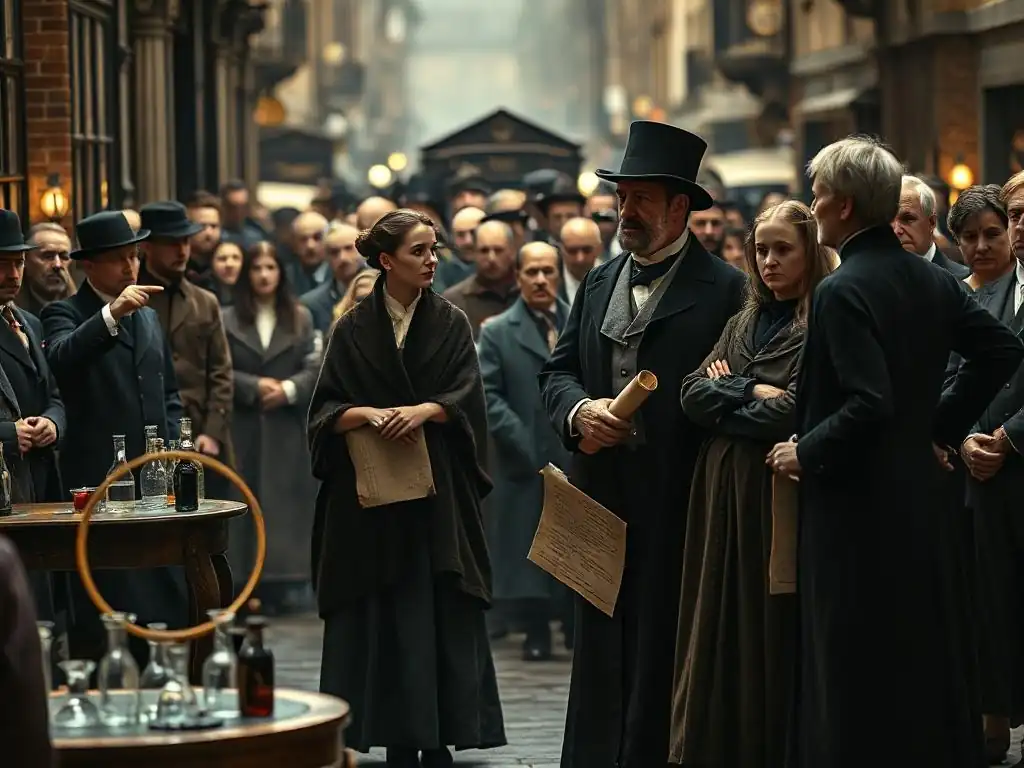
Delve into the fascinating, and often challenging, world of women in science. This site is dedicated to unearthing the remarkable stories of female pioneers who shaped scientific progress. Today, we explore a particularly compelling chapter: The Social Reaction: Public and Peer Perception of Women Chemists in the 1800s. Uncover the societal biases and professional hurdles faced by these brilliant minds in a male-dominated era. What secrets do their struggles reveal about the past, and what lessons can we learn for the future? Prepare to be surprised by the resilience, ingenuity, and sheer determination of these forgotten heroines of chemistry!
-
Women Chemists in the 1800s: Public and Peer Perception
- Introduction: The Landscape for Women in 19th Century Science
- Societal Views on Women's Roles in the 1800s
- The Emergence of Women in Chemistry: A Difficult Path
- Public Perception of Women Chemists in the 19th Century
- Peer Perception: Attitudes of Male Chemists Towards Their Female Counterparts
- Case Studies: Examining the Experiences of Specific Women Chemists
- The Role of Scientific Publications in Shaping Perceptions
- The Impact of Social Class on Women Chemists' Opportunities
- The Legacy of 19th Century Women Chemists: Inspiring Future Generations
- Conclusion: Reflecting on the Social Reaction to Women Chemists in the 1800s
-
Frequently Asked Questions
- What were some of the primary challenges faced by women chemists in the 1800s?
- How did the public generally perceive women pursuing chemistry in the 1800s?
- What role did male colleagues play in shaping the perception of women chemists during this era?
- Were there any women chemists in the 1800s who managed to gain widespread recognition despite the challenges?
- How did the limited access to education impact the careers of women chemists in the 1800s?
- Final Reflection: Echoes of Prejudice, Seeds of Progress
- Ignite Your Passion: Champion Women in Science!
Women Chemists in the 1800s: Public and Peer Perception
Introduction: The Landscape for Women in 19th Century Science
The 19th century was a period of immense scientific discovery and industrial transformation, yet it presented a challenging landscape for women aspiring to participate in formal scientific endeavors. As chemistry evolved from an artisanal practice into a rigorous academic discipline, the doors to laboratories, universities, and scientific societies remained largely closed to women. This era was characterized by deeply entrenched societal norms that dictated distinct spheres for men and women, often relegating women to the domestic realm and discouraging intellectual pursuits, particularly in demanding fields like chemistry.
Despite these formidable barriers, a determined cohort of women began to break through, pursuing chemical knowledge and contributing to the scientific landscape. Understanding the "Women chemists 1800s public perception" and the attitudes of their male peers is crucial to appreciating the immense courage and perseverance required to forge a path in a profession that was largely unwelcoming. Their stories reveal not only individual triumphs but also the pervasive social and institutional resistance they faced, shaping how their contributions were received, or often overlooked.
Societal Views on Women's Roles in the 1800s
The Cult of Domesticity and its Impact on Women's Careers
The prevailing ideology of the 19th century, particularly in Western societies, was the "Cult of Domesticity," which posited that a woman's natural sphere was the home. Women were expected to be pious, pure, submissive, and domestic, serving as moral guardians of the family and creating a sanctuary from the harsh realities of the industrializing world.
This cultural framework actively discouraged women from engaging in public life, professional careers, or intense intellectual pursuits, as these were believed to detract from their essential roles as wives and mothers. The very idea of a woman engaging in the rigorous, often messy, and public work of chemistry directly contradicted these deeply ingrained societal expectations.
This restrictive ideology had profound practical implications for women seeking careers in chemistry. Access to advanced education, particularly in scientific disciplines, was severely limited, as institutions feared that intellectual strain would harm women's delicate constitutions or divert them from their domestic duties.
Opportunities for practical laboratory experience, mentorship, and professional networking were virtually nonexistent for most women, effectively channeling their ambitions away from scientific professions and reinforcing the notion that chemistry was an exclusively male domain. The "Women chemists 1800s public perception" was thus heavily influenced by these prevailing gender roles, often viewing female scientific aspirations with skepticism or amusement.
Challenging Victorian Gender Norms Through Science
Despite the formidable societal pressures to conform to domestic roles, some women found ways to challenge these Victorian gender norms, often through their pursuit of knowledge, including science. While many were limited to self-study or private instruction, their engagement with scientific subjects, even within the confines of their homes, represented a quiet rebellion against the intellectual limitations imposed upon them. For some, science offered an avenue for intellectual fulfillment and a sense of purpose beyond the domestic sphere, proving that women possessed the intellectual capacity and drive for rigorous study.
The act of pursuing chemistry, a field often associated with industrial innovation and male-dominated laboratories, was a particularly bold defiance. Women who managed to gain even informal access to chemical knowledge or practical experience implicitly questioned the prevailing beliefs about female intellectual inferiority. Their very presence in scientific discourse, whether through popular science writing or, for a rare few, through formal education, began to subtly erode the rigid boundaries of the "Cult of Domesticity." This quiet but persistent challenge laid foundational groundwork for future generations, even as the "Women chemists 1800s public perception" remained largely conservative.
The Emergence of Women in Chemistry: A Difficult Path
Access to Education and Research Opportunities for Women Chemists
Access to formal education, particularly in scientific fields like chemistry, was a monumental hurdle for women in the 19th century. Early in the century, educational opportunities beyond basic literacy were scarce, often limited to private tutors or female seminaries that focused on "accomplishments" rather than rigorous academics. As the century progressed, the establishment of women's colleges like Vassar (1861), Wellesley (1875), and Smith (1875) began to offer advanced scientific curricula, including chemistry.
For instance, at Vassar College, Maria Mitchell, a renowned astronomer, and later her successors, championed science education for women, providing some of the first formal laboratory experiences for female students. However, these institutions were few, and their graduates still faced immense difficulty in translating their education into professional careers or further research opportunities.
Beyond these rare formal avenues, many aspiring women chemists had to rely on informal means, such as self-study, private lessons, or learning within family businesses or through supportive male relatives. Research opportunities were even more elusive. University laboratories were almost exclusively male domains, and women were often denied entry or relegated to auxiliary roles if permitted at all.
Ellen Swallow Richards, for example, was admitted as a "special student" to MIT in 1871, becoming its first female student, but even after earning her S.B. degree in Chemistry in 1873, she was not formally admitted to the doctoral program despite her exceptional abilities. Her research was often conducted in an informal "Woman's Laboratory" she helped establish, highlighting the persistent lack of integrated research facilities for women.
Overcoming Barriers: Gender Discrimination in Scientific Societies
Beyond educational access, women chemists in the 1800s faced pervasive gender discrimination when attempting to gain recognition or integrate into the established scientific community. Professional scientific societies, which were crucial for networking, presenting research, and validating scientific contributions, largely excluded women.
The Chemical Society of London (now the Royal Society of Chemistry), for instance, did not admit women as full members until 1919, despite the fact that women like Martha Whiteley and Ida Smedley had made significant contributions to chemistry much earlier. Similarly, the American Chemical Society, founded in 1876, only began admitting women in the 1890s, with Ellen Swallow Richards becoming one of its earliest female members in 1890.
This exclusion meant that women were often denied the platforms necessary to present their findings, engage in peer review, or collaborate formally with male colleagues. Their work, even if published, might not receive the same visibility or validation as that of their male counterparts. Some women circumvented these barriers by publishing anonymously, under initials, or through male intermediaries who could present their work to societies. This systemic discrimination significantly impeded the professional advancement of women chemists and reinforced the "Women chemists 1800s public perception" that science was not a suitable profession for them.
Public Perception of Women Chemists in the 19th Century
Popular Media's Portrayal of Female Scientists
The public perception of women chemists in the 19th century was heavily influenced by popular media, which often reinforced prevailing gender stereotypes rather than challenging them. Newspapers, magazines, and even fictional literature frequently portrayed female scientists, if at all, as eccentric spinsters, unfeminine bluestockings, or amateur hobbyists rather than serious, capable researchers.
For example, caricatures often depicted women in laboratories as clumsy, prone to accidents, or as merely assisting male professors, thereby undermining their intellectual prowess and dedication. The idea of a woman engaging in the rigorous, often messy, and intellectually demanding work of chemistry was often met with ridicule or skepticism, rather than respect.
This portrayal contributed to a general dismissiveness of women's intellectual capabilities in the sciences. Stories might focus on the perceived "unsuitability" of science for women, suggesting it would make them unattractive, mentally unstable, or neglectful of their domestic duties. While a few popular science writers like Jane Marcet gained respect for making chemistry accessible, their roles were often framed as educators or popularizers rather than original researchers, even when their work demonstrated deep understanding. This media narrative significantly shaped the overall "Women chemists 1800s public perception," making it difficult for the public to envision women as legitimate, professional chemists.
Public Opinion on Women's Intellectual Capabilities in Chemistry
Beyond media portrayals, a widespread public opinion in the 19th century held that women were inherently intellectually inferior to men, particularly in fields requiring abstract thought and rigorous reasoning like chemistry. This belief was often justified by pseudo-scientific theories about women's smaller brains or delicate nervous systems, which were supposedly incapable of withstanding the strain of intense intellectual labor. It was argued that pursuing such studies could lead to mental illness, physical debility, or even infertility, thus threatening the very fabric of society by compromising women's reproductive roles.
This pervasive skepticism meant that any woman who pursued chemistry faced an uphill battle for credibility. Her achievements were often dismissed as anomalies or attributed to external factors rather than innate talent. The public, largely unexposed to real examples of female scientific prowess, found it easier to accept the narrative of women's intellectual limitations. Consequently, the "Women chemists 1800s public perception" was one of disbelief and often condescension, making it incredibly challenging for female chemists to gain widespread respect or support for their professional aspirations.
Peer Perception: Attitudes of Male Chemists Towards Their Female Counterparts
Recognition and Acceptance within the Scientific Community
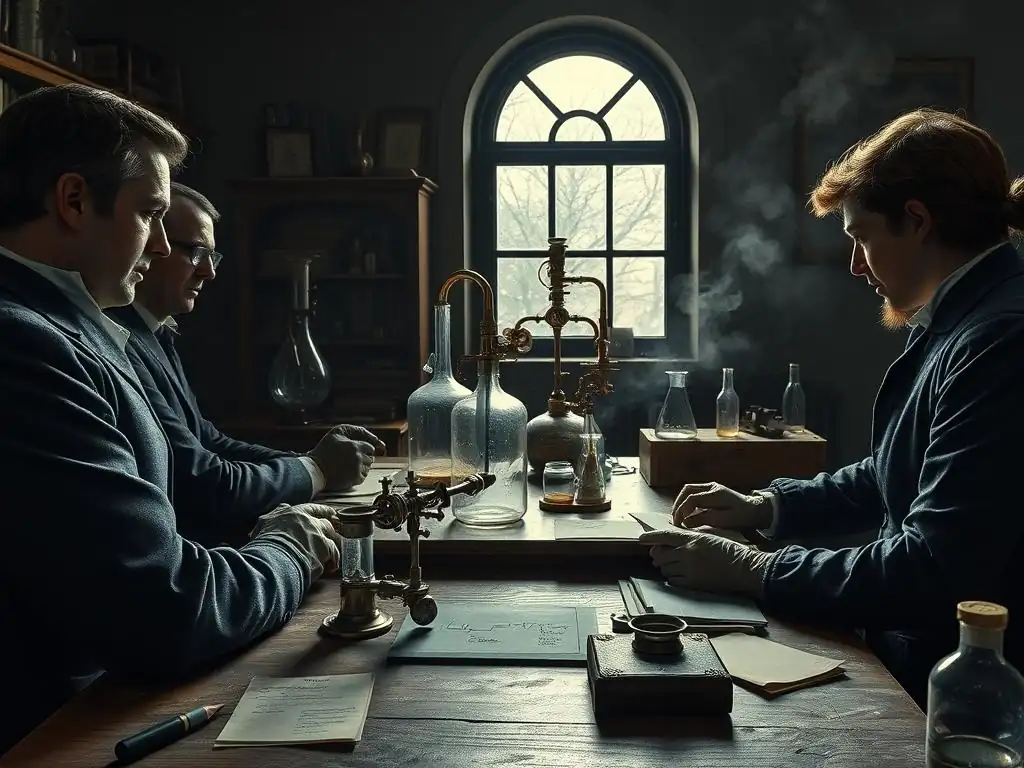
The attitudes of male chemists towards their female counterparts in the 19th century were varied, ranging from outright hostility and dismissal to cautious acceptance and, in rare cases, genuine support. While formal scientific institutions were slow to grant women membership or recognition, individual male chemists sometimes offered informal mentorship or collaboration. However, even when women's work was acknowledged, it was often downplayed, attributed to male colleagues, or framed in a way that reinforced traditional gender roles. For instance, a woman might be praised for her meticulousness or patience in the lab, rather than her intellectual insights or theoretical contributions.
Despite the prevailing biases, some male chemists recognized the talent of their female students or collaborators. William R. Nichols, a professor of chemistry at MIT, was instrumental in admitting Ellen Swallow Richards and supporting her early work, even establishing the "Woman's Laboratory" for her.
However, this support often came with significant caveats: Richards, despite her contributions, was never granted a full professorship at MIT, instead holding the title of instructor and being primarily responsible for the "Woman's Laboratory," which focused on applied rather than theoretical chemistry. This nuanced recognition highlights the complex and often conditional acceptance women received from their male peers, which significantly shaped the "Women chemists 1800s public perception" within academic circles.
Collaboration and Mentorship: Opportunities and Obstacles
Opportunities for collaboration and mentorship for women chemists in the 19th century were rare and often fraught with obstacles. While a few male mentors, like Professor Nichols for Ellen Swallow Richards, provided invaluable support, these relationships were often unequal. Women typically served in subordinate roles, performing analyses or assisting with experiments, rather than being recognized as equal partners in research design or intellectual contribution. This dynamic was partly due to the lack of formal training opportunities for women, but also a reflection of the prevailing patriarchal structures within science.
Furthermore, even when collaborative efforts occurred, women often faced challenges in gaining proper credit for their work. Their names might be omitted from publications, or their contributions minimized. The lack of access to formal scientific networks and funding also limited their ability to initiate or lead independent research projects, forcing them to rely on the patronage of male colleagues. These systemic barriers meant that while some individual instances of mentorship existed, they were exceptions rather than the norm, and the broader scientific community often created an environment of isolation rather than collaboration for women chemists.
Case Studies: Examining the Experiences of Specific Women Chemists
Jane Marcet - Popularizing Chemistry and Challenging Educational Norms
Jane Marcet (1769–1858), though not a professional research chemist in the modern sense, played a pivotal role in shaping the "Women chemists 1800s public perception" through her groundbreaking work, Conversations on Chemistry (1806). This book, written in an accessible dialogue format between a governess and her two female pupils, made complex chemical principles comprehensible to a broad audience, including women and children, who were largely excluded from formal scientific education.
The book was incredibly successful, going through 16 editions in Britain and at least 15 in the United States by 1850, and was translated into French and German. Its widespread adoption, even being used as a textbook in some early American colleges, demonstrated a significant demand for accessible scientific knowledge.
Marcet's work challenged the prevailing notion that scientific subjects, especially chemistry, were too difficult or inappropriate for women. By framing the instruction within a domestic, feminine context and using clear, engaging language, she implicitly argued for women's intellectual capacity and right to scientific education. While she initially published anonymously, acknowledging her gender only in later editions, her influence was undeniable. Her approach not only demystified chemistry but also empowered countless individuals, particularly women, to engage with scientific ideas, thereby subtly, yet powerfully, expanding the perceived intellectual sphere of women.
Ellen Swallow Richards - Sanitary Chemistry, Public Health, and MIT
Ellen Swallow Richards (1842–1911) stands as a monumental figure in the history of women in chemistry, particularly in the field of sanitary chemistry and public health. She became the first woman admitted to the Massachusetts Institute of Technology (MIT) in 1871 as a "special student" in chemistry, earning her S.B. degree in 1873.
Despite her exceptional academic performance, she was denied formal admission to the doctoral program, a clear example of the gender discrimination prevalent at the time. Undeterred, she continued her work at MIT, eventually establishing the "Woman's Laboratory" in 1876, which provided scientific training for women at a time when other institutions largely excluded them.
Richards' contributions were highly practical and directly impacted public welfare, which may have contributed to a more positive "Women chemists 1800s public perception" of her specific work. She conducted extensive analyses of water quality for the Massachusetts State Board of Health, pioneering methods for water and sewage analysis that became standard. Her work directly led to improvements in public health, including the establishment of the first state water quality standards in the United States.
She also founded the field of home economics, applying chemical principles to domestic science, food purity, and nutrition. Despite holding the title of instructor at MIT for decades without a full professorship, her practical, applied chemistry garnered significant respect and demonstrated the tangible benefits of women's scientific expertise to society.
The Role of Scientific Publications in Shaping Perceptions
Women's Contributions to Chemical Literature
Despite the pervasive barriers, women in the 19th century did contribute to chemical literature, albeit often in less formal or recognized ways than their male counterparts. Many published their work in popular science magazines, educational textbooks, or as unsigned contributions to scientific reports.
Jane Marcet's Conversations on Chemistry, as previously noted, is a prime example of a widely influential chemical text authored by a woman, though initially anonymously. Other women, such as Martha Whiteley, who conducted research in organic chemistry at the Royal Holloway College, published papers in journals like the Journal of the Chemical Society in the late 19th and early 20th centuries, demonstrating their capacity for original research.
However, the path to publication was often arduous. Women's research might be viewed with skepticism, and they might face higher scrutiny than male authors. For those working within male-dominated institutions, their contributions might be subsumed under a male colleague's name or laboratory, diminishing their individual recognition. These contributions, while significant, often struggled to gain the same level of visibility and validation within the male-centric world of formal scientific publishing, impacting the broader "Women chemists 1800s public perception" of their scientific authority.
Recognition (or Lack Thereof) in Scientific Journals
The formal scientific journals of the 19th century largely reflected the exclusionary practices of scientific societies, offering limited recognition to women chemists. Even when a woman's research was deemed worthy of publication, it often appeared in less prestigious sections, or her name might be omitted, replaced by "Miss X" or merely initials.
Reviews of their work, if they appeared, sometimes focused on the novelty of a woman conducting science rather than the scientific merit of her findings. For example, while Ellen Swallow Richards published numerous technical papers and reports on water analysis, public health, and sanitation, her work was often acknowledged more for its practical utility than for its theoretical innovations within pure chemistry.
This lack of prominent recognition in peer-reviewed journals was a significant hurdle. It meant that women's contributions were less likely to be cited, debated, or integrated into the mainstream scientific discourse, effectively marginalizing their impact. This systemic oversight perpetuated the idea that women were not serious contributors to scientific knowledge, further solidifying the negative "Women chemists 1800s public perception" within the professional realm and among the broader educated public. The struggle for proper attribution and widespread acknowledgment continued well into the 20th century.
Privileged Backgrounds vs. Limited Access for Working-Class Women
The social class of women in the 19th century profoundly influenced their opportunities to engage with chemistry. The vast majority of pioneering women who managed to pursue scientific interests came from privileged backgrounds. Families with financial means could afford private tutors, access to books and scientific equipment, and sometimes even support informal laboratory setups at home.
For example, Jane Marcet came from a wealthy Swiss banking family, which afforded her the leisure and resources to pursue intellectual interests and publish her educational works. Similarly, Ellen Swallow Richards' family, while not exceptionally wealthy, was able to support her education at Vassar and MIT, an opportunity far beyond the reach of most women.
In stark contrast, working-class women had virtually no access to formal scientific education or professional opportunities in chemistry. Their lives were dominated by the necessity of earning a living, often through domestic service, factory work, or other manual labor.
The idea of pursuing a demanding academic field like chemistry was an inconceivable luxury, compounded by the lack of educational institutions catering to their needs. This stark divide meant that the face of the "Women chemists 1800s public perception" was largely shaped by the experiences of a few, often elite, women, while the potential contributions of countless others remained unrealized due to socioeconomic barriers.
Philanthropy and Support for Women in Science
While social class was a major determinant, philanthropic efforts and individual support systems played a crucial, albeit limited, role in creating opportunities for some women in science. The establishment of women's colleges, often funded by wealthy benefactors, provided the first formal avenues for women to study chemistry and other sciences. For instance, Matthew Vassar's endowment for Vassar College specifically aimed to provide women with an education comparable to that offered to men, including strong science departments. These institutions, though few, became vital incubators for female scientific talent.
Beyond institutional philanthropy, individual patrons or supportive family members were often critical. A father, brother, or husband who believed in a woman's intellectual capabilities and was willing to provide financial or logistical support could make all the difference. This support often meant the difference between a woman pursuing her scientific interests and being confined to purely domestic roles. However, such support was not widespread, and the "Women chemists 1800s public perception" remained largely unchanged by these isolated acts of generosity, as the systemic barriers persisted for the majority of women.
The Legacy of 19th Century Women Chemists: Inspiring Future Generations
Breaking Barriers and Paving the Way for Women in STEM
The women chemists of the 19th century, despite the immense challenges and limited recognition, laid crucial groundwork for future generations of women in STEM. Their perseverance in seeking education, conducting research, and publishing their findings directly challenged the entrenched prejudices of their era.
By demonstrating their intellectual capabilities and scientific rigor, they began to erode the false narratives of female intellectual inferiority. Figures like Jane Marcet proved that chemistry could be made accessible and engaging to a wider audience, including women, while Ellen Swallow Richards demonstrated that women could excel in rigorous scientific research and apply it to solve pressing societal problems.
Their individual struggles and triumphs collectively contributed to a gradual shift in societal attitudes and educational opportunities. While the immediate "Women chemists 1800s public perception" remained largely conservative, their pioneering efforts created a growing body of evidence that women were indeed capable of contributing significantly to science. This paved the way for the eventual opening of more educational institutions, the gradual acceptance of women into scientific societies, and the slow but steady increase of women in scientific professions in the 20th century.
The Enduring Importance of Recognizing Their Contributions
Recognizing the contributions of 19th-century women chemists is not merely an act of historical revisionism but an essential step in understanding the full narrative of scientific progress. Their stories highlight the profound impact of social and institutional barriers on individual potential and collective knowledge. By shedding light on their often-overlooked achievements, we gain a more complete and accurate picture of scientific history, acknowledging the diverse individuals who shaped our understanding of the world.
Furthermore, their struggles serve as powerful reminders of the persistent challenges faced by underrepresented groups in science and beyond. The legacy of these women chemists continues to inspire, demonstrating the resilience required to pursue one's passion in the face of adversity. Their contributions, though sometimes minimized or forgotten, are vital pieces in the mosaic of scientific discovery, and their unwavering dedication continues to encourage future generations of women to pursue careers in chemistry and other STEM fields, ensuring their vital role in shaping the future.
The social reaction to women chemists in the 1800s was a complex tapestry woven from deeply ingrained societal norms, limited educational opportunities, and pervasive gender discrimination. Public perception largely viewed women in chemistry with skepticism, often caricaturing them or dismissing their intellectual capabilities, influenced by the prevailing "Cult of Domesticity" and popular media stereotypes. Within the scientific community, peer perception varied, with some individual male chemists offering support, yet formal institutions largely excluded women, limiting their access to recognition, collaboration, and professional advancement.
Despite this challenging environment, pioneering women like Jane Marcet and Ellen Swallow Richards persevered, making significant contributions that, in time, began to chip away at these barriers. Their work, often conducted under difficult circumstances and with minimal formal recognition, underscored women's intellectual capacity and dedication to scientific inquiry. The legacy of these 19th-century women chemists is a testament to their resilience and a crucial chapter in the ongoing narrative of gender equality in science, reminding us of the enduring importance of acknowledging and celebrating those who dared to defy the expectations of their time.
Frequently Asked Questions
What were some of the primary challenges faced by women chemists in the 1800s?
Women faced significant obstacles, including limited access to education and professional opportunities, as well as prevalent social biases against women in science.
How did the public generally perceive women pursuing chemistry in the 1800s?
The public perception was often mixed, ranging from skepticism and ridicule to curiosity and cautious acceptance, largely influenced by prevailing gender stereotypes.
What role did male colleagues play in shaping the perception of women chemists during this era?
Male colleagues' opinions were crucial; some offered support and mentorship, while others actively discouraged and undermined women's contributions due to professional jealousy or patriarchal beliefs.
Were there any women chemists in the 1800s who managed to gain widespread recognition despite the challenges?
Yes, a few exceptionally talented and determined women, such as Marie Curie in the late 1800s, achieved significant acclaim, though even they faced gender-based discrimination.
How did the limited access to education impact the careers of women chemists in the 1800s?
The lack of formal training meant women often relied on self-education, private tutoring, or unpaid work in laboratories, hindering their ability to advance professionally and gain equal footing with their male counterparts.
Okay, here's a final reflection crafted to close your article, "The Social Reaction: Public and Peer Perception of Women Chemists in the 1800s," optimized for the keyword "Women chemists 1800s public perception" and following the structure you outlined:
Final Reflection: Echoes of Prejudice, Seeds of Progress
The stories of women chemists in the 1800s, often relegated to the footnotes of scientific history, resonate powerfully today. Their struggles against societal expectations and professional barriers serve as a stark reminder that the fight for equity in STEM is far from over. While progress has undoubtedly been made, the subtle biases and systemic inequalities they faced continue to manifest in different forms, demanding our continued vigilance and action.
The courage and resilience of these pioneering women, who dared to defy convention and pursue their passion for chemistry, have profoundly shaped the landscape of science. Their legacy is a testament to the enduring power of perseverance and the importance of challenging the status quo. Science knows no country, because knowledge belongs to humanity, and is the torch which illuminates the world.
- Louis Pasteur. This quote, while not directly about women in science, underscores the universal value of knowledge and the inherent injustice of denying access to it based on gender.
Let us remember the women chemists of the 1800s not just as historical figures, but as beacons of inspiration. Their stories challenge us to examine our own biases, to actively support and encourage women in STEM, and to create a more inclusive and equitable scientific community for generations to come. Consider how you can contribute to dismantling the remaining barriers and fostering an environment where all individuals, regardless of gender, can thrive and contribute their unique talents to the advancement of scientific knowledge.
Ignite Your Passion: Champion Women in Science!
Thank you for exploring the untold stories of women who defied societal norms and shaped the world of chemistry. Now, it's your turn to contribute to their legacy and inspire future generations.
Here's how you can make a difference:
- Amplify their voices by sharing this article with your network and spark conversations about the challenges and triumphs of women in science.
- Explore WomenInScienceHistory.com to discover more inspiring stories and forgotten figures who deserve recognition.
- Consider researching a local woman scientist from the 1800s and nominating her for inclusion on our website to ensure her story is never forgotten.
What steps will you take to help rewrite the narrative of women in science history?