
Beyond the Famous Few: LesserKnown 19th Century Women Chemists Who Shaped the Field

Welcome to WomenInScienceHistory.com!
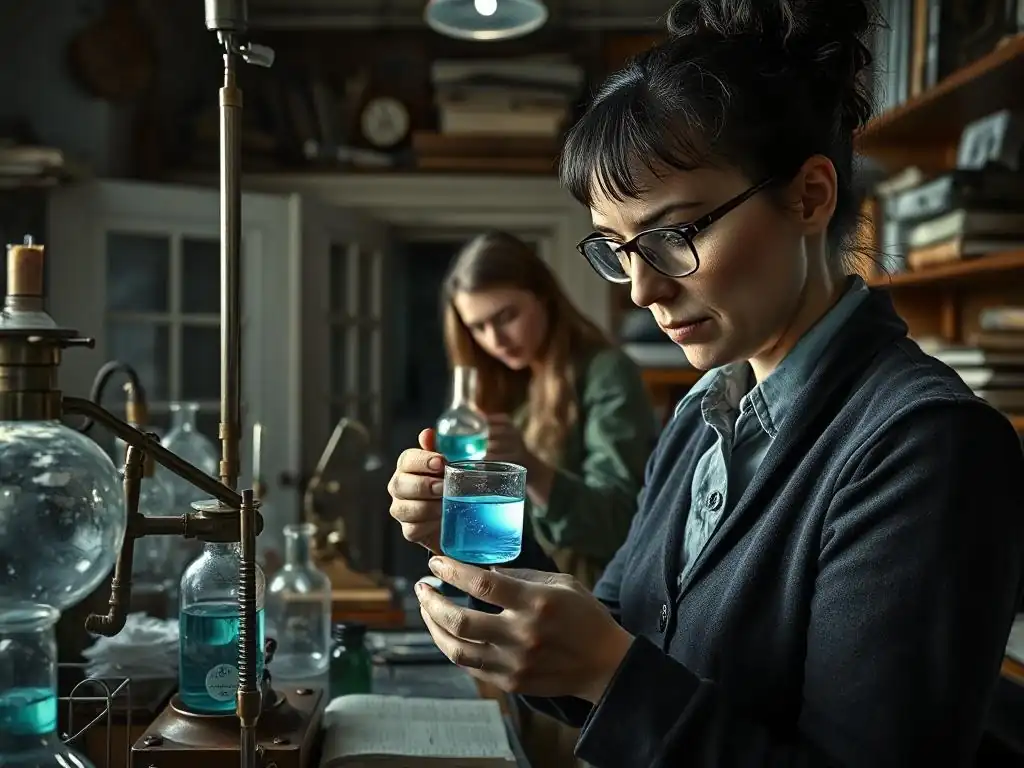
Dive into the captivating world of science and uncover the remarkable, often untold, stories of women who shaped our understanding of the universe. Ever heard of the lesser-known 19th-century women chemists who quietly revolutionized the field? Prepare to be amazed as we explore their groundbreaking contributions and the obstacles they overcame, revealing a hidden chapter in scientific history. Read on to discover the forgotten pioneers who paved the way for future generations of female scientists…
- Introduction: Unveiling the Forgotten Contributions of Women in 19th Century Chemistry
- Rachel Bodley: Pioneer in Medical Education and Pharmaceutical Chemistry
- Ellen Swallow Richards: Pioneer in Sanitary Chemistry and Environmental Science
- Ida Freund: Advocate for Science Education and Chemical Diagrams
- Agnes Pockels: Self-Taught Pioneer in Surface Chemistry
- Jane Haldimand Marcet: Popularizing Science Through Writing
- The Challenges Faced by 19th Century Female Chemists
- The Legacy of These Lesser-Known 19th Century Women Chemists
- Conclusion: Celebrating the Unsung Heroines of 19th Century Chemistry
-
Frequently Asked Questions
- What challenges did lesser-known 19th-century women chemists typically face?
- Why are many 19th-century women chemists "lesser-known" today?
- What types of chemical research did these women often engage in?
- How did these women contribute to shaping the field of chemistry despite the obstacles?
- Where can I find more information about these "lesser-known" 19th-century women chemists?
- Final Reflection: Unearthing Hidden Legacies
- Unveil Hidden Histories: Become a Pioneer Yourself!
Introduction: Unveiling the Forgotten Contributions of Women in 19th Century Chemistry
Highlighting the Overlooked Pioneers in 19th Century Chemical Science
The annals of science history often spotlight a select few prominent figures, predominantly male, leaving vast swaths of significant contributions by women chemists largely unacknowledged. In the 19th century, a period of immense scientific expansion and professionalization, numerous women quietly, yet profoundly, influenced the burgeoning field of chemistry. These lesserknown 19th century chemists navigated a landscape rife with societal barriers and gender bias, yet their dedication led to groundbreaking research, innovative educational methods, and crucial public outreach.
This article aims to peel back the layers of traditional historical narratives to reveal the remarkable achievements of these unsung heroines. By exploring their lives and work, we can gain a more comprehensive understanding of how chemistry developed and appreciate the ingenuity and perseverance of women who defied societal expectations to pursue their scientific passions. Their stories underscore the fact that scientific progress has always been a collective human endeavor, enriched by diverse minds.
The Importance of Recognizing Unsung Female Chemists of the 1800s
Recognizing the contributions of unsung female chemists of the 1800s is crucial for several reasons. Firstly, it rectifies historical inaccuracies, providing a more complete and truthful account of scientific development. Their work, often conducted under challenging circumstances, demonstrates that women were not merely passive observers but active participants and innovators in the scientific revolution of their time. This acknowledgment enriches our understanding of the diverse pathways to scientific discovery.
Secondly, celebrating these 19th century female chemists provides vital role models for future generations. For too long, the narrative of science has been limited, potentially discouraging young women from pursuing STEM fields. By highlighting the groundbreaking achievements of women like Rachel Bodley, Ellen Swallow Richards, and Agnes Pockels, we inspire and empower aspiring scientists, showing them that gender is no barrier to intellectual curiosity or profound contribution.
Challenging the Traditional Narrative: From Lavoisier's Wife to Unsung Heroes
While figures like Marie-Anne Paulze Lavoisier, the wife of Antoine Lavoisier, are occasionally mentioned for their role in translating and illustrating scientific texts, the broader spectrum of 19th century women chemists remains largely in the shadows. The traditional narrative often focuses on prominent male "discoverers," inadvertently minimizing the collaborative and diverse nature of scientific progress. This limited perspective obscures the significant intellectual and practical contributions made by women.
This article challenges that narrow view by delving into the specific work of women who were not just assistants or popularizers, but genuine innovators and educators in their own right. From developing new methodologies and apparatus to shaping educational curricula and public understanding, these lesserknown 19th century chemists actively molded the field. Their stories compel us to reconsider the true architects of modern chemistry and appreciate the myriad ways in which knowledge was advanced.
Rachel Bodley: Pioneer in Medical Education and Pharmaceutical Chemistry
Bodley's Leadership at the Woman's Medical College of Pennsylvania
Rachel Bodley (1831–1888) emerged as a pivotal figure in American medical education, becoming the Dean of the Woman's Medical College of Pennsylvania in 1874. Under her astute leadership, the college experienced a period of significant growth and academic strengthening, solidifying its reputation as a leading institution for women seeking medical careers. Bodley, herself a trained chemist with studies at the Polytechnic College of Pennsylvania, brought a rigorous scientific approach to the curriculum, particularly emphasizing the importance of chemistry in medical training.
Her deanship marked a critical era where the college expanded its student body, attracting talented women from across the United States and internationally. Bodley was instrumental in ensuring that her students received a comprehensive and scientifically sound education, including a robust foundation in chemical principles, which she believed was indispensable for effective medical practice. Her vision helped establish a pathway for 19th century female chemists to apply their expertise within the medical profession.
Her Contributions to Pharmaceutical Education and Curriculum Development
Bodley's impact on pharmaceutical education and curriculum development at the Woman's Medical College was transformative. She passionately advocated for hands-on laboratory experience, ensuring that students gained practical proficiency in chemical analysis and the understanding of drug formulations. This emphasis on experiential learning was progressive for its time, contrasting with more theoretical approaches prevalent in many other institutions.
She firmly believed that future physicians required a deep understanding of the chemical properties of medicines to diagnose ailments accurately and prescribe treatments safely. Her efforts were crucial in professionalizing the study of pharmacy within the medical curriculum, demonstrating that women chemists of the 1800s were not only researchers but also vital educators shaping the practical application of chemical knowledge for public health.
Advocacy for Women's Access to Medical and Scientific Training
Beyond her administrative and educational roles, Rachel Bodley was a tireless advocate for broader access for women to scientific and medical training. She recognized the systemic barriers that prevented women from pursuing higher education and professional careers in traditionally male-dominated fields. Through her public addresses and writings, she consistently championed the intellectual capabilities of women and their right to pursue any academic or professional path, including chemistry and medicine.
Her commitment extended to actively mentoring her students and supporting their post-graduate endeavors, encouraging them to break new ground in their respective fields. Bodley's work created an indispensable channel for countless women to enter the medical profession, many of whom leveraged their strong chemical backgrounds in their practice, leaving an indelible mark as a champion for women in science in the 19th century.
Ellen Swallow Richards: Pioneer in Sanitary Chemistry and Environmental Science
Richards' Groundbreaking Work in Sanitary Chemistry
Ellen Henrietta Swallow Richards (1842–1911) was a pivotal figure in 19th-century American chemistry, notably becoming the first woman admitted to the Massachusetts Institute of Technology (MIT) in 1871. Her early work focused on sanitary chemistry, a nascent but crucial field at the time, which involved analyzing water and air quality. She conducted extensive and pioneering studies on the water supply of Massachusetts, contributing significantly to public health initiatives and laying the groundwork for environmental science.
Richards' meticulous research demonstrated the critical link between environmental contaminants and public health. For instance, her comprehensive surveys of potable water sources across Massachusetts, starting in the 1880s, provided crucial data that led to improved state-wide water purification standards. This work established her as a leading expert in applying chemical principles to solve pressing societal problems, a hallmark of 19th century female chemists who sought practical applications for their science.
Development of the First Water Quality Standards in the U.S.
Richards' rigorous chemical analyses led directly to the establishment of the first municipal water quality standards in the United States. She developed precise testing protocols for various pollutants, including organic matter, nitrates, and heavy metals, setting new benchmarks for purity. Her methodologies were adopted by the Massachusetts State Board of Health, establishing a precedent for environmental regulation based on sound scientific data and systematic chemical analysis.
This foundational work not only safeguarded public health but also highlighted the critical role of analytical chemistry in urban development and resource management. Her efforts underscore how lesserknown 19th century chemists like Richards were instrumental in shaping public policy and laying the groundwork for modern environmental science, demonstrating the profound and practical impact of their chemical expertise on everyday life.
Advocacy for Science Education and the "Home Economics" Movement
Beyond her direct chemical research, Richards was a fervent advocate for science education, particularly for women. She founded the Women's Laboratory at MIT in 1876, providing formal scientific training at a time when women were largely excluded from advanced laboratory work and research opportunities. This initiative trained numerous 19th century female chemists and scientists, significantly expanding opportunities for women in STEM fields.
She also pioneered the field of "home economics," which she envisioned as the application of scientific principles, including chemistry, to household management, nutrition, and sanitation. Her influential book, " The Chemistry of Cooking and Cleaning" (1882), translated complex chemical concepts into practical advice for improving daily life, making scientific knowledge accessible and demonstrating the broad utility of chemistry to the public.
Ida Freund: Advocate for Science Education and Chemical Diagrams
Freund's Contributions to Chemical Education at Newnham College, Cambridge
Ida Freund (1863–1914) was a groundbreaking figure in chemical education at Newnham College, Cambridge, where she became the first woman to hold a university-level lectureship in chemistry in the UK, beginning in 1886. She revolutionized the teaching of chemistry, moving away from rote memorization towards a more investigative and conceptual approach. Her dedication to fostering a deep, intuitive understanding of chemical principles was evident in her innovative pedagogical methods.
Freund's lectures and laboratory sessions were renowned for their clarity, precision, and emphasis on practical application. She designed experiments that encouraged students to think critically, observe phenomena firsthand, and deduce principles, rather than simply following instructions. Her commitment to excellence in teaching ensured that Newnham College produced highly capable 19th century female chemists who were well-prepared for advanced studies or professional roles in science.
Development of Innovative Teaching Methods and Chemical Diagrams
Freund was a pioneer in developing visual aids for chemistry education, recognizing the complexity of abstract chemical concepts. She created intricate three-dimensional models and detailed diagrams to illustrate molecular structures, reaction mechanisms, and the spatial arrangement of atoms. These visual tools were revolutionary for their time, making complex ideas more accessible and intuitive for her students.
Her comprehensive book, " The Experimental Basis of Chemistry" (published posthumously in 1920), laid out her pedagogical philosophy and included many of her innovative diagrams. This work emphasized the empirical foundations of chemistry and demonstrated her belief that effective teaching required more than just theoretical explanations. Her methods profoundly influenced how chemistry was taught, showcasing the ingenuity of lesserknown 19th century chemists in the realm of scientific pedagogy.
Her Influence on Visualizing Chemical Concepts
Freund's emphasis on visual learning significantly impacted how chemical concepts were understood and taught beyond her immediate students. Her approach helped bridge the gap between abstract theories and tangible representations, making chemistry less intimidating and more engaging for learners. She effectively demonstrated that visualizing molecules and reactions could unlock deeper understanding and facilitate the comprehension of complex chemical phenomena.
The techniques she developed, such as using physical models to represent complex organic compounds, anticipated modern pedagogical practices in chemistry. Her legacy is not just in training a generation of women chemists, but in fundamentally changing the way chemistry was communicated, paving the way for more intuitive and visually oriented learning experiences in the field for decades to come.
Agnes Pockels: Self-Taught Pioneer in Surface Chemistry
Pockels' Independent Research on Surface Tension and Monolayers
Agnes Pockels (1862–1935) was a remarkable self-taught chemist who conducted groundbreaking experiments on the surface properties of liquids from her home in Braunschweig, Germany. Despite lacking formal university training—which was largely inaccessible to women in 19th-century Germany—she meticulously studied surface tension, particularly focusing on the behavior of oil films on water. Her innovative, homemade apparatus, often constructed from household items like a modified kitchen wash-tub, allowed her to make precise measurements.
Pockels' experiments, conducted with extraordinary patience and precision, demonstrated that even minute quantities of impurities could significantly alter the surface tension of water. She discovered that fatty acids formed monomolecular layers on water surfaces, a fundamental concept in surface chemistry that was largely unknown at the time. This work, conducted without institutional support, highlights the extraordinary dedication and talent of lesserknown 19th century chemists.
Her Correspondence with Lord Rayleigh and Recognition by the Scientific Community
In 1891, Pockels, encouraged by her brother, wrote a letter to the renowned British physicist Lord Rayleigh, detailing her findings. Rayleigh, highly impressed by the rigor and originality of her work, translated her letter and submitted it for publication in the prestigious journal Nature. This extraordinary act brought her pioneering research to the attention of the international scientific community, a rare feat for an uncredentialed woman of her era.
Her publication marked a significant moment, as it was one of the few instances of a self-taught woman gaining recognition in the male-dominated scientific landscape of the late 19th century. Her findings were later confirmed and expanded upon by others, including Irving Langmuir, who acknowledged her foundational contributions. Pockels' story exemplifies how 19th century female chemists, even those operating outside traditional academic structures, could make profound scientific discoveries.
Development of the Pockels Trough for Measuring Surface Tension
One of Agnes Pockels' most significant and lasting contributions was the invention of a simple yet remarkably effective device for measuring surface tension and the area of films on liquid surfaces. This apparatus, now widely known as the "Pockels Trough," allowed for precise control over the surface area of a liquid and the measurement of surface pressure, enabling systematic study of monomolecular layers.
The Pockels Trough became a crucial precursor to more sophisticated instruments used in modern surface chemistry and nanotechnology. It enabled systematic study of phenomena like biological membranes and lubrication, laying theoretical and practical groundwork for future research. Her ingenuity in developing such a vital experimental tool, despite her limited resources, underscores her brilliance and her lasting impact on the field, cementing her place among the pioneering women in chemistry of her era.
Jane Haldimand Marcet: Popularizing Science Through Writing
Marcet's Contributions to Science Education Through Conversational Texts
Jane Haldimand Marcet (1769–1858) was a prolific and highly influential science writer whose work played a crucial role in popularizing scientific knowledge, particularly chemistry, for a broad audience, including women and children, in the early 19th century. Her most famous work, " Conversations on Chemistry, Intended More Especially for the Female Sex" (1806), presented complex chemical principles in an accessible and engaging dialogue format, making science approachable for a wider readership.
The book, structured as a series of conversations between a knowledgeable teacher (Mrs. B) and two inquisitive female pupils (Caroline and Emily), demystified chemistry through clear explanations, relatable analogies, and practical examples. It covered fundamental concepts like elements, compounds, acids, and bases, making abstract scientific ideas tangible and understandable. Marcet's pioneering approach to science communication helped bridge the gap between academic research and public understanding, showcasing the educational impact of 19th century female chemists.
Her Book "Conversations on Chemistry" and its Impact on Public Understanding
" Conversations on Chemistry" was an enormous success, going through numerous editions in Britain and the United States, and was translated into several languages. It was one of the most widely read science books of its time, selling tens of thousands of copies over its publication history. Its popularity demonstrated a significant public appetite for scientific knowledge, and Marcet's engaging style made chemistry approachable for those without formal scientific training, significantly expanding scientific literacy.
The book's widespread adoption helped disseminate chemical knowledge far beyond traditional academic circles, influencing a generation of readers who might otherwise have remained unexposed to the subject. It proved that complex scientific subjects could be taught effectively and engagingly to a non-specialist audience. Marcet's work was instrumental in shaping public perception of science and fostering scientific literacy, a testament to the influence of women chemists of the 1800s in informal education.
Influence on Michael Faraday and Other Prominent Scientists
Perhaps one of the most significant impacts of Marcet's work was its profound influence on future scientific luminaries. Notably, a young Michael Faraday, who would become one of the greatest experimental physicists and chemists, credited " Conversations on Chemistry" as a key inspiration for his early interest in science. He studied her book intently, attended her lectures, and absorbed the principles she so clearly articulated, laying the groundwork for his own groundbreaking discoveries.
Faraday's own renowned lecture series on chemistry for children, delivered at the Royal Institution, echoed Marcet's conversational and accessible style, demonstrating her direct pedagogical influence. Her impact extended to other scientists and educators, proving how her popular science writing, seemingly a "soft" contribution, had a profound and direct effect on the trajectory of scientific discovery and education. She stands as a prime example of a lesserknown 19th century chemist whose indirect influence was immense and enduring.
The Challenges Faced by 19th Century Female Chemists
Societal Barriers and Gender Bias in Scientific Fields
The 19th century presented formidable societal barriers for women aspiring to careers in chemistry or any scientific field. Prevailing Victorian norms dictated that a woman's primary sphere was the domestic, making professional scientific pursuits seem unfeminine, unconventional, and often inappropriate. Gender bias was deeply pervasive, frequently leading to women's intellectual contributions being dismissed, overlooked, or even unfairly attributed to male counterparts. This societal pressure significantly limited opportunities for 19th century female chemists.
Women who courageously pursued science often faced ridicule, skepticism, and outright discrimination. They were routinely denied membership in prestigious scientific societies, excluded from academic positions, and frequently prevented from attending lectures or accessing well-equipped laboratories. Even when their work was groundbreaking, it was often marginalized or not given the same recognition as that of their male peers, illustrating the deep-seated prejudice against women in chemistry during this era.
Limited Access to Education and Research Opportunities for Women
Access to formal scientific education was severely restricted for women throughout much of the 19th century. Universities were largely male-only institutions, and even where women were eventually admitted, they often faced informal barriers, such as being excluded from practical laboratory work, which was absolutely crucial for comprehensive chemical training. This profound lack of access forced many lesserknown 19th century chemists to be self-taught or rely on informal networks and private studies.
Research opportunities were even scarcer. Without university affiliations, dedicated funding, or access to state-of-the-art equipment, women struggled to conduct large-scale or complex experiments required for significant breakthroughs. Those who managed to do so, like Agnes Pockels working from her kitchen with homemade apparatus, did so through sheer ingenuity, immense determination, and often in isolation, highlighting the immense obstacles faced by 19th century female chemists in their pursuit of scientific knowledge.
Overcoming Obstacles: Perseverance and Determination
Despite these immense and deeply entrenched challenges, the lesserknown 19th century chemists highlighted in this article, and countless others whose stories are yet to be fully told, demonstrated extraordinary perseverance and unwavering determination. They pursued their scientific passions through unconventional means, whether it was through independent study, establishing rudimentary home laboratories, or leveraging their roles in education and writing to advance scientific understanding and disseminate knowledge.
Their resilience and intellectual courage paved the way for future generations of women in science. By subtly challenging societal norms and unequivocally proving their intellectual capabilities, these pioneering women in chemistry chipped away at the systemic barriers, creating incremental but profoundly significant progress. Their stories are not just about scientific discovery, but about the enduring human spirit in the face of adversity, inspiring countless women to follow in their footsteps and break new ground.
The Legacy of These Lesser-Known 19th Century Women Chemists
Inspiring Future Generations of Women in STEM
The rediscovery and celebration of these lesserknown 19th century chemists are crucial for inspiring future generations, particularly young women, to pursue challenging and rewarding careers in STEM fields. Their stories powerfully demonstrate that scientific aptitude, intellectual curiosity, and groundbreaking contributions are not exclusive to any gender or social class. By showcasing their achievements, we provide tangible role models who overcame significant systemic odds, proving that a career in chemistry is not only attainable but also deeply fulfilling.
Knowing that women like Ida Freund and Ellen Swallow Richards made profound impacts in chemistry, despite the pervasive societal barriers of their time, can empower contemporary students to challenge their own limits and societal expectations. Their legacies are not merely historical footnotes; they are active sources of encouragement, demonstrating the enduring power of perseverance and intellect for aspiring women chemists today.
The contributions of these 19th century female chemists were not merely symbolic; they had a tangible and lasting impact on the development of chemistry and numerous related scientific fields. From Jane Marcet's popularization of chemical concepts that directly influenced Michael Faraday, to Agnes Pockels' foundational work in surface chemistry, and Ellen Swallow Richards' pioneering efforts in environmental chemistry and public health, their discoveries and innovations laid crucial groundwork for subsequent advancements.
Their work broadened the scope of chemical inquiry, introduced new methodologies, and made scientific knowledge more accessible to a wider audience. By recognizing their specific achievements and integrating them into the broader historical narrative, we gain a more accurate, comprehensive, and nuanced understanding of the historical trajectory of scientific progress, acknowledging that the landscape of chemistry was shaped by a more diverse array of brilliant minds than traditionally presented.
The stories presented here are just a few compelling examples of the many lesserknown 19th century chemists whose contributions still await wider recognition and deeper exploration. Much historical research is still needed to uncover and properly document the full extent of women's involvement in science throughout the 19th century and beyond. Archives, personal letters, overlooked scientific publications, and institutional records often hold crucial clues to these hidden figures.
This ongoing effort to unearth and celebrate more women in chemistry is vital for building a complete and inclusive historical narrative that accurately reflects the diversity of scientific talent throughout history. It ensures that future generations have a rich tapestry of role models and a true understanding of how science has always been a collective human endeavor, infinitely enriched by diverse perspectives, experiences, and talents.
Conclusion: Celebrating the Unsung Heroines of 19th Century Chemistry
The exploration of lesserknown 19th century chemists underscores a critical and often overlooked point: history is frequently written from a limited perspective, inadvertently marginalizing significant contributions from diverse groups. Acknowledging these hidden figures is not just an act of historical correction but a vital step in fostering a more inclusive and accurate understanding of scientific progress. It powerfully reminds us that innovation and discovery spring from myriad sources, often in the face of profound adversity.
By consciously seeking out and celebrating the stories of women like Rachel Bodley, Ellen Swallow Richards, Ida Freund, Agnes Pockels, and Jane Marcet, we immeasurably enrich our collective scientific heritage. Their resilience, intellectual curiosity, and ingenuity serve as powerful reminders that many more unsung heroes and heroines await recognition, challenging us to look beyond conventional narratives and embrace a fuller, more truthful history of science.
The Ongoing Effort to Promote Diversity and Inclusion in Chemistry
The struggles and triumphs of 19th century female chemists resonate deeply with contemporary efforts to promote diversity, equity, and inclusion in STEM fields today. Their experiences highlight the systemic barriers that have historically excluded certain groups from scientific pursuits and underscore the ongoing need to dismantle such obstacles in modern academia and industry. The fight for equitable access, recognition, and opportunity continues, drawing strength and inspiration from the pioneering women who came before.
Celebrating these women chemists of the 1800s serves as a powerful testament to the inherent value of diverse perspectives and backgrounds in fostering scientific discovery and innovation. When all voices are heard, all talents are nurtured, and all contributions are recognized, science flourishes more robustly. Their legacy is a profound call to action, urging us to ensure that the scientific landscape of the future is truly representative of humanity's full potential and intellectual prowess.
Their Enduring Impact: Shaping the Landscape of Science
The enduring impact of these lesserknown 19th century chemists is undeniable and far-reaching. Their pioneering work in areas ranging from pharmaceutical education and environmental science to fundamental surface chemistry and popular science communication laid crucial groundwork and directly influenced subsequent generations of scientists and scientific thought. They were not just passive participants but active, intellectual shapers of the chemical landscape as it evolved throughout their era.
Their inspiring stories compel us to reconsider who gets to be a scientist and how scientific progress truly unfolds, emphasizing the often-overlooked contributions of those outside the traditional centers of power. By bringing these unsung heroines into the light, we not only honor their individual achievements and personal perseverance but also gain a richer, more accurate, and ultimately more inspiring narrative of chemistry's remarkable and diverse journey through history.
Frequently Asked Questions
What challenges did lesser-known 19th-century women chemists typically face?
They often encountered limited access to education and research facilities. Furthermore, they battled significant societal biases and discrimination within the scientific community.
Why are many 19th-century women chemists "lesser-known" today?
Historical records often overlooked or minimized their contributions. Additionally, their work might have been attributed to male colleagues or mentors, obscuring their individual achievements.
What types of chemical research did these women often engage in?
While diverse, many focused on areas like agricultural chemistry, pharmaceutical research, and analytical chemistry. Their work often involved practical applications directly impacting daily life.
How did these women contribute to shaping the field of chemistry despite the obstacles?
They made key advancements in understanding chemical processes and developing new techniques. Their work laid the foundation for future breakthroughs in various chemical disciplines.
Where can I find more information about these "lesser-known" 19th-century women chemists?
Resources like WomenInScienceHistory.com and academic databases can provide detailed biographies and information on their work. Searching for primary source materials like journals and letters can also reveal valuable insights.
The stories of these lesser-known 19th-century women chemists serve as a powerful reminder that history is rarely complete. Their contributions, often overshadowed by their male counterparts or simply lost to time, highlight the systemic barriers women faced in pursuing scientific careers. Recognizing their achievements is not just about historical accuracy; it's about acknowledging the full spectrum of talent that has shaped the field of chemistry and inspiring future generations to break down existing barriers.
The impact of these women extends far beyond the laboratory. Their perseverance in the face of adversity underscores the importance of inclusivity and equal opportunity in STEM fields. Their stories challenge us to question the narratives we inherit and to actively seek out the voices that have been historically marginalized. The history of science is not a straight line of progress; it is a complex and often messy tapestry woven with the threads of countless individuals, many of whom remain unseen.
This quote encapsulates the essence of our exploration, urging us to look beyond the famous few and appreciate the richness of the scientific past.
As we reflect on the lives and work of these remarkable women, let us be inspired to champion diversity and inclusion in all areas of science. Consider how you can actively support and amplify the voices of underrepresented groups in your own community. The legacy of these lesser-known chemists is a call to action: to create a more equitable and inclusive future where every individual has the opportunity to contribute their unique talents to the advancement of knowledge.
Thank you for delving into the untold stories of these remarkable women chemists. We hope you've found their journeys as inspiring as we do. Now, let's bring their legacy to life through action!
- Boldly share this article with at least three friends or colleagues to amplify the voices of these forgotten pioneers.
- Delve deeper: Research a 19th-century woman chemist not mentioned here and share your findings on social media with the hashtag #HiddenChemist.
- Start a conversation: Spark a dialogue about the importance of recognizing diverse contributions to STEM in your local community or online forum.
Which unsung scientific hero will you champion today?