
Anna Mani: India's Weather Woman and Her Solar Radiation Legacy

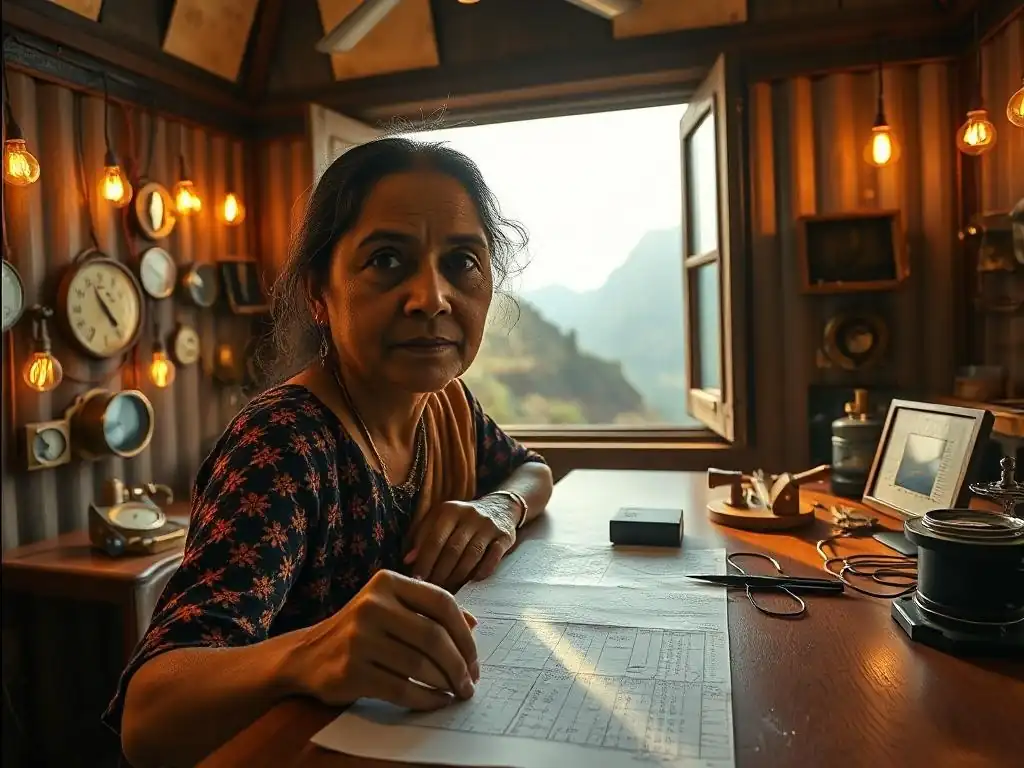
Welcome to WomenInScienceHistory.com, where we illuminate the extraordinary contributions of women who shaped the scientific landscape! Prepare to be inspired by stories of resilience, innovation, and groundbreaking discoveries. Delve into the remarkable life and work of Anna Mani, India's Weather Woman, and uncover her pioneering research in solar radiation – a legacy that continues to impact environmental science today. Intrigued? Discover how Mani defied societal expectations and revolutionized weather forecasting in India, leaving an indelible mark on the field. Read on to learn more about her journey and the challenges she overcame.
- Introduction: Remembering Anna Mani, a Pioneer in Indian Meteorology
- Anna Mani's Groundbreaking Work in Meteorological Instrumentation
- Anna Mani's Research on Ozone and Atmospheric Physics
- Anna Mani's Role at the Indian Meteorological Department (IMD)
- The Legacy of Anna Mani: Inspiring Future Generations of Scientists
- Anna Mani's Published Works and Scientific Contributions
- Anna Mani's Impact on Renewable Energy and Solar Power Development in India
- Anna Mani's Awards and Recognition
- Conclusion: Celebrating Anna Mani, the Weather Woman of India
-
Frequently Asked Questions
- What were some of Anna Mani's key contributions to science?
- What obstacles did Anna Mani face as a woman in science during her time?
- Why is Anna Mani often referred to as " India's Weather Woman"?
- What is the " solar radiation legacy" associated with Anna Mani?
- How does WomenInScienceHistory.com aim to promote the stories of scientists like Anna Mani?
- Final Reflection: Illuminating the Future with Anna Mani's Vision
- Ignite Your Inner Scientist: Explore the World Through Anna Mani's Eyes!
Introduction: Remembering Anna Mani, a Pioneer in Indian Meteorology
Anna Mani's Early Life and Education: A Foundation for Scientific Excellence
Born in 1918 in Peerumedu, Kerala, Anna Mani exhibited an extraordinary curiosity and a voracious appetite for knowledge from a young age. Instead of playing with toys, she immersed herself in books, devouring literature from diverse fields. This early passion for learning laid the groundwork for her remarkable academic journey and distinguished scientific career, marking her as a child destined for intellectual pursuits.
Her formal education saw her excel, culminating in a B.Sc. (Hons) in Physics and Chemistry from Presidency College, Madras (now Chennai) in 1939. Following this, Anna Mani secured a scholarship for postgraduate studies at the prestigious Indian Institute of Science (IISc) in Bangalore. There, she conducted groundbreaking research under the guidance of Nobel laureate C.V. Raman, focusing on the spectroscopy of diamonds and rubies. Her meticulous work during this period, which included publishing five papers, honed her experimental skills and rigorous scientific approach.
Overcoming Barriers: Anna Mani's Journey in a Male-Dominated Field
Despite her exceptional research contributions at the Indian Institute of Science, Anna Mani faced institutional barriers common for women in academia during the mid-20th century. Although her work was undoubtedly of doctoral quality, she was not awarded a Ph.D. because she did not possess a master's degree, a prerequisite at the time. This systemic hurdle highlights the challenges pioneering women in science encountered, even when their intellectual contributions were profound.
Undeterred, Anna Mani embarked on a new path in 1945, transitioning to meteorology. She moved to London to specialize in meteorological instruments, a field predominantly male and critical for the nascent independent India. Her decision to enter and excel in this specialized area, despite societal expectations and professional obstacles, underscored her determination and vision, allowing her to become a leading figure and truly establish herself as the Indian weather woman.
Anna Mani's Groundbreaking Work in Meteorological Instrumentation
Contributions to Solar Radiation Measurement in India
Anna Mani, India's pioneering weather woman, recognized the critical importance of accurate solar radiation data for a country heavily reliant on agriculture and with immense potential for renewable energy. She took charge of establishing and expanding India's network of solar radiation measuring stations. Her work involved the meticulous design, calibration, and maintenance of various instruments to precisely measure solar irradiance, sunshine duration, and atmospheric turbidity across the subcontinent.
Her seminal contribution in this area culminated in the publication of the Handbook of Solar Radiation Data for India in 1980. This comprehensive resource compiled over a decade's worth of data (roughly from the 1960s to the 1970s) from 18 solar radiation stations spread across India. This handbook became an indispensable tool for engineers, architects, and researchers, enabling them to accurately estimate solar power potential for various applications, from designing energy-efficient buildings to planning the first large-scale solar energy projects.
Designing and Developing Indigenous Meteorological Instruments
Following India's independence, there was a strong national push for self-reliance in technology and scientific equipment. Anna Mani championed this vision within the Indian Meteorological Department (IMD). Under her leadership, the IMD's workshop became a hub for indigenous instrument design and manufacturing, producing over 100 different types of meteorological instruments, including pyranometers, radiometers, and ozonesondes, tailored to India's unique climatic conditions.
This commitment to indigenous production yielded significant benefits. It drastically reduced India's reliance on costly imported instruments, saving valuable foreign exchange and ensuring the continuous supply of critical equipment. Furthermore, it fostered a strong local technical base, nurturing expertise in precision engineering and calibration, which positioned India as a leader in meteorological instrumentation among developing nations.
Anna Mani's Impact on India's Weather Forecasting Capabilities
The precision and reliability of meteorological instruments are the bedrock of accurate weather forecasting. By spearheading the development and provision of standardized, high-quality instruments, Anna Mani, India's pioneering weather woman, directly enhanced the integrity and trustworthiness of data collected by the IMD. This fundamental improvement significantly bolstered the accuracy and reliability of weather predictions, which are vital for critical sectors like agriculture, aviation, and disaster management.
Her instrumental contributions led to practical, life-saving implications. More precise measurements of atmospheric pressure, temperature, and humidity, facilitated by her instruments, enabled better numerical weather prediction models. This resulted in earlier and more accurate warnings for severe weather events such as monsoons and cyclones, allowing for timely preparedness and mitigating potential loss of life and property across the nation.
Anna Mani's Research on Ozone and Atmospheric Physics
Studying Atmospheric Ozone: Anna Mani's Contributions to Ozone Research
Anna Mani was among the first Indian scientists to systematically investigate atmospheric ozone. Recognizing its importance, she established a network of ozone-measuring stations across India, utilizing instruments like the Dobson spectrophotometer. Her meticulous research contributed significantly to understanding the vertical distribution, seasonal variations, and overall behavior of ozone in the Indian subcontinent's atmosphere.
The foresight of her ozone research is particularly noteworthy. Long before the global scientific community became widely concerned about the Antarctic ozone hole in the 1980s, Anna Mani was diligently collecting baseline data. Her pioneering work provided crucial foundational information that later proved invaluable for international studies on ozone depletion and the broader impact of human activities on the Earth's delicate atmospheric layers.
Research on Atmospheric Radiation: Understanding the Physics of the Atmosphere
Beyond her focus on solar radiation, Anna Mani extended her research to encompass terrestrial radiation and the broader radiation balance of the atmosphere. She delved into how various atmospheric components, such as water vapor, clouds, and aerosols, absorb, scatter, and emit radiation. Her investigations aimed to understand the intricate energy exchanges that occur within the Earth's atmosphere, which fundamentally drive weather and climate patterns.
Her comprehensive studies on atmospheric radiation significantly advanced the understanding of climate dynamics. This fundamental research provided critical insights into the role of different gases and particulates in influencing the Earth's energy budget. Her work laid essential groundwork for subsequent climate modeling efforts in India, contributing to the nation's capacity to predict and adapt to climate change.
Anna Mani's Role at the Indian Meteorological Department (IMD)
Leading the Instrumentation Division at IMD
Anna Mani joined the Indian Meteorological Department (IMD) in 1948, and her exceptional talent and dedication quickly led to her promotion. By 1960, she ascended to the prestigious position of Head of the Instrumentation Division. This role was pivotal, as it encompassed the entire lifecycle of meteorological instruments – from their initial design and development to rigorous calibration, production, and ongoing maintenance for all stations across India.
Under her dynamic leadership, the IMD's workshop transformed into a highly efficient, self-sufficient unit capable of producing a vast array of high-quality instruments. She not only oversaw the technical aspects but also played a crucial role in training a new generation of technicians and engineers. This ensured that India possessed the skilled workforce necessary to operate and maintain its increasingly complex and widespread meteorological network, a testament to the vision of Anna Mani, the Indian weather woman.
Standardizing Meteorological Instruments Across India
Before Anna Mani's concerted efforts, there was considerable variability in the quality and calibration of meteorological instruments used across India, leading to inconsistencies in collected data. Recognizing this critical flaw, Anna Mani championed the nationwide standardization of meteorological instruments. Her rigorous approach ensured uniform data collection protocols and comparability across different observation stations, a monumental task that required meticulous planning and execution.
This standardization initiative had a profound impact. It dramatically improved the reliability and accuracy of meteorological data, which is indispensable for precise weather forecasting, robust climate research, and effective agricultural planning. Her unwavering commitment to high standards helped establish India's meteorological data as highly credible and reliable on both national and international scientific platforms.
The Legacy of Anna Mani: Inspiring Future Generations of Scientists

Anna Mani's Influence on Women in Climate Science and Meteorology
Anna Mani served as an inspiring trailblazer for countless women aspiring to careers in science, particularly in fields like meteorology and atmospheric physics, which were traditionally male-dominated. Her exceptional achievements and rise to leadership positions within the Indian Meteorological Department demonstrated unequivocally that women could not only excel but also lead in demanding scientific domains. She proved that gender was no barrier to intellectual prowess and significant contribution.
By excelling in a challenging scientific field and holding prominent roles, Anna Mani paved the way for future generations. Her remarkable journey continues to be a narrative of perseverance, intellectual curiosity, and breaking societal norms. Her story inspires many young Indian women to pursue STEM education and careers, fostering greater diversity and inclusion in scientific research and leadership.
Recognizing Anna Mani's Contributions to Science History
Anna Mani's meticulous and foundational work in meteorological instrumentation, her pioneering research in solar radiation, and her early investigations into atmospheric ozone have firmly secured her a permanent and prominent place in India's scientific history. Her contributions are not merely academic; they are fundamental to the very infrastructure of the nation's meteorological capabilities and its understanding of environmental science.
While deeply celebrated within India, her contributions to global atmospheric science, particularly in providing long-term, reliable data from a tropical region, are increasingly recognized internationally. This broader acknowledgment cements her status as a significant figure in the global history of women in science, highlighting her profound and lasting impact on our understanding of the Earth's atmosphere.
Anna Mani: A Role Model for Aspiring Indian Scientists
Anna Mani's unwavering dedication, scientific precision, and profound commitment to rigorous research make her an exemplary figure for aspiring scientists. She embodied the true spirit of scientific inquiry, consistently pushing the boundaries of knowledge and championing the pursuit of self-reliance in technological advancement within India. Her career showcases the power of intellectual curiosity combined with meticulous execution.
Her life's work powerfully illustrates that with perseverance, intellectual drive, and an unyielding commitment to excellence, one can overcome significant barriers and make profound, lasting contributions to society. Anna Mani stands as a beacon of inspiration for anyone considering a career in science, particularly in India, demonstrating that scientific exploration offers a path to meaningful societal impact.
Anna Mani's Published Works and Scientific Contributions
Key Publications and Research Papers by Anna Mani
Anna Mani was a prolific writer and researcher, contributing significantly to meteorological literature. Beyond the Handbook of Solar Radiation Data for India (1980), she authored several other seminal works, including Handbook for Solar Radiation over India (1966) and Solar Radiation over India (1980), which quickly became standard reference texts for solar energy studies and atmospheric research. Her extensive bibliography also includes numerous research papers published in prestigious national and international scientific journals.
The breadth of her scientific output was remarkable. Her papers covered a wide spectrum of topics, ranging from the performance characteristics of various meteorological instruments to detailed studies on atmospheric turbidity, the complex variations of atmospheric ozone, and the intricate energy balance of the atmosphere. This extensive and diverse body of work underscored her deep engagement with and comprehensive mastery of her specialized field.
Examples of Research Impact: Albedo Measurements and Instrumentation Design
One specific example of Anna Mani's research impact lies in her work on albedo measurements, which refers to the reflectivity of the Earth's surface. Her studies were crucial for understanding how different land covers, such as forests, crops, and urban areas, absorb and reflect solar energy, thereby influencing local and regional climate patterns. For instance, her detailed investigations into various vegetation types and their albedo values provided vital data for agricultural meteorology and land-use planning.
Furthermore, the indigenous design and development of precision instruments under her leadership, such as the pyrheliometer (for measuring direct solar radiation) and the pyranometer (for measuring global solar radiation), had a tangible impact. These tools ensured that India possessed the necessary equipment for highly accurate data collection, directly supporting practical applications from optimizing agricultural practices to facilitating the initial planning and deployment of solar energy projects nationwide.
Anna Mani's Impact on Renewable Energy and Solar Power Development in India
How Anna Mani's Solar Radiation Data Aided Solar Power Initiatives
The comprehensive solar radiation data meticulously compiled and published by Anna Mani, India's pioneering weather woman, provided the fundamental baseline information indispensable for the nascent solar power industry in India. Engineers, researchers, and policymakers relied heavily on her detailed handbooks and data sets to accurately assess the viability, potential output, and optimal placement of solar installations across diverse geographical regions of the country.
Accurate solar maps and precise data on daily, seasonal, and annual radiation variations were absolutely critical for effective site selection, appropriate system sizing, and reliable performance prediction for both solar photovoltaic and thermal projects. Without her pioneering and systematic collection of this meticulous data, the initial planning, development, and widespread deployment of solar energy in India would have been significantly hampered, delaying the nation's progress in renewable energy.
Anna Mani's Work and Sustainable Energy Solutions
Anna Mani's foresight in meticulously collecting and compiling solar radiation data decades ago laid an invisible but crucial foundation for India's current ambitious renewable energy targets. Her pioneering work, though primarily in meteorology, indirectly supports India's strategic transition towards a more sustainable and energy-independent future. She understood the long-term value of precise environmental data for national development.
As India continues its rapid expansion of solar capacity, aiming for an impressive 500 GW of renewable energy by 2030, the scientific principles and the foundational data derived from Anna Mani's pioneering work remain profoundly relevant. Her enduring legacy is not just in advancing meteorology but also in empowering India's journey towards achieving significant energy independence and fostering long-term environmental sustainability.
Anna Mani's Awards and Recognition
Acknowledging Anna Mani's Scientific Achievements
Despite the systemic challenges she faced as a woman in science during her era, Anna Mani's extraordinary scientific prowess, dedication, and profound contributions were widely acknowledged and highly respected within India's scientific community. Her tireless work and the tangible impact of her research earned her considerable recognition and admiration from her peers, colleagues, and prominent scientific institutions.
Among the notable accolades she received, Anna Mani was elected a Fellow of the Indian National Science Academy (INSA) in 1975. This prestigious honor is bestowed upon scientists who have made significant and distinguished contributions to various fields of science and technology, underscoring her high standing among India's scientific elite.
Awards and Honors: INSA K. R. Ramanathan Medal
In 1987, Anna Mani, India's weather woman, received one of her most significant honors: the INSA K. R. Ramanathan Medal. This esteemed award was presented to her in recognition of her outstanding and pioneering contributions to atmospheric physics. The medal specifically celebrated her profound impact on the understanding of the Earth's atmosphere, particularly in the areas of radiation and ozone studies.
The K. R. Ramanathan Medal, named after another prominent Indian meteorologist, further underscored the high regard in which her work was held by the scientific community. It served as a powerful testament to her peer recognition and the lasting value of her meticulous research, which continues to inform and influence atmospheric science in India and beyond.
Conclusion: Celebrating Anna Mani, the Weather Woman of India
The Enduring Significance of Anna Mani's Contributions
Anna Mani's legacy is a multifaceted tapestry woven with threads of scientific excellence, national service, and pioneering spirit. Her contributions span from establishing a robust meteorological instrumentation infrastructure across India to providing the foundational data crucial for the nation's burgeoning solar energy sector, and undertaking early, invaluable research into atmospheric ozone. Her meticulous work continues to underpin India's weather forecasting capabilities and its ongoing climate studies.
She was more than just a scientist; Anna Mani was a true nation-builder, equipping India with the essential tools and knowledge required to better understand, monitor, and respond to its diverse climate patterns. Her unwavering commitment to precision and self-reliance ensured that India's meteorological data collection and analysis were of world-class standards, a remarkable achievement for her time.
Anna Mani's Place in the History of Women in Science
Anna Mani, the Indian weather woman, stands tall among the pioneering women in science globally. Her remarkable story is a powerful testament to intellectual curiosity, unwavering perseverance, and the exceptional ability to break significant barriers in fields traditionally dominated by men. She carved a path where none existed, demonstrating that scientific acumen knows no gender.
Her life's work serves as an enduring and inspiring reminder of the invaluable and often overlooked contributions women have made, and continue to make, to scientific progress worldwide. Anna Mani's journey encourages countless future generations, particularly young girls in India and beyond, to pursue their scientific dreams with courage, dedication, and an unyielding passion for discovery.
Frequently Asked Questions
What were some of Anna Mani's key contributions to science?
Anna Mani made significant contributions to meteorological instrumentation, specifically in the area of solar radiation measurements. She also standardized weather instruments in India.
What obstacles did Anna Mani face as a woman in science during her time?
Anna Mani likely faced challenges related to gender bias and limited opportunities that were common for women in STEM fields during the 20th century. This included navigating male-dominated environments.
Why is Anna Mani often referred to as " India's Weather Woman"?
This title reflects Anna Mani's pioneering work in meteorology and her dedication to improving weather forecasting and instrumentation across India, making her a prominent figure.
What is the " solar radiation legacy" associated with Anna Mani?
Her legacy stems from her extensive research and development of instruments to measure solar radiation, which is vital for understanding climate and weather patterns, particularly in India.
How does WomenInScienceHistory.com aim to promote the stories of scientists like Anna Mani?
The website aims to highlight the achievements and overcome the historical underrepresentation of women in science by providing biographies and information about their groundbreaking work.
Final Reflection: Illuminating the Future with Anna Mani's Vision
The story of Anna Mani, India's Weather Woman, resonates profoundly today because of the urgent need for sustainable energy solutions and accurate climate data. Her pioneering work in solar radiation measurement, often overlooked, is now more crucial than ever as we grapple with the impacts of climate change and seek cleaner energy alternatives. Mani's dedication serves as a powerful reminder that scientific innovation, driven by a commitment to understanding our environment, can shape a brighter future for generations to come.
Anna Mani's legacy extends far beyond the scientific community; it has subtly but significantly shaped the cultural landscape by inspiring women in STEM and emphasizing the importance of environmental awareness. Her unwavering pursuit of knowledge in a male-dominated field serves as a beacon, encouraging young women to break barriers and contribute to scientific advancement. One is only as good as one's work.
This quote, often attributed to Mani, encapsulates her relentless dedication and underscores the enduring value of hard work and perseverance in the face of adversity.
As we reflect on Anna Mani's remarkable contributions, let us be inspired to embrace her spirit of inquiry and dedication. Consider how you can contribute, in your own way, to a more sustainable and informed future. Whether it's supporting renewable energy initiatives, advocating for climate action, or simply educating yourself and others about the importance of environmental stewardship, remember that every action, no matter how small, can illuminate the path towards a healthier planet. Let Anna Mani's legacy be a catalyst for positive change in your life and in the world around you.
Ignite Your Inner Scientist: Explore the World Through Anna Mani's Eyes!
Thank you for delving into the inspiring story of Anna Mani and her groundbreaking contributions to meteorology! Now that you've discovered her legacy, it's time to translate that inspiration into action.
- Take a bold step and explore the vast world of meteorology with a free online course!
- Delve deeper: research the impact of solar radiation on your local climate and share your findings with friends and family to raise awareness.
- Uncover hidden female figures: nominate a woman scientist from history you admire for recognition on WomenInScienceHistory.com.
Inspired by Anna Mani's dedication, what small change will you make today to observe and understand the world around you?