
The Persistent Pursuit: Stories of Women Overcoming Barriers in Theoretical Mathematics

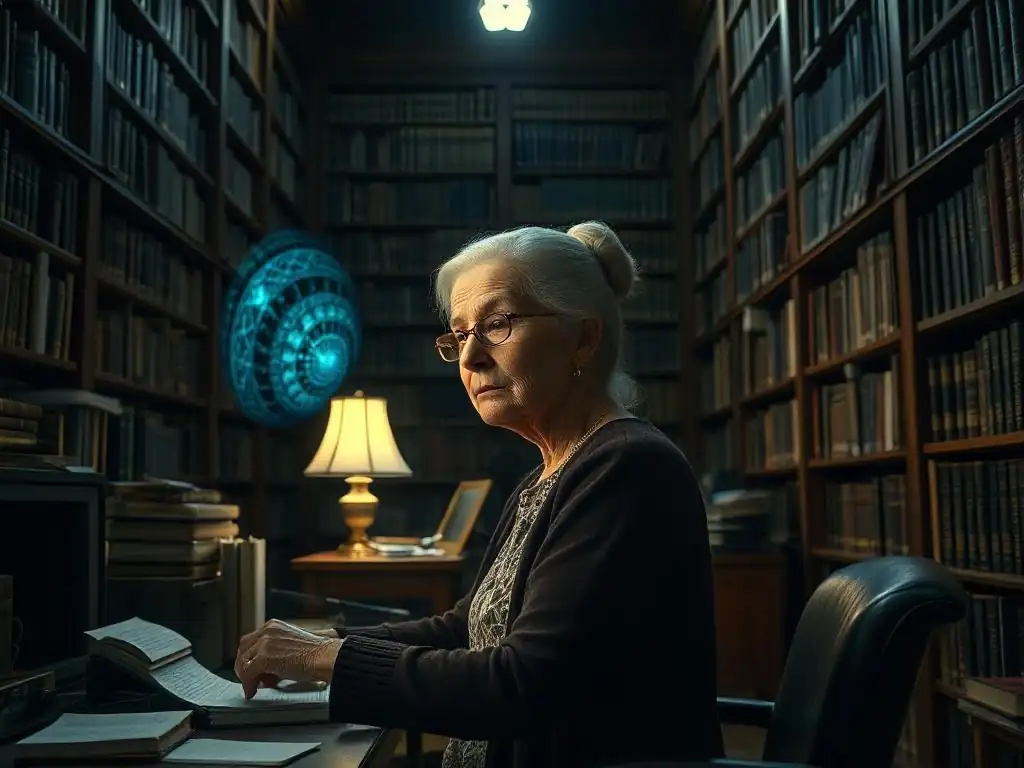
Welcome to WomenInScienceHistory.com, where we illuminate the untold stories of remarkable women who shaped the scientific landscape. Ever wondered about the invisible barriers that women in math have faced throughout history? Delve into "The Persistent Pursuit," our latest article exploring these challenges and celebrating the triumphs of women who defied expectations in the world of theoretical mathematics. Prepare to be inspired by their resilience and groundbreaking contributions!
- Introduction: Celebrating Women's Contributions to Theoretical Mathematics
- Early Obstacles and Societal Expectations: Barriers for Women in Math
- Pioneering Women in Theoretical Mathematics: Case Studies
- Strategies for Success: How Women Navigated Mathematical Challenges
- The Ongoing Fight for Equality: Modern Challenges for Women in Math
- Inspiring Future Generations: The Legacy of Women in Theoretical Mathematics
- The Future of Women in Math: Breaking Down Remaining Barriers
- Conclusion: Celebrating the Enduring Impact of Women in Mathematics
-
Frequently Asked Questions
- What were some of the main barriers that women in theoretical mathematics faced historically?
- How did societal expectations impact the careers of women mathematicians?
- What kind of discrimination did women in mathematics experience in academia?
- Can you name a specific barrier that prevented women from reaching leadership positions in mathematics?
- Why is it important to highlight the stories of women overcoming barriers in mathematics?
- Final Reflection: Embracing the Unfolding Potential
- Ignite Your Mathematical Journey!
Introduction: Celebrating Women's Contributions to Theoretical Mathematics
Women in Pure Mathematics: An Underrepresented History
The annals of pure mathematics have historically been dominated by male figures, creating an impression that women's contributions were either negligible or nonexistent. This perception, however, is a profound misrepresentation of reality. Throughout history, countless women possessed extraordinary mathematical talent and contributed significantly to theoretical advancements, often in the face of immense societal and institutional opposition. Their stories, largely untold or relegated to footnotes, reveal a persistent pursuit of knowledge and an unwavering dedication to the most abstract and challenging of sciences.
Despite the pervasive societal barriers for women in math, these pioneering female mathematicians made breakthroughs in areas ranging from abstract algebra to differential equations and topology. Their work laid foundational stones for future discoveries, yet their names frequently remain absent from mainstream historical accounts. This underrepresentation is not a reflection of their capabilities but rather a testament to the formidable obstacles they had to navigate in academic and scientific spheres.
The Importance of Recognizing Female Mathematicians' Achievements
Recognizing the achievements of female mathematicians is crucial for several compelling reasons. Firstly, it rectifies a significant historical oversight, ensuring that the full tapestry of mathematical innovation is accurately depicted. By highlighting these women's groundbreaking work, we gain a more complete and nuanced understanding of scientific progress. Secondly, and perhaps more importantly, these narratives serve as powerful inspiration for future generations.
When young girls and aspiring female mathematicians see themselves reflected in the history of a field, it dismantles the perception of mathematics as an exclusively male domain. Celebrating these "unsung heroines" helps to dismantle the invisible women in math barriers that still subtly deter many from pursuing careers in theoretical sciences. Their legacies demonstrate that brilliance knows no gender and that perseverance can triumph over even the most entrenched biases.
Early Obstacles and Societal Expectations: Barriers for Women in Math
Societal Bias Against Women in STEM Fields
Historically, deeply ingrained societal biases formed some of the most formidable women in math barriers. Prevailing beliefs often asserted that women lacked the intellectual capacity or the necessary "masculine" traits for rigorous abstract thought required in fields like mathematics. Women were largely confined to domestic roles, and their education, if it occurred at all, was typically limited to subjects deemed appropriate for their perceived social functions, such as needlework or basic household management. The idea of a woman engaging in complex mathematical problems was often met with ridicule or outright hostility.
This bias manifested in various forms, from informal discouragement within families to formal exclusion from academic institutions and scientific societies. For example, in the 19th century, many universities across Europe and North America simply did not admit women, or if they did, it was under strict conditions, often denying them official degrees or participation in public academic life. This systemic exclusion reinforced the misconception that women were inherently unsuited for intellectual pursuits, thereby creating a self-fulfilling prophecy of underrepresentation.
Limited Educational Opportunities for Female Mathematicians Historically
The lack of formal educational opportunities was a defining barrier for women in mathematics for centuries. Prior to the late 19th and early 20th centuries, women rarely had access to universities or specialized mathematical training. Those who managed to pursue their passion often did so through private tutors, self-study, or by auditing lectures without official enrollment. Sofia Kovalevskaya, for instance, had to arrange a "fictitious marriage" to gain the independence necessary to travel abroad and study mathematics privately with Karl Weierstrass in Berlin, as universities in Russia and Germany were largely closed to women.
Even when some institutions began to cautiously open their doors, the path for female mathematicians remained fraught with challenges. They were often denied the same resources as their male counterparts, such as library access, laboratory space, or opportunities for research assistantships. The absence of a structured academic pathway meant that many exceptionally talented women struggled to develop their full potential or gain the credentials necessary for professional recognition, effectively stifling their contributions to the field.
Overcoming Gender Stereotypes in Mathematical Sciences
Overcoming deeply entrenched gender stereotypes was a constant battle for pioneering women in mathematical sciences. These stereotypes suggested that women were too emotional, lacked logical reasoning, or were simply not robust enough for the intellectual demands of theoretical mathematics. Such preconceived notions created a pervasive atmosphere of skepticism and often outright resistance to their presence in academic settings. Women who dared to pursue mathematics were frequently seen as anomalies, their achievements often attributed to luck or unusual circumstances rather than innate talent.
To succeed, these women had to not only demonstrate exceptional mathematical prowess but also possess extraordinary resilience and determination. They had to consistently prove their capabilities in environments that were often unwelcoming or overtly discriminatory. For example, even after demonstrating unparalleled brilliance, Emmy Noether faced years of institutional resistance at the University of Göttingen, where some faculty members famously objected to a woman being appointed as a professor, despite her being a protégé of David Hilbert. These experiences highlight the immense personal fortitude required to challenge and ultimately transcend the gender-based barriers for women in math.
Pioneering Women in Theoretical Mathematics: Case Studies
Emmy Noether: Breaking Ground in Abstract Algebra
Amalie Emmy Noether (1882–1935) stands as one of the most influential mathematicians of the 20th century, renowned for her groundbreaking work in abstract algebra. Her contributions profoundly reshaped the understanding of concepts like rings, fields, and algebras, laying the foundation for significant advancements in mathematics and theoretical physics. Noether's work on ideal theory, particularly her development of the ascending chain condition, revolutionized the field, leading to the concept of "Noetherian rings" which are fundamental to modern algebra.
Beyond abstract algebra, Noether's most celebrated contribution to physics is Noether's Theorem, which establishes a fundamental connection between symmetries and conservation laws. Published in 1918, this theorem states that every differentiable symmetry of the action of a physical system has a corresponding conservation law. For example, the symmetry of time translation corresponds to the conservation of energy, and spatial translation symmetry corresponds to the conservation of momentum. This theorem remains a cornerstone of theoretical physics, underpinning theories from classical mechanics to quantum field theory and general relativity.
Overcoming Institutional Resistance to Noether's Academic Career
Despite her immense intellectual contributions, Emmy Noether faced significant women in math barriers in her academic career, particularly regarding institutional resistance. After completing her doctorate in 1907 at the University of Erlangen (one of the few German universities admitting women at the time), she worked for years without pay or an official position. In 1915, renowned mathematicians David Hilbert and Felix Klein invited her to the University of Göttingen, a global hub for mathematics. However, the faculty council vehemently opposed her habilitation (the qualification for teaching at a German university) due to her gender.
Hilbert famously retorted to his colleagues, "I do not see that the sex of the candidate is an argument against her admission as a Privatdozent. After all, we are a university, not a bathhouse."
Despite this powerful advocacy, Noether was only allowed to lecture under Hilbert's name for several years. It wasn't until 1919, after the end of World War I and a shift in academic policies, that she was finally granted the title of Privatdozent, and even then, she remained unpaid for years, eventually becoming an "unofficial extraordinary professor" in 1923, still without a full professorship or proper salary until later in her career.
Sofia Kovalevskaya: A Trailblazer in Analysis and Differential Equations
Sofia Kovalevskaya (1850–1891) was a brilliant Russian mathematician who overcame immense societal and educational barriers for women in mathematics to achieve international recognition. Born into an aristocratic family, she displayed extraordinary mathematical aptitude from an early age. However, universities in Russia were closed to women. To pursue her higher education, she entered into a "fictitious marriage" with Vladimir Kovalevsky, a paleontologist, which allowed her to travel abroad independently, a necessity for women seeking intellectual freedom at the time.
Kovalevskaya sought out leading mathematicians in Europe, eventually studying privately with Karl Weierstrass in Berlin, who recognized her exceptional talent and dedicated significant time to her instruction. Despite Weierstrass's support, she faced constant challenges, including the difficulty of finding universities willing to accept a woman. In 1874, through Weierstrass's persistent advocacy, she earned her doctorate summa cum laude from the University of Göttingen, becoming the first woman in Northern Europe to receive a doctoral degree in mathematics.
Significant Contributions to Partial Differential Equations
Sofia Kovalevskaya's most significant contributions were in the fields of analysis and partial differential equations. Her doctoral dissertation, which she submitted to Göttingen, included three papers, one of which was "Zur Theorie der partiellen Differentialgleichungen" (On the Theory of Partial Differential Equations). This work contained a proof of what is now known as the Cauchy-Kovalevskaya theorem, a fundamental result guaranteeing the existence and uniqueness of solutions to certain types of partial differential equations. This theorem remains a cornerstone in the theory of differential equations.
Later, Kovalevskaya also made profound contributions to the mechanics of rigid body rotation. In 1888, she won the prestigious Prix Bordin from the French Academy of Sciences for her paper "Mémoire sur un cas particulier du problème de la rotation d'un corps pesant autour d'un point fixe, où l'intégration s'effectue à l'aide des fonctions ultraelliptiques du temps" (Memoir on a particular case of the problem of the rotation of a rigid body about a fixed point, where the integration is carried out with the aid of ultra-elliptic functions of time).
Her solution provided a new, previously unknown case of integrable motion for a rigid body, a problem that had challenged mathematicians for centuries. Her work earned her an appointment as a professor at Stockholm University in 1889, making her the first woman to hold such a position in Northern Europe.
Maryam Mirzakhani: A Visionary in Teichmüller Theory
Maryam Mirzakhani (1977–2017) was an Iranian mathematician and the only woman to date to be awarded the Fields Medal, the highest honor in mathematics. Her work primarily focused on the geometry of Riemann surfaces and their moduli spaces, revolutionizing several subfields within theoretical mathematics. Mirzakhani's journey began with exceptional promise, earning gold medals in the International Mathematical Olympiad in 1994 and 1995. She pursued her undergraduate degree at Sharif University of Technology in Tehran before moving to Harvard University for her Ph.D., which she completed in 2004 under the supervision of Curtis McMullen.
Mirzakhani's research encompassed hyperbolic geometry, ergodic theory, and symplectic geometry, leading to groundbreaking insights into the dynamics of billiards and the properties of moduli spaces of Riemann surfaces. She developed novel techniques to calculate the volumes of moduli spaces and to understand the behavior of geodesics on hyperbolic surfaces. Her ability to synthesize ideas from disparate areas of mathematics allowed her to solve long-standing problems and open entirely new avenues of research, solidifying her legacy as a visionary in 21st-century mathematics.
Facing Challenges as an Iranian Woman in Mathematics
While Maryam Mirzakhani achieved unparalleled success, her path as an Iranian woman in mathematics was not without its unique set of subtle women in math barriers. Growing up in post-revolutionary Iran, cultural expectations and limited opportunities for women in certain academic fields could have presented significant hurdles. However, her family and her early education fostered her exceptional talent, allowing her to thrive in a competitive environment. Her success at the International Mathematical Olympiad, where she was one of the few female participants, demonstrated her ability to excel on a global stage.
Beyond the initial challenges of navigating cultural norms, Mirzakhani's journey to becoming a leading mathematician in the United States involved adapting to new academic systems and cultures. Her achievement of the Fields Medal in 2014, the first time it was awarded to a woman in its nearly 80-year history, was a monumental moment. It not only celebrated her extraordinary intellect but also served as a powerful symbol, breaking down perceived gender barriers in theoretical mathematics and inspiring countless women globally, especially those from underrepresented backgrounds, to pursue their mathematical ambitions.
Revolutionizing the Understanding of Riemann Surfaces
Maryam Mirzakhani's profound impact on theoretical mathematics is most evident in her revolutionary contributions to the understanding of Riemann surfaces. Her doctoral thesis provided a new proof for Witten's conjecture regarding the intersection numbers of stable moduli spaces of Riemann surfaces, linking it to the theory of matrix models. This work was a significant breakthrough, connecting two seemingly disparate areas of mathematics. She developed methods to count simple closed geodesics on hyperbolic Riemann surfaces, leading to asymptotic formulas that provided deep insights into their geometric and topological properties.
Her subsequent work, often in collaboration, explored the dynamics on moduli spaces, particularly the behavior of earthquake maps and the properties of the Weil-Petersson metric. She introduced novel techniques, such as the "train track" method, to analyze the complex structures of these spaces.
By bringing together ideas from hyperbolic geometry, ergodic theory, and symplectic geometry, Mirzakhani transformed the field, providing powerful tools and a fresh perspective that continues to influence research in low-dimensional topology and mathematical physics. Her research not only solved complex problems but also opened up entirely new directions for future exploration, solidifying her legacy as a truly transformative figure.
Mentorship and Collaboration: Building Supportive Networks
For women facing the significant women in math barriers of their eras, mentorship and collaboration proved to be indispensable strategies for success. In environments often unwelcoming or overtly hostile, having a supportive mentor who recognized and championed their talent could make all the difference. For instance, Sofia Kovalevskaya's exceptional mathematical development was largely due to the dedicated mentorship of Karl Weierstrass, who tutored her privately for years when formal university admission was denied. His belief in her abilities and his willingness to advocate for her academic recognition were pivotal to her career.
Similarly, Emmy Noether benefited from the unwavering support of David Hilbert and Felix Klein at Göttingen, who fought for her right to lecture and secure a position, even when faced with staunch opposition from their colleagues. Beyond one-on-one mentorship, collaboration offered female mathematicians opportunities to engage intellectually, share ideas, and build supportive networks. These collaborations provided not only intellectual stimulation but also a sense of community and validation, helping to combat the isolation that often accompanied their pioneering journeys.
Persistence and Resilience in the Face of Discrimination
The stories of women who achieved prominence in theoretical mathematics are invariably tales of extraordinary persistence and resilience in the face of pervasive discrimination. From being denied formal education to facing professional exclusion and even ridicule, these women encountered numerous gender barriers in theoretical mathematics that would have deterred less determined individuals. They often had to work twice as hard to prove their capabilities, constantly challenging preconceived notions about women's intellectual capacities.
For example, Emmy Noether continued her groundbreaking research and lecturing for years without a proper salary or official title at Göttingen, driven solely by her passion for mathematics. Sofia Kovalevskaya pursued her education across continents, enduring personal sacrifices and navigating complex social obstacles to gain access to the knowledge she craved. This unwavering commitment, coupled with an unyielding belief in their own abilities, allowed them to push through systemic resistance and ultimately carve out spaces for themselves within the mathematical community, demonstrating that sheer tenacity can indeed overcome significant obstacles for female mathematicians.
Finding Allies and Advocates within the Mathematical Community
A crucial strategy for women navigating the historical barriers for women in mathematics was the ability to find influential allies and advocates within the male-dominated mathematical community. These champions often held positions of power and could leverage their influence to open doors, secure opportunities, or simply provide a platform for recognition that would otherwise be denied. The support of these allies was often the decisive factor in enabling female mathematicians to advance their careers and gain the recognition they deserved.
As highlighted, Karl Weierstrass's tireless efforts to secure Sofia Kovalevskaya's doctorate at Göttingen and her eventual professorship in Stockholm were instrumental. Similarly, David Hilbert's outspoken advocacy for Emmy Noether at Göttingen was critical in her eventual, albeit delayed, appointment. These male allies, recognizing the extraordinary talent before them, were willing to challenge the prevailing norms and institutional resistance. Their support not only provided practical assistance but also lent crucial credibility and legitimacy to the work of these pioneering women, helping to dismantle the women in math barriers one step at a time.
The Ongoing Fight for Equality: Modern Challenges for Women in Math

Addressing Gender Bias in Academic Hiring and Promotion
While overt women in math barriers like outright exclusion from universities are largely a thing of the past, subtle and unconscious gender bias continues to pose significant challenges in academic hiring and promotion within mathematics. Studies have shown that biases can influence how résumés are evaluated, how recommendation letters are perceived, and how candidates are judged in interviews, often disadvantaging female applicants. This can lead to women being underrepresented in faculty positions, particularly at higher ranks such as full professorships, despite earning a substantial percentage of mathematics PhDs.
For example, while women may earn around 20-25% of mathematics PhDs in some Western countries, their representation among tenured faculty, especially full professors, can drop to below 15-20% in many departments. This disparity suggests that factors beyond individual merit, such as subtle biases in evaluation processes or lack of equitable promotion opportunities, contribute to a slower progression for female mathematicians up the academic ladder. Addressing these systemic issues requires proactive measures, including unconscious bias training, transparent hiring criteria, and diverse search committees, to ensure truly merit-based selection.
Combating the "Leaky Pipeline" in Mathematics
The "leaky pipeline" phenomenon remains a significant modern barrier for women in mathematics. This term describes the trend where women enter STEM fields, including mathematics, in reasonable numbers at undergraduate or graduate levels, but their representation steadily declines at each subsequent career stage, from post-doctoral positions to tenure-track faculty, and ultimately to senior leadership roles. Factors contributing to this "leakage" are complex and multifaceted, encompassing issues such as lack of mentorship, work-life balance challenges, and persistent subtle biases.
Women in mathematics often face disproportionate burdens in balancing demanding academic careers with family responsibilities, especially during critical early career stages. Furthermore, they may experience microaggressions, feelings of isolation, or less supportive environments compared to their male counterparts, leading some to leave academia. Combating this requires comprehensive institutional support, including flexible work arrangements, robust mentoring programs, and creating inclusive departmental cultures that actively address the unique challenges faced by female mathematicians.
Promoting Inclusive Environments in Mathematical Research
Promoting truly inclusive environments is essential to dismantle the remaining women in math barriers and foster a thriving community for all mathematicians. An inclusive environment goes beyond simply avoiding overt discrimination; it actively ensures that all individuals, regardless of gender, feel valued, respected, and supported in their research and career development. This includes ensuring equitable access to resources, opportunities for collaboration, and visibility in conferences and publications.
Many mathematical departments and professional organizations are now implementing initiatives aimed at fostering inclusivity. These include explicit codes of conduct for conferences to prevent harassment, establishing diversity and inclusion committees, and actively promoting female speakers and researchers at workshops and seminars. The goal is to create spaces where implicit biases are challenged, diverse perspectives are celebrated, and all mathematicians feel empowered to contribute their best work without facing additional obstacles for female mathematicians due to their gender.
Inspiring Future Generations: The Legacy of Women in Theoretical Mathematics
The Importance of Role Models for Young Women in STEM
The visibility of successful women in theoretical mathematics is paramount for inspiring future generations and breaking down perceived women in math barriers. When young girls and aspiring female students see accomplished mathematicians like Maryam Mirzakhani, they gain tangible proof that a career in this challenging field is not only possible but also deeply rewarding. Role models provide a crucial counter-narrative to historical biases and societal stereotypes that often deter girls from pursuing mathematics.
These inspiring figures demonstrate that mathematical brilliance knows no gender and that dedication can overcome significant obstacles. Their stories offer blueprints for navigating academic and professional landscapes, providing insights into strategies for success and resilience. By highlighting the achievements of women like Emmy Noether and Sofia Kovalevskaya, we not only celebrate their past contributions but also actively cultivate a sense of belonging and aspiration among young women considering a path in STEM, thereby directly addressing the persistent gender barriers in theoretical mathematics.
Encouraging Girls' Interest in Mathematics Education
Encouraging girls' interest in mathematics education from an early age is a vital step in dismantling future women in math barriers. Research indicates that girls often begin to lose interest in mathematics and science subjects during middle school, influenced by societal messages, lack of visible female role models, and sometimes biased teaching approaches. Proactive interventions are needed to foster a positive and engaging relationship with mathematics throughout their formative years.
This can involve implementing innovative teaching methods that make mathematics more relatable and enjoyable, providing access to extracurricular math clubs and competitions, and ensuring that educators are trained to address unconscious biases in the classroom. Programs specifically designed to engage girls in problem-solving and critical thinking through mathematical challenges can build confidence and curiosity. By nurturing their interest and talent early, we can lay the groundwork for a more diverse and equitable future in theoretical mathematics, ensuring that no potential is lost due to outdated stereotypes.
Creating a More Equitable Future for Women in Mathematics
Creating a more equitable future for women in mathematics requires a concerted and sustained effort from individuals, institutions, and the broader scientific community. This involves actively dismantling the women in math barriers that continue to exist, both overt and subtle. It means moving beyond simply celebrating past achievements to actively shaping a present and future where gender plays no role in one's opportunities or recognition within the field.
An equitable future entails ensuring fair hiring and promotion practices, providing robust mentorship and sponsorship opportunities, and fostering truly inclusive research environments where all voices are heard and valued. It also involves challenging the structural issues that contribute to the "leaky pipeline" phenomenon. By prioritizing diversity, equity, and inclusion, the mathematical community can ensure that it harnesses the full spectrum of talent available, leading to richer, more innovative, and more comprehensive advancements in theoretical mathematics for generations to come.
The Future of Women in Math: Breaking Down Remaining Barriers
Promoting Diversity and Inclusion Initiatives
The future of women in mathematics critically depends on the continued promotion and expansion of diversity and inclusion initiatives. These proactive efforts are designed to systematically break down the remaining women in math barriers and ensure that the field is truly representative of all talents. Such initiatives often include implementing gender-neutral language in job descriptions, establishing clear guidelines for fair evaluation processes, and creating explicit mentorship programs for female graduate students and early-career researchers.
Furthermore, professional mathematical societies and academic departments are increasingly forming diversity and inclusion committees, tasked with monitoring progress, identifying areas of concern, and developing strategies to foster a more welcoming environment. These efforts are not merely about increasing numbers; they are about fundamentally changing the culture of mathematics to one that celebrates varied perspectives and actively supports the success of all individuals, thereby enriching the entire discipline and ensuring that no potential is lost due to historical gender barriers in theoretical mathematics.
Addressing Systemic Issues in Mathematical Education and Research
Breaking down the remaining women in math barriers necessitates a deeper look at systemic issues within mathematical education and research. This involves scrutinizing the entire ecosystem, from early childhood education to university curricula and research funding mechanisms. For instance, unconscious biases in teaching materials or classroom interactions can subtly discourage girls from pursuing advanced mathematics. In research, biases might manifest in peer review processes, grant allocations, or opportunities for presenting at prestigious conferences.
Addressing these systemic problems requires comprehensive training for educators and researchers on implicit bias, developing curricula that highlight diverse contributions to mathematics, and implementing transparent and equitable processes for funding and publication. It also means actively promoting flexible work arrangements and parental leave policies within academic institutions to support female mathematicians in balancing their careers and family lives, thereby directly combating the "leaky pipeline" effect and ensuring that women can sustain their careers in theoretical mathematics.
The Continued Pursuit of Excellence by Women in Theoretical Mathematics
Despite the historical and ongoing obstacles for female mathematicians, women continue to pursue excellence in theoretical mathematics with unwavering dedication. The legacies of pioneers like Emmy Noether, Sofia Kovalevskaya, and Maryam Mirzakhani serve as powerful reminders of the profound impact women have made and continue to make on the field. Their stories are not just about overcoming adversity; they are about groundbreaking discoveries, innovative thinking, and an unyielding passion for the beauty and rigor of pure mathematics.
The future of theoretical mathematics will undoubtedly be shaped by the continued contributions of women who, empowered by the progress made and supported by increasingly inclusive environments, will push the boundaries of knowledge. As more women in math achieve prominence, their visibility will further inspire new generations, creating a virtuous cycle of talent and achievement. The persistent pursuit of mathematical excellence by women is a testament to their intellectual prowess and a promise of a more diverse, equitable, and brilliantly innovative future for the discipline.
Conclusion: Celebrating the Enduring Impact of Women in Mathematics
Recognizing the Unsung Heroines of Mathematical History
The journey through the lives and achievements of women in theoretical mathematics reveals a powerful narrative of resilience, intellect, and profound impact. From the abstract algebraic breakthroughs of Emmy Noether to Sofia Kovalevskaya's pioneering work in differential equations and Maryam Mirzakhani's revolutionary insights into Riemann surfaces, these women, and countless others, navigated formidable women in math barriers to leave an indelible mark on one of humanity's most abstract and challenging fields. Their stories are a testament to human ingenuity and an urgent call to recognize those "unsung heroines" whose contributions have often been overlooked or marginalized in historical accounts.
Acknowledging their struggles and celebrating their triumphs is not merely an act of historical correction; it is an essential step towards a more complete and truthful understanding of mathematical progress. These narratives highlight that genius knows no gender, and that the absence of women from historical records often reflects societal limitations rather than a lack of talent or effort on their part. By bringing these stories to light, we enrich our collective understanding of mathematics and honor the enduring spirit of these pioneering women.
The Ongoing Journey Towards Gender Equality in STEM
While significant progress has been made since the days when women were outright barred from universities, the journey towards true gender equality in STEM, and particularly in mathematics, is far from over. The persistent women in math barriers have evolved from overt discrimination to more subtle, systemic challenges like unconscious bias in hiring, the "leaky pipeline" phenomenon, and a lack of inclusive environments. These modern obstacles continue to limit the full participation and advancement of women in theoretical mathematics.
Therefore, the ongoing commitment to address these subtle yet powerful barriers is crucial. It requires vigilance, proactive policy changes, and a continuous re-evaluation of institutional practices. The aim is not just to increase representation but to foster a culture where every mathematician, regardless of gender, feels equally empowered to contribute, innovate, and lead. This sustained effort is vital to ensure that the mathematical community truly reflects the diversity of talent available.
A Call to Action for Continued Progress
The stories of women overcoming gender barriers in theoretical mathematics serve as both an inspiration and a powerful call to action. It is incumbent upon individuals, academic institutions, and professional organizations to continue the work of dismantling remaining obstacles for female mathematicians. This means actively promoting diversity and inclusion initiatives, challenging unconscious biases in all aspects of academia, and creating supportive environments where women can thrive at every stage of their mathematical careers.
By championing mentorship, fostering inclusive communities, and advocating for equitable opportunities, we can ensure that future generations of female mathematicians do not face the same formidable women in math barriers that their predecessors endured. The continued pursuit of excellence by women in theoretical mathematics is not just about individual success; it is about enriching the entire field, fostering new discoveries, and inspiring a more equitable and innovative future for mathematics as a whole.
Frequently Asked Questions
What were some of the main barriers that women in theoretical mathematics faced historically?
Historically, women faced significant social prejudice and limited access to education and academic positions. They were often excluded from scientific communities and lacked opportunities for mentorship.
How did societal expectations impact the careers of women mathematicians?
Societal expectations often steered women towards domestic roles, making it difficult for them to pursue demanding academic careers. This created a lack of support and recognition for their mathematical achievements.
What kind of discrimination did women in mathematics experience in academia?
Women frequently encountered gender bias in hiring, promotion, and publication processes. They were also subjected to microaggressions and often had their work undervalued compared to their male counterparts.
Can you name a specific barrier that prevented women from reaching leadership positions in mathematics?
A major barrier was the existence of "old boys' networks" which were informal networks that favored men. This excluded women from opportunities for advancement and leadership roles.
Why is it important to highlight the stories of women overcoming barriers in mathematics?
Highlighting these stories helps to challenge stereotypes, inspire future generations of female mathematicians, and acknowledge the historical contributions of women in a field where their work was often unrecognized.
Final Reflection: Embracing the Unfolding Potential
The stories shared within this article serve as a powerful testament to the enduring spirit of women in theoretical mathematics, highlighting the ongoing struggle against systemic barriers and the unwavering pursuit of intellectual passion. These narratives are not relics of the past; they resonate deeply today, reminding us that the fight for equity and inclusion in STEM fields remains a critical and urgent endeavor.
The impact of these women extends far beyond their individual achievements; they have reshaped the cultural landscape of mathematics, inspiring future generations to challenge preconceived notions and break down barriers. Their courage and resilience underscore the vital importance of fostering supportive environments where all individuals, regardless of gender, can thrive. The most effective way to do it, is to do it.
- Amelia Earhart. This quote perfectly encapsulates the proactive spirit needed to overcome obstacles and pave the way for future generations of women in mathematics.
As you reflect on these stories, consider the role you can play in dismantling the barriers that still exist. What steps can you take, in your own sphere of influence, to champion inclusivity and empower women in mathematics and beyond? Let us all commit to creating a future where talent and passion, not gender, determine the limits of achievement.
Ignite Your Mathematical Journey!
Thank you for exploring the inspiring stories of women who conquered challenges in theoretical mathematics. We hope you found their resilience and dedication empowering. Now, it's your turn to contribute to their legacy.
- Dive deeper: Embark on your own exploration of a mathematical concept that intrigued you the most from their work. Revisit the equations, theories, or problems they grappled with, and see where your curiosity takes you.
- Share their untold stories:Nominate an under-appreciated woman in mathematics for recognition on WomenInScienceHistory.com, highlighting her unique contributions.
- Inspire future generations: Organize a local event showcasing the accomplishments of these mathematicians at a school or library.
What mathematical hurdle will you courageously tackle next?