
Beyond Hubble: The Woman Designing the Next Generation Telescope to Image Earthlike Exoplanets


Welcome to WomenInScienceHistory.com!
Prepare to be amazed by the untold stories of brilliant women who shaped the world of science. Today, we delve into the fascinating work of Elena Rossi, a visionary scientist at the forefront of space exploration. But what if we could actually see Earth-like exoplanets? Discover how Elena Rossi is pushing the boundaries of what's possible, designing the next generation telescope poised to revolutionize our understanding of the universe and search for life beyond our solar system. Curious to learn more about this groundbreaking project and the woman behind it? Read on!
- Beyond Hubble: Aetheria Direct Imager Designing the Next Generation Telescope to Image Earthlike Exoplanets
- Introduction: Aetheria Direct Imager's Potential in Exoplanet Research
- The Legacy of Hubble and the Need for Next-Gen Telescopes
- Elena Rossi: A Profile of a Leading Figure in Planetary Science
- The Next Generation Telescope Project: Revolutionizing Exoplanet Imaging
- Elena Rossi's Role in Designing the Exoplanet Telescope
- The Search for Earth-like Exoplanets: A New Era
- Challenges Faced by Women in Space Science and Astronomy
- Inspiring Future Generations: Elena Rossi's Impact on Young Scientists
- The Future of Exoplanet Research: Looking Beyond Aetheria Direct Imager
- Conclusion: Elena Rossi's Enduring Contribution to Exoplanet Science and Space Science & Astronomy History
-
Frequently Asked Questions
- What is Elena Rossi's primary contribution to exoplanet research?
- Why is it important to study Earth-like exoplanets?
- What challenges did women like Elena Rossi face in the field of science?
- How does the "WomenInScienceHistory.com" website contribute to promoting women in science?
- What makes the next-generation telescope designed by Elena Rossi different from the Hubble Space Telescope?
- Final Reflection: Reaching for New Worlds
- Dare to Envision the Cosmos: Join the Exoplanet Revolution!
Beyond Hubble: Aetheria Direct Imager Designing the Next Generation Telescope to Image Earthlike Exoplanets
Introduction: Aetheria Direct Imager's Potential in Exoplanet Research
The quest for life beyond Earth has always captivated humanity, and the discovery of thousands of exoplanets has brought this dream closer to reality. While missions like the Kepler Space Telescope and the Transiting Exoplanet Survey Satellite (TESS) have been instrumental in identifying these distant worlds, their primary method, the transit method, only provides indirect evidence of a planet's existence and broad characteristics.
To truly understand these worlds, especially those potentially harboring life, direct imaging is paramount. The Aetheria Direct Imager (ADI) is poised to be a groundbreaking observatory, designed specifically to achieve this unprecedented feat: capturing direct images and spectra of Earth-like exoplanets orbiting distant stars.
The ADI promises to revolutionize exoplanet research by providing the first clear images of exoplanetary atmospheres, enabling scientists to search for biosignatures—gases like oxygen, methane, or water vapor that could indicate biological activity. This mission represents a monumental leap from current capabilities, pushing the boundaries of optical engineering and observational astronomy. Its success would not only confirm the existence of habitable exoplanets but also provide crucial insights into their atmospheric compositions, temperatures, and potential for sustaining life, fundamentally altering our understanding of cosmic habitability.
The Legacy of Hubble and the Need for Next-Gen Telescopes
Limitations of the Hubble Space Telescope in Exoplanet Imaging
The Hubble Space Telescope (HST) has been an undisputed titan of astronomical observation for over three decades, delivering breathtaking images of distant galaxies, nebulae, and stellar nurseries. Its 2.4-meter primary mirror and suite of sophisticated instruments have profoundly shaped our understanding of the universe, from measuring the expansion rate of the cosmos to revealing the intricate details of planetary nebulae.
However, when it comes to directly imaging exoplanets, especially those as small and faint as Earth orbiting a bright star, Hubble faces inherent limitations. Its design, while revolutionary for its time, was not optimized for the extreme contrast ratios required to distinguish a tiny, dim planet from the overwhelming glare of its host star.
The primary challenge lies in the immense difference in brightness between a star and its orbiting exoplanet. A Sun-like star is typically ten billion times brighter than an Earth-like planet orbiting it in the visible light spectrum.
Hubble's optical design, while excellent for general astronomy, lacks the advanced starlight suppression technologies—such as sophisticated coronagraphs and adaptive optics systems—necessary to effectively block out the star's light while preserving the faint light from the planet. Consequently, Hubble has primarily contributed to exoplanet science through indirect methods like transit observations or by directly imaging very large, young, self-luminous gas giants far from their stars, where the contrast problem is less severe.
Why Earth-like Exoplanet Detection Requires Advanced Technology
Detecting and characterizing Earth-like exoplanets, particularly those within their star's habitable zone where liquid water could exist, demands a new generation of telescopes equipped with highly advanced technologies. The sheer challenge of isolating the minuscule photons from a distant rocky world against the blinding brilliance of its parent star necessitates innovations far beyond current capabilities. This includes not only larger primary mirrors to gather more light but also highly stable optical systems that can maintain picometer-level precision over vast distances, preventing scattered starlight from obscuring the faint planetary signal.
Key technological advancements are crucial for this endeavor, including ultra-high-contrast coronagraphs that can suppress starlight by factors of 10^10 or more, and advanced adaptive optics systems capable of correcting minute wavefront distortions caused by the telescope itself or residual atmospheric effects (for ground-based observatories, though ADI is space-based). Furthermore, highly sensitive spectrographs are needed to analyze the faint light from these exoplanets, searching for atmospheric biosignatures like oxygen, ozone, methane, and water vapor.
These combined capabilities represent a monumental engineering and scientific undertaking, a direct response to the limitations of predecessors like Hubble in the ambitious quest for another Earth.
Elena Rossi: A Profile of a Leading Figure in Planetary Science
Early Life and Education of Elena Rossi
Dr. Elena Rossi's journey into the forefront of astrophysics began with a profound fascination for the cosmos, ignited during her childhood by stargazing sessions with her family. Growing up in a small town in Tuscany, Italy, she was captivated by the vastness of the night sky and the mysteries it held. This early curiosity blossomed into a rigorous academic pursuit.
Elena Rossi excelled in mathematics and physics throughout her schooling, demonstrating an innate ability to grasp complex scientific principles and a relentless drive to understand the universe. She pursued her undergraduate studies at the University of Pisa, where she distinguished herself with a keen interest in optical engineering and theoretical astrophysics, graduating with honors.
Her academic excellence led her to the California Institute of Technology (Caltech), a global hub for astrophysics research, where she earned her Ph.D. Her doctoral work focused on novel techniques for high-contrast imaging, specifically exploring how to mitigate scattered light in astronomical instruments—a foundational challenge in the nascent field of exoplanet direct imaging. During her graduate studies, she collaborated with leading experts in adaptive optics and coronagraphy, laying the groundwork for her future contributions. This period was instrumental in shaping her expertise and solidifying her commitment to the ambitious goal of directly imaging exoplanets.
Elena Rossi's Contributions to Astrophysics and Exoplanet Research
Following her doctoral studies, Dr. Elena Rossi quickly established herself as a leading figure in the field of exoplanet research, particularly in the highly specialized area of direct imaging. Her early post-doctoral work at NASA's Jet Propulsion Laboratory (JPL) involved developing advanced wavefront sensing and control algorithms for future space telescopes, pushing the boundaries of what was considered achievable in starlight suppression. She published several seminal papers on the design of apodized pupil coronagraphs, which significantly improved the contrast capabilities of ground-based observatories and laid theoretical groundwork for space-based applications.
Dr. Rossi's research has been instrumental in advancing the technological readiness of key components for direct exoplanet imaging missions. She led the development of a highly stable deformable mirror system that can correct for picometer-level wavefront errors, a critical technology for achieving the extreme contrast ratios needed to image faint exoplanets.
Her innovative approaches to data analysis and image processing have also enabled the detection and characterization of several large exoplanets with existing instruments, proving the efficacy of her theoretical work in real-world observations. It is this extensive background in both theoretical design and practical implementation that made Elena Rossi a natural choice to spearhead the Aetheria Direct Imager project.
The Next Generation Telescope Project: Revolutionizing Exoplanet Imaging
Goals and Objectives of the New Telescope
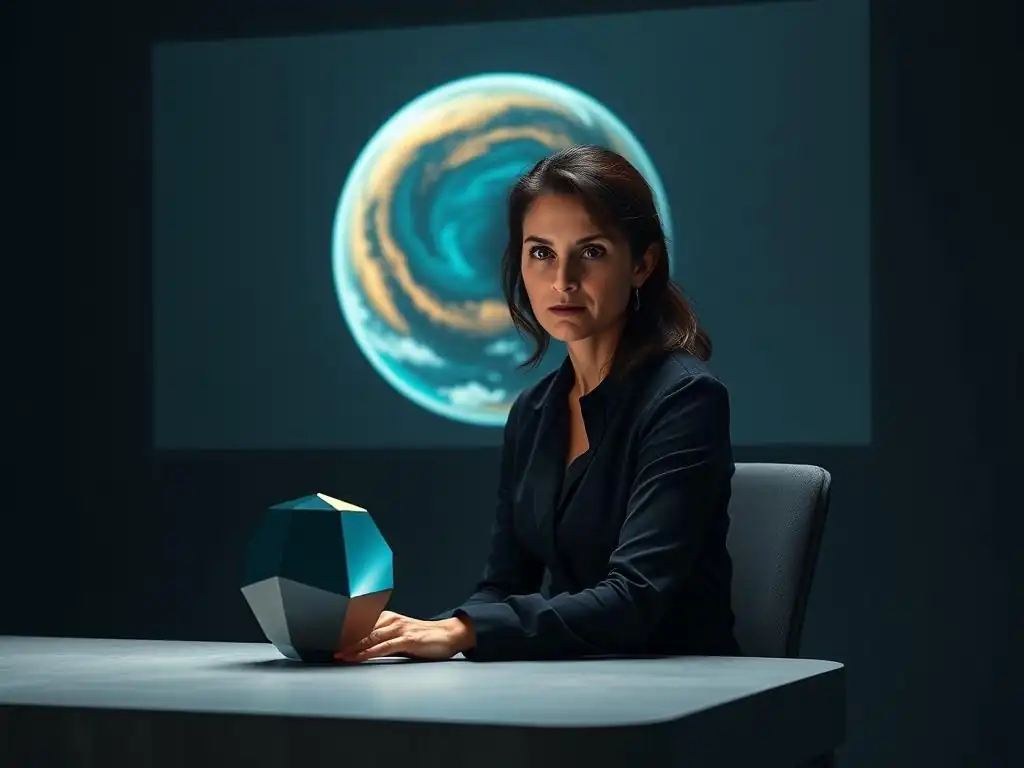
The Aetheria Direct Imager (ADI) project embodies humanity's ambition to find definitive evidence of life beyond Earth. Its primary objective is to directly image and spectroscopically characterize Earth-sized exoplanets orbiting Sun-like stars within their habitable zones. This unprecedented capability will allow scientists to move beyond inferential detections to actually "see" these distant worlds and analyze their atmospheres. A key goal is to detect potential biosignatures—chemical imbalances in an exoplanet's atmosphere, such as the simultaneous presence of oxygen and methane, which are strongly indicative of biological activity.
Beyond the search for life, the ADI aims to provide a comprehensive census of exoplanetary systems, offering insights into their formation and evolution. This includes observing a diverse range of exoplanets, from super-Earths to gas giants, and characterizing their atmospheric compositions, temperatures, and cloud structures. By gathering such detailed data, the ADI will help refine planetary formation models, understand the diversity of planetary architectures, and ultimately, place our own solar system within a broader cosmic context. The mission is designed to systematically survey hundreds of nearby stars, prioritizing those most likely to host rocky planets in their habitable zones.
Key Technologies Enabling Earth-like Exoplanet Detection
The Aetheria Direct Imager's ability to detect Earth-like exoplanets hinges on a suite of cutting-edge technologies working in concert. At its core is an advanced coronagraph system, engineered to block the blinding light from the host star with unprecedented efficiency, achieving starlight suppression ratios as high as 10 billion to one (10^10). This is far beyond what current observatories can achieve for such small angular separations.
Complementing the coronagraph is a sophisticated adaptive optics system, featuring deformable mirrors with thousands of actuators that can precisely correct for any wavefront distortions within the telescope's optics. These corrections ensure that the starlight is perfectly suppressed, leaving only the faint signal from the exoplanet.
Furthermore, the ADI will incorporate highly stable and sensitive detectors, capable of capturing the few photons arriving from distant exoplanets over long integration times. The telescope's primary mirror, while not yet finalized in exact dimensions, is envisioned to be significantly larger than Hubble's, potentially in the 6-8 meter class, to gather sufficient light from these faint targets. The entire optical path is designed for extreme stability, operating at cryogenic temperatures to minimize thermal noise and vibrations. These integrated technologies represent a leap forward in astronomical instrumentation, making the direct imaging of Earth-like exoplanets a tangible reality.
Overcoming Challenges in Exoplanet Direct Imaging
Direct imaging of exoplanets, especially those comparable to Earth, presents formidable challenges that the Aetheria Direct Imager project is meticulously designed to overcome. The most significant hurdle is the extreme contrast ratio between the host star and its orbiting planet, which can be as high as 10 billion to one in visible light.
This requires virtually perfect starlight suppression, meaning any stray light from the star, no matter how minute, must be meticulously controlled and eliminated before it reaches the detector. Even microscopic imperfections on the telescope's mirrors or dust particles can scatter enough starlight to overwhelm the planet's signal.
Another major challenge is maintaining the extraordinary stability of the optical system. The telescope must hold its precise alignment over extended periods, with vibrations and thermal fluctuations minimized to picometer levels. This demands innovative mechanical designs, active vibration suppression systems, and precise thermal control, especially in the cold vacuum of space. Additionally, the sheer faintness of the exoplanet's light means that extremely long integration times, potentially spanning hundreds or thousands of hours for a single target, will be necessary to gather enough photons for meaningful spectroscopic analysis. Overcoming these engineering marvels is central to the ADI's mission success.
Elena Rossi's Role in Designing the Exoplanet Telescope
Elena Rossi's Specific Contributions to the Telescope's Design
Dr. Elena Rossi has been a pivotal figure in the conceptualization and detailed design of the Aetheria Direct Imager, specifically taking the lead on the mission's crucial starlight suppression system. Her expertise in high-contrast imaging and coronagraphy made her the ideal candidate to oversee the development of the ADI's sophisticated coronagraph, the heart of its exoplanet imaging capabilities.
She spearheaded the design of the telescope's internal coronagraph, which incorporates multiple stages of occulting masks and apodizers to achieve the required 10 billion-to-one contrast ratio. Her team has meticulously modeled and tested various coronagraphic architectures, ultimately selecting a hybrid design that combines the best features of phase-induced amplitude apodization and pupil plane masks for optimal performance.
Beyond the coronagraph, Elena Rossi has also been instrumental in defining the specifications for the ADI's adaptive optics system. She has overseen the integration of cutting-edge deformable mirrors and wavefront sensors, ensuring they can effectively compensate for any residual optical imperfections and maintain the necessary wavefront flatness. Her work has involved intricate simulations to predict the performance of these integrated systems under various astrophysical conditions, including the effects of stellar brightness and exoplanet separation. The success of the Aetheria Direct Imager, an exoplanet telescope designed by Elena Rossi, hinges significantly on these precise and innovative optical solutions she championed.
Innovative Approaches to Blocking Starlight for Exoplanet Visibility
The challenge of blocking starlight to reveal faint exoplanets is analogous to trying to see a firefly next to a lighthouse from thousands of miles away. Dr. Elena Rossi's contributions to the Aetheria Direct Imager have centered on pioneering innovative approaches to this problem.
One of her key innovations involves the development of a "hybrid coronagraphic architecture" that combines the strengths of several starlight suppression techniques. This involves not only precisely shaped masks to block the star's light, but also advanced wavefront control using deformable mirrors to cancel out scattered light and diffraction effects, ensuring a "dark hole" in the telescope's field of view where the exoplanet can be detected.
Furthermore, Elena Rossi's team has explored novel optical designs that minimize light scattering within the telescope itself, from the primary mirror down to the detectors. This includes ultra-smooth mirror coatings and meticulous baffling to prevent any unwanted reflections. Her work also delves into sophisticated post-processing algorithms that can further enhance the contrast by modeling and subtracting residual starlight, effectively peeling away layers of noise to reveal the faint planetary signal. These multi-faceted and ingenious strategies are central to the Aetheria Direct Imager's ability to directly image Earth-like exoplanets, making the exoplanet telescope designed by Elena Rossi truly revolutionary.
Collaboration and Teamwork in a Large-Scale Scientific Project
The development of a mission as complex and ambitious as the Aetheria Direct Imager is a testament to the power of global scientific collaboration. Dr. Elena Rossi, while a leading figure, emphasizes that the ADI project is a massive undertaking involving hundreds of scientists, engineers, and technicians from numerous institutions worldwide.
She has fostered an environment of open communication and interdisciplinary teamwork, recognizing that no single individual or group possesses all the necessary expertise. The project brings together specialists in optics, materials science, astrophysics, software engineering, thermal control, and spacecraft design from NASA centers, European Space Agency (ESA) facilities, and major universities.
Elena Rossi's leadership style promotes collaborative problem-solving, with regular cross-institutional workshops and data-sharing initiatives. For instance, the development of the ADI's coronagraph involved close cooperation between JPL's optical engineers, Caltech's wavefront sensing experts, and European partners specializing in ultra-stable mechanical systems. This highly integrated approach ensures that every component of the exoplanet telescope designed by Elena Rossi is optimized to work seamlessly with the others, maximizing the mission's chances of success in its ambitious quest to find Earth-like exoplanets.
The Search for Earth-like Exoplanets: A New Era
Defining "Earth-like": Characteristics of Habitable Exoplanets
In the realm of exoplanet research, the term "Earth-like" refers to a planet that shares key characteristics with our home world, making it potentially habitable. Primarily, this means a rocky planet, similar in size and mass to Earth, orbiting within its star's "habitable zone."
This zone is the region around a star where temperatures are just right for liquid water to exist on a planet's surface, a fundamental requirement for life as we know it. Beyond size and location, an Earth-like exoplanet is also expected to have a stable atmosphere, which could regulate temperature, provide protection from stellar radiation, and potentially harbor biosignatures.
The Aetheria Direct Imager is specifically designed to identify these characteristics. Its spectroscopic capabilities will allow scientists to analyze the composition of exoplanet atmospheres, searching for the presence of water vapor, carbon dioxide, methane, and crucially, free oxygen. The detection of oxygen alongside a reducing gas like methane, for example, would be a strong indicator of biological activity, as these gases would quickly react and disappear in the absence of a continuous biological source. The ADI's precision will enable us to move beyond mere speculation, providing empirical data on what truly constitutes an "Earth-like" world.
Potential Discoveries and Implications for the Search for Life Beyond Earth
The launch of the Aetheria Direct Imager heralds a new era in the search for life beyond Earth, promising discoveries that could fundamentally alter humanity's understanding of its place in the cosmos. By directly imaging Earth-like exoplanets and analyzing their atmospheres, the ADI could provide the first definitive evidence of biosignatures on another world. Imagine detecting significant levels of oxygen and methane in the atmosphere of a planet orbiting a star dozens of light-years away—this would be a watershed moment, moving the question of "Are we alone?" from philosophy to empirical science.
Beyond the detection of life, the ADI is poised to uncover a wealth of information about planetary diversity. It could reveal exoplanets with vastly different atmospheric compositions, shedding light on alternative pathways for planetary evolution and habitability. We might discover worlds with unusual atmospheric chemistry, or planets with unexpected geological features revealed through subtle variations in their light curves. Such discoveries would not only expand our knowledge of planet formation but also inform future missions and refine our models of where and how life might arise in the universe, inspiring generations to come to continue the profound search.
Challenges Faced by Women in Space Science and Astronomy
Overcoming Systemic Barriers and Unconscious Bias in Scientific Research
Despite significant progress, women in space science and astronomy continue to face systemic barriers and unconscious bias that can impede their careers and recognition. Historically, these fields have been male-dominated, leading to subtle yet pervasive biases in hiring, promotion, funding allocation, and even the attribution of scientific credit. Women may encounter skepticism regarding their technical expertise, fewer mentorship opportunities, or an expectation to prove themselves more rigorously than their male counterparts. These challenges are often compounded for women from underrepresented racial or ethnic backgrounds, who may face intersecting forms of discrimination.
Overcoming these deeply ingrained issues requires active and sustained effort from institutions and individuals alike. This includes implementing blind review processes for grants and publications, establishing clear and transparent promotion criteria, and providing robust mentorship and sponsorship programs specifically for women. Furthermore, it necessitates ongoing education and awareness campaigns to address unconscious biases among faculty and leadership. Creating truly inclusive environments where all scientists can thrive, regardless of gender, is not just a matter of fairness but also essential for fostering innovation and accelerating scientific discovery, as diverse teams consistently outperform homogeneous ones.
Elena Rossi's Perspective on Promoting Inclusivity
Dr. Elena Rossi is not only a brilliant scientist but also a staunch advocate for diversity and inclusion within STEM fields. She is acutely aware of the challenges faced by women, particularly in the historically male-dominated realm of space science and astronomy. Elena Rossi often speaks about her own experiences, acknowledging the subtle biases she encountered throughout her career, from being one of the few women in her physics classes to navigating male-centric professional networks. Her perspective is one of resilience and a commitment to ensuring that future generations of women do not face the same hurdles.
She firmly believes that scientific excellence is inextricably linked to diversity. "When you limit who gets to participate in science," she states, "you limit the questions asked, the perspectives brought to bear, and ultimately, the solutions found."
Elena Rossi champions initiatives that actively promote women in leadership roles, create supportive networks, and address the pipeline issues that see women leaving STEM fields at various career stages. Her advocacy extends to encouraging institutions to implement equitable practices, from addressing pay gaps to ensuring fair representation on committees and review panels, all with the goal of fostering a truly inclusive scientific community.
Inspiring Future Generations: Elena Rossi's Impact on Young Scientists
Mentorship and Outreach Activities by Elena Rossi
Beyond her groundbreaking scientific contributions, Dr. Elena Rossi is deeply committed to inspiring and nurturing the next generation of scientists, particularly young women and underrepresented groups. She dedicates significant time to mentorship, taking on numerous graduate students and post-doctoral researchers, many of whom are women. Her mentorship style is characterized by intellectual rigor combined with genuine encouragement, fostering independence while providing unwavering support. She encourages her mentees to present at conferences, publish their work, and build their professional networks, actively opening doors for them in the scientific community.
Elena Rossi also engages extensively in public outreach activities. She frequently gives lectures at schools and community events, sharing her passion for space science and the quest for exoplanets. She participates in programs designed to introduce middle and high school girls to STEM careers, often highlighting the challenges and triumphs of women in science history. Her powerful narrative of designing the Aetheria Direct Imager and searching for other Earths serves as a compelling example of what dedication and scientific curiosity can achieve, directly inspiring countless aspiring astronomers and engineers.
Encouraging Young Women and Underrepresented Groups to Pursue Careers in Planetary Science
Dr. Elena Rossi understands that representation matters. By visibly leading a major space mission, she serves as a powerful role model, demonstrating that women can achieve the highest echelons of planetary science. She actively encourages young women and underrepresented groups to pursue careers in this field, addressing common misconceptions and providing practical advice. She emphasizes that a career in planetary science is not just about complex equations but also about creativity, problem-solving, and a profound sense of wonder.
Elena Rossi advocates for early exposure to STEM subjects, supporting initiatives that make science accessible and engaging for children from all backgrounds. She stresses the importance of fostering curiosity and critical thinking from a young age, and ensuring that educational environments are supportive and equitable. Through her speaking engagements and direct interactions, she dismantles stereotypes and empowers young individuals to envision themselves as future scientists, contributing to humanity's greatest discoveries, including the search for life beyond Earth with advanced instruments like the exoplanet telescope designed by Elena Rossi.
The Future of Exoplanet Research: Looking Beyond Aetheria Direct Imager
Future Missions and Technologies for Exoplanet Exploration
The Aetheria Direct Imager represents a monumental step, but the future of exoplanet research extends even further, with concepts for even more ambitious missions already on the drawing board. Following ADI, concepts like the Large UV/Optical/IR Surveyor (LUVOIR) and the Habitable Exoplanet Observatory (HabEx) envision even larger space telescopes, potentially with segmented mirrors spanning 15 meters or more. These observatories would not only be capable of imaging smaller, more challenging targets but also performing more detailed spectroscopic analysis, potentially identifying a wider array of biosignatures or even "technosignatures" (indicators of advanced civilizations).
Beyond larger apertures, future technologies might include space-based interferometers, which combine light from multiple separated telescopes to achieve extremely high angular resolution, or even entirely new paradigms like gravitational lensing observatories positioned at the Sun's focal point. These next-generation missions aim to build upon ADI's success, providing a deeper understanding of exoplanet atmospheres, climates, and potential for life. The progression of exoplanet exploration is a continuous journey, with each mission laying the groundwork for the next, pushing the boundaries of human ingenuity and our understanding of the universe.
The Ongoing Quest to Find Another Earth
The search for another Earth is one of humanity's most profound scientific endeavors, driven by a deep-seated curiosity about our place in the cosmos and the fundamental question of whether life is unique to our planet. The Aetheria Direct Imager is poised to make a significant contribution to this quest by providing the first direct images and atmospheric characterizations of potentially habitable exoplanets. However, the journey will not end with ADI. Even if ADI finds compelling biosignatures, follow-up observations by future missions will be crucial to confirm these findings and rule out false positives.
The ongoing quest involves refining our understanding of planetary habitability, developing more sophisticated instruments, and exploring an ever-increasing number of stars. It is a multi-generational effort that combines theoretical astrophysics, cutting-edge engineering, and relentless observation. Each new exoplanet discovered, each atmospheric signature detected, brings us closer to answering whether we are truly alone, making the search for another Earth a continuous and inspiring chapter in human exploration.
Conclusion: Elena Rossi's Enduring Contribution to Exoplanet Science and Space Science & Astronomy History
Elena Rossi's Place in the History of Space Science & Astronomy
Dr. Elena Rossi's pioneering work in high-contrast imaging and her leadership in designing the Aetheria Direct Imager firmly establish her as a transformative figure in the history of space science and astronomy. Her dedication to overcoming the formidable challenges of directly imaging exoplanets has pushed the boundaries of optical engineering and astrophysics.
By championing the complex technologies required for starlight suppression and precision wavefront control, she has not only advanced the field but also opened up an entirely new observational window into the universe. Her contributions are not merely incremental; they represent a fundamental shift in how we can explore distant planetary systems.
Elena Rossi's legacy will be defined by the scientific breakthroughs enabled by the Aetheria Direct Imager. Should the ADI successfully image Earth-like exoplanets and detect potential biosignatures, her name will forever be synonymous with one of humanity's most profound discoveries: the first direct evidence of life beyond Earth. Her influence extends beyond technical achievements; as a visible female leader in a demanding scientific field, Elena Rossi designing exoplanet telescope has also served as an inspiring role model, demonstrating that persistence, innovation, and a collaborative spirit can overcome even the most daunting scientific challenges.
Aetheria Direct Imager: A Pivotal Moment in Space Exploration
The Aetheria Direct Imager stands as a pivotal moment in the history of space exploration, representing a monumental leap from indirect exoplanet detection to direct observation and characterization. Its launch marks the culmination of decades of technological development and scientific aspiration, offering humanity its first real opportunity to "see" and analyze potentially habitable worlds orbiting other stars. The ADI is not just another telescope; it is a dedicated mission designed to answer one of the most fundamental questions of existence: Are we alone in the universe?
The success of the Aetheria Direct Imager will redefine the landscape of exoplanet research, shifting the focus from mere discovery to detailed study. It will provide crucial data that will inform future missions and accelerate the search for extraterrestrial life. The ADI, a testament to Dr. Elena Rossi's vision and the collective genius of its international team, is poised to usher in an era of unprecedented exploration, forever changing our cosmic perspective and inspiring future generations to continue the boundless quest for knowledge among the stars.
Frequently Asked Questions
What is Elena Rossi's primary contribution to exoplanet research?
Elena Rossi is known for designing the next generation telescope aimed at directly imaging Earth-like exoplanets. This advanced telescope will allow scientists to search for potential signs of life beyond our solar system.
Why is it important to study Earth-like exoplanets?
Studying Earth-like exoplanets is crucial in the search for extraterrestrial life. These planets, similar in size and composition to Earth, offer the best chance of finding potentially habitable environments.
What challenges did women like Elena Rossi face in the field of science?
Historically, women in science faced significant challenges, including gender bias and limited opportunities. They often had to overcome societal expectations and navigate male-dominated environments to pursue their scientific careers.
How does the "WomenInScienceHistory.com" website contribute to promoting women in science?
The website highlights the contributions of women in science by sharing their biographies and research. This helps to inspire future generations and address the historical underrepresentation of women in STEM fields.
What makes the next-generation telescope designed by Elena Rossi different from the Hubble Space Telescope?
The next-generation telescope is specifically designed to directly image exoplanets, a task that Hubble struggles with. It will have advanced technology optimized for detecting faint light from Earth-like planets orbiting distant stars.
Final Reflection: Reaching for New Worlds
The journey to understand our place in the cosmos is far from over, and the pursuit of Earth-like exoplanets remains one of humanity's most ambitious endeavors. The legacy of Hubble, and the promise of future telescopes designed by visionaries like Elena Rossi, underscore our unwavering curiosity and our determination to answer the fundamental question: are we alone? This quest is not just about scientific discovery; it's about understanding our own planet and our potential future among the stars.
The impact of this research extends far beyond the scientific community. It fuels our imagination, inspires future generations of scientists and engineers, and reminds us of the interconnectedness of all things. The cosmos is within us. We are made of star-stuff. We are a way for the universe to know itself.
- Carl Sagan. This sentiment captures the profound significance of exploring the universe and understanding our place within it. The work of Elena Rossi and her colleagues is a testament to this enduring human desire to explore and understand.
As we stand on the cusp of a new era in exoplanet exploration, let us embrace the spirit of discovery and innovation. Consider the vastness of the universe and the potential for life beyond Earth. How can you contribute to this grand endeavor, whether through supporting scientific research, advocating for space exploration, or simply fostering a sense of wonder and curiosity in those around you? The future of exoplanet exploration, and perhaps the future of humanity, depends on our collective vision and our unwavering commitment to reaching for new worlds.
Dare to Envision the Cosmos: Join the Exoplanet Revolution!
Thank you for diving into the fascinating world of exoplanet exploration and the brilliant minds shaping our future! Now, let's channel that inspiration into tangible action:
- Become a Citizen Scientist: Download and analyze publicly available data from the James Webb Space Telescope. Uncover hidden patterns and contribute to groundbreaking discoveries.
- Share this article with educators and students to inspire the next generation of women in STEM. Let’s broaden the horizons of what's possible.
- Explore the Women in Science History archives! Nominate a pioneering woman you admire to be featured and celebrate unsung heroes.
What small step will you take today to contribute to our understanding of the universe and inspire future generations of women in science?