
Sunita Williams: RecordBreaking Spacewalks and Life Aboard the ISS

Welcome to WomenInScienceHistory.com!
Delve into the extraordinary life and groundbreaking achievements of women who have shaped the world of science. This week, we spotlight Sunita Williams, a name synonymous with courage and innovation beyond our atmosphere. But what challenges did she face during her record-breaking spacewalks, and how did she navigate the demanding environment of the International Space Station? Join us as we uncover the story behind this remarkable astronaut's journey, a testament to resilience and the enduring spirit of women in science. Prepare to be inspired!
- Introduction: Honoring Sunita Williams' Legacy in Space Exploration
- Early Life and Education: Forging the Path to Space
- Sunita Williams' NASA Career: A Stellar Ascent
- Record-Breaking Spacewalks: Sunita Williams' Contributions to the ISS
- Life Aboard the International Space Station (ISS): Beyond the Spacewalks
- Sunita Williams' Impact and Inspiration: A Role Model for Future Generations
- Sunita Williams' Enduring Legacy in Space Science
- Conclusion: Celebrating a Trailblazing Woman in Space
-
Frequently Asked Questions
- What were some of the key challenges Sunita Williams faced during her spacewalks?
- How did Sunita Williams prepare for the physical demands of spacewalks?
- What records did Sunita Williams break regarding spacewalks and time in space?
- How did the male-dominated environment of space exploration potentially impact Sunita Williams' career?
- What type of research did Sunita Williams conduct while aboard the International Space Station (ISS)?
- Final Reflection: Reaching for the Stars, Grounded in Reality
- Embark on Your Own Stellar Journey!
Introduction: Honoring Sunita Williams' Legacy in Space Exploration
Women in Space: Sunita Williams' Pioneering Role
Sunita Williams stands as a monumental figure in the history of women in space, her career marked by extraordinary achievements and an unwavering dedication to exploration. As one of the most experienced female astronauts, her contributions to the International Space Station (ISS) have been pivotal, particularly her record-breaking spacewalks. Her journey reflects not only personal excellence but also the increasing prominence of women in fields historically dominated by men, paving the way for future generations of female scientists and engineers.
Her tenure aboard the ISS, spanning multiple expeditions, showcased her exceptional skills in complex orbital mechanics, robotics, and crucial extravehicular activities (EVAs). Williams' ability to perform under immense pressure and execute intricate repairs in the vacuum of space has made her a true pioneer, inspiring countless individuals globally to look beyond traditional boundaries and pursue their scientific aspirations.
Sunita Williams' path to becoming a NASA astronaut was forged through a distinguished career in the U.S. Navy, where she honed critical skills in aviation and leadership. Her journey began far from the stars, within the demanding environment of naval flight operations, where precision, quick thinking, and adaptability were paramount. This rigorous background provided a robust foundation for the unique challenges of spaceflight.
Her transition from a decorated naval aviator, flying helicopters and serving in various command roles, to a candidate for NASA's elite astronaut corps was a testament to her exceptional aptitude and relentless pursuit of knowledge. The discipline and technical proficiency acquired during her military service proved invaluable, preparing her for the rigorous training and the extraordinary responsibilities of a space explorer.
Early Life and Education: Forging the Path to Space
Academic Foundations: Preparing for a Scientific Career
Sunita Williams’ journey into the realm of space exploration began with a strong academic foundation, laying the groundwork for her future scientific and engineering endeavors. She earned a Bachelor of Science in Physical Science from the U.S. Naval Academy in 1987, a rigorous program that instilled in her a deep understanding of scientific principles and analytical thinking. This initial academic pursuit provided her with the theoretical knowledge essential for navigating complex technical challenges.
Further solidifying her expertise, Williams went on to obtain a Master of Science in Engineering Management from the Florida Institute of Technology in 1995. This advanced degree equipped her with the strategic planning and problem-solving skills crucial for managing intricate systems and leading high-stakes operations, qualities that would become indispensable during her extensive career at NASA and her record-setting spacewalks.
Following her graduation from the U.S. Naval Academy, Sunita Williams embarked on a distinguished career in the U.S. Navy, where she served as a helicopter pilot. She flew various aircraft, including the H-46 Sea Knight, participating in numerous operational deployments, which honed her piloting skills and operational experience. This period of her life was instrumental in developing her ability to perform under pressure and make swift, accurate decisions in critical situations.
Her naval career also saw her rise through the ranks, undertaking roles as a test pilot and an instructor, which further refined her technical proficiency and leadership capabilities. These experiences instilled in her the discipline, teamwork, and resilience necessary for the highly demanding environment of spaceflight, preparing her not just for the technical aspects of being an astronaut but also for the critical human elements of long-duration missions.
Sunita Williams' NASA Career: A Stellar Ascent
Astronaut Training: Mastering the Skills for Spaceflight
Sunita Williams' selection into NASA's astronaut corps in 1998 marked the beginning of an intensive period of preparation, transforming her from an accomplished naval aviator into a versatile space explorer. Her training encompassed a broad spectrum of disciplines, including extensive simulations in the Neutral Buoyancy Laboratory (NBL), where astronauts practice spacewalks underwater to simulate microgravity conditions. She also underwent rigorous training in Soyuz spacecraft operations in Star City, Russia, preparing her for transport to and from the International Space Station.
Beyond spacewalk and spacecraft operations, Williams mastered the complexities of the ISS systems, robotics, and the myriad scientific payloads she would eventually operate. This comprehensive training regimen, designed to equip astronauts with the skills to handle any contingency, demanded immense physical and mental fortitude, ensuring she was prepared for every aspect of life and work in the unforgiving environment of space.
Preparing for the Challenges of Spacewalks
A significant portion of Sunita Williams' astronaut training was dedicated to preparing for extravehicular activities (EVAs), or spacewalks, which are among the most demanding and critical tasks in space. She spent countless hours in the NBL, meticulously rehearsing every step of planned spacewalks, practicing tool manipulation, equipment installation, and emergency procedures in a simulated weightless environment. This hands-on training was vital for understanding the nuances of working in a bulky spacesuit.
The preparation also involved extensive theoretical study of the ISS's external components, electrical systems, and cooling mechanisms. Furthermore, Williams underwent psychological conditioning to manage the inherent risks and isolation of spacewalks, which demand extreme focus and calmness. This thorough preparation was crucial for mitigating the specific Sunita Williams space walk challenges she would ultimately face during her record-breaking EVAs.
Record-Breaking Spacewalks: Sunita Williams' Contributions to the ISS
First Mission: Expedition 14/15 - Initial Spacewalks and Experiments
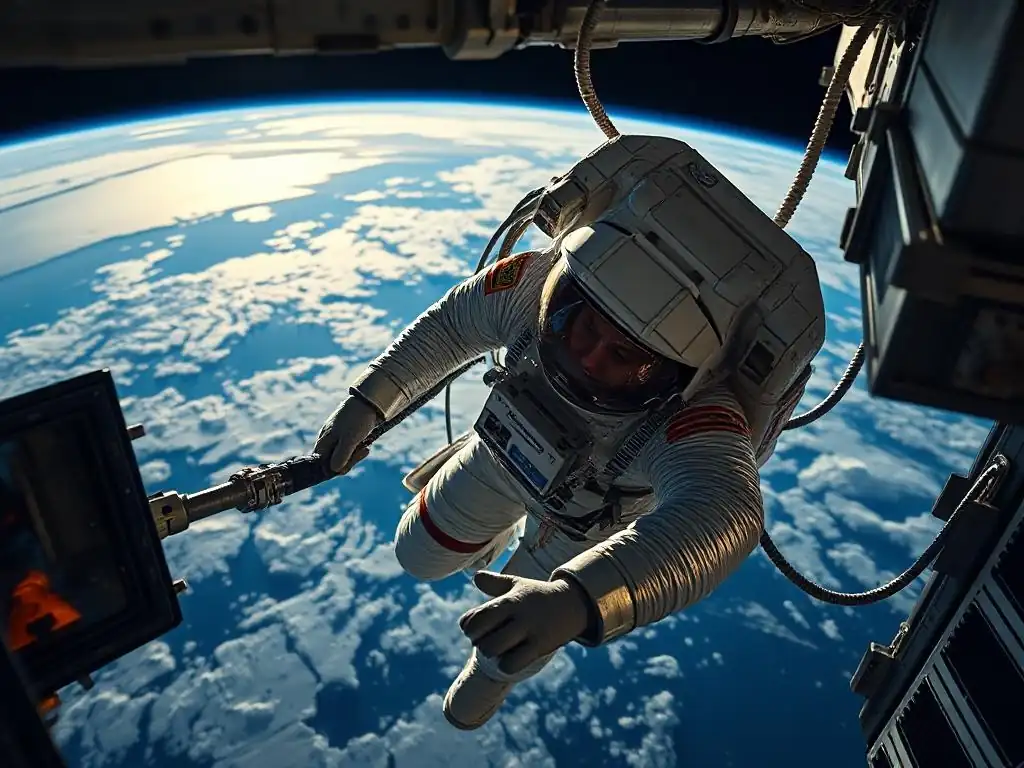
Sunita Williams embarked on her first long-duration mission to the International Space Station, Expedition 14/15, in December 2006, arriving aboard Space Shuttle Discovery (STS-116). During this extended stay, she quickly established herself as a formidable spacewalker, undertaking four significant extravehicular activities (EVAs). These initial spacewalks, totaling approximately 29 hours and 17 minutes, set a new record for the most cumulative spacewalk time by a female astronaut at that point.
These spacewalks were critical for the ongoing assembly and maintenance of the ISS. Williams was instrumental in reconfiguring the station's power grid, installing new structural components, and performing crucial repairs. Her tasks included working on the P5 truss segment and repositioning solar array wings, demonstrating her exceptional precision and endurance in the challenging vacuum of space.
Expedition 32/33: Continuing Research and Maintenance on the ISS
Sunita Williams returned to the International Space Station for her second long-duration mission, Expedition 32/33, launching in July 2012. During this expedition, she assumed command of Expedition 33, a testament to her leadership and extensive experience. Her second tour of duty further solidified her legacy as a prolific spacewalker, as she conducted three additional EVAs, bringing her career total to seven spacewalks and over 50 hours of cumulative spacewalk time.
These later spacewalks were often more complex, involving intricate repairs and upgrades vital for the continued operation and scientific capabilities of the orbital outpost. Her work included addressing external issues and contributing to the station's ongoing evolution, showcasing her continued dedication to maintaining humanity's most advanced orbiting laboratory.
Specific Spacewalk Challenges Faced by Sunita Williams
Spacewalks are inherently fraught with challenges, and Sunita Williams faced her share of unique difficulties during her record-breaking EVAs. One common obstacle is the sheer physical exertion required to maneuver in the bulky, pressurized Extravehicular Mobility Unit (EMU) suit, which can weigh over 300 pounds on Earth. Every movement requires considerable effort, and the constant microgravity environment can make orientation disorienting, adding to the Sunita Williams space walk challenges.
Beyond physical demands, astronauts must contend with limited visibility through their helmets, the potential for equipment malfunctions, and the constant threat of micrometeoroid and orbital debris impacts. Working with specialized tools, often tethered, in the vacuum of space requires immense dexterity and patience, further compounding the Sunita Williams space walk challenges and demanding peak performance under pressure.
Repairing the Ammonia Cooling System During Expedition 32
A prime example of the critical Sunita Williams space walk challenges occurred during Expedition 32, when she was tasked with repairing a crucial ammonia leak in the International Space Station's cooling system. This was an unplanned and highly demanding EVA, necessitated by a vital system malfunction that threatened the station's operational capacity. The repair involved working with a potentially hazardous substance – ammonia – which required extreme caution and precision.
The spacewalk to address the ammonia leak involved complex plumbing work and the replacement of a faulty pump controller box. Williams and her spacewalking partner had to meticulously disconnect and reconnect lines, all while managing the risk of ammonia flakes escaping into space or contaminating their suits. This high-stakes operation, performed under intense pressure and with limited visibility, exemplifies the most formidable Sunita Williams space walk challenges she expertly navigated.
Innovations and Techniques Used During Sunita Williams' Spacewalks
Sunita Williams' extensive experience in spacewalks contributed significantly to the refinement of extravehicular activity procedures and technologies. During her missions, astronauts often employ innovative techniques to overcome the inherent difficulties of working in space. This includes advanced tether management systems, which allow for greater mobility while ensuring safety, and specialized tool development to facilitate complex repairs with improved ergonomics.
Her contributions, alongside those of her crewmates, helped to streamline communication protocols between spacewalkers and ground control, enhancing real-time problem-solving. The meticulous documentation and debriefings from her EVAs provided invaluable data, leading to incremental improvements in spacesuit design, training methodologies, and operational strategies, making future spacewalks for all astronauts safer and more efficient.
Life Aboard the International Space Station (ISS): Beyond the Spacewalks
Scientific Research Conducted by Sunita Williams on the ISS
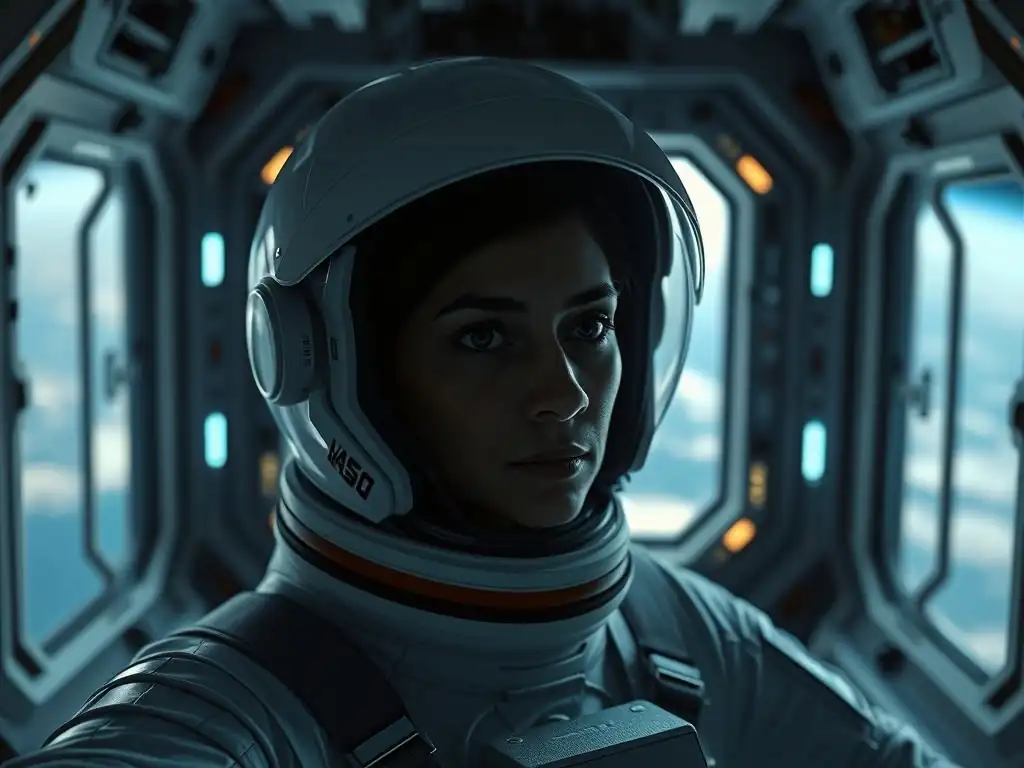
Beyond her remarkable spacewalks, Sunita Williams dedicated significant time to conducting a wide array of scientific research aboard the International Space Station. Her work spanned various disciplines, including human physiology studies, which investigated the effects of long-duration spaceflight on the human body, such as bone density loss and muscle atrophy. These experiments are crucial for understanding and mitigating health risks for future deep-space missions.
She also participated in material science experiments, testing how different substances behave in microgravity, and biological research, observing the growth and development of organisms in space. Furthermore, Williams was involved in Earth observation, capturing imagery and data that contributed to environmental monitoring and climate studies, showcasing the ISS's role as a unique platform for global scientific advancement.
Adjusting to Microgravity: Daily Life and Health Considerations
Life in microgravity aboard the ISS presents unique challenges that require significant adaptation. Astronauts like Sunita Williams must contend with physiological changes such as fluid shifts, which can cause facial puffiness, and the long-term effects of weightlessness on bone and muscle density. To counteract these effects, a rigorous exercise regimen is mandatory, with astronauts spending approximately two hours daily on specialized equipment like treadmills and resistance machines.
Daily routines, from eating and sleeping to personal hygiene, are also profoundly impacted. Meals consist of rehydratable and thermostabilized foods, secured to trays to prevent them from floating away. Sleeping involves strapping oneself into a small cabin to prevent drifting, while showering is replaced by sponge baths with limited water. These adaptations highlight the ingenuity required to sustain human life and productivity in an off-world environment.
The Psychological Impact of Long-Duration Spaceflight
Long-duration spaceflight, while an extraordinary privilege, also imposes significant psychological demands on astronauts. Sunita Williams, like all ISS crew members, experienced the challenges of prolonged confinement in a relatively small space, isolation from family and friends, and the continuous, demanding work schedule. The absence of natural day-night cycles and the constant hum of machinery can also contribute to mental fatigue.
To mitigate these psychological impacts, crew cohesion is paramount, fostered through teamwork, shared meals, and recreational activities. Regular communication with family on Earth, as well as psychological support from ground control, plays a vital role in maintaining mental well-being. Astronauts are trained to recognize and address signs of stress in themselves and their crewmates, ensuring a healthy and productive environment for extended missions.
Sunita Williams' Impact and Inspiration: A Role Model for Future Generations
Inspiring Women in STEM: The Significance of Her Achievements
Sunita Williams' extraordinary achievements in space exploration have had a profound impact on inspiring women and girls to pursue careers in science, technology, engineering, and mathematics (STEM). Her record-breaking spacewalks and leadership roles on the International Space Station serve as tangible proof that women can excel in the most demanding and technically complex fields. By breaking barriers and demonstrating exceptional competence, she has become a powerful role model, challenging traditional perceptions of what is possible.
Her visibility as a pioneering female astronaut in a historically male-dominated arena has been instrumental in encouraging young minds to consider paths in aerospace, physics, and engineering. Williams' story resonates deeply, illustrating that dedication, resilience, and a passion for discovery can lead to the highest echelons of scientific achievement, igniting curiosity and ambition in countless aspiring scientists worldwide.
Sunita Williams' Awards and Recognition: Acknowledging Her Contributions
Sunita Williams' distinguished career is punctuated by numerous awards and recognitions that acknowledge her significant contributions to space exploration and national service. Her accolades include the Defense Superior Service Medal, the Legion of Merit, the Navy Commendation Medal, and the Navy and Marine Corps Achievement Medal, reflecting her exemplary service in the U.S. Navy. These military honors underscore her foundational discipline and leadership.
From NASA, she has received the NASA Spaceflight Medal and the NASA Distinguished Service Medal, among others, recognizing her outstanding performance during her missions to the International Space Station. These awards not only celebrate her individual accomplishments, such as her record-setting spacewalks, but also highlight the profound impact she has had on advancing human understanding of space and inspiring future generations of explorers.
Future Missions and Continued Advocacy for Space Exploration
Even after her record-breaking missions to the ISS, Sunita Williams remains a pivotal figure in NASA's plans for future human spaceflight. She has been assigned to the Crew Flight Test of Boeing's CST-100 Starliner spacecraft, demonstrating her continued commitment to pushing the boundaries of space exploration and validating new commercial crew transportation systems. This assignment underscores her invaluable experience and trust within the astronaut corps.
Beyond active mission assignments, Williams is a vocal advocate for human spaceflight, often participating in public outreach events and educational initiatives. She passionately champions the importance of continued investment in space exploration, inspiring public interest and encouraging young people to pursue STEM careers. Her ongoing advocacy ensures that her legacy continues to influence the next generation of explorers and scientists.
Sunita Williams' Enduring Legacy in Space Science
Sunita Williams' Contribution to Space Exploration Safety
Sunita Williams' extensive experience, particularly her numerous and complex spacewalks, has significantly contributed to enhancing safety protocols and operational procedures for space exploration. Her meticulous approach to extravehicular activities, including her expert handling of critical repairs like the ammonia cooling system during Expedition 32, provided invaluable insights into the practical challenges and solutions for working in the vacuum of space. The lessons learned from overcoming specific Sunita Williams space walk challenges have directly informed improvements in spacesuit design, tool development, and contingency planning for future EVAs.
Her detailed mission debriefs and participation in post-flight analyses have helped refine training methodologies, ensuring that new astronauts are better prepared for the physical and mental demands of spacewalks. By consistently demonstrating exceptional judgment and problem-solving skills under pressure, Williams has set a high standard for operational excellence, directly enhancing the overall safety and reliability of human spaceflight.
Influence on Commercial Crew Program and Artemis Missions
Sunita Williams' trailblazing career extends its influence into the present and future of human spaceflight, notably impacting NASA's Commercial Crew Program and the ambitious Artemis missions. Her assignment to the Boeing Starliner's inaugural crewed flight test underscores her role in validating the next generation of American spacecraft designed to transport astronauts to the ISS. This involvement is crucial for diversifying access to space and fostering private sector innovation.
Her legacy also resonates with the goals of the Artemis program, which aims to return humans to the Moon and establish a sustainable lunar presence as a stepping stone to Mars. Williams' pioneering spirit, her record-breaking spacewalks, and her dedication to pushing human limits serve as a powerful inspiration for the diverse crews who will embark on these future lunar and interplanetary journeys, reinforcing the vital role of experienced astronauts in shaping humanity's cosmic destiny.
Conclusion: Celebrating a Trailblazing Woman in Space
Sunita Williams stands as an indelible icon in the pantheon of space exploration, her name synonymous with perseverance, skill, and groundbreaking achievements. Her record-breaking spacewalks, totaling over 50 hours across seven EVAs, not only advanced the maintenance and assembly of the International Space Station but also set new benchmarks for human endurance and technical prowess in the unforgiving vacuum of space. Her two long-duration missions aboard the ISS showcased her versatility as a scientist, engineer, and leader, contributing to vital research and demonstrating exceptional adaptability to life in microgravity.
Beyond her remarkable orbital accomplishments, Sunita Williams’ legacy is profoundly felt in her role as an inspiration. She has unequivocally demonstrated the immense capabilities of women in STEM fields, shattering stereotypes and empowering countless individuals to pursue their most ambitious dreams. Her unwavering dedication to space exploration, her continued advocacy, and her active involvement in future missions solidify her position as a true trailblazer, ensuring her impact will resonate for generations to come, as humanity continues its journey among the stars.
Frequently Asked Questions
What were some of the key challenges Sunita Williams faced during her spacewalks?
Sunita Williams faced challenges including the complexities of working in a bulky spacesuit in the vacuum of space, and the demanding physical and mental endurance required for extended extravehicular activities (EVAs). Additionally, equipment malfunctions could pose significant risks.
How did Sunita Williams prepare for the physical demands of spacewalks?
Williams underwent rigorous training, including underwater simulations to mimic the weightlessness of space. She also engaged in intensive physical conditioning to build the strength and stamina needed for EVAs.
What records did Sunita Williams break regarding spacewalks and time in space?
Williams has held records for the most spacewalks by a woman (although this record has since been surpassed) and for the longest single spaceflight by a woman at the time. These achievements highlighted her pioneering role in space exploration.
How did the male-dominated environment of space exploration potentially impact Sunita Williams' career?
While specifics regarding discrimination aren't detailed in the title, the historic underrepresentation of women in STEM fields, including space exploration, may have presented challenges. Williams had to overcome societal biases and prove her capabilities.
What type of research did Sunita Williams conduct while aboard the International Space Station (ISS)?
While the specific research isn't detailed here, astronauts on the ISS typically conduct experiments in various fields such as biology, medicine, and materials science. These experiments help advance our understanding of the universe and benefit life on Earth.
Final Reflection: Reaching for the Stars, Grounded in Reality
The story of Sunita Williams, her record-breaking spacewalks, and her life aboard the ISS, resonates deeply today because it reminds us that human potential knows no bounds. While the challenges she faced in the vacuum of space were extraordinary, they mirror the everyday obstacles we all encounter on our own journeys of exploration and self-discovery. Her dedication and resilience serve as a powerful testament to the human spirit's capacity to overcome adversity.
The impact of Sunita Williams' achievements extends far beyond the realm of space exploration. Her story has inspired countless individuals, particularly young women, to pursue careers in STEM fields and to dream bigger than they ever thought possible. Her legacy is not just about breaking records; it's about breaking barriers and redefining what it means to be a pioneer. There's a lot of satisfaction that comes from doing something that's never been done before.
This quote encapsulates the spirit of innovation and courage that Sunita Williams embodies, a spirit that continues to fuel our collective ambition to push the boundaries of human knowledge.
Now, as you reflect on Sunita Williams' incredible journey, consider the challenges you face in your own life. What "spacewalks" are you hesitant to undertake? What limitations are you imposing on yourself? Let Sunita's story be a reminder that with perseverance, dedication, and a willingness to embrace the unknown, you too can overcome your own obstacles and reach for the stars. Embrace the challenge, believe in your potential, and embark on your own extraordinary adventure.
Embark on Your Own Stellar Journey!
Thank you for exploring the incredible life and achievements of Sunita Williams with us! We hope you found her dedication and groundbreaking contributions as inspiring as we do. Now, it's your turn to connect with her legacy and push your own boundaries.
Here's how you can continue the adventure:
- Share Sunita Williams' inspiring story with three friends or family members. Let's amplify her impact and encourage more young women to pursue STEM fields.
- Delve deeper:Research another female astronaut and compare their experiences and contributions to space exploration.
- Consider creative ways to engage with the topic, such as writing a short poem or creating a piece of artwork inspired by Sunita Williams' journey.
What small step will you take today to reach for the stars?