
Rescuing from Obscurity: The Forgotten Women Pioneers of Modern Physics (19502000)

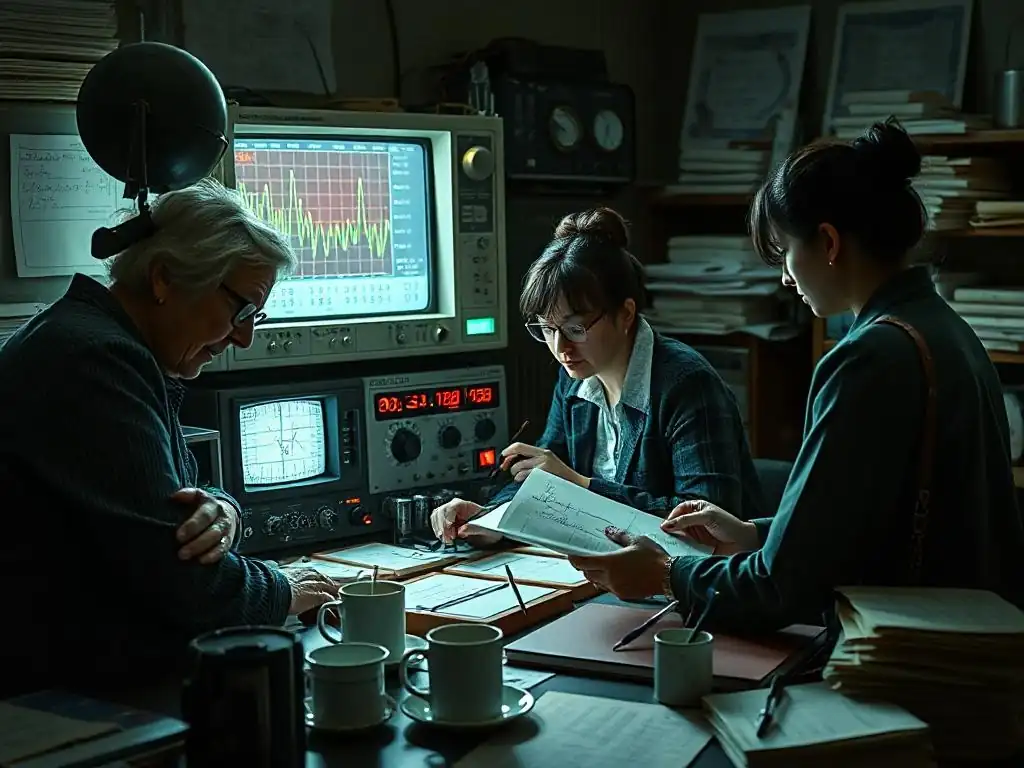
Welcome to WomenInScienceHistory.com, where we unearth the captivating stories of women who shaped the scientific landscape. Prepare to be inspired as we delve into the world of physics and shine a light on those often overlooked. Our main feature, "Rescuing from Obscurity: The Forgotten Women Pioneers of Modern Physics (1950-2000)," explores the groundbreaking contributions of these remarkable individuals. But what challenges did they face, and why were their names not etched in textbooks alongside their male counterparts? Discover the answers and more as we begin to uncover their legacy!
- Rescuing from Obscurity: Women Pioneers in Modern Physics (1950-2000)
- Introduction: Unveiling Overlooked Contributions
- Section 1: Key Areas of Contribution
- Section 2: Spotlight on Individual Pioneers
- Section 3: Societal and Institutional Barriers
- Section 4: Rediscovering and Celebrating Legacies
- Conclusion: Honoring the Legacy
-
Frequently Asked Questions
- What challenges did women in physics face between 1950 and 2000?
- Why are these women often considered "forgotten"?
- What types of contributions did these women make to modern physics?
- How does WomenInScienceHistory.com aim to address the issue of forgotten women in physics?
- How can I learn more about these forgotten women pioneers of modern physics?
- Final Reflection: Illuminating Unsung Legacies
- Illuminate the Legacy: Champion Women in Physics!
Rescuing from Obscurity: Women Pioneers in Modern Physics (1950-2000)
Introduction: Unveiling Overlooked Contributions
Persistent Underrepresentation of Women in 20th Century Physics
The mid-to-late 20th century, a period of immense scientific expansion and discovery, paradoxically saw a persistent and stark underrepresentation of women in physics. Despite groundbreaking advancements in nuclear physics, astrophysics, and material science, women constituted a minuscule percentage of faculty members, research scientists, and even graduate students in physics departments globally.
For instance, in the United States, by 1970, women earned only about 3% of all physics Ph.D.s, a figure that only marginally improved by the turn of the century. This systemic exclusion meant that many brilliant minds, who were truly forgotten women modern physics pioneers, operated on the periphery of recognition.
This pervasive underrepresentation had profound consequences, leading to a diminished pool of role models for aspiring female scientists and limiting opportunities for collaboration and advancement. The contributions of these pioneering female physicists were often marginalized, overlooked, or even appropriated, leading to an incomplete and skewed historical record of scientific progress. Their work, though foundational, frequently remained in the shadow of their male counterparts, highlighting a significant blind spot in the narrative of 20th-century physics.
Reasons for the Historical Neglect of These Women
The historical neglect of these remarkable women in physics stemmed from a confluence of deeply entrenched societal and institutional biases. Societal norms often dictated that women's primary roles were domestic, discouraging them from pursuing rigorous scientific careers and limiting their access to higher education in STEM fields. Many talented women faced pressure to choose family over career, or were unable to balance both due to lack of support structures.
Institutionally, academic environments were largely male-dominated and often unwelcoming. Women encountered overt discrimination in hiring, promotion, and access to research facilities. They were frequently excluded from informal networks and scientific "old boys' clubs" where crucial collaborations and recognition often originated. This systemic bias meant that even when forgotten women modern physics pioneers made significant discoveries, their achievements were less likely to be published in prominent journals, presented at major conferences, or recognized with prestigious awards, further contributing to their obscurity.
Section 1: Key Areas of Contribution
Nuclear Physics: Female Scientists' Impact
Following the transformative era of World War II, nuclear physics entered a phase of intense global research and development. Women scientists, despite facing significant barriers, played crucial roles in expanding our understanding of the atomic nucleus, radioactive decay, and fundamental particle interactions within it. Their contributions ranged from meticulous experimental design and data analysis to theoretical advancements, which were critical to shaping the field.
These pioneering female physicists contributed significantly to areas such as nuclear spectroscopy, studying the energy levels and structure of nuclei, and investigating weak interactions, which govern processes like beta decay. Their work provided essential empirical data that validated or challenged theoretical models, pushing the boundaries of knowledge about fundamental forces. Many of these forgotten women modern physics pioneers laid the groundwork for subsequent discoveries, yet their names often do not appear prominently in historical accounts.
Astrophysics & Cosmology: Women's Groundbreaking Work
The mid-20th century witnessed a revolution in astrophysics and cosmology, driven by new observational technologies and theoretical frameworks. Women were instrumental in processing and interpreting the vast amounts of astronomical data that became available, often performing the laborious calculations that were crucial for uncovering cosmic truths. Their analytical prowess and observational insights led to paradigm-shifting discoveries about the universe.
These overlooked women in physics made significant contributions to understanding stellar evolution, galaxy dynamics, and the large-scale structure of the cosmos. Their research helped to refine models of star formation, map the distribution of galaxies, and provided compelling evidence for phenomena that were previously theoretical or unknown. The painstaking work of these forgotten women modern physics pioneers reshaped our understanding of the universe's composition and evolution, providing crucial insights into its darkest mysteries.
Solid State Physics and Materials Science Contributions
The post-war technological boom spurred rapid advancements in solid-state physics and materials science, fields critical for developing new technologies like semiconductors, superconductors, and advanced alloys. Women scientists were at the forefront of this applied research, contributing significantly to the fundamental understanding of material properties and the development of novel materials. Their work often bridged theoretical physics with practical engineering applications.
These pioneering female physicists conducted groundbreaking research on the electronic, optical, and thermal properties of various materials, including carbon-based structures, semiconductors, and superconductors. Their meticulous experimental work and theoretical modeling laid the foundation for innovations in microelectronics, energy storage, and nanotechnology. The insights provided by these forgotten women modern physics pioneers were essential for the information age, though their names often remained less known than their male counterparts in the burgeoning tech industry.
Particle Physics: Pioneering Research by Women
The expansion of particle accelerators globally in the mid-20th century opened new frontiers in particle physics, leading to the discovery of numerous subatomic particles and a deeper understanding of the fundamental forces. Women scientists, despite facing immense challenges in this highly competitive and collaborative field, made vital contributions to both experimental design and theoretical advancements. They were involved in the complex experiments and data analysis that characterized this era.
These overlooked women in physics played roles in experiments that probed the structure of matter, investigated the properties of quarks and leptons, and tested the predictions of the Standard Model. Their work helped to identify new particles, measure their lifetimes, and understand their interactions. The rigorous intellectual contributions of these forgotten women modern physics pioneers were integral to the progress of particle physics, even if their individual efforts were often subsumed within large experimental collaborations or overshadowed by male colleagues.
Section 2: Spotlight on Individual Pioneers
2.1 Chien-Shiung Wu: Her Contributions to Beta Decay
Early Life and Education
Chien-Shiung Wu was born in Liuhe, China, in 1912, into a progressive family that emphasized education for girls. Her father, a strong advocate for women's rights, founded the school she first attended. She excelled academically, graduating from National Central University in Nanjing in 1934 with a degree in physics. Driven by an insatiable curiosity, she left China for the United States in 1936 to pursue graduate studies, ultimately earning her Ph.D. in physics from the University of California, Berkeley, in 1940.
During her time at Berkeley, she worked under the tutelage of Ernest Lawrence, a Nobel laureate, focusing on nuclear fission. Her early career also saw her contribute to the Manhattan Project, though her direct involvement and the significance of her work were often downplayed due to prevailing gender biases, making her one of the early forgotten women modern physics pioneers of the atomic age. Her meticulous experimental skills were already evident, setting the stage for her most famous work.
Key Scientific Achievements
Chien-Shiung Wu is best known for her groundbreaking "Wu experiment" conducted in 1956-1957. This experiment provided the definitive experimental proof that the Law of Conservation of Parity, long considered a fundamental principle in physics, was violated in weak nuclear interactions. This principle stated that in a physical process, the mirror image of the process would also be physically possible. Wu meticulously designed and executed an experiment using cobalt-60 nuclei cooled to extremely low temperatures, aligning their spins with a strong magnetic field.
By observing the direction of electron emission during beta decay from these polarized nuclei, she found that electrons were preferentially emitted in one direction relative to the spin of the cobalt nuclei, definitively proving parity violation. This revolutionary finding overturned a long-held belief in physics and paved the way for a deeper understanding of the weak force.
While her theoretical colleagues, Tsung-Dao Lee and Chen-Ning Yang, received the Nobel Prize in Physics in 1957 for their theory of parity violation, Wu, the experimentalist who proved it, was notably omitted, a stark example of how forgotten women modern physics pioneers were often denied full recognition.
Challenges and Recognition
Throughout her career, Chien-Shiung Wu faced significant challenges as both a woman and an Asian immigrant in the male-dominated American academic landscape. She struggled to secure tenured faculty positions despite her exceptional talent and was often overlooked for major honors. Her exclusion from the 1957 Nobel Prize, despite her pivotal experimental work, remains one of the most prominent examples of gender bias in science history.
Despite this monumental snub, Wu did receive significant recognition later in her career. She was the first woman elected President of the American Physical Society and the first woman to receive the prestigious Comstock Prize of the National Academy of Sciences. In 1978, she was awarded the Wolf Prize in Physics for her pivotal role in the parity experiment. Her relentless pursuit of scientific truth and her meticulous experimental technique cemented her legacy as one of the most influential pioneering female physicists of the 20th century.
2.2 Vera Rubin: Unveiling Dark Matter's Influence
Overcoming Barriers in a Male-Dominated Field
Vera Rubin, born in 1928, developed a profound passion for astronomy from a young age. Despite her exceptional intellect and dedication, she encountered significant institutional barriers in her pursuit of a career in astronomy. She was initially denied admission to Princeton University's graduate astronomy program, which did not accept women until 1975. Undeterred, she earned her master's degree from Cornell University in 1951 and her Ph.D. from Georgetown University in 1954, where she studied the peculiar motions of galaxies.
Early in her career, her ideas about galaxy rotation and the large-scale structure of the universe were met with skepticism and even ridicule by the scientific establishment. Her perseverance in the face of such resistance, particularly as a woman challenging prevailing theories, highlights the resilience required of forgotten women modern physics pioneers. She continued her meticulous observational work, confident in the data she was collecting.
Significant Publications and Research
Vera Rubin's most significant contributions began in the 1970s, when she collaborated with Kent Ford at the Carnegie Institution of Washington. Using advanced spectrographs, they meticulously measured the rotation curves of spiral galaxies, including the Andromeda galaxy (M31). Their observations consistently showed that stars and gas at the outer edges of these galaxies were orbiting at unexpectedly high velocities, far faster than could be accounted for by the visible matter alone.
This groundbreaking research, published in a series of influential papers, provided compelling observational evidence for the existence of dark matter – an invisible, non-luminous substance that makes up approximately 27% of the universe's mass. Rubin's work revealed that the gravitational pull from visible matter was insufficient to hold galaxies together, necessitating the presence of a vast amount of unseen mass. Her discoveries fundamentally altered our understanding of the universe's composition and dynamics, making her one of the most impactful pioneering female physicists of her time.
Legacy and Impact
Vera Rubin's work on dark matter revolutionized cosmology and particle physics, transforming a theoretical concept into a central tenet of modern astrophysics. Her meticulous observations provided the strongest evidence for dark matter's existence, a mystery that continues to drive significant research in physics today. She received numerous prestigious awards for her contributions, including the National Medal of Science in 1993, the highest scientific honor in the United States.
Despite her profound impact and consistent nominations, Vera Rubin was never awarded the Nobel Prize, a point of contention for many in the scientific community who believe she was unjustly overlooked. Her legacy extends beyond her scientific discoveries; she became a powerful advocate for women in science, tirelessly encouraging young girls to pursue their scientific passions. Her story continues to inspire future generations, ensuring that this forgotten woman modern physics pioneer receives the recognition she deserves.
2.3 Mildred Dresselhaus: The Story of Carbon Nanotube Research
Research Focus and Innovations
Mildred Dresselhaus, born in 1930, emerged as a towering figure in materials science and solid-state physics, often referred to as "the Queen of Carbon Science." After earning her Ph.D. from the University of Chicago in 1958, she joined the Massachusetts Institute of Technology (MIT) in 1960, becoming the first tenured female professor in MIT's School of Engineering. Her research focused on the fundamental properties of carbon materials, particularly graphite, fullerenes, and carbon nanotubes.
Her innovative work involved using magnetic fields to study the electronic structure of semimetals, leading to a deep understanding of how electrons behave in various carbon forms. She pioneered the use of Raman spectroscopy to characterize carbon materials, a technique that became indispensable for the nascent field of nanotechnology.
Her theoretical and experimental insights into the unique electronic and phonon properties of carbon nanotubes, decades before their widespread recognition, laid the crucial groundwork for their application in electronics, energy storage, and biomedical devices. She was truly a pioneer among forgotten women in modern physics whose work shaped an entire technological revolution.
Collaborations and Mentorship
Beyond her groundbreaking research, Mildred Dresselhaus was renowned for her extensive collaborations and unwavering commitment to mentorship. She fostered a vibrant research community around carbon science, working with scientists across disciplines and continents. Her open and collaborative spirit helped to accelerate advancements in the field, making her a central figure in a global network of materials scientists.
Dresselhaus was also a tireless advocate for diversity in STEM. She actively mentored countless students and postdocs, many of whom went on to become leaders in their own right. She served on numerous national committees dedicated to promoting women and underrepresented minorities in science and engineering, working to dismantle the very barriers she had faced. Her dedication to fostering the next generation of scientists highlights her profound impact beyond the laboratory.
Awards and Recognition
Mildred Dresselhaus received an astonishing array of awards and honors throughout her illustrious career, reflecting the immense impact of her contributions. These include the National Medal of Science (1990), the Enrico Fermi Award (2012), and the Presidential Medal of Freedom (2014), the highest civilian honor in the United States. She was also the first woman to win the IEEE Medal of Honor, the highest award in electrical and computer engineering.
Her election to the National Academy of Engineering and the National Academy of Sciences further underscored her towering stature. Dresselhaus's legacy is not only in the foundational science she produced, which continues to drive innovation in materials science and nanotechnology, but also in her role as a trailblazer and champion for women in STEM. Her story stands as a testament to the enduring impact of pioneering female physicists when given the opportunity to thrive.
Section 3: Societal and Institutional Barriers

Gender Bias and Discrimination in Academia
During the mid-to-late 20th century, gender bias and overt discrimination were pervasive within academic physics departments, significantly impeding the careers of forgotten women modern physics pioneers. Women often faced skepticism regarding their intellectual capabilities, were subjected to different standards in hiring and promotion, and were frequently excluded from informal networks where critical scientific discussions and collaborations took place. They might be denied access to crucial lab space, equipment, or even the opportunity to lead research groups.
This discrimination often manifested as the "Matilda Effect," where the scientific achievements of women were attributed to their male colleagues, or simply overlooked and undervalued. For instance, a woman's contribution to a joint paper might be minimized, or her independent work might not receive the same recognition as a similar contribution by a man. This systemic devaluation meant that even when making significant breakthroughs, pioneering female physicists struggled to gain the recognition necessary for career advancement and historical prominence.
Limited Access to Funding and Resources
A significant barrier for women in physics was their limited access to research funding and resources compared to their male counterparts. Grant committees, often dominated by men, might subconsciously or overtly favor male applicants, perceiving them as more "serious" or "reliable" researchers. This made it exceedingly difficult for women to secure the necessary financial support to conduct ambitious experiments, purchase state-of-the-art equipment, or employ research assistants.
This unequal access to resources directly impacted the scope and visibility of their research. Without adequate funding, women were often relegated to smaller, less impactful projects, or their progress was significantly slowed. This created a vicious cycle: less funding led to fewer high-profile publications, which in turn made it harder to secure future grants, further contributing to the historical neglect of forgotten women modern physics pioneers.
The "Leaky Pipeline" Phenomenon
The "leaky pipeline" phenomenon vividly illustrates the progressive loss of women at various stages of the STEM academic career path. While women might enter undergraduate physics programs in reasonable numbers, their representation steadily declines at each subsequent stage – from graduate school to postdoctoral positions, and most dramatically at the professorial and leadership levels. For example, while women might constitute 20-30% of physics PhD graduates in later decades of the 20th century, their representation in tenured faculty positions often dropped to single digits.
This attrition is often attributed to a combination of factors, including persistent gender bias, lack of mentorship, work-life balance challenges, and a non-inclusive academic culture that fails to support women's long-term career growth. Many talented pioneering female physicists simply left the field due to these cumulative pressures, their potential contributions unrealized or their existing work unacknowledged, further perpetuating the narrative of their historical absence.
Section 4: Rediscovering and Celebrating Legacies
Initiatives to Promote and Recognize Women
In response to the historical underrepresentation and neglect, the late 20th and early 21st centuries saw the emergence of various initiatives dedicated to promoting and recognizing women in STEM. Organizations like the American Physical Society's Committee on the Status of Women in Physics, established in 1972, began to advocate for equitable practices and collect data on gender disparities. Conferences specifically for women in physics started to provide networking opportunities and platforms for sharing experiences.
Furthermore, efforts to document the histories of forgotten women modern physics pioneers gained momentum. Digital archives, biographical projects, and academic publications began to systematically uncover and highlight their contributions, ensuring that their stories are integrated into the broader narrative of scientific progress. These initiatives are crucial in correcting historical oversights and celebrating the achievements of these overlooked women in physics.
The Importance of Role Models
Showcasing the achievements of women like Chien-Shiung Wu, Vera Rubin, and Mildred Dresselhaus provides invaluable role models for aspiring female scientists. When young women and girls see concrete examples of women who have excelled in physics despite immense challenges, it inspires them to pursue their own scientific passions and believe in their capabilities. These narratives demonstrate that a career in physics is not exclusively for men and that women can make profound and lasting impacts.
Role models provide tangible proof of what is possible, helping to dismantle stereotypes and build confidence. By highlighting the perseverance and ingenuity of pioneering female physicists, these stories offer a powerful counter-narrative to historical biases, encouraging a new generation of women to enter and thrive in STEM fields. Their journeys offer not just inspiration but also practical lessons on navigating and overcoming professional obstacles.
Ensuring Future Recognition of Women's Contributions
Ensuring that future generations of women in physics receive proper recognition requires ongoing systemic change and proactive measures. This includes implementing blind review processes for grants and publications, fostering inclusive departmental cultures, and promoting equitable hiring and promotion practices. Universities and research institutions must actively work to dismantle implicit biases and create environments where all scientists, regardless of gender, can flourish and receive due credit for their work.
Furthermore, it is essential to actively seek out and document the contributions of women in contemporary science, ensuring that their work is recognized in real-time. This proactive approach prevents future forgotten women modern physics pioneers from being lost to history. By embedding their achievements into the immediate historical record and public consciousness, we build a more accurate, inclusive, and equitable future for the history of science.
Conclusion: Honoring the Legacy
The Enduring Impact on Physics
The contributions of the forgotten women modern physics pioneers from 1950 to 2000 are not merely footnotes in history; they are foundational pillars upon which much of modern physics stands. From Chien-Shiung Wu's experimental proof of parity violation, which reshaped our understanding of fundamental forces, to Vera Rubin's compelling evidence for dark matter, which revolutionized cosmology, and Mildred Dresselhaus's pioneering work on carbon materials, which paved the way for nanotechnology, their impact is profound and enduring.
These pioneering female physicists pushed the boundaries of knowledge across diverse subfields, often with less resources and recognition than their male counterparts. Their meticulous research, innovative methodologies, and groundbreaking discoveries have undeniably advanced the field, demonstrating that scientific excellence knows no gender. Modern physics, in its current form, is inextricably linked to the insights provided by these remarkable, often unacknowledged, women.
Inspiring Future Generations in STEM
By rescuing the stories of these forgotten women modern physics pioneers from obscurity, we do more than just correct historical omissions; we ignite inspiration for future generations. Their narratives of perseverance, intellectual brilliance, and resilience in the face of adversity serve as powerful beacons for young women and girls considering careers in STEM. Understanding the challenges they overcame provides context and encouragement for today's aspiring scientists.
Highlighting these achievements helps to dismantle outdated stereotypes and foster a more inclusive vision of who can be a physicist. It encourages more young women to pursue their passions in science, confident that their contributions will be valued and recognized. The enduring legacy of these overlooked women in physics is not just in their scientific discoveries, but in their power to inspire a diverse and vibrant future for science.
Further Research on Women's History in Physics
The work of uncovering and celebrating the contributions of women in physics is an ongoing endeavor. There are still countless untold stories, unacknowledged discoveries, and nuanced histories of forgotten women modern physics pioneers waiting to be brought to light. Continued research into archives, oral histories, and neglected publications is crucial to building a more complete and accurate historical record.
By actively pursuing further research on women's history in physics, we ensure that the full spectrum of human intellect and effort that shaped scientific progress is recognized. This commitment not only honors the past but also reinforces the importance of diversity and inclusion in contemporary science, fostering an environment where every scientist's contribution is valued and remembered for generations to come.
Frequently Asked Questions
What challenges did women in physics face between 1950 and 2000?
Many faced gender bias in academia and research institutions. They often encountered limited opportunities for advancement and were frequently overlooked for recognition.
Why are these women often considered "forgotten"?
Historical narratives have traditionally prioritized male figures, leading to the systematic exclusion of women's contributions. Also, some women were uncredited collaborators or worked in fields that were not considered as prestigious.
What types of contributions did these women make to modern physics?
They made significant contributions to various subfields, including particle physics, astrophysics, and materials science. Their work involved theoretical research, experimental design, and data analysis, furthering our understanding of the universe.
How does WomenInScienceHistory.com aim to address the issue of forgotten women in physics?
The website features detailed biographies and highlights the groundbreaking research of these women. It also aims to raise awareness of the challenges they faced and inspire future generations of female scientists.
How can I learn more about these forgotten women pioneers of modern physics?
Visit WomenInScienceHistory.com to explore the website's resources, including biographies, articles, and further reading lists. You can also search for their names in academic databases and scientific publications.
Final Reflection: Illuminating Unsung Legacies
The stories of these forgotten women pioneers of modern physics are not just historical footnotes; they are vital threads in the tapestry of scientific progress, resonating powerfully in our present. By unearthing their contributions, we not only rectify historical oversights but also challenge the persistent biases that continue to shape the scientific landscape today. Their struggles and triumphs serve as a potent reminder that brilliance knows no gender.
The enduring impact of these women extends far beyond their specific scientific achievements. Their perseverance in the face of adversity serves as a powerful inspiration for aspiring scientists, particularly women and minorities, who may still encounter systemic barriers. The most effective way to do it, is to do it.
- Amelia Earhart. This quote, while not directly from a physicist, perfectly encapsulates the spirit of these women who, despite facing immense obstacles, continued to push the boundaries of knowledge. Their legacy is a call to action, urging us to create a more inclusive and equitable scientific community where every voice can be heard and every talent can flourish.
Let us not allow their stories to fade back into obscurity. Take a moment to reflect on the biases, both conscious and unconscious, that may exist within your own spheres of influence. Consider how you can actively champion inclusivity and create opportunities for underrepresented voices in science and beyond. By honoring the legacies of these forgotten pioneers, we pave the way for a brighter, more equitable future where innovation thrives and everyone has the chance to contribute their unique brilliance to the world.
Illuminate the Legacy: Champion Women in Physics!
Thank you for diving into the stories of these groundbreaking women in physics. Now it's your turn to keep their legacies alive and inspire the next generation of scientists!
Here's how you can make a difference:
- Nominate a deserving woman physicist – past or present – for the "Women in Science History Spotlight" on our website. Help us uncover more hidden gems!
- Share this article with your network and spark conversations about the importance of recognizing diverse contributions to science.
- Organize a local event showcasing the achievements of women in physics – a book club discussion, a film screening, or even a student workshop!
What single step will you take today to ensure these women are never forgotten?