
Echoes of Erudition: How Ancient Women Scholars Blended Science with Artistic Crafts

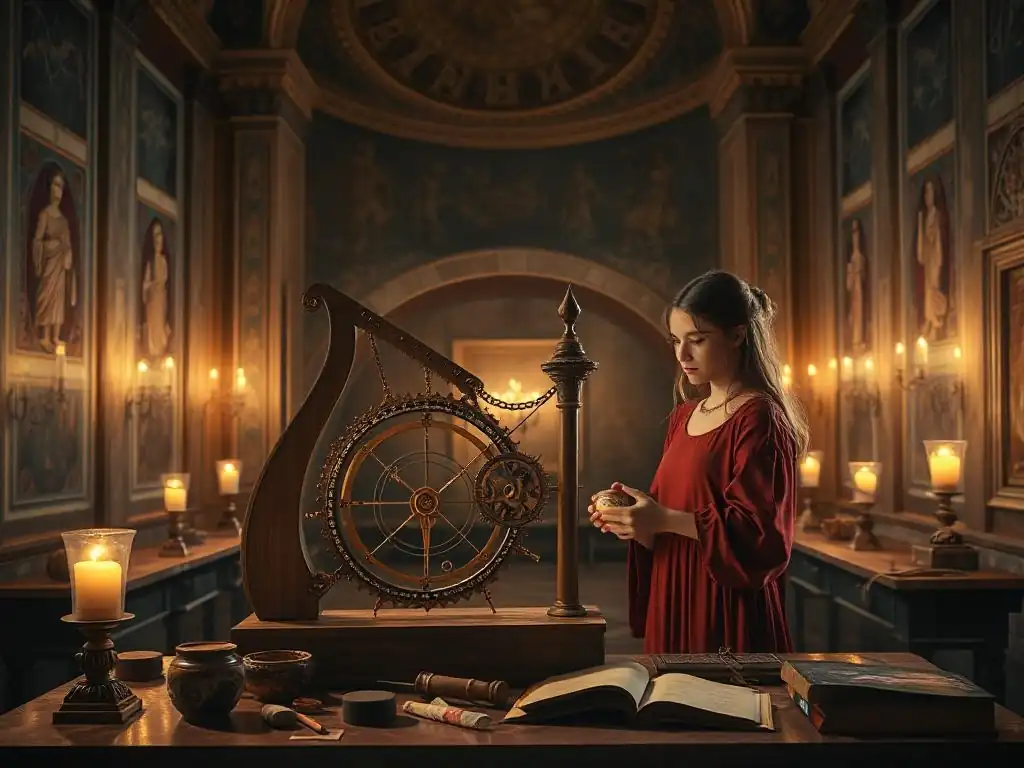
Welcome to WomenInScienceHistory.com!
Uncover the untold stories of brilliant minds and groundbreaking discoveries. This month, we delve into the fascinating world of Ancient Women Science Artisans. Imagine a time when scientific understanding was woven directly into the fabric of everyday life, and women were at the forefront of innovation, blending artistic skill with profound knowledge. Prepare to be inspired as we explore their legacies and the challenges they overcame in a world that often overlooked their contributions. What secrets will their artistry reveal about the scientific landscape of antiquity?
- Introduction: Unveiling the Role of Ancient Women Science Artisans
- Defining the Scope: Ancient Women's Contributions to Science and Art
- Case Studies: Exemplary Ancient Women Science Artisans
- The Scientific Methods Employed by Ancient Women Artisans
- The Artistic Crafts Practiced by Ancient Women Scientists
- Challenges Faced by Ancient Women in Science and Art
- The Lasting Impact of Ancient Women Science Artisans
- Conclusion: Celebrating the Enduring Legacy of Ancient Women Science Artisans
-
Frequently Asked Questions
- What is the main focus of WomenInScienceHistory.com?
- Why is it important to highlight "Ancient women science artisans"?
- What types of challenges did ancient women scholars and artisans face?
- Can you give an example of how ancient women blended science with artistic crafts?
- How does WomenInScienceHistory.com aim to inspire future generations?
- Final Reflection: The Enduring Legacy of Ancient Wisdom
- Ignite Your Inner Scholar: Rediscover Ancient Wisdom!
Introduction: Unveiling the Role of Ancient Women Science Artisans
Rediscovering the Legacy of Female Scholars in Antiquity
For centuries, the contributions of women to the intellectual and technological advancements of ancient civilizations have largely been overlooked or attributed to male counterparts. Traditional historical narratives often focus on prominent male philosophers, scientists, and inventors, leaving a significant void in our understanding of how women actively participated in shaping the world around them. This oversight is particularly acute when examining the blend of scientific inquiry and artistic endeavor that characterized much of ancient learning.
However, a closer look at archaeological findings, textual evidence, and reinterpretations of historical roles reveals a vibrant tapestry of female scholars who were also adept artisans. These ancient women science artisans were not merely passive participants but active contributors, employing observation, experimentation, and systematic knowledge in their crafts. Their ingenuity, often expressed through practical applications in daily life, represents a crucial yet understated facet of ancient scientific development.
The Intersection of Science, Art, and Craftsmanship in Ancient Civilizations
In the ancient world, the rigid distinctions between "science," "art," and "craftsmanship" that we recognize today were largely non-existent. Knowledge was holistic, and understanding the natural world often manifested through skilled production. For instance, the dyeing of textiles required an empirical understanding of chemistry, the construction of intricate jewelry demanded precise metallurgical knowledge, and the preparation of medicinal remedies relied on botanical and physiological insights.
Women, often confined to domestic spheres or specific communal roles, became masters of these intertwined disciplines. Their daily activities, from weaving and pottery to preparing foods and healing the sick, were fertile grounds for scientific observation and artistic expression. These ancient women science artisans seamlessly blended practical knowledge with aesthetic principles, demonstrating that intellectual pursuits were deeply embedded in the creation of functional and beautiful objects.
Why Ancient Women Science Artisans Matter to WomenInScienceHistory.com
At WomenInScienceHistory.com, our mission is to illuminate the often-eclipsed narratives of women who have shaped scientific progress throughout history. The stories of ancient women science artisans are fundamental to this endeavor, as they challenge preconceived notions about the origins of scientific thought and the roles women played in its early development. By highlighting their ingenuity, we not only correct historical omissions but also provide a more complete and nuanced picture of human intellectual heritage.
Understanding the contributions of these pioneering figures inspires contemporary generations, particularly young women, to see themselves reflected in the annals of science and art. Their resilience, creativity, and systematic approach to problem-solving, even within challenging societal frameworks, offer powerful lessons. Celebrating these ancient women science artisans reinforces the idea that scientific curiosity and artistic expression are timeless human pursuits, transcending gender and historical periods.
Defining the Scope: Ancient Women's Contributions to Science and Art
Delimiting "Ancient": Time Periods and Geographic Regions
For the purpose of this exploration, "ancient" generally refers to the period spanning from the earliest documented civilizations, roughly 3000 BCE, up to the decline of the Western Roman Empire around 500 CE. This vast timeframe encompasses a multitude of cultures, including those of Mesopotamia, ancient Egypt, the Minoan and Mycenaean civilizations, classical Greece, the Roman Empire, and early Indian and Chinese societies. While the available records vary significantly across these regions and eras, they collectively offer glimpses into the diverse contributions of women.
Geographically, our focus will primarily be on the Mediterranean basin and the Near East, where much of the extant textual and archaeological evidence regarding formal scholarship and sophisticated crafts originates. However, it is crucial to acknowledge that women in other ancient cultures across Asia, Africa, and the Americas also contributed significantly to science and art, often through practices that were integral to their daily survival and cultural expression, such as advanced agricultural techniques or textile arts.
What Constitutes "Science" and "Art" in the Ancient World?
In antiquity, "science" was not a distinct discipline as it is today, but rather an integral part of natural philosophy, medicine, astronomy, and practical crafts. It encompassed systematic observation, empirical understanding of natural laws, and the application of logical principles to solve problems. For instance, understanding the properties of metals for tools or the medicinal effects of plants constituted scientific knowledge. Similarly, "art" was often intertwined with functionality and spiritual meaning, encompassing skilled craftsmanship in areas like pottery, weaving, metallurgy, and architecture, all of which required a deep understanding of materials and processes.
Therefore, when discussing ancient women science artisans, we refer to individuals who demonstrated systematic knowledge of natural phenomena, applied mathematical or empirical principles, or engaged in detailed observation to produce functional or aesthetically significant objects. These women were not merely creating beautiful items; they were often innovators who pushed the boundaries of material science, chemical processes, and design, thereby advancing the collective knowledge base of their societies.
While historical records predominantly highlight women from elite classes, such as priestesses, queens, or philosophers like Hypatia, it is crucial to recognize that ancient women science artisans existed across all social strata. Women in lower social classes, including slaves, often performed crucial roles in agriculture, textile production, pottery, and food preparation, all of which required practical scientific knowledge and skilled craftsmanship. For instance, the intricate dyeing techniques, which involved precise chemical reactions, were often mastered by women across various social backgrounds.
Identifying the individual contributions of non-elite women is challenging due to the scarcity of written records pertaining to their lives. However, archaeological findings, such as specialized tools, remnants of workshops, and grave goods, provide invaluable insights into their skills and the significant economic and technological roles they played. These artifacts underscore that scientific and artistic endeavors were not solely the domain of the privileged few but were deeply embedded in the daily lives and labor of countless unheralded women.
Case Studies: Exemplary Ancient Women Science Artisans
Hypatia of Alexandria: Mathematics, Astronomy, and Philosophical Discourse
Hypatia, born around 350-370 CE in Alexandria, Egypt, stands as one of the most prominent female scholars of antiquity. She was a leading Neoplatonist philosopher, astronomer, and mathematician, teaching at the Alexandrian school that attracted students from across the Roman Empire. Her intellectual prowess and public lectures challenged the gender norms of her time, establishing her as a formidable intellectual figure in a male-dominated academic world.
Her life exemplifies the intersection of science and philosophy, as she engaged deeply with ancient Greek mathematical and astronomical texts, interpreting and commenting on them. Her work highlights the intellectual sophistication attained by some ancient women science artisans who bridged theoretical knowledge with practical application in education.
Hypatia's Scientific Contributions
Hypatia made significant contributions by editing and commenting on complex mathematical and astronomical works. She is credited with commentaries on Diophantus's Arithmetica, a foundational text in number theory, and Apollonius of Perga's Conics, which explored conic sections. Her work on these texts likely involved clarifying proofs and expanding on existing theories, making them more accessible to her students. Her deep understanding of geometry and algebra was crucial for advancing these fields.
Beyond theoretical work, Hypatia is also believed to have invented or significantly improved several scientific instruments, including the astrolabe and the hydrometer. The astrolabe, a sophisticated astronomical instrument, was used to measure the altitude of celestial bodies and solve problems relating to time and position. The hydrometer, used to measure the specific gravity of liquids, was a practical tool with applications in various fields, including brewing and medicine. These inventions underscore her practical application of scientific principles, cementing her status as an ancient woman science artisan.
Hypatia's Philosophical and Artistic Influence
As a Neoplatonist, Hypatia's philosophy integrated mathematics, astronomy, and cosmology into a holistic worldview. She taught that the universe was governed by rational principles accessible through intellectual inquiry and emphasized the pursuit of truth and knowledge as paths to understanding the divine. Her philosophical approach encouraged critical thinking and logical reasoning, attracting a diverse group of students, including prominent political figures like Orestes, the Roman prefect of Alexandria.
Her influence extended beyond the academic sphere into the cultural fabric of Alexandria, a bustling center of learning and innovation. Her public lectures and intellectual debates were a testament to her profound impact on the intellectual climate, shaping the minds of future leaders and scholars. While not an artist in the traditional sense, her structured and elegant exposition of complex ideas can be seen as an intellectual art form, demonstrating a masterful command of logic and rhetoric.
The Tragedy of Hypatia and its Lessons
Hypatia's life ended tragically in 415 CE when she was brutally murdered by a mob of Christian zealots, likely incited by religious tensions and political rivalries. Her death is often seen as a symbolic turning point, marking the decline of classical pagan scholarship in Alexandria and the rise of religious dogmatism. This horrific event serves as a stark reminder of the dangers faced by intellectuals, particularly women, who challenged prevailing norms or found themselves caught in power struggles.
The enduring legacy of Hypatia, however, far outweighs the tragedy of her demise. Her story continues to inspire countless individuals, highlighting the importance of intellectual freedom, critical inquiry, and the pursuit of knowledge. For WomenInScienceHistory.com, Hypatia stands as a powerful symbol of resilience and brilliance among ancient women science artisans, whose contributions, though often met with adversity, continue to resonate through the centuries.
Aglaonike of Thessaly: Astronomy and the Interpretation of Celestial Events
Aglaonike of Thessaly, often referred to as "Aglaonike the Sorceress," was a fascinating figure in ancient Greece, mentioned by Plutarch in his Conjugalia Praecepta (Moralia). She gained renown for her ability to "make the moon disappear from the sky," a feat attributed to her "magical powers." However, historical analysis reveals that Aglaonike's supposed sorcery was, in fact, a sophisticated understanding of astronomical phenomena, specifically lunar eclipses.
Her story, though shrouded in myth, points to the existence of ancient women science artisans who possessed advanced knowledge in fields traditionally dominated by men. Aglaonike's public displays of her predictive abilities underscore a rare instance of a woman being publicly recognized and celebrated for her intellectual prowess in ancient society.
Aglaonike's Astronomical Knowledge and Skills
Aglaonike's ability to predict lunar eclipses indicates a profound knowledge of celestial mechanics and the patterns of the moon's orbit. Such predictions relied on an understanding of the Saros cycle, a period of approximately 18 years, 11 days, and 8 hours after which the Sun, Earth, and Moon return to approximately the same relative geometry, resulting in a recurrence of similar eclipses. This cycle was known to ancient Babylonian astronomers and subsequently to Greek scholars.
Her mastery of this complex astronomical knowledge allowed her to forecast when the moon would be obscured by the Earth's shadow, turning a natural phenomenon into a spectacle of her own making. This was not mere superstition but a practical application of empirical observation and mathematical calculation, positioning her as an exceptional ancient woman science artisan who utilized scientific principles to achieve what appeared to be supernatural feats.
Aglaonike's Reputation and Cultural Impact
Aglaonike's fame spread throughout ancient Greece, earning her the epithet "sorceress" due to the awe-inspiring nature of her predictions. Plutarch mentions her as an example of a woman who was proficient in "celestial matters." Her public displays of predicting eclipses would have been extraordinary events, solidifying her reputation as a formidable figure capable of manipulating the heavens. This public recognition, while framed through the lens of magic, nevertheless highlights her significant cultural impact.
Her story also demonstrates how advanced scientific knowledge could be perceived and integrated into the cultural narratives of the time. While some might have viewed her as a witch, others likely recognized her as a brilliant observer of the cosmos. This dual perception underscores the blurred lines between early science, philosophy, and popular belief in the ancient world, with ancient women science artisans often navigating this complex cultural landscape.
Distinguishing Fact from Legend in Aglaonike's Story
Like many figures from antiquity, Aglaonike's story is a blend of historical fact and legendary embellishment. While her existence and her ability to predict eclipses are largely accepted, the exact details of her life and the full extent of her astronomical methods remain elusive. The "sorceress" label likely arose from the popular inability to comprehend the scientific basis of her predictions, leading to supernatural explanations.
However, the core narrative of Aglaonike provides compelling evidence that women in ancient Greece were capable of acquiring and applying sophisticated scientific knowledge. Her legacy serves as a reminder that the history of science is replete with figures whose true contributions may have been obscured or mythologized. For WomenInScienceHistory.com, Aglaonike stands as a powerful testament to the hidden astronomical talents of ancient women science artisans, urging us to look beyond the legends to uncover the scientific truths.
Enheduanna: Priestess, Poet, and the Dawn of Scientific Observation in Mesopotamia
Enheduanna, daughter of Sargon of Akkad, lived around 2300 BCE in Mesopotamia and held the prestigious title of High Priestess of the moon god Nanna (Sin) in the city of Ur. She is widely considered the earliest author and poet known by name in recorded history, having composed numerous Sumerian hymns and epic poems. Her literary output not only provides invaluable insights into Mesopotamian religion and politics but also offers glimpses into the early forms of systematic observation and scientific thought.
Enheduanna's unique position as both a political figure and a religious leader allowed her to influence intellectual and cultural life, making her a seminal figure among ancient women science artisans who laid foundations for systematic inquiry. Her work demonstrates how early human attempts to understand the cosmos were often intertwined with religious expression and meticulous record-keeping.
Enheduanna's Literary Contributions: A Glimpse into Mesopotamian Science
Enheduanna's most famous work, "The Exaltation of Inanna" (Nin-me-šara), is a lengthy hymn praising the goddess Inanna. Within this and other compositions, she meticulously describes natural phenomena and cosmic events, often linking them to divine actions. Her detailed observations of the moon's phases, the movement of celestial bodies, and the cyclical nature of agricultural seasons reflect an acute awareness of the natural world, a prerequisite for any scientific endeavor.
These literary works, inscribed on clay tablets using cuneiform script, served as a form of early data collection and preservation. While not scientific treatises in the modern sense, they are foundational texts that document systematic observation and classification of the environment. Enheduanna's structured approach to describing the world around her represents an early form of empirical inquiry, making her a crucial ancient woman science artisan whose work predates many recognized scientific texts.
Enheduanna's Role as a Priestess and its Connection to Early Scientific Thought
As High Priestess, Enheduanna was at the heart of the temple complex in Ur, which functioned as a central hub for administration, economic activity, and intellectual pursuits. Mesopotamian temples were not only religious centers but also served as observatories where priests and priestesses meticulously tracked celestial movements for calendrical purposes and omens. This systematic recording of astronomical data was a cornerstone of early Mesopotamian science.
Her administrative duties would have required a highly organized and logical mind, skills essential for any scientific pursuit. The connection between religious ritual and the understanding of cosmic order was profound in Mesopotamia; priests and priestesses were seen as interpreters of divine will, which often manifested through natural phenomena. Enheduanna's role therefore placed her at the nexus of spiritual understanding and early scientific observation, demonstrating how ancient women science artisans contributed to the development of systematic knowledge through their institutional roles.
Interpreting Enheduanna's Work Through a Scientific Lens
While Enheduanna's writings are primarily religious and poetic, they offer a unique window into the nascent stages of scientific thought. Her emphasis on detailed observation, the categorization of natural elements, and the articulation of cosmic patterns reflect a systematic approach to understanding the universe. For example, her descriptions of the moon's journey across the sky and its influence on earthly matters laid groundwork for later astronomical and calendrical advancements.
Her work also established literary conventions that influenced subsequent Mesopotamian scholarship, including the recording of observations. By providing a structured and memorable way to convey knowledge, Enheduanna contributed to the intellectual framework necessary for the development of more explicit scientific texts. Her legacy as an ancient woman science artisan lies not in explicit scientific discoveries, but in her pioneering role in establishing the intellectual habits of systematic observation and detailed documentation, which are fundamental to all scientific inquiry.
Merit Ptah: Physician of Ancient Egypt
Merit Ptah is often cited as the "first female physician" in recorded history, dating to the Old Kingdom of ancient Egypt, around 2700 BCE. While her exact identity and the details of her life are subject to some scholarly debate, her name has become a powerful symbol of women's early contributions to medicine. Her depiction is believed to be found on a tomb in the Saqqara necropolis, where she is identified as a "chief physician," although direct archaeological confirmation of her specific tomb and title has been difficult to definitively establish.
Despite the historical nuances, the enduring narrative of Merit Ptah highlights the significant, albeit often unacknowledged, role of ancient women science artisans in the field of healthcare. Her story, whether fully verifiable or symbolic, speaks to the societal acceptance of female medical practitioners in ancient Egypt, a remarkable aspect given the constraints faced by women in other ancient cultures.
Early depictions of Merit Ptah
The popular narrative of Merit Ptah stems from a figure mentioned by the Canadian physician Kate Campbell Hurd-Mead in her 1937 book, A History of Women in Medicine. Hurd-Mead claimed to have seen an image of Merit Ptah in a tomb in the Valley of the Kings, identifying her as a "chief physician" or "chief medical officer." While later research by Egyptologists has cast doubt on the precise details of Hurd-Mead's claim and the specific tomb location, the concept of a prominent female physician from ancient Egypt remains.
The existence of other documented female medical practitioners in ancient Egypt, such as Peseshet, who served during the Fourth Dynasty (c. 2575–2465 BCE) and bore the title "Overseer of all female physicians," lends credence to the idea of women holding significant medical roles. Thus, even if Merit Ptah's specific depiction is debated, the historical context strongly supports the presence of ancient women science artisans in the medical field.
Merit Ptah's role as head physician
Assuming the traditional understanding of Merit Ptah's role, her position as a "chief physician" would have entailed significant responsibilities. Ancient Egyptian medicine was a sophisticated practice, combining empirical observation, surgical procedures, herbal remedies, and ritualistic healing. A "chief physician" would have overseen other practitioners, managed medical resources, and been responsible for the health of high-ranking officials or even segments of the population.
This role would have required not only extensive medical knowledge but also organizational and leadership skills. Women in ancient Egypt enjoyed greater societal freedoms and opportunities compared to many other ancient civilizations, including the right to own property, engage in commerce, and pursue professions. This cultural context made it plausible for ancient women science artisans to rise to prominent positions in fields like medicine, demonstrating their intellectual capabilities and practical expertise.
The legacy of Merit Ptah
Regardless of the ongoing scholarly debate surrounding her precise identity, the figure of Merit Ptah has become an important symbol in the history of women in science. She is widely celebrated as a pioneering ancient woman science artisan who broke barriers in the medical profession. Her story inspires modern discussions about historical representation and the need to uncover the contributions of overlooked figures.
The enduring popularity of Merit Ptah's narrative highlights the powerful impact that even partially documented or symbolic figures can have in inspiring future generations. She serves as a reminder that the history of medicine, like other scientific fields, is not exclusively male and that ancient women played vital roles in developing and applying healthcare knowledge, thereby enriching the narrative of women in science history.
The Scientific Methods Employed by Ancient Women Artisans
Observation and Experimentation in Ancient Crafts
The daily work of ancient women science artisans was inherently driven by empirical observation and practical experimentation, long before these terms were formally defined. Whether in preparing food, crafting textiles, or administering remedies, women meticulously observed natural phenomena and the behavior of materials. For instance, a weaver would observe how different fibers reacted to tension or dye, adjusting her techniques based on these empirical findings. Similarly, a potter would experiment with various clay mixtures and firing temperatures to achieve desired strength and finish.
This iterative process of trial and error, coupled with careful observation of outcomes, constituted a fundamental scientific method. An herbalist, often a woman, would systematically test the effects of different plants on ailments, noting dosages and reactions to refine her treatments. This hands-on approach, deeply embedded in household and community practices, generated a vast body of practical scientific knowledge, transmitted often orally from one generation of ancient women science artisans to the next.
Application of Mathematical Principles in Art and Architecture
While formal mathematical education was often limited for women, many ancient women science artisans implicitly applied complex mathematical principles in their crafts. Textile production, a domain predominantly managed by women, involved intricate patterns that required a deep understanding of geometry, symmetry, and ratios. The number of threads per inch, the sequence of colors, and the overall design of a fabric necessitated precise calculations to achieve the desired aesthetic and structural integrity.
Similarly, in pottery, women applied principles of proportion and volume to create functional and aesthetically pleasing vessels. The construction of domestic dwellings, often involving women in their design and maintenance, incorporated rudimentary architectural principles, including stability and spatial organization. These practical applications of mathematics, even without explicit theoretical articulation, demonstrate the inherent scientific thinking embedded in the artistic creations of ancient women science artisans.
The Role of Herbalism and Natural Philosophy in Ancient Women's Practices
Women in ancient societies were often the primary custodians of knowledge regarding plants, their medicinal properties, and their uses in daily life. This extensive knowledge base, known as herbalism, was a profound form of natural philosophy. Through generations of observation and experimentation, ancient women science artisans identified which plants could heal wounds, alleviate pain, induce sleep, or even act as poisons. They understood plant cycles, harvesting times, and preparation methods, developing sophisticated remedies based on empirical data.
This practical science extended beyond medicine to include food preservation, dyeing, and cosmetics, all of which relied on an understanding of natural chemistry. The systematic classification of plants, their effects, and their applications, passed down through oral traditions and practical demonstrations, represented a significant contribution to ancient scientific knowledge. These women were the original naturalists, collecting and interpreting vast amounts of biological and chemical data through their daily interactions with the natural world.
The Artistic Crafts Practiced by Ancient Women Scientists
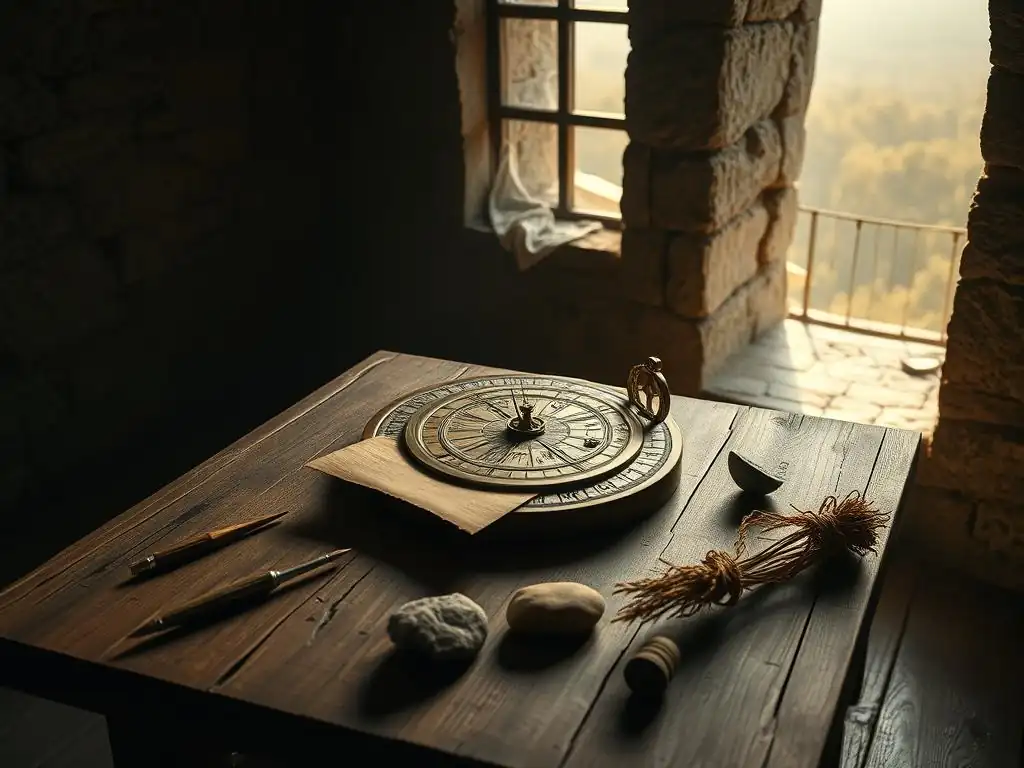
Weaving, Textile Production, and the Application of Scientific Principles
Weaving and textile production were among the most significant and complex crafts practiced by ancient women science artisans. This was not merely an artistic endeavor but a highly technical one, requiring a sophisticated understanding of material science, chemistry, and mechanics.
Women had to comprehend the properties of different fibers, such as wool, linen, or silk—their strength, elasticity, and how they reacted to various treatments. The process of dyeing, which involved extracting pigments from plants, insects, or minerals and fixing them onto fibers, was a complex chemical procedure requiring precise knowledge of mordants and chemical reactions to achieve vibrant and lasting colors.
Moreover, the operation of looms, from simple backstrap looms to more complex upright models, demanded an understanding of mechanical principles and tension. The creation of intricate patterns, such as those found in Egyptian linens or Greek peplos, involved meticulous counting, precise thread manipulation, and a deep grasp of geometry and symmetry. The resulting textiles were not only essential for clothing and shelter but also served as valuable trade goods and symbols of status, underscoring the economic and technological importance of these ancient women science artisans.
Pottery, Ceramics, and the Chemical Processes Involved
Pottery and ceramics were another cornerstone of ancient life, and women played a crucial role in their production, particularly for domestic use. The creation of durable and functional pottery involved a detailed understanding of geology and chemistry. Ancient women science artisans had to identify suitable clay deposits, understand their composition, and learn how to process them by removing impurities and adding temper (such as sand or crushed shell) to prevent cracking during firing.
The firing process itself was a complex chemical transformation. Women learned to control kiln temperatures and atmospheric conditions (e.g., oxygen levels) to achieve desired hardness, color, and vitrification. Glazing, where employed, added another layer of chemical complexity, requiring knowledge of mineral compounds that would melt and fuse to create a waterproof and decorative surface. The evolution of pottery techniques, from simple hand-built pots to more refined wheel-thrown vessels, was driven by generations of empirical experimentation and material science knowledge, often accumulated and applied by ancient women science artisans.
Jewelry Making, Metallurgy, and the Development of Ancient Technologies
While large-scale metallurgy was often a male-dominated craft due to its physical demands, ancient women science artisans were deeply involved in aspects of jewelry making and the refinement of precious materials. This included the intricate processes of bead making, gem polishing, and the delicate art of filigree and granulation. These techniques required an understanding of the physical properties of various stones and metals, including their hardness, malleability, and melting points.
Women often worked with gold, silver, and semi-precious stones, developing sophisticated methods for shaping, joining, and decorating these materials. The creation of alloys, for instance, involved understanding how different metals combine to alter properties like strength or color. The precision required for setting tiny gems or forming delicate metalwork speaks to a high level of technical skill and an intuitive grasp of material science. These ancient women science artisans contributed significantly to the aesthetic and technological advancements of their societies through their mastery of these intricate and valuable crafts.
Challenges Faced by Ancient Women in Science and Art
Societal Constraints and Limited Educational Opportunities
One of the most significant challenges faced by ancient women science artisans was the pervasive patriarchal structure of most ancient societies. Women were often confined to domestic roles, with limited access to public life, formal education, or institutionalized learning centers. While some elite women, like Hypatia, managed to access higher education, they were exceptions rather than the norm. Knowledge transmission for the vast majority of women occurred within the household or through informal apprenticeships, passed down from mothers to daughters or within close community networks.
This lack of formal recognition and structured educational pathways meant that women's contributions, however significant, were often undervalued and rarely recorded in the official histories. The emphasis on male lineage and public achievements further marginalized the intellectual and practical ingenuity of women, making it difficult for their scientific and artistic innovations to gain widespread recognition or be formally attributed to them.
The Gendered Nature of Knowledge and Skill
Ancient societies frequently assigned specific fields of knowledge and skill based on gender, further limiting the opportunities for ancient women science artisans. Fields deemed "masculine," such as architecture, advanced astronomy for navigation, or large-scale engineering, were often closed off to women. Conversely, skills traditionally associated with women, such as herbalism, midwifery, textile production, and domestic pottery, were often undervalued despite their profound scientific and technological underpinnings.
This gendered division of labor meant that even when women developed sophisticated scientific understanding within their designated spheres, their contributions were often dismissed as mere "crafts" or "household duties" rather than recognized as genuine scientific or artistic innovation. The inherent bias in historical records, predominantly written by men, further perpetuated this imbalance, often omitting or downplaying the intellectual rigor and ingenuity demonstrated by ancient women science artisans in their daily lives.
Preserving and Transmitting Knowledge in a Male-Dominated World
The methods by which knowledge was preserved and transmitted posed another formidable challenge for ancient women science artisans. Much of the scientific and artistic knowledge accumulated by women was passed down through oral traditions, practical demonstrations, and hands-on learning within families and communities. While effective for immediate transmission, oral traditions are inherently fragile and susceptible to loss or alteration over generations, unlike written records which offer greater permanence.
Furthermore, women often lacked access to formal scribal training or the institutional libraries where knowledge was systematically cataloged and preserved. This meant that their discoveries, innovations, and accumulated wisdom were less likely to be formally documented or attributed to individual women. Credit for advancements often went to male heads of households, religious institutions, or male-dominated guilds, further obscuring the true extent of contributions made by ancient women science artisans in a world where formal recognition was primarily bestowed upon men.
The Lasting Impact of Ancient Women Science Artisans
Influence on Subsequent Generations of Scientists and Artists
The practical innovations and accumulated knowledge of ancient women science artisans, though often uncredited, formed the bedrock for countless advancements in subsequent generations. Their mastery of textile dyeing, for instance, laid the groundwork for later chemical industries, while their understanding of herbal remedies contributed to the evolution of pharmacology. The empirical methods they employed in their crafts—observation, experimentation, and refinement—were fundamental to the development of more formalized scientific inquiry.
This influence was often subtle, transmitted through informal channels like family traditions and community practices rather than academic treatises. Nevertheless, the everyday technologies and artistic expressions that defined ancient life were deeply shaped by the ingenuity of women. Their contributions ensured the continuity of essential skills and knowledge, providing a practical foundation upon which later, more recognized, scientific and artistic developments could build.
Preserving the Memory of Ancient Women Scientists and Artisans
Preserving the memory of ancient women science artisans is a vital ongoing endeavor, requiring continuous archaeological research, re-examination of historical texts, and critical analysis of societal biases. Much of their work was ephemeral or integrated into daily life, making it harder to trace than grand architectural projects or formal philosophical treatises. However, every artifact, every reinterpreted text, and every new archaeological discovery contributes to piecing together their often-fragmented stories.
Platforms like WomenInScienceHistory.com play a crucial role in this preservation by actively seeking out, compiling, and disseminating these narratives. By highlighting the lives and contributions of figures like Hypatia, Aglaonike, Enheduanna, and the symbolic Merit Ptah, we challenge historical omissions and biases. This dedicated effort ensures that the intellectual and creative legacies of ancient women science artisans are no longer lost to the past but become an integral part of our collective human history.
Lessons for Contemporary Women in STEM and the Arts
The stories of ancient women science artisans offer profound lessons for contemporary women pursuing careers in STEM (Science, Technology, Engineering, and Mathematics) and the arts. Their resilience in the face of societal constraints, their ingenuity in applying scientific principles to practical problems, and their ability to blend intellectual curiosity with artistic expression serve as powerful inspirations. They demonstrate that scientific thinking and creative problem-solving are timeless human attributes, transcending gender and historical context.
These narratives encourage interdisciplinary thinking, reminding us that the most significant breakthroughs often occur at the intersection of different fields. By celebrating these pioneering women, we empower current and future generations to embrace their passions, overcome obstacles, and contribute their unique talents to the advancement of knowledge and culture. The enduring legacy of ancient women science artisans is a testament to the fact that women have always been, and continue to be, essential contributors to scientific and artistic progress.
Conclusion: Celebrating the Enduring Legacy of Ancient Women Science Artisans
The Importance of Recognizing Ancient Women's Contributions
The journey through the lives and works of ancient women science artisans reveals a profound truth: women have always been integral to the development of human knowledge, technology, and artistic expression. Their contributions, often overlooked or attributed to others, were fundamental to the functioning and advancement of ancient societies. From the precise calculations of Hypatia to the astronomical predictions of Aglaonike, the systematic observations of Enheduanna, and the healing practices attributed to Merit Ptah, these women demonstrate an ingenuity that defies historical marginalization.
Recognizing their roles enriches our understanding of history, providing a more complete and accurate picture of human intellectual heritage. It challenges the narrow, male-centric narratives that have long dominated historical accounts, demonstrating that scientific curiosity and artistic skill were cultivated and applied by individuals across all genders and social strata. These ancient women science artisans were not merely supplementary figures; they were foundational innovators.
Inspiring Future Generations Through the Stories of Ancient Women
The narratives of ancient women science artisans offer a powerful source of inspiration for future generations. By illuminating their struggles, triumphs, and profound impact, we provide role models who demonstrate resilience, intellectual bravery, and boundless creativity. These stories empower young women to pursue their interests in science, technology, engineering, arts, and mathematics, knowing that they stand on the shoulders of countless pioneering women who came before them.
Their experiences underscore the idea that science and art are universal human endeavors, not limited by gender or historical period. The ingenuity of these ancient women science artisans serves as a beacon, encouraging contemporary women to break barriers, challenge norms, and contribute their unique perspectives to the ongoing progress of humanity.
Further Research and Exploration of Women in Science & Art.
Despite the invaluable insights gained, the study of ancient women science artisans remains an evolving field. Much research is still needed to uncover more details about their lives, their specific contributions, and the broader societal contexts in which they operated. Ongoing archaeological excavations, re-evaluations of ancient texts, and interdisciplinary approaches continue to shed new light on these remarkable figures.
WomenInScienceHistory.com remains committed to this vital exploration, continuously seeking out and sharing the stories of women who have shaped our scientific and artistic understanding. By supporting further research and public engagement, we can ensure that the enduring legacy of ancient women science artisans is not only celebrated but also fully understood and integrated into the grand narrative of human achievement.
Frequently Asked Questions
What is the main focus of WomenInScienceHistory.com?
The website primarily focuses on celebrating the contributions of women in various scientific fields throughout history, highlighting their biographies and groundbreaking work. It also addresses the challenges they faced.
Why is it important to highlight "Ancient women science artisans"?
Highlighting them helps to shed light on overlooked narratives and inspire future generations by showcasing their skills and knowledge. These women blended scientific principles with artistic crafts.
What types of challenges did ancient women scholars and artisans face?
They often faced male-dominated arenas that limited their access to education, resources, and recognition for their scientific and artistic contributions. Societal expectations also played a significant role.
Can you give an example of how ancient women blended science with artistic crafts?
Consider ancient Egyptian women known for their knowledge of herbal remedies (science) used in creating cosmetics and perfumes (artistic crafts). Their skills were essential for both health and beauty.
How does WomenInScienceHistory.com aim to inspire future generations?
By presenting the stories of pioneering women in science, the website aims to motivate young people to pursue their interests in STEM fields and challenge gender stereotypes. It showcases that women have always been capable in science.
Final Reflection: The Enduring Legacy of Ancient Wisdom
The narratives of ancient women science artisans, once relegated to the shadows of history, are now resonating with unprecedented force, reminding us that intellectual pursuits and artistic expression are not mutually exclusive domains. Their contributions, a vibrant tapestry woven from scientific understanding and creative craftsmanship, challenge conventional narratives and offer a powerful model for holistic innovation in our own time.
The impact of these women extends far beyond the historical record; their stories serve as a potent source of inspiration, particularly for young women navigating STEM fields and creative industries. Their dedication to both scientific rigor and artistic beauty underscores the importance of interdisciplinary thinking and the power of diverse perspectives. The mind is not a vessel to be filled, but a fire to be kindled.
- Plutarch. This quote perfectly encapsulates the spirit of these ancient scholars, who sought not merely to accumulate knowledge, but to ignite a passion for learning and creation within themselves and others.
Let us, therefore, embrace the spirit of these ancient women science artisans. Let their stories inspire us to break down artificial barriers between disciplines, to cultivate both our intellectual curiosity and our creative talents, and to recognize the profound beauty and power that lies in the intersection of science and art. Consider how you can integrate this holistic approach into your own life, fostering a deeper understanding of the world and a more meaningful connection to your own creative potential.
Ignite Your Inner Scholar: Rediscover Ancient Wisdom!
Thank you for exploring the remarkable stories of ancient women scholars who masterfully blended science and art. Now, let’s carry their legacy forward!
Here are a few ways you can connect with this inspiring history:
- Embrace the Blend: Start a personal project that combines scientific thinking with a creative craft, documenting your process and insights.
- Share this article with fellow enthusiasts and inspire them to explore the intersection of science and art.
- Delve deeper into the lives of these women: Visit your local library or museum to uncover more untold stories!
What innovative blend of science and art will you create to honor these amazing women?