
Inside the Atom Smashers: Women on the Frontiers of HighEnergy Particle Physics


Welcome to WomenInScienceHistory.com, where we uncover the untold stories of remarkable women who shaped the world of science. Have you ever wondered about the unsung heroines pushing the boundaries of our understanding? This week, we delve inside the atom smashers to explore the crucial roles and groundbreaking contributions of women in high energy physics. Prepare to be inspired by their brilliance and resilience as we shine a light on their often-overlooked legacies. Ready to uncover the secrets of the subatomic world and the women who helped reveal them?
- Introduction: Unveiling the Untold Stories of Women in High Energy Physics
- The Pioneering Generation: Early Women in Particle Accelerator Research
- Key Contributions of Women to High-Energy Physics Experiments
- Notable Women Scientists at Major Particle Physics Laboratories
- Breaking Barriers: The Fight for Recognition and Equality in Physics
- Legacy and Inspiration: Women Who Shaped Modern Particle Physics
- Conclusion: Celebrating the Achievements of Women in High-Energy Physics
-
Frequently Asked Questions
- What is High Energy Particle Physics and why is it significant?
- What were some of the major challenges faced by women working in high energy physics historically?
- Can you name one or two pioneering women who made significant contributions to high energy physics?
- How does WomenInScienceHistory.com help to promote the stories of women in high energy physics?
- What can be done to encourage more women to pursue careers in high energy physics today?
- Final Reflection: Illuminating the Invisible
- Ignite Your Inner Physicist: Dare to Explore the Universe!
Introduction: Unveiling the Untold Stories of Women in High Energy Physics
WomenInScienceHistory.com: Illuminating the Contributions of Female Physicists
WomenInScienceHistory.com is dedicated to unearthing and celebrating the pivotal contributions of women across various scientific disciplines throughout history. In fields like physics, where narratives have often been dominated by male figures, it is crucial to shine a light on the intellectual prowess and unwavering dedication of female scientists whose work profoundly shaped our understanding of the universe. This platform aims to correct historical oversights, ensuring that the groundbreaking achievements of women in high-energy physics are rightfully recognized and celebrated.
By highlighting the lives and work of these pioneering women, WomenInScienceHistory.com not only provides a more complete historical record but also inspires future generations. Their stories demonstrate remarkable resilience in the face of significant systemic barriers, proving that scientific excellence knows no gender. This article specifically delves into the vital, yet often understated, roles played by female high-energy physicists during a transformative period in scientific discovery.
The Era of Atom Smashers: A New Frontier for Physics and a Challenge for Women
The mid-20th century, roughly from 1950 to 2000, marked a revolutionary era in physics, characterized by the proliferation of powerful particle accelerators, colloquially known as "atom smashers." These colossal machines, from CERN's Proton Synchrotron to Fermilab's Tevatron, opened unprecedented avenues for exploring the fundamental constituents of matter and the forces governing them. Discoveries such as quarks, leptons, and the W and Z bosons fundamentally reshaped the Standard Model of particle physics.
However, entering and thriving within this rapidly expanding and highly competitive field presented unique challenges for women in high-energy physics. Despite the intellectual demands, the environment was often unwelcoming, characterized by deeply ingrained societal biases, limited access to resources, and an informal "boys' club" culture. These hurdles made it exceptionally difficult for many talented women high energy physics researchers to gain the recognition and opportunities their contributions deserved, yet many persevered to make indelible marks.
The Pioneering Generation: Early Women in Particle Accelerator Research
Overcoming Obstacles: The Challenges Faced by Women in Physics (1950-1970)
The period between 1950 and 1970 was fraught with significant systemic barriers for women aspiring to careers in physics. Statistics from the era reveal a stark disparity: in the United States, for example, women earned only about 3-5% of physics PhDs during the 1950s and 1960s. Beyond the low representation, those who did enter the field often faced overt discrimination in hiring, promotion, and access to research facilities. Cultural expectations frequently steered women towards less demanding roles or away from careers entirely, despite their intellectual capabilities.
Within the demanding world of particle accelerator research, these challenges were amplified. Labs were often remote, required long and irregular hours, and lacked basic support structures like childcare, making it difficult for women with family responsibilities to participate fully. The pervasive "old boys' network" often excluded women in high-energy physics from informal discussions, mentorship opportunities, and crucial collaborations, further hindering their career progression and recognition.
Trailblazers in the Lab: Chien-Shiung Wu and the Wu Experiment
Among the most prominent trailblazers for women in high-energy physics was Dr. Chien-Shiung Wu, a meticulous experimental physicist whose work was instrumental in disproving a fundamental law of physics. Born in China and educated in the United States, Wu dedicated her career to precision measurements in nuclear physics, particularly focusing on beta decay, a process governed by the weak nuclear force. Her rigorous approach to experimental design and execution set new standards for accuracy in the field.
Her most famous contribution came in 1956-1957, when she led the groundbreaking "Wu Experiment." This experiment, conducted at the National Bureau of Standards, meticulously demonstrated that parity, or the left-right symmetry, is not conserved in weak interactions. This astonishing result, contrary to long-held assumptions, sent shockwaves through the physics community. Despite her pivotal role in designing, performing, and interpreting the complex experiment, the 1957 Nobel Prize in Physics for the theoretical prediction of parity non-conservation was awarded solely to her male colleagues, Tsung-Dao Lee and Chen-Ning Yang, a stark reminder of the recognition disparities faced by female high-energy physicists.
The Impact of Chien-Shiung Wu on High-Energy Physics
Chien-Shiung Wu's experiment had profound implications for high-energy physics, fundamentally altering the understanding of the weak nuclear force and leading to a revised Standard Model. Her work paved the way for future explorations into the fundamental symmetries of the universe and the behavior of subatomic particles. The meticulous nature of her experimental setup and analysis became a benchmark for future precision experiments in particle physics, demonstrating the critical importance of rigorous empirical verification for theoretical predictions.
Beyond the immediate scientific impact, Wu's unwavering dedication and scientific excellence served as a powerful testament to the capabilities of women in high-energy physics. Her career, spanning decades of significant contributions to nuclear and particle physics, inspired many aspiring scientists. She proved that despite the prevailing biases, a woman high energy physics researcher could lead complex experiments and deliver results that reshaped entire fields, leaving an enduring legacy of scientific integrity and perseverance.
Key Contributions of Women to High-Energy Physics Experiments
Designing and Building Particle Detectors: Women's Roles in Instrumentation
The success of high-energy physics experiments hinges critically on the ingenious design and meticulous construction of particle detectors. These sophisticated instruments are the "eyes" of the atom smashers, capturing the fleeting traces of subatomic particles born from high-energy collisions. Throughout the mid-to-late 20th century, women in high-energy physics played essential, often understated, roles in this complex and demanding area. For instance, while specific individual names for every detector component are often buried within large collaboration lists, many women were instrumental in developing and calibrating crucial detector technologies.
Their contributions ranged from designing innovative tracking chambers and calorimeters to developing the intricate electronics and software required to read out and process signals from millions of individual detector channels. These technical roles required deep understanding of physics principles, engineering prowess, and meticulous attention to detail. The precision and reliability of these detectors, often achieved through the tireless efforts of female high-energy physicists, were fundamental to making groundbreaking discoveries, such as the identification of new particles and the precise measurement of their properties.
Data Analysis and Interpretation: Unveiling the Secrets of Subatomic Particles
Particle accelerators generate colossal volumes of data, often petabytes (millions of gigabytes) per year, from countless particle collisions. Extracting meaningful physics insights from this raw data is a monumental task, requiring sophisticated analytical skills, advanced computational techniques, and a deep understanding of theoretical models. Women in high-energy physics have consistently excelled in this crucial domain, transforming raw detector signals into profound discoveries.
From the early days of scanning photographic emulsions in bubble chambers to the development of complex algorithms for modern electronic detectors, female scientists were at the forefront of data analysis. Their work involved identifying rare particle decays, reconstructing particle trajectories, and statistically validating experimental results against theoretical predictions.
For example, during the hunt for the top quark at Fermilab in the 1990s, numerous female high-energy physicists were integral to the intricate data analysis efforts of the CDF and D0 collaborations, sifting through trillions of collisions to pinpoint the elusive particle. Their insightful interpretations were key to unveiling the secrets of subatomic particles and solidifying the Standard Model.
Theoretical Physics and Modeling: Women Shaping Our Understanding of Fundamental Forces
Beyond the experimental realm, women in high-energy physics have made profound theoretical contributions, shaping our conceptual understanding of fundamental forces and particles. Theoretical physicists develop the mathematical frameworks and models that guide experimental searches and interpret their results, often predicting the existence of new particles or phenomena before they are observed. This intellectual frontier requires immense creativity, abstract reasoning, and a deep grasp of quantum mechanics and relativity.
A notable example is Helen Quinn, a theoretical physicist whose work in the 1970s significantly contributed to our understanding of the strong force and the search for new physics. Her collaboration on the Peccei-Quinn theory (1977) proposed a solution to the strong CP problem in quantum chromodynamics and predicted the existence of a new particle called the axion, which is now a leading candidate for dark matter. Such theoretical insights from female high-energy physicists have not only refined the Standard Model but also opened new avenues for experimental exploration, demonstrating their integral role in advancing fundamental knowledge.
Notable Women Scientists at Major Particle Physics Laboratories
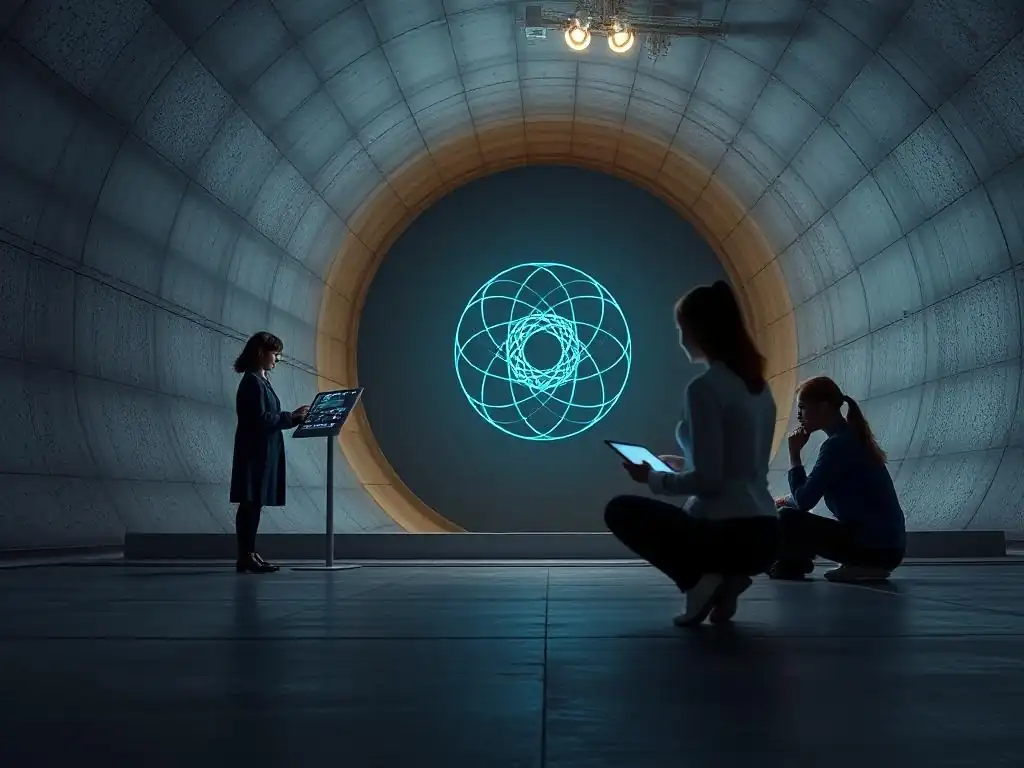
CERN: Women Contributing to International Collaborations
CERN, the European Organization for Nuclear Research, stands as a beacon of international scientific collaboration and a powerhouse of high-energy physics research. Since its inception in the 1950s, women in high-energy physics have been integral to its groundbreaking endeavors, from the development of its early accelerators to the discovery of the W and Z bosons in the 1980s. While often working within large, anonymous collaborations, their expertise was essential across all facets of the experiments.
For instance, women were deeply involved in the design and operation of detectors at facilities like the Super Proton Synchrotron (SPS) and the Large Electron-Positron Collider (LEP). They contributed to the complex data acquisition systems, performed rigorous analyses of collision events, and played key roles in interpreting the results that refined the Standard Model with unprecedented precision. Their presence at CERN, though initially small, steadily grew, with female high-energy physicists holding crucial positions in accelerator operations, experimental teams, and even leadership roles as the century progressed.
Fermilab: Female Physicists in the US High-Energy Physics Program
Fermilab, or the Fermi National Accelerator Laboratory, has been the cornerstone of the United States' high-energy physics program, particularly famous for its Tevatron collider, which operated from the 1980s through the early 2010s. Women in high-energy physics were crucial to Fermilab's success, from its initial construction to its most significant discoveries.
A prime example is Helen Edwards, an accelerator physicist who was instrumental in the design, construction, and commissioning of the Tevatron's Main Ring. Her leadership ensured that this massive project, a vital component of the world's most powerful particle accelerator at the time, was completed ahead of schedule and under budget in 1976.
Beyond accelerator operations, numerous female high-energy physicists were deeply embedded in the experimental collaborations at Fermilab, such as CDF and D0. These teams were responsible for the groundbreaking discovery of the top quark in 1995, the last fundamental particle of the Standard Model to be found. Women contributed to every stage of these complex experiments, from building and calibrating detectors to developing sophisticated data analysis techniques and authoring the seminal papers that announced these monumental findings, solidifying Fermilab's legacy in particle physics.
SLAC National Accelerator Laboratory: Women at the Forefront of Linear Collider Research
The SLAC National Accelerator Laboratory (formerly Stanford Linear Accelerator Center) pioneered the use of linear accelerators for high-energy physics research, offering unique insights into the structure of matter. Throughout the latter half of the 20th century, SLAC was home to groundbreaking experiments that led to fundamental discoveries, and women in high-energy physics were at the forefront of these efforts. Early experiments at SLAC's SPEAR collider, for instance, led to the discovery of the charm quark in 1974 and the tau lepton in 1975, both integral components of the Standard Model.
Female scientists at SLAC contributed to the design and operation of these advanced linear accelerators, the development of innovative detector technologies optimized for electron-positron collisions, and the intricate analysis of experimental data. Their work was vital in unraveling the internal structure of protons and neutrons and identifying new fundamental particles. The contributions of female high-energy physicists at SLAC underscored their intellectual leadership and technical prowess in a field that was rapidly expanding its capabilities and pushing the boundaries of scientific inquiry.
Breaking Barriers: The Fight for Recognition and Equality in Physics
Gender Bias in Academia and Research: Addressing Systemic Inequalities
Despite their significant contributions, women in high-energy physics throughout the mid-to-late 20th century frequently encountered persistent gender bias and systemic inequalities within academia and research institutions. This bias manifested in various forms, including unequal pay for equivalent work, limited opportunities for promotion, and exclusion from informal networks and influential committees. Studies and anecdotal evidence from the era consistently point to a "leaky pipeline," where women, despite excelling in early stages of their careers, disproportionately left physics compared to their male counterparts.
These systemic issues often meant that talented female high-energy physicists received less credit for their collaborative work, were less likely to be invited to speak at major conferences, and faced skepticism regarding their capabilities. The cultural norms of the time often perpetuated stereotypes that undermined women's authority and intellectual contributions in scientific fields. Addressing these deep-seated prejudices has been an ongoing struggle, highlighting the resilience required for women high energy physics researchers to not only succeed but also to gain deserved recognition.
Mentorship and Support Networks: Empowering Future Generations of Women in Physics
In the challenging environment of mid-to-late 20th-century physics, mentorship and the formation of informal and formal support networks proved crucial for empowering women in high-energy physics. Recognizing the isolation many female scientists faced, pioneering women and supportive male colleagues began to establish connections that offered guidance, encouragement, and practical advice. These networks provided a vital space for sharing experiences, discussing career hurdles, and collectively strategizing ways to overcome them.
While formal programs were less common in the earlier part of this period, the importance of individual mentorship, shared office spaces, and informal gatherings cannot be overstated. These interactions helped to retain talented female high-energy physicists in the field, providing them with the confidence and resources to navigate demanding research environments and academic politics. Such support systems were fundamental in fostering a sense of community and demonstrating that women were not alone in their pursuit of scientific excellence.
The Ongoing Struggle for Representation in Leadership Roles
A significant barrier that continued to face women in high-energy physics throughout the 1950-2000 period, and indeed persists today, was their severe underrepresentation in leadership roles. Positions such as department chairs, laboratory directors, principal investigators, and heads of major experimental collaborations were overwhelmingly held by men. This lack of representation meant that women had limited influence on institutional policies, funding priorities, and the overall strategic direction of high-energy physics research.
The absence of women in these influential positions often perpetuated a cycle of exclusion, as decision-making bodies lacked diverse perspectives and experiences. While individual women certainly rose to prominence in specific scientific roles, the broader struggle for equitable representation in leadership remains a critical area of focus. Ensuring that female high-energy physicists are not only present but also have a voice in shaping the future of the field is essential for fostering true equity and maximizing scientific potential.
Legacy and Inspiration: Women Who Shaped Modern Particle Physics
Helen Quinn's Enduring Influence on Particle Physics Theory
Among the theoretical physicists who profoundly shaped modern particle physics, Helen Quinn stands out for her enduring influence. Her work in the 1970s played a pivotal role in advancing our understanding of the fundamental forces. Most notably, she contributed significantly to the development of Grand Unified Theories (GUTs), which propose a framework for unifying the strong, weak, and electromagnetic forces at extremely high energies, an idea central to high-energy physics research.
Furthermore, in 1977, Quinn, alongside Roberto Peccei, proposed the Peccei-Quinn theory, which introduced a new symmetry to solve the strong CP problem in quantum chromodynamics. This theory predicted the existence of a new, extremely light particle called the axion. The axion is now a leading candidate for dark matter, a mysterious substance that makes up about 27% of the universe's mass. Quinn's theoretical insights continue to guide experimental searches for new particles and phenomena, cementing her legacy as a foundational figure among women in high-energy physics theory.
Inspiring Future Generations: The Importance of Role Models in STEM
The stories and achievements of pioneering women in high-energy physics serve as invaluable sources of inspiration for future generations of scientists. For young girls and women contemplating careers in STEM, seeing successful female role models in fields traditionally dominated by men is transformative. It helps to dismantle ingrained stereotypes about who can excel in science and demonstrates that intellectual curiosity, dedication, and scientific rigor are not bound by gender.
By highlighting the groundbreaking work of female high-energy physicists, from experimentalists like Chien-Shiung Wu to theorists like Helen Quinn, WomenInScienceHistory.com aims to show aspiring scientists that a path in physics is not only possible but also deeply rewarding. These narratives provide tangible proof that women have always been, and continue to be, at the forefront of scientific discovery, encouraging a new wave of talent to pursue their passions in high-energy physics and beyond.
Continuing the Quest: The Future of Women in High Energy Physics and Accelerator Science
While significant strides have been made in recognizing and supporting women in high-energy physics, the quest for full equity and inclusion is ongoing. The field continues to push the boundaries of human knowledge, with new accelerators and experiments planned for the coming decades. Ensuring that these future endeavors benefit from the full spectrum of human talent requires sustained commitment to diversity.
The future of high-energy physics and accelerator science promises exciting discoveries, from probing the nature of dark matter and dark energy to exploring the fundamental symmetries of the universe. To fully realize this potential, it is imperative to continue fostering environments where female high-energy physicists can thrive, lead, and innovate without facing historical barriers. This ongoing effort will not only enrich the scientific community but also ensure that the most profound questions about our universe are addressed by the brightest minds, regardless of gender.
Conclusion: Celebrating the Achievements of Women in High-Energy Physics
Recognizing the Enduring Impact of Women on Particle Physics Research
The journey through the era of "atom smashers" reveals an undeniable truth: the progress in high-energy particle physics would have been incomplete without the profound and enduring contributions of women. From the meticulous design and construction of particle detectors to the intricate analysis of vast datasets and the development of groundbreaking theoretical models, women in high-energy physics have been integral to every facet of discovery. Their intellectual prowess, perseverance, and innovative spirit have significantly advanced our understanding of the fundamental constituents of matter and the forces that govern them.
The stories of these pioneering female high-energy physicists, though often overlooked in historical accounts, are testament to their resilience in the face of systemic barriers. Their work, ranging from the experimental verification of parity non-conservation to contributions to accelerator design and theoretical frameworks like those for axions, has irrevocably shaped the Standard Model and laid the groundwork for future explorations. Celebrating their achievements is not merely an act of historical correction but an essential recognition of their indelible impact on particle physics research.
A Call to Action: Promoting Equity and Inclusion in STEM Fields
The legacy of women in high-energy physics serves as both an inspiration and a powerful call to action. While progress has been made, the scientific community must continue to actively dismantle the remaining barriers to equity and inclusion in STEM fields. This includes addressing unconscious biases, promoting fair representation in leadership, ensuring equitable access to resources and opportunities, and fostering supportive and inclusive environments for all scientists.
By actively promoting and celebrating the contributions of female high-energy physicists, we not only honor their past achievements but also inspire a new generation to pursue careers in science with confidence and determination. WomenInScienceHistory.com remains committed to illuminating these narratives, ensuring that the remarkable legacy of women on the frontiers of high-energy particle physics continues to grow, inspiring a more diverse, equitable, and scientifically vibrant future.
Frequently Asked Questions
What is High Energy Particle Physics and why is it significant?
High Energy Particle Physics, also known as high energy physics, investigates the fundamental constituents of matter and their interactions at the smallest scales. It's significant because it helps us understand the origins of the universe and the laws that govern its behavior.
What were some of the major challenges faced by women working in high energy physics historically?
Women in high energy physics faced significant challenges, including gender bias, limited access to funding and resources, and a lack of mentorship opportunities in a heavily male-dominated field.
Can you name one or two pioneering women who made significant contributions to high energy physics?
Certainly! Chien-Shiung Wu, known as the "First Lady of Physics," made groundbreaking contributions to nuclear physics and particle physics. Another important figure is Melissa Franklin, a renowned experimental particle physicist who has worked on major experiments at Fermilab and CERN.
How does WomenInScienceHistory.com help to promote the stories of women in high energy physics?
WomenInScienceHistory.com highlights the achievements and struggles of women in high energy physics through detailed biographies, discussions of their scientific contributions, and analysis of the historical context they worked in.
What can be done to encourage more women to pursue careers in high energy physics today?
Encouraging more women requires addressing systemic biases, providing mentorship and support networks, and promoting greater visibility of female role models in the field. This includes actively recruiting women and creating inclusive research environments.
Final Reflection: Illuminating the Invisible
The journey through the world of high-energy particle physics, as seen through the eyes of the women who are shaping its future, reveals a profound truth: scientific progress thrives on diversity and unwavering dedication. The stories shared highlight not only the intellectual brilliance required to unravel the universe's deepest secrets, but also the resilience and determination needed to overcome systemic barriers and pave the way for future generations.
This exploration into the atom smashers and the women within them underscores the enduring impact of their contributions on both the scientific community and the broader cultural landscape. The pursuit of knowledge, especially in fields traditionally dominated by men, requires courage and a commitment to challenging the status quo. Science is not a boy's game, it's not a girl's game. It's everyone's game. It's about where we are and where we're going.
This sentiment, echoed by many women in STEM, reminds us that true innovation emerges when all voices are heard and valued.
As we conclude this exploration, let us carry forward the lessons learned from these pioneering women. Consider how you can actively champion inclusivity and equity in your own sphere of influence, whether it be in science, technology, or any other field. Embrace the spirit of curiosity and perseverance that defines these remarkable individuals, and strive to create a world where every aspiring scientist, regardless of gender, has the opportunity to unlock the mysteries of the universe.
Ignite Your Inner Physicist: Dare to Explore the Universe!
Thank you for joining us on this journey into the fascinating world of high-energy particle physics! We hope you found inspiration in the stories of these incredible women pushing the boundaries of scientific understanding. Now, it's time to take your own leap into the unknown.
- Dive deeper into the world of particle physics by exploring resources from CERN, SLAC, or Fermilab, starting with their educational pages. Uncover the mysteries of the universe for yourself!
- Share this article with friends, family, or colleagues to spark their curiosity about women in STEM and the wonders of physics.
- Participate in citizen science projects related to particle physics or astronomy – contribute to real research from the comfort of your home!
What discoveries will you make as you explore the vast universe of particle physics?