
Secret Science: The Classified Contributions of Women During the Cold War

Welcome to WomenInScienceHistory.com!
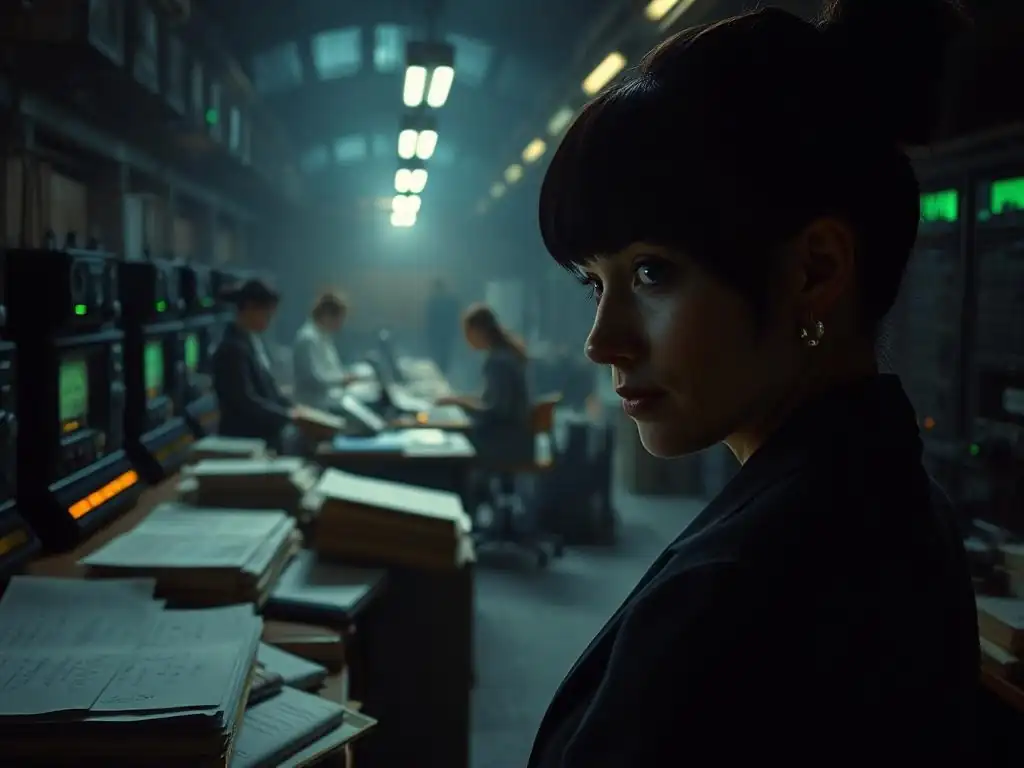
Delve into the often-untold stories of remarkable women who shaped the world of science. This month, we pull back the curtain on a fascinating, and largely unknown, chapter: Women’s Cold War scientific secrets. What vital roles did they play behind the iron curtain and in clandestine labs? Discover the classified contributions of these brilliant minds and the historical context that shrouded their groundbreaking work. Read on to uncover the hidden figures who helped define an era.
- Introduction: Unveiling Women's Cold War Scientific Secrets
- The Cold War Context: Science and National Security
- Women's Classified Roles in Cold War Science
- Key Figures: Women Behind the Cold War's Scientific Advancements
- Overcoming Obstacles: Gender Bias in Cold War Science
- Specific Scientific Contributions of Women During the Cold War
- Declassification and Recognition: Bringing Women's Stories to Light
- Legacy and Impact: Inspiring Future Generations of Women in STEM
- Conclusion: Remembering Women's Vital Cold War Scientific Secrets
-
Frequently Asked Questions
- What role did women play in secret Cold War science?
- Why were women's contributions to Cold War science often hidden?
- What types of scientific fields saw significant contributions from women during the Cold War?
- How does WomenInScienceHistory.com aim to highlight the contributions of women in Cold War science?
- What challenges did women scientists face during the Cold War era?
- Final Reflection: Unveiling Hidden Legacies
- Ignite Your Inner Pioneer: Continue the Legacy!
Introduction: Unveiling Women's Cold War Scientific Secrets
The Cold War, a period defined by geopolitical tension and an intense scientific arms race between the United States and the Soviet Union, necessitated unprecedented innovation across a myriad of fields. While the public narrative often spotlights male scientists and engineers, a vast, largely unrecognized cadre of women played crucial, often classified, roles behind the scenes.
Their contributions, ranging from complex mathematical computations to groundbreaking research in nuclear physics and early computer science, were frequently obscured by the pervasive societal norms of the era and the inherent secrecy of national security projects. Many of these "Women’s Cold War scientific secrets" remained hidden for decades, known only within the confines of secure government laboratories and intelligence agencies.
These women navigated environments steeped in gender bias, where their intellectual capabilities were often underestimated or their roles relegated to supportive, rather than leading, positions. Despite these formidable barriers, their expertise was indispensable.
From the precise calculations that guided rockets into space to the intricate codebreaking that provided vital intelligence, their work was foundational to many of the scientific and technological advancements that emerged from the Cold War. Uncovering these stories is not merely an act of historical correction but a crucial step in understanding the true breadth of human ingenuity during one of the most pivotal periods in modern history.
Why Recognizing Women's Cold War Contributions Matters
Acknowledging the "Women’s Cold War scientific secrets" is vital for several compelling reasons. Firstly, it provides a more accurate and comprehensive historical record, correcting a narrative that has, for too long, overlooked or minimized the significant impact of female scientists. Without their contributions, many of the technological breakthroughs that defined the Cold War, from advanced radar systems to the very foundations of modern computing, would have been significantly delayed or perhaps never realized. Their often-uncredited work directly influenced national security, intelligence operations, and the trajectory of the Space Race.
Secondly, recognizing these pioneering women serves as a powerful source of inspiration for current and future generations, particularly for young women considering careers in STEM fields. By highlighting the resilience, intellect, and groundbreaking achievements of these historical figures, we demonstrate that scientific excellence knows no gender. Their stories underscore the importance of diversity in scientific endeavors, proving that when talent is sought and utilized without prejudice, the potential for innovation is boundless. Bringing these hidden histories to light helps dismantle persistent stereotypes and encourages a more inclusive vision for the scientific community.
The Cold War Context: Science and National Security
The Scientific Arms Race: A Catalyst for Innovation
The Cold War was fundamentally a scientific and technological contest, driving an unprecedented arms race that reshaped global politics and spurred rapid innovation. The Soviet Union's launch of Sputnik in 1957 shocked the United States, galvanizing a massive investment in scientific research, particularly in rocketry, nuclear physics, and computing.
This period saw the creation of specialized government agencies like NASA and the Defense Advanced Research Projects Agency (DARPA), specifically designed to accelerate scientific discovery for national security purposes. Billions of dollars were poured into laboratories, universities, and defense contractors, creating a demand for skilled scientists and engineers that, in some instances, began to chip away at traditional gender barriers.
This intense competition meant that scientific breakthroughs were not just about academic progress; they were directly linked to military superiority and ideological dominance. The development of intercontinental ballistic missiles (ICBMs), nuclear submarines, and sophisticated surveillance technologies became paramount.
This urgent need for innovation often led to the recruitment of talented individuals from diverse backgrounds, including women, into classified projects. While systemic biases remained, the sheer scale of the scientific challenge sometimes created openings for women to contribute their intellectual prowess in ways previously unimaginable, even if their work remained largely hidden from public view as "Women’s Cold War scientific secrets."
The Role of Science in Cold War Geopolitics
Science was not merely a tool in the Cold War; it was a central theater of conflict, deeply interwoven with geopolitics and national identity. Each superpower leveraged scientific achievements to assert its technological superiority and ideological strength on the global stage. The Space Race, for instance, was a vivid demonstration of this, where successful satellite launches and manned spaceflights were celebrated as triumphs of respective political systems. Beyond the highly visible space endeavors, covert scientific work underpinned intelligence gathering, counter-intelligence, and the development of strategic defense capabilities.
The Cold War necessitated sophisticated scientific intelligence, requiring experts to analyze foreign technological advancements, predict adversary capabilities, and develop countermeasures. This often involved highly classified research into areas like signal processing, materials science, and atmospheric physics for nuclear test detection. Women scientists frequently found themselves at the forefront of these efforts, translating complex data, designing experiments, and contributing to theoretical frameworks that informed critical national security decisions. Their work, much of it kept under wraps, directly influenced diplomatic strategies, military readiness, and the very balance of power, forming a critical layer of "Women’s Cold War scientific secrets."
Women's Classified Roles in Cold War Science
Pioneering Female Scientists in Defense Research
During the Cold War, numerous pioneering female scientists dedicated their intellect to defense research, often working under strict secrecy. These women were not confined to traditional "female" roles but engaged in highly technical and demanding fields. For instance, in the realm of materials science, women contributed to the development of stronger alloys for aircraft and missile components, and to radiation-hardened electronics critical for nuclear deterrence.
In physics laboratories, they performed complex calculations related to nuclear fission and fusion, contributing to the understanding of weapon effects and detection methods. Their work often involved long hours and meticulous attention to detail, operating within a system that rarely offered public recognition.
One notable area was aerodynamic research, where women worked as mathematicians and engineers, optimizing aircraft and missile designs. At facilities like NACA (later NASA), female engineers contributed to wind tunnel tests and flight simulations, ensuring the stability and performance of high-speed vehicles. Despite the classified nature of much of this work, their analytical rigor and problem-solving skills were indispensable. These women were integral to the technological edge sought by the United States, their contributions representing a significant, albeit often unacknowledged, part of "Women’s Cold War scientific secrets."
Women in Cryptography and Intelligence Gathering During the Cold War
The Cold War was an era of intense espionage and intelligence gathering, where the ability to intercept and decipher enemy communications was paramount. Women played an absolutely critical role in cryptography and intelligence analysis, building upon the foundations laid during World War II. At agencies like the National Security Agency (NSA), women served as linguists, cryptanalysts, and mathematicians, working tirelessly to break complex Soviet codes and ciphers. Their work was highly compartmentalized and often performed in secure facilities, making it some of the most profound "Women’s Cold War scientific secrets."
These women processed vast amounts of intercepted data, identifying patterns, developing new algorithms, and applying advanced statistical methods to reveal hidden messages. Their analytical acumen directly informed policymakers and military strategists, providing crucial insights into adversary intentions and capabilities. Without their unwavering dedication and sharp minds, the intelligence community would have operated with significant blind spots. The precision and intellectual rigor required for such tasks meant that women, despite societal biases, were often indispensable to the success of these vital intelligence operations, their contributions remaining classified for decades.
Key Figures: Women Behind the Cold War's Scientific Advancements
Grace Hopper: Pioneer of Computer Programming
Rear Admiral Grace Hopper, a visionary mathematician and computer scientist, stands as a towering figure in the history of computing, with profound contributions during the Cold War. After World War II, she continued her groundbreaking work, becoming a key figure in the development of programming languages. In the early 1950s, while working at Remington Rand, she developed FLOW-MATIC, one of the first data-processing compilers, which allowed programs to be written in English-like words rather than numerical machine code.
This innovation was a direct precursor to COBOL ( Common Business-Oriented Language), which she helped develop and standardize, transforming how businesses and government agencies handled vast amounts of data. COBOL became the most widely used programming language in the world for decades, running on mainframe computers critical to Cold War-era logistics, finance, and defense operations.
Hopper's advocacy for "machine independent" programming languages revolutionized the field, making computers more accessible and efficient. She famously popularized the term "debugging" after finding a moth in the Mark II computer. Her relentless pursuit of innovation within the burgeoning field of computer science, much of which had direct applications for military and intelligence computations, solidified her legacy. Her work directly contributed to streamlining data processing for the U.S. Navy and other defense organizations, making her a pivotal figure in the unfolding of "Women’s Cold War scientific secrets."
Katherine Johnson: Human Computer and Aerospace Pioneer
Katherine Johnson, one of NASA's extraordinary "human computers," played an indispensable role in the United States' Cold War-driven Space Race, particularly with the critical calculations for Project Mercury and the Apollo program. Joining NACA (the predecessor to NASA) in 1953, Johnson's exceptional mathematical abilities were quickly recognized.
She performed trajectory analysis for Alan Shepard's 1961 mission, America's first human spaceflight, meticulously calculating the flight path, launch window, and emergency return trajectories. Her precision was so trusted that John Glenn, before his historic 1962 orbital flight, specifically requested that Johnson recheck the electronic computer's calculations, stating, "If she says they're good, then I'm ready to go."
Johnson's contributions extended to the Apollo 11 mission to the Moon in 1969, where she calculated the rendezvous trajectory for the lunar lander and the command module. Her work was foundational to the success of these complex missions, which were not only scientific endeavors but also powerful symbols of American technological superiority during the Cold War.
Her ability to solve intricate problems with remarkable accuracy under immense pressure made her an unsung hero whose vital calculations, though not strictly "classified secrets" in the traditional sense of intelligence, were crucial to the highly competitive and national security-driven space program, undeniably a part of "Women’s Cold War scientific secrets."
Genevieve Grotjan Feinstein: Mathematician and Cryptanalyst
Genevieve Grotjan Feinstein was a brilliant mathematician and cryptanalyst whose highly classified work at the National Security Agency (NSA) during the Cold War was crucial to U.S. intelligence efforts. Having joined the Army Security Agency (ASA) in 1948, she transitioned to the newly formed NSA in 1952, where she became a leading figure in breaking Soviet codes. Her expertise was particularly vital in deciphering complex ciphers, including those used by the Soviet Union's intelligence agencies. Feinstein's analytical prowess enabled her to identify patterns and vulnerabilities in seemingly impenetrable communications, providing critical insights into Soviet military capabilities and strategic intentions.
Her contributions were central to Project Venona, though much of that specific work concluded by the mid-1950s, her methods and expertise continued to be applied to new Cold War challenges. Feinstein's work involved intricate mathematical analysis and the development of new cryptographic techniques, often working on projects that remained classified at the highest levels for decades.
Her ability to unravel sophisticated encrypted messages provided the U.S. with invaluable intelligence, directly influencing national security policy and military strategy throughout the tense years of the Cold War. Her story exemplifies the profound "Women’s Cold War scientific secrets" that were essential to maintaining a strategic advantage.
Overcoming Obstacles: Gender Bias in Cold War Science

The Challenges Faced by Women in Male-Dominated Scientific Fields
Women pursuing scientific careers during the Cold War era faced significant systemic and cultural challenges rooted in pervasive gender bias. Academia and industry were largely male-dominated, with women often encountering overt discrimination in hiring, promotion, and access to resources. Many highly qualified women were relegated to lower-paying, less prestigious "support" roles, such as laboratory assistants or "computers," even when their work was intellectually equivalent to that of their male counterparts. They were frequently paid less for the same work, and opportunities for leadership or independent research were scarce.
Societal expectations also played a major role, with strong pressures for women to prioritize domestic roles over professional ambitions. This often meant that women who did pursue scientific careers had to contend with a lack of childcare support, inflexible work environments, and a general skepticism about their long-term commitment to their professions. Furthermore, women were often excluded from informal networks and mentorship opportunities, which were crucial for career advancement in these fields. This pervasive bias meant that many brilliant "Women’s Cold War scientific secrets" remained unacknowledged or their creators uncelebrated.
Despite the formidable barriers, women found innovative ways to navigate discrimination and secure vital roles in classified Cold War science. The immense demand for scientific and technical talent, especially in fields like mathematics, computing, and engineering, occasionally created openings that bypassed traditional biases. Agencies and projects desperate for skilled minds sometimes overlooked gender, particularly for roles that could be framed as "supportive" or "analytical," even if they were profoundly technical. For example, the need for "human computers" at NACA/NASA or cryptanalysts at the NSA created avenues for women whose mathematical prowess was undeniable.
Women often entered these fields through less conventional routes or by excelling to such an extent that their contributions became indispensable. Their sheer persistence, exceptional skill, and unwavering dedication often forced institutions to acknowledge their value. Many women working on "Women’s Cold War scientific secrets" quietly proved their capabilities through meticulous work and groundbreaking results, demonstrating that their intellect and expertise were critical to national security. While public recognition was rare, their impact within the classified world was undeniable, paving the way for future generations by demonstrating the immense potential of women in STEM.
Specific Scientific Contributions of Women During the Cold War
Women's Role in Developing Radar Technology
Women played a crucial, though often uncredited, role in the development and refinement of radar technology during the Cold War. Their contributions spanned theoretical research, experimental design, and operational analysis. In laboratories, female physicists and engineers contributed to understanding electromagnetic wave propagation, designing improved antenna systems, and developing more sophisticated signal processing techniques. For instance, at research facilities like MIT's Lincoln Laboratory, women were involved in analyzing radar signals to enhance detection capabilities and improve the accuracy of targeting systems, which were vital for air defense and missile guidance.
Beyond the laboratory, women were also instrumental in the practical application of radar. They served as radar operators, meticulously monitoring screens for incoming threats and analyzing complex data patterns. Their ability to interpret subtle variations in radar returns was critical for identifying aircraft, tracking submarines, and even detecting early missile launches. This detailed work, often performed under pressure in classified environments, directly contributed to the effectiveness of Cold War defense systems and the development of early warning networks, forming a significant portion of "Women’s Cold War scientific secrets."
Contributions to Early Computer Science and Codebreaking
The Cold War spurred the rapid evolution of computer science, and women were at the very heart of this revolution, particularly in early programming and codebreaking. Building on their foundational work from World War II, women continued to dominate the ranks of early programmers, often referred to as "coders" or "software engineers" before these terms were widely adopted.
They developed the algorithms and wrote the machine code that enabled the first electronic computers to perform complex calculations for ballistic trajectories, cryptographic analysis, and logistical support for military operations. For example, at facilities like the Aberdeen Proving Ground, women were responsible for programming the ENIAC and other early mainframes, making these machines functional tools for defense research.
In the realm of codebreaking, women's analytical skills were indispensable. At agencies like the National Security Agency (NSA), female mathematicians and linguists worked tirelessly to intercept, analyze, and decipher encrypted communications from adversary nations. Their work often involved developing sophisticated statistical methods and pattern recognition techniques to crack complex ciphers, providing vital intelligence on Soviet intentions and capabilities. These efforts, kept under the strictest secrecy, were central to national security and represent some of the most impactful "Women’s Cold War scientific secrets."
The Space Race, a defining feature of the Cold War, saw women make profound contributions across various scientific and engineering disciplines. While figures like Katherine Johnson are now widely recognized, countless other women worked behind the scenes on projects that propelled the U.S. into space. Female mathematicians and physicists performed critical calculations for orbital mechanics, trajectory planning, and navigation systems for rockets and satellites.
They analyzed telemetry data from early space missions, ensuring the proper functioning of spacecraft and the safety of astronauts. For example, at NASA's various centers, women were involved in designing experiments for space environments, studying materials science for spacecraft components, and developing life support systems for manned missions.
Beyond the purely mathematical and engineering roles, women also contributed to the scientific understanding gained from space exploration. They analyzed lunar samples, studied the effects of space radiation on biological systems, and contributed to the development of remote sensing technologies used for Earth observation, which had both scientific and intelligence applications. Their meticulous work and intellectual rigor were essential to the success of the Apollo program and other space initiatives, directly contributing to the U.S.'s technological leadership in the Cold War and furthering "Women’s Cold War scientific secrets."
Contributions to Medical Advancements and Public Health Research
The Cold War's pervasive threat of nuclear conflict and biological warfare also spurred significant medical and public health research, where women made vital contributions. Female scientists, doctors, and researchers worked in military hospitals, government laboratories, and public health agencies, addressing issues ranging from radiation sickness to vaccine development. They conducted epidemiological studies on the effects of nuclear fallout, developed protocols for managing mass casualties, and researched countermeasures against potential biological agents. For instance, women were often at the forefront of studying the long-term health impacts of radiation exposure, contributing to safety guidelines and treatment protocols.
Furthermore, women played key roles in advancing public health initiatives that, while not always overtly classified, were crucial for national resilience during a period of heightened threat. They contributed to vaccine research, disease surveillance, and the development of emergency medical responses. Their work in understanding infectious diseases and developing preventative measures was critical for maintaining a healthy populace and military force, indirectly supporting national security. These often-overlooked medical and public health efforts form another important layer of "Women’s Cold War scientific secrets."
Declassification and Recognition: Bringing Women's Stories to Light
The Gradual Declassification of Cold War Scientific Projects
The nature of Cold War scientific projects meant that much of the work, especially that related to national security, was classified at the highest levels. This secrecy, while necessary for intelligence and military advantage, also inadvertently obscured the contributions of many individuals, particularly women. However, over the past few decades, a gradual process of declassification has begun to shed light on these previously hidden narratives. Government agencies, compelled by public interest, historical research, and legislative acts like the Freedom of Information Act, have slowly released documents pertaining to Cold War-era projects.
This declassification process is often painstaking, involving meticulous review of millions of pages of documents, many of which contain highly sensitive information. As these records become available, historians and researchers are able to piece together a more complete picture of the scientific efforts of the time, revealing the roles of individuals who operated in the shadows. This ongoing effort has been instrumental in uncovering the specific contributions of women in fields like cryptography, aerospace engineering, and nuclear research, finally bringing many "Women’s Cold War scientific secrets" into the public domain and allowing their stories to be told.
Efforts to Recognize and Celebrate Women's Cold War Contributions
With the gradual declassification of Cold War documents and a growing awareness of historical gender imbalances, significant efforts have been made to recognize and celebrate the contributions of women scientists. Museums, historical societies, and academic institutions have launched initiatives to research, document, and publicize these overlooked stories. Exhibitions dedicated to "Women in STEM" often feature sections on the Cold War era, highlighting figures like the "human computers" of NASA or the cryptanalysts of the NSA. Educational programs and documentaries have also played a crucial role in disseminating these narratives to a broader audience.
Moreover, posthumous awards and honors have been bestowed upon many of these pioneers, acknowledging their vital work that went unrecognized during their lifetimes. Biographies and scholarly articles are increasingly focusing on these hidden figures, ensuring that their achievements are properly integrated into the historical record. These concerted efforts aim to correct past oversights and ensure that the "Women’s Cold War scientific secrets" are no longer secrets, but celebrated chapters in the history of science and national security.
Oral Histories and Archival Research: Recovering Lost Narratives
Recovering the lost narratives of women in Cold War science relies heavily on two critical methodologies: oral histories and meticulous archival research. Oral history projects involve interviewing surviving female scientists, engineers, and intelligence professionals who worked on classified projects. These firsthand accounts provide invaluable insights into their daily work, the challenges they faced, the culture of their workplaces, and the personal impact of their highly secretive roles. Many of these women, now in their later years, are often the last living links to these historical periods, and their testimonies are crucial for capturing details not found in official records.
Concurrently, extensive archival research involves sifting through declassified government documents, military records, technical reports, and personal papers. Researchers painstakingly cross-reference information, identify patterns, and piece together fragmented evidence to reconstruct the full scope of women's involvement. This often means delving into obscure footnotes or obscure project files that might contain the only mention of a woman's contribution. The combination of these methods allows historians to illuminate the profound "Women’s Cold War scientific secrets" and ensure that these vital stories are preserved for future generations, transforming anonymous contributions into celebrated legacies.
Legacy and Impact: Inspiring Future Generations of Women in STEM
The Lasting Impact of Women's Cold War Scientific Achievements
The scientific achievements of women during the Cold War era have had a profound and lasting impact on modern technology and society, far beyond the immediate context of national security. Their foundational work in early computer programming laid the groundwork for the digital age, influencing everything from the internet to personal computing. The analytical techniques developed by female cryptanalysts continue to inform modern cybersecurity practices and intelligence methodologies. Similarly, their contributions to aerospace engineering and materials science were critical stepping stones for contemporary space exploration and advanced manufacturing.
These "Women’s Cold War scientific secrets" also paved the way for greater inclusion in STEM fields. By demonstrating their immense capabilities under highly demanding circumstances, these women implicitly challenged prevailing gender stereotypes and proved that scientific excellence knows no gender. Their perseverance helped to slowly dismantle barriers, creating more opportunities for subsequent generations of women to enter and thrive in scientific and technical professions. The technological landscape we inhabit today owes an immeasurable debt to their largely unacknowledged brilliance.
Lessons Learned: Promoting Diversity and Inclusion in STEM Fields
The stories of women in Cold War science offer invaluable lessons for promoting diversity and inclusion in contemporary STEM fields. One key takeaway is the critical importance of recognizing talent wherever it exists, regardless of gender, background, or social expectations. The Cold War's urgent demand for innovation sometimes forced institutions to look beyond traditional hiring practices, demonstrating that when talent is prioritized, groundbreaking results follow. This historical precedent underscores that diversity is not merely a matter of social justice but a strategic imperative that enhances creativity, problem-solving, and overall scientific progress.
Furthermore, these narratives highlight the detrimental effects of systemic bias and the need for proactive measures to dismantle it. The challenges faced by these women, from unequal pay to limited opportunities for advancement, serve as stark reminders of the obstacles that still exist for many underrepresented groups in STEM.
Promoting diversity and inclusion today requires not only celebrating past achievements but also actively fostering supportive environments, ensuring equitable opportunities, and challenging implicit biases to unlock the full potential of all scientific minds. The "Women’s Cold War scientific secrets" teach us that progress is often slow but always worth the effort.
Inspiring Future Generations of Women in Science from the Cold War Era
The compelling narratives of women who contributed to Cold War science serve as powerful sources of inspiration for future generations of women in STEM. By shining a light on their intellectual prowess, resilience, and groundbreaking achievements, we provide tangible role models who demonstrate that women have always been, and continue to be, at the forefront of scientific discovery. Young women today can look to figures like Grace Hopper, Katherine Johnson, and Genevieve Grotjan Feinstein as testaments to what is possible when intellect and determination converge.
These stories move beyond abstract concepts to provide concrete examples of women making significant, often world-changing, contributions in fields that were once considered exclusively male domains. Understanding the "Women’s Cold War scientific secrets" encourages young women to pursue their passions in science, technology, engineering, and mathematics, knowing that they stand on the shoulders of giants. It empowers them to challenge existing norms, overcome obstacles, and aspire to make their own indelible marks on the scientific landscape, ensuring that the legacy of these pioneers continues to inspire innovation and progress.
Conclusion: Remembering Women's Vital Cold War Scientific Secrets
Acknowledging the Underappreciated Role of Women in Cold War Science
The Cold War was a period of immense scientific and technological advancement, driven by an urgent need for national security and ideological supremacy. Within this high-stakes environment, women played an undeniably vital, yet largely underappreciated, role. From the precise mathematical calculations that guided rockets into space to the intricate codebreaking that provided critical intelligence, their contributions spanned virtually every major scientific and technical domain. These "Women’s Cold War scientific secrets" were often hidden behind layers of classification and overshadowed by pervasive gender biases, preventing public recognition during their most impactful years.
Acknowledging their contributions is not merely an act of historical revisionism; it is about completing the historical record and recognizing the true breadth of human ingenuity during one of the most pivotal eras. These women were not just support staff; they were innovators, problem-solvers, and intellectual powerhouses whose work directly influenced the trajectory of the Cold War and laid the foundations for much of our modern technological world. Their stories underscore the fact that scientific excellence is not defined by gender but by intellect, dedication, and perseverance.
The task of uncovering and sharing the "Women’s Cold War scientific secrets" is an ongoing and crucial endeavor. Many details of their classified work still remain unrevealed, and countless individual stories are yet to be fully documented. Continued efforts in archival research, oral history collection, and public dissemination are essential to ensure that these narratives are not lost to time. Each new discovery enriches our understanding of the Cold War, offers fresh perspectives on scientific history, and highlights the often-unseen forces that shaped global events.
Beyond historical accuracy, sharing these stories is vital for inspiring future generations. By showcasing the brilliance and resilience of these pioneering women, we provide powerful role models for young girls and women considering careers in STEM. Their experiences offer valuable lessons about overcoming adversity, the importance of perseverance, and the profound impact that diverse perspectives bring to scientific discovery. The continued illumination of these "Women’s Cold War scientific secrets" serves as a testament to the enduring power of human intellect and a call to foster a more inclusive and equitable scientific future.
Frequently Asked Questions
What role did women play in secret Cold War science?
Women made significant, but often uncredited, contributions to Cold War scientific advancements, particularly in fields like mathematics, cryptography, and engineering. Their work was often classified, obscuring their impact.
The era was marked by gender bias and limited opportunities for women in science. Many women worked in support roles or had their work attributed to male colleagues due to classified projects and prevailing societal norms.
What types of scientific fields saw significant contributions from women during the Cold War?
Women were instrumental in areas like mathematics, particularly in computing and codebreaking, physics related to nuclear weapons research, and engineering contributing to defense technologies. Their work was often highly specialized and secretive.
How does WomenInScienceHistory.com aim to highlight the contributions of women in Cold War science?
The website aims to uncover and share the hidden stories of women scientists, providing biographies, articles, and resources that showcase their contributions. We spotlight their groundbreaking work and the challenges they faced during this period.
What challenges did women scientists face during the Cold War era?
Women often faced discrimination and limited career advancement opportunities. They were frequently relegated to lower-paying positions and their contributions were undervalued or outright dismissed due to prevailing gender biases.
The stories unearthed within this article serve as a potent reminder that history is rarely complete without acknowledging the unseen hands that shaped it. The classified contributions of women during the Cold War, long shrouded in secrecy, are now beginning to emerge, revealing a tapestry of brilliance and dedication that significantly impacted the course of global events. Their scientific prowess, often overlooked or deliberately obscured, deserves recognition not only for its historical significance but also for its enduring relevance in inspiring future generations of female scientists and innovators.
This exploration into the "Women's Cold War scientific secrets" has profoundly influenced my perspective on the narratives we choose to tell and the voices we choose to amplify. It underscores the critical importance of actively seeking out and celebrating the contributions of marginalized groups, ensuring that their legacies are not lost to the passage of time. The most effective way to do it, is to do it.
- Amelia Earhart. This quote, though not directly related to the Cold War, perfectly encapsulates the spirit of these women who, despite facing immense obstacles, persevered in their pursuit of scientific excellence.
As we bring this exploration to a close, I invite you, the reader, to consider the untold stories that surround you. What hidden talents and suppressed contributions might be waiting to be discovered within your own community, your own family, or even within yourself? Let us commit to actively seeking out and celebrating these untold narratives, ensuring that the full spectrum of human achievement is recognized and honored for generations to come. Let the secret science of these women inspire you to unlock your own potential and contribute your unique voice to the world.
Ignite Your Inner Pioneer: Continue the Legacy!
Thank you for exploring the untold stories of women who shaped the Cold War era through their scientific brilliance. Now, let's transform that inspiration into action.
- Unearth your own hidden potential: Research women scientists in your local community or family history, sharing their stories to ensure their contributions are never forgotten. (Primary Action)
- Dive deeper into related fields: Explore the broader impact of women in STEM through documentaries, books, or podcasts about women in science during the 20th century.
- Amplify their voices: Share this article with friends, family, and educators to inspire the next generation of female scientists.
What untold story will you uncover, and how will you ensure its impact resonates for years to come?