
Beginner's Online Astronomy: First Steps with History's Great Women SkyWatchers

Welcome to WomenInScienceHistory.com, a space dedicated to celebrating the remarkable achievements of women in science!
Are you fascinated by the cosmos and eager to embark on your astronomical journey? Then, get ready to delve into our beginner's online course, " Beginner's Online Astronomy: First Steps with History's Great Women SkyWatchers." Discover the inspiring women astronomers history biographies that shaped our understanding of the universe. These groundbreaking women defied expectations and left an indelible mark. Intrigued? Let's explore the stars... together.
- Beginner's Online Astronomy: First Steps Inspired by History's Women Skywatchers
- Introduction: Unveiling the Cosmos Through the Legacy of Women Astronomers
- Step 1: Equipping Your Astronomical Exploration (Product Recommendations)
- Step 2: Celebrating the Trailblazing Women Astronomers: Their Lives and Discoveries
- Step 3: Embarking on Your First Astronomical Observations (Practical Guide)
- Step 4: Expanding Your Astronomical Horizons (Resources for Continued Learning)
- Conclusion: Continuing Your Cosmic Journey with Inspiration from Women in Science
-
Frequently Asked Questions
- What is the main focus of WomenInScienceHistory.com?
- Why is it important to study the history of women in astronomy?
- What kind of information can I find about women astronomers on WomenInScienceHistory.com?
- What were some common challenges faced by women astronomers in the past?
- How can learning about women astronomers inspire future generations?
- Final Reflection: Gazing Upward with Her Legacy
- Ignite Your Inner Astronomer!
Beginner's Online Astronomy: First Steps Inspired by History's Women Skywatchers
Introduction: Unveiling the Cosmos Through the Legacy of Women Astronomers
Why Explore Astronomy with Women in Science History as Your Guides?
Embarking on a journey into astronomy can be a profoundly enriching experience, offering a new perspective on our place in the vast cosmos. When you choose to learn with WomenInScienceHistory.com, you gain not just foundational knowledge of celestial mechanics and observation techniques, but also a unique lens through which to view the universe: through the pioneering work and enduring legacies of women astronomers. This approach enriches your understanding, highlighting how perseverance, intellect, and passion allowed these remarkable individuals to break barriers and contribute significantly to our cosmic understanding.
Our platform specifically aims to illuminate the often-overlooked narratives of women in science, providing a vital context for any aspiring skywatcher. By delving into the challenges and triumphs faced by these trailblazers, you'll gain a deeper appreciation for the scientific process and the human spirit. This historical grounding provides a powerful source of inspiration, demonstrating that the pursuit of knowledge knows no gender, and that the "women astronomers history biographies" are integral to the fabric of scientific discovery.
Honoring the Women Who Illuminated the Night: A Historical Perspective
Throughout history, women have played crucial, though often uncredited, roles in advancing astronomical knowledge. From ancient civilizations where women observed celestial patterns for calendars and navigation, to the scientific revolutions where they meticulously calculated orbits and classified stars, their contributions have been foundational. Despite societal constraints and limited access to formal education or professional recognition, these "women astronomers history biographies" reveal a consistent thread of dedication and brilliance.
Many early women astronomers worked as "human computers," performing complex calculations that were essential for mapping the sky and predicting celestial events. Others made groundbreaking observations with rudimentary instruments, charting comets, nebulae, and variable stars. Their stories are not just about scientific discovery, but also about resilience and a profound love for the night sky. By understanding their journeys, we honor their impact and ensure their rightful place in the annals of scientific achievement, inspiring new generations of skywatchers.
Step 1: Equipping Your Astronomical Exploration (Product Recommendations)
Selecting Your First Telescope: A Beginner's Guide (Orion StarBlast 4.5 Astro Reflector Example)
For many aspiring astronomers, the dream of seeing Saturn's rings or Jupiter's moons begins with acquiring a telescope. A fantastic starting point for beginners is a Dobsonian reflector, known for its user-friendly design and excellent light-gathering capabilities. The Orion StarBlast 4.5 Astro Reflector, for instance, exemplifies these qualities, offering a generous 4.5-inch (114mm) aperture and a short focal length of 450mm, making it compact yet powerful for its size. This combination allows for bright, clear views of the Moon, planets, and many deep-sky objects right from your backyard.
The key features that make this type of telescope ideal for novice skywatchers include its "point-and-look" simplicity, requiring no complex alignment procedures often associated with larger, more intricate mounts. Its tabletop design ensures stability, reducing frustrating vibrations during observation, which is crucial for maintaining focus on celestial targets. This model is widely regarded as an excellent entry-level choice and is available from major online retailers specializing in telescopes, providing a solid foundation for your initial astronomical explorations.
Astronomy Binoculars: A Portable and Versatile Tool (Celestron Cometron 7x50 Example)
Before investing in a telescope, or as a complementary tool, astronomy binoculars offer a highly portable and versatile way to explore the night sky. The Celestron Cometron 7x50 binoculars, for example, are a popular choice, providing 7x magnification and large 50mm objective lenses. This configuration ensures a wide field of view, allowing you to take in sweeping vistas of star fields, entire constellations, and extended objects like the Andromeda Galaxy or the Pleiades star cluster, which might be too large for a telescope's narrower field.
The advantages of binoculars for wide-field observing are numerous: they are lightweight, easy to carry, and intuitive to use, making them perfect for casual skywatching sessions or taking on camping trips. The 50mm objective lenses gather ample light, making fainter objects visible, while the 7x magnification provides a steady view without excessive shakiness. Understanding magnification and light-gathering ability is crucial, and 7x50s strike an excellent balance for beginner astronomical observations, widely available from electronics and outdoor gear retailers.
Astronomy Apps for Mobile Devices: Your Digital Sky Atlas (Stellarium Mobile & SkySafari)
In the digital age, your smartphone or tablet can transform into a powerful astronomical tool, serving as a digital sky atlas and helping you navigate the cosmos with ease. Apps like Stellarium Mobile and SkySafari are indispensable for beginners, offering interactive star charts that reflect the sky above you in real-time. These applications utilize your device's GPS and compass to provide augmented reality (AR) features, allowing you to point your phone at the sky and instantly identify stars, constellations, planets, and even deep-sky objects.
Navigating the night sky becomes remarkably intuitive with these apps, as they display object names, astronomical data, and even historical information. Many offer customizable views, allowing you to filter objects, simulate time travel to see the sky at different dates and times, and plan your observing sessions by showing rising and setting times for celestial bodies. These digital tools are often available for download from major app stores, with many offering premium features or content through in-app purchases, enhancing your skywatching experience.
Step 2: Celebrating the Trailblazing Women Astronomers: Their Lives and Discoveries
Caroline Herschel: Comet Discoverer and Royal Astronomer
Caroline Herschel stands as a towering figure among "women astronomers history biographies," an individual who transitioned from assistant to her brother William to a revered independent discoverer. Born in Hanover, Germany, in 1750, she moved to England to assist her brother, who was a gifted musician and astronomer. Initially, her role involved grinding mirrors for his telescopes and meticulously recording his observations, but her innate talent for systematic sky sweeping soon became evident.
Caroline began her own independent observations, leading to her first comet discovery on August 1, 1786, making her the first woman to discover a comet. Over her career, she would discover eight comets, earning her significant recognition.
Her groundbreaking work led King George III to grant her an annual salary of 50 pounds in 1787, officially making her the first woman in England to be paid for her scientific contributions. Beyond comet hunting, Caroline meticulously re-observed and indexed John Flamsteed's star catalogue, correcting errors and adding 560 new stars. Her comprehensive "General Catalogue of Nebulae and Clusters" was also instrumental for future astronomers. This dedication and precision earned her the Gold Medal of the Royal Astronomical Society in 1828, a testament to her profound impact on deep-sky observing and cataloging.
Williamina Fleming: From Housemaid to Astronomical Pioneer
Williamina Fleming's story is a compelling testament to talent and perseverance, making her a central figure in "women astronomers history biographies." Born in Dundee, Scotland, in 1857, she immigrated to Boston, Massachusetts, and found herself working as a housemaid for Professor Edward Pickering, the director of the Harvard College Observatory. Impressed by her intelligence and meticulous nature, Pickering famously hired her in 1881 to help manage and interpret the vast collection of photographic plates accumulating at the observatory, initiating what became known as "Pickering's Harem" — a group of women computers who analyzed stellar spectra.
Fleming's exceptional pattern recognition skills quickly made her invaluable. She developed a system for classifying stars based on their hydrogen lines, which became the standard for identifying thousands of stars. Her most famous discovery, however, came in 1888 when she identified the Horsehead Nebula, a dark nebula in the constellation Orion, from a photographic plate. She also discovered 59 gaseous nebulae, more than 300 variable stars, and 10 novae. By 1898, she was appointed Curator of Astronomical Photographs at Harvard, overseeing other women computers and further solidifying her legacy as a pioneering figure in stellar classification and astronomical photography.
Antonia Maury: A Critic of Stellar Classification and a Champion of Accuracy
Antonia Maury, born in 1866 into a prominent scientific family, was another brilliant woman astronomer who contributed significantly to the Harvard College Observatory's efforts in stellar classification. She joined the observatory in 1888 and quickly distinguished herself through her meticulous work on stellar spectra. Maury's most significant contribution was her refined system for classifying stars, which went beyond the existing Harvard system (developed by Williamina Fleming and Annie Jump Cannon) by incorporating not only brightness and color but also the subtle differences in the width and appearance of spectral lines.
Her system, published in 1897 as "Spectra of Bright Stars Photographed with the 11-inch Draper Telescope as part of the Henry Draper Memorial," introduced a third dimension to stellar classification, now known as luminosity classes. This level of detail, however, was initially met with resistance, particularly from Edward Pickering, who found it overly complex for large-scale cataloging.
Despite the controversy, Maury staunchly defended her system's accuracy and importance, particularly in her analysis of the spectroscopic binary Beta Lyrae. Her work was later vindicated and embraced by Danish astronomer Ejnar Hertzsprung, who used Maury's classifications to establish the absolute magnitudes of stars, a crucial step in the development of the Hertzsprung-Russell diagram, proving the enduring value of her insistence on precision in "women astronomers history biographies."
Nancy Grace Roman: The "Mother of Hubble"
Nancy Grace Roman, born in Nashville, Tennessee, in 1925, earned her place among the most influential "women astronomers history biographies" for her visionary leadership in space-based astronomy. Joining NASA in 1959, just a year after its formation, she became the agency's first Chief of Astronomy in the Office of Space Science. At a time when space-based telescopes were nascent concepts, Roman became a tireless advocate for placing observatories above Earth's distorting atmosphere, recognizing their unparalleled potential for scientific discovery, especially in ultraviolet and X-ray astronomy.
Roman's most enduring legacy is her instrumental role in planning and developing the Hubble Space Telescope. Throughout the 1960s and 1970s, she championed the concept, secured funding, and built widespread support within NASA and the scientific community for what was then an ambitious and expensive project. She oversaw the preliminary design and early development of the telescope, earning her the affectionate moniker "Mother of Hubble." Her foresight and persistent advocacy laid the crucial groundwork that led to Hubble's eventual launch in 1990, revolutionizing our understanding of the universe and solidifying her status as a pivotal figure in modern astronomy.
Step 3: Embarking on Your First Astronomical Observations (Practical Guide)
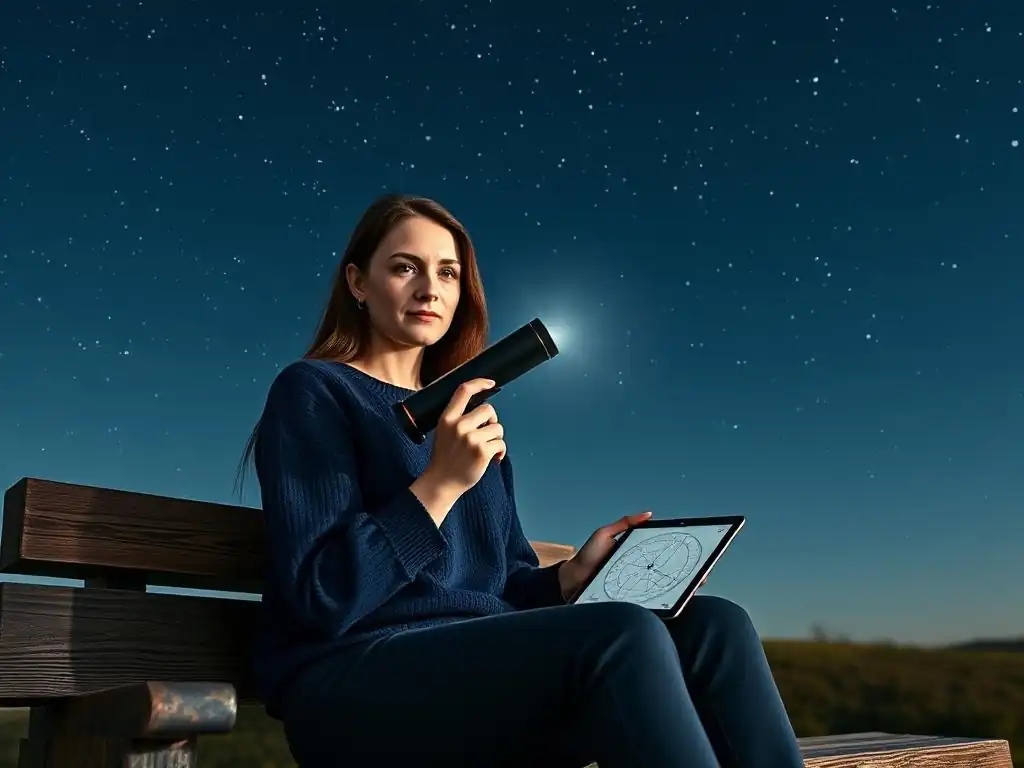
Observing the Moon: A Gateway to Astronomy
The Moon, our nearest celestial neighbor, offers an unparalleled starting point for beginner astronomers, providing a wealth of detail even with modest equipment like binoculars or a small telescope. Its stark, cratered surface and dark maria (large basaltic plains) are easily discernible, inviting closer inspection. To maximize your lunar observations, focus on the "terminator," the line separating the illuminated and shadowed portions of the Moon. Along this line, the low angle of sunlight casts long shadows, dramatically highlighting craters, mountains, and rilles (narrow, winding valleys), revealing intricate lunar topography that remains hidden during a full moon.
Understanding lunar phases is key to optimal viewing. While a full moon is bright and impressive, the best times for detailed observation are during the crescent or gibbous phases, when the terminator is prominent. For instance, a first quarter moon (about seven days after new moon) offers fantastic views of craters like Copernicus and Tycho, while a last quarter moon reveals different regions. You can easily find real-time lunar phase calendars online or within astronomy apps to plan your observing sessions and explore the Moon's ever-changing face.
Identifying the Planets: A Celestial Treasure Hunt
Identifying the planets is another exciting step in your astronomical journey, offering a dynamic celestial treasure hunt in the night sky. Astronomy apps are invaluable tools for this, as they can precisely indicate the current positions of visible planets relative to your location and time. With a telescope, even a beginner model, you can begin to discern distinct features of these distant worlds. For example, Jupiter often reveals its four largest moons – Io, Europa, Ganymede, and Callisto – appearing as tiny pinpricks of light dancing around the giant planet, a sight that never ceases to amaze.
Saturn, with its iconic ring system, is another breathtaking target; even a small telescope can resolve the rings, making it an unforgettable view. Mars, when favorably positioned, will appear as a distinct reddish-orange orb, while Venus, often the brightest object after the Moon, can show phases similar to our Moon. Websites and astronomy apps frequently provide up-to-date information on planetary visibility, including their rising and setting times and their apparent brightness, allowing you to easily locate and observe these fascinating members of our solar system.
Discovering Constellations: Mapping the Stars
Discovering constellations is a foundational skill for any beginner astronomer, helping you to map the stars and understand the celestial sphere. Start by familiarizing yourself with prominent constellations like Ursa Major (the Big Dipper) or Orion, the Hunter, which are easily recognizable in their respective seasons. Astronomy apps and traditional star charts are excellent resources for identifying these patterns, showing how individual stars connect to form figures. Many apps also include augmented reality features that overlay constellation lines and names onto your live camera view of the sky, making identification instantaneous.
Beyond simply identifying star patterns, delving into the mythology and cultural significance of constellations adds a rich, narrative layer to your skywatching experience. Across different civilizations, stars have been woven into stories of gods, heroes, and animals, reflecting humanity's ancient connection to the cosmos. Exploring these narratives provides a deeper appreciation for how cultures have interpreted the night sky throughout history. Interactive star charts or planetarium simulations available online can further enhance this learning, allowing you to explore the celestial sphere and its stories from the comfort of your home.
Step 4: Expanding Your Astronomical Horizons (Resources for Continued Learning)
Online Astronomy Courses: Deepening Your Knowledge
For those eager to deepen their understanding of astronomy beyond initial observations, online courses offer a structured and comprehensive pathway to knowledge. Platforms like Coursera and edX host numerous astronomy courses, often taught by university professors and leading experts in the field. You can find courses specifically focusing on observational techniques, teaching you how to use various astronomical instruments, interpret data, and plan advanced skywatching sessions. These courses might cover topics such as astrophotography basics or the specifics of different telescope types.
Beyond practical observation, many online courses delve into theoretical aspects of astronomy, covering cosmology, astrophysics, and the history of space exploration. These provide an invaluable opportunity to learn about topics like stellar evolution, the Big Bang theory, black holes, and exoplanets. The benefits of structured online learning in astronomy include access to high-quality educational materials, interactive assignments, and discussion forums with fellow learners, all from the convenience of your home, allowing you to progress at your own pace.
Astronomy Books for Beginners: A Curated Reading List
Complementing your practical observations and online courses, a curated reading list of astronomy books can provide foundational knowledge and inspiring narratives. "Astronomy: A Self-Teaching Guide" by Dinah L. Moché is widely recommended for its clear, accessible explanations of fundamental astronomical concepts, making complex topics understandable for complete novices. For those seeking more practical advice on equipment and observing, "The Backyard Astronomer's Guide" by Terence Dickinson and Alan Dyer offers comprehensive insights into choosing and using telescopes, binoculars, and accessories, alongside detailed observing guides for various celestial objects.
To further enrich your understanding and connect with the spirit of WomenInScienceHistory.com, seek out books that specifically highlight "women astronomers history biographies." These titles not only provide technical astronomical information but also weave in the compelling stories of the women who contributed to those discoveries, offering unique perspectives on the scientific journey. Such books often provide a powerful source of inspiration, showcasing the resilience and ingenuity of female scientists throughout history and their enduring impact on our understanding of the cosmos.
Connecting with the Astronomy Community: Joining a Club
One of the most rewarding ways to expand your astronomical horizons is by connecting with the broader astronomy community, particularly by joining a local astronomy club or society. These clubs are treasure troves of shared resources, expertise, and observing opportunities. Members often have access to powerful club telescopes at dark sky sites, far from city light pollution, which can reveal celestial wonders invisible from urban areas. This provides an excellent chance to try out different types of equipment before making a purchase.
The advantages of joining a club extend beyond just equipment access. You'll benefit from the collective knowledge and experience of seasoned observers who can offer invaluable mentorship, answer your questions, and guide you through your first complex observations. Many clubs host regular star parties, workshops, and lectures, fostering a vibrant learning environment. Organizations like the Astronomical League in the United States offer directories of local clubs, making it easy to find a welcoming community of fellow skywatchers in your region.
Conclusion: Continuing Your Cosmic Journey with Inspiration from Women in Science
Empowering Future Generations: Inspiring More Women to Explore the Universe
Our cosmic journey is an ongoing narrative, one that continues to be shaped by curiosity, innovation, and the tireless pursuit of knowledge. By embarking on your own astronomical exploration, inspired by the groundbreaking work of "women astronomers history biographies," you become part of this grand tradition. Understanding the challenges and triumphs of figures like Caroline Herschel, Williamina Fleming, Antonia Maury, and Nancy Grace Roman not only enriches your appreciation for the science but also serves as a powerful testament to the limitless potential of the human mind, regardless of gender.
These inspiring women broke barriers, defied expectations, and made indelible contributions to our understanding of the universe, often against immense societal odds. Their stories are not just historical footnotes; they are beacons of inspiration, demonstrating that perseverance and passion can overcome significant obstacles. By highlighting their legacies, we aim to empower future generations, particularly young women, to pursue their interests in science, technology, engineering, and mathematics, ensuring that the next wave of astronomical discoveries is driven by diverse and brilliant minds.
Celebrating WomenInScienceHistory.com and the Enduring Legacy of Women Astronomers.
WomenInScienceHistory.com is dedicated to ensuring that the vital contributions of women to scientific fields are recognized, celebrated, and remembered. This article, "Beginner's Online Astronomy: First Steps Inspired by History's Women Skywatchers," is a testament to that mission, aiming to bridge the gap between practical astronomical learning and the rich historical narratives of female scientists. By connecting your initial steps in skywatching with the enduring legacy of women astronomers, we hope to foster a deeper, more meaningful engagement with the cosmos.
The universe is vast and full of wonders, and the journey of discovery is made even more profound when viewed through the lens of those who paved the way. We encourage you to continue exploring the biographies of incredible women in science featured on our website, to delve into their discoveries, and to draw inspiration from their unwavering commitment to unraveling the universe's mysteries.
Their stories remind us that every observation, every calculation, and every moment spent under the stars contributes to a collective human endeavor that transcends time and celebrates the brilliance of all who dare to look up.
Frequently Asked Questions
What is the main focus of WomenInScienceHistory.com?
The website celebrates the contributions of women to science, featuring biographies of pioneering female scientists and their work. It aims to inspire future generations by highlighting these often overlooked narratives.
Why is it important to study the history of women in astronomy?
Studying their history reveals the groundbreaking work done by women astronomers, often facing significant challenges. It also helps to correct historical biases and provides role models for aspiring scientists.
What kind of information can I find about women astronomers on WomenInScienceHistory.com?
You can find biographies of female astronomers, discussions on their discoveries, and insights into the obstacles they overcame. The site showcases their pioneering contributions to the field.
What were some common challenges faced by women astronomers in the past?
They often faced gender discrimination, limited access to resources and education, and societal expectations that discouraged them from pursuing scientific careers. Many had to fight for recognition.
How can learning about women astronomers inspire future generations?
By showcasing their achievements and resilience, the stories of women astronomers can inspire young girls and women to pursue their passion for science. It demonstrates that gender is not a barrier to scientific success.
Final Reflection: Gazing Upward with Her Legacy
The journey through the lives of history's great women skywatchers reveals more than just astronomical discoveries; it illuminates the enduring power of human curiosity and the unwavering pursuit of knowledge against societal odds. Their stories, once relegated to the footnotes of history, now shine brightly, inspiring a new generation to look up and question the universe.
The impact of these pioneering women resonates deeply, not just in the scientific community, but in the broader cultural landscape. Their struggles and triumphs remind us that progress is rarely linear and that representation matters profoundly. Look up at the stars and not down at your feet. Try to make sense of what you see, and wonder about what makes the universe exist. Be curious.
- Stephen Hawking (though not a woman astronomer, the sentiment perfectly captures their spirit). Their legacy encourages us to challenge preconceived notions and to create a more inclusive and equitable future for all who seek to explore the cosmos.
As we conclude this exploration of women astronomers' history biographies, I invite you to reflect on the lessons learned from these remarkable individuals. How can you embody their spirit of perseverance and curiosity in your own life? Let their stories fuel your own quest for knowledge, and remember that even the smallest step towards understanding the universe can have a profound impact. Embrace the night sky, and let the legacy of these women guide your gaze towards a brighter, more enlightened future.
Ignite Your Inner Astronomer!
Thank you for embarking on this journey through the cosmos alongside history's remarkable women astronomers. Now that you're equipped with their wisdom and inspiration, it's time to take your first steps into the starlit realm!
- Embark on your own celestial observations: Dedicate one clear night this week to identify at least one constellation or celestial object using a free stargazing app or a planisphere.
- Share your newfound astronomical heroes! Create a short social media post celebrating your favourite woman astronomer from this article and tag a friend.
- Delve deeper into the night sky and start a free course about introductory astronomy at Coursera.
Ready to map your first constellation?