
Royal Patronage & Petals: Queen Charlotte and Women Advancing 18thCentury Botany

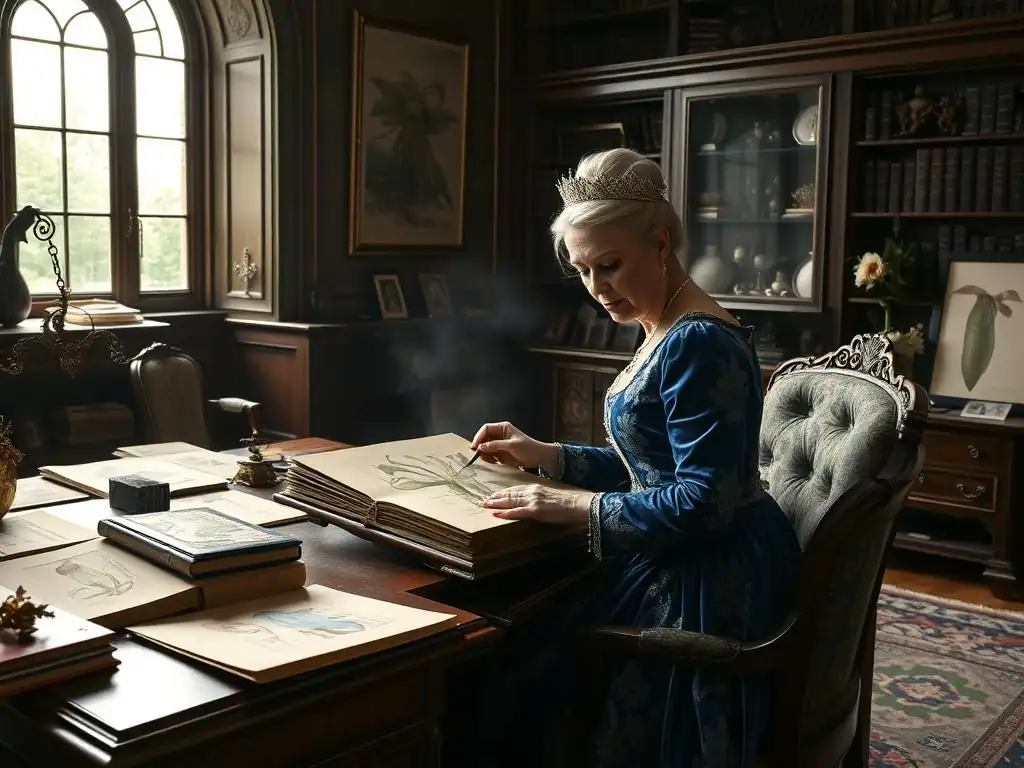
Welcome to WomenInScienceHistory.com!
Prepare to be captivated by the untold stories of women who shaped the world of science. Did you know that even royalty played a crucial role in scientific advancement? This week, we delve into the fascinating connection between Royal Patronage & Petals, exploring how Queen Charlotte's passion for botany propelled groundbreaking research and opened doors for women in the field during the 18th century. Her influence extended far beyond the palace gardens, but what specific contributions did she make to botany? Discover the answers and the hidden narratives that are waiting to be unearthed!
- Introduction: Queen Charlotte's Enduring Legacy in 18th-Century Botany
- Queen Charlotte: A Royal Champion of Botanical Knowledge
- Women Benefiting from Queen Charlotte's Botanical Patronage
- Beyond Royal Circles: The Wider Impact on Women in 18th-Century Biology
- Queen Charlotte's Herbarium and Botanical Library
- Challenges and Limitations Faced by Women in 18th-Century Botany
- Queen Charlotte's Lasting Impact on Women in Science
- Conclusion: Queen Charlotte, Botany, and the Blossoming of Women in Science
-
Frequently Asked Questions
- What was Queen Charlotte's role in advancing botany during the 18th century?
- How did Queen Charlotte's patronage benefit women specifically in botany?
- What were some of the challenges women faced in pursuing botanical careers during the 18th century?
- Can you give an example of a woman who benefited from Queen Charlotte's support in botany?
- Why is it important to recognize the contributions of women in 18th-century botany?
- Final Reflection: Cultivating Legacies of Botanical Empowerment
- Unearth Your Inner Botanist: Inspired by Queen Charlotte!
Introduction: Queen Charlotte's Enduring Legacy in 18th-Century Botany
Unveiling Queen Charlotte's Passion for Botanical Science
Queen Charlotte, consort of King George III, possessed a profound and genuine passion for botanical science, a pursuit that transcended mere aristocratic amusement. Her interest in plants, their classification, and cultivation was not merely a hobby but a serious intellectual endeavor that shaped her engagement with the scientific community of her era. This deep curiosity set her apart as a monarch who actively contributed to the burgeoning field of 18th-century botany.
Her personal dedication extended to the meticulous study of new species, the expansion of royal gardens, and the patronage of botanical expeditions. Through her influence, Queen Charlotte fostered an environment where the study of plants was not only encouraged but actively supported, contributing significantly to the scientific landscape of the time.
The Context: 18th-Century Scientific Advancements and Opportunities for Women
The 18th century was a period of immense scientific curiosity and systematic exploration, particularly in natural history. The Linnaean system of classification, introduced in the mid-1700s, provided a much-needed framework for organizing the vast array of newly discovered flora and fauna, fueling global botanical expeditions. This era saw the rise of public interest in horticulture and botanical illustration, making botany a relatively accessible scientific pursuit for a broader demographic.
However, formal scientific institutions and academic roles remained largely inaccessible to women. Societal norms often confined women to domestic spheres, and their scientific contributions, if any, were typically informal, often through illustration, collecting, or private study. Queen Charlotte's royal standing provided a unique platform, allowing her to circumvent some of these barriers and create unprecedented opportunities for women in 18th-century botany.
Queen Charlotte: A Royal Champion of Botanical Knowledge
Queen Charlotte's Personal Botanical Interests and Collection
Queen Charlotte's engagement with botany was deeply personal, extending far beyond ceremonial patronage. She was an avid collector of rare and exotic plants, many of which were cultivated in her private gardens at Frogmore and Kew. Her interest was not solely aesthetic; she meticulously studied and understood the botanical characteristics of her specimens, often corresponding with leading botanists and horticulturists of the day.
Her personal collection became a living laboratory, a testament to her intellectual curiosity and her commitment to advancing botanical knowledge. This dedication to cultivating and classifying new species showcased a monarch who was genuinely invested in the scientific understanding of the natural world, a direct contribution to the practical aspects of 18th-century botany.
Kew Gardens and Queen Charlotte's Influence on Botanical Exploration
While Kew Gardens was initially established by her mother-in-law, Princess Augusta, Queen Charlotte played a pivotal role in its transformation into a world-renowned botanical institution. Under her patronage, Kew expanded significantly, becoming a center for the cultivation of plants from across the globe, many brought back by intrepid explorers. She worked closely with figures like Sir Joseph Banks, the renowned botanist and president of the Royal Society, to ensure Kew's scientific rigor and global reach.
Her influence directly contributed to Kew's reputation as a leading botanical research facility, facilitating the introduction of thousands of new plant species to Britain. This royal backing was instrumental in funding the expeditions that enriched Kew's collections and, by extension, significantly advanced the understanding and diversity of 18th-century botany.
Royal Patronage: Funding Botanical Expeditions and Research
Queen Charlotte's patronage was a crucial financial engine for botanical exploration and research. She provided direct funding and support for numerous plant hunters and collectors dispatched to distant lands, including expeditions to South Africa and Australia. For instance, her support facilitated the work of collectors like Francis Masson, who was sent to the Cape of Good Hope in 1772 to collect specimens for Kew.
This royal financial backing enabled ambitious ventures that would have been otherwise impossible, significantly expanding the known botanical world. Her consistent support ensured that valuable research could be conducted and new discoveries documented, solidifying her role as a key figure in the progression of 18th-century botany.
Women Benefiting from Queen Charlotte's Botanical Patronage
Mary Delany: Artistic Botanical Representation and Royal Connection
One of the most notable beneficiaries of Queen Charlotte's patronage was Mary Delany (1700-1788), an extraordinary artist renowned for her "paper mosaics" or Flora Delanica. Delany meticulously crafted intricate botanical collages from cut paper, achieving astonishing scientific accuracy and artistic beauty. She produced nearly 1,000 such works between 1772 and 1782, each depicting a specific plant species with remarkable detail.
Queen Charlotte was deeply impressed by Delany's unique talent and precision. She became a steadfast patron, providing Delany with a house at Windsor and an annual pension of £300, allowing her to dedicate herself fully to her art. This direct royal support from Queen Charlotte botany 18th century patron allowed Delany's groundbreaking artistic and scientific contributions to flourish, providing a rare example of a woman receiving substantial recognition for her botanical work.
Princess Augusta: Botanical Gardens at Frogmore and Royal Influence
While Queen Charlotte is celebrated for her contributions, it is important to acknowledge Princess Augusta of Saxe-Gotha, her mother-in-law, who initiated the botanical gardens at Kew in 1759. Princess Augusta's foresight laid the groundwork for what would become a world-leading botanical institution, demonstrating an earlier royal interest in scientific horticulture. Her personal gardens at Frogmore also showcased a significant commitment to botanical cultivation.
Queen Charlotte not only continued but expanded upon Princess Augusta's legacy, fostering a courtly environment where botanical pursuits were highly valued. This sustained royal interest created a cultural climate that subtly, yet significantly, influenced the acceptance and encouragement of women's involvement in natural history, setting a precedent for royal women to engage with and champion scientific endeavors.
Supporting Women: Overcoming Societal Barriers in Botany
Queen Charlotte's patronage, while not directly dismantling all societal barriers, created a unique space for women to engage with botany in a respected and often financially supported manner. By valuing the contributions of women like Mary Delany, she legitimized their participation in scientific endeavors, even if these were primarily artistic or observational rather than formal academic roles. Her example offered a powerful counterpoint to the prevailing gender biases of the era.
Her visible interest in 18th-century botany made the field a more acceptable and even prestigious pursuit for gentlewomen, providing an avenue for intellectual engagement that was otherwise limited. This royal endorsement helped to subtly challenge the notion that science was solely a male domain, offering encouragement and a pathway for women to pursue their botanical interests.
Beyond Royal Circles: The Wider Impact on Women in 18th-Century Biology
Inspiring a Generation: Queen Charlotte as a Role Model for Female Botanists
Queen Charlotte's prominent engagement with botany served as a powerful, albeit indirect, inspiration for other women. Her visible passion for cultivating, classifying, and collecting plants demonstrated that intellectual curiosity in natural history was a worthy pursuit for women of all social standings. This royal endorsement helped to destigmatize women's involvement in scientific hobbies and studies.
Her example encouraged a generation of women to engage more deeply with the natural world, whether through creating detailed botanical illustrations, maintaining personal herbaria, or participating in informal botanical societies. This burgeoning interest, fostered partly by her influence, broadened the landscape for women in 18th-century botany.
The Rise of Female Botanical Illustrators and Collectors
The 18th century witnessed a significant rise in the number of women involved in botanical illustration and plant collecting. These roles were often considered acceptable for women as they could be performed within the domestic sphere or involved skills like drawing and needlework, which were traditionally taught to women. Figures like Marianne North (though later) and Elizabeth Blackwell, who published "A Curious Herbal" in the 1730s, exemplify this trend of women contributing significantly through art.
These female artists and collectors played a crucial role in documenting and disseminating botanical knowledge, creating detailed visual records that were invaluable for scientific study. Their contributions, though often unsung in formal scientific circles, were fundamental to the expansion of botanical understanding during this period.
Maria Merian: Scientific Illustration and Expedition to Suriname
While Maria Sibylla Merian (1647-1717) predates the full scope of Queen Charlotte's influence, her legacy profoundly impacted 18th-century botany and botanical illustration. Merian was a pioneering entomologist and botanical artist who undertook an extraordinary self-funded expedition to Suriname in 1699. Her detailed illustrations depicted insects and plants in their natural habitats, showcasing their life cycles and ecological relationships with unprecedented accuracy.
Merian's work, particularly her "Metamorphosis Insectorum Surinamensium" (1705), set a new standard for scientific illustration, combining artistic beauty with rigorous observation. Her example inspired countless subsequent botanical artists, including many women, who sought to emulate her scientific precision and artistic excellence, demonstrating the profound impact of combining art with scientific exploration.
Scientific Societies and Women's Participation in Botanical Studies
Despite the growing interest in botany among women, formal scientific societies of the 18th century, such as the Royal Society, largely excluded them from membership and active participation. Women rarely presented papers or held official positions within these male-dominated institutions. The path to scientific recognition for women was primarily through informal networks.
However, women often participated in scientific discourse through correspondence, private salons, and informal study groups. Their contributions to botanical studies, while not always formally recognized, were significant. They shared observations, exchanged specimens, and discussed new classifications, often facilitated by their engagement in botanical pursuits, which gained cultural currency partly due to figures like Queen Charlotte.
Queen Charlotte's Herbarium and Botanical Library
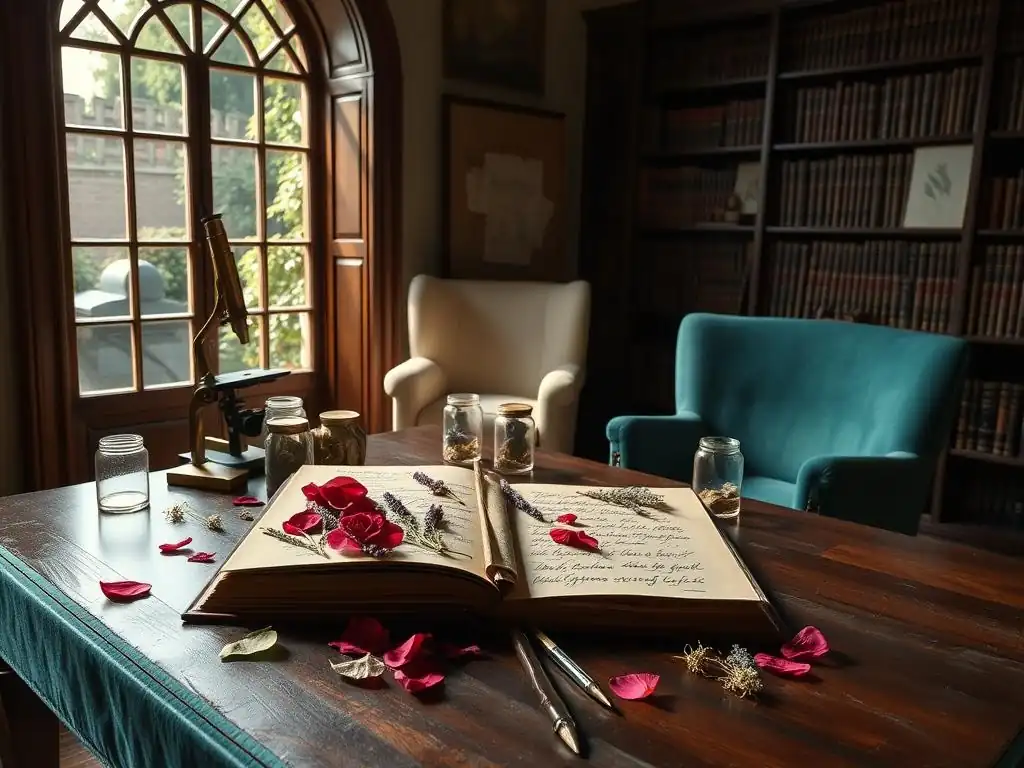
A Glimpse into Queen Charlotte's Private Botanical World
Queen Charlotte maintained a substantial personal herbarium, a collection of meticulously pressed and dried plant specimens, often acquired from her gardens at Kew or through her sponsored expeditions. This herbarium was not merely a decorative collection but a working scientific resource, reflecting her serious engagement with botanical classification and study. Each specimen was carefully preserved, often with detailed annotations about its origin and characteristics.
This private botanical world offered her a hands-on approach to the science she so passionately supported. It underscored her role as an active participant in 18th-century botany, demonstrating a scientific methodology that went beyond mere appreciation of beauty.
The Significance of Her Collection for Botanical Research
Queen Charlotte's herbarium and extensive botanical library were invaluable resources for the scientific community. Her library housed rare and important botanical texts, including works on classification, plant geography, and horticultural practices. These collections served as reference points for contemporary botanists and horticulturists, providing access to a wide array of plant knowledge.
The prestige associated with a royal collection also lent credibility and visibility to botanical research, encouraging further study and documentation. Her meticulous approach to collecting and preserving specimens contributed directly to the systematic understanding of plant diversity during a period of rapid global botanical discovery.
The Strelitzia reginae and Other Notable Specimens
Perhaps the most famous botanical tribute to Queen Charlotte is the Strelitzia reginae, commonly known as the Bird of Paradise flower. This spectacular plant, native to South Africa, was named in her honor by Sir Joseph Banks, then director of Kew Gardens. The naming of such a striking and exotic species after her cemented her enduring association with botanical discovery and nomenclature.
Beyond the Strelitzia, her gardens and herbarium contained numerous other notable specimens, many of which were newly introduced to Europe through her patronage. These included rare varieties of camellias, magnolias, and various South African proteas. The cultivation and study of these diverse plants at Kew, under her direct influence, significantly enriched the botanical knowledge base of 18th-century botany.
Challenges and Limitations Faced by Women in 18th-Century Botany
Societal Constraints and Gender Bias in Science
Despite Queen Charlotte's patronage, women in 18th-century society faced immense societal constraints that severely limited their participation in formal science. Prevailing gender roles dictated that women's primary spheres were the home and family, making professional scientific careers virtually impossible. Public education for girls was rudimentary, and universities were closed to them, denying access to formal scientific training.
Furthermore, a pervasive gender bias existed within scientific institutions, which were exclusively male bastions. Women's intellectual capacities were often underestimated or dismissed, and their contributions, when made, were frequently attributed to male relatives or simply overlooked in official records. This systemic bias created a formidable barrier to women's recognition in 18th-century botany.
Access to Education and Resources for Female Botanists
A significant limitation for aspiring female botanists was the profound lack of access to formal scientific education and essential resources. Unlike their male counterparts who could attend universities, join scientific expeditions, or access specialized laboratories, women typically learned through self-study, private tutors, or informal apprenticeships. This limited their exposure to rigorous scientific methodology and cutting-edge research.
Access to vital resources like extensive libraries, specialized instruments, and opportunities for field research was also severely restricted. While some wealthy women could afford private collections, these were exceptions. The lack of institutional support meant that even passionate and talented female botanists struggled to gain the knowledge and tools necessary for significant scientific contributions.
The Ongoing Struggle for Recognition and Acceptance
Even when women managed to make substantial contributions to botany, their work often went unrecognized or was attributed to male family members. For instance, many plant discoveries made by female collectors were credited to the men who formally described them. This lack of formal acknowledgment was a persistent challenge, reflecting the prevailing societal norms that devalued women's intellectual achievements.
The path for women in 18th-century botany, even with royal encouragement, remained fraught with difficulties. They operated largely outside the established academic and scientific structures, often working quietly and without public acclaim. Their struggle for acceptance underscores the profound societal barriers that existed, making their contributions all the more remarkable.
Queen Charlotte's Lasting Impact on Women in Science
Queen Charlotte's Influence on Future Generations of Female Scientists
Queen Charlotte's visible and active engagement with botany, coupled with her patronage of women like Mary Delany, created an important cultural precedent. While she did not immediately usher in an era of professional female botanists, her example helped to normalize and legitimize women's intellectual pursuits in natural history. She demonstrated that a woman, even a queen, could possess deep scientific curiosity and contribute to knowledge.
This royal validation subtly, yet significantly, influenced future generations. It provided a historical example of a powerful woman championing science, contributing to a gradual shift in societal attitudes that eventually paved the way for more formal roles for women in scientific fields in later centuries, building upon the foundations laid in 18th-century botany.
Celebrating Her Legacy: Recognizing Queen Charlotte's Contributions to 18th-Century Botany
It is crucial to recognize Queen Charlotte's contributions not merely as a monarch, but as a genuine patron and enthusiast who significantly advanced the field of botany. Her role extended beyond merely providing funds; she was intellectually invested, fostering environments like Kew Gardens, which became global centers of botanical research and exploration. Her dedication to collecting, classifying, and understanding plants was a testament to her scientific spirit.
Her legacy lies not just in the beautiful gardens she cultivated or the exotic plants named in her honor, but in her steadfast support for botanical expeditions, her personal commitment to scientific study, and her quiet but impactful encouragement of women within the scientific sphere. Her influence on 18th-century botany is undeniable and deserves comprehensive recognition.
The Continued Relevance of Queen Charlotte's Story for Women in STEM
Queen Charlotte's story holds enduring relevance for women in STEM today. Her journey, marked by personal passion, strategic patronage, and subtle challenges to societal norms, serves as a powerful reminder of how individual determination can overcome systemic barriers. In an era where women's scientific contributions were often ignored, her position allowed her to create unique opportunities and lend prestige to women's intellectual pursuits.
Her narrative highlights the historical challenges faced by women in science and underscores the importance of mentorship, patronage, and individual passion in fostering scientific progress. By celebrating figures like Queen Charlotte, we gain valuable historical context and renewed inspiration for current efforts to promote diversity, inclusion, and equitable recognition for women in all scientific disciplines.
Conclusion: Queen Charlotte, Botany, and the Blossoming of Women in Science
Reflecting on Queen Charlotte's Role in Advancing 18th-Century Botanical Studies
Queen Charlotte's multifaceted role in advancing 18th-century botany cannot be overstated. From her personal botanical interests and extensive collections to her instrumental patronage of Kew Gardens and various expeditions, she was a pivotal figure. Her direct support enabled significant discoveries and the systematic study of a vast array of plant species. She was not just a passive observer but an active participant who genuinely propelled botanical knowledge forward.
Her influence extended beyond mere financial backing, encompassing intellectual curiosity and a genuine commitment to scientific exploration. She cultivated an environment where botany flourished, creating a unique space for women's engagement in a burgeoning scientific field.
The Importance of Recognizing Women's Contributions to Scientific History
Queen Charlotte's story is a compelling example of the often-overlooked contributions of women to scientific history. By highlighting her role, alongside figures like Mary Delany, we begin to paint a more complete and accurate picture of scientific progress. These narratives remind us that scientific advancement is not solely the domain of formally recognized male figures but is enriched by diverse contributions from individuals working within and often against the constraints of their time.
Recognizing these women's achievements is vital, not only to correct historical omissions but also to inspire future generations. Understanding how women navigated and influenced science, even in challenging environments, provides valuable lessons and encouragement for aspiring scientists today, ensuring that the legacy of Queen Charlotte botany 18th century continues to resonate.
Frequently Asked Questions
What was Queen Charlotte's role in advancing botany during the 18th century?
Queen Charlotte acted as a significant royal patron of botany. Her support provided financial assistance and social legitimacy to botanical endeavors, helping women gain entry into the field.
How did Queen Charlotte's patronage benefit women specifically in botany?
Her patronage created opportunities for women to participate in botanical research and illustration, often through commissions and appointments. This helped them overcome societal barriers and gain recognition for their scientific contributions.
What were some of the challenges women faced in pursuing botanical careers during the 18th century?
Women faced significant obstacles, including limited access to formal education and societal expectations that confined them to domestic roles. They were often excluded from scientific societies and professional networks.
Can you give an example of a woman who benefited from Queen Charlotte's support in botany?
While the article may not explicitly name one single woman, it highlights how Royal patronage provided social legitimacy to botany. This led to more opportunity for women in the field, and the research of women in botany to be taken seriously.
Why is it important to recognize the contributions of women in 18th-century botany?
Recognizing these contributions helps to create a more complete and accurate historical narrative of science. It also inspires future generations by showcasing the diversity of talent and the potential for women in STEM.
Final Reflection: Cultivating Legacies of Botanical Empowerment
The exploration of Queen Charlotte's influence on 18th-century botany reveals more than just a royal hobby; it underscores the enduring power of patronage in fostering scientific advancement, particularly for women who were often marginalized. Today, as we champion diversity and inclusion in STEM fields, recognizing Charlotte's role serves as a potent reminder of the historical barriers and the crucial impact of those who dared to break them down.
The ripple effects of Charlotte's support continue to resonate, shaping our understanding of botanical history and inspiring contemporary efforts to empower women in science. Her legacy reminds us that progress is often built upon the shoulders of those who came before, and that seemingly small acts of encouragement can blossom into significant contributions. Great minds have purposes, others have wishes.
- Washington Irving. This quote encapsulates Charlotte's purposeful dedication to botany, transforming a personal interest into a catalyst for broader scientific engagement.
Let us, therefore, cultivate our own gardens of opportunity. Consider how you can support and uplift aspiring scientists, especially women, in your own sphere of influence. By embracing the spirit of Queen Charlotte, we can ensure that future generations have the resources and encouragement they need to flourish and contribute to a world enriched by botanical discovery and scientific innovation.
Unearth Your Inner Botanist: Inspired by Queen Charlotte!
Thank you for exploring the fascinating world of Queen Charlotte and her impact on women in 18th-century botany! We hope this article has sparked your curiosity and provided a fresh perspective on the history of science. Now, let's cultivate your own botanical journey:
- Dive into your local botanical garden! Spend an afternoon sketching your favorite plants and learn about their unique properties and history.
- Share this article with fellow history enthusiasts and budding botanists to spread the word about Queen Charlotte's inspiring legacy.
- Research a contemporary female botanist or horticulturalist and share their story on social media using the hashtag #WomenInScienceHistory.
What overlooked corner of your local garden is just waiting for you to explore?