
Anna Morandi Manzolini: Sculpting Anatomical Wonders in Wax in 18thCentury Italy

Welcome to WomenInScienceHistory.com!
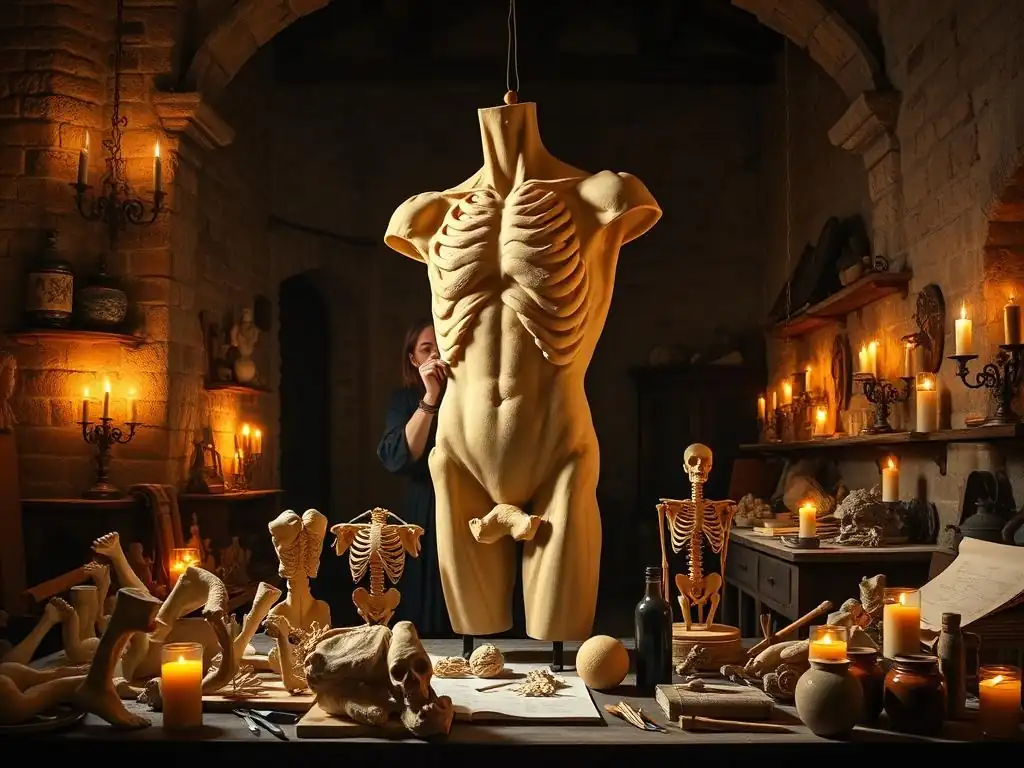
Prepare to be amazed by the untold stories of remarkable women who shaped the world of science. Uncover the brilliance and resilience of female pioneers, often working against immense odds. Today, we delve into the fascinating world of 18th-century anatomy and the stunningly realistic wax sculptures created by Anna Morandi Manzolini in Italy. How did this self-taught artist revolutionize anatomical teaching, and what secrets lie beneath the surface of her incredible creations? Join us as we explore her extraordinary life and groundbreaking contributions!
- Introduction: Unveiling the Anatomical Art of Anna Morandi Manzolini
- Early Life and Artistic Inclination of Anna Morandi
- The Making of an Anatomical Sculptor: Morandi's Training and Techniques
- Anna Morandi Manzolini's Anatomical Models: A Legacy of Precision
- Recognition and Acclaim: Morandi's Impact on Science and Art
- The Scientific and Artistic Significance of Morandi's Work
- Challenges and Triumphs: Morandi's Journey as a Woman in Science
- Anna Morandi Manzolini: A Lasting Influence on Anatomy and Art History
-
Frequently Asked Questions
- How did Anna Morandi Manzolini contribute to the field of anatomy?
- What were some of the challenges Anna Morandi Manzolini faced as a woman in science during the 18th century?
- Why were wax sculptures important tools for anatomical study in the 18th century?
- Where did Anna Morandi Manzolini create her wax anatomical models?
- What impact did Anna Morandi Manzolini's work have on future generations of scientists and artists?
- Final Reflection: The Enduring Legacy of Anatomical Art
- Unleash Your Inner Anatomist!
Introduction: Unveiling the Anatomical Art of Anna Morandi Manzolini
In the vibrant intellectual atmosphere of 18th-century Italy, a remarkable woman named Anna Morandi Manzolini emerged as a pivotal figure at the intersection of art and science. Born in Bologna in 1714, Morandi transcended the conventional roles for women of her era, dedicating her life to the meticulous study of human anatomy and its breathtaking representation through wax modeling. Her extraordinary skill transformed the ephemeral nature of dissection into permanent, educational masterpieces, establishing her as a trailblazer in a field predominantly dominated by men.
Anna Morandi Manzolini's legacy is deeply intertwined with the pioneering spirit of Bologna, a city renowned for its ancient university and its embrace of anatomical study. Her work not only pushed the boundaries of scientific illustration but also challenged societal norms, proving that intellectual curiosity and artistic precision knew no gender. Her anatomical wax sculptures, masterpieces of detail and realism, stand as a testament to her genius and continue to fascinate scholars and the public alike, offering a unique window into 18th-century medical education and artistic innovation.
Early Life and Artistic Inclination of Anna Morandi
Morandi's Early Years and Artistic Development
Anna Morandi was born into a modest family in Bologna, a city that was a hub of intellectual and artistic activity during the Enlightenment. While formal art education for women was uncommon, Bologna's rich cultural environment likely fostered an innate artistic inclination in young Anna. She possessed a keen eye for detail and a natural dexterity, qualities that would later prove indispensable in her highly specialized career. Her early life, though not extensively documented in terms of specific artistic training, undoubtedly laid the groundwork for the precision and aesthetic sensibility evident in her later anatomical models.
Her early experiences, perhaps in domestic crafts or observational drawing, cultivated the meticulousness required for her future endeavors. The intellectual climate of Bologna, home to one of Europe's oldest universities and a center for anatomical studies, provided a fertile ground for someone with Morandi's burgeoning talents. This environment, coupled with her inherent curiosity, set the stage for her remarkable journey into the world of scientific artistry.
Marriage to Giovanni Manzolini and the Path to Anatomy
Anna Morandi's life took a decisive turn with her marriage to Giovanni Manzolini in 1735. Giovanni was not only a professor of anatomy at the University of Bologna but also a highly skilled practitioner of anatomical wax modeling, a burgeoning field at the time. This union proved to be the gateway for Anna into the intricate world of human dissection and scientific representation. Initially, Anna assisted her husband, preparing specimens and learning the complex art of anatomical observation firsthand.
Giovanni's declining health, particularly his tuberculosis, meant that Anna progressively took on more responsponsibilities in his workshop and even in his teaching duties. She absorbed his knowledge of anatomy and the delicate techniques of wax modeling, quickly mastering the craft. This period was crucial for her development, transforming her from an assistant into an independent and highly proficient anatomical sculptor, laying the foundation for her groundbreaking contributions to 18th century wax sculptures anatomy.
The Making of an Anatomical Sculptor: Morandi's Training and Techniques
Learning Anatomy Through Dissection and Observation
Anna Morandi Manzolini's anatomical expertise was not merely theoretical; it was forged through direct, hands-on experience with human dissection. A highly unusual and challenging pursuit for a woman in the 18th century, Morandi regularly assisted her husband, Giovanni Manzolini, in the dissection room. This direct engagement with cadavers allowed her to develop an unparalleled understanding of the human body's intricate structures, from the largest organs to the most minute nerves and blood vessels. Her keen observational skills were paramount, enabling her to meticulously study and internalize the complex three-dimensional relationships of anatomical components.
This practical training, far beyond what was typically accessible to women, provided her with an intimate knowledge of human anatomy, which was essential for the accuracy of her models. She learned to identify and differentiate tissues, understand physiological functions, and accurately portray the nuanced textures and colors of various anatomical parts. Her dedication to this often gruesome but vital aspect of anatomical study set her apart and formed the bedrock of her scientific credibility.
Mastering the Art of Wax Modeling: Techniques and Materials
The creation of anatomical wax models in the 18th century was a highly specialized and demanding art form, and Anna Morandi Manzolini mastered it with extraordinary finesse. Her primary medium was a carefully prepared blend of beeswax, often mixed with animal fats or resins to achieve the desired consistency and durability. Pigments derived from natural sources were then incorporated to mimic the lifelike colors of tissues, blood vessels, and organs. The process involved sculpting intricate details while the wax was pliable, often using specialized tools resembling those of jewelers or dentists to achieve microscopic precision.
Once sculpted, models were often assembled from multiple pieces, sometimes incorporating real human or animal bones, hair, or glass eyes for added realism. The ability to render the delicate textures of soft tissues, the translucency of certain membranes, and the intricate branching of nerves and vessels required not only artistic talent but also an profound understanding of the material's properties. Morandi's mastery of these techniques allowed her to create stunningly realistic 18th century wax sculptures anatomy, which were both scientifically accurate and aesthetically compelling.
18th Century Anatomical Wax Sculptures: A Unique Art Form
In the 18th century, anatomical wax sculptures served as indispensable educational tools, bridging the gap between fleeting cadaveric dissections and the need for permanent, accessible anatomical representations. Unlike preserved specimens, which degraded over time and were difficult to transport, wax models offered a durable, detailed, and visually consistent alternative. They allowed for repeated study of complex internal structures, proving invaluable for medical students and practitioners.
Anna Morandi Manzolini's contributions to this unique art form elevated it to an unprecedented level of scientific precision and artistic expression. Her models were not mere illustrations; they were three-dimensional maps of the human body, capturing nuances that even detailed drawings struggled to convey. The demand for these sophisticated 18th century wax sculptures anatomy from leading universities and royal courts across Europe underscored their immense value as both teaching aids and objets d'art.
Anna Morandi Manzolini's Anatomical Models: A Legacy of Precision
Detailed Depictions of the Human Body: The Realism of Morandi's Work
Anna Morandi Manzolini's anatomical models are renowned for their astonishing realism and meticulous detail, reflecting her profound understanding of human anatomy. She recreated complex systems such as the nervous system, with its intricate network of nerves branching throughout the body, and the circulatory system, depicting the delicate capillaries as well as major arteries and veins. Her models of the sensory organs, particularly the eye and the ear, are celebrated for their precision, showing every muscle, nerve, and membrane with startling accuracy.
One of her most famous and striking pieces is a self-portrait model depicting her dissecting a human brain, a testament to her mastery and her direct engagement with the material. This piece, along with countless others, showcases her ability to capture the subtle textures and colors of living tissue, making her 18th century wax sculptures anatomy not just educational tools but compelling works of art that conveyed the beauty and complexity of the human form.
Specialized in Female Anatomy: Morandi's Unique Contribution
Beyond her general anatomical models, Anna Morandi Manzolini made a particularly significant and pioneering contribution through her specialization in female anatomy. In an era when the female body was often less thoroughly studied or frequently overlooked in anatomical texts, Morandi meticulously created detailed models of the female reproductive system, including the uterus, ovaries, and associated structures. She also produced models illustrating fetal development at various stages, offering invaluable insights into embryology.
This focus filled a crucial gap in anatomical knowledge and medical education, providing a comprehensive visual resource for understanding female physiology and reproductive health. Her detailed models of the female pelvis and internal organs were groundbreaking, offering a level of specificity and accuracy rarely seen before. This unique contribution solidified her standing as a leading anatomist and highlighted the necessity of diverse perspectives in scientific inquiry, ensuring that her 18th century wax sculptures anatomy covered all aspects of human biology.
The Anatomical Collection at the University of Bologna
Anna Morandi Manzolini's extensive collection of anatomical wax models became a prized possession of the University of Bologna, where she herself held a prestigious position. Numbering in the hundreds, these models covered nearly every aspect of human anatomy, from skeletal structures to intricate internal organs and systems. The collection served as an unparalleled teaching resource, allowing medical students to study the human body in detail without constant reliance on fresh cadavers, which were scarce and perishable.
Today, a significant portion of her magnificent collection is preserved and displayed at the Palazzo Poggi Museum in Bologna, part of the University of Bologna Museum System. This impressive display offers visitors a unique opportunity to witness the remarkable blend of scientific accuracy and artistic craftsmanship that characterized her work. The collection stands as a lasting testament to her extraordinary skill and her enduring impact on anatomical education and the history of 18th century wax sculptures anatomy.
Recognition and Acclaim: Morandi's Impact on Science and Art
Appointment as Lecturer at the University of Bologna
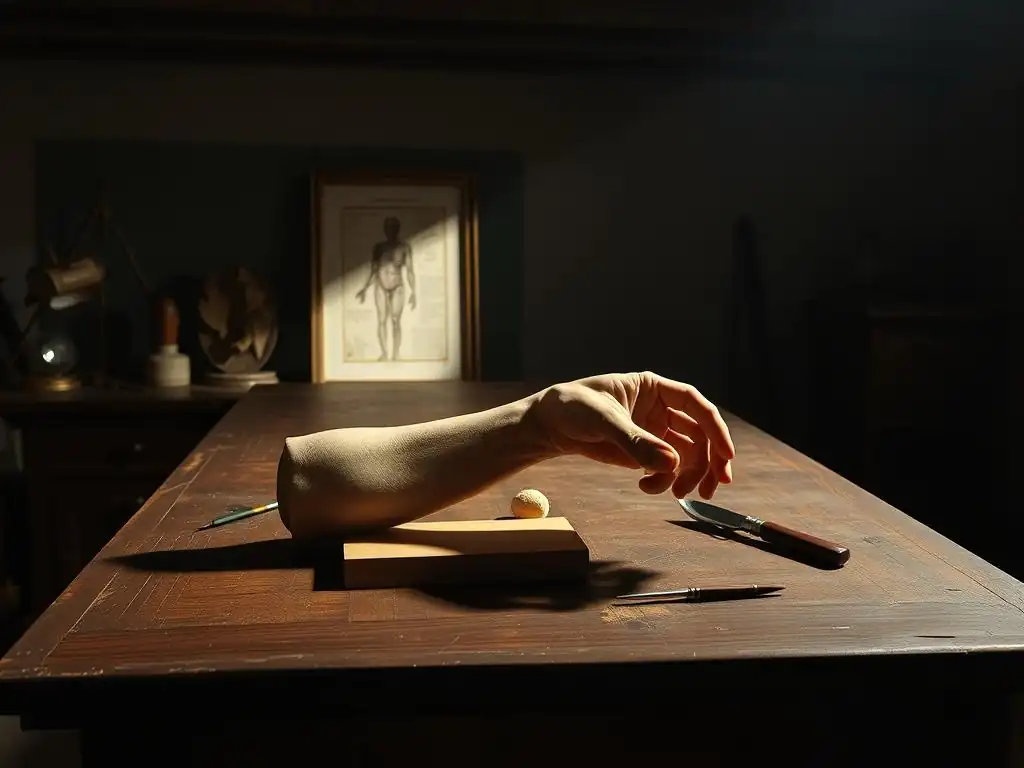
Following the death of her husband, Giovanni Manzolini, in 1755, Anna Morandi Manzolini faced a precarious future. However, her exceptional skill and profound knowledge of anatomy were widely recognized. In an unprecedented move for the 18th century, the University of Bologna appointed her as a lecturer in anatomy. This was a groundbreaking achievement, as women were rarely granted academic positions, particularly in fields as demanding and public as anatomical instruction.
Her appointment was a testament to her intellectual prowess and the high regard in which her anatomical models were held. She taught anatomy not only by demonstrating her exquisite wax models but also by lecturing directly, sharing her extensive knowledge with students and scholars. This official recognition solidified her status as a legitimate and influential figure in the scientific community, further highlighting the significance of her 18th century wax sculptures anatomy as teaching tools.
Royal Patronage and International Recognition
Anna Morandi Manzolini's fame quickly spread beyond the borders of Italy, attracting the attention and patronage of Europe's most influential monarchs and intellectuals. Emperors and empresses sought her remarkable anatomical models for their personal collections and for the advancement of medical education in their own realms. Notable patrons included Catherine the Great of Russia, who commissioned models for her imperial collection, and Emperor Joseph II of Austria, who acquired pieces for the Josephinum in Vienna, a renowned medical academy.
King George III of England also extended an invitation for her to visit London and share her expertise, though she ultimately declined due to her commitment to Bologna. This widespread international acclaim underscored the scientific and artistic value placed on her work. Her anatomical wax sculptures were considered essential for any serious anatomical collection, making her one of the most celebrated artists and scientists of her time.
18th Century Female Anatomists: Breaking Barriers
Anna Morandi Manzolini stands as a towering figure among the few women who managed to break through the formidable societal and institutional barriers of the 18th century to pursue scientific careers. In an era when women were largely confined to domestic roles and excluded from formal academic institutions, her success was nothing short of revolutionary. She defied prevailing norms that deemed scientific inquiry, particularly anatomy, inappropriate for women.
Her achievements paved the way for future generations of female scholars and scientists, demonstrating that intellectual capability and scientific acumen were not exclusive to men. Alongside contemporaries like Laura Bassi, another celebrated Bolognese scholar and the first woman to hold a professorship at a European university, Morandi exemplified the potential for women to excel in rigorous academic and scientific fields. Her journey as a pioneering female anatomist remains an inspiring narrative of resilience and intellectual triumph, proving the profound impact of 18th century wax sculptures anatomy on both science and gender roles.
The Scientific and Artistic Significance of Morandi's Work
Advancing Anatomical Knowledge Through Wax Models
Anna Morandi Manzolini's wax models played a crucial role in advancing anatomical knowledge during the 18th century. Before the advent of modern preservation techniques, fresh cadavers were scarce, perishable, and difficult to study repeatedly. Morandi's durable and incredibly detailed wax models offered an invaluable alternative, allowing medical students and practitioners to examine complex anatomical structures at their leisure, without the limitations of decomposition or seasonal availability.
Her ability to accurately depict intricate systems, such as the vascular or nervous networks, provided an unprecedented level of visual clarity. These models facilitated a deeper understanding of human physiology and pathology, serving as essential teaching aids that disseminated anatomical knowledge far more effectively than drawings or textual descriptions alone. Her 18th century wax sculptures anatomy thus directly contributed to the education of generations of medical professionals.
The Intersection of Art and Science in 18th Century Anatomy
Morandi's work perfectly embodies the Enlightenment ideal of the harmonious intersection of art and science. Her anatomical models were not merely technical illustrations; they were exquisite works of art that combined aesthetic beauty with rigorous scientific accuracy. She possessed the artistic sensibility to sculpt lifelike forms and apply nuanced coloration, alongside the scientific precision required to faithfully represent the human body's intricate details.
This fusion elevated the status of anatomical study, transforming it from a purely clinical pursuit into a field that commanded artistic appreciation. Her models demonstrated that scientific truth could be conveyed through beautiful and compelling visual forms, making complex anatomical concepts accessible and engaging. The artistic excellence of her 18th century wax sculptures anatomy ensured their preservation and continued study, transcending their initial role as purely educational tools.
Morandi's influence on anatomical illustration and education
Anna Morandi Manzolini's innovative approach to anatomical modeling set a new benchmark for anatomical illustration and profoundly influenced medical education. Her meticulous detail and lifelike representations inspired subsequent generations of anatomists, artists, and educators to strive for greater accuracy and clarity in their own work. Her models provided a permanent, accessible, and highly detailed visual reference that was far superior to earlier forms of anatomical representation.
The pedagogical effectiveness of her 18th century wax sculptures anatomy demonstrated the power of three-dimensional models in conveying complex biological information. This influence extended to the development of teaching methodologies, emphasizing hands-on visual learning. Her legacy continues to inspire those who seek to bridge the gap between scientific understanding and artistic expression, ensuring that anatomical education remains both accurate and engaging.
Challenges and Triumphs: Morandi's Journey as a Woman in Science
Overcoming Societal Barriers in a Male-Dominated Field
Anna Morandi Manzolini's journey as a woman in 18th-century science was fraught with significant societal barriers and institutional prejudices. At a time when women were largely excluded from public life and academic institutions, her pursuit of anatomy, a field often associated with dissection and the male domain, was highly unconventional. She faced the challenge of proving her intellectual capabilities and scientific rigor in a world that often doubted women's capacity for such pursuits.
Despite these formidable obstacles, Morandi persevered, demonstrating her expertise through her unparalleled skill and profound knowledge. Her public lectures and the widespread acclaim for her 18th century wax sculptures anatomy gradually chipped away at the prevailing sexism, allowing her to gain respect and recognition in a field that was otherwise closed off to women. Her success was a direct challenge to the gender norms of her era.
Balancing Family Life with Scientific Pursuits
Beyond the external societal pressures, Anna Morandi Manzolini also navigated the complex personal challenge of balancing a demanding scientific and artistic career with her family responsibilities. She was a mother to several children, many of whom tragically died young due to the high infant mortality rates of the period. The grief and domestic duties associated with raising a family, coupled with the intensive labor of anatomical dissection and wax modeling, required immense dedication and resilience.
Her ability to manage these dual roles speaks volumes about her extraordinary commitment to her work and her personal strength. She carved out a space for herself in the scientific world while fulfilling the expectations of her domestic life, a feat that few women of her time could achieve. Her unwavering dedication to her craft, despite personal losses and societal expectations, underscores the depth of her passion for 18th century wax sculptures anatomy.
The Legacy of a Pioneering Female Anatomist
Anna Morandi Manzolini's life and work represent a powerful narrative of triumph over adversity. She stands as a pioneering female anatomist who not only excelled in a male-dominated field but also significantly advanced anatomical knowledge through her innovative wax models. Her story is a testament to the intellectual potential and resilience of women who dared to defy societal conventions.
Her legacy extends beyond her remarkable anatomical collection; it lies in her role as an inspirational figure who opened doors for future generations of women in science. She demonstrated that talent, dedication, and intellectual curiosity could overcome even the most entrenched barriers. Her contributions ensured that the field of 18th century wax sculptures anatomy would forever bear the indelible mark of a brilliant woman's genius.
Anna Morandi Manzolini: A Lasting Influence on Anatomy and Art History
The Anatomical Collection at the Palazzo Poggi, Bologna
The enduring legacy of Anna Morandi Manzolini is most tangibly represented by her magnificent anatomical collection, predominantly housed at the Palazzo Poggi in Bologna. This historic palace, now part of the University of Bologna Museum System, proudly displays hundreds of her meticulously crafted wax models. The collection serves as a vital historical and scientific resource, attracting scholars, medical professionals, and art enthusiasts from around the world.
Visitors to the Palazzo Poggi can marvel at the astonishing detail and realism of her work, gaining a profound appreciation for both the scientific advancements and the artistic craftsmanship of the 18th century. The preservation and public display of these 18th century wax sculptures anatomy ensure that Morandi's groundbreaking contributions remain accessible and continue to educate and inspire.
Morandi's Enduring Influence on Medical Illustration and Anatomical Education
Anna Morandi Manzolini's precise methodology and artistic skill continue to exert a significant influence on contemporary medical illustration and anatomical education. Her commitment to accuracy, combined with her ability to create visually compelling representations of complex biological structures, set a high standard that remains relevant today. Modern medical illustrators and educators draw inspiration from her work, striving for the same level of detail and clarity in their own visual aids.
Her models demonstrated the immense pedagogical value of three-dimensional representations in understanding human anatomy. This insight has contributed to the development of advanced anatomical models and virtual reality simulations used in modern medical training. Her work underscored the power of visual learning, cementing her place as a foundational figure in the history of anatomical education and the art of 18th century wax sculptures anatomy.
Preserving the Legacy of 18th Century Wax Sculptures Anatomy
The preservation of Anna Morandi Manzolini's anatomical wax sculptures is an ongoing effort that recognizes their dual value as invaluable scientific artifacts and exquisite works of art. These delicate models, created over two centuries ago, require specialized care to protect them from environmental degradation and ensure their longevity. Institutions like the University of Bologna are dedicated to conserving this unique heritage, allowing future generations to study and appreciate her genius.
By preserving her collection and sharing her remarkable story, we ensure that Morandi's pioneering spirit and her profound contributions to anatomy and art history are not forgotten. Her work stands as a powerful reminder of the often-overlooked narratives of women in science and the enduring impact of 18th century wax sculptures anatomy on our understanding of the human body.
Frequently Asked Questions
How did Anna Morandi Manzolini contribute to the field of anatomy?
Anna Morandi Manzolini created highly detailed wax sculptures of human anatomy during the 18th century. These models were used for medical education and provided a valuable resource for understanding the human body. Her work was known for its accuracy and artistry.
What were some of the challenges Anna Morandi Manzolini faced as a woman in science during the 18th century?
As a woman in the 18th century, Anna Morandi Manzolini faced significant societal barriers that limited opportunities for women in science. She had to overcome gender bias and prove her capabilities in a male-dominated field. Despite this, she achieved international recognition.
Why were wax sculptures important tools for anatomical study in the 18th century?
Wax sculptures offered a durable and realistic alternative to dissections, which were often limited by availability and preservation issues. They allowed for repeated study and provided a three-dimensional representation of complex anatomical structures. They were also more accessible to students.
Where did Anna Morandi Manzolini create her wax anatomical models?
Anna Morandi Manzolini primarily worked in Bologna, Italy. She initially began creating models with her husband and later continued her work independently, gaining recognition for her skill and expertise at the University of Bologna.
What impact did Anna Morandi Manzolini's work have on future generations of scientists and artists?
Anna Morandi Manzolini's work served as an inspiration and educational tool for future scientists and artists. Her detailed anatomical models advanced medical knowledge and showcased the potential of women in scientific pursuits, helping to break down gender stereotypes.
Final Reflection: The Enduring Legacy of Anatomical Art
The journey through Anna Morandi Manzolini's life and artistry reveals more than just the creation of 18th-century wax sculptures of anatomy; it unveils a testament to human curiosity, dedication, and the power of art to transcend scientific boundaries. In a world increasingly reliant on digital representations, Morandi's tangible, painstakingly crafted models remind us of the profound connection between the artist's hand and the intricacies of the human form, a connection that continues to resonate with artists, scientists, and historians alike.
The impact of Morandi's work extends far beyond the anatomical theaters of her time. Her sculptures not only revolutionized medical education but also challenged societal norms, proving a woman's capacity for intellectual and artistic mastery in a male-dominated field. Art is the lie that enables us to realize the truth.
- Pablo Picasso. This quote encapsulates Morandi's genius; her wax figures, though representations, reveal a deeper truth about the human body and the human spirit, inspiring awe and wonder even centuries later.
As we close this chapter on Anna Morandi Manzolini, let us carry forward her spirit of inquiry and her unwavering commitment to excellence. Consider how you, too, can bridge seemingly disparate fields – art and science, tradition and innovation – to create something truly remarkable. Embrace the power of observation, the beauty of detail, and the courage to challenge conventions. Let Morandi's legacy inspire you to sculpt your own path, leaving an enduring mark on the world, just as she did with her anatomical wonders in wax.
Unleash Your Inner Anatomist!
Thank you for delving into the fascinating world of Anna Morandi Manzolini! We hope you’ve been inspired by her dedication and artistry. Now, let’s bring that inspiration to life with some hands-on exploration.
Here's how you can engage further:
- Visit a medical museum and experience anatomical models firsthand, letting their craftsmanship spark new questions and a deeper understanding. This will allow you to see the science and art blend together.
- Research contemporary female medical illustrators and artists, and share their groundbreaking work on your social media.
- Start a conversation with your local science museum about featuring the stories of women in science in a public display.
What surprising detail from Anna Morandi Manzolini's life resonated most with you, and how might you incorporate her spirit of inquiry into your own pursuits?