
The Secret World of Beatrix Potter: A 19thCentury Mycologist's Passion for Fungi and Conservation

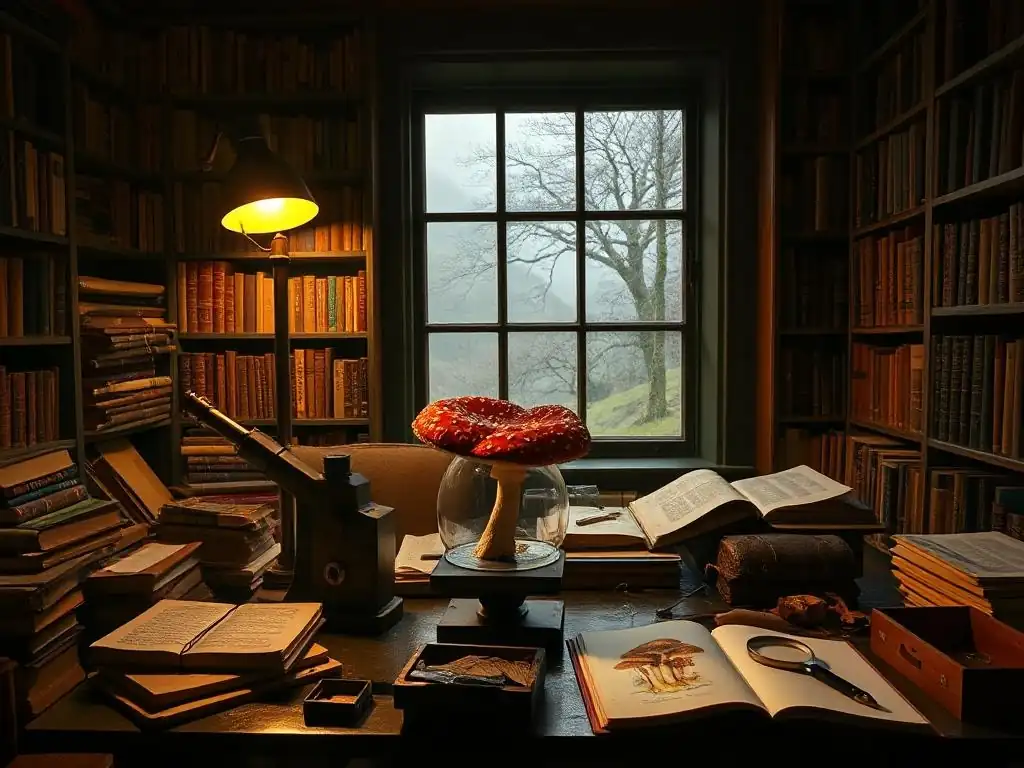
Welcome to WomenInScienceHistory.com!
Delve into the often-untold stories of women who shaped the scientific landscape. Today, we uncover the surprising scientific passions of a beloved children's author. Prepare to be fascinated by the secret world of Beatrix Potter, and discover her groundbreaking contributions to fungal conservation in the 19th century. Intrigued? Read on to explore the remarkable journey of this pioneering mycologist and her enduring legacy in environmental science.
- Beatrix Potter: Mycologist and Conservationist
- Introduction: Beyond Peter Rabbit
- Beatrix Potter: A Self-Taught Mycologist
- Potter's Mycological Research
- Conservation Efforts in the Lake District
- Fungal Illustrations: Art and Science
- Legacy: Fungal Conservation and Women in Science
- Conclusion: Enduring Significance
-
Frequently Asked Questions
- What was Beatrix Potter's main scientific interest outside of her children's books?
- Why is Beatrix Potter's contribution to mycology often overlooked?
- How did Beatrix Potter contribute to fungal conservation?
- What challenges did Beatrix Potter face as a female scientist in the 19th century?
- How can "WomenInScienceHistory.com" help highlight Beatrix Potter's work on fungal conservation?
- Final Reflection: Cultivating Conservation Through Observation
- Rediscover Nature's Hidden Wonders!
Beatrix Potter: Mycologist and Conservationist
Introduction: Beyond Peter Rabbit
Beatrix Potter's Literary Legacy
Beatrix Potter is globally celebrated as the beloved author and illustrator of timeless children's books, most famously The Tale of Peter Rabbit, first published in 1902. Her whimsical stories, populated by anthropomorphic animals in charming natural settings, have captivated generations of readers, selling over 250 million copies worldwide and translating into numerous languages. This enduring literary legacy has firmly cemented her place in the pantheon of children's literature, making her a household name synonymous with innocence and imagination.
However, behind the gentle tales of mischievous bunnies and diligent ducks lies a lesser-known, yet equally fascinating, aspect of Potter's life: her profound engagement with the natural sciences. Her meticulous observations of flora and fauna, which informed her celebrated illustrations, were not merely artistic whims but stemmed from a deep-seated scientific curiosity. This scientific rigor, particularly in the field of mycology, reveals a dimension of Potter that extends far beyond the familiar world of her storybooks.
While her literary achievements brought her widespread fame and financial independence, Beatrix Potter's intellectual pursuits began much earlier and were significantly broader. Before Peter Rabbit found its way into print, Potter was already deeply immersed in the study of natural history, with a particular passion for fungi. Her scientific endeavors were not a mere hobby but a serious commitment, involving detailed observation, precise illustration, and even attempts at formal scientific contribution.
Her early life was marked by a keen interest in the natural world, fostered during family holidays in Scotland and the Lake District. It was during these formative years that she developed a systematic approach to studying plants and animals, collecting specimens and meticulously documenting her findings. This scientific foundation, often overshadowed by her literary success, is crucial to understanding the full scope of her remarkable talents and contributions.
Connecting Art and Science: Fungi and Nature
For Beatrix Potter, the worlds of art and science were inextricably linked, especially when it came to her fascination with fungi. Her exquisite illustrations of mushrooms and toadstools were not only aesthetically beautiful but also scientifically accurate, serving as detailed records of diverse fungal species. She possessed an extraordinary ability to capture the intricate structures and delicate textures of fungi, often employing a microscope to render their microscopic features with precision.
This fusion of artistic skill and scientific observation allowed her to document the fleeting beauty of fungi, which often appear and disappear rapidly in their natural habitats. Her art became a powerful tool for scientific inquiry, enabling her to explore and understand the complex life cycles and morphological variations of different fungal species. This dedication laid the groundwork for her later contributions, which included a remarkable Beatrix Potter fungal conservation legacy, intertwining her love for nature with a commitment to its preservation.
Beatrix Potter: A Self-Taught Mycologist
The Victorian Era and Natural History
The Victorian era, spanning much of Beatrix Potter's formative years, was characterized by a widespread enthusiasm for natural history. This period saw a surge in amateur naturalists, many of whom, like Potter, were self-taught and dedicated countless hours to observing, collecting, and documenting the natural world. Societies dedicated to botany, entomology, and geology flourished, providing a forum for shared knowledge, though often excluding women from formal participation.
This broad cultural interest provided a fertile ground for Potter's burgeoning scientific curiosity. While formal scientific institutions were largely closed off to women, the informal networks of naturalists and the availability of scientific literature allowed determined individuals to pursue their passions. Potter's extensive personal library, filled with scientific texts, and her access to knowledgeable mentors like Charles McIntosh, a Scottish naturalist, further fueled her self-education in mycology.
Early Fascination with Fungi
Beatrix Potter's profound fascination with fungi began in her youth, fueled by her family's annual summer holidays in rural Scotland and later in the Lake District. These prolonged periods in nature provided her with ample opportunity to observe the diverse and often ephemeral world of mushrooms and toadstools. Unlike many botanists who focused on flowering plants, Potter was captivated by the unique and often mysterious life cycles of fungi, which were then a relatively understudied kingdom.
She meticulously collected specimens, bringing them back to her temporary laboratories (often a makeshift setup in her holiday lodgings) to study them closely. She would spend hours sketching, painting, and examining fungi under a microscope, documenting their colors, textures, and structural details with an almost obsessive precision. This early, self-directed exploration laid the foundation for her serious mycological studies and her later contributions to Beatrix Potter fungal conservation efforts.
Overcoming Obstacles: A Woman in 19th-Century Science
Despite her undeniable talent and dedication, Beatrix Potter faced significant systemic obstacles as a woman pursuing science in the late 19th century. Victorian society largely confined women to domestic roles, and formal scientific education and professional careers were overwhelmingly reserved for men. Universities and scientific societies often barred women from attendance or membership, limiting their access to resources, mentorship, and recognition.
Potter's attempts to present her research were met with institutional bias. When she prepared a paper on the germination of fungal spores, a groundbreaking observation for its time, she could not present it herself to the prestigious Linnean Society of London. Instead, her uncle, Sir Henry Roscoe, and later the mycologist George Massee, had to present it on her behalf in 1897. This exemplifies the pervasive discrimination that prevented many talented women from receiving the recognition they deserved, highlighting the challenges that Beatrix Potter fungal conservation advocates and other female scientists had to overcome.
Potter's Mycological Research
Fungal Illustrations: Accuracy and Detail
Beatrix Potter's mycological research is perhaps best exemplified by her extraordinary collection of fungal illustrations. These watercolors, numbering in the hundreds, are not merely artistic renderings but highly accurate scientific documents. She employed a rigorous approach, often observing specimens for extended periods, drawing them at various stages of their life cycle, and noting minute details of their gills, caps, and stems. Her use of a microscope allowed her to depict microscopic features, such as spore structures, with remarkable precision.
Her commitment to scientific accuracy was paramount. She understood that fungi, due to their rapid growth and decay, required immediate and precise documentation. Her illustrations capture the ephemeral beauty and intricate morphology of species like Boletus versipellis or Amanita muscaria with a level of detail that rivals professional scientific drawings of the era. These meticulously rendered works served as invaluable records for her own studies and, had they been fully recognized, would have significantly advanced the field of mycology.
Scientific Paper and Institutional Bias
In 1897, Beatrix Potter penned a scientific paper titled "On the Germination of the Spores of Agaricineae" (a group of gilled fungi). This paper presented her pioneering observations on how fungal spores germinate, a process that was not fully understood at the time. She hypothesized that certain fungi could be cultivated from spores, a concept that was quite advanced for the period. Her detailed sketches accompanying the paper provided visual evidence for her theories.
However, due to the institutional sexism prevalent in Victorian scientific circles, Potter was not permitted to present her own research to the Linnean Society, a leading scientific body. Instead, her paper was formally presented by George Massee, a mycologist from the Royal Botanic Gardens, Kew.
While Massee recognized the merit of her work, the paper was ultimately dismissed, partly due to the prevailing skepticism towards amateur contributions and, undoubtedly, the inherent bias against female researchers. This incident underscores the systemic barriers faced by women like Potter in gaining recognition for their scientific contributions, even when those contributions were genuinely insightful for Beatrix Potter fungal conservation and wider mycological understanding.
Contributions to Fungal Taxonomy and Classification
Although her formal paper was not widely accepted at the time, Beatrix Potter's detailed observations and illustrations nonetheless contributed to the understanding of fungal taxonomy and classification. Her meticulous drawings, often depicting species from multiple angles and at different developmental stages, provided invaluable visual data for identifying and differentiating various fungal species. She accurately illustrated characteristics that are crucial for classification, such as spore prints and gill attachments.
Moreover, her persistent study of fungal life cycles, particularly her work on spore germination, demonstrated an intuitive grasp of mycological principles that were ahead of her time. While she did not formally name new species, her detailed documentation of known and lesser-known fungi, including her careful notes on their habitats and growth patterns, enriched the descriptive knowledge base of mycology. Her work, though largely unacknowledged in her lifetime, represents a significant, albeit informal, contribution to the field, supporting the broader understanding necessary for Beatrix Potter fungal conservation.
Conservation Efforts in the Lake District
From Observation to Preservation
Beatrix Potter's deep appreciation for the natural world, cultivated through years of scientific observation and artistic rendering, eventually evolved into a passionate commitment to conservation. Her extensive studies of fungi, plants, and animals in the Lake District instilled in her a profound understanding of the delicate balance of ecosystems. This intimate knowledge of nature's intricacies, combined with her growing financial independence from her books, provided the impetus for her shift from merely observing the landscape to actively preserving it.
She witnessed firsthand the encroaching development and changes in agricultural practices that threatened the unique beauty and traditional way of life in the Lake District. This concern for the integrity of the natural environment, which had been the backdrop for both her scientific pursuits and her literary inspirations, spurred her to take direct action. Her transition from a keen naturalist to a proactive conservationist was a natural progression, driven by a desire to protect the very landscapes that had nurtured her intellectual and creative life.
Potter as Landowner and Conservationist
Beginning in 1905 with the purchase of Hill Top Farm, Beatrix Potter systematically acquired significant tracts of land in the Lake District, using the substantial royalties from her beloved children's books. Over several decades, she bought and managed 15 farms and numerous cottages, accumulating approximately 4,000 acres (about 1,600 hectares) of land. Her goal was not personal wealth accumulation but rather the preservation of the traditional Lakeland landscape, its unique architecture, and its distinct agricultural practices.
Potter actively managed her farms, often engaging in sheep farming herself and championing the native Herdwick sheep breed, which is integral to the region's ecology and economy. She worked tirelessly to ensure that the land was maintained in a way that respected its natural heritage and traditional farming methods, preventing haphazard development and preserving the scenic beauty. Her actions laid a crucial foundation for Beatrix Potter fungal conservation and the broader ecological health of the area.
Impact on the Lake District Ecosystem
Beatrix Potter's extensive land acquisitions and dedicated stewardship had a profound and lasting impact on the Lake District ecosystem. By purchasing and protecting thousands of acres, she effectively safeguarded vast areas from commercial development and unsustainable agricultural practices. Her focus on preserving traditional farming methods, such as the grazing of Herdwick sheep, helped maintain the unique mosaic of habitats that support a rich biodiversity, including various plant and fungal species.
Crucially, upon her death in 1943, Potter bequeathed the vast majority of her landholdings to the National Trust, a conservation organization she had actively supported and worked with for many years. This monumental gift, which included farms, cottages, and extensive tracts of fells and woodlands, ensured the permanent protection of a significant portion of the Lake District. Her foresight and generosity have played a pivotal role in preserving the region's natural beauty and ecological integrity for future generations, making her a towering figure in Beatrix Potter fungal conservation and environmental stewardship.
Fungal Illustrations: Art and Science
Scientific Accuracy of Botanical and Mycological Art
Beatrix Potter's botanical and mycological art stands out for its exceptional scientific accuracy, a testament to her meticulous observation skills and deep understanding of her subjects. Far from being mere decorative pieces, her illustrations served as precise scientific records. She understood the importance of rendering exact morphology, including the subtle variations in color, texture, and structure that are critical for species identification. Her drawings of fungi often depict cross-sections, spore prints, and various stages of growth, providing a comprehensive visual analysis.
Her commitment to scientific rigor was evident in her methodology. She would often use a microscope to examine the gills and spores of fungi, ensuring that even the minute details were faithfully reproduced. This level of detail, combined with her artistic talent, allowed her to capture the transient beauty of fungi while simultaneously providing valuable data for mycological study. Her work exemplifies how art can be a powerful tool for scientific documentation, contributing significantly to the visual record necessary for Beatrix Potter fungal conservation efforts.
Art as a Tool for Documentation and Education
For Beatrix Potter, art was not just an aesthetic pursuit but a vital tool for documentation and education. Given the ephemeral nature of fungi, which often appear and disappear rapidly, her detailed illustrations provided a permanent record that photographic technology of the time could not fully capture. She meticulously documented hundreds of species, noting their habitats, colors, and unique characteristics, creating an invaluable visual catalog of the fungal diversity she encountered.
Beyond mere documentation, her illustrations also served an educational purpose. Through her precise renderings, she could convey complex scientific information in an accessible and engaging manner. While her mycological papers were largely unrecognized, her illustrations, even those in her children's books, subtly educated readers about the beauty and intricacies of the natural world. This blend of scientific precision and artistic accessibility made her work a potent instrument for fostering an appreciation for nature, supporting the broader goals of Beatrix Potter fungal conservation.
Legacy of Illustrations: Inspiring Future Generations
The legacy of Beatrix Potter's fungal illustrations extends far beyond their immediate scientific context. These vibrant and accurate artworks continue to inspire future generations of mycologists, botanists, and artists alike. Their scientific precision serves as a model for how art can contribute to scientific understanding, while their aesthetic beauty draws new enthusiasts into the study of the natural world. Many contemporary mycologists and botanical artists cite Potter as a significant influence.
Her work demonstrates that the boundaries between art and science are fluid, and that passion for nature can manifest in diverse and impactful ways. The collection of her mycological drawings, now housed in institutions like the Armitt Library and Museum Centre, remains a valuable resource for researchers. They stand as a testament to her genius and her pioneering spirit, encouraging a holistic approach to understanding and appreciating the environment, a core tenet of Beatrix Potter fungal conservation.
Legacy: Fungal Conservation and Women in Science
Reassessing Contribution to Mycology
For many years, Beatrix Potter's significant contributions to mycology were largely overlooked or dismissed, overshadowed by her literary fame and the societal biases she faced as a woman in science. However, in recent decades, there has been a significant reassessment of her scientific work. Mycologists and historians of science have begun to recognize the groundbreaking nature of her observations, particularly her detailed studies on fungal spore germination and her meticulous illustrations.
The British Mycological Society, for example, posthumously acknowledged her pioneering efforts, recognizing the scientific value of her extensive collection of fungal drawings and her insightful hypotheses. Her work, though not formally published in leading scientific journals during her lifetime, is now understood to have been ahead of its time, demonstrating a genuine scientific aptitude and a profound understanding of fungal biology. This re-evaluation highlights the importance of revisiting historical narratives to uncover the often-uncredited contributions of women in science.
Potter as a Role Model
Beatrix Potter's life story serves as a compelling role model for aspiring scientists, particularly women in STEM fields. Despite the formidable barriers she encountered in the male-dominated scientific establishment of the 19th century, she pursued her intellectual passions with unwavering dedication and rigor. Her self-education, persistent observation, and pioneering research demonstrate remarkable resilience and intellectual curiosity.
Her ability to pivot from a largely unrecognized scientific career to a highly successful literary one, and then to leverage that success for conservation, underscores her adaptability and multifaceted genius. Potter's journey illustrates that scientific inquiry can take many forms and that passion, coupled with meticulous effort, can lead to significant, albeit sometimes belated, recognition. She stands as an inspiring figure who defied societal expectations to pursue her diverse talents, leaving an indelible mark on both literature and science, including the field of Beatrix Potter fungal conservation.
Relevance of Environmental Conservation Efforts
Beatrix Potter's environmental conservation efforts in the Lake District remain profoundly relevant today, especially in an era marked by increasing concerns about climate change and biodiversity loss. Her foresight in purchasing vast tracts of land and dedicating them to preservation was revolutionary for her time. She understood the intrinsic value of natural landscapes and traditional farming practices long before environmentalism became a mainstream movement.
Her actions laid the groundwork for the enduring protection of one of England's most cherished natural areas. The lands she bequeathed to the National Trust continue to safeguard unique ecosystems, traditional farming methods, and the aesthetic beauty of the Lake District. Her legacy highlights the power of individual initiative in driving large-scale conservation outcomes, serving as a powerful example for contemporary Beatrix Potter fungal conservation initiatives and broader environmental stewardship.
Dual Legacy: Art, Science, and Stewardship
Beatrix Potter's enduring legacy is a powerful testament to the interconnectedness of art, science, and environmental stewardship. Her artistic talent allowed her to document the natural world with unparalleled precision, transforming scientific observation into exquisite visual records. Her scientific curiosity drove her to explore the intricate lives of fungi, contributing original insights to mycology, even if unrecognized in her lifetime.
Finally, her deep love for the Lake District, cultivated through years of artistic and scientific engagement with its landscapes, compelled her to become a pioneering conservationist. She used her wealth and influence to protect the very environments that inspired her, ensuring their preservation for future generations. This multifaceted legacy—encompassing literature, scientific illustration, mycological research, and land conservation—makes Beatrix Potter a truly unique and inspirational figure, whose work in Beatrix Potter fungal conservation continues to resonate today.
Conclusion: Enduring Significance
Contributions to Mycology and Conservation
Beatrix Potter's life provides a compelling narrative of dedication, talent, and perseverance, leaving behind a dual legacy of profound significance in both mycology and environmental conservation. As a self-taught mycologist, her meticulous observations and exquisite illustrations of fungi were scientifically rigorous and often ahead of their time, offering invaluable insights into fungal taxonomy and life cycles. Though her formal scientific contributions faced institutional barriers, her informal body of work stands as a testament to her intellectual prowess.
Equally impactful were her pioneering efforts in conservation. Through strategic land acquisition in the Lake District and her eventual bequest to the National Trust, she played a pivotal role in preserving thousands of acres of unique landscape, traditional farming practices, and vital ecosystems. This commitment to stewardship, driven by a deep love for nature, cemented her status as one of Britain's earliest and most effective environmental advocates, ensuring the long-term protection necessary for Beatrix Potter fungal conservation and wider ecological health.
Impact of a Woman Ahead of Her Time
Beatrix Potter was undeniably a woman ahead of her time. In an era when societal norms severely limited opportunities for women, particularly in scientific fields, she defied expectations by pursuing her intellectual passions with unwavering determination. Her scientific work, though often overlooked, demonstrated an acute observational ability and an innovative approach to understanding the natural world. She navigated institutional biases with quiet resilience, finding alternative avenues for her creativity and intellect to flourish.
Her transition from a frustrated scientist to a celebrated author and then to a dedicated conservationist showcases an extraordinary adaptability and vision. Potter's life exemplifies how individual passion, when combined with strategic action, can lead to monumental achievements that transcend societal limitations and leave an enduring positive impact for generations. Her story continues to inspire, underscoring the vital contributions of women who dared to break molds.
Further Exploration of Scientific Achievements
While Beatrix Potter is universally known for Peter Rabbit, her scientific achievements, particularly in mycology and Beatrix Potter fungal conservation, warrant much greater recognition and further exploration. Delving into her detailed scientific drawings, her personal journals, and the context of 19th-century mycology reveals a scientist of considerable talent and insight. Her work offers a fascinating case study of an amateur naturalist whose observations rivaled those of many formally trained professionals.
For those interested in the history of science, women in STEM, or environmental history, exploring Potter's scientific life offers a rich tapestry of discovery. It challenges conventional narratives and highlights the often-unseen contributions of individuals who, despite facing significant obstacles, pushed the boundaries of knowledge and made lasting contributions to our understanding and preservation of the natural world.
Frequently Asked Questions
What was Beatrix Potter's main scientific interest outside of her children's books?
Beatrix Potter was deeply interested in mycology, the study of fungi. She made detailed scientific illustrations and even developed her own theories about fungal reproduction.
Why is Beatrix Potter's contribution to mycology often overlooked?
Her scientific work was often dismissed due to her gender and lack of formal qualifications in a male-dominated field. She also prioritized her writing career, which gained more public attention.
How did Beatrix Potter contribute to fungal conservation?
Potter was a keen observer of nature and concerned about its preservation. Her detailed illustrations and writings implicitly promoted awareness of fungal diversity and the importance of habitat conservation.
What challenges did Beatrix Potter face as a female scientist in the 19th century?
She faced significant barriers due to gender bias in the scientific community. She was often denied recognition and access to resources available to her male counterparts, impacting her professional recognition.
How can "WomenInScienceHistory.com" help highlight Beatrix Potter's work on fungal conservation?
The website aims to amplify overlooked narratives by showcasing her contributions. This includes featuring her biography, discussing her scientific findings, and emphasizing her passion for fungal conservation.
Final Reflection: Cultivating Conservation Through Observation
The enduring legacy of Beatrix Potter extends far beyond the charming tales of Peter Rabbit; it reveals a profound connection between artistic expression and scientific inquiry, particularly in the realm of mycology and conservation. Potter's meticulous observations of fungi, coupled with her unwavering dedication to preserving the Lake District, offer a powerful example of how passion and knowledge can intertwine to create lasting positive change. Her story resonates today, reminding us that even seemingly disparate fields can converge to address pressing environmental concerns.
The impact of Potter's work, both artistic and scientific, continues to ripple through our cultural understanding of nature. Her detailed illustrations sparked a love for the natural world in generations of children, while her scientific contributions, though often overlooked, laid the groundwork for a deeper appreciation of fungal ecology. The world is my idea.
- Beatrix Potter. This quote encapsulates her unique perspective, highlighting how her personal vision shaped both her art and her scientific pursuits, ultimately contributing to a broader understanding of the interconnectedness of life.
Now, consider how you can emulate Beatrix Potter's spirit of inquiry and dedication in your own life. What seemingly small corner of the world sparks your curiosity? How can you use your unique talents, whether artistic, scientific, or otherwise, to contribute to a more sustainable and harmonious future? Let Potter's example inspire you to cultivate your own passion for observation and conservation, ensuring that the beauty and wonder of the natural world endure for generations to come.
Thank you for exploring Beatrix Potter's fascinating journey beyond children's stories! We hope you've gained a new appreciation for her scientific contributions and her deep connection to the natural world. Now, let's bring that inspiration to life.
- Delve deeper: Research a local fungi species and document your findings in a journal, just like Beatrix Potter.
- Share your newfound knowledge: Organize a local nature walk focusing on fungi identification and their ecological importance.
- Inspire others: Introduce a child in your life to Beatrix Potter’s lesser-known illustrations of fungi, sparking their curiosity about the world around them.
What small step will you take this week to reconnect with the natural world, inspired by Beatrix Potter's pioneering spirit?