
Cracking the Code: The Brilliant Women of Bletchley Park & Their WarWinning Work

Welcome to WomenInScienceHistory.com!
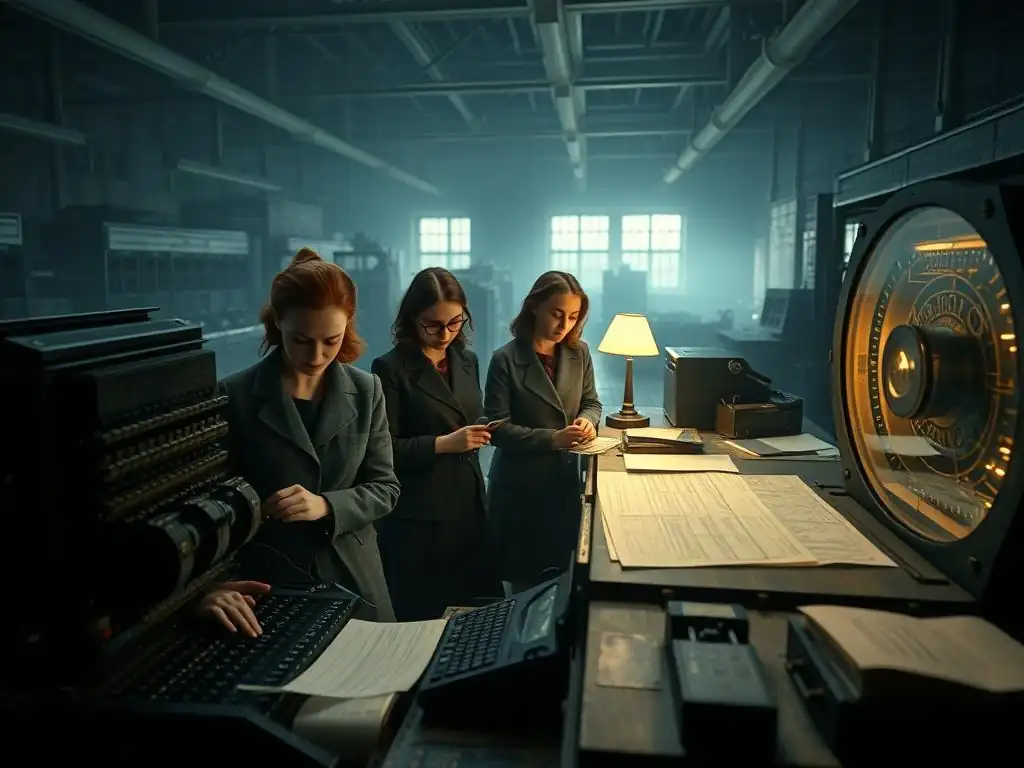
Dive into the fascinating untold stories of brilliant women who shaped the world of science. Are you ready to uncover the pivotal role women played in some of history's most crucial moments? Our latest article explores the groundbreaking contributions of Women’s codebreaking at Bletchley Park during World War II, revealing the ingenious minds behind the codebreaking efforts that helped turn the tide of the war. Prepare to be inspired by their ingenuity and resilience – the secrets they unlocked are just the beginning.
- Introduction: The Unsung Heroines of World War II - Women’s Codebreaking at Bletchley Park
- The Enigma Machine and the Codebreaking Challenge
- The Recruitment of Women to Bletchley Park
- Key Figures: Pioneering Women Codebreakers at Bletchley Park
- The Work Environment and Daily Life at Bletchley Park
- The Impact of Women’s Codebreaking on the Outcome of World War II
- Post-War Recognition and Legacy
- Bletchley Park Today: A Memorial to the Women Codebreakers
- Conclusion: Celebrating the Genius and Resilience of Women in Wartime Codebreaking
-
Frequently Asked Questions
- What was Bletchley Park, and why was it important during World War II?
- What role did women play in the codebreaking efforts at Bletchley Park?
- What types of codes were the women at Bletchley Park primarily working to break?
- What were some of the challenges faced by women working at Bletchley Park during the war?
- How did the work of women at Bletchley Park impact the outcome of World War II?
- Final Reflection: Echoes of Unsung Brilliance
- Unveil the Secrets: Continue the Legacy!
Introduction: The Unsung Heroines of World War II - Women’s Codebreaking at Bletchley Park
Highlighting the Crucial Role of Women in Bletchley Park's Codebreaking Efforts
Bletchley Park, the clandestine hub of British codebreaking during World War II, was home to an extraordinary concentration of intellect and dedication. While often associated with famous male figures, the truth is that the vast majority of its workforce, estimated at around 75% by 1945, were women. These brilliant minds, recruited from diverse backgrounds ranging from universities to quiet villages, formed the backbone of the entire operation. Their collective efforts in women’s codebreaking at Bletchley Park were indispensable, playing a pivotal role in decrypting enemy communications and providing vital intelligence that significantly altered the course of the war.
These women filled critical roles across various sections, from operating the complex Bombe machines designed to decipher Enigma messages, to meticulous clerical work, intricate wiring, and even high-level cryptanalysis. Without their precision, perseverance, and often overlooked intellectual contributions, the sheer volume of intercepted messages could not have been processed, let alone understood. Their commitment under immense pressure and secrecy truly underscored the vital importance of women’s codebreaking at Bletchley Park to the Allied war effort.
Why Women’s Contributions to Cryptography at Bletchley Park Were Often Overlooked
Despite their overwhelming numbers and the undeniable impact of their work, the contributions of the women of Bletchley Park remained largely unacknowledged for decades after the war. This oversight stemmed from a combination of factors, primarily the stringent secrecy imposed by the Official Secrets Act, which prevented anyone involved from discussing their wartime roles until the 1970s. By the time declassification began, many of these women had returned to more traditional roles, and the narrative of the war often focused on military leaders and a handful of prominent male scientists.
Furthermore, societal norms of the mid-20th century often downplayed or dismissed the intellectual achievements of women, particularly in fields perceived as male domains like mathematics, engineering, and cryptography. The quiet, behind-the-scenes nature of their work at Bletchley Park, combined with the prevailing gender biases, meant that their stories were not celebrated or even widely known. It has taken concerted efforts in recent decades to uncover and highlight these vital contributions, finally giving due recognition to the pioneering women’s codebreaking at Bletchley Park that was so crucial to Allied victory.
The Enigma Machine and the Codebreaking Challenge
Understanding the Complexity of the Enigma Code
The Enigma machine, a portable cipher device used by the German military, was designed to encrypt and decrypt secret messages. Its complexity lay in its intricate combination of rotors, a plugboard, and a reflector, which together created an astronomical number of possible settings. Each time a key was pressed, the rotors would advance, changing the electrical pathway and thus the substitution of the letter. The plugboard alone offered over 150 million million possible wirings, while the three (later four) rotors could be arranged in six different orders and set to 17,576 starting positions.
This multi-layered encryption meant that a single letter could be encoded in many different ways depending on its position in the message and the machine's current settings. Without knowing the precise daily settings – including rotor order, starting positions, plugboard connections, and internal ring settings – decrypting an Enigma message was akin to finding a needle in a haystack the size of the solar system. The sheer mathematical scale of the challenge made Enigma seem virtually unbreakable, requiring not just immense computational power but also brilliant human ingenuity, which the women’s codebreaking at Bletchley Park would famously provide.
The Urgent Need for Codebreakers During World War II
As World War II escalated, the ability of the Axis powers to communicate securely via codes like Enigma posed an existential threat to the Allies. German U-boats, for instance, were sinking vast numbers of Allied merchant ships in the Atlantic, jeopardizing Britain's vital supply lines for food, fuel, and raw materials. Without the ability to decipher these enemy communications, the Allies were effectively fighting blind, unable to anticipate troop movements, naval attacks, or strategic plans.
The urgent need for intelligence was paramount, driving the British government to pour resources into Bletchley Park and recruit thousands of individuals with exceptional analytical skills. The success of women’s codebreaking at Bletchley Park in breaking Enigma and other ciphers provided "Ultra" intelligence, giving the Allies unprecedented insight into enemy operations. This intelligence was critical for planning defensive strategies, orchestrating counter-attacks, and ultimately shortening the war, saving countless lives and vast resources.
The Recruitment of Women to Bletchley Park
Seeking Exceptional Minds: How Women Were Selected for Codebreaking
The recruitment process for Bletchley Park was unconventional and highly secretive, often targeting individuals with specific intellectual aptitudes rather than traditional qualifications. Women were sought from a variety of backgrounds, including universities where they had excelled in mathematics, classics, or modern languages. For example, women with strong mathematical abilities were ideal for cryptanalysis, while those proficient in German or Italian were essential for translation and interpretation of decrypted messages.
Beyond academic prowess, recruiters also looked for women with sharp minds and a knack for problem-solving, even extending to those who excelled at puzzles, crosswords, or games like chess and bridge. The famous daily crossword puzzles in The Daily Telegraph were even used as an informal recruitment tool, identifying individuals with the necessary logical and lateral thinking skills. Once identified, these women underwent rigorous vetting and were then sworn to secrecy, entering a world where their work would be paramount to the war effort, establishing the foundation of women’s codebreaking at Bletchley Park.
Overcoming Societal Expectations: Women Entering a Male-Dominated Field
For many women recruited to Bletchley Park, entering the highly secretive and intellectually demanding world of codebreaking meant shattering conventional societal expectations of the era. Prior to the war, career opportunities for women, particularly in fields requiring advanced scientific or mathematical skills, were severely limited. Most were expected to become homemakers, teachers, or nurses, or to enter clerical roles. The call to Bletchley Park presented a unique opportunity to engage in critical, high-stakes work traditionally reserved for men.
Despite the groundbreaking nature of their roles, these women often faced underlying gender biases, being assigned to roles that were sometimes considered "mechanical" or "clerical" even when their intellectual input was crucial. However, the urgency of the war created an environment where talent, regardless of gender, was desperately needed. The sheer scale of women’s codebreaking at Bletchley Park not only contributed directly to Allied victory but also inadvertently paved the way for future generations of women to pursue careers in STEM fields, challenging entrenched norms and demonstrating their immense capabilities.
Key Figures: Pioneering Women Codebreakers at Bletchley Park
Joan Clarke: Her Contribution to Breaking Enigma
Joan Clarke, a brilliant mathematician and cryptanalyst, was a pivotal figure in Hut 8, the section primarily responsible for breaking German Naval Enigma. She joined Bletchley Park in 1940 and quickly distinguished herself with her exceptional analytical skills. Working closely with Alan Turing, she played a crucial role in the development and operation of the "Bombe" machines, electro-mechanical devices designed to rapidly test possible Enigma settings.
Clarke's meticulous work involved identifying the daily Enigma keys, a process known as "Banburismus," which significantly reduced the time and effort required to find the correct settings. Her deep understanding of statistical analysis and her ability to spot patterns in encrypted messages were instrumental in making the Bombe operation more efficient. Her contributions were not merely technical; she was a key cryptanalyst whose insights directly led to the decryption of vital U-boat communications, proving indispensable to the success of women’s codebreaking at Bletchley Park against the German naval threat.
Margaret Rock: Her Role in Decrypting Lorenz Cipher
Margaret Rock was another unsung heroine of Bletchley Park, whose contributions extended beyond the Enigma machine to the far more complex Lorenz cipher. Used for high-level German communications between Hitler and his generals, Lorenz, code-named "Tunny" by the British, was a formidable challenge, more sophisticated than Enigma. Rock worked in the "Testery," the section dedicated to breaking Lorenz.
Her expertise in cryptography and her relentless dedication were crucial to deciphering these incredibly complex messages. The work on Lorenz involved developing new techniques and machines, including the Colossus, the world's first programmable electronic digital computer. Rock's analytical prowess helped in understanding the underlying patterns of the Lorenz cipher, contributing directly to the development of methods that allowed the Allies to read these vital communications. Her work, alongside that of other female cryptanalysts, highlighted the advanced nature of women’s codebreaking at Bletchley Park beyond just Enigma.
Mavis Batey, a young woman who had studied classics at university, applied her sharp mind to the challenge of Italian Naval Enigma at Bletchley Park. Her breakthrough came in March 1941, just before the pivotal Battle of Cape Matapan. Working in Hut 4, she successfully decrypted a critical Italian naval message that revealed the precise sailing orders and intentions of the Italian fleet.
This decryption provided the Royal Navy with advance warning of the Italian fleet's movements, allowing Admiral Cunningham to ambush them effectively. The resulting victory at Cape Matapan was a crushing defeat for the Italian navy, significantly weakening Axis power in the Mediterranean. Batey's remarkable achievement was a direct result of her innovative cryptanalytic techniques and her ability to exploit subtle weaknesses in the Italian Enigma setup. Her specific, timely contribution stands as a testament to the immediate and profound impact of women’s codebreaking at Bletchley Park on the battlefield.
The Work Environment and Daily Life at Bletchley Park
The Secrecy and Pressure of Codebreaking During Wartime
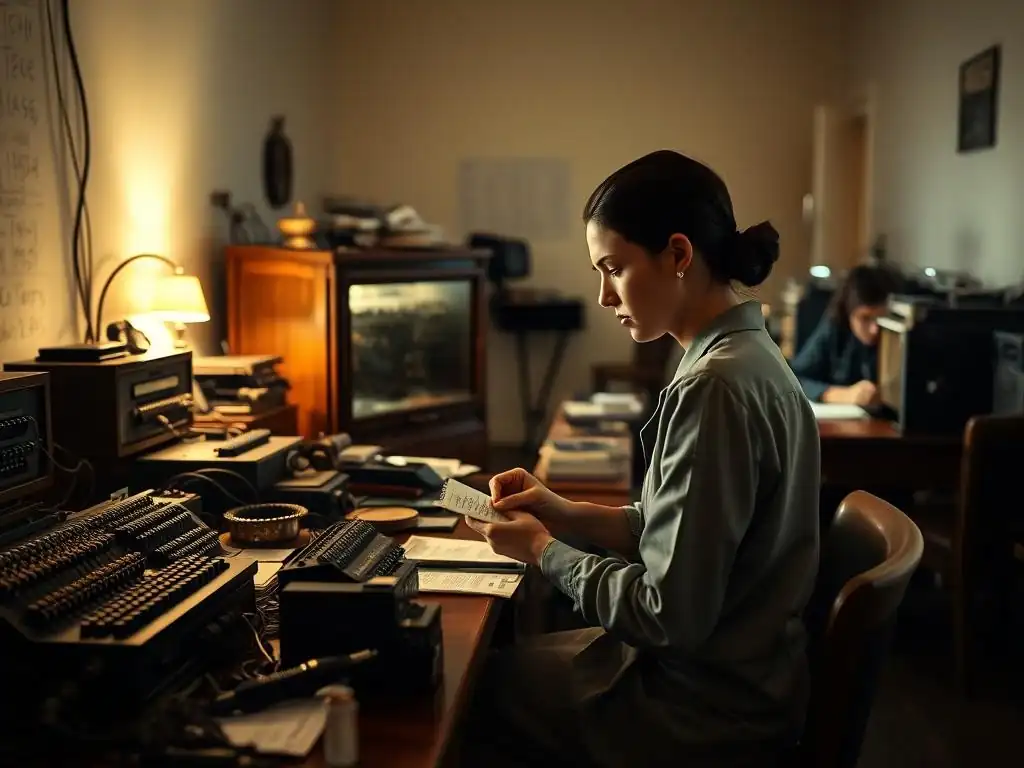
Life at Bletchley Park was defined by an atmosphere of intense secrecy and immense pressure. Every individual, regardless of their role, was bound by the Official Secrets Act, forbidden from discussing their work with anyone, even family members, both during and after the war. This extreme confidentiality meant that the women codebreakers carried the weight of vital national security information, often without the ability to share the burdens or triumphs of their day with loved ones.
The work itself was relentless, with shifts often lasting up to 12 hours, seven days a week, especially during critical periods. The constant race against time to decrypt messages before they lost their intelligence value, coupled with the knowledge that the fate of the war and countless lives depended on their success, created an environment of profound psychological pressure. This demanding setting underscored the resilience and dedication of the women engaged in women’s codebreaking at Bletchley Park.
Living and Working Conditions for Women at Bletchley Park
The living and working conditions for the thousands of women at Bletchley Park were often spartan and far from luxurious. Many lived in crowded hostels, billets, or even rented rooms in the surrounding towns and villages, commuting daily to the heavily guarded estate. Accommodation was basic, with communal facilities and limited privacy. The pressure of their work meant that social lives were often restricted to interactions within Bletchley Park itself, fostering a unique camaraderie among the diverse group of women.
Workplaces, often huts or purpose-built blocks, were functional rather than comfortable, designed for efficiency. Despite the often dreary surroundings and the demanding nature of their tasks, the women found ways to build community, form friendships, and even engage in limited recreational activities like dances or sports. The shared purpose and the knowledge of their vital contribution to the war effort provided a powerful unifying force, shaping the unique experience of women’s codebreaking at Bletchley Park.
The Impact of Women’s Codebreaking on the Outcome of World War II
How Decrypted Messages Shortened the War
The intelligence gleaned from women’s codebreaking at Bletchley Park, known as Ultra, provided the Allies with an unparalleled advantage throughout World War II. By reading German, Italian, and Japanese encrypted communications, the Allies gained crucial insights into enemy strategies, troop movements, supply lines, and technological developments. This foresight allowed them to anticipate attacks, direct Allied forces more effectively, and launch successful counter-offensives.
Historians and military strategists widely agree that Ultra intelligence significantly shortened the war, with estimates often ranging from two to four years. This reduction in duration saved millions of lives—both military and civilian—and conserved immense resources that would otherwise have been expended in prolonged conflict. The constant flow of actionable intelligence, made possible by the dedicated efforts of the codebreakers, directly impacted the timing and success of major Allied operations, demonstrating the profound strategic value of women’s codebreaking at Bletchley Park.
Specific Examples of Successful Decryptions Led by Women
The impact of women’s codebreaking at Bletchley Park can be seen in numerous critical junctures of the war. One prominent example is the Battle of the Atlantic, where the decryption of German U-boat messages was instrumental. Women operating the Bombe machines and meticulous cryptanalysts like Joan Clarke helped to break the daily Enigma keys, allowing the Allies to reroute convoys away from wolf packs and target U-boats more effectively. This intelligence drastically reduced shipping losses, ensuring vital supplies reached Britain.
Another significant instance was the aforementioned Battle of Cape Matapan in March 1941, where Mavis Batey's decryption of Italian naval Enigma allowed the Royal Navy to achieve a decisive victory. Furthermore, intelligence derived from Lorenz cipher decryptions, in which Margaret Rock played a key role, provided crucial insights into German high command communications, aiding in the planning of D-Day and subsequent campaigns. These specific successes underscore the direct and measurable impact of the pioneering women’s codebreaking at Bletchley Park on the Allied victory.
Post-War Recognition and Legacy
The Delayed Acknowledgement of Women's Codebreaking Contributions
For decades after World War II, the extraordinary contributions of the women of Bletchley Park remained shrouded in secrecy. The Official Secrets Act ensured that their vital work, including the extensive women’s codebreaking at Bletchley Park, was kept from public knowledge. Many of the women themselves adhered strictly to their oaths, returning to civilian life without ever revealing the true nature of their wartime service, even to their closest family members.
This prolonged silence meant that when the story of Bletchley Park finally began to emerge in the 1970s with the declassification of some documents, the initial narrative often centered on the more prominent male figures and technological achievements. The sheer scale and depth of the women’s codebreaking at Bletchley Park were largely overlooked in early accounts, contributing to a historical imbalance that has only begun to be corrected in recent years through dedicated research and personal testimonies.
The Fight for Recognition: Recovering the Lost Stories of Bletchley Park's Women
The journey to acknowledge the full extent of women’s codebreaking at Bletchley Park has been a gradual and often challenging one. It gained significant momentum in the late 20th and early 21st centuries as more documents were declassified, and crucially, as surviving veterans began to share their stories. Historians, authors, and documentarians embarked on extensive efforts to interview these women, piece together their experiences, and highlight their individual and collective achievements.
This concerted effort has led to a much richer and more accurate understanding of Bletchley Park's operations, finally giving these pioneering women the recognition they deserve. Exhibitions, biographies, and even popular media have brought their narratives to a wider audience, ensuring that their bravery, intelligence, and unwavering dedication are no longer forgotten. The fight for recognition continues, aiming to fully embed the story of women’s codebreaking at Bletchley Park into the mainstream historical narrative of World War II.
The Lasting Impact of Women's Codebreaking on Modern Cryptography and Computer Science
Beyond their immediate impact on World War II, the contributions of the women of Bletchley Park laid foundational groundwork for modern cryptography and computer science. The innovative techniques developed to break complex ciphers, the conceptualization of processing large datasets, and the operational experience with early computing machines like the Bombe and Colossus, all had profound implications for future technological advancements.
While the specific details of their work remained secret for decades, the principles of logical deduction, pattern recognition, and systematic analysis employed by these female cryptanalysts continue to be fundamental to cybersecurity and data science today. Their often pioneering roles in operating and even helping to design early computational devices demonstrate a direct lineage to the development of electronic computers. The legacy of women’s codebreaking at Bletchley Park thus extends far beyond wartime victory, inspiring and influencing the digital world we inhabit today.
Bletchley Park Today: A Memorial to the Women Codebreakers
Visiting Bletchley Park: Remembering the Women Who Cracked the Code
Today, Bletchley Park stands as a vibrant and vital museum and heritage site, meticulously preserved to tell the extraordinary story of its wartime operations. Visitors can explore the iconic huts and blocks where the codebreaking work took place, including Hut 8 where Joan Clarke worked, and the Block B building that housed the Bombe machines. The museum has made significant efforts to ensure that the narrative of the thousands of women who worked there is prominently featured.
Exhibits detail their recruitment, daily lives, specific roles, and the immense impact of their work. Personal testimonies, photographs, and artifacts bring their stories to life, ensuring that the sheer scale and intellectual prowess of women’s codebreaking at Bletchley Park are fully appreciated. A visit provides a tangible connection to the past, allowing one to walk in the footsteps of these remarkable women and understand the environment in which they changed the course of history.
Educational Initiatives and Resources Highlighting Women's Codebreaking Achievements
Bletchley Park is not just a museum; it is also a hub for educational initiatives dedicated to preserving and promoting the legacy of its wartime personnel, especially the women. The site hosts various programs for schools, universities, and the general public, designed to inspire future generations by showcasing the ingenuity and resilience displayed there. These initiatives often focus explicitly on the roles of women in codebreaking, emphasizing their contributions to STEM fields.
Online resources, archival collections, and dedicated publications further disseminate the stories of women’s codebreaking at Bletchley Park, making them accessible to a global audience. By highlighting figures like Joan Clarke, Margaret Rock, and Mavis Batey, Bletchley Park ensures that their individual achievements, alongside the collective efforts of thousands of other women, are celebrated and understood as integral to the Allied victory and the development of modern technology.
Conclusion: Celebrating the Genius and Resilience of Women in Wartime Codebreaking
A Reminder of the Vital Role Women Played in Bletchley Park's Success
The story of Bletchley Park is incomplete without recognizing the pivotal and often understated role played by the thousands of women who worked there. From operating complex machinery and performing intricate calculations to translating vital intelligence and managing vast administrative tasks, their dedication, intelligence, and meticulousness were absolutely indispensable. They constituted the vast majority of the workforce, and their collective efforts were the engine that drove the codebreaking operation.
Their unwavering commitment under conditions of extreme secrecy and pressure ensured the continuous flow of Ultra intelligence, which proved to be a decisive factor in shortening World War II. The narrative of women’s codebreaking at Bletchley Park stands as a powerful reminder that genius, resilience, and patriotism know no gender boundaries, and that significant historical contributions can emerge from the most unexpected places and people.
Inspiring Future Generations of Women in STEM Through the Stories of Bletchley Park
The remarkable achievements of the women of Bletchley Park offer a compelling source of inspiration for future generations, particularly young women considering careers in science, technology, engineering, and mathematics (STEM). Their stories demonstrate that women have always possessed the intellectual capacity and innovative spirit to excel in these fields, even when societal barriers were formidable. By highlighting the pioneering women’s codebreaking at Bletchley Park, we showcase real-world examples of female excellence in critical technical and analytical roles.
These narratives serve as a powerful testament to what can be achieved when talent is recognized and nurtured, regardless of gender. They encourage young women to pursue their passions in STEM, challenging stereotypes and demonstrating that their contributions can lead to groundbreaking discoveries and profound societal impact, just as the women codebreakers of Bletchley Park did in a time of global crisis.
Frequently Asked Questions
What was Bletchley Park, and why was it important during World War II?
Bletchley Park was the central site of British codebreakers during World War II. It was crucial for deciphering enemy communications, providing vital intelligence that significantly shortened the war.
What role did women play in the codebreaking efforts at Bletchley Park?
Women constituted a significant majority of the workforce at Bletchley Park. They performed a variety of essential tasks, from operating the Bombe machines to analyzing encrypted messages and translating decoded text.
What types of codes were the women at Bletchley Park primarily working to break?
The women at Bletchley Park were primarily focused on breaking German Enigma and Lorenz codes. These codes were used to transmit critical military information by the Axis powers.
What were some of the challenges faced by women working at Bletchley Park during the war?
Despite their crucial contributions, women often faced gender discrimination and were not always recognized for their intellectual abilities. Maintaining strict secrecy about their work also presented a considerable challenge.
How did the work of women at Bletchley Park impact the outcome of World War II?
The codebreaking efforts, largely driven by women, provided Allied forces with a decisive advantage in understanding enemy movements and strategies. This intelligence is widely credited with shortening the war and saving countless lives.
Final Reflection: Echoes of Unsung Brilliance
The story of Bletchley Park's women codebreakers, once shrouded in secrecy, now resonates with a powerful and timely message: untapped potential, when unleashed, can reshape the course of history. Their contributions, long overlooked, serve as a potent reminder that brilliance knows no gender and that recognizing and nurturing diverse talents is not just morally right, but strategically imperative.
The impact of these women extends far beyond the battlefield. Their story continues to inspire generations to break down barriers and challenge societal expectations, proving that innovation thrives in environments that embrace inclusivity. The human mind is our fundamental resource.
- John F. Kennedy. This quote, though not directly about Bletchley Park, perfectly encapsulates the essence of their achievement: recognizing and utilizing the unique capabilities of every individual, regardless of background, is the key to unlocking extraordinary progress.
As we reflect on the legacy of these remarkable women, let us not only celebrate their past achievements but also commit to creating a future where every voice is heard, every talent is nurtured, and every individual has the opportunity to contribute their unique brilliance to solving the challenges that lie ahead. Let their story be a constant reminder that the greatest codes are cracked not by machines alone, but by the collective ingenuity of diverse minds working together.
Unveil the Secrets: Continue the Legacy!
Thank you for delving into the remarkable stories of the women who shaped history at Bletchley Park. Their brilliance and dedication deserve to be remembered and celebrated. Now, it’s your turn to keep their legacy alive!
Here’s how you can contribute:
- Commit to sharing their stories: Tell at least one person about the women of Bletchley Park and inspire them with their achievements.
- Explore related topics on WomenInScienceHistory.com. There is more incredible stories to find!
- Consider joining a local historical society or museum that focuses on women's contributions to STEM.
What other incredible untold stories of women in science deserve to be brought to light?