
Navigating Prejudice: How Early Women Engineers Forged Their Groundbreaking Careers

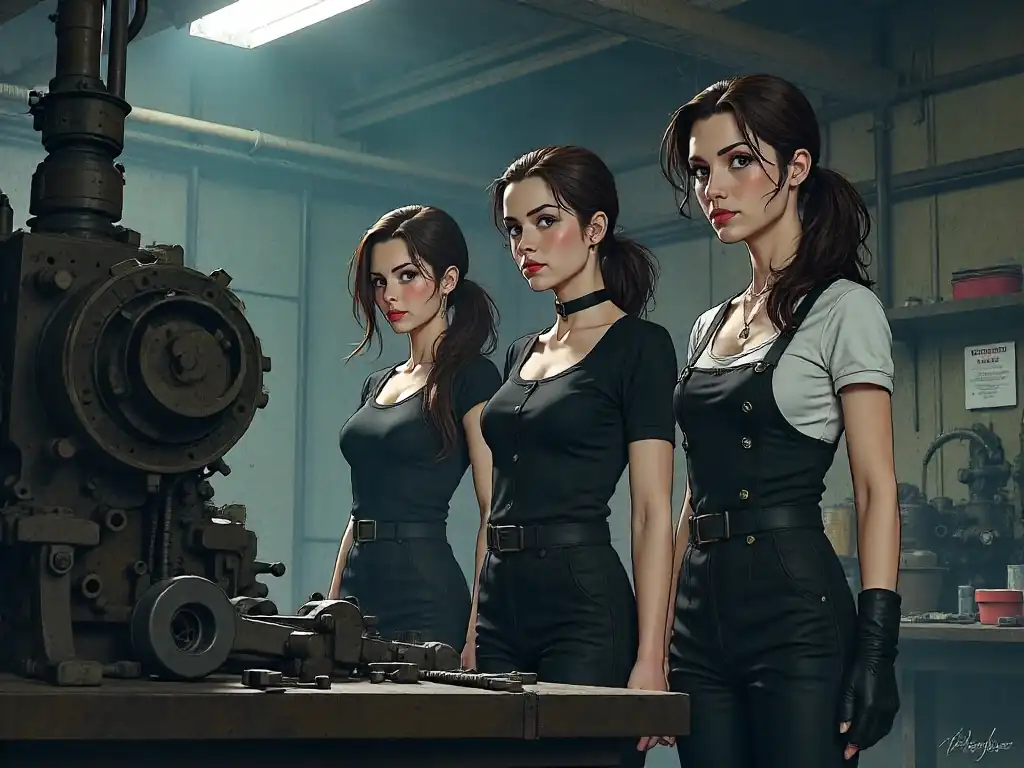
Welcome to WomenInScienceHistory.com!
Dive into the untold stories of brilliant minds and groundbreaking discoveries. Ever wondered about the specific hurdles faced by the first women daring to enter the world of engineering? This article explores the Early women engineering challenges, revealing the prejudice and obstacles these pioneers overcame to shape the world we live in today. Discover their resilience and ingenuity – their stories are waiting to be uncovered!
- Introduction: Pioneering Women in Engineering (1900-1950)
- Early Women Engineering Challenges: A Multifaceted Obstacle
- Strategies for Success: How Women Engineers Broke Barriers
- Case Studies: Groundbreaking Women Engineers and Their Impact
- The Impact of Early Women Engineers on the Field
- Legacy and Lessons Learned: The Enduring Relevance of Their Stories
- Conclusion: Honoring the Trailblazers of Women in Engineering History
-
Frequently Asked Questions
- What were some of the primary social barriers faced by early women engineers?
- How did the lack of mentorship and networking opportunities impact early women engineers?
- What specific forms of discrimination did early women engineers encounter in the workplace?
- What role did education and access to STEM fields play in shaping the careers of early women engineers?
- How did early women engineers contribute to breaking down stereotypes and paving the way for future generations?
- Final Reflection: The Enduring Legacy of Resilience
- Unearth Your Inner Pioneer!
Introduction: Pioneering Women in Engineering (1900-1950)
The Underrepresentation of Women in Early 20th Century Engineering
At the dawn of the 20th century, the field of engineering was overwhelmingly male-dominated, a bastion of technical prowess largely inaccessible to women. Societal norms rigidly dictated women's roles, primarily confining them to domestic spheres or traditionally "feminine" professions like teaching or nursing. Consequently, the presence of women in engineering was negligible; by 1920, the total number of women identified as engineers in the United States was likely in the low hundreds, representing a minuscule fraction—less than 0.1%—of the overall engineering workforce. This stark underrepresentation underscored the formidable barriers that pioneering women had to confront.
Beyond the prevailing social expectations, the very infrastructure of education and industry was not designed to accommodate women in engineering. There were few, if any, female role models in the field, and even fewer clear pathways for women to pursue technical training or secure professional positions. This created a self-reinforcing cycle of exclusion, making it exceptionally difficult for any woman to even consider, let alone enter, a career in engineering, thus laying the groundwork for significant early women engineering challenges.
Setting the Stage: Societal Expectations and Gender Roles
The early 20th century was characterized by deeply entrenched societal expectations that assigned distinct roles based on gender. Women were largely expected to fulfill roles as wives and mothers, with their education and aspirations often geared towards domesticity or supportive, non-technical professions. The notion of a woman engaging in complex mathematical calculations, designing machinery, or overseeing construction projects was often met with incredulity, ridicule, or outright opposition.
These pervasive gender roles created a hostile environment for women aspiring to careers in engineering. Educational institutions were slow to admit women into their engineering programs, and workplaces were even slower to hire or promote them. The prevailing belief was that women lacked the inherent aptitude for technical work, or that their presence would somehow disrupt the male-centric professional environment. This cultural resistance formed a fundamental layer of the early women engineering challenges they would encounter throughout their careers.
Early Women Engineering Challenges: A Multifaceted Obstacle
Overcoming Gender Bias in Engineering Education
Limited Access to Engineering Programs for Women
One of the most immediate and significant early women engineering challenges was the profound lack of access to formal engineering education. Many universities either outright refused to admit women into their engineering departments or placed severe restrictions on their enrollment.
For instance, while institutions like MIT and Cornell eventually opened their doors to women, their initial admissions were often limited, and the women frequently faced segregated facilities or a curriculum subtly designed to discourage their persistence. By the 1920s, a mere handful of universities across the nation offered engineering degrees to women, making the pursuit of a formal education an uphill battle from the outset.
Even when admitted, women often found themselves in a minority of one or two in a classroom of dozens of men. This isolation was compounded by a lack of resources tailored to their needs and an academic environment that often questioned their capabilities. The very act of enrolling in an engineering program became a public statement of defiance against societal norms, requiring immense personal conviction and resilience in the face of institutionalized gender bias.
The Struggle for Recognition in Male-Dominated Classrooms
Once inside the classroom, early women engineers frequently faced an ongoing struggle for intellectual recognition and respect. They were often subjected to subtle microaggressions, dismissive attitudes from professors, and overt skepticism from male peers who doubted their intellectual capacity or commitment to the field. Their contributions might be overlooked, their questions dismissed, or their achievements downplayed, forcing them to work exponentially harder to prove their competence.
This daily struggle extended beyond academic interactions, impacting their ability to form study groups, access informal knowledge networks, or secure crucial faculty recommendations. The burden of constantly proving their worth, simply by virtue of their gender, diverted energy that could have been spent entirely on their studies. This pervasive atmosphere of doubt and undervaluation became a significant, exhausting early women engineering challenge that tested their resolve and passion for the discipline.
Workplace Discrimination: Barriers to Professional Advancement
Unequal Pay and Limited Promotion Opportunities
Even after successfully navigating the educational hurdles, early women engineers encountered pervasive discrimination in the professional sphere, particularly in the form of unequal pay and severely limited promotion opportunities. It was common practice for women to be paid significantly less than their male counterparts for performing the exact same duties and holding the same qualifications. During the World War II era, for example, when women were actively recruited into technical roles, they often earned only 60-70% of a man’s wage for comparable engineering work, a glaring example of the financial early women engineering challenges.
Beyond the wage disparity, the "glass ceiling" was an undeniable reality. Regardless of their experience, technical expertise, or years of dedicated service, women were routinely passed over for promotions to leadership positions. The upper echelons of engineering firms and industrial companies remained almost exclusively male, with women relegated to lower-tier technical roles or support functions, effectively blocking their professional ascent and denying them the recognition their skills deserved.
Exclusion from Key Projects and Leadership Roles
Another critical early women engineering challenge was their systemic exclusion from high-profile projects, crucial decision-making processes, and leadership roles. Women were often assigned to less visible, often tedious, tasks such as drafting, routine calculations, or laboratory research, even if their skills and qualifications made them perfectly capable of managing complex projects or leading teams. This relegating of women to secondary roles prevented them from gaining the hands-on project management experience vital for career progression.
Furthermore, women were frequently excluded from informal professional networks, such as industry associations, social gatherings, or after-hours discussions where critical business relationships were forged and significant decisions often made. This professional isolation further marginalized them, limiting their opportunities for collaboration, mentorship, and the kind of visibility necessary to advance. The combination of formal and informal barriers created a formidable obstacle course for any woman seeking to establish a meaningful and impactful career in engineering.
Strategies for Success: How Women Engineers Broke Barriers
Mentorship and Networking: Building Support Systems
In the face of immense early women engineering challenges, many pioneering women found crucial support through mentorship and the nascent development of informal networks. While formal mentorship programs were rare, some women were fortunate enough to find sympathetic male professors or senior colleagues who recognized their talent and provided guidance, advice, and even advocacy within their male-dominated institutions. These individual relationships often proved invaluable in navigating academic and professional hurdles.
Beyond individual mentors, the few women in the field often sought each other out, forming small, informal networks. These connections provided not only emotional support and a shared understanding of their unique struggles but also practical assistance, such as sharing information about job openings, discussing strategies for dealing with discrimination, or offering technical advice. These nascent support systems were vital for enduring the isolation and systemic biases inherent in their professional journeys.
Excellence in Technical Skills: Proving Their Competence
A universal strategy for early women engineers to overcome skepticism and prejudice was to achieve an undeniable level of technical excellence. They understood that their work had to be not just good, but exceptional, to counter the prevailing belief that women were inherently less capable in technical fields. This often meant working harder, paying more meticulous attention to detail, and producing results that were beyond reproach.
Their impeccable technical skills became their most powerful argument against gender bias. When designs were flawless, calculations precise, and projects successfully executed, it became increasingly difficult for male colleagues and superiors to dismiss their contributions. This commitment to superior technical competence not only earned them grudging respect but also forced open doors that might otherwise have remained closed, demonstrating that skill, not gender, dictated capability.
Perseverance and Resilience: Overcoming Setbacks
The journey of early women engineers was marked by constant setbacks, rejections, and the psychological toll of persistent discrimination. To succeed, they needed extraordinary levels of perseverance and resilience. They learned to navigate professional environments that were often unwelcoming, to shrug off dismissive remarks, and to continue pursuing their goals despite repeated disappointments and the ever-present early women engineering challenges.
Their resilience manifested in various ways: patiently waiting for opportunities, retraining in new sub-disciplines when original paths were blocked, or simply refusing to give up in the face of institutional resistance. This unwavering determination allowed them to not only survive but also to carve out significant careers, laying the groundwork for future generations and proving that passion and tenacity could overcome even the most entrenched societal barriers.
Case Studies: Groundbreaking Women Engineers and Their Impact
Emily Roebling: Chief Engineer of the Brooklyn Bridge
Emily Warren Roebling (1843-1903) stands as a monumental figure in engineering history, embodying the spirit of early women engineers despite her work largely preceding the 1900-1950 timeframe. Her pivotal role in the construction of the Brooklyn Bridge showcased an extraordinary mastery of engineering principles. After her husband, Washington Roebling, the chief engineer, became incapacitated by caisson disease in 1872, Emily stepped into an unprecedented role. She diligently studied higher mathematics, the intricacies of cable construction, stress analysis, and material science, effectively becoming his eyes, ears, and voice on the project.
For over a decade, Emily Roebling served as the vital link between her bedridden husband and the construction site, managing daily operations, liaising with contractors, and interpreting complex technical instructions. Her profound understanding of the bridge's design and construction challenges allowed her to oversee its progress, troubleshoot problems, and ensure its integrity. Her unwavering dedication and profound technical acumen were instrumental in the successful completion of the Brooklyn Bridge in 1883, a testament to her capabilities and an early, powerful demonstration of a woman's capacity to lead a monumental engineering endeavor.
Lillian Gilbreth: Pioneering Industrial Engineer and Efficiency Expert
Lillian Moller Gilbreth (1878-1972) was a trailblazer in industrial engineering, recognized for her groundbreaking application of psychology to improve workplace productivity. Holding a Ph.D. in psychology from Brown University (1915), she, along with her husband Frank Gilbreth, pioneered time-and-motion studies, revolutionizing efficiency in industries. After his death in 1924, she continued their consulting firm, becoming a leading voice in management theory and human factors engineering, eventually becoming the first woman elected to the National Academy of Engineering in 1965.
Gilbreth's innovative approach integrated a deep understanding of human behavior with engineering principles to optimize processes and enhance worker well-being. She designed efficient kitchen layouts, improved surgical procedures by streamlining tool organization, and even invented practical items like the foot-pedal trash can and shelves inside refrigerator doors, all aimed at reducing fatigue and increasing ease of use. Her work directly addressed some of the early women engineering challenges by demonstrating that women could bring unique, human-centered perspectives to the field, expanding its scope beyond traditional mechanical or civil engineering.
Olive Dennis: Second Woman to Graduate from Cornell with a Civil Engineering Degree
Olive Wetzel Dennis (1885-1957) made significant contributions to civil engineering, particularly in the railway industry. She graduated from Cornell University in 1920 with a civil engineering degree, notably becoming the second woman to do so. Her pioneering spirit led her to a groundbreaking role at the Baltimore and Ohio Railroad (B&O), where she was hired as a "service engineer" – a novel position specifically created to improve the passenger experience. This role itself was a testament to B&O's progressive thinking in hiring a woman for such an innovative engineering function amidst prevalent early women engineering challenges.
During her tenure at B&O, Dennis spearheaded numerous innovations focused on passenger comfort and railway design. Her contributions included designing stain-resistant upholstery, developing improved ventilation systems for train cars, introducing individually adjustable seatbacks, and even pioneering the use of fresh flowers in dining cars. Her work transformed railway travel, making it more comfortable, efficient, and aesthetically pleasing for passengers. Olive Dennis exemplified how women engineers could apply their skills to practical, user-centered design, expanding the traditional boundaries of engineering and demonstrating the value of diverse perspectives in the field.
The Impact of Early Women Engineers on the Field
Expanding the Scope of Engineering Innovation
The contributions of early women engineers, often working against formidable early women engineering challenges, were instrumental in expanding the very scope of engineering innovation. Because they were often excluded from traditional, male-dominated projects like bridge building or heavy machinery design, many women gravitated towards, or were assigned, areas that required different perspectives. This led to pioneering work in fields like industrial efficiency, human factors, and user-centered design, areas that were initially overlooked by a predominantly male engineering community.
Their unique insights, often stemming from their lived experiences and a different approach to problem-solving, brought new dimensions to the discipline. For instance, Lillian Gilbreth's focus on psychology in the workplace or Olive Dennis's innovations in passenger comfort demonstrated that engineering was not solely about structural integrity or mechanical function, but also about improving human experience, efficiency, and well-being. This broadened the definition of what engineering could achieve, enriching the field with diverse and vital contributions.
Challenging Gender Stereotypes in STEM
The very presence and success of early women engineers served as a powerful, albeit slow-burning, challenge to deeply ingrained gender stereotypes in STEM. Each degree earned, each project completed, and each professional barrier overcome chipped away at the pervasive notion that women lacked the inherent aptitude for technical work. Their achievements, often accomplished against incredible odds and significant early women engineering challenges, provided concrete evidence that intellectual capability and engineering talent were not confined by gender.
While their numbers remained small for decades, these pioneers acted as living proof that women could not only participate in but also excel in highly technical and demanding fields. Their unwavering dedication and demonstrable expertise gradually began to erode the societal and institutional biases that had long excluded women from engineering, paving the way for a more inclusive future and setting precedents for future generations.
Inspiring Future Generations of Women in Engineering
Perhaps one of the most profound and lasting impacts of early women engineers was their role in inspiring future generations. Though their stories were often underpublicized or even deliberately obscured, the existence of women like Lillian Gilbreth, Olive Dennis, and many others provided crucial, albeit scarce, role models. For young women contemplating a career in STEM, knowing that other women had successfully navigated the male-dominated landscape offered a glimmer of possibility and encouragement.
Their perseverance in the face of significant early women engineering challenges became a testament to what was achievable. As their stories slowly gained recognition, they served as powerful narratives, demonstrating that passion, intelligence, and resilience could overcome systemic barriers. This inspiration was vital in gradually increasing the number of women pursuing engineering degrees and careers in the latter half of the 20th century, laying the foundation for greater diversity in the field.
Legacy and Lessons Learned: The Enduring Relevance of Their Stories
Acknowledging the Ongoing Fight for Gender Equality in Engineering
The struggles and triumphs of early women engineers provide an invaluable historical context for understanding the ongoing fight for gender equality in engineering today. While significant progress has been made since the early 20th century, women still remain underrepresented in many engineering disciplines, particularly at senior leadership levels. Issues like the persistent gender pay gap, subtle forms of bias, and challenges in work-life balance continue to echo the early women engineering challenges, albeit in more nuanced forms.
Their stories serve as a powerful reminder that the fight for equitable representation and opportunity is not a new phenomenon but a continuous journey. Acknowledging the historical barriers faced by these pioneers helps us to identify and address the contemporary obstacles that prevent full gender parity in STEM fields, emphasizing that vigilance and proactive measures are still essential.
Promoting Inclusive Practices in STEM Education and the Workplace
The experiences of early women engineers offer critical lessons for promoting inclusive practices in STEM education and the workplace. Understanding how they were marginalized – through limited access, biased classrooms, and workplace discrimination – informs modern efforts to create truly equitable environments. This includes actively encouraging young girls to pursue STEM subjects, fostering inclusive classroom cultures that value diverse perspectives, and implementing fair hiring, promotion, and retention practices in engineering firms.
Furthermore, the emphasis on mentorship and networking, which proved vital for early women engineers, remains a cornerstone of current diversity initiatives. By actively sponsoring women in engineering, challenging unconscious biases, and creating supportive professional communities, we can dismantle the modern manifestations of early women engineering challenges and ensure that talent, regardless of gender, is recognized and nurtured.
Celebrating the Achievements of Early Women Engineers
To truly honor the trailblazers of women in engineering history, it is imperative to celebrate their achievements and ensure their stories are widely known. For too long, the narratives of these pioneering women were overlooked or relegated to footnotes in historical accounts of engineering. By actively researching, documenting, and publicizing their contributions, we not only give them the recognition they deserve but also enrich the broader history of science and technology.
Celebrating these early women engineers provides powerful role models for current and future generations. Their resilience, ingenuity, and perseverance in the face of immense early women engineering challenges offer compelling narratives that can inspire young women to pursue their dreams in STEM. By shining a light on their legacies, we reinforce the message that engineering is a field for everyone, and that diversity ultimately strengthens innovation and progress.
Conclusion: Honoring the Trailblazers of Women in Engineering History
The journey of early women engineers in the first half of the 20th century was an arduous path paved with formidable early women engineering challenges. From battling pervasive societal expectations and institutional barriers in education to confronting entrenched discrimination and unequal opportunities in the workplace, these pioneers demonstrated extraordinary courage and resilience. Yet, despite the immense obstacles, they not only persisted but also made groundbreaking contributions that expanded the very definition of engineering.
Their stories, exemplified by figures like Emily Roebling, Lillian Gilbreth, and Olive Dennis, are not merely historical footnotes; they are powerful narratives of determination, ingenuity, and unwavering commitment. These trailblazers not only proved their capabilities but also laid essential groundwork, challenging gender stereotypes and inspiring the generations of women who would follow. Honoring their legacy is crucial, not just to acknowledge their past struggles and triumphs, but to inform present efforts and inspire future endeavors towards achieving true gender equality and celebrating the full spectrum of talent in engineering.
Frequently Asked Questions
Early women engineers faced significant social expectations that confined them to domestic roles. They were often discouraged from pursuing careers deemed "unfeminine," and their presence in engineering was met with skepticism and prejudice.
How did the lack of mentorship and networking opportunities impact early women engineers?
The scarcity of female role models and the exclusion from male-dominated professional networks hindered their career advancement. This limited access to informal knowledge sharing and crucial support systems.
What specific forms of discrimination did early women engineers encounter in the workplace?
They faced lower pay, fewer opportunities for promotion, and were often assigned menial tasks regardless of their qualifications. Their expertise was frequently undervalued and dismissed by male colleagues.
What role did education and access to STEM fields play in shaping the careers of early women engineers?
Limited access to quality STEM education, particularly in engineering disciplines, was a major obstacle. Many had to fight for opportunities to prove their intellectual capabilities and gain technical skills.
How did early women engineers contribute to breaking down stereotypes and paving the way for future generations?
Despite facing immense challenges, their persistence and achievements helped challenge gender norms and demonstrate that women could excel in engineering. They became inspiring figures for aspiring female scientists and engineers.
Final Reflection: The Enduring Legacy of Resilience
The stories of early women engineers, detailed throughout this article, are not just historical accounts; they are powerful testaments to the enduring struggle against prejudice and the unwavering pursuit of dreams. Their battles against societal expectations and professional barriers resonate deeply today, reminding us that the fight for true equality in STEM fields is far from over.
The impact of these pioneering women extends far beyond the blueprints they drafted and the structures they built. Their courage paved the way for future generations, challenging deeply ingrained biases and inspiring countless young women to pursue careers in engineering. You educate a man; you educate a man. You educate a woman; you educate a generation.
This African proverb perfectly encapsulates the ripple effect of their achievements, demonstrating how their individual triumphs have collectively shaped a more inclusive and innovative landscape.
As we reflect on the "Early women engineering challenges" and the remarkable resilience displayed by these trailblazers, let us not simply admire their past accomplishments. Instead, let us be inspired to actively dismantle the remaining barriers that hinder women and other underrepresented groups in STEM. Consider how you can contribute to a more equitable future, whether through mentorship, advocacy, or simply challenging your own biases. The legacy of these early women engineers calls us to action, urging us to build a world where talent, not gender, defines success.
Unearth Your Inner Pioneer!
Thank you for exploring the inspiring journeys of these early women engineers! We hope their stories have resonated with you and illuminated the challenges and triumphs of breaking barriers. Now, it's your turn to carry their legacy forward.
- Boldly share their remarkable stories with your network to inspire the next generation of innovators.
- Delve deeper by researching other unsung heroines of STEM and uncover their hidden contributions.
- Consider mentoring a young woman interested in engineering or science, providing guidance and encouragement on her path.
What steps will you take to ensure future generations celebrate equally diverse voices in STEM?