
Beyond Marie Curie: LesserKnown European Women Scientists Making Waves (19001939)

Welcome to WomenInScienceHistory.com!
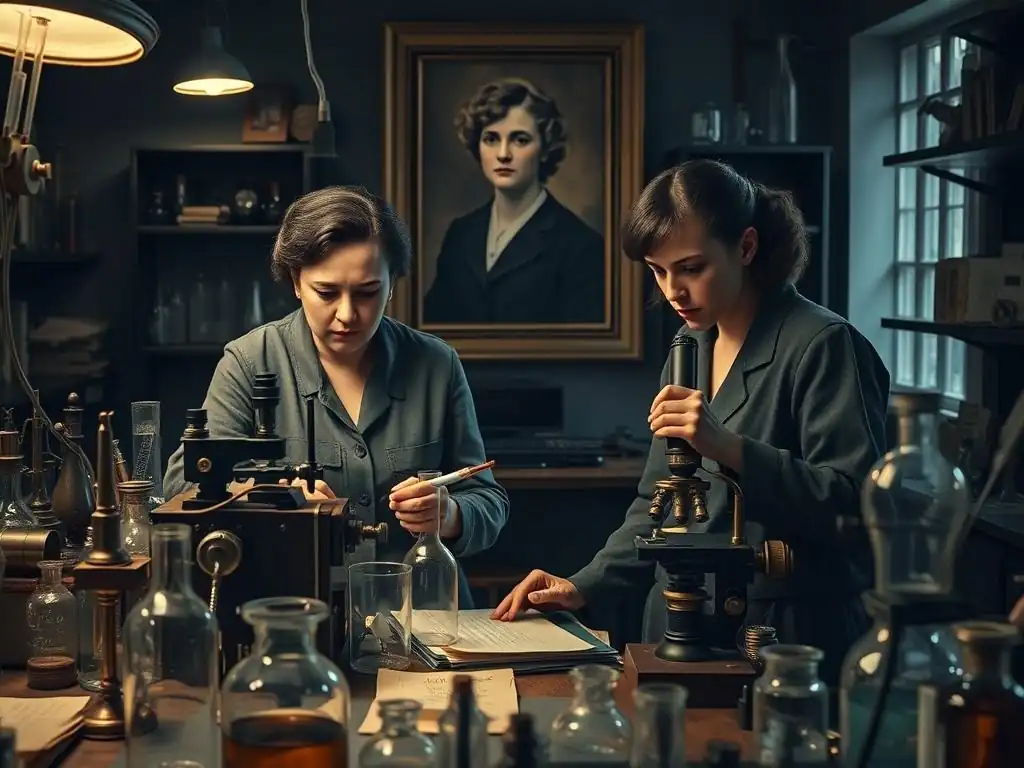
Delve into the captivating untold stories of women who shaped the scientific landscape. This site celebrates their brilliance and resilience, often obscured by historical biases. This week, we're spotlighting a crucial era with " Beyond Marie Curie: Lesser-Known European Women Scientists Making Waves (1900-1939)," exploring the groundbreaking contributions of often-overlooked figures. Discover their pivotal research, the obstacles they overcame, and how their work continues to resonate today. Intrigued? Prepare to be inspired as we uncover the hidden narratives of these remarkable women.
- Introduction: Unveiling the Hidden Figures of European Science (1900-1939)
- Pioneering Women in Physics and Mathematics
- Groundbreaking Discoveries in Chemistry and Biology
- Contributions to Medicine and Healthcare
- Challenges Faced by European Women Scientists (1900-1939)
- The Legacy of These European Women Scientists
- Conclusion: Celebrating the Unsung Heroines of European Science (1900-1939)
-
Frequently Asked Questions
- What were some of the biggest obstacles faced by European women scientists between 1900 and 1939?
- Besides Marie Curie, can you name another prominent European woman scientist from the 1900-1939 period?
- What scientific fields did European women scientists contribute to most significantly during this era?
- Why is it important to highlight the contributions of "lesser-known" European women scientists from this period?
- How can I learn more about these European women scientists who were active between 1900 and 1939?
- Final Reflection: Illuminating Unsung Scientific Pioneers
- Unearth Their Hidden Stories!
The Era of Scientific Advancement and Gender Barriers in Europe
The period between 1900 and 1939 was a crucible of profound scientific transformation across Europe, witnessing the birth of quantum mechanics, the theory of relativity, and the burgeoning fields of nuclear physics and genetics. Major breakthroughs reshaped humanity's understanding of the universe, from the subatomic realm to the cosmos.
Yet, this era of immense intellectual ferment was also characterized by deeply entrenched societal norms and institutional barriers that significantly curtailed the participation and recognition of women in scientific endeavors. Universities, research institutions, and scientific societies, predominantly male-dominated, often imposed formal or informal restrictions on female students and researchers, limiting their access to education, resources, and career progression.
Despite these formidable gender barriers, a remarkable cohort of European women scientists persevered, making fundamental contributions that often went unacknowledged or were attributed to their male colleagues. Their stories are a testament to their intellectual prowess, resilience, and unwavering dedication to scientific inquiry amidst pervasive discrimination. Many of these pioneering European women scientists of the early 20th century carved out niches, sometimes in less prestigious roles, but consistently pushed the boundaries of knowledge, laying groundwork for future discoveries even as they faced an uphill battle for professional acceptance and recognition.
Why Focus on Lesser-Known European Women Scientists?
While figures like Marie Curie rightly stand as icons of scientific achievement, their prominence can inadvertently overshadow the countless other European women scientists who made significant, albeit less celebrated, contributions between 1900 and 1939. This focus on lesser-known figures is crucial for several reasons. Firstly, it rectifies historical inaccuracies and biases, ensuring a more complete and truthful narrative of scientific progress, one that acknowledges the diverse intellects behind breakthroughs. By delving into the lives and work of these unsung heroines, we gain a richer understanding of the complex tapestry of scientific discovery.
Secondly, highlighting these European women scientists from the 1900-1939 era provides invaluable role models for current and future generations. Their stories of perseverance against systemic discrimination, their intellectual rigor, and their groundbreaking insights demonstrate that scientific talent knows no gender. By bringing these narratives to light, we not only celebrate their achievements but also inspire a broader, more inclusive vision of who can be a scientist, fostering greater diversity in STEM fields today and ensuring that the legacies of these pioneering European female researchers are finally given the recognition they deserve.
Pioneering Women in Physics and Mathematics
Emmy Noether: Revolutionizing Abstract Algebra
Emmy Noether, a German mathematician (1882-1935), stands as one of the most influential figures in abstract algebra of the 20th century. Born in Erlangen, Bavaria, she initially faced immense obstacles due to her gender; women were largely barred from university education.
Despite these hurdles, she eventually gained admission to the University of Erlangen, where her father was a mathematics professor, and later pursued her doctorate at the University of Göttingen, then a global hub for mathematics. Her early work focused on algebraic invariants and number theory, but her true genius blossomed in the realm of abstract algebra, where she developed foundational theories that transformed the field.
Noether's profound insights led to the development of critical concepts in ring theory and ideal theory, such as the ascending chain condition on ideals (now known as "Noetherian rings"). Her contributions were so fundamental that many mathematical objects and theorems bear her name. Despite her intellectual brilliance, she struggled immensely to secure a permanent, paid academic position.
At Göttingen, she lectured for years without pay, often under the name of male colleagues like David Hilbert, who famously championed her cause, stating, "I do not see that the sex of the candidate is an argument against her admission [to the faculty]. After all, we are a university, not a bathhouse." She finally received an unsalaried "extraordinary professor" position in 1919, but her true recognition came posthumously.
Noether's Theorem and its Impact on Physics
Beyond her groundbreaking work in pure mathematics, Emmy Noether made an astonishingly impactful contribution to theoretical physics with what is now universally known as Noether's Theorem. Published in 1918, this theorem establishes a profound connection between symmetries in physical systems and conserved quantities. Specifically, it states that for every continuous symmetry of the action of a physical system, there exists a corresponding conservation law. For instance, the symmetry of physical laws under time translation implies the conservation of energy, while spatial translation symmetry leads to the conservation of momentum.
Noether's Theorem is a cornerstone of modern physics, unifying concepts across classical mechanics, quantum mechanics, and quantum field theory. Its elegance and universality have made it indispensable for understanding the fundamental laws of nature.
It provides a powerful framework for physicists, allowing them to derive conservation laws directly from the symmetries inherent in a system's description. The theorem's implications range from understanding the stability of planetary orbits to formulating theories of elementary particles, solidifying Noether's legacy as a pivotal figure not just in mathematics but also among the most influential European women scientists of the early 20th century whose work continues to resonate in contemporary scientific research.
Lise Meitner: Unsung Heroine of Nuclear Fission
Lise Meitner (1878-1968), an Austrian-Swedish physicist, was a central figure in the scientific community that explored radioactivity and nuclear physics during the first half of the 20th century. Born in Vienna, she overcame societal barriers to become only the second woman to earn a doctoral degree in physics from the University of Vienna in 1906. She then moved to Berlin in 1907, beginning a remarkable 30-year collaboration with chemist Otto Hahn at the Kaiser Wilhelm Society.
Their partnership was incredibly productive, leading to significant discoveries in radioactivity, including the identification of several new isotopes and their work on protactinium. Meitner, a brilliant experimentalist and theoretician, was often the conceptual driver behind their joint research.
However, Meitner's career was tragically interrupted by the rise of Nazism. As an Austrian Jew, she was forced to flee Germany in July 1938, escaping to Sweden with just a few possessions. Despite her exile, her intellectual collaboration with Hahn continued through letters and clandestine meetings. It was from Sweden that she received Hahn's perplexing experimental results—barium appeared after bombarding uranium with neutrons. Her interpretation of this data would lead to one of the most significant discoveries of the 20th century.
Meitner's Collaboration with Otto Hahn and the Discovery of Fission
The discovery of nuclear fission is a complex narrative where Lise Meitner's contribution is often overlooked, a glaring omission in the history of European women scientists. In late 1938, Otto Hahn and Fritz Strassmann, continuing their experiments in Berlin, found that bombarding uranium with neutrons produced elements lighter than uranium, specifically barium. They were baffled by this result, which defied all existing nuclear models. Hahn wrote to Meitner, describing the "barium puzzle," and it was Meitner, along with her nephew, physicist Otto Frisch, who provided the groundbreaking theoretical explanation.
During a Christmas walk in Sweden in December 1938, Meitner and Frisch used Niels Bohr's "liquid drop model" of the nucleus to explain how a uranium nucleus could split into two smaller nuclei when hit by a neutron, releasing an enormous amount of energy. They calculated that the mass difference between the original uranium nucleus and the resulting lighter elements accounted for approximately 200 million electron volts of energy, precisely predicted by Einstein's E=mc² equation.
Frisch coined the term "fission" for this process. Their interpretation was published in Nature in January 1939, just weeks after Hahn and Strassmann's experimental paper.
Despite her pivotal role in conceptualizing and explaining nuclear fission, only Otto Hahn received the Nobel Prize in Chemistry in 1944, a decision widely regarded as one of the most significant injustices in Nobel history and a stark example of the gender bias faced by European women scientists during this period.
Hertha Ayrton: Breaking Barriers in Electrical Engineering and Physics
Phoebe Sarah Hertha Ayrton (1854-1923) was a formidable British engineer, mathematician, and inventor whose pioneering work significantly advanced understanding in electrical engineering and fluid dynamics. Born in Portsea, Hampshire, she showed early promise in mathematics, attending Girton College, Cambridge, where she studied mathematics. Despite passing the Mathematical Tripos exam in 1880, Cambridge did not grant degrees to women until 1948, so she received an external degree from the University of London in 1881.
Ayrton's career was marked by a relentless pursuit of knowledge and a determination to overcome the systemic barriers facing women in science. She became the first woman to be elected to the Institution of Electrical Engineers in 1899 and the first woman to read her own paper before the Royal Society in 1904, though she was never formally admitted as a Fellow due to her gender.
Ayrton's innovative spirit led to numerous inventions and patents, including a line divider for dividing a line into any number of equal parts and an improved arc lamp. She was also a passionate advocate for women's suffrage and education, embodying the resilience and intellectual prowess of European women scientists challenging the status quo in the early 20th century. Her groundbreaking research was often conducted with limited institutional support, a common challenge for female researchers of her time.
Ayrton's Research on Electric Arcs and Sand Ripples
Hertha Ayrton's most significant scientific contributions during the early 1900s focused on the electric arc, a prevalent technology in lighting and industrial applications but one poorly understood at the time. Electric arcs were prone to flickering and hissing, issues that limited their practical utility. Ayrton conducted meticulous experiments, observing the behavior of carbon electrodes in arc lamps.
Her detailed investigations revealed the relationship between the current, potential difference, and the length of the arc, demonstrating that the arc's stability depended on the properties of the carbon vapor produced. She published her comprehensive findings in "The Electric Arc" (1902), a definitive textbook that became a standard reference for electrical engineers and cemented her reputation as a leading authority in the field. Her work led to the development of more stable and efficient arc lamps, greatly improving their practical application.
Beyond electrical engineering, Ayrton also made notable contributions to fluid dynamics and the study of sand ripples. During World War I, she developed the "Ayrton fan" to clear poisonous gases from trenches, a testament to her practical application of scientific principles. Her research into the formation and movement of sand ripples on beaches and the dynamics of water vortices provided fundamental insights into sediment transport and fluid mechanics.
This work, though seemingly disparate from her electrical research, showcased her versatile scientific mind and her ability to apply rigorous experimental methods to diverse physical phenomena. Her multidisciplinary approach and her significant publications underscore her status as one of the influential European women scientists of her era, whose work had tangible impacts on both technology and fundamental science.
Groundbreaking Discoveries in Chemistry and Biology
Dorothy Wrinch: Mathematical Approaches to Protein Structure
Dorothy Wrinch (1894-1976) was a British mathematician and theoretical chemist, a pioneering figure in the nascent field of structural biology. Educated at Girton College, Cambridge, she excelled in mathematics, becoming the first woman to earn a First Class degree in Mathematical Tripos. Her academic career was marked by her bold attempts to apply rigorous mathematical principles to solve complex problems in chemistry and biology, particularly the elusive structure of proteins. In an era when the three-dimensional arrangement of biological macromolecules was largely unknown, Wrinch stood out for her audacious theoretical proposals.
Wrinch's work was highly interdisciplinary, bridging mathematics, chemistry, and biology, a rarity for European women scientists of her time. She was deeply interested in the geometry of molecules and believed that mathematical symmetry could unlock the secrets of biological structures. Her most famous, and controversial, contribution was the "Cyclol theory," which she developed in the mid-1930s. This theory represented a significant intellectual leap, proposing a specific, highly ordered, and symmetrical architecture for proteins, based on a novel chemical rearrangement of amino acid residues.
Wrinch's Cyclol Model and its Controversies
Dorothy Wrinch's Cyclol model, proposed in 1936, posited that proteins formed a specific type of cage-like structure, with amino acid chains linked by cyclol bonds (a theoretical rearrangement of peptide bonds). She suggested that these structures, particularly the C60 cyclol (a tetrahedral arrangement of 60 amino acid residues), could explain the regularities observed in protein crystals and the fixed molecular weights of certain proteins. Her model was highly geometric and symmetric, reflecting her mathematical background, and it offered a concrete, albeit speculative, three-dimensional representation of proteins at a time when experimental data was extremely limited.
The Cyclol theory generated intense debate and controversy within the scientific community, particularly with prominent figures like Linus Pauling. While the Cyclol model was eventually disproven by later X-ray crystallography work (which revealed the alpha-helix and beta-sheet structures), its significance lies not in its ultimate correctness, but in its role as a catalyst for rigorous scientific inquiry.
Wrinch's bold hypothesis forced chemists and biologists to confront the problem of protein structure head-on, stimulating critical thinking, experimental design, and the development of new analytical techniques. Her work, though controversial, undeniably pushed the field forward, highlighting her as a visionary among European women scientists who dared to challenge conventional wisdom and apply novel approaches to fundamental biological questions during the 1900-1939 period.
Ida Noddack: Challenging the Discovery of Nuclear Fission
Ida Noddack (1896-1978), a German chemist and physicist, was a remarkable figure known for her meticulous experimental work and her insightful, albeit sometimes controversial, theoretical interpretations. Educated at the Technical University of Berlin, she became one of the first women in Germany to hold a professional position in chemistry. Her career was largely a collaboration with her husband, Walter Noddack, and together they made significant contributions to analytical chemistry.
Their most famous achievement was the co-discovery of element 75, Rhenium, in 1925, the last naturally occurring element to be discovered. This discovery showcased her formidable skills in chemical analysis and separation techniques.
Noddack's intellectual independence and willingness to challenge established scientific dogmas were particularly evident in her critique of early nuclear physics experiments. While many European women scientists of her era faced an uphill battle for recognition, Noddack was unafraid to voice dissenting opinions, even when they contradicted the leading figures in the field. Her critical thinking led her to a remarkably prescient hypothesis regarding the fate of heavy nuclei under neutron bombardment.
Noddack's Criticism and Early Suggestion of Fission
In 1934, Enrico Fermi, a leading physicist, published results from his experiments bombarding uranium with neutrons, claiming to have produced transuranic elements (elements heavier than uranium). While many scientists accepted Fermi's interpretation, Ida Noddack published a short paper in Zeitschrift für Angewandte Chemie that same year, offering a radical alternative. She critically analyzed Fermi's experimental setup and conclusions, pointing out that he had not adequately ruled out the possibility of lighter elements being formed.
In her paper, Noddack boldly proposed: "It is conceivable that when neutrons are used to bombard heavy nuclei, these nuclei might break up into several large fragments which are isotopes of known elements, but not neighbors of the elements subjected to irradiation." This statement, made four years before Hahn and Strassmann's experimental discovery and Meitner and Frisch's theoretical explanation of nuclear fission, was an astonishingly accurate prediction.
Unfortunately, her suggestion was largely ignored by the scientific community at the time, partly because it was so revolutionary and lacked experimental proof, and partly due to the prevailing biases against the contributions of European women scientists. Despite its initial dismissal, Noddack's hypothesis stands as a testament to her sharp scientific intuition and her willingness to question the accepted wisdom, cementing her place as a visionary among the European women scientists of the 1900-1939 period.
Gerty Cori: Elucidating Carbohydrate Metabolism
Gerty Cori (1896-1957), a Czech-American biochemist, was a pivotal figure in understanding carbohydrate metabolism, a field she revolutionized with her husband, Carl Cori. Born Gerty Theresa Radnitz in Prague, then part of Austria-Hungary (now the Czech Republic), she received her medical degree from the German University of Prague in 1920. Her early education and formative years in Europe provided the foundation for her rigorous scientific approach.
In 1922, she emigrated to the United States with Carl, where their collaborative research blossomed, primarily at Washington University in St. Louis. Their work, much of which occurred within the 1900-1939 timeframe, focused on how the body processes sugars and starches, unraveling complex biochemical pathways.
Gerty Cori's research was characterized by meticulous experimentation and an unparalleled ability to conceptualize intricate metabolic cycles. Her contributions were not only groundbreaking but also laid the methodological groundwork for future biochemical investigations. She faced significant professional hurdles in the United States, often being denied faculty positions or receiving lower pay than her male counterparts, a common experience for even the most brilliant European women scientists who emigrated in the early 20th century.
Cori's Cycle and the Discovery of Glucose-1-Phosphate
Gerty Cori's most celebrated contributions include the elucidation of the "Cori cycle" and the discovery of glucose-1-phosphate. Throughout the 1930s, the Coris meticulously researched glycogen metabolism, the process by which the body stores and utilizes glucose. Their work culminated in the description of the Cori cycle, published in seminal papers during this decade.
This cycle explains the interconversion of lactate and glucose between muscle and liver: during strenuous activity, muscles produce lactate, which is then transported to the liver and converted back into glucose, which can then be returned to the muscles. This fundamental cycle provided critical insights into energy production and glucose homeostasis in the human body.
Further solidifying their impact, in 1936, Gerty and Carl Cori isolated and identified glucose-1-phosphate, an intermediate compound in glycogen breakdown. This molecule, often referred to as the "Cori ester," was crucial for understanding how glycogen is synthesized and degraded. Its discovery provided a missing piece in the puzzle of carbohydrate metabolism, demonstrating the enzymatic steps involved in energy storage.
For their groundbreaking work on carbohydrate metabolism, Gerty Cori, along with Carl Cori and Bernardo Houssay, was awarded the Nobel Prize in Physiology or Medicine in 1947. Gerty Cori was the first woman to win a Nobel Prize in a scientific field, a testament to the profound impact of her research largely completed in the 1930s, making her an exemplary figure among European women scientists who shaped modern biochemistry.
Contributions to Medicine and Healthcare
Elsie Widdowson: Pioneering Nutrition Research
Elsie Widdowson (1906-2000) was a towering figure in British nutrition science, whose meticulous research fundamentally reshaped our understanding of human dietary requirements and food composition. Born in London, she pursued her education at Imperial College London and King's College London, where she studied chemistry and later obtained her PhD in dietetics.
Her career, which began in the mid-1930s, was defined by an extraordinary collaboration with Robert McCance, a partnership that would last for over 60 years and produce seminal works in nutritional science. Widdowson's rigorous experimental approach and her commitment to real-world applications of her research made her a unique and invaluable asset to public health.
Widdowson and McCance's work was particularly crucial during a period of significant social and economic upheaval in Europe, including the looming threat of World War II. Their research was not confined to the laboratory; they famously engaged in self-experimentation to understand nutrient absorption, even subjecting themselves to restricted diets to simulate rationing conditions. This hands-on, practical approach, combined with their scientific rigor, set them apart and made their findings exceptionally relevant for public health policy.
Widdowson's Groundbreaking Work on Human Dietary Requirements
Elsie Widdowson's most enduring legacy stems from her groundbreaking work with Robert McCance on the chemical composition of foods and human dietary requirements. Their magnum opus, "The Chemical Composition of Foods," first published in 1940 but based on extensive research conducted throughout the 1930s, became an indispensable reference text for nutritionists, dietitians, and public health officials worldwide. This book provided detailed data on the nutrient content of hundreds of food items, a critical resource for understanding diet and disease. Before their work, such comprehensive and accurate data was largely unavailable.
Beyond compiling food composition data, Widdowson and McCance conducted pioneering studies on mineral metabolism, particularly iron absorption. Their experiments in the 1930s demonstrated that the body's absorption of iron varied significantly depending on the food source, challenging prevailing assumptions. They also investigated the effects of diet on growth and development, contributing vital knowledge that informed public health policies on child nutrition.
Their research during this period directly influenced wartime rationing in the UK, ensuring that the population received adequate nutrition despite severe food shortages. Elsie Widdowson's profound impact on nutrition science firmly establishes her as one of the most influential European women scientists in public health during the 1900-1939 era.
Dame Janet Vaughan: Advancing Blood Transfusion and Hematology
Dame Janet Maria Vaughan (1899-1993) was a distinguished British physiologist and hematologist whose foundational work in the 1930s significantly advanced blood transfusion practices and our understanding of blood disorders. Born in Clifton, Bristol, she was educated at Oxford University, where she studied physiology and medicine. Vaughan's early career was marked by her dedication to laboratory research and clinical practice, focusing on the complex processes of blood formation and diseases affecting the bone marrow. Her commitment to rigorous scientific inquiry and her practical approach to medical problems made her a leading figure in British medicine.
Vaughan's foresight and leadership were particularly evident in the late 1930s, as Europe braced for armed conflict. She recognized the urgent need for efficient blood storage and transfusion systems to manage casualties, a foresight that would prove critical during World War II. Her work laid the essential groundwork for modern blood banking, transforming emergency medical care and saving countless lives. She consistently pushed the boundaries of medical knowledge, embodying the spirit of innovation among European women scientists in healthcare during this critical period.
Vaughan's Contributions to Blood Storage and Transfusion Practices
Throughout the 1930s, Dame Janet Vaughan dedicated herself to solving the critical challenge of blood storage and transfusion. At the time, blood transfusions were often performed directly from donor to recipient because blood could not be stored for long periods. Vaughan's research at University College Hospital, London, focused on finding effective ways to preserve blood, making it readily available for medical emergencies. Her investigations centered on anticoagulants and preservatives, leading to significant breakthroughs.
In 1937, Vaughan was instrumental in establishing one of the very first blood banks in London, a revolutionary concept that allowed hospitals to store blood for later use. Her research demonstrated the effectiveness of using sodium citrate as an anticoagulant, which prevented blood from clotting, and explored methods to extend the viability of stored blood from a few hours to several days. This breakthrough was monumental, transforming blood transfusion from an immediate, cumbersome procedure into a life-saving medical staple.
As World War II approached, her efforts ensured that the UK was prepared to provide blood transfusions on an unprecedented scale, significantly reducing mortality rates among wounded soldiers and civilians. Dame Janet Vaughan's pioneering work in blood banking and hematology stands as a testament to the vital contributions of European women scientists to public health and emergency medicine in the 1900-1939 era.
Challenges Faced by European Women Scientists (1900-1939)
Gender Bias and Discrimination in Academia
European women scientists between 1900 and 1939 faced pervasive gender bias and systemic discrimination within the academic and scientific establishments. Universities and research institutions, largely male-dominated bastions, often denied women admission to certain programs, restricted their access to laboratories, or prevented them from holding tenured or full professorship positions. Even when women excelled, their achievements were frequently downplayed or ignored, a phenomenon known as the "Matilda effect."
For instance, Emmy Noether struggled for years to gain a paid professorship at Göttingen, despite being universally recognized as a mathematical genius, often teaching under male colleagues' names. Lise Meitner, despite her pivotal role in nuclear fission, was infamously denied the Nobel Prize awarded solely to Otto Hahn, a stark example of such bias.
Furthermore, female researchers often received lower salaries, fewer resources, and less recognition than their male counterparts for equivalent work. They were frequently relegated to assistant roles or positions with limited opportunities for advancement, even if they were the intellectual drivers of a project.
Hertha Ayrton, a brilliant electrical engineer, was repeatedly denied full fellowship in the Royal Society despite her numerous patents and publications, simply because of her gender. This entrenched discrimination meant that even the most talented European women scientists had to work significantly harder to prove their worth, often battling against an invisible but powerful wall of prejudice that actively undermined their careers and contributions.
Limited Access to Funding and Resources
Beyond overt discrimination, European women scientists of the early 20th century frequently encountered severe limitations in accessing crucial funding and research resources. Scientific research, particularly in fields like physics, chemistry, and medicine, often required expensive equipment, dedicated laboratory space, and financial support for experiments and personnel. Women were disproportionately disadvantaged in securing grants, endowments, or institutional budgets for their projects, often having to rely on personal funds, the patronage of sympathetic male colleagues, or positions in less prestigious institutions.
This scarcity of resources directly impacted their ability to conduct large-scale, cutting-edge research. Many were forced to work in suboptimal conditions or with outdated equipment, hindering their progress and the scope of their investigations. For example, some early female researchers had to conduct experiments in makeshift labs or work unpaid, relying on the goodwill of department heads. This lack of equitable access to funding and state-of-the-art facilities meant that even the most brilliant European women scientists were often constrained in their potential impact, their discoveries sometimes delayed or diminished due to the systemic under-resourcing of their endeavors.
Balancing Scientific Careers with Societal Expectations
Perhaps one of the most insidious challenges faced by European women scientists between 1900 and 1939 was the immense pressure to conform to prevailing societal expectations regarding women's roles. Society largely dictated that a woman's primary duty was marriage, motherhood, and domesticity. Pursuing a demanding scientific career was often seen as antithetical to these expectations, leading to immense personal and professional conflicts. Many brilliant women were forced to choose between a family life and a scientific career, a choice rarely imposed on their male counterparts.
For those who chose to pursue science, balancing these societal pressures with the rigorous demands of research was incredibly difficult. Institutions rarely provided support systems like childcare, and societal norms often meant that married women were expected to prioritize their husbands' careers or domestic duties over their own professional ambitions.
Many European women scientists, such as Emmy Noether, remained unmarried or childless to fully dedicate themselves to their work, a sacrifice that highlights the extraordinary personal cost of their scientific pursuits. This constant tension between personal aspirations and societal dictates added another layer of complexity to the already challenging path of a female scientist in the early 20th century.
The Legacy of These European Women Scientists
Inspiring Future Generations of Women in STEM
The stories of these lesser-known European women scientists from 1900 to 1939 serve as profoundly inspiring narratives for future generations of women in STEM. By shedding light on their intellectual brilliance, their perseverance in the face of formidable gender barriers, and their groundbreaking contributions, we provide tangible role models that extend beyond the widely recognized figures. Learning about women like Emmy Noether, whose mathematical abstractions underpin modern physics, or Lise Meitner, who provided the theoretical key to nuclear fission, demonstrates that women have always been at the forefront of scientific discovery, despite systemic efforts to marginalize them.
These historical accounts empower young women and girls by showing that scientific excellence is not limited by gender. They illustrate resilience, critical thinking, and unwavering dedication, qualities essential for any successful scientific career. By recognizing the struggles and triumphs of these pioneering European women in science, we not only give them their deserved place in history but also foster a sense of possibility and belonging for contemporary and future female scientists, encouraging them to pursue their passions in STEM with confidence and determination.
Recognizing the Importance of Inclusive Science History
The effort to recover and celebrate the contributions of these European women scientists from the 1900-1939 era is crucial for developing a truly inclusive and accurate history of science. For too long, the narrative of scientific progress has been presented as predominantly male, overlooking or minimizing the significant roles played by women.
A more inclusive history acknowledges that scientific advancement is a collective human endeavor, enriched by diverse perspectives and talents. By integrating the stories of figures like Ida Noddack, who presciently suggested nuclear fission, or Elsie Widdowson, who revolutionized nutrition, we gain a far richer and more nuanced understanding of how scientific knowledge has evolved.
Recognizing the full scope of their contributions not only rectifies past injustices but also helps to dismantle persistent stereotypes about women's capabilities in science. It highlights how societal structures and biases have historically shaped who gets recognized and how scientific credit is distributed. By actively seeking out and celebrating these often-overlooked narratives of European women scientists, we contribute to a more equitable and representative scientific community, one that values diversity and ensures that all contributions, regardless of gender, are properly acknowledged and celebrated for their impact on human knowledge.
Conclusion: Celebrating the Unsung Heroines of European Science (1900-1939)
The Ongoing Effort to Recover Lost Histories of Women Scientists
The period between 1900 and 1939 represents a pivotal, yet often understated, chapter in the history of European women scientists. While breakthroughs in physics, chemistry, and biology were rapidly transforming the world, countless brilliant female minds worked tirelessly, often in the shadows, against formidable societal and institutional barriers.
Their stories, like those of Emmy Noether, Lise Meitner, Hertha Ayrton, Dorothy Wrinch, Ida Noddack, Gerty Cori, Elsie Widdowson, and Dame Janet Vaughan, are not mere footnotes but integral components of scientific progress. The ongoing effort to recover these lost histories is a vital endeavor, aimed at correcting historical omissions and providing a more comprehensive and truthful account of scientific discovery.
This collective work, undertaken by historians, feminist scholars, and dedicated institutions, is essential for demonstrating the pervasive impact of gender bias in science and ensuring that the legacies of these pioneering European women in science are finally given their rightful prominence. By bringing these narratives to light, we not only honor their individual achievements but also reveal the systemic challenges they overcame, offering valuable lessons for fostering greater equity and inclusion in contemporary scientific fields. The recognition of these unsung heroines is not merely about the past; it is about shaping a more just and inspiring future for science.
Further Research and Resources on European Women in Science
The narratives explored in this article represent just a fraction of the remarkable contributions made by European women scientists during the 1900-1939 period. Many other women dedicated their lives to scientific inquiry, often making significant advancements that remain largely unrecognized in mainstream historical accounts. Continued research into archives, personal letters, and lesser-known publications is essential to unearth more of these invaluable stories. Exploring the specific institutional contexts in which these women worked, the networks they formed, and the specific societal pressures they navigated can provide deeper insights into their experiences and achievements.
For those inspired to delve further, numerous academic articles, biographies, and digital archives are increasingly dedicated to highlighting the contributions of these pioneering European women scientists. Organizations focused on women in STEM and historical science societies are continuously compiling resources that illuminate their lives and work. By actively seeking out and engaging with these resources, we contribute to a richer, more accurate understanding of scientific history and ensure that the vital legacies of these extraordinary European female researchers from the early 20th century continue to inspire and educate future generations.
Frequently Asked Questions
What were some of the biggest obstacles faced by European women scientists between 1900 and 1939?
Many faced significant gender bias in accessing education and research opportunities. They were often excluded from prestigious positions and struggled for recognition of their work.
Besides Marie Curie, can you name another prominent European woman scientist from the 1900-1939 period?
Lise Meitner was a crucial figure in nuclear physics, though often overshadowed. Her contributions to the discovery of nuclear fission were initially overlooked.
What scientific fields did European women scientists contribute to most significantly during this era?
They made substantial contributions to fields like physics, chemistry, and biology. Many also excelled in medicine and mathematics, despite societal limitations.
Why is it important to highlight the contributions of "lesser-known" European women scientists from this period?
It's crucial to provide a more complete and accurate historical record. Recognizing their achievements helps to challenge stereotypes and inspire future scientists.
How can I learn more about these European women scientists who were active between 1900 and 1939?
Websites like WomenInScienceHistory.com offer biographies and articles. Further research can be done through academic journals and historical archives to uncover their stories.
Final Reflection: Illuminating Unsung Scientific Pioneers
The stories we've unearthed, detailing the contributions of lesser-known European women scientists between 1900 and 1939, resonate profoundly today. While Marie Curie's legacy shines brightly, it's crucial to remember that she was not alone. These women, often facing immense societal barriers, persevered to advance scientific knowledge, and their work continues to inform and inspire contemporary research.
This exploration has underscored the persistent need to actively seek out and celebrate the overlooked narratives within scientific history. Their struggles and triumphs serve as a potent reminder of the systemic biases that have historically marginalized women in STEM fields. The history of science is not just a history of great men, but a history of great minds, regardless of gender.
This quote encapsulates the essence of why uncovering these stories is so vital – it enriches our understanding of scientific progress and challenges us to create a more inclusive future.
Now, consider the implications of these untold stories. How can we, as individuals and as a society, actively champion the voices of those who have been historically silenced? Let us commit to seeking out and amplifying the contributions of underrepresented groups in all fields, ensuring that future generations inherit a more complete and equitable understanding of our shared human story. Let the dedication and resilience of these European women scientists inspire you to challenge the status quo and advocate for a world where every voice is heard and valued.
Thank you for delving into the remarkable lives of these often-overlooked women scientists! You've uncovered a hidden chapter in scientific history, and now it's time to amplify their impact.
- Nominate a deserving, but lesser-known woman scientist (1900-1939) from your country to be featured on WomenInScienceHistory.com. Let's broaden the recognition!
- Share this article with three friends who appreciate untold stories and need a dose of inspiration.
- Delve deeper: Research a woman scientist mentioned and share an interesting fact you discover in the comments below.
Which underappreciated woman scientist from your country will you champion?