
Pioneering Programmers: The Women Who Wrote the Code for Cold War Supremacy

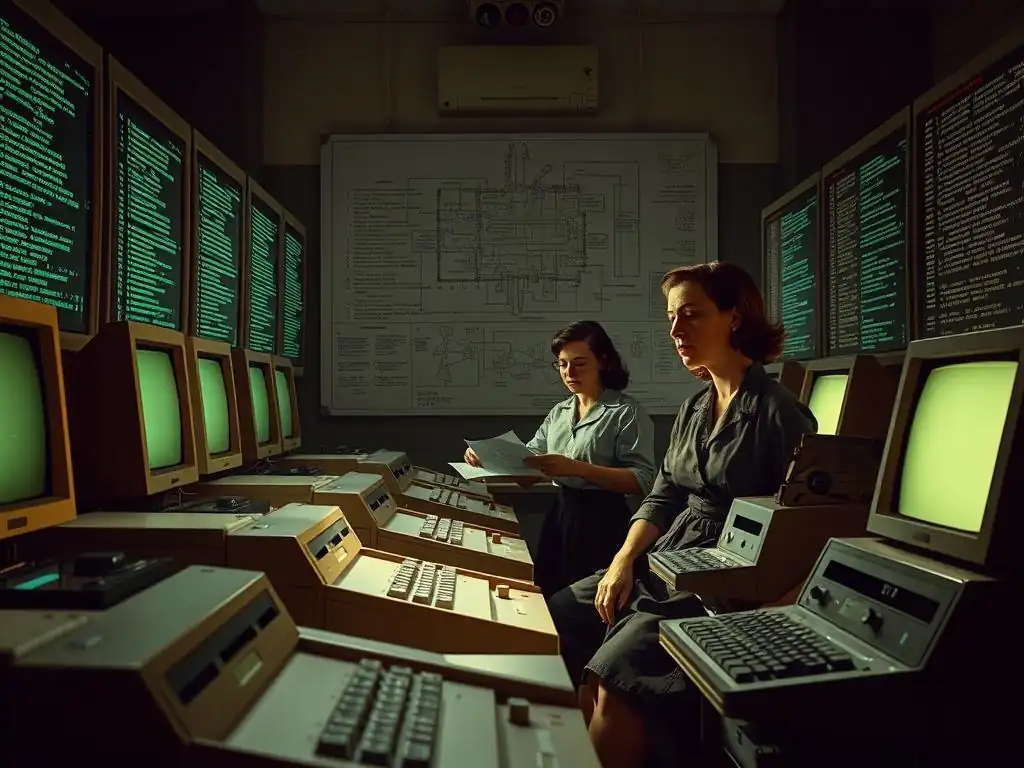
Welcome to WomenInScienceHistory.com!
Delve into the captivating world of women's scientific achievements. Did you know that some of the most crucial code during the Cold War was written by unsung female programmers? Explore our site to uncover their stories and discover how their contributions shaped history, starting with our featured article: "Pioneering Programmers: The Women Who Wrote the Code for Cold War Supremacy." Prepare to be amazed by the brilliance and resilience of these often-overlooked figures and the challenges they overcame.
- Introduction: Unsung Heroines of the Cold War - Women in Programming
- The Rise of Women in Early Computing: A Historical Context
- Key Figures: Profiles of Women Coders Shaping Cold War Technology
- Cold War Coding Projects: Women Programmers' Impact
- The Legacy of Women Programmers in Cold War Code
- The Importance of Preserving the History of Women in Cold War Computing
- Conclusion: Celebrating the Achievements of Women Programmers and Their Cold War Legacy
-
Frequently Asked Questions
- What role did women play in programming during the Cold War?
- Why were women often hired for programming positions during this era?
- What kinds of challenges did women programmers face during the Cold War?
- What specific types of code did women programmers contribute to during the Cold War?
- How does WomenInScienceHistory.com aim to address the lack of recognition for these women?
- Final Reflection: Honoring the Silent Architects of Innovation
- Ignite Your Inner Codebreaker: Step into History!
Introduction: Unsung Heroines of the Cold War - Women in Programming
The Critical Role of Code in the Cold War Era
The Cold War was not just a geopolitical standoff; it was also a technological arms race, where computational superiority often dictated strategic advantage. At the heart of this race was software – the intricate code that powered everything from ballistic missile guidance systems to early warning radar networks. The ability to process vast amounts of data, simulate complex scenarios, and automate critical defense functions became paramount. Early computers, such as the ENIAC (Electronic Numerical Integrator and Computer) or later the UNIVAC (Universal Automatic Computer), though rudimentary by today's standards, represented a revolutionary leap in data processing capabilities. Their effective utilization, however, hinged entirely on the precise and innovative code developed by a burgeoning field of specialists. This code was the silent weapon, enabling real-time calculations for aircraft trajectories, cryptographic analysis, and the complex logistics of military operations, making it an indispensable component of Cold War supremacy.
The demand for sophisticated computational power surged dramatically throughout the 1950s and 1960s, driven by the escalating tensions between the U.S. and the Soviet Union. Whether for the precise targeting of intercontinental ballistic missiles, the development of sophisticated air defense systems like SAGE, or the ambitious goals of the Space Race, every major Cold War initiative relied on the meticulous crafting of software. This era saw the birth of modern computing as a discipline, with programming evolving from a niche skill into a critical profession. The sheer volume of data and the complexity of the problems presented necessitated an entirely new workforce dedicated to translating human logic into machine instructions. This intellectual frontier, surprisingly, was largely populated by a group of pioneers whose contributions have only recently begun to receive the recognition they deserve.
Introducing the Women Programmers Behind Cold War Technology
While the narrative of Cold War technological advancement often highlights male engineers and scientists, a significant and often overlooked truth is that many of the foundational programs and systems were developed by women programmers Cold War code. In the early days of computing, the role of "computer" was often filled by women, who performed complex mathematical calculations by hand. As machines took over these computations, many of these skilled women transitioned naturally into the new field of programming. They were the unsung heroines who meticulously crafted the code that controlled everything from missile trajectories to the guidance systems of space missions. Their contributions were not merely supportive; they were fundamental to the operational success and strategic capabilities of the United States and its allies.
These pioneering female coders of the Cold War played an instrumental role in shaping the digital landscape of the era. They tackled immense challenges, from debugging temperamental machines to devising entirely new methods for organizing and executing computational tasks. Their work laid the groundwork for modern software engineering, establishing best practices and innovative solutions in an environment where few precedents existed. Without their dedication, intellectual prowess, and painstaking attention to detail, many of the technological marvels and strategic advantages gained during the Cold War would have been impossible. Their stories illuminate a crucial chapter in both computing history and the broader narrative of women's impact on science and technology.
The Rise of Women in Early Computing: A Historical Context
Why Women Excelled in Early Programming Roles
In the nascent stages of the computing industry, particularly from the 1940s through the 1960s, programming was often perceived as a clerical or administrative task, akin to data entry or operating complex machinery. This perception, coupled with the post-World War II societal shifts, created an unexpected opportunity for women. As men returned from the war and sought careers in more traditionally prestigious fields like hardware engineering or management, programming roles were increasingly filled by women. They were valued for their perceived meticulousness, patience, and ability to handle repetitive, detail-oriented work—qualities essential for debugging early, temperamental machines and writing thousands of lines of precise code. This led to a significant proportion of early programmers being women, with some estimates suggesting that women constituted over 50% of the programming workforce in certain sectors during the 1950s.
Furthermore, many women who entered programming had strong backgrounds in mathematics, physics, or engineering, having been encouraged to pursue these fields during wartime when male labor was scarce. For instance, the original six programmers of the ENIAC, all women, were mathematicians who had previously worked as human "computers" for the U.S. Army. Their analytical skills, logical thinking, and problem-solving abilities translated seamlessly into the demands of writing code. This unique confluence of societal perception, workforce dynamics, and inherent aptitude allowed women programmers Cold War code to not just participate but to excel and innovate in a field that would later become overwhelmingly male-dominated. They established programming as a distinct intellectual discipline, laying much of the foundational theory and practice.
Overcoming Barriers: Challenges Faced by Female Programmers
Despite their critical contributions and undeniable talent, women programmers in the Cold War era faced significant systemic barriers and gender-based discrimination. Often relegated to lower pay scales and denied opportunities for promotion into management or advanced research roles, their work was frequently undervalued or even attributed to their male colleagues. The perception of programming as a "pink-collar" job meant that as the field gained prestige and higher salaries, men increasingly entered it, pushing women out of leadership positions and, in some cases, out of the field entirely. This shift began in the late 1960s and accelerated through the 1970s, leading to a dramatic decline in the percentage of women in computing science roles.
Beyond wage disparities and limited career progression, female coders of the Cold War also contended with a prevalent cultural bias that questioned their technical capabilities and intellectual rigor. They often had to work harder to prove their competence and were sometimes excluded from informal networks and technical discussions that were crucial for professional development. For example, some women programmers recalled being barred from certain military facilities or classified meetings where their code was being discussed, simply because of their gender. This lack of recognition and the prevailing stereotypes contributed to a challenging environment, making their achievements even more remarkable. Their perseverance in the face of these obstacles not only shaped the technology of their time but also highlighted the broader struggle for gender equality in professional fields.
Key Figures: Profiles of Women Coders Shaping Cold War Technology
Rear Admiral Grace Murray Hopper stands as one of the most influential women programmers of the Cold War era, often credited with democratizing programming itself. A mathematician by training, she joined the U.S. Naval Reserve during World War II and became one of the first programmers of the Harvard Mark I computer. Her most significant contribution, however, came during the 1950s when she developed the first compiler, A-0, in 1952, and later FLOW-MATIC, a precursor to modern programming languages. These innovations allowed programmers to write code using English-like commands rather than complex machine-specific instructions, dramatically increasing efficiency and accessibility. This was a monumental leap for Cold War code development, reducing errors and speeding up the creation of critical applications.
Hopper's work revolutionized the way programming was done, making it less of an arcane art and more of a systematic engineering discipline. Her philosophy was that code should be written once and then compiled to run on various machines, a concept foundational to contemporary software development. She famously popularized the term "debugging" after finding a moth obstructing the Mark II computer. Throughout her long career in the Navy, which spanned over four decades, she was instrumental in developing programming languages and standards, including her foundational work on COBOL (Common Business-Oriented Language), which became the most widely used business programming language for decades. Her enduring legacy is not just in the code she helped create, but in her visionary approach to making computers more user-friendly and powerful tools for national defense and beyond.
Jean Bartik: From ENIAC to BINAC, A Legacy of Programming Innovation
Jean Bartik was one of the original six women programmers of the ENIAC, the world's first general-purpose electronic digital computer, unveiled in 1946. Tasked with manually programming the colossal machine by manipulating thousands of switches and cables, Bartik and her colleagues were responsible for making the ENIAC perform ballistic trajectory calculations for the U.S. Army's Aberdeen Proving Ground. This was a painstaking process, requiring immense precision and logical foresight, as a single incorrect connection could render the entire calculation useless. Her foundational work on the ENIAC demonstrated the critical intellectual role of programmers in an era when programming was still largely considered a manual, rather than cognitive, task.
After her groundbreaking work on the ENIAC, Bartik went on to contribute significantly to the design and programming of early commercial computers. She worked on the BINAC (Binary Automatic Computer) and later the UNIVAC I, leading teams that developed the first commercial code for these machines. Her expertise was not limited to simply operating the hardware; she was deeply involved in the logical design and architectural considerations of these pioneering systems. Bartik's ability to translate complex mathematical problems into executable machine instructions was crucial for the early adoption and practical application of computers in both military and civilian sectors during the Cold War. Her contributions underscore the intellectual rigor and innovative spirit of the women programmers Cold War code relied upon.
Margaret Hamilton: Leading the Way in Apollo Guidance Software
While directly associated with the Space Race, Margaret Hamilton's work is intrinsically linked to the broader Cold War technological competition, demonstrating the incredible capabilities of women programmers Cold War code. As the director of the Software Engineering Division at the MIT Instrumentation Laboratory, she led the team responsible for developing the on-board flight software for the Apollo missions, including the historic Apollo 11 lunar landing in 1969. This was an unprecedented undertaking, requiring the creation of highly reliable, real-time code for a system with extremely limited memory and processing power. Hamilton's team pioneered concepts that would become fundamental to modern software engineering, a term she herself coined to elevate the discipline from a craft to an engineering profession.
Hamilton's critical innovation was the development of asynchronous processing and priority scheduling for the Apollo Guidance Computer (AGC). This system famously averted an abort of the Apollo 11 moon landing when an overloaded computer, due to a faulty checklist procedure, triggered multiple alarms. Hamilton's software, designed with robust error detection and recovery mechanisms, prioritized critical tasks, ignoring the lower-priority radar data and allowing the lunar module to land safely. This incident showcased the unparalleled reliability and foresight embedded in the code developed by her team. The 145,000 lines of code for Apollo 11, much of which was written by women programmers Cold War code experts under her leadership, remains a testament to their ingenuity and the profound impact of software on human endeavor.
Cold War Coding Projects: Women Programmers' Impact
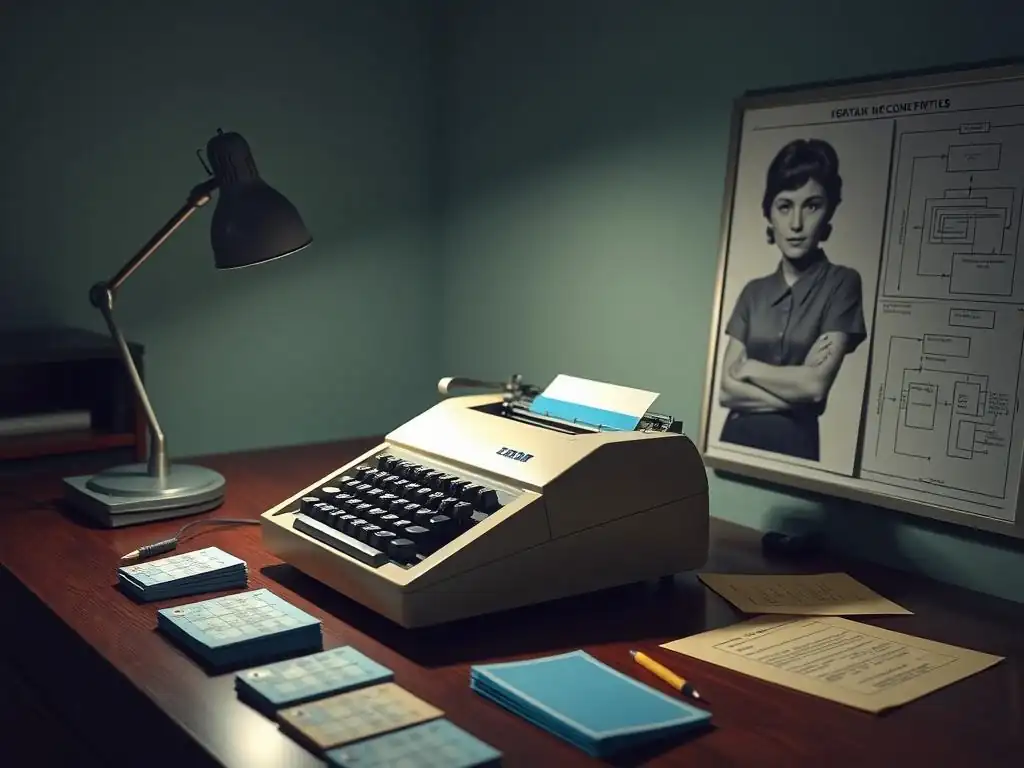
SAGE Air Defense System: Women's Crucial Role in Early Warning Systems
The Semi-Automatic Ground Environment (SAGE) system was a monumental undertaking of the Cold War, a real-time computerized air defense network designed to detect and intercept Soviet bomber attacks. Operational from 1958, SAGE was arguably the largest and most complex computer system of its time, utilizing 25 massive AN/FSQ-7 computers across North America. Each of these computers weighed 250 tons and required thousands of vacuum tubes. The development and maintenance of the intricate code for this system demanded an enormous workforce, and a significant portion of these programmers were women. They were responsible for writing the code that processed radar data, tracked aircraft, calculated intercepts, and coordinated responses, effectively acting as the digital backbone of continental air defense.
The women programmers working on SAGE faced immense pressure, as the system's reliability was directly tied to national security. They meticulously crafted code for real-time operations, ensuring that the system could continuously monitor airspace and respond within seconds to potential threats. This involved developing innovative techniques for data processing, display interfaces, and fault tolerance. For instance, the code had to be robust enough to handle vast amounts of incoming data from radar stations and to seamlessly switch between primary and backup systems. Their contributions to SAGE not only safeguarded North American airspace but also laid fundamental groundwork for large-scale, distributed computing systems, showcasing the pivotal role of women programmers Cold War code in national defense.
Ballistic Missile Defense Systems: Programming the Unthinkable
The development of intercontinental ballistic missiles (ICBMs) like the Atlas, Titan, and Minuteman during the Cold War presented unprecedented programming challenges. These weapons required incredibly precise guidance systems to travel thousands of miles and strike targets accurately. Women programmers were deeply involved in writing the complex code that calculated trajectories, managed propulsion systems, and ensured the stability of these missiles during flight. This wasn't merely about launching a projectile; it involved sophisticated physics, real-time adjustments, and redundant systems to guarantee mission success. The stakes were incredibly high, as the reliability of this code could determine the outcome of a potential nuclear conflict.
Beyond guidance, women programmers also contributed to the development of early warning systems designed to detect incoming ballistic missiles and to analyze their flight paths. This included code for radar tracking, data analysis, and the development of command and control systems that would orchestrate a response. The mathematical models and algorithms translated into code by these female coders of the Cold War were critical for understanding the "unthinkable" scenarios of nuclear warfare and for developing deterrent capabilities. Their work was highly classified, often performed under immense secrecy, yet it formed the intellectual bedrock of the nation's strategic defense posture, demonstrating the profound and often hidden impact of women programmers Cold War code on global stability.
Space Race Software: Women's Code Behind Satellite Launches and Missions
The Space Race, a direct offshoot of the Cold War, was another arena where women programmers played an indispensable role. From the early Vanguard satellite program to the ambitious Apollo missions, every launch, orbital maneuver, and scientific experiment relied on flawlessly executed code. Women programmers were instrumental in developing the complex algorithms for orbital mechanics, telemetry data processing, and ground control systems. For instance, at NASA's Jet Propulsion Laboratory (JPL), women programmers were key to calculating trajectories for early planetary probes and managing the intricate data flow from deep space.
Beyond the Apollo missions previously highlighted with Margaret Hamilton, countless women programmers Cold War code experts worked on less publicized but equally vital projects. They wrote code for satellite tracking networks, which monitored the orbital paths of both American and Soviet spacecraft, providing crucial intelligence. They developed simulation software to predict the behavior of rockets and spacecraft under various conditions, saving millions of dollars and countless hours of physical testing. The precision required for these calculations was immense; a single error in code could result in a catastrophic mission failure or a lost satellite. The success of the U.S. in the Space Race was, in large part, a testament to the meticulous and innovative programming contributions of these dedicated women.
The Legacy of Women Programmers in Cold War Code
From Punched Cards to Modern Software: The Evolution of Programming Skills
The journey of programming from the Cold War era to the present day has been transformative, and the skills honed by women programmers Cold War code laid much of its foundation. In the early days, programming often involved physically wiring machines like the ENIAC or translating instructions into binary code for punched cards, a painstaking and error-prone process. As the field evolved, these pioneers adapted, transitioning to assembly languages and then to higher-level languages like FORTRAN and COBOL, which Grace Hopper was instrumental in developing. This progression required not just technical adaptation but a conceptual leap in how software was designed and implemented, moving from mere machine instruction to abstract, reusable code modules.
The methodologies developed by these women programmers for debugging, modular programming, and system integration were crucial for handling the increasing complexity of software projects. Their experience in managing large-scale, mission-critical systems, such as the SAGE air defense network or the Apollo guidance software, directly informed the nascent discipline of software engineering. They were among the first to grapple with issues of software reliability, maintainability, and scalability. Their pragmatic approaches to problem-solving, often under tight deadlines and with limited resources, forged the best practices that underpin modern software development, demonstrating a direct lineage from their early Cold War code to today's sophisticated applications.
Inspiring Future Generations: The Impact of Women in STEM
The stories of women programmers from the Cold War era serve as powerful inspiration for future generations, particularly in the ongoing effort to encourage more women and girls to pursue careers in STEM (Science, Technology, Engineering, and Mathematics). By highlighting figures like Grace Hopper, Jean Bartik, and Margaret Hamilton, we demonstrate that women have always been at the forefront of technological innovation, challenging the pervasive stereotype that computing is a male-dominated field. Their achievements provide tangible proof of women's intellectual capabilities and their capacity to excel in technically demanding roles, often against significant societal odds.
These historical narratives are crucial in broadening the perception of who can be a scientist, engineer, or programmer. For instance, knowing that women programmers Cold War code experts were instrumental in putting a man on the moon or securing national defense can significantly impact a young girl's perception of her own potential in computing. Organizations and educational initiatives increasingly leverage these stories to counter implicit biases and to provide visible role models. By celebrating these pioneering women, we not only correct historical oversights but also actively contribute to fostering a more inclusive and diverse STEM workforce for the future, helping to close existing gender gaps in technology leadership and innovation.
Acknowledging the Unacknowledged: Recognizing the Contributions of Women Programmers
For decades, the contributions of women programmers to Cold War technology remained largely unacknowledged, overshadowed by male figures in engineering and management. Their critical work, often performed behind the scenes, was frequently dismissed as "clerical" or "support" rather than groundbreaking innovation. This historical oversight has led to an incomplete and skewed understanding of how modern computing developed. Correcting this narrative is not merely an academic exercise; it is essential for a comprehensive and accurate recounting of technological progress and for ensuring that all contributors receive their due recognition.
The process of acknowledging these female coders of the Cold War involves extensive historical research, the recovery of forgotten documents, and the amplification of their stories through books, documentaries, and educational programs. For example, the recognition of the ENIAC Six, the original programmers of the ENIAC, came decades after their initial contributions. This ongoing effort seeks to identify other women programmers Cold War code experts whose work was pivotal but whose names have been lost to history. By bringing these narratives to light, we not only honor their individual achievements but also challenge the systemic biases that have historically marginalized women's intellectual contributions in technical fields. This recognition is a crucial step towards fostering a more equitable and inclusive future in science and technology.
The Importance of Preserving the History of Women in Cold War Computing
Archiving Code and Documents: Ensuring the Preservation of Historical Records
The preservation of the actual code and documentation created by women programmers during the Cold War is paramount for understanding the evolution of computing and their specific contributions. Early code was often stored on fragile mediums like punched cards, magnetic tapes, or even as physical diagrams representing circuit configurations. These artifacts are susceptible to degradation, loss, or becoming unreadable due to obsolete hardware. Efforts to digitize and archive these historical records are crucial, ensuring that future generations can study the ingenuity and methodologies employed by these pioneering female coders of the Cold War.
Beyond the code itself, preserving technical manuals, project reports, internal memos, and personal papers provides invaluable context about the working environment, the challenges faced, and the solutions devised by women programmers. Institutions like the Computer History Museum and various university archives are actively engaged in this vital work, collecting and cataloging these materials. For instance, the meticulous code written for the Apollo Guidance Computer, much of it by Margaret Hamilton's team, has been carefully preserved, allowing historians and software engineers to analyze its structure and innovation. This diligent archiving ensures that the foundational Cold War code written by women is not lost to time, providing tangible evidence of their enduring impact on technology.
Oral Histories and Interviews: Capturing the Voices of Pioneering Women Programmers
While documents and code provide technical details, oral histories and interviews offer a unique and indispensable human perspective on the experiences of women programmers during the Cold War. Many of these pioneers are now elderly, making the urgent task of capturing their firsthand accounts critical before their memories are lost. These interviews reveal not only the technical aspects of their work but also the social dynamics, the challenges of working in male-dominated environments, and their personal motivations and triumphs. Hearing their voices provides a richness and depth that no written record can fully convey.
Projects dedicated to recording the oral histories of women in computing have shed light on the personal journeys behind the creation of Cold War code. For example, interviews with the ENIAC programmers have provided intimate details about their daily lives, their problem-solving techniques, and the excitement of working with the world's first electronic computer. These narratives often highlight moments of discrimination, unexpected opportunities, and the sheer intellectual joy of tackling complex problems. By preserving these individual stories, we ensure that the human element of women programmers Cold War code is not forgotten, offering invaluable insights into a transformative period in technological history and the lives of those who shaped it.
Women's Contributions to Cold War Tech: Challenging Gender Stereotypes in STEM
The comprehensive documentation and celebration of women's contributions to Cold War tech directly challenges persistent gender stereotypes in STEM fields. For too long, the narrative of technological innovation has been dominated by male figures, creating a misleading impression that women are less capable or less interested in technical pursuits. By showcasing the undeniable impact of women programmers on critical Cold War projects—from air defense systems to space exploration—we dismantle these stereotypes and demonstrate that technical aptitude is not bound by gender.
Highlighting the fact that programming was initially a field heavily populated by women, and that their expertise was essential for national security and scientific advancement, reframes the historical narrative. It proves that the current underrepresentation of women in certain tech sectors is not a natural phenomenon but a result of historical and societal factors. The visibility of these women programmers Cold War code experts provides powerful counter-narratives that can inspire young girls and women to pursue careers in computing, knowing that they are following in the footsteps of truly groundbreaking innovators. This historical reassessment is a vital step towards achieving greater gender equity and diversity across all STEM disciplines.
Conclusion: Celebrating the Achievements of Women Programmers and Their Cold War Legacy
The Enduring Impact of Women's Cold War Programming Contributions
The women programmers of the Cold War era were not merely participants; they were architects of the digital age, whose contributions to Cold War code have an enduring impact on modern society. Their meticulous programming of early computers for ballistic missile defense, air traffic control, and space exploration laid the fundamental groundwork for today's sophisticated software systems. They pioneered concepts like compilers, structured programming, and real-time operating systems, which are now standard in every piece of technology we use. Without their foresight and dedication, the rapid advancements in computing that characterized the latter half of the 20th century, and indeed the 21st, would have been significantly delayed or taken a different course.
From Grace Hopper's vision of machine-independent code to Margaret Hamilton's life-saving software for the Apollo missions, these female coders of the Cold War solved problems of unprecedented complexity under immense pressure. Their work propelled national security, enabled scientific discovery, and shaped the very trajectory of the information age. The code they wrote was foundational, not just for specific military or space applications, but for the entire discipline of software engineering. Their legacy is embedded in the algorithms, methodologies, and even the professional standards that continue to govern how software is developed and deployed worldwide.
Continuing the Fight for Equality in STEM Fields
While we celebrate the remarkable achievements of women programmers Cold War code experts, their stories also serve as a poignant reminder that the fight for equality in STEM fields is far from over. Despite their foundational contributions, the percentage of women in computing fields declined significantly after the 1980s, creating a gender gap that persists today, particularly in leadership and technical roles. This historical context underscores the importance of ongoing advocacy, policy changes, and educational initiatives aimed at fostering inclusivity and diversity in technology.
By actively promoting the narratives of these pioneering women, we can inspire a new generation and challenge the stereotypes that continue to deter women from entering and staying in STEM. It is imperative to ensure equitable access to education, mentorship opportunities, and leadership positions for women in technology. The legacy of the women programmers who wrote the Cold War code is not just a historical footnote; it is a powerful call to action, urging us to continue building a future where talent and innovation are recognized and celebrated regardless of gender, ensuring that the contributions of all individuals are valued and empowered.
Frequently Asked Questions
What role did women play in programming during the Cold War?
Women played a critical role in programming during the Cold War, often performing the essential, yet undervalued, task of writing and debugging complex code. They were instrumental in developing software for military and scientific applications.
Why were women often hired for programming positions during this era?
Programming was initially viewed as clerical work, and women were often hired because they were perceived as being detail-oriented and patient, traits considered suitable for coding. This allowed them to enter a field that was later redefined and dominated by men.
What kinds of challenges did women programmers face during the Cold War?
Women faced significant challenges, including gender bias, limited opportunities for advancement, and a lack of recognition for their contributions. They also had to navigate a male-dominated environment where their work was often undervalued.
What specific types of code did women programmers contribute to during the Cold War?
Women contributed to a wide range of code, including software for ballistic missile defense systems, cryptography, and scientific simulations. Their work was essential for maintaining technological supremacy during the Cold War.
How does WomenInScienceHistory.com aim to address the lack of recognition for these women?
WomenInScienceHistory.com aims to highlight the stories of these pioneering women, providing biographies and discussions of their groundbreaking work. This helps to inspire future generations and ensure their contributions are not forgotten.
Final Reflection: Honoring the Silent Architects of Innovation
The untold stories of the women programmers who shaped the Cold War era are finally emerging, revealing their pivotal role in securing technological supremacy. Their contributions, long obscured by the shadows of history, are now being recognized as foundational to the digital world we inhabit today. This reevaluation is not just about correcting the historical record; it's about understanding the ingenuity and resilience that propelled technological advancement during a period of intense global tension.
The impact of these women extends far beyond the lines of code they meticulously crafted. Their dedication and problem-solving skills shattered gender stereotypes and paved the way for future generations of women in STEM. Their legacy serves as a powerful reminder that innovation thrives on diversity and that overlooking talent based on gender is a profound loss for society. You're not supposed to be able to do that,
was a common refrain. But they did it anyway, proving that brilliance knows no gender.
As we reflect on the achievements of these pioneering programmers, let us be inspired by their unwavering commitment to excellence. Let us remember that progress is built upon the shoulders of those who dared to challenge the status quo and that their stories deserve to be celebrated and shared. Consider how you can champion inclusivity and create opportunities for underrepresented voices in your own sphere of influence, ensuring that future generations benefit from the full spectrum of human potential.
Ignite Your Inner Codebreaker: Step into History!
Thank you for diving into the stories of these incredible women! Now that you've seen their impact, it's time to connect with their legacy and forge your own path.
- Delve deeper: Research one of the pioneering programmers mentioned and write a blog post about their specific contributions.: Share it on your social media to inspire others!
- Explore lesser-known coding languages from the Cold War era. What surprising insights can you uncover?
- Join (or start!) a local "Women in Tech" group to connect with other passionate individuals and share your coding journey.
What small step will you take today to honor these unsung heroes and advance the future of women in STEM?