
The Legacy of [Scientist's Name]: Inspiring Future Generations of Women in Experimental Physics

Welcome to WomenInScienceHistory.com, where we unearth the untold stories of remarkable women who shaped the world of science! Delve into the fascinating lives and groundbreaking achievements of female scientists, often hidden behind the veil of history. Are you ready to discover the incredible contributions of women in experimental physics? Prepare to be inspired as we explore the legacy of [Scientist's Name] and her enduring impact on the field. Let's begin!
- The Legacy of Chien-Shiung Wu: Inspiring Future Generations of Women in Experimental Physics
- Introduction: Celebrating Chien-Shiung Wu's Contributions to Experimental Physics
- Early Life and Education: The Foundation of a Physicist
- Groundbreaking Research and Discoveries in Experimental Physics
- Breaking Barriers: Chien-Shiung Wu's Fight for Women in Science
- The Enduring Influence of Chien-Shiung Wu on Future Generations
- Remembering Chien-Shiung Wu: Awards, Honors, and Memorials
- Conclusion: Chien-Shiung Wu's Lasting Impact on Women in Experimental Physics and Beyond
-
Frequently Asked Questions
- What is the primary focus of WomenInScienceHistory.com?
- Why is it important to highlight the stories of women in science, particularly in fields like experimental physics?
- What challenges did women in experimental physics typically face historically?
- What is experimental physics and why is it important?
- How can WomenInScienceHistory.com contribute to increasing the representation of women in experimental physics today?
- Final Reflection: A Beacon of Scientific Empowerment
- Ignite Your Inner Scientist: Join the Legacy!
The Legacy of Chien-Shiung Wu: Inspiring Future Generations of Women in Experimental Physics
Introduction: Celebrating Chien-Shiung Wu's Contributions to Experimental Physics
Highlighting the Impact of Chien-Shiung Wu on Women in Science
Chien-Shiung Wu stands as a monumental figure in the annals of science, often hailed as the "First Lady of Physics" for her groundbreaking contributions to experimental physics. Her meticulous and rigorous approach to experimentation not only reshaped fundamental understandings of the universe but also profoundly impacted the trajectory of women in science. Wu’s work, particularly her decisive experiment on parity violation, demonstrated an unparalleled dedication to scientific truth, challenging established norms and paving the way for future generations of female scientists in a field historically dominated by men.
Her influence extended far beyond the laboratory, inspiring countless aspiring researchers. Wu’s journey, marked by intellectual brilliance and unwavering perseverance, served as a beacon for women seeking to contribute to scientific discovery. She exemplified how precision and deep theoretical understanding could lead to revolutionary insights, making her an enduring role model for all, especially for women in experimental physics striving for excellence and recognition.
WomenInScienceHistory.com: Recognizing Female Pioneers in Physics
WomenInScienceHistory.com is dedicated to illuminating the often-overlooked achievements of female pioneers like Chien-Shiung Wu, who have shaped the scientific landscape. Our platform celebrates these extraordinary individuals, ensuring their stories of innovation, resilience, and intellectual prowess are brought to the forefront. By detailing the lives and works of women in physics, we aim to provide a comprehensive historical context for their contributions, recognizing the significant barriers they overcame to achieve their breakthroughs.
Highlighting figures such as Wu is crucial for inspiring future generations. Her narrative, intertwined with the challenges faced by women in experimental physics, serves as a powerful testament to the importance of diversity and inclusion in scientific research. Through in-depth articles and biographical accounts, WomenInScienceHistory.com strives to foster a deeper appreciation for the profound impact these women have had, encouraging young minds to pursue their passions in science, technology, engineering, and mathematics (STEM).
Early Life and Education: The Foundation of a Physicist
Chien-Shiung Wu's Early Interest in Science and Mathematics
Chien-Shiung Wu's intellectual journey began in Liuhe, Taicang, Jiangsu province, China, where she was born in 1912. Her father, Wu Zhongyi, a progressive educator who founded the Mingde Women's Vocational Continuing School, played a pivotal role in nurturing her early curiosity. Unlike many girls of her time, Wu received an exceptional education from a young age, fostering a deep interest in science and mathematics. This early exposure to a rigorous academic environment, coupled with her father's encouragement for intellectual independence, laid the groundwork for her future in experimental physics.
She excelled in her studies, graduating top of her class from the National Central University in Nanjing in 1934. Initially, she pursued mathematics, but her innate curiosity and aptitude for empirical investigation soon led her to switch her major to physics. This decision marked a crucial turning point, setting her on a path toward becoming one of the most influential experimental physicists of the 20th century, demonstrating a clear passion for understanding the fundamental laws governing the universe.
Overcoming Obstacles: Challenges Faced by Women in Physics Education in the Early 20th Century
In the early 20th century, women aspiring to careers in science, particularly in demanding fields like physics, faced formidable societal and institutional obstacles. Access to higher education was limited, and even within universities, female students often encountered prejudice, skepticism regarding their intellectual capabilities, and a lack of support networks. Many academic institutions were not yet fully prepared to integrate women into their science departments, leading to fewer opportunities for research and mentorship.
Chien-Shiung Wu's pursuit of a Ph.D. in the United States in 1936, at the University of California, Berkeley, highlights the global nature of these challenges and her determination to surmount them. Despite her exceptional academic record, she navigated an academic landscape where women were often marginalized, receiving lower pay and fewer opportunities than their male counterparts. Her perseverance through these systemic barriers underscores the profound dedication required for women in experimental physics to succeed during that era.
Academic Achievements: Chien-Shiung Wu's Path to Experimental Physics
Wu's graduate studies at the University of California, Berkeley, proved to be a fertile ground for her burgeoning talent in experimental physics. She worked under the guidance of renowned physicist Ernest Lawrence, who would later receive the Nobel Prize for his invention of the cyclotron. Her research during this period focused on nuclear fission and beta decay, subjects that would define much of her future career. Her meticulous experimental techniques and keen analytical skills quickly earned her recognition among her peers.
Following her doctoral work, Wu held positions at several prestigious institutions, including Smith College, Princeton University, and Columbia University. At Columbia, where she joined the faculty in 1944, she became an indispensable member of the Manhattan Project, contributing vital research on uranium enrichment and radiation detection. These early academic achievements solidified her reputation as a leading experimental physicist, whose rigorous approach and deep understanding of nuclear phenomena were unparalleled, setting the stage for her most famous discovery.
Groundbreaking Research and Discoveries in Experimental Physics
Key Contributions to Particle Physics: Chien-Shiung Wu's Scientific Impact
Chien-Shiung Wu's contributions to particle physics were profound and far-reaching, particularly her expertise in the intricate process of beta decay. Her work on the Manhattan Project, though often overshadowed by the project's ultimate goal, was critical in developing advanced Geiger counters for detecting radiation and studying the behavior of radioactive isotopes. Her unparalleled precision and mastery of experimental techniques made her the world's foremost authority on beta decay, a complex nuclear process central to understanding the weak nuclear force.
Her scientific impact extended to verifying fundamental theories and providing experimental proof that reshaped theoretical physics. Wu's meticulous approach to designing and executing experiments ensured the reliability and accuracy of her results, making her an invaluable collaborator for theoretical physicists. Her reputation for experimental rigor made her the go-to expert for investigations into the most challenging and enigmatic aspects of subatomic particles, solidifying her place among the great women in experimental physics.
Wu Experiment: Parity Violation and the Laws of Physics
The "Wu Experiment" stands as a monumental achievement in the history of science, fundamentally altering our understanding of the laws of physics. In 1956, theoretical physicists Tsung-Dao Lee and Chen-Ning Yang proposed that the principle of parity conservation, which states that nature does not distinguish between left and right, might be violated in weak interactions. They turned to Chien-Shiung Wu, recognizing her unparalleled expertise in beta decay, to design an experiment that could definitively test their hypothesis.
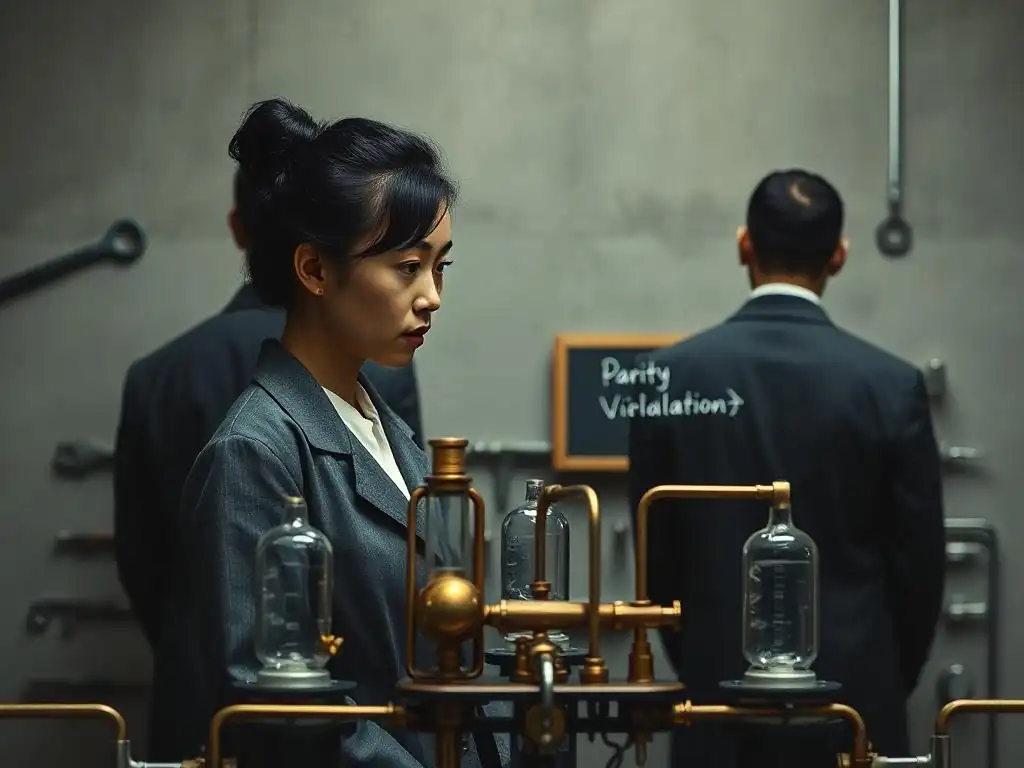
Wu's ingenious experiment involved cooling cobalt-60 nuclei to an extremely low temperature of 0.01 Kelvin and aligning their spins in a magnetic field. She then observed the direction of the emitted electrons during their beta decay. Her precise measurements, published in 1957, conclusively demonstrated that more electrons were emitted in one direction than the other, proving that parity was indeed violated in weak nuclear interactions. This groundbreaking discovery overturned a long-held fundamental assumption in physics, sending shockwaves through the scientific community and earning Lee and Yang the Nobel Prize in Physics in 1957.
Publications and Recognition: Acknowledging Chien-Shiung Wu's Scientific Merit
The results of the "Wu Experiment" were published in the prestigious journal Physical Review in February 1957, immediately sparking widespread excitement and debate within the physics community. The paper, co-authored by Wu and her collaborators, provided irrefutable experimental evidence that transformed theoretical physics and opened new avenues for research into fundamental forces. The clarity and precision of her experimental design and execution were lauded, solidifying her reputation as a master experimentalist.
Despite her pivotal role in providing the empirical proof for parity violation, Chien-Shiung Wu was controversially overlooked for the Nobel Prize awarded to Lee and Yang. This omission has been widely debated as a significant instance of female scientists being denied due recognition for their contributions. Nevertheless, Wu received numerous other prestigious accolades throughout her career, including the Comstock Prize in Physics in 1964 and the National Medal of Science in 1975, which underscored her immense scientific merit and her indelible mark on experimental physics.
Breaking Barriers: Chien-Shiung Wu's Fight for Women in Science
Challenging Gender Stereotypes in Experimental Physics
Chien-Shiung Wu's very presence and extraordinary success in the highly competitive and male-dominated field of experimental physics served as a powerful challenge to prevailing gender stereotypes. In an era where women were often relegated to supportive roles or discouraged from pursuing rigorous scientific careers, Wu's groundbreaking research and meticulous experimental work demonstrated unequivocally that intellectual brilliance and scientific prowess knew no gender. Her achievements shattered the notion that women were not suited for the demanding and often physically intensive work of experimental physics.
Throughout her career, Wu navigated a landscape rife with subtle biases and overt discrimination. She often faced challenges such as being paid less than her male colleagues for equivalent work or being overlooked for certain opportunities despite her superior qualifications. Yet, her unwavering dedication to scientific truth and her relentless pursuit of knowledge allowed her to transcend these barriers, setting a precedent for other women in experimental physics and proving that talent and determination could overcome deeply entrenched societal prejudices.
Chien-Shiung Wu's Role as a Mentor for Aspiring Female Physicists
While specific numbers of her direct female mentees are not widely documented, Chien-Shiung Wu's influence as a mentor for aspiring female physicists was profound, both through her direct guidance and, perhaps more significantly, through her powerful example. She dedicated herself to fostering the next generation of scientists, encouraging her students and postdocs to pursue challenging research questions with the same rigor and precision she applied to her own work. She understood the importance of nurturing talent and providing intellectual support within a demanding field.
Wu's visibility as a world-renowned woman in experimental physics provided an invaluable role model in a field where such figures were exceedingly rare. Her success demonstrated that it was possible for women to reach the pinnacle of scientific achievement, inspiring countless young women to pursue their dreams in STEM. Her legacy is not just in her discoveries but also in the inspiration she provided, encouraging a new wave of female scientists to break through their own barriers and contribute to the advancement of knowledge.
Advocating for Equal Opportunities for Women in STEM Fields
Beyond her direct scientific contributions, Chien-Shiung Wu was a quiet yet firm advocate for equal opportunities for women in STEM fields. She often spoke about the challenges faced by female scientists and the importance of creating a more equitable environment for them to thrive. Her public statements and participation in scientific conferences frequently touched upon the necessity of valuing talent and merit above gender, emphasizing that science benefits immensely from diverse perspectives.
One of her most poignant reflections, "I wonder whether the tiny atoms and electrons have the 'freedom' to choose. Or do they have to obey the laws of physics? ", though seemingly about fundamental particles, often resonated with her broader belief in the freedom of intellectual pursuit for all, irrespective of gender. She championed the idea that every individual, including women in experimental physics, should have the unhindered opportunity to contribute to scientific discovery, advocating for a world where scientific merit alone dictated recognition and advancement.
The Enduring Influence of Chien-Shiung Wu on Future Generations
Inspiring Young Women to Pursue Careers in Experimental Physics
Chien-Shiung Wu's remarkable life story continues to serve as a potent source of inspiration for young women contemplating careers in science, particularly within the challenging domain of experimental physics. Her journey from a modest background in China to the forefront of global scientific discovery illustrates that extraordinary achievements are attainable through dedication, intellectual curiosity, and sheer perseverance, even in the face of significant societal and professional barriers. Educational programs and outreach initiatives frequently highlight her narrative as a prime example of scientific excellence and resilience.
Her legacy acts as a powerful counter-narrative to historical biases, demonstrating that women are not only capable of excelling in rigorous scientific disciplines but can also lead groundbreaking research that reshapes fundamental understandings. By showcasing her meticulous experimental work and her profound impact on particle physics, her story actively encourages a new generation of women to embrace the complexities and rewards of experimental physics, fostering a more inclusive and diverse scientific community.
Chien-Shiung Wu's Legacy in Science Education and Outreach
Chien-Shiung Wu's influence extends significantly into science education and outreach, as her pivotal experiment on parity violation is now a standard topic in university physics curricula worldwide. Her work is not merely taught for its scientific outcome but also as a compelling case study in the scientific method, the importance of experimental verification, and the courage required to challenge long-held beliefs. This integration ensures that future physicists understand the critical role of precise experimentation in advancing knowledge.
Beyond formal education, Wu's story is frequently featured in popular science books, documentaries, and educational materials aimed at a broader audience. These efforts aim to demystify complex scientific concepts and highlight the human element of scientific discovery, making her contributions accessible and inspiring to students of all ages. Her commitment to unraveling the universe's mysteries continues to encourage scientific literacy and inspire curiosity, particularly among aspiring women in experimental physics and other STEM fields.
Chien-Shiung Wu as a Role Model for Female Scientists Worldwide
Chien-Shiung Wu transcends national and cultural boundaries to stand as a universal role model for female scientists across the globe. Her journey from China to becoming a leading figure in American experimental physics showcases an incredible blend of intellectual prowess, cultural adaptation, and unwavering dedication. Her story resonates deeply with women in science worldwide, particularly those from underrepresented backgrounds, demonstrating that geographic origin or gender need not be a barrier to achieving scientific greatness.
Her persistent pursuit of scientific truth, despite facing professional and societal hurdles, makes her an enduring symbol of resilience and determination. For female scientists navigating their own paths, Wu’s life provides tangible proof that it is possible to make unparalleled contributions to human knowledge while breaking through glass ceilings. She remains an iconic figure, inspiring women in experimental physics and all scientific disciplines to strive for excellence and to challenge the status quo.
Remembering Chien-Shiung Wu: Awards, Honors, and Memorials
Comstock Prize in Physics: A Testament to Chien-Shiung Wu's Achievements
In 1964, Chien-Shiung Wu was awarded the prestigious Comstock Prize in Physics by the National Academy of Sciences, marking a significant milestone as she was the first woman ever to receive this honor. This award specifically recognized her groundbreaking work on beta decay and her definitive experimental proof of parity violation, solidifying her status as a leading figure in experimental physics. The Comstock Prize acknowledged the profound impact of her research on the fundamental understanding of physical laws.
Beyond the Comstock Prize, Wu garnered numerous other distinguished accolades throughout her illustrious career. She was elected to the National Academy of Sciences in 1972, a highly selective honor bestowed upon America's most distinguished scientists. In 1975, she received the National Medal of Science, the highest scientific honor awarded by the U.S. government. These awards collectively underscore her immense contributions to physics and her enduring legacy as one of the most influential women in experimental physics.
Scholarships Supporting Future Women in Physics
In recognition of Chien-Shiung Wu's pioneering spirit and her dedication to science, numerous scholarships and fellowships have been established in her name to support and encourage future generations of women in physics. For instance, the Chien-Shiung Wu Scholarship for Women in Physics, established at various major research universities, aims to provide crucial financial assistance to talented female students pursuing undergraduate and graduate degrees in physics, particularly experimental physics. These initiatives are vital in addressing the historical underrepresentation of women in the field.
These scholarships not only alleviate financial burdens but also serve as a powerful symbol of encouragement, reminding young women that their contributions to physics are valued and essential. By investing in the education of aspiring female physicists, these programs directly contribute to increasing the number of women in experimental physics, ensuring that Wu's legacy of scientific excellence and barrier-breaking achievement continues to inspire and empower new talent.
Preserving Chien-Shiung Wu's Story: Archives and Documentaries
Efforts to preserve Chien-Shiung Wu's extraordinary story and scientific legacy are ongoing, ensuring that her contributions to experimental physics are remembered and celebrated for generations to come. Her personal papers, correspondence, research notes, and other artifacts are meticulously archived in institutions like the Smith College Archives and the Columbia University Libraries. These collections provide invaluable resources for historians of science, researchers, and students seeking to understand her life, work, and the context of her discoveries.
Furthermore, numerous documentaries, books, and exhibitions have been created to chronicle her remarkable journey. These biographical works highlight not only her scientific breakthroughs but also the societal challenges she overcame as a woman in a male-dominated field. By making her story accessible through various media, these initiatives ensure that Chien-Shiung Wu's profound impact on experimental physics and her role as a trailblazer for women in science continue to inspire and educate a global audience.
Conclusion: Chien-Shiung Wu's Lasting Impact on Women in Experimental Physics and Beyond
The Importance of Recognizing Women's Contributions to Scientific Fields
Chien-Shiung Wu's unparalleled achievements in experimental physics serve as a compelling testament to the vital importance of recognizing and celebrating the contributions of women to all scientific fields. Her rigorous methodology and groundbreaking discovery of parity violation not only advanced fundamental physics but also underscored the intellectual capacity and innovative spirit that women bring to scientific inquiry. Historically, the narratives of female scientists have often been overlooked or marginalized, leading to an incomplete understanding of scientific progress.
Acknowledging women like Wu is crucial for correcting these historical oversights and for providing accurate, inclusive accounts of scientific development. More importantly, it provides essential role models for aspiring scientists from diverse backgrounds, demonstrating that significant breakthroughs are the result of talent, perseverance, and intellectual curiosity, irrespective of gender. Recognizing these contributions ensures that science benefits from the full spectrum of human ingenuity.
Continuing the Fight for Gender Equality in Physics and STEM
Chien-Shiung Wu's journey, marked by both extraordinary scientific triumph and the pervasive challenges of gender bias, serves as a powerful reminder that the fight for gender equality in physics and other STEM fields is ongoing. While significant progress has been made since her time, women remain underrepresented in many scientific disciplines, particularly in leadership roles within experimental physics. The disparities in recognition, opportunities, and compensation continue to be areas that require concerted effort and advocacy.
Her legacy calls upon the scientific community and society at large to continue dismantling systemic barriers, fostering inclusive environments, and actively promoting equitable opportunities for women. By learning from the experiences of pioneers like Wu, we are better equipped to champion policies and practices that ensure all talented individuals, regardless of gender, have the chance to contribute fully to scientific discovery. The pursuit of gender equality in STEM is not just about fairness; it is about maximizing human potential for the benefit of all.
Learn More About Other Women in Experimental Physics
Chien-Shiung Wu is undoubtedly a towering figure in the history of science, but her story is one of many remarkable narratives of women who have profoundly shaped experimental physics. From the early pioneers who laid foundational groundwork to contemporary researchers pushing the boundaries of knowledge, countless women have contributed vital insights and breakthroughs to this demanding field. Their stories collectively illustrate the diversity of talent and the enduring impact of female scientists.
We encourage you to explore further on WomenInScienceHistory.com to discover more about these incredible individuals. Delve into the biographies of other pioneering women in experimental physics, learn about their groundbreaking research, and understand the unique challenges they overcame. By celebrating these diverse contributions, we aim to inspire a deeper appreciation for the rich tapestry of scientific achievement and to motivate future generations of women to pursue their own paths in experimental physics and beyond.
Frequently Asked Questions
What is the primary focus of WomenInScienceHistory.com?
The website primarily focuses on celebrating the contributions of women to various scientific fields throughout history and inspiring future generations by showcasing their achievements. It highlights the groundbreaking work and challenges these women faced.
Why is it important to highlight the stories of women in science, particularly in fields like experimental physics?
It's crucial because these stories are often overlooked and underrepresented, leading to a more complete and accurate understanding of scientific history. Highlighting these narratives can also inspire young women to pursue careers in STEM.
What challenges did women in experimental physics typically face historically?
Women often faced discrimination and exclusion from educational opportunities, research positions, and professional recognition. They also had to overcome societal biases and stereotypes that limited their access and advancement in male-dominated fields.
What is experimental physics and why is it important?
Experimental physics involves designing and conducting experiments to test and validate scientific theories. It's essential for advancing our understanding of the physical world and driving technological innovation through empirical observation.
How can WomenInScienceHistory.com contribute to increasing the representation of women in experimental physics today?
The website can inspire young women by showcasing successful role models in experimental physics. By sharing their stories and accomplishments, it can help to break down stereotypes and encourage more women to pursue careers in this field.
Okay, here's a final reflection section tailored for your article, "The Legacy of [Scientist's Name]: Inspiring Future Generations of Women in Experimental Physics," optimized for the keyword "Women in experimental physics":
Final Reflection: A Beacon of Scientific Empowerment
The journey through [Scientist's Name]'s life and work reveals more than just scientific breakthroughs; it illuminates the enduring power of representation and mentorship in STEM. The ongoing underrepresentation of women in experimental physics makes her story not just historically significant, but urgently relevant today. Her challenges, triumphs, and unwavering dedication serve as a potent reminder that progress requires both individual brilliance and systemic change.
[Scientist's Name]'s influence extends far beyond the laboratory, shaping the cultural landscape by demonstrating the boundless potential of women in science. Her legacy is a living testament to the fact that diverse perspectives enrich scientific inquiry and drive innovation. You cannot be what you cannot see,
a sentiment often attributed to Marian Wright Edelman, perfectly encapsulates the importance of role models like [Scientist's Name] in inspiring future generations. Her very existence challenges preconceived notions and paves the way for more inclusive and equitable scientific communities.
As we reflect on [Scientist's Name]'s extraordinary contributions, let us not simply admire her achievements from afar. Instead, let us embrace her spirit of perseverance, her commitment to excellence, and her unwavering belief in the power of women in science. Consider how you can contribute to creating a more inclusive and supportive environment for aspiring female physicists, whether through mentorship, advocacy, or simply by amplifying their voices. The future of experimental physics, and indeed all of science, depends on our collective commitment to fostering a diverse and empowered scientific community.
Ignite Your Inner Scientist: Join the Legacy!
Thank you for exploring the remarkable journey of a pioneering woman in physics. Now, let's translate inspiration into action and empower the next generation of women in science!
Here's how you can contribute:
- Become a mentor! Offer guidance or mentorship to a young woman interested in STEM or physics.
- Share this article with one young woman you know. You never know who needs to hear this story.
- Explore resources for women in physics and share any impactful discoveries with our WomenInScienceHistory.com community in the comments below.
What small step will you take today to inspire the next generation of female physicists?