
Fuel Your Inspiration: The Ultimate Women in Chemistry Reading Checklist (Downloadable)


Welcome to WomenInScienceHistory.com, where we unearth the remarkable stories of women who shaped the scientific world. Ever wondered who truly paved the way in chemistry? Dive into our curated collection of women in chemistry biographies and prepare to be amazed by their groundbreaking contributions. This Ultimate Women in Chemistry Reading Checklist, available for download, is just the beginning! Discover the untold narratives and fuel your inspiration – what secrets will you unlock?
- Discovering the Trailblazers: Why Read Women in Chemistry Biographies?
- The Ultimate Women in Chemistry Biography Reading Checklist: Our Top Picks
- Featured Biographies: Essential Reads on Women Chemists
- Expanding Your Knowledge: Further Reading on Women in Chemistry
- Celebrating Women in Chemistry: A Call to Action
- Frequently Asked Questions
- Final Reflection: Celebrating Chemistry's Unsung Heroines
- Ignite Your Passion: Download Your Chemistry Reading List Now!
Discovering the Trailblazers: Why Read Women in Chemistry Biographies?
For too long, the narratives of scientific discovery have predominantly centered on male figures, often leaving out the crucial contributions of women. Reading women in chemistry biographies is essential for correcting this historical oversight, revealing a rich tapestry of intellect, perseverance, and groundbreaking work that has shaped our understanding of the chemical world. Many pivotal discoveries were made by women who faced systemic barriers, including limited access to education, research facilities, or even proper recognition for their findings, with their work sometimes being attributed to male colleagues.
These biographies shine a light on the "Matilda Effect," a phenomenon where the achievements of women scientists are often overlooked, denied, or attributed to men. By delving into the lives of these women in chemistry, we gain a more accurate and complete understanding of scientific progress, acknowledging the diverse minds that pushed boundaries and expanded knowledge. It's not merely about adding names to a list; it's about understanding the depth of their scientific contributions and the societal context in which they operated, challenging the prevailing notion that science was solely a male domain.
Inspiring Future Generations: Role Models in STEM
The power of seeing oneself reflected in stories of success cannot be overstated, especially for young girls and women contemplating careers in STEM. Women in chemistry biographies provide invaluable role models, demonstrating that despite historical and ongoing challenges, it is possible to achieve scientific excellence. These narratives offer tangible proof of women's intellectual capabilities and their capacity for groundbreaking innovation in fields like organic chemistry, biochemistry, and physical chemistry.
Many of these pioneering women in chemistry navigated formidable obstacles, from outright discrimination and skepticism about their abilities to juggling demanding research with societal expectations. Their stories of resilience, passion, and unwavering dedication to scientific inquiry offer powerful lessons in perseverance.
For instance, while women now earn approximately half of all STEM bachelor's degrees, their representation in leadership roles within chemistry departments or as principal investigators in research remains a critical area for growth. Learning about these historical figures provides context for current efforts to promote diversity and inclusion, inspiring the next generation to break barriers and contribute to a more equitable scientific landscape.
The Ultimate Women in Chemistry Biography Reading Checklist: Our Top Picks
This curated checklist highlights essential women in chemistry biographies that offer profound insights into the lives and scientific legacies of some of history's most impactful female chemists. These books are not just historical accounts; they are compelling narratives of ambition, discovery, and the enduring human spirit.
Featured Biographies: Essential Reads on Women Chemists
1. Marie Curie: A Life
Marie Curie stands as one of the most iconic figures in scientific history, a true trailblazer among women in chemistry. Her groundbreaking work on radioactivity not only transformed the field of physics but also laid the foundation for modern chemistry and medicine.
She, along with her husband Pierre, discovered the elements polonium and radium, meticulously isolating these new radioactive substances from tons of pitchblende ore. Her unprecedented achievement of winning two Nobel Prizes – one in Physics in 1903 and another in Chemistry in 1911 – marks her as the only person to win in two different scientific fields and the only woman to win multiple Nobel Prizes.
Beyond her remarkable scientific output, Marie Curie's life was a testament to unwavering dedication despite immense personal and professional challenges. She faced skepticism and prejudice as a woman in a male-dominated academic world, particularly after Pierre's death when she took over his professorship at the Sorbonne. Her relentless pursuit of scientific truth, often working under difficult and dangerous conditions without understanding the full risks of radiation, underscores her profound commitment. Her legacy continues to inspire countless aspiring scientists, particularly women in chemistry, demonstrating the heights that intellect and perseverance can achieve.
2. Rosalind Franklin: The Dark Lady of DNA
Rosalind Franklin's contributions to the understanding of molecular structures, particularly DNA, are undeniably fundamental, yet for decades, her pivotal role was largely overlooked. Her meticulous X-ray diffraction images of DNA, most notably "Photo 51," provided the critical experimental evidence that allowed James Watson and Francis Crick to deduce the double helix structure. Franklin's work at King's College London was characterized by rigorous experimental technique and a deep understanding of crystallography, making her one of the most significant women in chemistry who contributed to the birth of molecular biology.
The narrative surrounding Rosalind Franklin is often tinged with the controversy of recognition, as her data was shared with Watson and Crick without her explicit knowledge or consent, and she was not awarded a Nobel Prize alongside them in 1962. Her story highlights the systemic challenges faced by women in chemistry and science in general during the mid-20th century, where credit and collaboration were often skewed. Despite the historical oversight, her legacy has steadily grown, recognizing her as a brilliant and essential scientist whose precise work irrevocably changed our understanding of life itself.
3. Rachel Carson: Silent Spring
While not a chemist in the traditional laboratory sense, Rachel Carson's profound impact on the intersection of chemistry, biology, and public health solidifies her place among influential women in chemistry who shaped the modern world. Her seminal 1962 book, Silent Spring, meticulously documented the devastating ecological and health effects of synthetic pesticides, particularly DDT. Carson, a marine biologist by training, synthesized vast amounts of scientific data, including chemical analyses, to present a compelling and accessible argument against the indiscriminate use of these chemicals, revealing their bioaccumulation in the food chain and their long-term harm to wildlife and humans.
Silent Spring sparked a national debate and faced fierce opposition from the powerful chemical industry, which launched a concerted campaign to discredit her work. Despite the personal attacks and professional pressure, Carson steadfastly defended her research with scientific integrity and eloquent prose.
Her courageous advocacy led to a paradigm shift in environmental policy, directly contributing to the ban of DDT in the United States in 1972 and the establishment of the Environmental Protection Agency (EPA). Her work remains a powerful testament to how scientific knowledge, even when applied outside the lab, can drive profound societal change and protect the planet.
4. Dorothy Hodgkin: A Life in Science
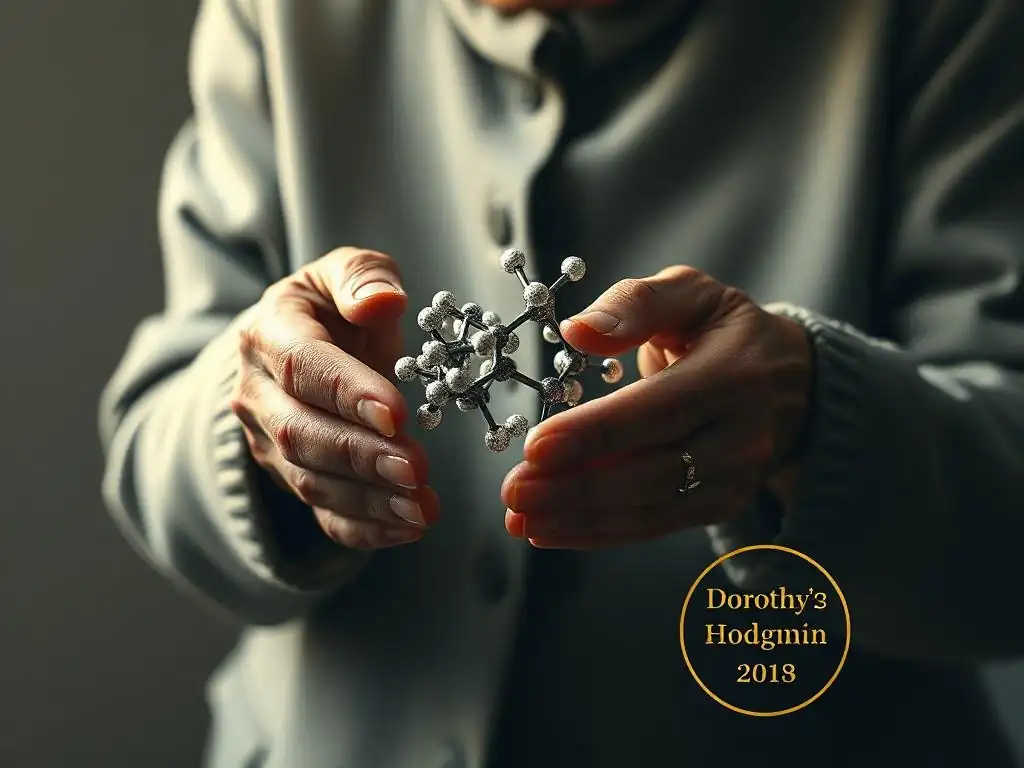
Dorothy Hodgkin was a pioneering crystallographer whose groundbreaking work in determining the three-dimensional structures of complex biomolecules revolutionized biochemistry and medicine. She was one of the most remarkable women in chemistry, utilizing X-ray diffraction to unlock the secrets of molecules that were previously impossible to visualize.
Her most significant achievements include the determination of the structure of penicillin in 1945, which greatly aided its mass production during wartime, and the monumental task of elucidating the structure of vitamin B12 in 1956, a project that took nearly a decade. For these incredible feats, she was awarded the Nobel Prize in Chemistry in 1964.
Hodgkin's scientific career was marked by extraordinary dedication and intellectual rigor, often pursued despite the debilitating effects of severe rheumatoid arthritis, which she contracted at a young age. She was also a dedicated mentor, fostering a collaborative and supportive research environment that nurtured many future leaders in science.
Her later work on the structure of insulin, a project she pursued for over 30 years, further solidified her legacy as a relentless and visionary scientist. Her biography reveals a life committed not only to scientific discovery but also to peace and international cooperation, making her an enduring inspiration for women in chemistry worldwide.
5. Alice Ball: A Forgotten Pioneer in Leprosy Treatment
Alice Ball, an African American chemist, made a revolutionary contribution to medicine that, for too long, remained largely uncredited. In the early 20th century, she developed the "Ball Method," the most effective treatment for leprosy (Hansen's disease) available at the time. Working at the University of Hawaii, she successfully isolated the active chemical compounds from chaulmoogra oil and developed a water-soluble, injectable form of the oil's fatty acids. This breakthrough allowed for the first truly effective and widely adopted treatment for leprosy, offering hope and recovery to thousands of patients who had previously faced lifelong isolation and suffering.
Tragically, Alice Ball died at the young age of 24 in 1916, likely due to chlorine poisoning from her laboratory work, before she could publish her findings. Her work was subsequently continued and published by her male colleague, who initially claimed credit for her method.
It took decades for her contributions to be properly recognized, a poignant example of the systemic erasure faced by many women in chemistry, particularly women of color. Today, efforts are underway to ensure her rightful place in history is acknowledged, highlighting her as a brilliant and compassionate scientist whose innovation saved countless lives and represents a crucial chapter in the history of women in chemistry.
Expanding Your Knowledge: Further Reading on Women in Chemistry
Recommended Books on the History of Women in Science
To gain a broader perspective on the groundbreaking work of women in chemistry and across all scientific disciplines, exploring comprehensive histories of women in science is invaluable. These books often contextualize individual biographies within the larger societal and scientific movements of their times, revealing patterns of struggle and triumph. They might cover centuries of contributions, from early alchemists to modern-day physicists, providing a rich backdrop against which to understand the specific challenges and achievements of female chemists.
Look for titles that offer a panoramic view of women in science history, perhaps organized by era or scientific field. Such books frequently feature collections of essays or shorter biographical sketches, allowing readers to discover lesser-known figures whose work was equally significant but perhaps less publicized. These resources help to illuminate the collective impact of women on scientific progress and underscore the importance of continuing to research and celebrate these often-overlooked narratives, ensuring a fuller understanding of scientific heritage.
Online Resources and Databases for Women in Chemistry
The digital age offers an unparalleled opportunity to delve deeper into the lives and work of women in chemistry through various online resources and academic databases. Many universities, scientific societies, and historical archives have digitized collections of letters, research papers, and biographical information, making it easier than ever to access primary sources and scholarly articles. These platforms often host dedicated sections or entire databases focused on the history of women in science, providing rich material for further study and exploration.
Utilize reputable academic search engines and the websites of organizations like the American Chemical Society (ACS), the Royal Society of Chemistry, or the American Association for the Advancement of Science (AAAS). Many institutions maintain online encyclopedias or biographical dictionaries specifically profiling women in chemistry and other STEM fields. These digital archives offer not just biographical sketches but also insights into their scientific methodologies, publications, and the broader impact of their discoveries, allowing for continuous learning and the discovery of even more inspiring stories.
Celebrating Women in Chemistry: A Call to Action
The journey of discovering and celebrating the contributions of women in chemistry is a collective endeavor. We encourage you to share your own favorite women in chemistry biographies or stories of inspiring female chemists who have impacted your understanding of science. Perhaps you've encountered a lesser-known figure whose resilience and brilliance deserve wider recognition, or a specific anecdote from a famous chemist's life that resonated deeply with you.
By actively discussing and highlighting these narratives, we contribute to a growing awareness of the historical richness and diversity of scientific achievement. Each shared story helps to amplify the voices of these trailblazing women in chemistry, ensuring their legacies are not only preserved but also actively celebrated and learned from by new generations. Your engagement helps to build a more inclusive and comprehensive understanding of scientific history.
Support Organizations Promoting Women in STEM.
Beyond reading and sharing, a tangible way to honor the legacy of women in chemistry is by supporting organizations dedicated to promoting women and girls in STEM fields. These organizations play a crucial role in dismantling systemic barriers, providing mentorship, offering scholarships, and advocating for policies that foster diversity and inclusion in science. They work tirelessly to create pathways for future female scientists, ensuring that the next generation has the resources and opportunities to thrive.
Whether through direct donations, volunteering your time, or simply raising awareness about their missions, your support can make a significant difference. These efforts directly contribute to increasing female representation in chemistry departments, research labs, and leadership positions. By supporting organizations that champion women in chemistry, we actively participate in building a more equitable and innovative scientific community, continuing the work begun by the pioneers we celebrate in these essential biographies.
Frequently Asked Questions
What is WomenInScienceHistory.com about?
WomenInScienceHistory.com is dedicated to celebrating and highlighting the contributions of women in science throughout history. It features biographies, discussions of their work, and the challenges they overcame.
Why is it important to learn about women in chemistry?
Learning about women in chemistry helps shed light on often-overlooked narratives, inspires future generations, and acknowledges the diverse contributions to scientific fields.
You can find detailed biographies of pioneering female chemists, discussions of their groundbreaking discoveries, and analyses of the obstacles they faced in their careers.
What are "Women in chemistry biographies?"
"Women in chemistry biographies" are historical accounts of female chemists' lives, focusing on their scientific achievements and the challenges they navigated in the field.
How can WomenInScienceHistory.com inspire future generations?
By showcasing the successes and perseverance of women in chemistry, the website aims to encourage young people, especially girls, to pursue careers in STEM fields.
Final Reflection: Celebrating Chemistry's Unsung Heroines
The stories highlighted in this checklist, "Fuel Your Inspiration: The Ultimate Women in Chemistry Reading Checklist (Downloadable)," are not just historical accounts; they are powerful testaments to resilience and brilliance that resonate deeply in today's scientific landscape. These biographies serve as crucial reminders that progress is built upon the shoulders of those who dared to challenge the status quo, often facing immense adversity.
The impact of these women extends far beyond their scientific contributions. Their lives, documented in these biographies, offer invaluable lessons in perseverance, creativity, and the importance of mentorship, shaping not only the scientific community but also inspiring future generations of women to pursue their passions fearlessly. The most effective way to do it, is to do it.
- Amelia Earhart, a sentiment echoed in the actions of countless women in chemistry who simply persevered despite the odds.
As you delve into these remarkable stories, I invite you to reflect on the challenges these women overcame and the legacy they have left behind. Let their journeys fuel your own inspiration, whether you are a seasoned scientist, a budding student, or simply someone seeking to understand the profound impact women have had on the world of chemistry. Embrace their spirit of innovation and determination, and contribute to a future where every voice is heard and every talent is nurtured.
Ignite Your Passion: Download Your Chemistry Reading List Now!
Thank you for exploring the amazing contributions of women in chemistry! We hope you've found inspiration and a deeper appreciation for their groundbreaking work. Now, let's turn that inspiration into action.
- Download your free "Women in Chemistry Reading Checklist" and embark on a journey through their captivating stories and scientific breakthroughs.
- Share this article with fellow science enthusiasts, students, and educators to spread awareness and celebrate these remarkable women.
- Dive deeper! Research a woman chemist highlighted in the checklist whose story particularly resonates with you and present her accomplishments to your local school or community group.
Which woman's story will you explore first, and how will you share her legacy with the world?