
Lillian Gilbreth: Mother of Modern Management and Industrial Engineering Pioneer

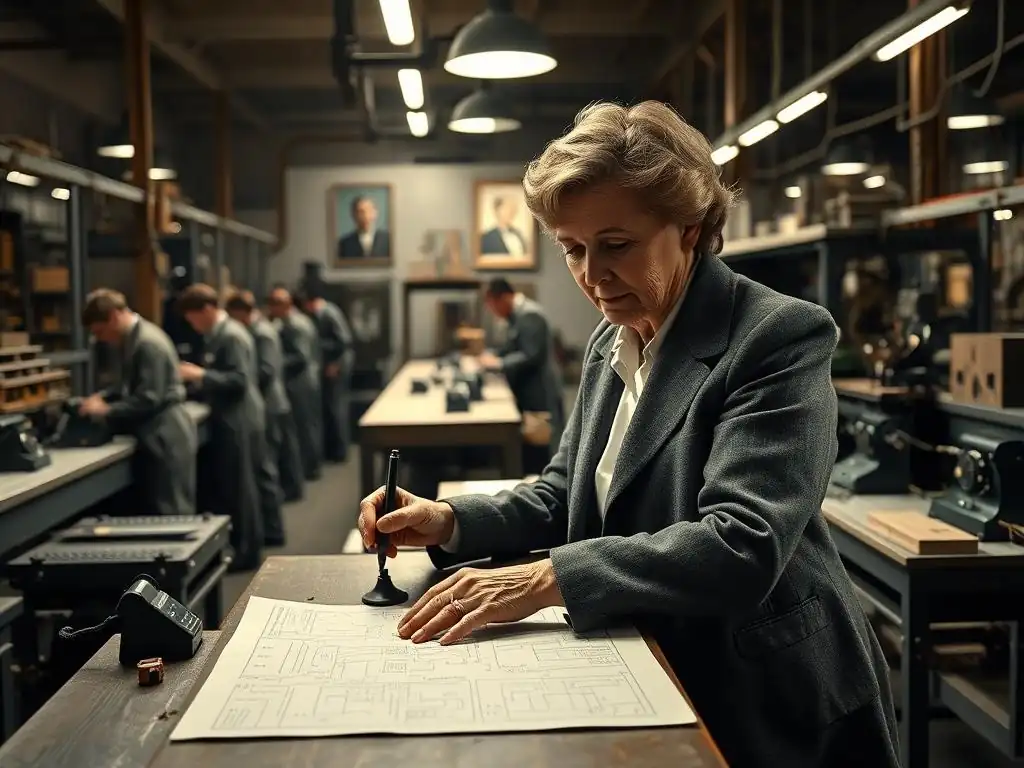
Welcome to WomenInScienceHistory.com, where we illuminate the remarkable legacies of female scientists throughout history. Ever wondered how efficiency in the workplace became a science? Dive into the extraordinary life of Lillian Gilbreth, the "Mother of Modern Management," and discover how her revolutionary efficiency management techniques not only transformed industries but also redefined the balance between work and family. Prepare to be inspired by her innovative spirit and lasting impact!
- Introduction: Celebrating Lillian Gilbreth's Legacy in Industrial Engineering
- Early Life and Education: Shaping a Future Industrial Engineer
- The Gilbreth Partnership: Pioneering Motion Study and Time Management
- Key Contributions to Efficiency Management Techniques
- Applications of Gilbreth's Principles Beyond the Factory Floor
- Lillian Gilbreth's Focus on Human Factors in Engineering
- Later Career and Recognition: Cementing Gilbreth's Place in History
- The Gilbreth Family: Balancing Career and Motherhood
- Lillian Gilbreth's Enduring Influence on Modern Management Practices
- Conclusion: Remembering Lillian Gilbreth, an Industrial Engineering Icon
-
Frequently Asked Questions
- What were Lillian Gilbreth's primary contributions to the field of management?
- How did Lillian Gilbreth's work differ from that of her husband, Frank Gilbreth?
- What is "therblig" and how did the Gilbreths utilize this concept?
- What were some of the challenges Lillian Gilbreth faced as a woman in science and engineering?
- How did Lillian Gilbreth's experiences as a mother influence her work in efficiency management?
- Final Reflection: The Enduring Legacy of Efficiency
- Ignite Your Inner Efficiency Expert!
Introduction: Celebrating Lillian Gilbreth's Legacy in Industrial Engineering
Women in Engineering History: Recognizing Lillian Gilbreth's Contributions
Lillian Gilbreth stands as a monumental figure in the annals of industrial engineering, a field she helped shape and define during its formative years. As a pioneering woman in a predominantly male domain, her contributions were not only groundbreaking but also served to challenge prevailing societal norms regarding women's roles in science and engineering.
Born in 1878, Gilbreth brought a unique interdisciplinary perspective, blending her deep understanding of psychology with the practicalities of engineering to create a more humane and efficient workplace. Her work laid fundamental groundwork for modern management principles, demonstrating that intellectual rigor and innovative thinking transcended gender.
Her early academic achievements at a time when higher education for women was still a struggle were remarkable. She earned her Bachelor of Letters in 1900 and a Master of Arts in 1902 from the University of California, Berkeley, before pursuing a Ph.D. in psychology from Brown University, which she completed in 1915. This robust psychological foundation allowed her to approach industrial problems with an unprecedented focus on human factors, distinguishing her work from many of her contemporaries. Her advocacy for the worker's well-being, even amidst the drive for efficiency, marked her as a visionary.
The Enduring Impact of Gilbreth's Efficiency Management Techniques
The Lillian Gilbreth efficiency management techniques revolutionized how work was understood and optimized, moving beyond mere stopwatch-driven time studies to a comprehensive analysis that included human motion and psychology. Her methods aimed not just at increasing output but also at reducing worker fatigue and improving job satisfaction. This holistic approach ensured that the gains in productivity were sustainable and beneficial for both employers and employees.
Today, the enduring impact of Gilbreth's work is evident in numerous modern practices. Lean manufacturing, Six Sigma, and ergonomic design principles all trace their roots back to the foundational insights of Lillian Gilbreth efficiency management techniques. Her emphasis on eliminating waste, standardizing processes, and designing tools and environments for human comfort continues to influence everything from factory floor layouts to user interface design in software development, proving the timeless relevance of her human-centered approach to efficiency.
Early Life and Education: Shaping a Future Industrial Engineer
Lillian Moller Gilbreth: From Psychology to Engineering
Lillian Evelyn Moller was born on May 24, 1878, in Oakland, California, into a family that valued education and intellectual curiosity. From a young age, she displayed exceptional academic prowess, particularly in areas that would later inform her groundbreaking work. Her initial academic path diverged from traditional engineering, focusing instead on the humanities and psychology.
She earned her undergraduate and master's degrees from the University of California, Berkeley, with a focus on English literature and psychology. This unique background provided her with a critical lens through which to view industrial problems, emphasizing the human element often overlooked by purely engineering-focused approaches.
Her doctoral studies culminated in a Ph.D. in psychology from Brown University in 1915, making her one of the earliest women to achieve such a distinction in the field. Her dissertation, "The Psychology of Management," explored the psychological dimensions of scientific management, arguing that efficiency should not come at the expense of worker well-being. This work, published in 1914, predated her formal doctorate and became a cornerstone of her intellectual contributions, establishing her as a pioneer in industrial psychology and a key architect of human-centered Lillian Gilbreth efficiency management techniques.
Marriage to Frank Gilbreth: A Partnership in Motion Study
Lillian Moller's life took a pivotal turn in 1904 when she met and married Frank Bunker Gilbreth, a prominent contractor and self-taught efficiency expert. Their union was not merely a personal one but ignited a formidable professional partnership that would redefine the landscape of industrial engineering. Frank, known for his innovative methods in the construction industry, had already begun exploring time and motion studies to optimize work processes.
Lillian's psychological insights perfectly complemented Frank's practical engineering background. Together, they formed a unique synergy, applying her understanding of human behavior, fatigue, and motivation to his observational techniques. This collaboration was instrumental in developing the comprehensive Lillian Gilbreth efficiency management techniques that focused on both the physical movements of workers and their psychological states, laying the groundwork for their joint contributions to scientific management.
The Gilbreth Partnership: Pioneering Motion Study and Time Management
Frank and Lillian Gilbreth: A Collaborative Approach to Scientific Management
The partnership between Frank and Lillian Gilbreth was a cornerstone in the development of scientific management, particularly their pioneering work in motion and time studies. While Frederick Winslow Taylor, often considered the "father of scientific management," focused primarily on time as the key metric for efficiency, the Gilbreths expanded this scope significantly by integrating the human element.
They believed that true efficiency came from understanding the worker's movements and mental state, not just the speed of their tasks. Their collaborative efforts led to numerous joint publications, including "Motion Study" (1911) and "Applied Motion Study" (1917), which outlined their revolutionary approaches.
Their distinct yet complementary skills allowed them to create a more holistic approach to workplace optimization. Frank, with his background in construction, was adept at observing and analyzing physical processes, while Lillian, with her Ph.D. in psychology, brought an understanding of human motivation, fatigue, and learning. This fusion of engineering and psychology was unique and groundbreaking, allowing them to develop Lillian Gilbreth efficiency management techniques that were both highly effective and more considerate of the human worker.
Applying Psychology to Industrial Efficiency: The Gilbreth's Innovative Methods
Lillian Gilbreth's profound understanding of psychology was the linchpin of the Gilbreth's innovative methods for industrial efficiency. She recognized that simply pushing workers to perform faster was unsustainable and often counterproductive. Instead, she advocated for designing work processes that minimized physical and mental strain, thereby increasing overall productivity and worker satisfaction. Her psychological insights led to a focus on reducing fatigue, optimizing learning curves, and considering the individual differences among workers.
For instance, Lillian emphasized the importance of proper training and the psychological benefits of structured rest breaks. She believed that a well-rested and mentally engaged worker was far more efficient than an exhausted one. This perspective influenced the design of workstations and tools, ensuring they were ergonomically suited to the human body and mind. The integration of psychology into their Lillian Gilbreth efficiency management techniques set their work apart and continues to be a hallmark of modern human-centered design.
Motion Study Analysis: Eliminating Waste and Optimizing Workflows
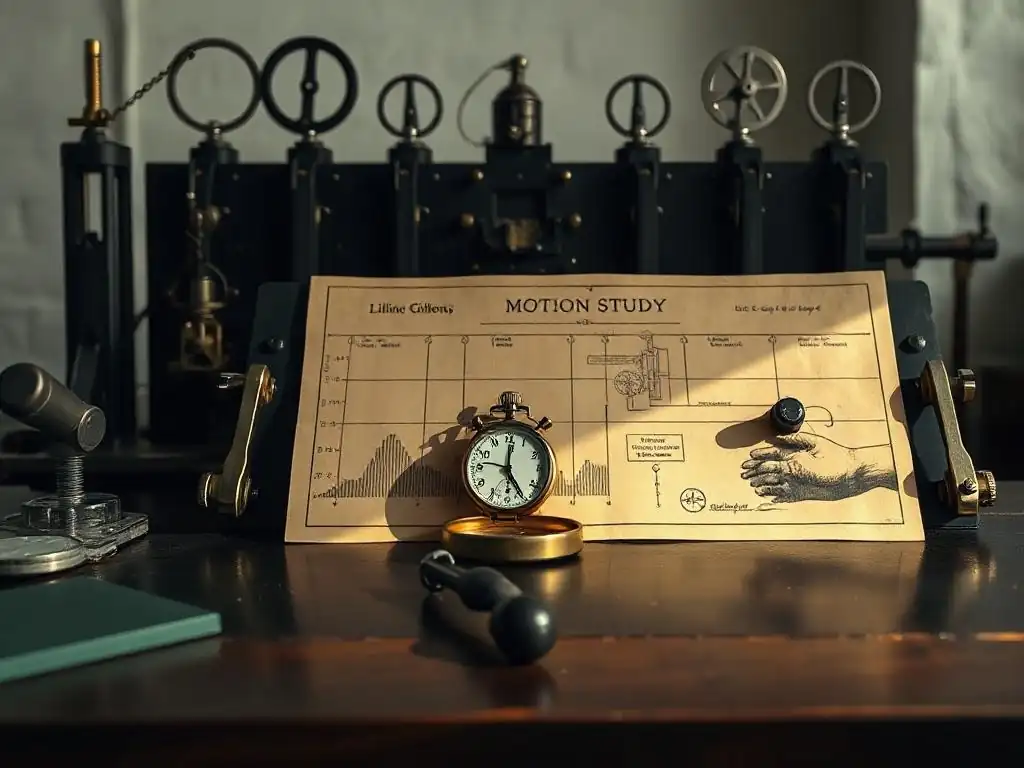
The Gilbreths are perhaps best known for their pioneering work in motion study, a meticulous analysis of the physical movements involved in performing a task. Their methods went far beyond simple observation; they employed innovative tools such as microchronometers, which could measure time in thousandths of a second, and cyclographs, which used lights attached to workers' hands to record paths of motion on long-exposure photographs. These techniques allowed them to break down complex tasks into their most fundamental constituent motions.
The primary goal of motion study was to identify and eliminate wasteful, inefficient, or fatiguing movements. For example, Frank Gilbreth's earlier work in bricklaying famously reduced the number of motions required to lay a brick from 18 to 4.5, significantly increasing productivity and reducing strain on the bricklayers. This systematic approach to analyzing and optimizing workflows became a core component of Lillian Gilbreth efficiency management techniques, leading to substantial improvements in various industries, from manufacturing to surgery.
Key Contributions to Efficiency Management Techniques
The "One Best Way": Identifying Optimal Work Methods
Central to the Lillian Gilbreth efficiency management techniques was the concept of "the one best way." This principle was not about imposing a rigid, unchangeable standard but rather about a continuous, scientific search for the most efficient and least fatiguing method to perform any given task. The Gilbreths believed that through meticulous observation, analysis, and experimentation, an optimal sequence of motions and conditions could be identified, leading to significant improvements in productivity and worker well-being.
This iterative process involved breaking down tasks, analyzing each element, and then reconstructing the task in a more streamlined manner. For instance, in surgical procedures, they analyzed the movements of surgeons and nurses to identify the most efficient placement of instruments and the most effective sequence of actions, thereby reducing operating time and patient risk. The "one best way" became a powerful guiding principle for optimizing work across diverse settings, from factories to operating rooms.
Time and Motion Studies: Enhancing Productivity and Reducing Fatigue
The Gilbreths' most famous contribution to industrial engineering is their comprehensive development of time and motion studies. While Frank initially focused on the time aspect, Lillian's influence brought the critical dimension of motion analysis and, crucially, the reduction of worker fatigue. They meticulously documented the physical movements of workers, using films and chronometers to identify inefficient motions and wasted effort. Their goal was to enhance productivity not by speeding up workers, but by making their movements more efficient and less strenuous.
For example, in a factory setting, they might analyze the assembly line of a product, observing how workers reached for parts, grasped them, and assembled components. By redesigning the workstation layout, optimizing the sequence of operations, or even modifying the tools used, they could significantly reduce the number of motions required and the physical strain on the worker. These Lillian Gilbreth efficiency management techniques demonstrated that improved output and worker comfort were not mutually exclusive but rather synergistic outcomes of thoughtful design.
The Therblig System: Deconstructing Work into Fundamental Elements
A cornerstone of the Lillian Gilbreth efficiency management techniques is the Therblig system, a revolutionary method for analyzing and classifying human motion. The term "Therblig" is, ingeniously, "Gilbreth" spelled backward (with an added 's'), highlighting its origin. This system breaks down any manual task into 18 fundamental elements of motion, such as "search," "find," "grasp," "transport loaded," "position," and "release load." Each Therblig represents a basic unit of work, whether effective or ineffective.
By deconstructing tasks into these micro-motions, the Gilbreths could precisely identify and eliminate unnecessary or inefficient movements. For instance, analyzing a worker assembling a small device, they could pinpoint wasted "search" or "find" time and then redesign the workstation to place parts within easy reach, minimizing these unproductive Therbligs. This granular analysis allowed for unprecedented levels of optimization, leading to substantial reductions in wasted effort and significant improvements in overall workflow and productivity.
Applications of Gilbreth's Principles Beyond the Factory Floor
Home Management and Ergonomics: Improving Daily Life
Lillian Gilbreth uniquely extended her efficiency management techniques beyond the traditional industrial sphere, applying them to the domestic realm. She recognized that the home, particularly for women, was a significant workplace often fraught with inefficient processes and unnecessary labor. Her aim was to liberate homemakers from undue drudgery by applying the same scientific principles used in factories to household chores, making daily life more manageable and less fatiguing.
Her work in home management included the development of ergonomic principles for household tasks. She advocated for practical solutions such as adjusting the height of ironing boards, optimizing the placement of cleaning supplies, and designing accessible storage solutions. These applications demonstrated her belief that efficiency was a universal concept that could improve the quality of life in any setting, not just industrial ones.
Gilbreth's Contributions to Kitchen Design and Efficiency
Perhaps one of the most visible and lasting applications of Lillian Gilbreth's principles in the home was her groundbreaking work in kitchen design. She approached the kitchen as a laboratory, applying motion studies to analyze how homemakers prepared meals and cleaned. Her research led to the development of the "scientific kitchen," characterized by layouts that minimized steps and effort. She is widely credited with popularizing the concept of the "work triangle," optimizing the placement of the sink, stove, and refrigerator to reduce walking distances during meal preparation.
Her designs also championed concepts like continuous countertops, accessible shelving, and the strategic placement of appliances to create a smooth workflow. For instance, she suggested placing frequently used items within easy reach and organizing cupboards to eliminate unnecessary bending or stretching. These innovations, rooted in her Lillian Gilbreth efficiency management techniques, transformed kitchen layouts, significantly reducing the physical demands of cooking and cleaning for millions of people worldwide.
Adapting Industrial Engineering Principles to Healthcare and Education
Lillian Gilbreth's genius lay in her ability to adapt her industrial engineering principles to a vast array of fields beyond manufacturing and the home. In healthcare, her Lillian Gilbreth efficiency management techniques were instrumental in improving hospital operations and surgical procedures. She consulted on hospital layouts to optimize patient flow and nurse efficiency, ensuring that critical supplies were readily accessible and that staff movements were minimized during emergencies. She also worked on improving surgical techniques, analyzing the motions of surgeons and nurses to reduce operating times and minimize patient exposure.
Similarly, in education, she advocated for the application of efficiency principles to classroom management and teaching methods. She believed that by optimizing the physical layout of classrooms and streamlining instructional processes, learning could become more effective and less fatiguing for both students and teachers. Her versatile approach demonstrated that the core tenets of motion study and human-centered design were universally applicable to any domain involving human endeavor.
Lillian Gilbreth's Focus on Human Factors in Engineering
Prioritizing Worker Well-being and Satisfaction
A defining characteristic of Lillian Gilbreth's pioneering work was her unwavering focus on the human element in engineering. Unlike many of her contemporaries who viewed workers primarily as components in a mechanical system, Gilbreth consistently emphasized the importance of worker well-being, satisfaction, and psychological health. She argued that true efficiency could only be achieved when the needs and capabilities of the human operator were fully considered and respected. This human-centered approach became a cornerstone of her Lillian Gilbreth efficiency management techniques.
She understood that physical fatigue, boredom, and lack of motivation could severely impact productivity. Therefore, her solutions often included provisions for rest periods, ergonomic tool design, and methods to make repetitive tasks less monotonous. Her advocacy for the worker's holistic experience led to improved working conditions, reduced industrial accidents, and a greater recognition of the psychological dimensions of work, demonstrating that humane treatment and high productivity were not mutually exclusive.
Ergonomics and Workplace Design: Creating a Comfortable and Efficient Environment
Lillian Gilbreth was a foundational figure in the field of ergonomics, the science of designing and arranging things people use so that the people and things interact most efficiently and safely. Her work systematically analyzed how human bodies interact with their work environment, leading to practical recommendations for workplace design. She championed the use of adjustable chairs, proper lighting, and optimized workstation layouts to minimize strain, reduce fatigue, and prevent injuries.
For example, her studies in office environments led to recommendations for desk heights, chair adjustability, and the placement of typewriters (the dominant office tool of her era) to ensure comfort and reduce repetitive strain. These ergonomic considerations, integral to Lillian Gilbreth efficiency management techniques, not only boosted productivity by making work easier but also significantly improved the long-term health and comfort of employees, setting precedents for modern occupational health and safety standards.
Understanding the Psychological Impact of Work on Employees
Lillian Gilbreth's doctorate in psychology deeply informed her approach to industrial engineering, leading her to emphasize the profound psychological impact of work on employees. She recognized that factors like monotony, lack of control, and poor working conditions could lead to stress, dissatisfaction, and decreased performance. Her research extended beyond mere physical movements to encompass the mental processes involved in learning, decision-making, and coping with repetitive tasks.
She advocated for job enrichment, proper training, and feedback mechanisms to keep workers engaged and motivated. Her insights into industrial psychology influenced practices such as employee selection, performance appraisal, and the design of incentive systems that considered psychological factors. This pioneering focus on the mental and emotional well-being of workers was a distinctive feature of Lillian Gilbreth efficiency management techniques, making her a precursor to modern fields like organizational psychology and human resources.
Later Career and Recognition: Cementing Gilbreth's Place in History
Consulting and Teaching: Sharing Knowledge and Expertise
Following the sudden death of her husband, Frank, in 1924, Lillian Gilbreth faced the daunting task of continuing their joint work while raising their 11 children. She not only persevered but thrived, taking over their consulting firm, Gilbreth, Inc. She became a highly sought-after consultant for major corporations, including Macy's, Johnson & Johnson, and General Electric, where she applied her Lillian Gilbreth efficiency management techniques to improve diverse operations, from office procedures to product design.
Her dedication to sharing knowledge also extended to academia. She held professorships at Purdue University from 1935 to 1948, becoming the first female professor in the university's School of Engineering. She also taught at Newark College of Engineering (now New Jersey Institute of Technology) and Rutgers University. Through her teaching, she mentored countless students, ensuring that her human-centered approach to industrial engineering would continue to influence future generations.
Awards and Honors: Recognizing Gilbreth's Pioneering Work
Lillian Gilbreth's extraordinary contributions were recognized with numerous prestigious awards and honors throughout her lifetime, cementing her place as a true pioneer. In 1926, she became the first woman inducted into the American Society of Mechanical Engineers (ASME), a significant milestone in a male-dominated profession. Decades later, in 1965, she achieved another historic first by becoming the first woman elected to the National Academy of Engineering, one of the highest honors for engineers in the United States.
Among her most notable accolades was the Hoover Medal in 1966, awarded for "outstanding non-technical services to humanity," placing her among luminaries like Herbert Hoover, Henry Ford, and Dwight D. Eisenhower. She received over 20 honorary degrees from various universities worldwide, acknowledging her profound impact across multiple disciplines. In 1998, she was posthumously inducted into the National Women's Hall of Fame, further solidifying her legacy as a transformative figure whose Lillian Gilbreth efficiency management techniques benefited society at large.
Lillian Gilbreth: A Role Model for Women in STEM
Lillian Gilbreth's life and career serve as an enduring inspiration and a powerful role model for women in STEM (Science, Technology, Engineering, and Mathematics) fields. At a time when women were largely excluded from higher education and professional careers in engineering, she broke numerous barriers through sheer intellect, determination, and innovative spirit. Her ability to achieve academic excellence, conduct groundbreaking research, and run a successful consulting firm while raising a large family demonstrated that gender was not a barrier to significant professional achievement.
Her story encouraged countless women to pursue careers in engineering, management, and scientific research, showing that it was possible to make profound contributions and gain recognition in fields traditionally reserved for men. By consistently championing the human element in engineering and advocating for the inclusion of diverse perspectives, she paved the way for greater diversity and inclusivity in STEM, leaving a legacy that continues to empower future generations of female innovators.
The Gilbreth Family: Balancing Career and Motherhood
"Cheaper by the Dozen": A Glimpse into the Gilbreth's Family Life
The unique and often humorous dynamics of the Gilbreth family, particularly their application of efficiency principles to daily life, were famously chronicled in the bestselling book "Cheaper by the Dozen." Written by two of Lillian's children, Frank Jr. and Ernestine Gilbreth Carey, the book, and subsequent film adaptations, offered a delightful and insightful peek into a household managed with the same scientific rigor applied to industrial settings.
While embellished for narrative effect, it captured the essence of their home life where time and motion studies were part of the daily routine, from efficient bathing schedules to chore organization for their 12 children.
The book highlighted how Lillian and Frank Gilbreth integrated their professional passion for efficiency into every aspect of their personal lives. For example, the children were timed on how quickly they could get dressed, and family meetings were conducted with parliamentary procedure. This narrative provided a relatable and often amusing illustration of how Lillian Gilbreth efficiency management techniques could be adapted to even the most unconventional environments, showcasing her dedication to practical application.
Integrating Family Values with Professional Pursuits
Lillian Gilbreth's life exemplified an extraordinary integration of demanding professional pursuits with profound family values. Unlike many professional women of her era who might have had to choose between career and family, Lillian found ways to blend the two, often using her home as a laboratory for her Lillian Gilbreth efficiency management techniques. She saw the management of her large household not as a burden but as an opportunity to apply and refine her scientific principles.
She believed that efficiency in the home was crucial for empowering women and creating a harmonious family environment. This seamless integration showcased her conviction that the principles of scientific management were not just for factories but could enhance all aspects of life, including raising children and managing a household effectively. Her ability to balance these roles made her an even more compelling and relatable figure, demonstrating a holistic approach to life management.
Inspiring Future Generations of Engineers and Managers
Lillian Gilbreth's personal story, characterized by her ability to balance a groundbreaking career with the responsibilities of raising a large family, has served as a powerful source of inspiration for countless individuals. Her children themselves went on to achieve success in various fields, many influenced by the analytical and efficient mindset fostered in their home. This legacy extended beyond her immediate family, demonstrating that professional excellence and personal fulfillment were not mutually exclusive.
Her life continues to inspire future generations of engineers, managers, and working parents to pursue their passions, manage diverse responsibilities creatively, and contribute meaningfully to society. By showcasing how Lillian Gilbreth efficiency management techniques could be applied to both industrial and domestic spheres, she provided a blueprint for a balanced and productive life, encouraging individuals to think innovatively about how they manage their time, energy, and resources.
Lillian Gilbreth's Enduring Influence on Modern Management Practices
The Lasting Relevance of Gilbreth's Efficiency Techniques
The Lillian Gilbreth efficiency management techniques developed over a century ago remain remarkably relevant and foundational to modern management practices. Concepts such as process optimization, ergonomic design, and human-centered engineering are direct descendants of her pioneering work. Her emphasis on understanding the fundamental elements of work, eliminating waste, and designing systems that account for human capabilities and limitations is still taught in business schools and engineering programs worldwide.
Today's continuous improvement methodologies like Lean manufacturing and Six Sigma owe a significant debt to the Gilbreths' systematic approach to identifying and eliminating inefficiencies. Her focus on identifying "the one best way" has evolved into modern process mapping and workflow analysis, proving that her foundational principles are timeless and adaptable to complex contemporary challenges in diverse industries.
How Gilbreth's Principles Continue to Shape Workplace Optimization
Lillian Gilbreth's principles continue to profoundly shape workplace optimization in the 21st century. Her human-factors approach, which prioritized worker well-being alongside productivity, is more pertinent than ever in an era where employee engagement and mental health are recognized as critical drivers of organizational success. Modern ergonomic furniture, office layouts designed for collaboration and comfort, and even the design of user interfaces in software all reflect her early insights into how environment and tools impact human performance.
Furthermore, her meticulous motion studies have evolved into sophisticated data analytics and AI-driven process automation, yet the underlying goal remains the same: to identify and eliminate unnecessary steps and optimize workflows. Her emphasis on understanding the psychological impact of work informs contemporary talent management, training programs, and organizational development strategies, ensuring that workplace optimization is holistic and sustainable.
Lillian Gilbreth and the Future of Industrial Engineering
Lillian Gilbreth's legacy extends far into the future of industrial engineering. As technology advances and workplaces evolve, her core principles of human-centered design and efficiency remain crucial. In the age of artificial intelligence, automation, and robotics, her focus on the interaction between humans and machines, and the psychological impact of technology on workers, is more relevant than ever. She laid the groundwork for fields like human-computer interaction and cognitive ergonomics.
Her vision of a workplace where efficiency is achieved through understanding and respecting the human element continues to guide innovations in smart manufacturing, personalized work environments, and adaptive systems. The future of industrial engineering will undoubtedly build upon the robust foundation of Lillian Gilbreth efficiency management techniques, ensuring that technological progress serves human needs effectively and ethically, making her an enduring icon of innovation and foresight.
Conclusion: Remembering Lillian Gilbreth, an Industrial Engineering Icon
Frequently Asked Questions
What were Lillian Gilbreth's primary contributions to the field of management?
Lillian Gilbreth made significant contributions to efficiency management and industrial engineering. She focused on human factors in the workplace, emphasizing worker well-being and ergonomics to improve productivity. Her work went beyond simply measuring time and motion.
How did Lillian Gilbreth's work differ from that of her husband, Frank Gilbreth?
While they often collaborated, Lillian Gilbreth brought a unique psychological perspective to the partnership. She emphasized the human element in efficiency studies, focusing on worker motivation and job satisfaction, rather than solely on optimizing physical movements.
What is "therblig" and how did the Gilbreths utilize this concept?
A "therblig" is a fundamental motion element used in time and motion studies. The Gilbreths used therbligs to analyze and simplify work processes, aiming to reduce wasted movements and increase efficiency in various tasks.
What were some of the challenges Lillian Gilbreth faced as a woman in science and engineering?
Lillian Gilbreth faced significant gender bias in a male-dominated field. She was often overlooked or underestimated despite her groundbreaking contributions and had to work harder to gain recognition and acceptance for her work.
How did Lillian Gilbreth's experiences as a mother influence her work in efficiency management?
Her experiences raising a large family deeply influenced her focus on efficiency and ergonomics within the home. She applied her principles of work simplification to household tasks, ultimately improving the quality of life for families.
Okay, here's a final reflection designed to close your article on Lillian Gilbreth, optimized for the keyword "Lillian Gilbreth efficiency management techniques" and following the requested structure:
Final Reflection: The Enduring Legacy of Efficiency
Lillian Gilbreth's efficiency management techniques, though developed in the early 20th century, remain profoundly relevant today as businesses and individuals alike strive for greater productivity and well-being. Her focus on motion study, ergonomics, and the human element in the workplace provides a timeless framework for optimizing performance and fostering a more supportive and effective environment.
The impact of Lillian Gilbreth extends far beyond the factory floor. Her emphasis on understanding human needs and adapting processes accordingly has shaped modern approaches to design, technology, and even education. Her work reminds us that efficiency is not simply about maximizing output, but about creating systems that empower individuals and improve their quality of life. The greatest waste in the world is the difference between what we are and what we could become.
This quote encapsulates Gilbreth's belief in the potential of every individual and the importance of creating environments that allow them to thrive.
As we navigate an increasingly complex and demanding world, let us remember Lillian Gilbreth's pioneering spirit and her unwavering commitment to human-centered efficiency. Consider how you can apply her principles of motion study, ergonomics, and collaboration to optimize your own work, your home, and your relationships. Embrace the challenge of creating a more efficient and fulfilling life, one motion, one interaction, one innovation at a time.
Ignite Your Inner Efficiency Expert!
Thank you for delving into the remarkable life and work of Lillian Gilbreth! We hope you’ve found inspiration in her dedication to making life more efficient and fulfilling. Now, it’s your turn to put those principles into action!
- Start Small, Dream Big: Identify one daily task that feels unnecessarily complicated and brainstorm three ways to streamline it. Could you reorganize your workspace, automate a process, or delegate a responsibility?
- Share Lillian’s legacy by discussing her contributions with your friends, family, or colleagues. Help ensure her pioneering work continues to inspire future generations.
- Delve deeper! Research other women who have shaped the fields of management and industrial engineering and share your discoveries with the Women in Science History community!
What small step will you take today to embrace Lillian Gilbreth's philosophy and optimize your own life?