
The [Invention/Project] That Changed Everything: [Engineer's Name]'s Story


Welcome to WomenInScienceHistory.com!
Dive into the inspiring story of [Engineer's Name] and the groundbreaking [Invention/Project] that redefined her field. This biography uncovers not only the brilliance behind her invention but also the challenges she overcame as a female engineer in a world often resistant to change. Prepare to be captivated by a tale of innovation, perseverance, and the profound impact of one woman's vision. What obstacles did she face, and how did her invention shape the world? Explore further to discover the full story!
- The COBOL Compiler That Streamlined Business: Grace Hopper's Story
- Introduction: Celebrating Grace Hopper's Groundbreaking Contribution to Computer Science
- Early Life and Education: The Seeds of Computing Genius in Grace Hopper
- The Genesis of the COBOL Compiler: Conception and Development
- The Groundbreaking COBOL Compiler: Details and Functionality
- Impact and Significance: How Hopper's Compiler Transformed Business Computing
- Overcoming Adversity: Challenges Faced as a Female Computer Scientist
- Grace Hopper's Lasting Legacy: Inspiring Future Female Computer Scientists
- Conclusion: Grace Hopper's Enduring Contribution to Computer Science
-
Frequently Asked Questions
- What is "WomenInScienceHistory.com" about?
- Why is it important to highlight the stories of female scientists and engineers?
- What kind of challenges did female engineers typically face in the past?
- What is a "groundbreaking invention story" in the context of this website?
- How does "WomenInScienceHistory.com" aim to inspire future generations?
- Final Reflection: The Enduring Spark of Innovation
- Ignite Your Own Scientific Journey!
The COBOL Compiler That Streamlined Business: Grace Hopper's Story
Introduction: Celebrating Grace Hopper's Groundbreaking Contribution to Computer Science
Highlighting Women in Computing History: Grace Hopper's Legacy
Grace Hopper, often referred to as "Amazing Grace," was a pivotal figure whose work fundamentally shaped modern computing. Her contributions extended far beyond the invention of COBOL, encompassing pioneering work in compiler development and advocating for machine-independent programming languages. Her story is a prime example of a female engineer’s groundbreaking invention story that transformed an entire industry.
Hopper's legacy is not just about the technical innovations she spearheaded but also about her relentless advocacy for making computers accessible and understandable to a broader audience. She envisioned a future where programming was not confined to a select few mathematicians but could be utilized by businesses and individuals alike, a vision she actively worked to realize through her groundbreaking contributions.
The Importance of Recognizing Female Computer Scientists' Innovations
Recognizing the innovations of female computer scientists like Grace Hopper is crucial for accurately portraying the history of technology and inspiring new generations. For too long, the narratives of women in STEM have been overlooked, leading to a skewed perception of who contributes to scientific and technological progress. Highlighting these stories corrects the historical record and provides powerful role models.
Such recognition serves to dismantle persistent stereotypes about gender roles in technical fields and encourages young women to pursue careers in computing and engineering. By showcasing the profound impact of figures like Hopper, we demonstrate that a female engineer’s groundbreaking invention story is not an anomaly but a vital part of technological advancement, fostering a more inclusive and diverse future in STEM.
Early Life and Education: The Seeds of Computing Genius in Grace Hopper
Grace Hopper's Childhood and Early Interest in Mathematics
Born Grace Brewster Murray in New York City in 1906, Hopper displayed an early fascination with how things worked. At the tender age of seven, her insatiable curiosity led her to dismantle seven alarm clocks in a single night to understand their inner mechanisms. This early, hands-on exploration of mechanics foreshadowed her later analytical prowess and her lifelong dedication to understanding and optimizing complex systems.
Her keen interest in mathematics and problem-solving was evident throughout her childhood. She excelled in her studies, showing a particular aptitude for subjects that required logical thinking and precise calculations. This foundational period instilled in her the analytical mindset that would later prove invaluable in her groundbreaking work in computer science, paving the way for her to become a notable female engineer.
Academic Journey: From Vassar College to PhD in Mathematics at Yale
Grace Hopper's formal academic journey began at Vassar College, where she graduated in 1928 with a Bachelor of Arts degree in mathematics and physics. Her exceptional performance earned her a fellowship to pursue graduate studies at Yale University, a prestigious institution. This rapid progression through higher education underscored her intellectual capabilities and dedication to her chosen fields.
In 1930, she earned her Master's degree from Yale, and just three years later, in 1934, she successfully completed her Doctor of Philosophy (PhD) in mathematics, also from Yale. Her dissertation, "New Types of Irreducibility Criteria," showcased her advanced understanding of abstract mathematical concepts, solidifying her academic credentials before she embarked on her transformative career as a female engineer.
Overcoming Obstacles: Challenges Faced by Women in STEM Education During Hopper's Time
During the early 20th century, women pursuing advanced degrees, especially in fields like mathematics and science, faced significant societal and institutional barriers. Universities often had quotas or unwritten biases against female students, and the prevailing cultural norms encouraged women towards more traditional roles rather than demanding academic or professional careers in STEM.
Despite these pervasive challenges, Hopper's academic achievements at Yale were remarkable. Her perseverance in a male-dominated academic environment demonstrated her unwavering commitment to intellectual pursuit. Her success in obtaining a PhD in mathematics at a time when fewer than 2% of all PhDs were awarded to women, and even fewer in STEM fields, stands as a testament to her determination and intellect, making her an inspiring figure in the history of female engineers.
The Genesis of the COBOL Compiler: Conception and Development
Identifying the Problem: The Need for User-Friendly Programming Languages
After joining the Harvard Mark I computer project during World War II, Grace Hopper gained firsthand experience with the laborious nature of early computer programming. Programs were written in machine code or assembly language, which were highly technical, prone to errors, and required deep understanding of the machine's architecture. This made programming inaccessible to most business professionals.
Hopper recognized that for computers to move beyond scientific and military applications and become truly useful for business, programming needed to be simplified. She envisioned a future where programmers could write instructions in a language closer to human English, rather than cryptic symbols and binary code. This vision was the driving force behind her pursuit of a more accessible programming paradigm, laying the groundwork for a female engineer’s groundbreaking invention story.
The Eureka Moment: Hopper's Idea of a Compiler Translating English-like Code
The "eureka moment" for Hopper came with her realization that a computer could be programmed to "translate" human-readable instructions into machine code. In 1952, she developed the A-0 System, the first compiler for an electronic computer. This was a radical concept: instead of writing every instruction directly in machine language, one could write in a higher-level language and let the compiler do the conversion.
This breakthrough was foundational. It allowed programmers to write more efficiently and with fewer errors, abstracting away the complex details of the underlying hardware. Her work on the A-0 and subsequent Flow-Matic (released in 1958) compilers demonstrated the feasibility and immense benefits of her approach, proving that a female engineer could pioneer transformative software.
Despite the clear advantages, Hopper faced significant skepticism and resistance from her peers and superiors regarding her compiler concepts. Many believed that computers were inherently mathematical machines and that "English-like" programming was inefficient or even impossible. She famously recalled being told, "You can't do that, the computer won't understand English."
Hopper persisted, demonstrating the practicality of her ideas through working prototypes and tireless advocacy. Her determination eventually convinced the U.S. Navy and later, a consortium of computer manufacturers, to invest in and adopt her compiler concepts. This perseverance in overcoming entrenched resistance was critical to the widespread adoption of her groundbreaking invention.
The Groundbreaking COBOL Compiler: Details and Functionality
A Detailed Look at the COBOL Compiler's Design and Architecture
The Common Business-Oriented Language (COBOL) was designed in 1959 by a committee, Conference on Data Systems Languages (CODASYL), which included Grace Hopper as a technical advisor. While she did not invent COBOL itself, her earlier work on Flow-Matic heavily influenced its design, especially its English-like syntax and data division structure. COBOL was conceived as a self-documenting language, making programs easier to read and maintain.
Its architecture was structured into distinct divisions: IDENTIFICATION (program name), ENVIRONMENT (hardware specifications), DATA (data descriptions), and PROCEDURE (program logic). This modular design, influenced by Hopper's earlier work, allowed for clearer separation of concerns and made the language highly portable across different computer systems, a significant advantage in an era of diverse hardware, solidifying its place as a groundbreaking invention.
How the COBOL Compiler Works: Explaining the Compilation Process
A COBOL compiler translates source code written in COBOL into machine-executable code. The process typically involves several stages: lexical analysis (breaking code into tokens), parsing (checking syntax), semantic analysis (checking meaning and consistency), optimization (improving performance), and code generation (producing machine code). This multi-stage process ensures that the high-level, human-readable instructions are accurately converted into commands the computer can execute.
For example, a COBOL statement like ADD AMOUNT TO TOTAL would be broken down, checked for correct syntax, and then translated into a series of machine instructions that perform the arithmetic operation and store the result. This abstraction made programming accessible to business professionals who didn't need to understand the intricate details of binary arithmetic or memory management, a true testament to a female engineer's groundbreaking invention story.
Innovations in COBOL: Its Business-Oriented Language and Widespread Adoption
The most significant innovation of COBOL was its explicit focus on business data processing. Unlike scientific languages like FORTRAN, COBOL included robust features for handling financial calculations, record keeping, and large-scale data manipulation. Its verbose, English-like syntax, while sometimes criticized, was a deliberate design choice aimed at making programs readable and understandable by non-technical managers and auditors.
COBOL's widespread adoption was bolstered by the U.S. Department of Defense, which mandated its use for data processing systems in 1960. This government endorsement, combined with its machine independence, led to its rapid proliferation across industries. By the 1970s, COBOL was the most widely used programming language in the world, processing an estimated 80% of all business data, showcasing the immense impact of this groundbreaking invention.
Impact and Significance: How Hopper's Compiler Transformed Business Computing
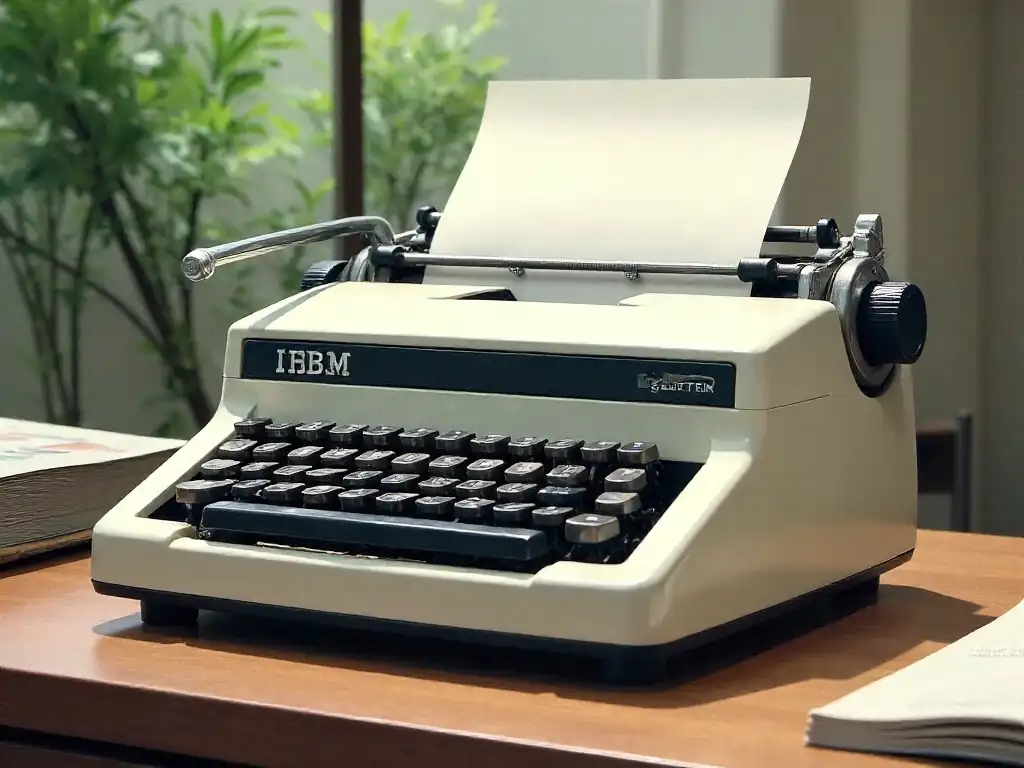
The Immediate Impact of COBOL on Business Data Processing
The introduction of COBOL drastically reduced the time and specialized expertise required to develop business applications. Before COBOL, creating payroll, inventory, or billing systems was a monumental task, often requiring assembly language programmers. COBOL allowed businesses to automate complex processes more efficiently, leading to significant cost savings and improved operational speeds.
For instance, a task that might have taken weeks to program in assembly could be completed in days or even hours using COBOL, enabling companies to quickly adapt to market demands and manage increasingly large datasets. This immediate transformation in data processing capabilities cemented COBOL's role as a cornerstone of corporate IT infrastructure, driven by a female engineer's groundbreaking invention story.
Long-Term Effects: COBOL's Enduring Use in Financial and Government Systems
Decades after its creation, COBOL continues to be the backbone of countless critical systems worldwide. It powers an estimated 70-80% of the world's business transactions, including those in banking, insurance, and government agencies. For example, major financial institutions like JP Morgan Chase and Bank of America still rely on COBOL for core banking operations, processing trillions of dollars daily.
The language's stability, reliability, and ability to handle massive volumes of transactions efficiently have ensured its longevity. Despite efforts to migrate away from it, the sheer scale and cost of replacing these deeply embedded systems mean COBOL remains indispensable. This enduring presence highlights the profound and lasting impact of Hopper's vision for accessible programming, a testament to her groundbreaking invention.
Recognition and Awards: Acknowledging Hopper's Computing Achievements
Grace Hopper received numerous accolades for her monumental contributions to computer science. In 1969, she was awarded the first-ever Computer Sciences Man of the Year Award from the Data Processing Management Association, a clear recognition of her pioneering work. She was also inducted into the National Women's Hall of Fame in 1994.
Perhaps one of her most significant honors was the National Medal of Technology, presented to her by President George H.W. Bush in 1991, making her the first woman to receive the award as an individual. Additionally, a U.S. Navy destroyer, the USS Hopper (DDG-70), was named in her honor in 1996, symbolizing her profound impact on both naval operations and the broader field of computing.
Overcoming Adversity: Challenges Faced as a Female Computer Scientist
Gender Bias in the Computing Field: Hopper's Personal Experiences
Throughout her career, Grace Hopper often encountered skepticism and resistance not just because of her innovative ideas, but also due to her gender. In the mid-20th century, computing was rapidly emerging as a male-dominated field, and women, despite their significant early contributions (like the ENIAC "calculators"), were often relegated to less visible roles or faced dismissive attitudes.
Hopper's anecdotes frequently touched upon the challenges of being taken seriously. She once recounted how male colleagues would initially assume she was a secretary rather than a lead programmer or a naval officer. This pervasive gender bias meant she consistently had to prove her technical prowess and leadership abilities in environments that were not always welcoming to women, making her female engineer’s groundbreaking invention story even more remarkable.
Grace Hopper employed a combination of intellectual brilliance, unwavering persistence, and a pragmatic, results-oriented approach to navigate and succeed in a male-dominated industry. She focused on delivering tangible, working solutions, such as her compilers, which spoke for themselves and demonstrated the validity of her unconventional ideas. Her mantra, "It's easier to ask forgiveness than it is to get permission," exemplified her proactive approach to innovation.
Furthermore, Hopper was a master communicator and educator, capable of explaining complex technical concepts in an understandable way to both technical and non-technical audiences. Her ability to articulate the benefits of her work and build consensus was crucial in garnering support for her revolutionary concepts, even when facing significant resistance from established norms and biases within the computing world.
Inspiring Future Generations of Women in Computer Science
Grace Hopper's career serves as a powerful testament to the potential and impact of women in computer science. Her resilience in the face of adversity and her groundbreaking technical achievements have made her an iconic figure, inspiring countless young women to pursue careers in STEM. Her story demonstrates that innovation knows no gender and that perseverance can overcome significant societal barriers.
Organizations like the Grace Hopper Celebration of Women in Computing, the world's largest gathering of women technologists, are direct embodiments of her legacy. Attracting over 30,000 attendees annually, this event provides a platform for women in tech to connect, learn, and be inspired, continuing Hopper's mission of fostering a more inclusive and diverse computing workforce. Her groundbreaking invention story continues to resonate deeply.
Grace Hopper's Lasting Legacy: Inspiring Future Female Computer Scientists
The Importance of Role Models: Hopper as an Inspiration
Grace Hopper stands as an indispensable role model for aspiring female computer scientists and engineers. Her journey from academic excellence to pioneering compiler technology, all while navigating societal barriers, provides a tangible example of what women can achieve in STEM. Seeing her success helps dismantle the perception that computing is solely a male domain and encourages young women to envision themselves in similar groundbreaking roles.
Her celebrated career trajectory, marked by innovation, leadership, and a commitment to making technology accessible, offers a clear path for future generations. Hopper's story underscores the importance of not just technical skill but also vision, perseverance, and the courage to challenge conventional thinking, qualities that are essential for any aspiring innovator.
Continuing the Work: Building on Hopper's Innovations in Programming Languages
The principles established by Grace Hopper's work on compilers and high-level programming languages continue to be fundamental to modern software development. Every time a programmer uses a language like Python, Java, or C++ and relies on a compiler or interpreter to translate their code into machine instructions, they are benefiting from the foundational concepts Hopper championed.
Her emphasis on readability, portability, and business applicability deeply influenced subsequent language designs and software engineering practices. Researchers and developers today continue to build upon these principles, creating more efficient compilers, more intuitive programming languages, and more robust software systems, ensuring that Hopper's groundbreaking invention and vision continue to shape the technological landscape.
Celebrating Women in Computing: A Call to Action
Grace Hopper's legacy serves as a powerful call to action to continue celebrating and promoting women in computing. While progress has been made, women remain underrepresented in many areas of technology, particularly in leadership and technical roles. By actively highlighting the achievements of historical figures like Hopper and contemporary female engineers, we can inspire and empower more women to enter and thrive in the field.
This involves fostering inclusive environments, providing mentorship opportunities, and ensuring equitable access to education and resources. Continuing to tell stories like Hopper's, which showcase a female engineer’s groundbreaking invention story, is vital for encouraging diversity and ensuring that the future of computing benefits from the full spectrum of human talent and perspective.
Conclusion: Grace Hopper's Enduring Contribution to Computer Science
Remembering the Achievements of This Groundbreaking Female Computer Scientist
Grace Hopper's monumental achievements in computer science, particularly her pioneering work on compilers and her influence on the development of COBOL, irrevocably altered the trajectory of computing. Her vision of user-friendly programming languages transformed computers from esoteric machines used by a select few into essential tools for global business and government operations.
She was not merely a programmer or a mathematician; she was a visionary who foresaw the practical applications of computers and worked tirelessly to make them a reality. Her tireless efforts and intellectual brilliance established her as a truly groundbreaking female computer scientist, whose contributions continue to underpin much of the digital infrastructure we rely on today.
The Future of Women in Computing: Inspired by Hopper's Story
The narrative of Grace Hopper, a female engineer’s groundbreaking invention story, remains a beacon of inspiration for the future of women in computing. Her life exemplifies the power of curiosity, perseverance, and challenging the status status quo. As technology continues to evolve, the need for diverse perspectives and innovative thinking becomes even more critical.
By remembering and celebrating trailblazers like Hopper, we reinforce the message that women are not just capable but essential contributors to scientific and technological advancement. Her legacy challenges us to continue breaking down barriers, fostering inclusive environments, and empowering the next generation of female engineers to create their own groundbreaking inventions that will shape the future.
Frequently Asked Questions
What is "WomenInScienceHistory.com" about?
The website celebrates the contributions of women to various scientific fields throughout history, showcasing their biographies and groundbreaking work. It aims to inspire future generations by highlighting the often-overlooked narratives of women in science.
Why is it important to highlight the stories of female scientists and engineers?
Highlighting these stories is crucial because it addresses the historical lack of recognition given to women in STEM fields. It also serves to inspire future generations of female scientists and engineers.
What kind of challenges did female engineers typically face in the past?
Female engineers often faced challenges such as gender bias, limited access to education and resources, and being undermined in male-dominated environments.
What is a "groundbreaking invention story" in the context of this website?
A "groundbreaking invention story" refers to the narrative of a female engineer's invention that had a significant impact on her field and society. These stories often highlight the obstacles overcome to achieve success.
How does "WomenInScienceHistory.com" aim to inspire future generations?
The site inspires future generations by showcasing the achievements and resilience of female scientists and engineers. By sharing these stories, it demonstrates that women can excel and innovate in STEM fields.
Okay, here's a final reflection designed to fit your article, focusing on the "Female engineer's groundbreaking invention story" theme and using the structure you provided:
Final Reflection: The Enduring Spark of Innovation
The journey of [Engineer's Name] and their groundbreaking invention serves as a potent reminder that innovation knows no bounds of gender or background. In a world constantly seeking solutions to complex problems, their story underscores the critical importance of fostering inclusivity and empowering diverse voices within the fields of science and engineering. The impact of their work resonates far beyond the immediate application of their invention, inspiring future generations to challenge the status quo and pursue their own groundbreaking ideas.
This narrative highlights not only the technical brilliance of [Engineer's Name]'s invention but also the perseverance and resilience required to overcome societal barriers. Their story is a testament to the power of individual vision and the transformative potential of female leadership in STEM. It compels us to recognize and celebrate the contributions of women who have historically been underrepresented in these fields. The most effective way to do it, is to do it.
- Amelia Earhart. This quote encapsulates the spirit of [Engineer's Name]'s journey, emphasizing the importance of action and determination in achieving groundbreaking results.
As we reflect on [Engineer's Name]'s legacy, let us ask ourselves: How can we actively contribute to creating a more equitable and supportive environment for aspiring female engineers? How can we ensure that their voices are heard, their ideas are valued, and their potential is fully realized? Let [Engineer's Name]'s story be a catalyst for change, inspiring us all to champion diversity, embrace innovation, and build a future where groundbreaking inventions are born from the collective brilliance of all.
Ignite Your Own Scientific Journey!
Thank you for exploring the inspiring story of a dedicated engineer and their groundbreaking project. We hope it has sparked your appreciation for perseverance and innovation. Now, it's time to turn that inspiration into action.
Here are some ways you can continue to nurture your passion for science:
- Design your own mini-experiment inspired by the engineer's research. What question can you explore using materials readily available to you?
- Join or start a local chapter of a STEM-focused organization for girls and women to connect with like-minded individuals.
- Share this engineer's story with a young person who might need a role model in science.
What groundbreaking question will you choose to explore next?