
Science, Culture, and Identity: Women Scientists Navigating Tradition and Modernity

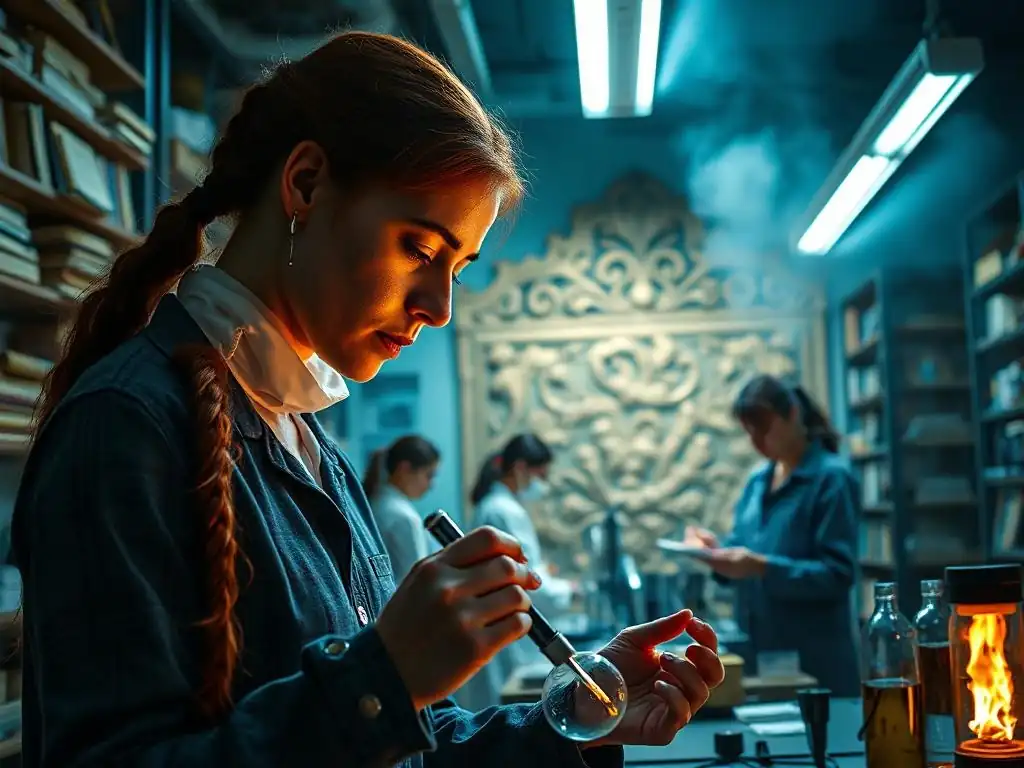
Welcome to WomenInScienceHistory.com!
Delve into the fascinating world of women in science and uncover the untold stories of brilliant minds who shaped our understanding of the universe. This site celebrates their groundbreaking achievements and the hurdles they overcame. Our latest exploration, " Science, Culture, and Identity: Women Scientists Navigating Tradition and Modernity", sheds light on the complex societal pressures and tradition challenges these remarkable women faced. Are you ready to discover how they redefined the landscape of science?
- Introduction: Women Scientists Bridging Tradition and Modernity
- Challenges Faced by Women Scientists
- Case Studies: Women Scientists Overcoming Obstacles
- The Role of Identity in the Success of Women Scientists
- Strategies for Supporting Women Scientists
- Impact of Women Scientists on Scientific Advancements
- Conclusion: Empowering Women Scientists
-
Frequently Asked Questions
- How did societal expectations impact the careers of women scientists historically?
- What are some common challenges faced by women scientists in male-dominated fields?
- How did some women scientists overcome the challenges of navigating tradition and modernity?
- Why is it important to highlight the contributions of women in science history?
- What role does cultural identity play in the experiences of women scientists?
- Final Reflection: Bridging Worlds, Shaping Futures
- Empower Change: Become a Champion for Women in Science!
Introduction: Women Scientists Bridging Tradition and Modernity
The pursuit of scientific knowledge has long been a journey marked by innovation and discovery, yet for many women, particularly those in developing nations, this path is often intertwined with complex cultural narratives and deeply rooted traditions. These pioneering individuals embark on remarkable careers, contributing significantly to global understanding, all while navigating a delicate balance between their professional aspirations and societal expectations. Their stories illuminate the unique challenges and triumphs of women scientists navigating tradition challenges in diverse cultural landscapes.
This article delves into the fascinating interplay between science, culture, and personal identity, exploring how women in STEM fields forge their paths. It highlights the systemic barriers they encounter, from cultural biases to the burden of societal roles, and celebrates the resilience and ingenuity that enable them to overcome these obstacles. By examining specific case studies and broader societal impacts, we aim to shed light on the profound contributions of these remarkable women and advocate for a more inclusive future in science.
The Underrepresentation of Women in Science Globally
Despite significant strides in gender equality over the past century, women remain starkly underrepresented in scientific fields worldwide, particularly in leadership and senior research positions. Globally, women constitute less than 30% of researchers, with even lower figures in specific disciplines such as engineering (around 20% in many regions) and computer science. This disparity is not merely a matter of numbers; it reflects deep-seated historical and systemic biases that have historically marginalized women from scientific pursuits, often viewing them as less capable or suited for rigorous intellectual work.
This underrepresentation is exacerbated in many developing countries where access to quality education, particularly in STEM subjects, is limited for girls, and societal pressures often steer them away from scientific careers. For instance, in some parts of Africa, women comprise less than 10% of engineering graduates, a figure that underscores the pervasive barriers. Addressing this gap is crucial not only for gender equity but also for fostering diverse perspectives essential for robust scientific innovation and addressing global challenges.
The Intersection of Culture, Science, and Identity for Women in STEM
For women in STEM, their journey is often a complex negotiation at the intersection of their cultural heritage, their scientific ambitions, and their personal identity. Cultural norms and traditional values frequently dictate roles for women that may conflict with the demands of a scientific career, such as extensive travel for fieldwork, long hours in the lab, or pursuing education far from home. These expectations can create internal conflicts and external pressures, forcing women scientists navigating tradition challenges to make difficult choices that their male counterparts rarely face.
Moreover, a woman's identity—encompassing her ethnic, religious, or socioeconomic background—can profoundly shape her experiences within the scientific community. For some, their cultural identity provides a unique lens through which to approach research, offering novel insights or motivating them to solve problems specific to their communities. For others, it might present an additional layer of prejudice or misunderstanding within a predominantly Western-centric scientific paradigm. Understanding this intricate interplay is vital to appreciating the resilience and adaptability of women scientists who navigate these multifaceted identities.
Challenges Faced by Women Scientists
Cultural Barriers to Women's Participation in STEM
Cultural beliefs and traditional gender roles often pose significant hurdles to women's entry and progression in STEM fields, particularly in societies where patriarchal structures are deeply entrenched. In many communities, girls are subtly or overtly discouraged from pursuing subjects deemed "masculine," such as physics or engineering, and are instead channeled towards fields like teaching or nursing. This cultural conditioning begins early, with stereotypes perpetuated through educational materials, family expectations, and community narratives that limit aspirations for women scientists navigating tradition challenges.
For example, in parts of South Asia, the expectation that women marry young and prioritize domestic duties can cut short educational opportunities, making a demanding scientific career seem impractical or even undesirable. These cultural barriers manifest not only in educational choices but also in workplace environments, where women might face skepticism regarding their commitment or competence. Overcoming these deeply ingrained societal perceptions requires a fundamental shift in cultural attitudes and active promotion of gender equality from early childhood.
Societal Expectations and Gender Roles Impacting Scientific Careers
Beyond cultural norms, broader societal expectations about gender roles significantly impact the career trajectories of women in science. The pervasive stereotype that women are less analytical or intellectually rigorous than men continues to undermine their confidence and influence hiring and promotion decisions. This implicit bias can lead to women being overlooked for leadership roles, prestigious grants, or speaking opportunities, creating a "leaky pipeline" where women disproportionately leave STEM careers at various stages, despite their qualifications.
Furthermore, the expectation that women primarily bear the responsibility for childcare and household management often conflicts with the demanding nature of scientific research. Long hours, frequent travel, and the pressure to publish can be incompatible with these traditional gender roles, forcing many women scientists navigating tradition challenges to choose between career advancement and family life. This societal pressure contributes to the persistent gender gap in senior scientific positions and slows the progress towards true equity in STEM.
Balancing Family Responsibilities and Scientific Pursuits
One of the most persistent and acute challenges for women scientists is the delicate, often precarious, balance between their demanding scientific careers and their family responsibilities. In many societies, women disproportionately shoulder the burden of childcare, elder care, and household management, often leading to significant career interruptions or reduced productivity. This "motherhood penalty" is evident in academia, where female scientists with children often publish fewer papers and secure fewer grants than their male counterparts or childless female colleagues, especially in the crucial early career stages.
For instance, studies show that women in STEM are more likely to take extended parental leave, which can disrupt research continuity and delay promotions. The lack of adequate institutional support, such as affordable childcare, flexible work arrangements, or robust return-to-work programs, exacerbates this challenge. Consequently, many talented women scientists navigating tradition challenges find themselves at a crossroads, forced to compromise on either their professional ambitions or their personal lives, ultimately contributing to the attrition of female talent from the scientific workforce.
Case Studies: Women Scientists Overcoming Obstacles
Marie Curie: Pioneering Research and Challenging Gender Norms
Marie Curie, born Maria Skłodowska in Poland in 1867, stands as a towering figure in scientific history, not only for her groundbreaking discoveries but also for her unwavering resolve in challenging entrenched gender norms. In an era when higher education and scientific careers were largely inaccessible to women, particularly in her native Poland under Russian rule, Curie pursued her studies in Paris, eventually earning degrees in physics and mathematical sciences from the Sorbonne. Her relentless dedication led to her revolutionary work on radioactivity, a term she coined, and the isolation of new elements: polonium and radium.
Curie's scientific achievements were unparalleled; she became the first woman to win a Nobel Prize (Physics, 1903) and the only person ever to win Nobel Prizes in two different scientific fields (Chemistry, 1911). Despite her brilliance, she faced significant discrimination, including being denied membership to the French Academy of Sciences, a stark reminder of the pervasive bias even for a scientist of her caliber. Her life is a testament to the extraordinary resilience required for women scientists navigating tradition challenges and breaking through the barriers of a male-dominated scientific establishment.
Tu Youyou: Traditional Medicine and the Development of Artemisinin
Tu Youyou, a Chinese pharmaceutical chemist, exemplifies the power of integrating traditional knowledge with modern scientific methodology to achieve monumental breakthroughs. Born in 1930, Tu's work was deeply rooted in traditional Chinese medicine (TCM), a field often viewed with skepticism by Western science. During the 1960s and 70s, amidst the turmoil of China's Cultural Revolution, Tu led a secret government project (Project 523) to find a cure for malaria, which was devastating soldiers and civilians alike. Her extensive research into ancient texts led her to qinghao (sweet wormwood), and specifically to its active compound, artemisinin.
Tu's innovative approach involved extracting the active ingredient using a low-temperature method described in a 4th-century text, which proved crucial for isolating the compound effectively. Her discovery of artemisinin and dihydroartemisinin revolutionized malaria treatment, saving millions of lives globally. In 2015, she was awarded the Nobel Prize in Physiology or Medicine, becoming the first Chinese woman to receive a Nobel Prize in a scientific category. Her story highlights how women scientists navigating tradition challenges can bridge cultural divides and traditional practices with modern scientific inquiry to yield profound global health benefits.
Mae Jemison: Science, Engineering, and Breaking Racial Barriers
Dr. Mae Jemison, an American physician and engineer, broke significant barriers as the first African American woman to travel to space. Born in 1956, Jemison's path to becoming an astronaut was a testament to her multifaceted talents and unwavering determination to overcome both racial and gender discrimination. She earned a chemical engineering degree from Stanford University and a medical degree from Cornell University, then served as a Peace Corps medical officer in Sierra Leone and Liberia, demonstrating a commitment to global health and humanitarianism.
In 1992, Jemison made history aboard the Space Shuttle Endeavour, conducting experiments in material science and bone cell research. Her journey symbolized not only the breaking of racial and gender ceilings in space exploration but also the power of diverse perspectives in scientific endeavors. Jemison’s legacy extends beyond her space flight; she continues to advocate for science education, particularly for minority youth, and champions the idea that true scientific progress requires the inclusion of all voices. Her life story inspires countless aspiring women scientists navigating tradition challenges, proving that intellect and perseverance can transcend societal limitations.
The Role of Identity in the Success of Women Scientists

Integrating Cultural Heritage and Scientific Careers
For many women scientists, their cultural heritage is not a barrier to be overcome but rather a profound source of strength and unique insight that enriches their scientific careers. Integrating cultural heritage means bringing diverse ways of knowing, problem-solving, and communicating into the scientific realm. For instance, a scientist from an indigenous background might apply traditional ecological knowledge to modern conservation biology, offering sustainable solutions deeply rooted in centuries of observation. This integration can lead to innovative research questions, culturally relevant methodologies, and a deeper understanding of complex global issues.
Moreover, a strong sense of cultural identity can provide resilience in the face of adversity, grounding women scientists navigating tradition challenges in their values and community. It can foster a unique perspective on global health disparities, environmental justice, or technological accessibility, driving research that directly addresses the needs of their communities. This fusion of cultural identity and scientific pursuit not only benefits the individual but also broadens the scope and impact of scientific discovery, demonstrating that diversity in thought and background is a powerful catalyst for innovation.
Mentorship and Support Networks for Women in Science
The journey of women in science, particularly those navigating tradition challenges, is significantly bolstered by robust mentorship and supportive professional networks. Mentors—experienced scientists who provide guidance, advice, and advocacy—play a crucial role in helping women navigate academic politics, secure funding, and advance their careers. These relationships offer invaluable insights into managing work-life balance, overcoming imposter syndrome, and developing leadership skills, often filling gaps left by formal education.
Beyond individual mentorship, formal and informal support networks, such as professional organizations for women in STEM, peer groups, and online communities, create spaces for shared experiences and collective problem-solving. These networks provide a sense of belonging, reduce feelings of isolation, and offer practical advice on everything from grant writing to negotiating salaries. By fostering these connections, women scientists can build a powerful collective voice, challenge systemic biases, and ensure that their contributions are recognized and valued, paving the way for future generations.
Role Models: Inspiring Future Generations of Scientists
The visibility of successful women scientists is paramount in inspiring and empowering future generations, especially young girls who may not see themselves reflected in traditional scientific narratives. When girls see women who look like them, share their cultural backgrounds, or have overcome similar obstacles, it shatters stereotypes and makes a career in science seem attainable and exciting. Role models demonstrate that it is possible to be a woman, a scientist, and a cultural contributor simultaneously, offering tangible proof that women scientists navigating tradition challenges can thrive.
These inspiring figures, from Nobel laureates like Tu Youyou to astronauts like Mae Jemison, serve as beacons of possibility, showing that brilliance and dedication transcend gender and cultural boundaries. Their stories are not just about scientific achievements but also about perseverance, leadership, and the courage to defy expectations. By highlighting these narratives through platforms like WomenInScienceHistory.com, we not only celebrate past accomplishments but also actively cultivate a future where every girl can envision herself as a scientist, unconstrained by societal limitations.
Strategies for Supporting Women Scientists
Educational Initiatives Promoting Gender Equality in STEM
To genuinely empower women scientists and address the root causes of underrepresentation, educational initiatives must actively promote gender equality in STEM from an early age. This involves challenging gender stereotypes in curricula and teaching practices, ensuring that science and mathematics are presented as equally accessible and exciting for both boys and girls. Programs that specifically encourage girls' participation in STEM, such as coding camps, robotics clubs, and science fairs designed to be inclusive and engaging, are crucial.
Furthermore, these initiatives should focus on building confidence and critical thinking skills, addressing the documented "leaky pipeline" where girls often lose interest in STEM during adolescence. By providing early exposure to diverse scientific role models and fostering an environment where curiosity and experimentation are celebrated regardless of gender, educational systems can lay a strong foundation. This proactive approach helps to dismantle cultural biases before they take root, enabling more women scientists navigating tradition challenges to emerge and flourish.
Mentorship Programs and Professional Development
Formalized mentorship programs and targeted professional development opportunities are essential strategies for supporting women scientists throughout their careers. Mentorship programs connect aspiring or early-career women with experienced female scientists who can offer guidance on navigating academic politics, grant applications, research methodologies, and work-life integration. These relationships provide invaluable insights and emotional support, helping women overcome specific challenges and build resilience.
Professional development workshops, tailored to the needs of women in STEM, can address crucial skills such as negotiation, leadership, public speaking, and strategic networking. These programs empower women to advocate for themselves, secure promotions, and assume leadership roles. By investing in these structured support systems, institutions can actively combat the systemic barriers that women scientists navigating tradition challenges frequently encounter, ensuring they have the resources and skills to reach their full potential and contribute meaningfully to their fields.
Policy Changes to Address Gender Bias
Meaningful policy changes within academic institutions, research organizations, and governmental bodies are critical to addressing systemic gender bias and fostering a more equitable environment for women in science. These policies should include transparent and equitable hiring, promotion, and tenure processes, with clear criteria and accountability mechanisms to prevent implicit bias. Implementing flexible work arrangements, such as part-time options, telecommuting, and extended parental leave policies, can significantly alleviate the burden of family responsibilities that disproportionately affects women.
Furthermore, policies should mandate diversity training for all staff, particularly those involved in hiring, grant review, and promotion committees, to raise awareness of unconscious biases. Addressing the gender pay gap through regular audits and ensuring equal opportunities for funding and resources are also vital. By enacting and enforcing robust policies, institutions can create a framework that actively supports women scientists navigating tradition challenges, enabling them to thrive without facing undue discrimination or career penalties based on their gender.
Impact of Women Scientists on Scientific Advancements
Contributions to Medicine
Women scientists have made indelible contributions to medicine, revolutionizing our understanding of disease, developing life-saving treatments, and pioneering public health initiatives. Beyond Marie Curie's foundational work on radioactivity, which led to new cancer therapies, countless other women have shaped modern healthcare. For instance, Dr. Alice Ball, an African American chemist in the early 20th century, developed the most effective treatment for leprosy available before antibiotics. More recently, Dr. Katalin Karikó's perseverance in mRNA research, often against skepticism, laid the groundwork for the highly effective COVID-19 vaccines, fundamentally altering how we combat infectious diseases.
These contributions extend to every facet of medicine, from groundbreaking discoveries in genetics and immunology to innovations in surgical techniques and diagnostic tools. Women scientists have often brought unique perspectives to research, focusing on diseases that disproportionately affect women or underserved populations, thereby addressing critical gaps in medical knowledge. Their work underscores the vital role of diverse perspectives in advancing medical science and improving global health outcomes.
Innovations in Engineering and Technology
The ingenuity of women scientists and engineers has driven countless innovations in technology and engineering, shaping the modern world in profound ways. Grace Hopper, a pioneering computer scientist, not only developed the first compiler but also played a crucial role in creating COBOL, one of the first modern programming languages, fundamentally changing how computers operate. Stephanie Kwolek, a chemist at DuPont, invented Kevlar, a material five times stronger than steel, which has revolutionized protective gear from bulletproof vests to aerospace components.
These examples are just a glimpse of the vast impact women have had on these fields. From designing sustainable infrastructure and developing advanced robotics to creating user-friendly software and pioneering renewable energy solutions, women engineers and technologists have consistently pushed the boundaries of what's possible. Their contributions highlight how diverse teams, including women scientists navigating tradition challenges, bring different approaches to problem-solving, leading to more robust, creative, and inclusive technological advancements that benefit society at large.
Addressing Global Challenges Through Scientific Research
Women scientists are at the forefront of addressing some of the most pressing global challenges of our time, from climate change and food security to public health crises and sustainable development. Their research often integrates interdisciplinary approaches and considers the social and ethical dimensions of scientific solutions, leading to more holistic and impactful outcomes. For example, female climate scientists are leading critical research on polar ice melt, extreme weather patterns, and adaptation strategies, often bringing a unique understanding of how these changes impact vulnerable communities.
In the realm of food security, women agricultural scientists are developing drought-resistant crops and sustainable farming practices that are particularly vital in regions affected by climate change. Their work ensures that scientific solutions are not only effective but also culturally appropriate and accessible to local populations. By actively engaging with these complex issues, women scientists demonstrate their pivotal role in fostering a more sustainable, equitable, and resilient future for all, often while women scientists navigating tradition challenges in their own careers.
Conclusion: Empowering Women Scientists
Breaking Down Barriers and Fostering Inclusivity
The journey of women scientists, particularly those navigating tradition challenges, is a powerful narrative of resilience, intellect, and unwavering dedication. To fully harness their potential and accelerate scientific progress, it is imperative that we actively break down the cultural, societal, and institutional barriers that have historically impeded their advancement. This requires a concerted effort to dismantle gender stereotypes from early education, implement equitable policies in workplaces, and challenge implicit biases that can derail promising careers.
Fostering inclusivity means creating environments where every woman scientist feels valued, supported, and empowered to contribute her unique talents without fear of discrimination or undue burden. It involves recognizing the diverse paths to scientific success and celebrating the multifaceted identities that women bring to their research. By intentionally cultivating inclusive spaces, we not only ensure fairness but also unlock new perspectives and innovative solutions that are crucial for addressing the complex challenges facing humanity.
The Future of Women in Science
The future of women in science is one of immense promise and growing influence, characterized by increasing representation, leadership, and groundbreaking discoveries. As more girls pursue STEM education and more women enter scientific professions, the "leaky pipeline" can be mended through sustained advocacy, policy changes, and cultural shifts. The ongoing efforts to provide robust mentorship, flexible work environments, and equitable funding opportunities will pave the way for a generation of women scientists who are not only brilliant but also unburdened by historical limitations.
This future envisions a scientific community where gender is no longer a determinant of opportunity or recognition, where collaboration thrives, and where diverse voices lead to more comprehensive and impactful research. It is a future where the unique perspectives of women scientists navigating tradition challenges are celebrated as catalysts for innovation, driving advancements that benefit all of society. The trajectory is clear: women will increasingly shape the scientific landscape, leading discoveries that redefine our world.
Celebrating Achievements of Women Scientists
Celebrating the achievements of women scientists is more than just an act of recognition; it is a vital strategy for inspiring future generations and correcting historical oversights. By highlighting the groundbreaking work of pioneers like Marie Curie, the life-saving discoveries of Tu Youyou, and the barrier-breaking journey of Mae Jemison, we provide tangible proof of women's profound impact on scientific progress. These narratives serve as powerful role models, demonstrating that scientific brilliance knows no gender.
Platforms dedicated to women in science history, such as WomenInScienceHistory.com, play a crucial role in amplifying these stories, ensuring that their contributions are not forgotten and that their struggles and triumphs serve as lessons for continuous improvement. By consistently acknowledging and celebrating the ingenuity, perseverance, and dedication of women scientists navigating tradition challenges, we not only honor their legacies but also cultivate an environment where every aspiring female scientist can see herself as a future leader, innovator, and changemaker, ready to leave her own indelible mark on the world.
Frequently Asked Questions
How did societal expectations impact the careers of women scientists historically?
Historically, societal expectations often limited women's access to education and resources, forcing them to navigate traditional roles while pursuing scientific careers. This created significant barriers and required immense resilience.
What are some common challenges faced by women scientists in male-dominated fields?
Women scientists frequently faced discrimination, lack of recognition, and limited opportunities for advancement in male-dominated fields. They also encountered gender bias in funding and publication processes.
Many women scientists overcame these challenges through perseverance, collaboration, and by actively challenging gender stereotypes. They also benefited from supportive mentors and networks.
Why is it important to highlight the contributions of women in science history?
Highlighting their contributions is crucial for correcting historical imbalances, inspiring future generations of women in STEM, and showcasing the diversity of scientific thought and innovation.
What role does cultural identity play in the experiences of women scientists?
Cultural identity can both shape opportunities and present unique challenges for women in science. Different cultural norms can either support or hinder their access to education and professional advancement.
Final Reflection: Bridging Worlds, Shaping Futures
The narratives shared throughout this article underscore a powerful truth: the journey of women scientists navigating tradition challenges is not merely a personal struggle, but a vital force shaping the future of science itself. By understanding the complexities of their experiences, we gain invaluable insights into creating a more inclusive and equitable scientific landscape, one where diverse perspectives are not just tolerated, but actively celebrated.
The enduring impact of these women's stories resonates deeply, reminding us that progress is rarely linear and often requires immense courage and resilience. Their dedication to both their scientific pursuits and their cultural identities serves as a powerful testament to the human spirit's capacity for innovation and adaptation. Science knows no country, because knowledge belongs to humanity, and is the torch which illuminates the world.
- Louis Pasteur. This quote encapsulates the ideal, but the reality is that access to that torch is often unevenly distributed, and these women are actively working to level the playing field.
As we conclude this exploration, let us not simply admire these women from afar, but actively champion their cause. Consider how you can contribute to dismantling the barriers that hinder women in science, whether through mentorship, advocacy, or simply by amplifying their voices. The future of scientific discovery depends on our collective commitment to fostering an environment where every brilliant mind, regardless of gender or background, can thrive and contribute to a brighter tomorrow.
Empower Change: Become a Champion for Women in Science!
Thank you for delving into the inspiring stories of women scientists who've navigated complex cultural landscapes. We hope this article has broadened your understanding of their challenges and triumphs. Now, let's turn that inspiration into action!
- Take the most powerful action:Share this article with at least three friends, family members, or colleagues to amplify these crucial narratives and spark conversations about gender equality in STEM.
- Explore further: Dive deeper into the life and work of a woman scientist featured in this article. Research her contributions, her struggles, and her legacy to truly appreciate her impact.
- Consider an unconventional step: Write a short letter to a young girl you know, encouraging her to pursue her dreams in science, regardless of societal pressures.
What small, yet impactful, step will you take today to support women in science and shape a more equitable future?