
The Masterminds of Manufacturing: How Women Optimized Production Against the Odds.

Welcome to WomenInScienceHistory.com!
Delve into the captivating stories of women who shaped the scientific landscape. Prepare to be amazed as we uncover the untold narratives within Engineering & Technology, starting with a fascinating exploration into Women’s manufacturing production optimization history. Discover how these brilliant minds, often working against formidable odds, revolutionized industrial processes and left an indelible mark on the world. What innovative strategies did they employ, and how did their contributions pave the way for modern manufacturing? Let's unravel their ingenuity together...
- Introduction: Unveiling Women's Contributions to Manufacturing Optimization
- Early Pioneers of Manufacturing Efficiency: Laying the Groundwork
- World War II and the Rise of Women in Manufacturing Roles
- Post-War Innovations: Women Shaping Modern Manufacturing Processes
- Contemporary Leaders: Women Revolutionizing Manufacturing Today
- Overcoming Obstacles: Challenges Faced by Women in Manufacturing
- The Future of Manufacturing: Continued Growth and Opportunity for Women
- Conclusion: Celebrating the Enduring Impact of Women in Manufacturing
-
Frequently Asked Questions
- What is the primary focus of WomenInScienceHistory.com?
- How does the website aim to inspire future generations?
- What is "The Masterminds of Manufacturing" article about?
- Why is it important to highlight the contributions of women in science and manufacturing?
- How does this content relate to the keyword "Women’s manufacturing production optimization history"?
- Final Reflection: Honoring Innovation, Inspiring Progress
- Ignite Your Inner Innovator: Join the Movement!
Introduction: Unveiling Women's Contributions to Manufacturing Optimization
Highlighting Overlooked Female Pioneers in Industrial Production
Historically, the narratives of industrial development and manufacturing efficiency have predominantly centered around male figures, often overlooking the profound and innovative contributions of women. Despite facing significant societal and professional barriers, countless women played pivotal roles in optimizing production processes, enhancing workplace safety, and driving technological advancements. Their ingenuity spanned various fields, from the meticulous organization of factory floors to the complex design of industrial systems, quietly laying the groundwork for modern manufacturing practices.
This article aims to illuminate these often-hidden figures and their crucial impact. By delving into the specific achievements of female pioneers, we uncover how their analytical skills, practical innovations, and unwavering determination led to tangible improvements in output, quality, and operational flow. Their stories are not just footnotes in history; they are central to understanding the full scope of industrial evolution and the true breadth of human innovation in the face of adversity.
Women’s Manufacturing Production Optimization History: A Crucial Narrative
The comprehensive study of women’s manufacturing production optimization history is not merely an academic exercise; it is a crucial narrative that enriches our understanding of industrial progress. It challenges the conventional, male-dominated historical perspectives, offering a more complete and accurate portrayal of how industries evolved. By recognizing these contributions, we gain insights into the resilience and brilliance of women who innovated within restrictive environments, often without formal recognition or support.
Moreover, this narrative serves as a powerful source of inspiration for future generations. These women didn't just participate in the manufacturing sector; they actively innovated, streamlined processes, and often did so while confronting skepticism and outright discrimination. Their work directly led to increased productivity, improved working conditions, and the development of new methodologies, firmly establishing their place as cornerstones in the fabric of industrial optimization and underscoring the vital importance of women’s manufacturing production optimization history.
Early Pioneers of Manufacturing Efficiency: Laying the Groundwork
Lillian Gilbreth: The First Lady of Industrial Engineering and Time-Motion Studies
Lillian Gilbreth stands as a towering figure in the annals of industrial engineering, often hailed as the "First Lady of Engineering." With a Ph.D. in psychology, her unique background informed her groundbreaking approach to human factors in industry. Alongside her husband, Frank Gilbreth, she pioneered the development of time-motion studies, meticulously analyzing worker movements to eliminate inefficiency and reduce fatigue. Their work, which involved filming workers and breaking down tasks into elemental motions, revolutionized factory efficiency by creating more ergonomic and productive workflows.
Beyond their collaborative efforts, Lillian Gilbreth championed the human element in the workplace, focusing on worker welfare, stress management, and the psychological aspects of labor. She held patents for various household appliances designed for efficiency, such as the foot-pedal trash can and shelves inside refrigerator doors, demonstrating her commitment to optimizing everyday processes. Her insights were instrumental in applying scientific management principles not just to industrial settings but also to domestic life, profoundly influencing women’s manufacturing production optimization history by emphasizing human-centric design.
Elsie Eaves: First Woman Member of the American Society of Civil Engineers
Elsie Eaves made history in 1927 as the first woman elected to full membership in the American Society of Civil Engineers (ASCE), a significant milestone that broke a long-standing gender barrier in the engineering profession. Her early career involved diverse roles in construction and engineering economics, providing her with a comprehensive understanding of large-scale project management and resource allocation. She joined Engineering News-Record, a leading industry publication, where she spent decades compiling and analyzing vast amounts of data on construction costs, material trends, and labor statistics.
Eaves' meticulous statistical analyses and reporting provided crucial insights for optimizing large-scale construction and manufacturing projects. Her work was not about direct factory floor optimization but about providing the foundational data necessary for efficient industrial planning, resource allocation, and project management across the broader manufacturing and construction sectors. Her precise data aggregation and reporting on construction costs, material availability, and labor trends enabled better strategic decisions, making her an indirect yet significant contributor to women’s manufacturing production optimization history through robust data management.
Olive Dennis: Second Woman to Graduate from Cornell University with a Civil Engineering Degree
Olive Dennis, the second woman to graduate from Cornell University with a civil engineering degree, carved out a unique and impactful career at the Baltimore & Ohio (B&O) Railroad. Joining the B&O in 1920, she was initially hired to draft bridges, but her keen observational skills and engineering acumen quickly led to a more expansive role: that of a "service engineer." This position, created specifically for her, tasked her with improving the passenger experience, a crucial aspect of operational efficiency and customer satisfaction within a massive industrial enterprise like a railroad.
Dennis approached her role with an engineer's mindset, applying principles of design and efficiency to comfort and convenience. She was responsible for innovations such as the design of adjustable seats, stain-resistant upholstery, and improved ventilation systems, including the first use of air-conditioning on passenger trains. Her work directly contributed to the smooth operation and appeal of the railroad's services, transforming the passenger car into a more efficient and pleasant environment. By optimizing the "product" (the train journey) through engineering, Dennis played a distinctive role in women’s manufacturing production optimization history within the transportation sector.
World War II and the Rise of Women in Manufacturing Roles
Women Filling the Production Gap: Rosie the Riveter and Beyond
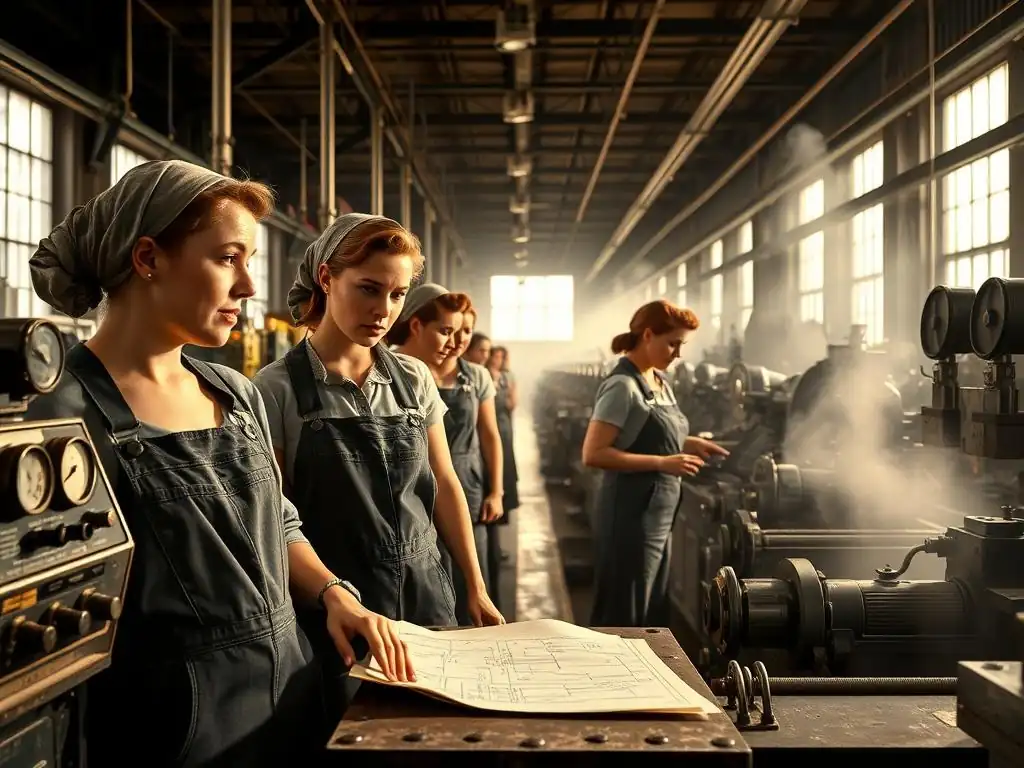
World War II instigated an unprecedented shift in the American workforce, as millions of men left for military service, creating a massive labor gap in the nation's factories and industrial plants. Women stepped into these roles in droves, particularly in heavy industry and manufacturing, taking on jobs previously considered exclusive to men. The iconic "Rosie the Riveter" image became a powerful symbol of this transition, representing the strength, capability, and patriotic duty of women on the home front. By 1944, women constituted nearly 37% of the civilian workforce, a dramatic increase from pre-war levels.
This rapid integration of women into manufacturing was a testament to their adaptability and resilience. They learned to operate complex machinery, performed welding, riveting, and assembly line tasks with remarkable speed and precision, and quickly mastered new skills. Their collective effort and high productivity levels were absolutely crucial to meeting the aggressive production targets required for the war effort, directly demonstrating women’s manufacturing production optimization history on an unparalleled scale and fundamentally altering perceptions of women's capabilities in industrial settings.
Optimizing War Production: Women's Ingenuity in Action
Beyond simply filling vacant positions, women in wartime manufacturing actively contributed to process improvements and efficiency gains on the factory floor. Lacking prior experience in many industrial roles, they often approached tasks with fresh perspectives, leading to innovative solutions and shortcuts that male workers, accustomed to traditional methods, might have overlooked. These grassroots innovations, though often unrecognized formally, were vital in meeting the relentless demands of war production.
For example, women working on aircraft assembly lines frequently devised ergonomic solutions or sequential changes that reduced fatigue, minimized waste, and significantly increased output. They found more efficient ways to handle materials, assemble components, and organize workspaces, contributing to continuous improvement directly from the production line. These small, yet impactful, contributions, driven by their direct experience and ingenuity, were critical to the unprecedented scale and speed of wartime manufacturing, undeniably shaping women’s manufacturing production optimization history.
Dr. Grace Murray Hopper, a brilliant mathematician, played a pivotal role in the U.S. Navy during World War II, transitioning from Vassar College to the WAVES (Women Accepted for Volunteer Emergency Service). She was assigned to the Bureau of Ordnance's Computation Project at Harvard University, where she worked with the Mark I computer, one of the earliest electronic digital computers. Her initial task involved calculating ballistics tables, a complex and time-consuming endeavor that was critical for naval operations.
Hopper's pioneering work went far beyond calculations; she became one of the first programmers, developing innovative ways to make these early, cumbersome machines more accessible and efficient. Her most notable achievement was the development of the first compiler, a program that translates human-readable code into machine code, laying the foundation for modern programming languages like COBOL. This breakthrough revolutionized how complex calculations were performed, enabling rapid processing of critical data for naval ordnance and logistics, thereby significantly optimizing military production and strategy, a monumental step in women’s manufacturing production optimization history through computational means.
Post-War Innovations: Women Shaping Modern Manufacturing Processes
Breaking Barriers: Women's Entry into Management and Leadership in Manufacturing
In the post-World War II era, despite societal pressures for women to return to domestic roles, a determined cohort of women persevered in the manufacturing sector, gradually breaking into management and leadership positions. This was a challenging period, as they navigated predominantly male environments often resistant to female authority. These pioneers demonstrated exceptional resilience, proving their capabilities in strategic planning, operational oversight, and team management.
Early examples include women who, against significant odds, ascended to supervisory roles or even founded their own manufacturing-related enterprises, showcasing their unwavering commitment to industrial innovation. Their strategic entry into these higher-level positions was crucial not only for their individual advancement but also for shaping future company policies and fostering more inclusive practices within a historically male-dominated industry. Their leadership marked a new phase in women’s manufacturing production optimization history, demonstrating that female acumen could drive efficiency from the top down.
Mary Anderson: Inventor of the Windshield Wiper Blade
Mary Anderson, an American real estate developer, made a crucial contribution to automotive safety and manufacturing efficiency with her invention of the windshield wiper blade. While visiting New York City in 1903, she observed trolley car drivers struggling to see through sleet and snow, often having to open their windows or stop to clear the glass manually. Recognizing this significant safety hazard and operational inefficiency, Anderson conceived of a device that could clear the windshield from inside the vehicle.
Her simple yet ingenious design, patented in 1903, featured a rubber blade operated by a lever from within the car, with a spring-loaded arm to keep contact with the glass. Although initially met with skepticism by some who considered it a distraction, her invention quickly proved its indispensable value, especially with the burgeoning automotive industry.
The widespread adoption of the windshield wiper necessitated new mass production processes and quality controls within automotive manufacturing, showcasing how a woman's invention spurred significant innovation and indirectly contributed to women’s manufacturing production optimization history by creating a new, essential product line that improved vehicle operability and safety.
Applying Scientific Principles: Women’s Impact on Quality Control and Process Improvement
In the mid-20th century, as manufacturing became increasingly complex, women with backgrounds in science, mathematics, and statistics began to apply rigorous scientific principles to factory processes. They were instrumental in the early adoption of statistical process control (SPC) and other quality assurance methodologies, moving manufacturing from reactive defect detection to proactive defect prevention. These women often worked in laboratories, as industrial engineers, or as quality control specialists, bringing analytical rigor to production floors.
Their analytical skills significantly improved product reliability and reduced waste across various industries. For instance, women were key in establishing testing protocols for materials and finished goods, identifying bottlenecks in assembly lines through data analysis, and implementing feedback loops to ensure consistent product quality. Their methodical approach to problem-solving and dedication to data-driven decision-making were critical in enhancing efficiency and ensuring high standards, marking a profound impact on women’s manufacturing production optimization history through the systematic improvement of quality and processes.
Contemporary Leaders: Women Revolutionizing Manufacturing Today
Women in Automation and Robotics: Driving Innovation in Manufacturing
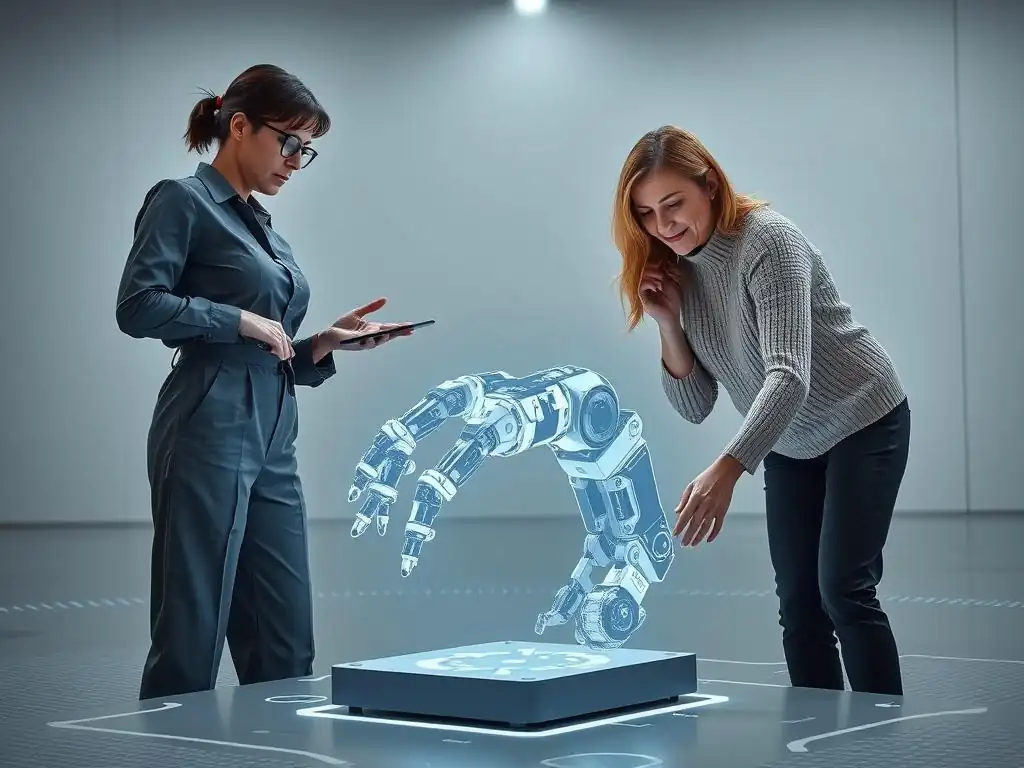
Today, women are increasingly at the forefront of the most advanced fields within manufacturing, including automation and robotics. As industrial engineers, software developers, and research scientists, they are designing, implementing, and optimizing complex automated systems that are transforming factory floors worldwide. Their expertise is crucial in developing intelligent manufacturing solutions that enhance precision, speed, and safety.
These women are leading efforts in developing collaborative robots (cobots) that work alongside human employees, creating AI-driven manufacturing processes that adapt to changing conditions, and integrating smart factory solutions based on the Internet of Things (IoT). For example, female engineers are pioneering robotic systems for intricate assembly tasks in electronics or developing automated quality inspection systems that detect flaws with unprecedented accuracy, significantly enhancing efficiency and precision in modern production and continuing the rich legacy of women’s manufacturing production optimization history.
Data-Driven Optimization: Women Leveraging Analytics in Production
The shift towards data-driven decision-making is revolutionizing modern manufacturing, and women are playing a pivotal role in this transformation. As data scientists, industrial analysts, and supply chain managers, they are leading efforts to collect, analyze, and interpret the vast amounts of production data generated daily. Their work involves identifying inefficiencies, predicting maintenance needs, and optimizing complex supply chains to ensure maximum output with minimal waste.
The impact of their work is profound, ranging from predictive analytics that minimize machine downtime to sophisticated algorithms that optimize logistics and inventory management. For instance, women are developing models that forecast demand more accurately, leading to leaner production schedules and reduced excess inventory. Their contributions in leveraging big data and advanced analytics are fundamental to achieving lean manufacturing and smart factory goals, demonstrating a crucial contemporary facet of women’s manufacturing production optimization history.
Lisa Su: CEO of Advanced Micro Devices (AMD), Driving Innovation in Semiconductor Manufacturing
Lisa Su stands as a preeminent figure in the global semiconductor industry, a sector critical to nearly all modern manufacturing and technology. With a background as an electrical engineer and a Ph.D. from MIT, her rise to CEO of Advanced Micro Devices (AMD) in 2014 marked a significant milestone for women in high-tech leadership. Under her guidance, AMD has undergone a remarkable turnaround, becoming a formidable competitor in the fiercely contested semiconductor market.
Su's strategic vision has directly influenced the optimization of AMD's chip design and manufacturing processes, leading to groundbreaking innovations in CPUs, GPUs, and adaptive computing solutions. Her leadership has not only propelled AMD to new heights in performance and market share but has also driven the entire industry forward by pushing the boundaries of what's possible in semiconductor manufacturing. She exemplifies a woman at the pinnacle of modern manufacturing innovation, embodying a key aspect of contemporary women’s manufacturing production optimization history in a high-tech, global context.
Overcoming Obstacles: Challenges Faced by Women in Manufacturing
Gender Bias and Discrimination in Manufacturing Environments
Despite significant progress, women in manufacturing continue to face persistent challenges, including explicit and implicit gender bias. Historically, manufacturing has been a male-dominated field, and this legacy often manifests as skepticism about women's technical capabilities, underestimation of their contributions, and exclusion from informal networks crucial for career advancement. These biases can lead to unequal opportunities, lower pay, and a sense of isolation.
The impact of these biases can be seen in various aspects, from subtle microaggressions in daily interactions to more overt discrimination in hiring, promotion, and project assignments. Women often report having to work harder to prove their competence and gain respect. While many companies are implementing diversity initiatives, systemic barriers still hinder their full participation and recognition, slowing the pace at which women’s manufacturing production optimization history can fully unfold.
Lack of Recognition and Support for Women's Contributions
A recurring theme throughout women’s manufacturing production optimization history is the historical tendency to overlook or downplay their innovations and operational improvements. This lack of formal recognition can lead to a vicious cycle where their achievements are not celebrated, making it harder for future generations to find role models and for current female professionals to gain the visibility needed for leadership roles. This often means their ingenious solutions and efficiency gains are simply absorbed into general company practices without proper attribution.
This lack of support often manifests as fewer opportunities for mentorship, less investment in their ideas, or insufficient sponsorship for leadership positions. While there's a growing awareness of this issue, dedicated efforts are still needed to ensure that women's contributions are not only acknowledged but actively celebrated and integrated into the official narrative of manufacturing history. This includes promoting their stories and ensuring they receive equitable opportunities for professional development and advancement.
Strategies for Empowering Women in Manufacturing Careers
To overcome these entrenched challenges and ensure women can fully contribute to the future of manufacturing, a multi-faceted approach is required. One crucial strategy involves promoting STEM education for girls from an early age, dismantling stereotypes about engineering and technology being male-only fields. This includes supporting programs like robotics clubs, coding camps, and mentorship initiatives that expose young girls to the exciting possibilities within manufacturing.
Furthermore, fostering inclusive corporate cultures within manufacturing companies is paramount. This entails implementing equitable hiring and promotion practices, providing unconscious bias training for leadership and employees, and establishing robust mentorship and sponsorship programs for women. Creating supportive work-life balance policies and ensuring safe, respectful workplaces are also essential to attract and retain female talent, thereby accelerating women’s manufacturing production optimization history.
The Future of Manufacturing: Continued Growth and Opportunity for Women
Encouraging STEM Education for Girls to Foster Future Manufacturing Leaders
The future of manufacturing, characterized by advanced automation, artificial intelligence, and sustainable practices, demands a diverse and highly skilled workforce. Therefore, it is critically important to encourage girls and young women to pursue STEM (Science, Technology, Engineering, and Mathematics) fields, particularly those directly applicable to manufacturing and industrial engineering. Early exposure to these disciplines through hands-on learning, science fairs, and inspiring role models can spark lifelong interests.
Providing robust educational support, from primary school through higher education, is key to nurturing this talent pipeline. This includes offering accessible coding bootcamps, robotics competitions, and engineering design challenges that engage girls and build their confidence in technical skills. By doing so, we not only break down traditional gender stereotypes but also prepare the next generation of female innovators and leaders who will continue to shape women’s manufacturing production optimization history.
Creating Inclusive Workplaces: Supporting Women's Advancement in Manufacturing
For women to thrive and lead in the evolving manufacturing landscape, companies must actively commit to creating and maintaining truly inclusive work environments. This extends beyond basic diversity quotas to encompass equitable hiring practices, transparent promotion pathways, and a culture that values diverse perspectives and contributions. Initiatives such as unconscious bias training for all employees, especially management, are vital to dismantling subtle barriers.
Furthermore, providing flexible work arrangements, comprehensive parental leave policies, and robust mentorship and sponsorship programs are crucial for supporting women's career progression and work-life balance. An inclusive workplace not only enhances employee retention and satisfaction but also fosters greater innovation, improved problem-solving capabilities, and ultimately, a more dynamic and productive manufacturing sector where women's contributions continue to drive women’s manufacturing production optimization history.
A Legacy of Innovation
From the early days of industrialization to the cutting-edge advancements of the digital age, women have left an indelible mark on manufacturing. Their legacy of innovation is characterized by an unwavering commitment to efficiency, quality, and often, the human element in production processes. Whether through foundational time-motion studies, wartime production surges, or contemporary breakthroughs in automation and data analytics, their contributions have been foundational to improving industrial output and working conditions worldwide.
This enduring legacy serves as a powerful inspiration, demonstrating that ingenuity, resilience, and analytical prowess transcend gender. The continuous stream of innovation driven by women in manufacturing ensures that their role in shaping women’s manufacturing production optimization history will only grow in significance. It is a testament to their enduring impact and a promise of their continued influence on the future of global industry.
Conclusion: Celebrating the Enduring Impact of Women in Manufacturing
Recognizing the Vital Role of Women in Shaping Manufacturing History
The journey through women’s manufacturing production optimization history reveals a compelling narrative of ingenuity, perseverance, and profound impact. From the foundational scientific management principles championed by Lillian Gilbreth to the critical wartime production efforts powered by millions of "Rosies," and to the contemporary leadership of figures like Lisa Su in advanced technology, women have been indispensable to the evolution of manufacturing. Their analytical acumen, practical innovations, and unwavering dedication have consistently driven improvements in efficiency, quality, and operational excellence, often against significant odds.
Their contributions span every facet of industrial development, from the meticulous optimization of assembly lines to the strategic management of global supply chains. By acknowledging these often-overlooked achievements, we gain a more complete and accurate understanding of how industries have progressed. It is clear that women have not just participated in manufacturing; they have actively shaped its trajectory, leaving an indelible mark on industrial processes worldwide.
Inspiring Future Generations
The purpose of highlighting these compelling stories of women in manufacturing is not merely to rectify historical oversights; it is fundamentally about inspiring future generations. By showcasing the brilliance, resilience, and pioneering spirit of these female masterminds, we demonstrate that talent and determination transcend gender, providing powerful role models for young women and girls. These narratives encourage them to pursue careers in engineering, technology, and manufacturing, fields where their unique perspectives and capabilities are increasingly valued.
As manufacturing continues to evolve with automation, AI, and sustainable practices, the need for diverse talent is more critical than ever. Celebrating the enduring impact of women in manufacturing history ensures that their legacy continues to empower and motivate. It fosters an environment where the next wave of female innovators can thrive, ensuring that the future of manufacturing is one of even greater diversity, groundbreaking innovation, and optimized production, driven by the continued contributions of women.
Frequently Asked Questions
What is the primary focus of WomenInScienceHistory.com?
The website primarily focuses on celebrating the contributions of women to various scientific fields throughout history. It highlights their groundbreaking work and the challenges they faced.
How does the website aim to inspire future generations?
The site aims to inspire future generations by showcasing the often-overlooked narratives of women in science. It provides role models and demonstrates what women can achieve.
What is "The Masterminds of Manufacturing" article about?
"The Masterminds of Manufacturing" article explores how women optimized manufacturing production against the odds. It likely highlights their contributions in the field of production optimization.
Why is it important to highlight the contributions of women in science and manufacturing?
Highlighting their contributions helps to correct historical imbalances and acknowledges the significant role women played. It also inspires greater diversity and inclusion in STEM fields.
How does this content relate to the keyword "Women’s manufacturing production optimization history"?
The content directly addresses the keyword by exploring the historical contributions of women to manufacturing production optimization. The article provides specific examples and biographies.
Final Reflection: Honoring Innovation, Inspiring Progress
The narratives we've explored in "The Masterminds of Manufacturing: How Women Optimized Production Against the Odds" resonate profoundly today, reminding us that innovation thrives even amidst adversity. These women, often overlooked in traditional historical accounts, not only navigated significant societal barriers but also revolutionized manufacturing processes, leaving an indelible mark on the industry. Their stories are a testament to the power of ingenuity and resilience, qualities that remain crucial for progress in any field.
The impact of these pioneering women extends far beyond the factory floor. Their contributions challenge conventional narratives and inspire a more inclusive understanding of history, demonstrating that talent and innovation are not limited by gender. Their legacy serves as a powerful reminder that diverse perspectives are essential for solving complex problems and driving meaningful change. The most effective way to do it, is to do it.
- Amelia Earhart, a sentiment that perfectly encapsulates the spirit of these women who dared to defy expectations and forge their own paths.
As we reflect on the "Women’s manufacturing production optimization history," let us not only celebrate their achievements but also commit to creating a future where every individual has the opportunity to contribute their unique talents. Consider how you can actively support diversity and inclusion in your own sphere of influence, fostering an environment where innovation flourishes and the masterminds of tomorrow can thrive, regardless of their background. Let their stories inspire you to challenge the status quo and champion a more equitable and innovative world.
Ignite Your Inner Innovator: Join the Movement!
Thank you for exploring the remarkable contributions of women in manufacturing! We hope this article has sparked a new appreciation for their ingenuity and resilience. Now, it's time to channel that inspiration into action.
Here's how you can contribute to a future where women thrive in STEM:
- Champion a young woman's interest in STEM: Share this article with a girl you know and encourage her to explore her passion for science and technology.
- Explore related content: Dive deeper by researching other women in engineering or attending a local STEM event.
- Start a conversation: Discuss the challenges and triumphs of women in manufacturing with your colleagues and friends to raise awareness and inspire change.
What steps will you take to inspire the next generation of women in manufacturing and STEM?