
Nuclear Boffins & Cold War Tensions: Women on the Atomic Frontier

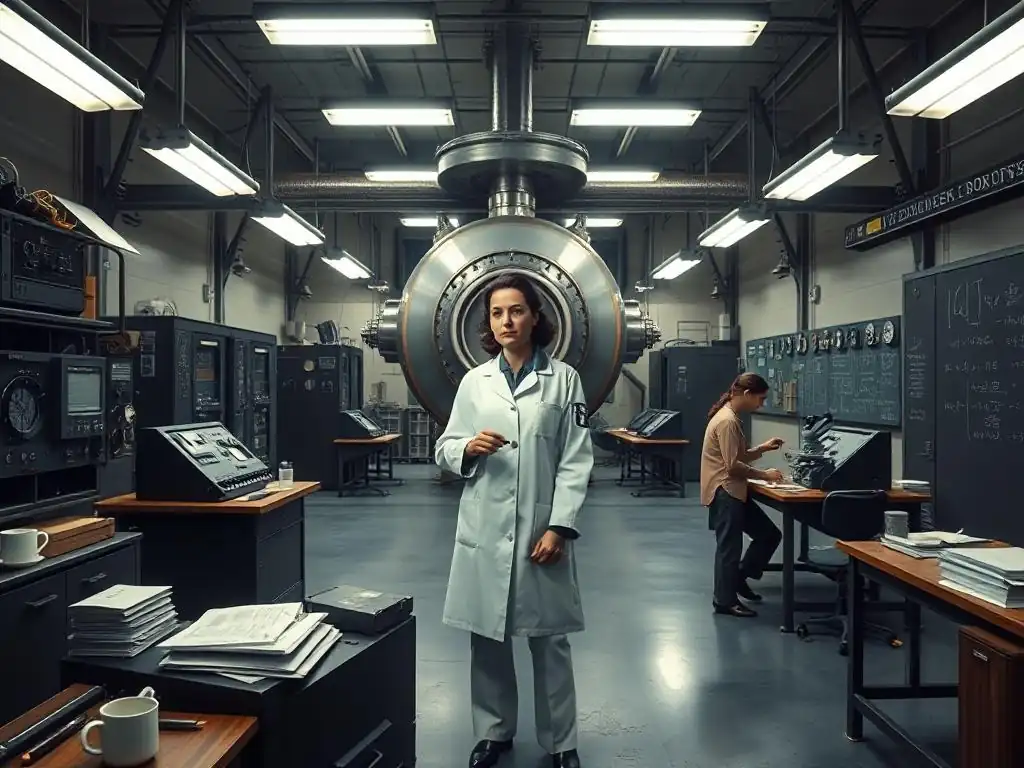
Welcome to WomenInScienceHistory.com!
Delve into the captivating and often untold stories of women who shaped the scientific landscape. This month, we're exploring the pivotal role of women scientists during the dawn of atomic energy. Discover how their groundbreaking contributions navigated the complex world of nuclear research and Cold War tensions, challenging societal norms and leaving an indelible mark on history. Intrigued? Read on to uncover the remarkable journeys of these unsung heroes and the secrets they unlocked.
- Introduction: Women Scientists and the Dawn of the Atomic Age
- Pioneering Women Scientists in Atomic Energy Research
- The Cold War's Influence on Women in Atomic Science
- Atomic Energy and Ethical Considerations: Women's Perspectives
- Case Studies: Women's Roles in Specific Atomic Projects
- The Legacy of Women Scientists in Atomic Energy
- Conclusion: Recognizing the Contributions of Women in Atomic Science History
-
Frequently Asked Questions
- What specific challenges did women scientists face in the field of atomic energy during the Cold War era?
- Why is it important to highlight the contributions of women scientists working with atomic energy?
- What types of scientific contributions did women make to atomic energy research?
- How did the Cold War impact the opportunities and experiences of women in atomic energy?
- Where can I find more information about specific women scientists who worked on atomic energy projects?
- Final Reflection: Illuminating the Atomic Frontier
- Unearth Your Atomic Potential!
Introduction: Women Scientists and the Dawn of the Atomic Age
Highlighting the Unsung Heroines of Atomic Research
The dawn of the atomic age, marked by groundbreaking discoveries in nuclear physics and chemistry, is often recounted through the narratives of prominent male scientists. However, behind the scenes and often overlooked, a cohort of brilliant women scientists made indispensable contributions to this transformative period. These unsung heroines, working in laboratories across the globe, navigated formidable societal and institutional barriers to advance our understanding of the atom, laying the groundwork for both its destructive and constructive applications. Their stories illuminate a crucial, yet underappreciated, aspect of scientific history.
Their work, spanning from theoretical breakthroughs to rigorous experimental verification, was fundamental to the rapid progress seen in the mid-20th century. Despite facing pervasive gender discrimination, these women scientists in atomic energy pushed the boundaries of knowledge, often without the recognition or resources afforded to their male counterparts. This article aims to shed light on their pivotal roles, celebrating their intellectual prowess and unwavering dedication in a field that would reshape global politics and human understanding of energy.
Cold War Context: The Urgency of Atomic Advancement
The Cold War, a period of intense geopolitical tension between the United States and the Soviet Union, profoundly accelerated atomic advancement. The race for nuclear supremacy created an unprecedented urgency for scientific and technological innovation, turning atomic research into a matter of national security. This intense pressure spurred massive governmental funding for physics and chemistry, inadvertently opening doors for some women scientists in atomic energy who possessed the specialized skills and intellect required for these high-stakes endeavors.
In this climate, the pursuit of atomic secrets became a global priority, transforming scientific institutions into strategic assets. While the primary focus was often on weaponization, the era also saw significant investment in understanding nuclear reactions for energy generation and other peaceful applications. For many women scientists, the Cold War presented a paradoxical scenario: an era of immense scientific opportunity, yet one where their contributions were often overshadowed by the prevailing military-industrial complex and ingrained gender biases.
Pioneering Women Scientists in Atomic Energy Research
Lise Meitner: Contributions to Nuclear Physics
Early Life and Education in Science
Lise Meitner, born in Vienna, Austria, in 1878, displayed an early and profound aptitude for science, a path rarely encouraged for girls at the time. Despite initial societal limitations on women's access to higher education, she persevered, privately preparing for the university entrance exam. In 1901, she enrolled at the University of Vienna, where she studied physics under the renowned Ludwig Boltzmann, earning her doctorate in 1906—only the second woman to achieve this distinction from the institution. Her early education laid a robust theoretical foundation for her future groundbreaking work in nuclear physics.
Following her doctoral studies, Meitner moved to Berlin in 1907, seeking opportunities for further research. There, she began her legendary collaboration with chemist Otto Hahn at the Kaiser Wilhelm Institute for Chemistry. Initially, she faced significant discrimination; as a woman, she was not allowed to work in the main laboratories and was relegated to a basement room, entering through the back door. She also worked without pay for several years, illustrating the immense barriers she overcame to pursue her passion as a woman scientist in atomic energy.
Key Research Areas: Atomic Fission and Beta Decay
Meitner's partnership with Hahn blossomed into one of the most productive collaborations in scientific history. Together, they made significant discoveries in radioactivity and nuclear physics, including the identification of several new isotopes.
However, her most monumental contribution came in the late 1930s when she, along with her nephew Otto Frisch, provided the theoretical explanation for nuclear fission. While Hahn and Fritz Strassmann conducted the experiments bombarding uranium with neutrons, it was Meitner who correctly interpreted their puzzling results: the uranium nucleus had split, or "fissioned," into smaller nuclei, releasing an enormous amount of energy, precisely as predicted by Einstein's E=mc².
Beyond fission, Meitner also conducted pioneering research on beta decay, meticulously analyzing the energy spectra of beta particles. Her work in this area provided crucial insights into the nature of the weak nuclear force and the structure of the atomic nucleus. Her detailed investigations into the process of radioactive decay were fundamental to understanding the stability and transformation of elements, solidifying her reputation as a leading woman scientist in atomic energy and a meticulous experimentalist and theoretician.
Overcoming Obstacles in a Male-Dominated Field
Lise Meitner’s career was a testament to her resilience in the face of pervasive obstacles. As a Jewish woman in Nazi Germany, she was forced to flee Berlin in 1938, escaping to Sweden with just a few possessions. Despite her exile, she continued her collaboration with Hahn via correspondence, providing the essential theoretical framework that allowed him to comprehend the experimental results of fission. Her forced displacement undoubtedly complicated her scientific work and severed her direct involvement in the ongoing research.
Perhaps the most glaring injustice in Meitner's career was her exclusion from the 1944 Nobel Prize in Chemistry, awarded solely to Otto Hahn for the discovery of nuclear fission. Despite her indispensable theoretical contribution, which was critical to understanding the phenomenon, the Nobel Committee overlooked her role. This egregious omission remains a significant point of contention in scientific history, highlighting the deep-seated biases that prevented full recognition of women scientists in atomic energy, even for their most profound achievements.
Chien-Shiung Wu: Advancements in Nuclear Chemistry
Focus on Beta Decay and Parity Violation
Chien-Shiung Wu, born in China in 1912, became one of the most influential experimental physicists of the 20th century, particularly renowned for her meticulous work in nuclear chemistry and physics. After earning her Ph.D. from the University of California, Berkeley, in 1940, she dedicated much of her early career to the study of beta decay, a fundamental process in nuclear transformations. Her expertise in this area made her an invaluable asset to the Manhattan Project, where she contributed to the development of methods for separating uranium isotopes.
Wu's most celebrated achievement, however, came in 1956 with her groundbreaking experiment that disproved the conservation of parity in weak nuclear interactions. Theoretical physicists Tsung-Dao Lee and Chen-Ning Yang had proposed that parity, the principle that physical laws remain the same under mirror reflection, might not hold true for the weak force. Wu undertook the challenging task of designing and executing an experiment using cooled cobalt-60 nuclei, demonstrating that beta particles were emitted preferentially in one direction, thus violating parity. This "Wu experiment" revolutionized fundamental physics.
Impact on Fundamental Physics
The definitive experimental proof provided by Chien-Shiung Wu had an immediate and profound impact on theoretical physics. Her meticulous and precise measurements confirmed Lee and Yang's radical hypothesis, leading them to be awarded the Nobel Prize in Physics in 1957. Wu's experiment fundamentally reshaped the understanding of the universe's basic symmetries and the nature of the weak nuclear force, which governs radioactive decay. Her work was a cornerstone in the development of the Standard Model of particle physics, which describes the fundamental forces and particles that make up matter.
Despite the monumental significance of her experimental confirmation, Wu was controversially excluded from the Nobel Prize alongside Lee and Yang. This omission sparked widespread debate and highlighted the ongoing challenges faced by women scientists in atomic energy and broader scientific communities in gaining equitable recognition. Nevertheless, her work cemented her legacy as a titan of experimental physics, whose rigorous methodology and profound discoveries continue to influence research in particle physics and nuclear chemistry.
Recognition and Legacy
Although Chien-Shiung Wu did not share the Nobel Prize for her parity violation experiment, her contributions were widely recognized through numerous other prestigious awards and honors. She was the first woman elected President of the American Physical Society in 1975, a testament to her standing among her peers. That same year, she was awarded the National Medal of Science, the highest scientific honor in the United States, for her "masterful experiments" that led to fundamental discoveries in nuclear physics.
Wu's legacy extends far beyond her specific scientific achievements. She served as an inspiring role model for countless aspiring scientists, particularly women and minorities, demonstrating that excellence knows no gender or origin. Her unwavering commitment to scientific rigor, her pioneering spirit, and her ability to tackle some of the most complex problems in physics have left an indelible mark on the scientific landscape, firmly establishing her as one of the most influential women scientists in atomic energy history.
Maria Goeppert Mayer: Theoretical Contributions to Atomic Theory
Exploring the Frontiers of Nuclear Physics
Maria Goeppert Mayer, born in Kattowitz, Germany, in 1906, was a theoretical physicist whose groundbreaking work fundamentally reshaped our understanding of the atomic nucleus. After earning her Ph.D. in theoretical physics from the University of Göttingen in 1930, she embarked on a career marked by intellectual brilliance and persistent challenges. Her most significant contribution was the development of the nuclear shell model, which proposed that atomic nuclei have a shell structure, much like the electron shells in atoms.
This model explained why certain numbers of protons or neutrons—dubbed "magic numbers" (2, 8, 20, 28, 50, 82, 126)—result in exceptionally stable nuclei. Her theory, developed independently and almost simultaneously by Hans Jensen, provided a coherent framework for understanding the stability and properties of different isotopes. Her insights into the internal structure of the nucleus were revolutionary, providing a crucial piece in the complex puzzle of atomic theory and solidifying her status as a leading woman scientist in atomic energy.
Collaborations and Influences
Throughout her career, Maria Goeppert Mayer benefited from and contributed to a vibrant scientific community, collaborating with many of the leading physicists of her time. Her early work was influenced by her professors at Göttingen, including Max Born, Werner Heisenberg, and Paul Dirac. Later, in the United States, she worked at various institutions, including Columbia University and the University of Chicago, where she interacted with figures like Enrico Fermi and Edward Teller.
It was during her time at the Argonne National Laboratory and the University of Chicago in the late 1940s that she fully developed the nuclear shell model. A crucial insight came to her when Enrico Fermi asked if there was any evidence for "spin-orbit coupling" within the nucleus, a concept that describes how particles with spin interact with their orbital motion. This question sparked the realization that spin-orbit coupling was the key to explaining the magic numbers and the stability of nuclei, leading directly to her Nobel Prize-winning work.
Challenges Faced as a Female Theoretical Physicist
Despite her exceptional intellect and groundbreaking contributions, Maria Goeppert Mayer faced immense professional challenges rooted in gender discrimination throughout her career. For decades, she struggled to secure a paid, tenured academic position commensurate with her qualifications. Often, she was offered unpaid "volunteer" or adjunct positions, typically under the guise of being the "wife" of a male faculty member (her husband, Joseph Edward Mayer, was a distinguished chemist). This phenomenon, known as the "wife problem," was pervasive in academia.
For instance, at Johns Hopkins University, she was allowed to use laboratory space but received no salary. At Columbia University during the Manhattan Project, she worked on isotope separation research, but again, without a formal appointment or salary.
It wasn't until 1959, when she was 53 years old, that she finally secured a full professorship at the University of California, San Diego. Her eventual recognition with the Nobel Prize in Physics in 1963, shared with J. Hans D. Jensen and Eugene Wigner, for her work on the nuclear shell model, underscored her extraordinary persistence and brilliance as a woman scientist in atomic energy, finally breaking through decades of systemic bias.
The Cold War's Influence on Women in Atomic Science
The Pressure to Excel: National Security and Scientific Innovation
The Cold War era imposed an unparalleled pressure on scientists to excel, particularly in fields related to atomic energy. The intense arms race between the United States and the Soviet Union meant that every scientific breakthrough, no matter how small, could have significant implications for national security. This created an environment where scientific innovation was paramount, and resources were poured into research and development, especially in nuclear physics and chemistry.
For some women scientists in atomic energy, this high-stakes environment paradoxically created opportunities. The sheer demand for skilled researchers sometimes superseded traditional gender barriers, allowing talented women to contribute to critical projects. However, this came with the burden of immense responsibility, secrecy, and often, long hours under intense scrutiny, as their work was directly tied to the geopolitical balance of power and the very survival of nations.
Opportunities and Limitations: Balancing Personal Life and Scientific Pursuits
While the Cold War's scientific boom offered new avenues for women in atomic science, it simultaneously highlighted and exacerbated existing limitations. Many women seized the opportunities presented by increased research funding and the urgency of the atomic mission, taking on roles in government laboratories and universities that might have been inaccessible in peacetime. However, these opportunities often came with significant personal sacrifices.
Societal expectations still largely confined women to domestic roles, and institutional support for childcare or work-life balance was virtually nonexistent. Women scientists often found themselves navigating immense pressures to balance demanding research careers with family responsibilities, frequently without the spousal support or institutional flexibility afforded to their male counterparts. This often meant choosing between a career and a family, or enduring extraordinary strain to manage both, a stark reality for many women scientists in atomic energy.
The Impact of Cold War Propaganda on the Portrayal of Women Scientists
Cold War propaganda, both in the East and West, heavily influenced the public perception of science and scientists. While both blocs lauded scientific achievement, the portrayal of the "scientist" was predominantly masculine, reinforcing traditional gender roles. Propaganda often depicted men as the stoic, intellectual masterminds behind technological marvels, while women were frequently relegated to supporting roles, if shown at all.
This pervasive narrative created a significant disconnect between the reality of women's substantial contributions to atomic science and their public image. Despite the critical work performed by women scientists in atomic energy in laboratories and research institutions, their stories were often omitted from public narratives, textbooks, and popular media. This deliberate or unconscious omission further solidified the perception that science was primarily a male domain, hindering the recognition of pioneering women and potentially discouraging future generations of female scientists.
Atomic Energy and Ethical Considerations: Women's Perspectives

Concerns about Nuclear Weapons Development
The development of atomic weapons, particularly the devastating use of atomic bombs in 1945, ignited profound ethical debates among scientists worldwide. Many women scientists in atomic energy, who had contributed to the fundamental understanding of nuclear processes, expressed deep moral concerns about the destructive power unleashed by their discoveries. Lise Meitner, for instance, was reportedly horrified by the military application of nuclear fission, famously stating she wanted "nothing to do with a bomb."
These concerns often stemmed from a humanitarian perspective, recognizing the potential for unprecedented human suffering and environmental devastation. While not always in positions of direct policy influence, many women scientists lent their voices to calls for international control of atomic energy and warned against the dangers of a nuclear arms race. Their ethical reflections highlighted the moral responsibility that comes with scientific discovery, especially in fields with such immense destructive potential.
Advocating for Peaceful Applications of Atomic Energy
In stark contrast to the development of nuclear weapons, many women scientists in atomic energy actively advocated for the peaceful applications of atomic energy. They envisioned a future where nuclear power could provide clean, abundant energy, and where radioactive isotopes could revolutionize medicine, agriculture, and industry. Their advocacy often focused on harnessing the atom's power for the betterment of humanity rather than for its destruction.
For example, early pioneers like Marie Curie, though preceding the Cold War, championed the use of radium in medicine, establishing mobile X-ray units during World War I. This legacy of focusing on beneficial applications continued with later generations of women scientists, who saw the potential for nuclear technology in areas such as cancer treatment, diagnostic imaging (like PET scans), and agricultural research to improve crop yields. Their efforts underscored a hopeful vision for atomic energy, emphasizing its capacity for positive societal impact.
The Role of Women in Shaping Atomic Policy
While women scientists in atomic energy were instrumental in the technical and scientific development of atomic energy, their direct involvement in shaping atomic policy was often limited by the prevailing patriarchal structures of the era. High-level policy-making bodies were overwhelmingly dominated by men, and women were rarely included in discussions about nuclear strategy, disarmament, or international control.
Despite these barriers, some women found ways to influence policy, often through advocacy, public education, or participation in scientific organizations that advised governments. Their unique perspectives, sometimes more attuned to the social and ethical ramifications of scientific progress, were valuable, even if their voices were not always given equal weight. Their efforts, though often behind the scenes, contributed to the broader dialogue on responsible scientific governance and highlighted the importance of diverse perspectives in critical policy decisions.
Case Studies: Women's Roles in Specific Atomic Projects
Manhattan Project: Women's Contributions
Specific Tasks and Responsibilities of Women Scientists
The Manhattan Project, the top-secret World War II research and development undertaking that produced the first atomic bombs, involved thousands of scientists, engineers, and technicians. Among them were a significant number of women scientists in atomic energy, whose contributions were crucial to the project's success. These women performed a wide array of specialized tasks across various sites, including Los Alamos, Oak Ridge, and Hanford.
For instance, physicists like Leona Woods Marshall Libby was the only woman on Enrico Fermi's team at the University of Chicago's Metallurgical Laboratory, playing a vital role in the construction and operation of Chicago Pile-1, the world's first nuclear reactor. Other women worked as chemists, analyzing uranium samples and developing separation processes; as mathematicians and "computers," performing complex calculations for critical mass and neutron flux; and as technicians, operating intricate equipment and ensuring the safety of experimental setups. Their collective efforts were indispensable to the project's rapid progress.
Challenges Faced During the Project
Despite their critical contributions, women scientists on the Manhattan Project faced significant challenges. The project's intense secrecy meant long hours and often isolated working conditions, with little opportunity for external communication. Gender bias was also prevalent; while women were needed for their skills, they often encountered skepticism or were relegated to roles considered less prestigious, even when their expertise was paramount.
Moreover, the wartime context meant that many women juggled their demanding scientific roles with personal sacrifices, including separation from families or the postponement of personal aspirations. Their contributions, while vital, were frequently downplayed or unacknowledged in official histories of the project, further perpetuating the narrative that atomic science was a male-dominated endeavor. This lack of recognition persisted for decades, obscuring the true extent of their involvement.
Lasting Impact of Their Work
The work of women scientists on the Manhattan Project had a profound and lasting impact, not only on the outcome of World War II but also on the future of atomic energy. Their technical expertise and tireless dedication were indispensable to the rapid development of nuclear technology. By demonstrating their capabilities in such a high-stakes and complex scientific undertaking, they inadvertently paved the way for future generations of women in STEM fields.
Their experiences also illuminated the systemic barriers that women faced in science, prompting later efforts to recognize their contributions and advocate for greater equity. The legacy of these women scientists in atomic energy extends beyond the bomb itself; it is a testament to their intellectual prowess and resilience, challenging historical narratives and inspiring a more inclusive view of scientific achievement.
Project Sherwood: Joan Hinton's Role in Plasma Physics
Demonstrating Scientific Expertise
Joan Hinton, an American nuclear physicist born in 1921, was another remarkable woman scientist who made significant contributions to atomic research, including during the Cold War era. After completing her Ph.D. at the University of Wisconsin and working on the Manhattan Project at Los Alamos, she became involved in Project Sherwood, the U.S. program initiated in the early 1950s to research controlled nuclear fusion. This project aimed to harness the immense energy of fusion for peaceful purposes, specifically for power generation.
Hinton's expertise in particle physics and accelerator design was invaluable to Project Sherwood's early efforts in plasma physics. Her work focused on understanding the behavior of superheated plasma, a critical step toward achieving sustainable fusion reactions. Her involvement underscored the vital role of individual scientific talent, irrespective of gender, in tackling complex, cutting-edge challenges during a period of intense scientific competition.
Overcoming Gender Bias in the Workplace
Like many women scientists in atomic energy of her era, Joan Hinton undoubtedly faced gender bias in the male-dominated fields of physics and engineering. While specific documented instances from Project Sherwood may be scarce due to the project's classified nature, the broader scientific climate of the 1950s meant that women often struggled for equal recognition, opportunities, and advancement.
Hinton's subsequent decision to move to China in 1948, where she spent the rest of her life contributing to scientific and agricultural development, can be seen as a broader statement about her pursuit of scientific freedom and perhaps an escape from the professional frustrations, including gender bias, she might have encountered in the U.S. Her long and impactful career in China, where she continued to apply her scientific knowledge, serves as a powerful example of a woman scientist who transcended national and gender barriers to pursue her scientific passion.
The Legacy of Women Scientists in Atomic Energy
Inspiring Future Generations of Female Scientists
The stories of pioneering women scientists in atomic energy serve as powerful beacons of inspiration for future generations of female scientists. Their journeys, marked by intellectual brilliance, perseverance, and groundbreaking discoveries, demonstrate that gender is no barrier to achieving excellence in the most challenging scientific fields. By highlighting figures like Lise Meitner, Chien-Shiung Wu, and Maria Goeppert Mayer, we provide tangible role models that can encourage young women to pursue careers in STEM (Science, Technology, Engineering, and Mathematics).
Learning about their struggles and triumphs helps to normalize the presence of women in science and dismantle stereotypes that have historically deterred girls from pursuing scientific careers. Their legacies underscore the importance of visibility and recognition in shaping aspirations, proving that women have always been, and continue to be, essential contributors to scientific progress.
Breaking Barriers and Redefining Gender Roles in STEM
The contributions of women scientists in atomic energy were instrumental in breaking down deeply entrenched barriers and redefining gender roles within STEM. By excelling in fields traditionally dominated by men, they challenged prevailing societal norms that often limited women to specific roles. Their successes demonstrated that intellectual capacity and scientific acumen are not gender-specific, paving the way for greater inclusion in physics, chemistry, and engineering.
Their work chipped away at institutional biases, gradually opening more doors for women in academic and research settings. While progress has been slow and challenges persist, the foundations laid by these pioneering women helped to shift perceptions and create a more equitable environment. Their enduring legacy is not just in their scientific discoveries but also in their profound impact on the social fabric of science, advocating for a more diverse and representative scientific community.
The Ongoing Relevance of Their Research in the 21st Century
The foundational research conducted by women scientists in atomic energy in the mid-20th century remains profoundly relevant in the 21st century. Lise Meitner's understanding of nuclear fission continues to underpin the operation of nuclear power plants worldwide, providing a significant source of carbon-free electricity. Her insights into the energy released during fission are crucial for the ongoing development of safer and more efficient nuclear reactors.
Similarly, Chien-Shiung Wu's experimental verification of parity violation fundamentally altered our understanding of subatomic particles and forces, contributing to the Standard Model of particle physics, which is still the cornerstone of high-energy physics research. Maria Goeppert Mayer's nuclear shell model remains essential for understanding nuclear structure and stability, informing studies in nuclear astrophysics and the creation of new superheavy elements. The intellectual contributions of these women scientists in atomic energy continue to drive innovation and understanding in critical scientific domains.
Conclusion: Recognizing the Contributions of Women in Atomic Science History
A Call to Remember and Celebrate Their Achievements
The history of atomic energy is a testament to human ingenuity, but it is also a narrative that has, for too long, minimized the pivotal roles played by women. From Lise Meitner's theoretical explanation of nuclear fission to Chien-Shiung Wu's experimental verification of parity violation and Maria Goeppert Mayer's groundbreaking nuclear shell model, women scientists in atomic energy made indispensable contributions that shaped the course of modern physics and the world. It is imperative that we actively remember and celebrate their achievements, ensuring their stories are fully integrated into our historical understanding of science.
Acknowledging their brilliance and resilience not only corrects historical oversights but also enriches our collective scientific heritage. Their intellectual courage in the face of significant professional and societal barriers exemplifies the spirit of scientific inquiry. By shining a spotlight on these remarkable women, we honor their legacies and ensure that their profound impact on atomic science is never again relegated to the footnotes of history.
The Importance of Diversity and Inclusion in Scientific Fields
The historical exclusion and underrepresentation of women scientists in atomic energy serve as a potent reminder of the critical importance of diversity and inclusion in all scientific fields. When talent is overlooked or undervalued due to gender, race, or any other demographic factor, science itself is diminished. A diverse scientific community brings a wider range of perspectives, approaches, and experiences, leading to more robust research, innovative solutions, and a more comprehensive understanding of complex problems.
Promoting diversity and inclusion is not merely an ethical imperative; it is a scientific one. By fostering environments where all individuals, regardless of background, feel empowered to contribute their full potential, we unlock greater creativity and accelerate progress. The ongoing efforts to encourage girls and women in STEM, to dismantle systemic biases, and to celebrate the contributions of all scientists are vital steps toward building a truly equitable and flourishing scientific future, drawing lessons from the often-overlooked history of women in atomic science.
Frequently Asked Questions
What specific challenges did women scientists face in the field of atomic energy during the Cold War era?
Women scientists often encountered gender bias in hiring and promotion, and their contributions were frequently underestimated or attributed to male colleagues. They also faced societal expectations that prioritized family over career advancement.
Why is it important to highlight the contributions of women scientists working with atomic energy?
It's crucial to acknowledge their contributions to rectify historical inaccuracies and provide role models for aspiring scientists, especially women. This helps combat the misconception that science is a male-dominated field.
What types of scientific contributions did women make to atomic energy research?
Women played vital roles in radioactive isotope research, nuclear reactor design, and understanding the effects of radiation on living organisms. Their work was fundamental to both the development and safe management of atomic energy.
How did the Cold War impact the opportunities and experiences of women in atomic energy?
The urgent need for scientific expertise during the Cold War sometimes created more opportunities for women. However, they still faced discrimination and suspicion due to prevailing gender stereotypes and security concerns.
Where can I find more information about specific women scientists who worked on atomic energy projects?
Resources like WomenInScienceHistory.com offer biographies and articles detailing the lives and work of pioneering women in atomic energy. You can also find information in academic journals and historical archives.
Final Reflection: Illuminating the Atomic Frontier
The stories of these women scientists, once obscured by the shadows of the Cold War, resonate with a renewed urgency today. Their contributions to atomic energy, often overlooked in historical narratives, serve as a potent reminder of the diverse talent that shaped one of the most pivotal periods in human history. Understanding their challenges and triumphs is not merely an exercise in historical correction; it's a vital step towards fostering a more inclusive and equitable future for STEM fields.
The impact of these "nuclear boffins" extends far beyond the scientific realm. Their dedication and resilience in the face of societal expectations and Cold War anxieties continue to inspire generations of women to break barriers and pursue their passions in science. Their legacy underscores the critical importance of recognizing and celebrating the contributions of all individuals, regardless of gender, in shaping our understanding of the world. Science is not a boy's game, it's not a girl's game. It's everyone's game. It's about where we are and where we're going.
- Mae Jemison
As we reflect on the lives and work of these pioneering women in atomic energy, let us be inspired to create a world where every individual has the opportunity to contribute their unique talents to the advancement of knowledge. Let us champion inclusivity, challenge biases, and ensure that the stories of these remarkable women, and countless others like them, are never forgotten. Embrace the spirit of inquiry, the pursuit of knowledge, and the unwavering belief in the power of human potential. The future of science, and indeed the future of our world, depends on it.
Unearth Your Atomic Potential!
Thank you for diving into the untold stories of women who shaped the atomic age. We hope you’ve found inspiration and a new appreciation for their remarkable contributions. Ready to take the next step?
- Dive deeper and research one of the women mentioned – uncover lesser-known facts about their lives and share what you find on social media!
- Start a conversation with friends or family about the impact of women in STEM, challenging common misconceptions and promoting inclusivity.
- Explore local science museums or historical archives for exhibits or resources related to the atomic age and women's contributions.
What untold story of a woman in science inspires you the most to action?